Thursday Doors 43/52 WigWam Motel

Copyright ©2016 Deborah M. Zajac. ALL RIGHTS RESERVED

About 6 weeks ago I spent a week-end touring a small part of U.S. Route 66 with friends.
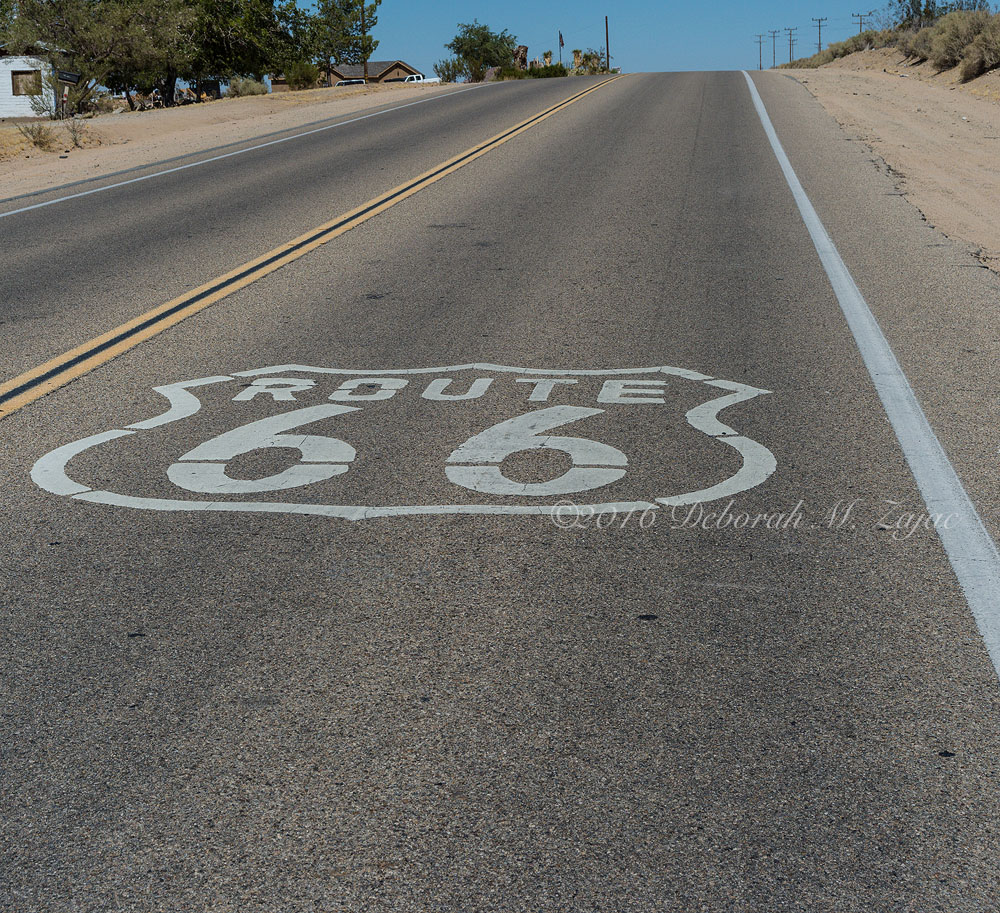
painted-road-sign-rte-66_dmz6233

One of the places we stopped along the Route to check out was the WigWam Motel in Rialto, California.
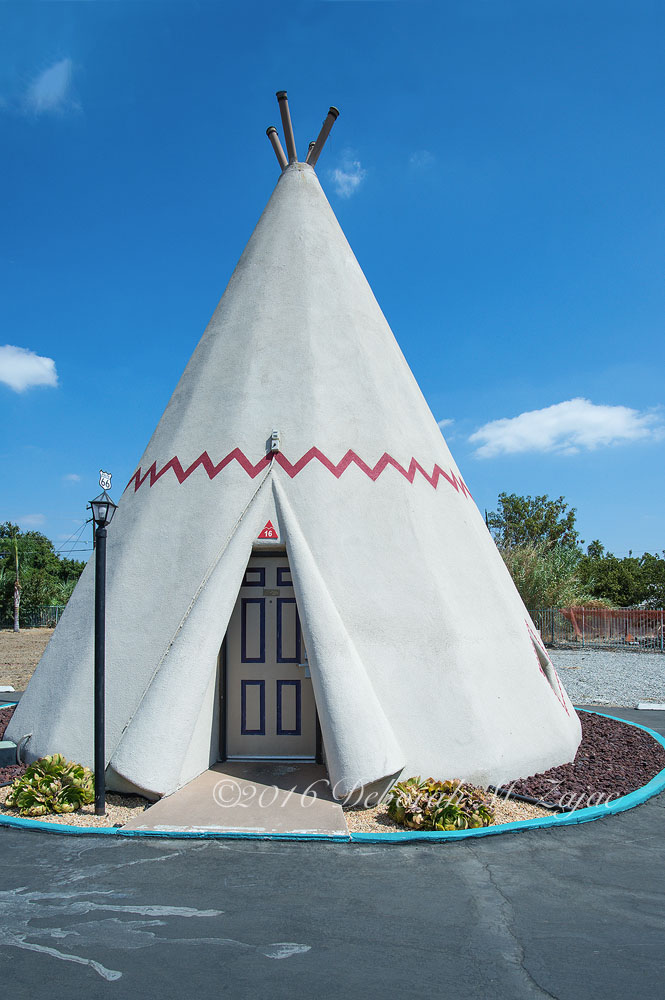
N°16 WigWam Motel

Several of the Tipis’ were empty and had their doors open so I inquired if I could take a peek inside of one; the proprietor graciously allowed me to take a tour of one. The shower stall is behind the entryway door. There was no room for it in the bathroom proper.
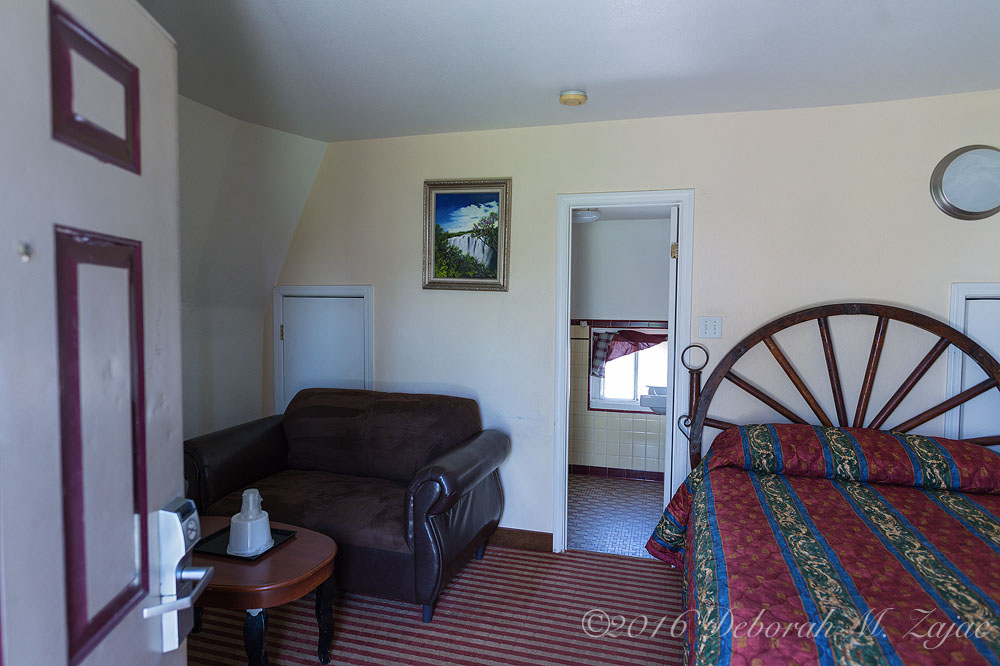
N°16 WigWam Motel Room Interior

There are 19 Tipis’ in this Village, a swimming pool,
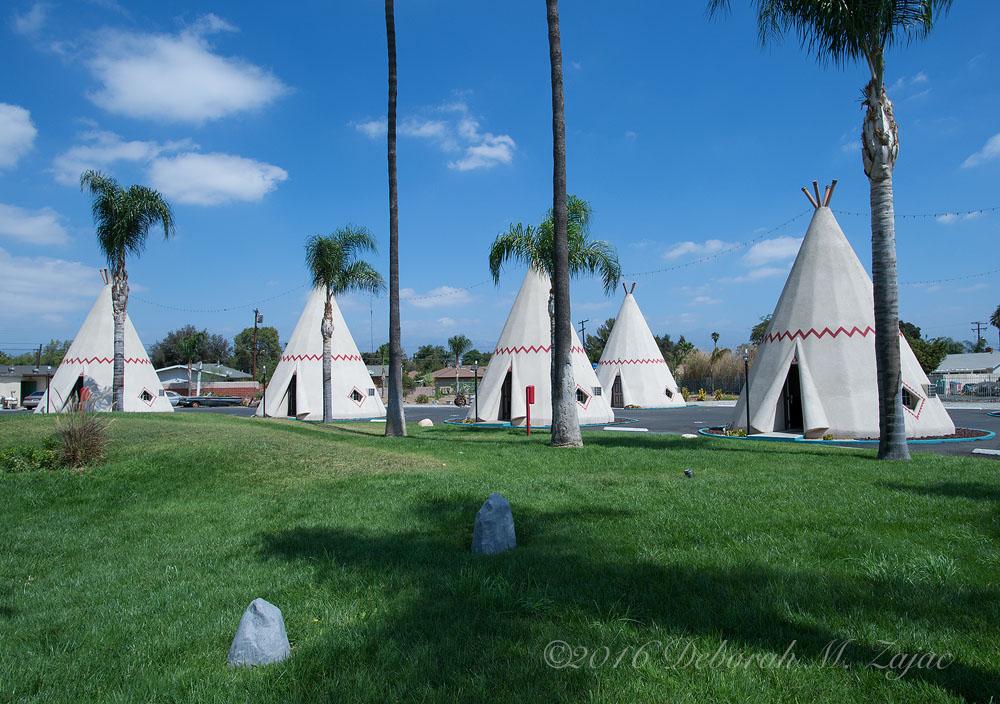
WigWam Motel

…and several vintage cars on the property. I couldn’t resist making an image of the old WigWam Motel Van.
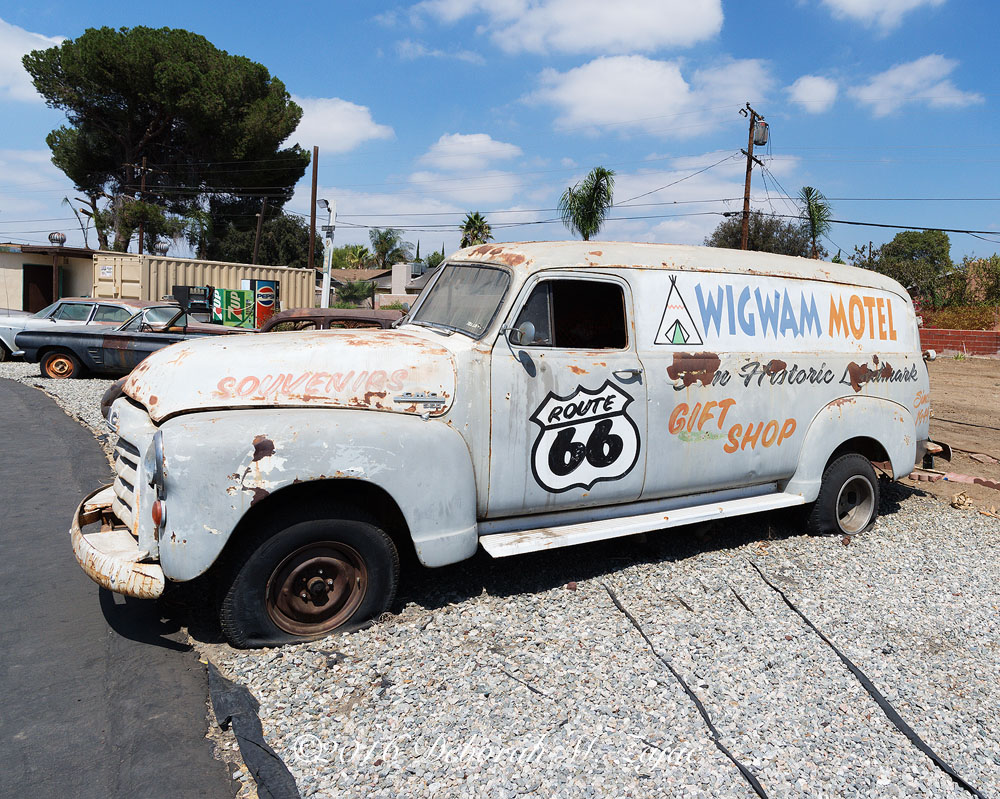
WigWam Motel Vintage Van

For the History Buffs:

“The Wigwam Motels, also known as the “Wigwam Villages“, is a motel chain in the United Statesbuilt during the 1930s and 1940s. The rooms are built in the form of tipis, mistakenly referred to as wigwams.[3] It originally had seven different locations: two locations in Kentucky and one each in Alabama, Florida, Arizona, Louisiana, and California.

They are very distinctive historic landmarks. Two of the three surviving motels are located on historic U.S. Route 66: in Holbrook, Arizona, and on the city boundary between Rialto and San Bernardino, California. All three of the surviving motels are listed on the National Register of Historic Places: the Wigwam Motel in Cave City, Kentucky, was listed in 1988 under the official designation of Wigwam Village #2; the Wigwam Motel in Arizona was listed as Wigwam Village #6 in 2002; and the Wigwam Motel in California was listed in 2012 as Wigwam Village #7.

Village #7: Rialto/San Bernardino, California, Wigwam Village No. 7

Frank Redford built this complex for himself in 1947–49 and not as a franchise. The address of the motel is Rialto, California, but the motel is physically located in San Bernardino. It is on the boundary between the two cities on historic Route 66, with an address of 2728 East Foothill Boulevard, Rialto, California.[11]

Unlike the one arch of wigwams in other surviving villages, Village #7 has a double row of wigwam guest rooms. They total 19 in number, as well as a base for what seems to be another never-completed wigwam in the back of the property. A central building is currently used as an office, with a lobby that is open 24 hours a day. There is also a swimming pool, a large grass front and palm trees surround the property.

The property had become very run down and rooms were rented by the hour, aggravated by a sign advertising “Do it in a Tee Pee” that is still on site in the back.[12] The complex underwent renovation, for which the National Historic Route 66 Federation awarded the Cyrus Avery Award in 2005.[13][14] Attention to detail was the main focus during renovation, as the wigwams lost their zigzag pattern.

Since 2012, the motel has been listed on the National Register of Historic Places.[11][15]

“U.S. Route 66 (US 66 or Route 66), also known as the Will Rogers Highway, the Main Street of America or the Mother Road, was one of the original highways within the U.S. Highway System. US 66 was established on November 11, 1926, with road signs erected the following year.[4] The highway, which became one of the most famous roads in America, originally ran from Chicago, Illinois, through Missouri, Kansas, Oklahoma, Texas, New Mexico, and Arizona before ending at Santa Monica, California, covering a total of 2,448 miles (3,940 km).[5] It was recognized in popular culture by both the hit song “(Get Your Kicks on) Route 66” and the Route 66 television show in the 1960s.

US 66 served as a major path for those who migrated west, especially during the Dust Bowl of the 1930s, and the road supported the economies of the communities through which it passed. People doing business along the route became prosperous due to the growing popularity of the highway, and those same people later fought to keep the highway alive in the face of the growing threat of being bypassed by the new Interstate Highway System.

US 66 underwent many improvements and realignments over its lifetime, and it was officially removed from the United States Highway System in 1985,[2] after it had been replaced in its entirety by segments of the Interstate Highway System. Portions of the road that passed through Illinois, Missouri, New Mexico, and Arizona have been designated a National Scenic Byway of the name “Historic Route 66“, which is returning to some maps.[6][7] Several states have adopted significant bypassed sections of the former US 66 into the state road network as State Route 66.”

420px-map_of_us_66-svg

History and Map Image credit: WikiPedia.com

We had a fun time and crammed a lot in over the course of the week-end.  I have more images from Calico Ghost Town, and Barstow’s train station that I’m saving for future posts.

Nikon Df| Nikkor 20mm f/1.8G & 28-105mm lenses| Delkin Digital Film| Hand-held and Tripod

This post is part of Norm 2.0’s Thursday Doors.  If you love doors and would like to see the doors others are posting, or post doors you’ve photographed and join other door lovers from around the world click here.

At the end of Norm’s latest Thursday Door post is a little Blue Link-up/View button click it to be taken to a page with all the links to view all the posts, and add your own if you’re a door enthusiast too.

More to come…
Thursday Doors 41/52

Copyright ©2016 Deborah M. Zajac. ALL RIGHTS RESERVED

I’m feeling rather “door” lite    weak this week as I was in the Eastern Sierras last week-end and wasn’t focused on doors, and I didn’t photograph any during the week.

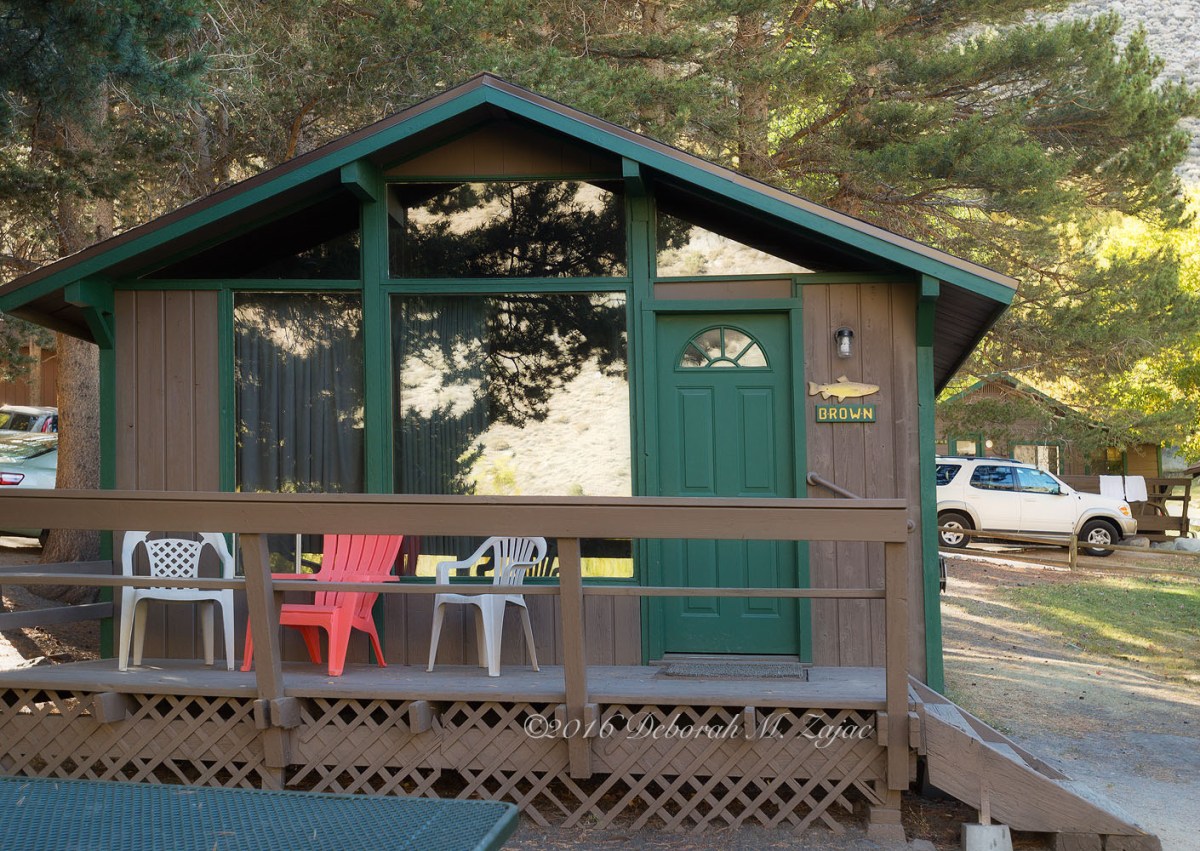
However, I did come across a fishing cabin with a green  door and lovely tree reflections in the big window so, I made a quick image of that.

Fishing Cabin in the Eastern Sierras

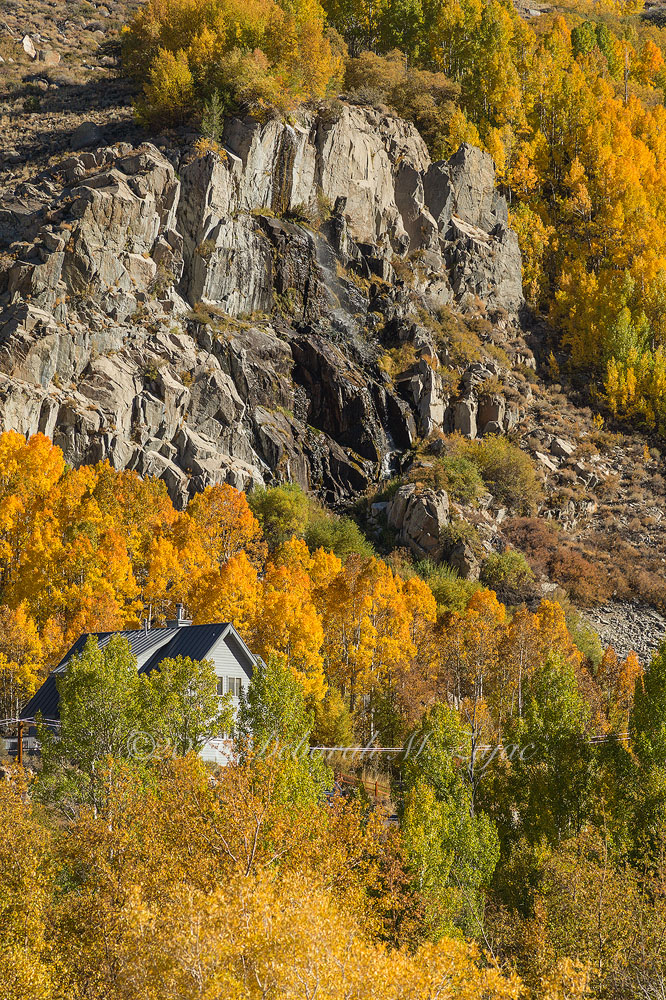
This cabin and the others in this resort area sit across the road from Misty Fall which is what I was in the area photographing.

Misty Fall South Fork Bishop Crk

It’s a pretty place to go fishin’.

Nikon Df| Nikkor 17-35mm| Delkin Digital Film

This post is part of Norm 2.0’s Thursday Doors.  If you love doors and would like to see the doors others are posting, or post doors you’ve photographed and join other door lovers from around the world click here.

At the end of Norm’s latest Thursday Door post is a little Blue Link-up/View button click it to be taken to a page with all the links to view all the posts, and add your own if you’re a door enthusiast too.

More to come…
Thursday Doors 40/52

Copyright © 2016 Deborah M. Zajac  ALL RIGHTS RESERVED

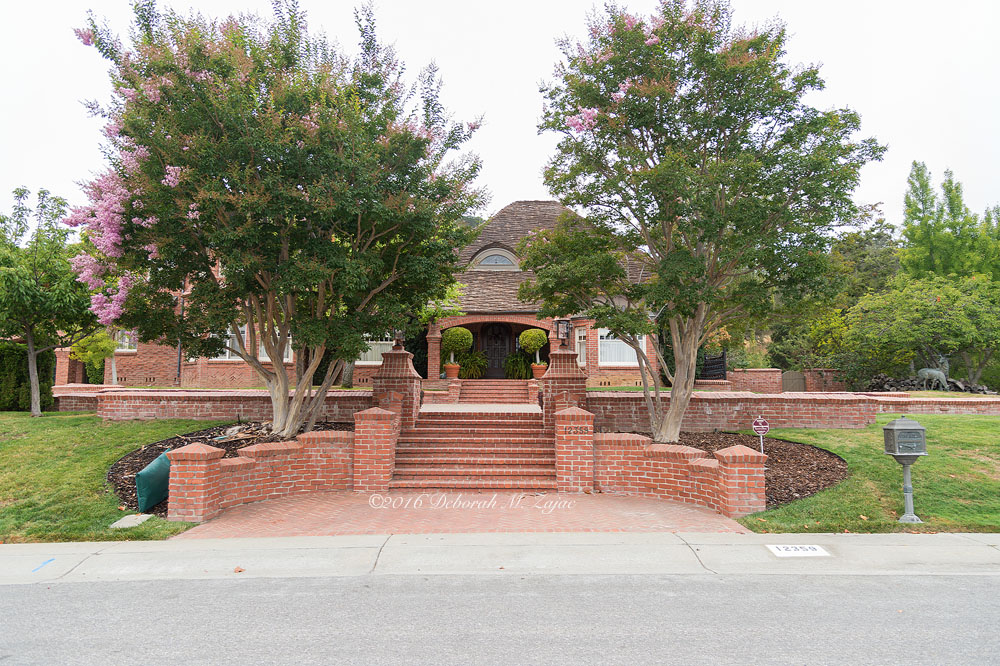
I can’t believe how fast this week has flown by! Thursday sort of snuck up on me so I’ve reached into my “walks around the neighborhood” files for this week’s Thursday Doors post.  Although, this particular neighborhood is the hilly one I stretch my legs in and a 10 minute drive from my “hood”.

N°12359

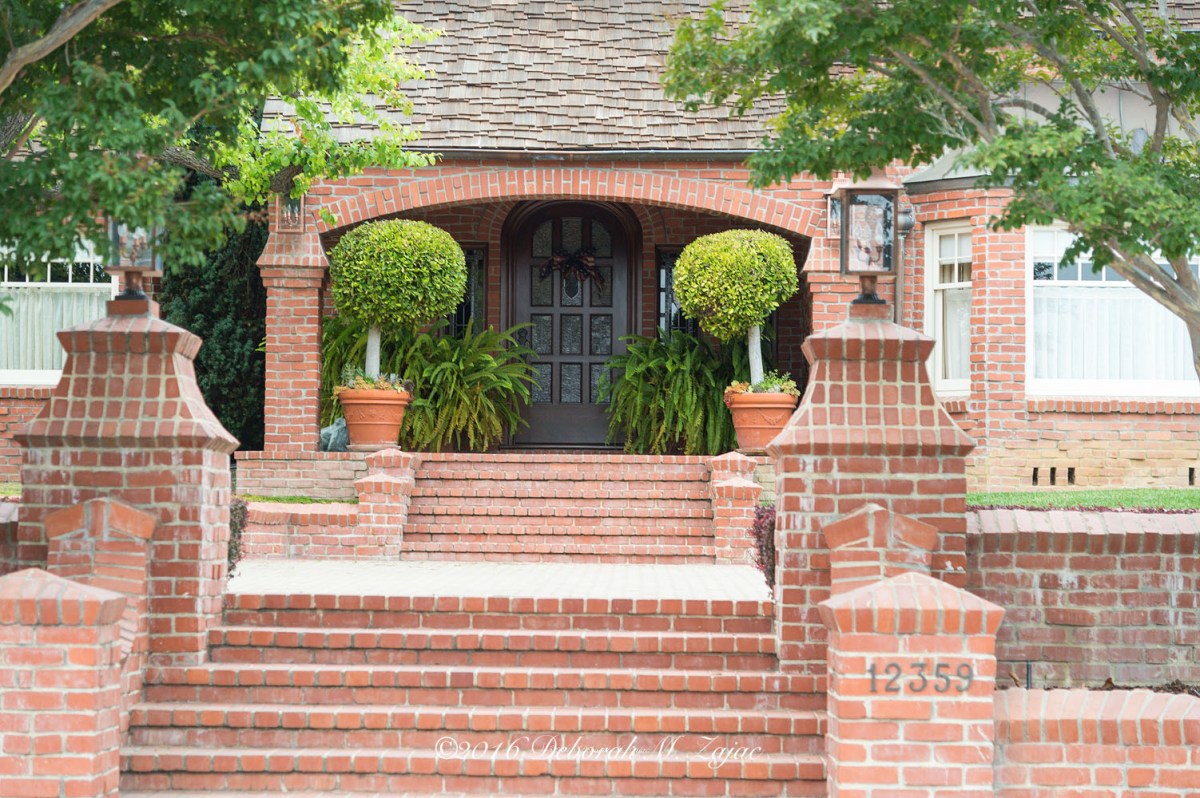
I confess the beautiful brick work, and topiary caught my eye before the door did.

N°12359

a look at the front of the house,

N°12359

Writing this up my spell checker didn’t like the word “snuck”. It likes sneaked better, but I don’t say sneaked in this sense…so, I looked it up to see if I’ve been saying the past tense of sneak wrong my whole life.   Apparently, I’m not alone and a lot of people say snuck, but I’d be correct using the word sneaked.

I think I’ll just leave it as an irregular verb and say snuck, and ponder it awhile as I’m writing this in the wee hours of the morning without my brain stimulating cup-a-tea. 🙂

What do you say; sneaked, or snuck?

Nikon Df| Nikkor 24-120mm| Delkin Digital Film

This post is part of Norm 2.0’s Thursday Doors.  If you love doors and would like to see the doors others are posting, or post doors you’ve photographed and join other door lovers from around the world click here.

At the end of Norm’s latest Thursday Door post is a little Blue Link-up/View button click it to be taken to a page with all the links to view all the posts, and add your own if you’re a door enthusiast too.

More to come…


Thursday Doors 39/52

Copyright © Deborah M. Zajac. ALL RIGHTS RESERVED

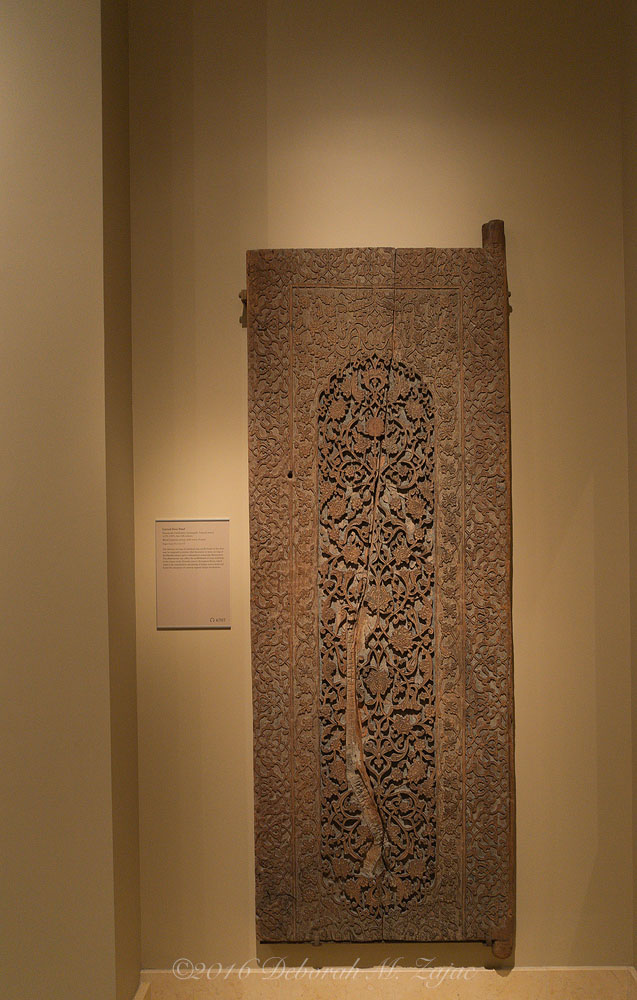
For this week’s Thursday Doors I have returned to my NYC trip files to share another ancient door panel from the MET (Metropolitan Museum of Art).

The plaque beside the panel says:

Carved Door Panel

Present-day Uzbekistan, Samarquand, Timurid period

(1370-1507), late 15th century

Wood (cypress); carved, with traces of paint

Culture- Islamic

H-82 in (208.3 cm)
W- 30 3/4in (78.1cm)
D-2 1/2in (6.4cm)
Wt. – 127 lbs. (57.6kg)
Made in Present-day Uzbekistan, Samarqand

This door is said to have been found in a secular building in Khokand, in present-day Uzbekistan. The intricate carvings of the interlaced vine scrolls seen here may be compared to similar relief decoration in stone carvings of the fifteenth century and to contemporary manuscript illuminations. The establishment of royal workshops throughout Iran during the fifteenth century fueled a unity of design across media, resulting in the emergence of common regional design vocabularies.

Carved Panel Door

Nikon Df| Nikkor 28-105mm| Delkin Digital Film| PS CC 2015.5

This post is part of Norm 2.0’s Thursday Doors.  If you love doors and would like to see the doors others are posting, or post doors you’ve photographed and join other door lovers from around the world click here.

At the end of Norm’s latest Thursday Door post is a little Blue Link-up/View button click it to be taken to a page with all the links to view all the posts, and add your own if you’re a door enthusiast too.

More to come…


Thursday Doors 38/52 West Cliff Inn

Copyright ©2016 Deborah M. Zajac. ALL RIGHTS RESERVED

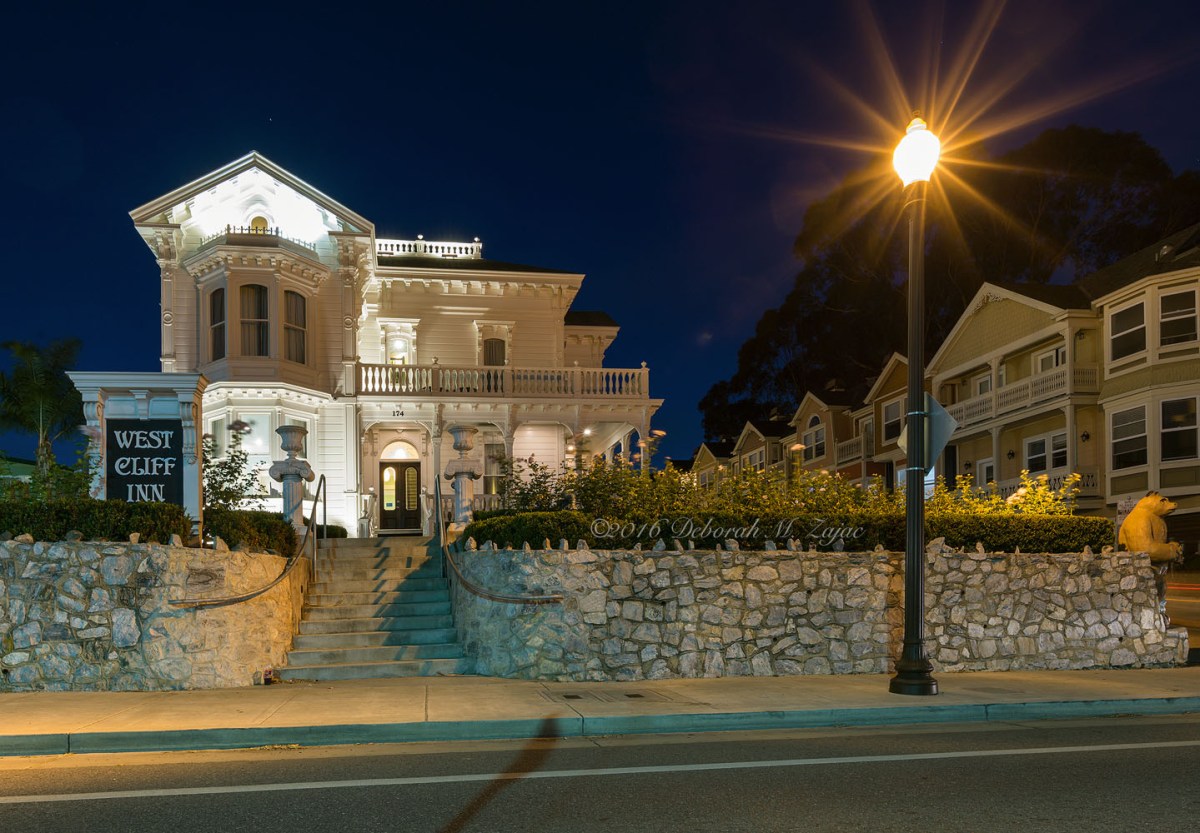
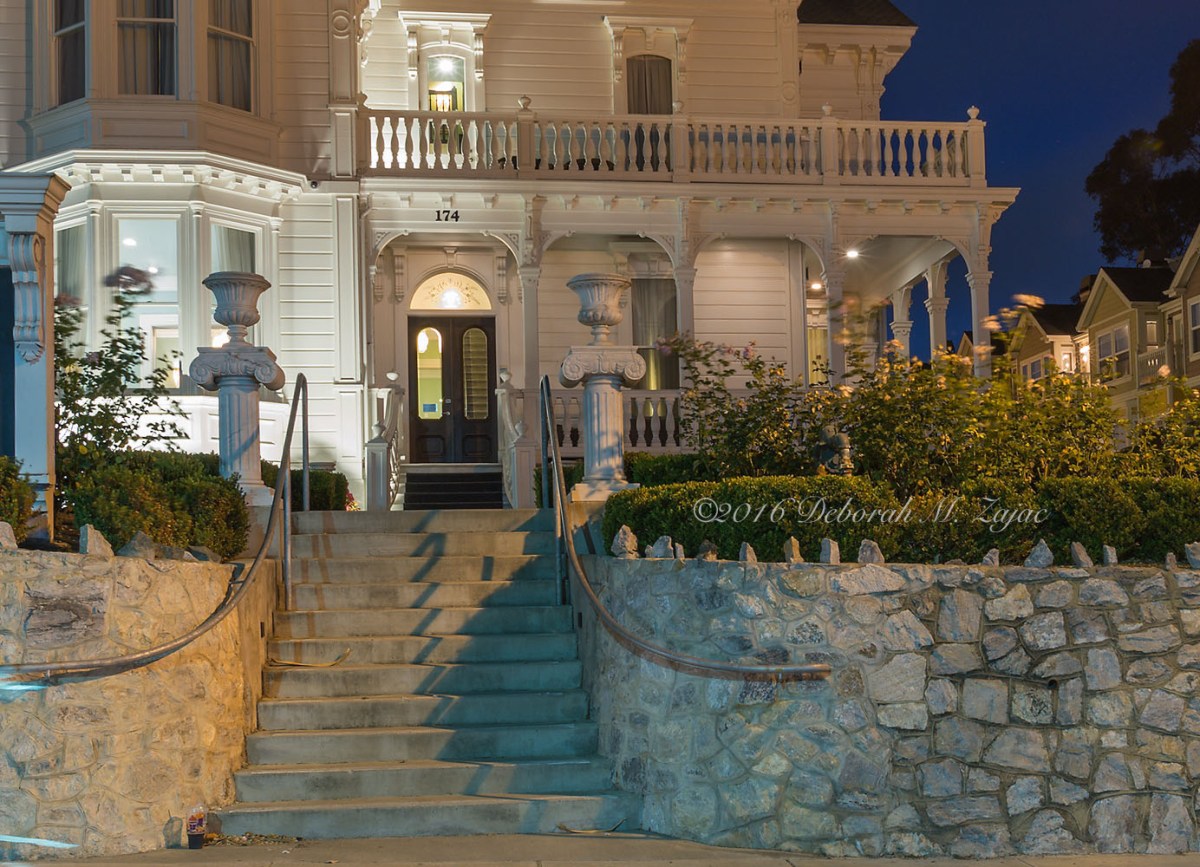
After photographing the Harvest Moon (image here) last Friday night I was walking up the hill to the car when I couldn’t help but notice, and remark how lovely the West Cliff Inn looked all lit up, and her transom window over the entry door looked lovely too.

My friend replied, “There’s your next door!”.    Don’t you love friends that support our thing for doors? I do! 🙂

West Cliff Inn/Lynch House Santa Cruz, CA

West Cliff Inn- Lynch House

For the History Buffs:

“Most of those who descended on California during the Gold Rush never struck it rich. One exception was prospector Sedgewick Lynch, a carpenter-turned-49er who made his fortune in the gold fields, then made his way to Santa Cruz. Lynch continued to use his carpentry skills; he built the original Santa Cruz wharf, among other local projects.

In 1877, Lynch built his family manse on a bluff with a commanding view of the ocean, just a short walk from the lighthouse.  The Lynch House was among the town’s most prominent residences, constructed for the then-startlingly high cost of $12,000. The house was initially the only home on the cliff, but by the turn of the century, similarly grand neighbors joined it, giving birth to the nickname “Millionaires’ Row.”

Over the next hundred years, the Lynch House morphed from family home to hospital, to office space and vacation rental.  By 2004, it was dilapidated. But the Italianate Grand Dame of West Cliff Drive was in luck; the new owners wanted to save the historic property, so they undertook a complete renovation to the building.

Four Sisters Inn’s President Shelley Post collaborated on every phase of the rehabilitation project, and her strong knowledge of what guests want influenced many design decisions. For example, soaking in a large tub after a long day at the beach is on Shelley’s list of favorite things, which is why almost every room soon had a deep soaking tub.

Work began in 2004, and by June of 2007, the Lynch House was as beautiful as ever, ready to welcome Santa Cruz visitors under her new name: Four Sisters Inns.”~westcliffinn.com

~westcliffinn.com

I remember when the house was looking quite run down. I am so happy it was restored and converted to  a B&B and preserved as an Historical Landmark in 2007. It looks beautiful today.

Nikon Df| Nikkor 20mm f/1.8G| Delkin Digital Film| PS CC 2015.5

This post is part of Norm 2.0’s Thursday Doors.  If you love doors and would like to see the doors others are posting, or post doors you’ve photographed and join other door lovers from around the world click here.

At the end of Norm’s latest Thursday Door post is a little Blue Link-up/View button click it to be taken to a page with all the links to view all the posts, and add your own if you’re a door enthusiast too.

More to come…
 

Thursday Doors 36/52 Triple Treat

Copyright ©2016 Deborah M. Zajac. ALL RIGHTS RESERVED

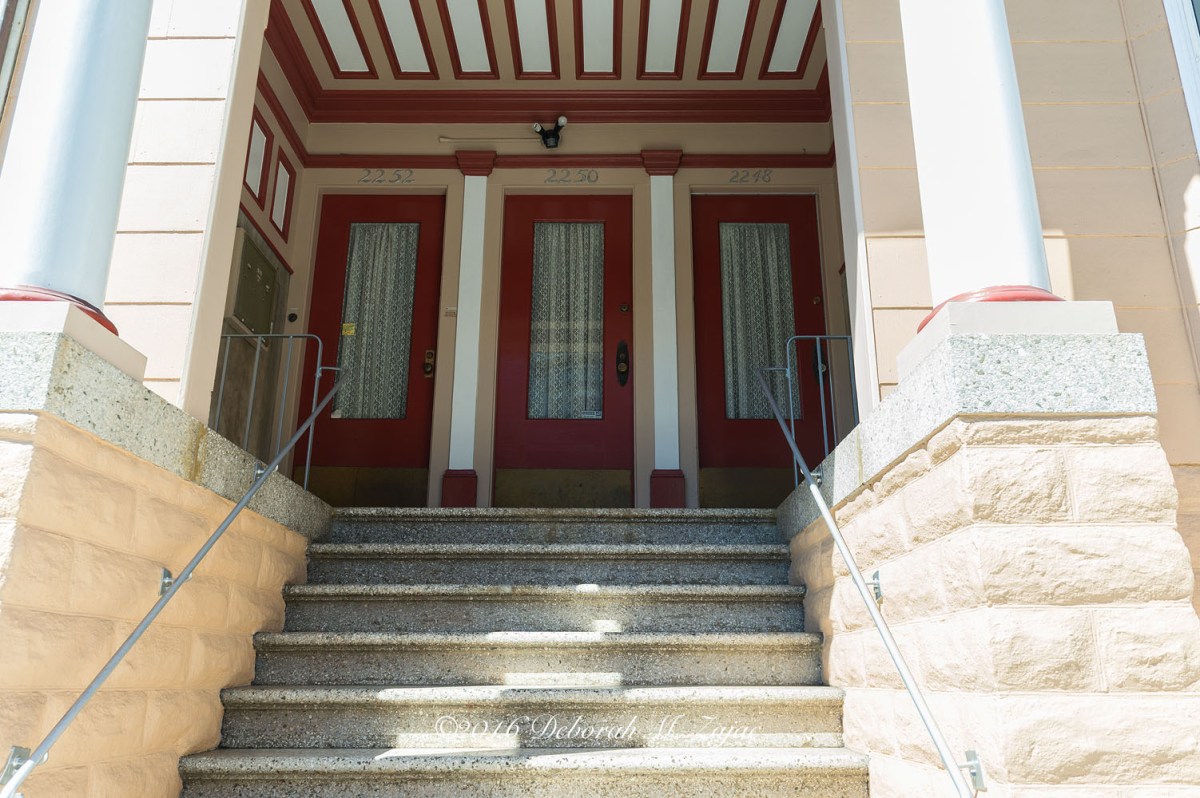
N°s 2248, 2250, & 2252.

3 Red Doors

Nikon Df| Nikkor 24-70mm| Delkin Digital Film| PS CC 2015.5

This post is part of Norm 2.0’s Thursday Doors.  If you love doors and would like to see the doors others are posting, or post doors you’ve photographed and join other door lovers from around the world click here.

At the end of Norm’s latest Thursday Door post is a little Blue Link-up/View button click it to be taken to a page with all the links to view all the posts, and add your own if you’re a door enthusiast too.

More to come…
Thursday Doors 35/52 Conservatory of Flowers San Francisco, CA.

Copyright ©2016 Deborah M. Zajac. ALL RIGHTS RESERVED

After spending 2 hours or so photographing Dahlias in the East Garden of the Conservatory of Flowers I thought I’d go up the small flight of stairs to photograph the Conservatory building, and doors before it got really crowded with Sunday park goers and tourists.

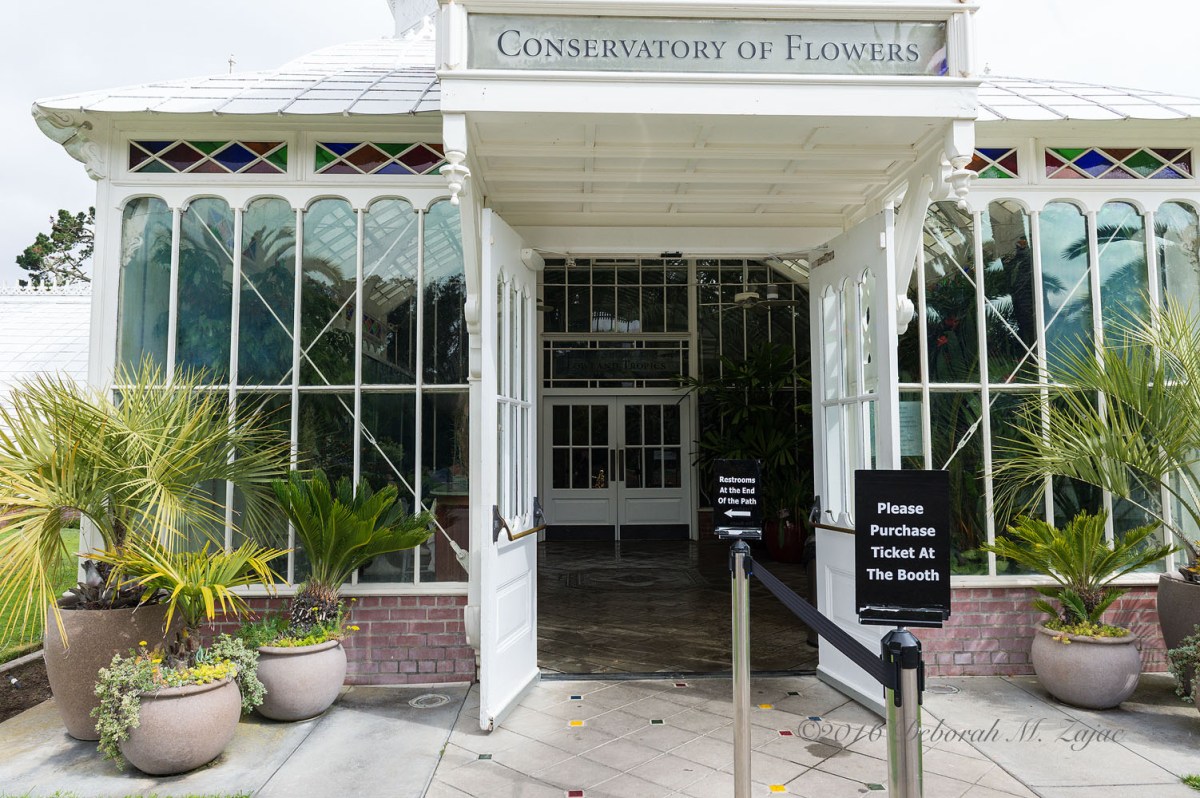
Main Entrance Doors:

Main Entrance Conservatory of Flowers

The Conservatory of Flowers has quite a history so, for the History Buffs:

The mission of the Conservatory of Flowers is to connect people and plants in a place of exceptional beauty.

“The Conservatory of Flowers has captivated guests for more than a century. This gem of Victorian architecture has a long and storied history, and is the oldest public wood-and-glass conservatory in North America. As a city, state and national historic landmark, the Conservatory remains one of the most photographed and beloved attractions in San Francisco.”~http://www.conservatoryofflowers.org/


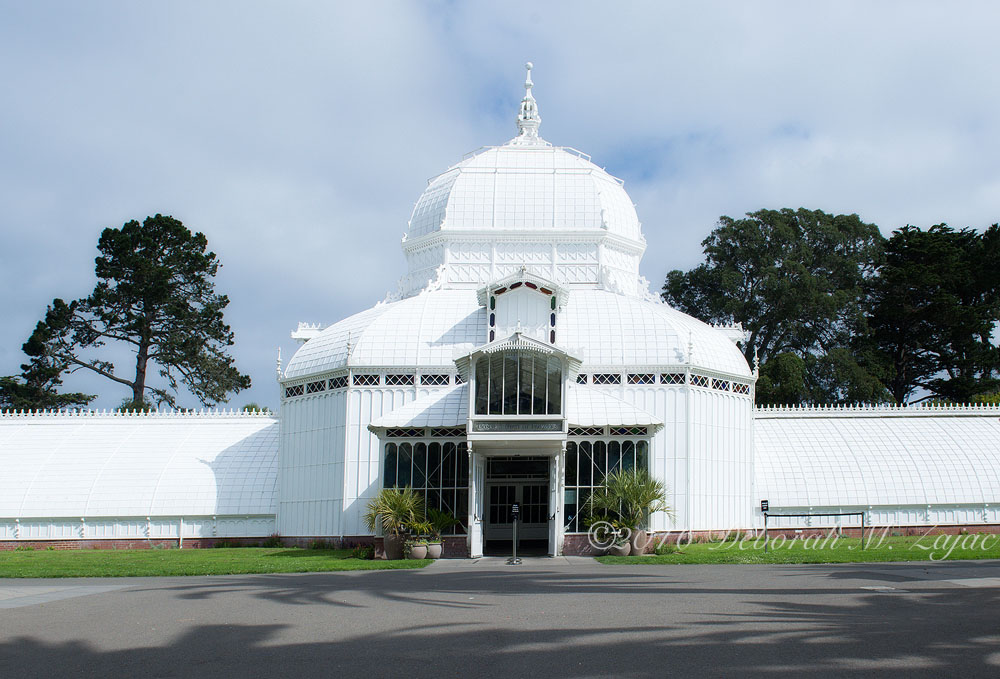
Main Entrance Wide View:

Conservatory of Flowers Main Entrance

“In the mid-19th century, James Lick, a wealthy businessman and philanthropist, ordered the greenhouse for his Santa Clara estate. Unfortunately, Lick died before it was erected, and the parts remained in crates, unused for decades. The kit was put up for sale by Lick’s trustees in 1877, and purchased by a group of prominent San Franciscans who offered it to the City. The civic-minded group of donors included Leland Stanford, founder of Stanford University and Governor and Senator of California, and Charles Crocker, the industrialist responsible for much of the railroad system in the West. The Conservatory opened to the public in 1879. It was an instant sensation and quickly became the most visited location in the park.

Since its opening, the building has seen more than its share of accidents and natural disasters. In 1883 the dome was  damaged by a boiler explosion. Charles Crocker came to the rescue with $10,000 for the restoration work. During this restoration, the dome was raised by six feet and the eagle finial on top of the dome was replaced with the planet Saturn, likely a reference to the ancient Roman god of agriculture.

In 1918, the dome and adjoining room burned again, and in 1933 structural instabilities caused a 13-year closure. The most devastating damage was done by a wind storm in 1995. After a winter of storms, 20 percent of the trees in Golden Gate Park were toppled and wind patterns changed. As a result, a relatively mild windstorm severely damaged the newly exposed Conservatory. Forty percent of the glass smashed, a portion of the rare plants were lost, and the building had to be closed.

In early 1998, the Conservatory was placed on the 100 most Endangered World Monuments list by the World Monuments Fund. The National Trust for Historic Preservation adopted the Conservatory into its Save America’s Treasures program, launched as part of then First Lady Hillary Clinton’s Millennium Council projects. Publicity from these efforts eventually led to a fundraising campaign to raise the $25 million dollars for the rehabilitation, which included support from the Richard & Rhoda Goldman Fund. The Conservatory reopened in 2003.

Docents are often asked how the Conservatory faired in the earthquake of 1906. The building stood strong, without damage, and the area leading up to the building, known as Conservatory Valley, became a location of temporary tents housing San Franciscans escaping the devastation and fires throughout the city.

Since reopening in 2003, over 2 million visitors have visited the Conservatory of Flowers, including tens of thousands of school children on free educational tours and hundreds of couples marrying in the most romantic spot in San Francisco. This modern version of the Conservatory strives to connect people and plants in a way that is most meaningful for the Bay Area community and for visitors from around the world.

And the Conservatory is a place where horticultural societies, botany students, and young plant enthusiasts gather to study collections and ensure passion for living museums and conservatories will continue to flourish.

Since re-opening in 2003, the Conservatory has garnered numerous local, state and national awards.” Abridged: ~conservatoryofflowers.org

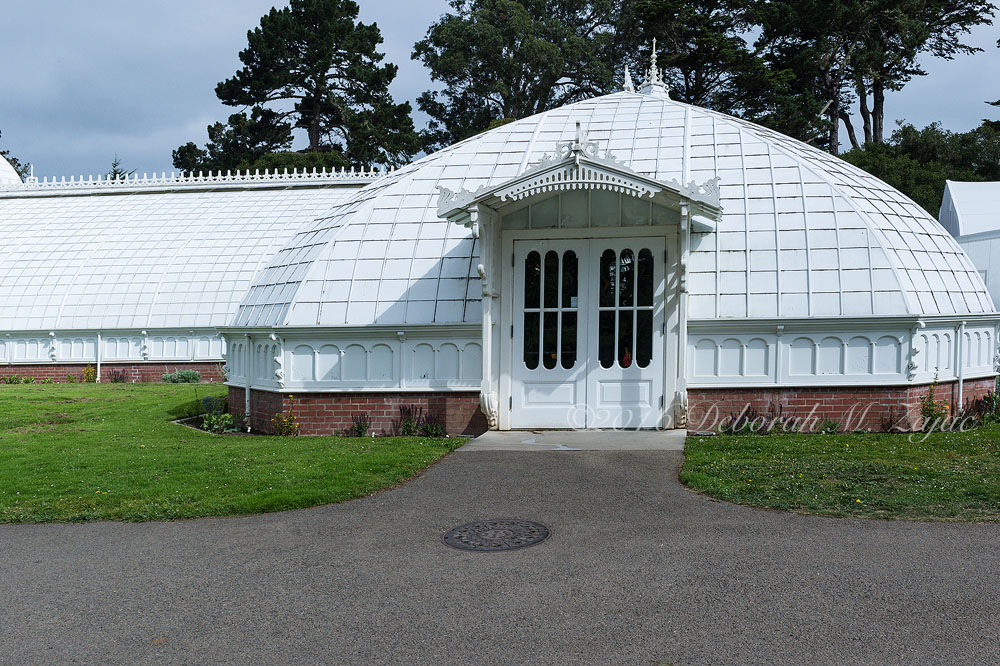
Aquatic Plants Gallery Doors: “The magical pools in the Aquatic Plants Gallery simulate the flow of a river winding through the tropics. The gallery features carnivorous pitcher plants, warm-growing orchids, and brightly painted Heliconia and Hibiscus. Giant taro leaves line the pond and the flowers of hundreds of bromeliads emerge from their water-filled buckets. A sculpture of a Victoria amazonica water lily hangs suspended in the air. The Victoria amazonica, lotus plants, and colorful water lilies grow in the ponds during the summers when water conditions are just right.”~ conservatoryofflowers.org

Conservatory of Flowers San Francisco

The Conservatory and south garden; I think this garden is gorgeous.

Conservatory of Flowers San Francisco

Standing at the top of the stairs in the image above I made this image below; the view is looking south: Sutro Tower is in the distance on Twin Peaks. On Sunday the road that this bridge is part of is closed to vehicles which makes it a bit of challenge to find parking, but it’s a boon for pedestrians, and cyclists. Isn’t that stone bridge lovely.  It’s for that bridge that I made the photo.  Pedestrians can safely cross the road by using the tunnel under the bridge during the week.  The flowers in the beds that I recognized are Foxglove and Begonia. There are other flowers, but I don’t know what they are.

South Garden Conservatory of Flowers


I went back to the Dahlia garden after making this last image.  I’ll share more of those images soon.

Nikon Df| Nikkor 24-70mm| Delkin Digital Film| PS CC 2015.5

This post is part of Norm 2.0’s Thursday Doors.  If you love doors and would like to see the doors others are posting, or post doors you’ve photographed and join other door lovers from around the world click here.

At the end of Norm’s latest Thursday Door post is a little Blue Link-up/View button click it to be taken to a page with all the links to view all the posts, and add your own if you’re a door enthusiast too.

More to come…
http://www.conservatoryofflowers.org/