PLEASE DO NOT USE MY IMAGES WITHOUT EXPRESSED WRITTEN PERMISSION.
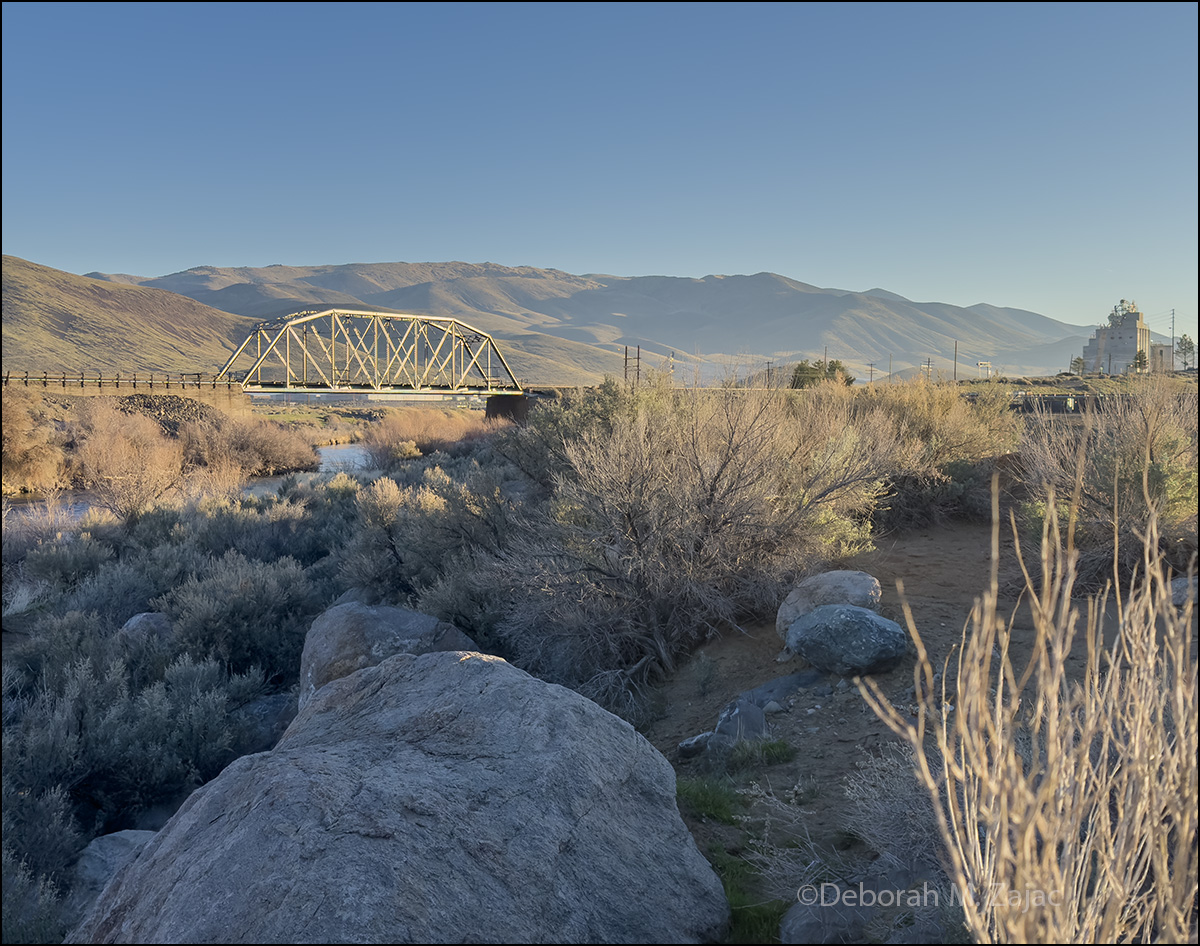
This is a Union Pacific Through-Truss Bridge you can see off I80 East in Lockwood, NV.
This is the only history I could find on the internet about it.
“Southern Pacific merged into Union Pacific in 1995, so the bridge predates that. The exact build date isn’t well-documented in publicly available sources, but given the CP/SP heritage of the line, it likely dates to the early-to-mid 20th century when the original wooden truss bridges on this corridor were being replaced with steel.” Circa 1930’s.
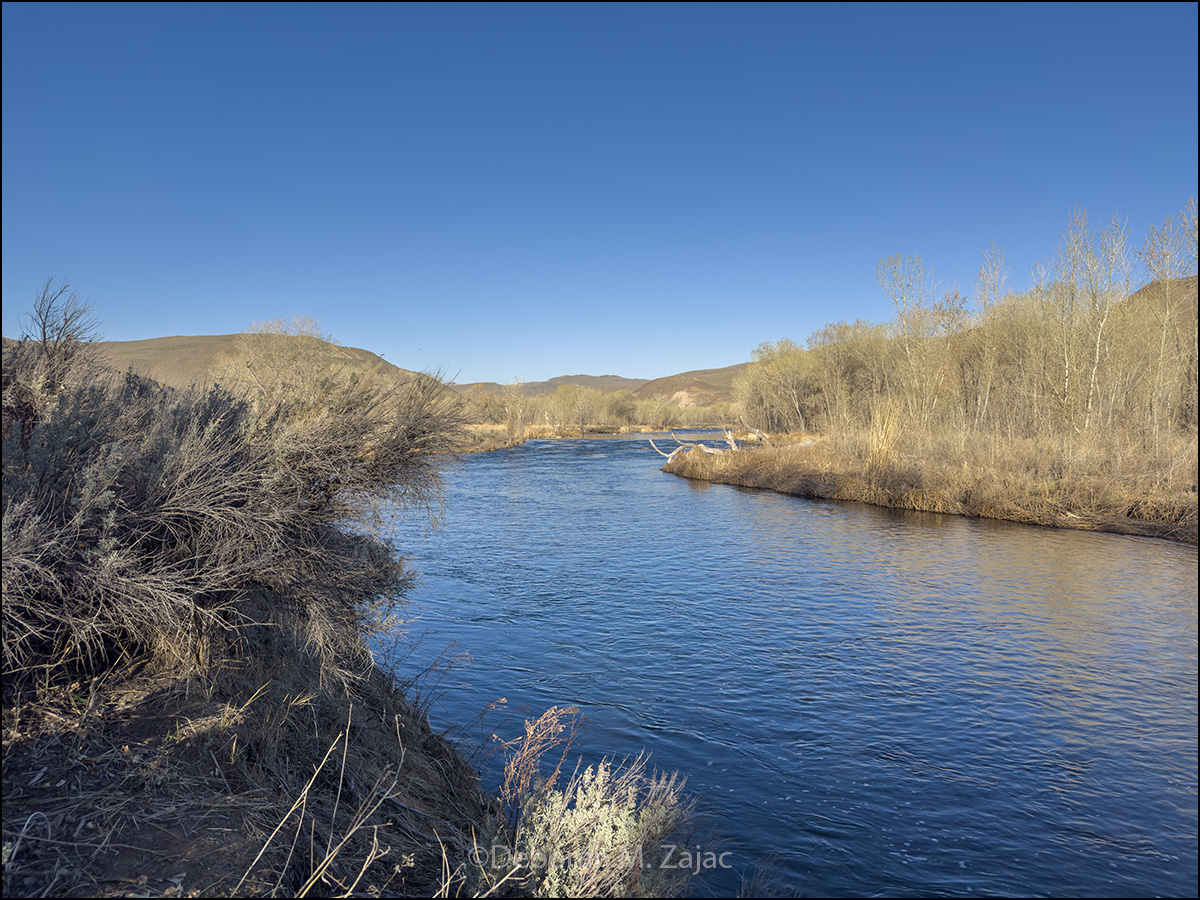
The bridge goes over the Truckee River. I’ve seen trains heading toward the bridge a few times but, I’ve always been down the trail quite away from the bridge so I haven’t managed to get a shot of the train on the bridge. Hopefully one day I’ll get the timing right. The view is NNE ish.
PLEASE DO NOT USE MY IMAGES WITHOUT EXPRESSED WRITTEN PERMISSION.
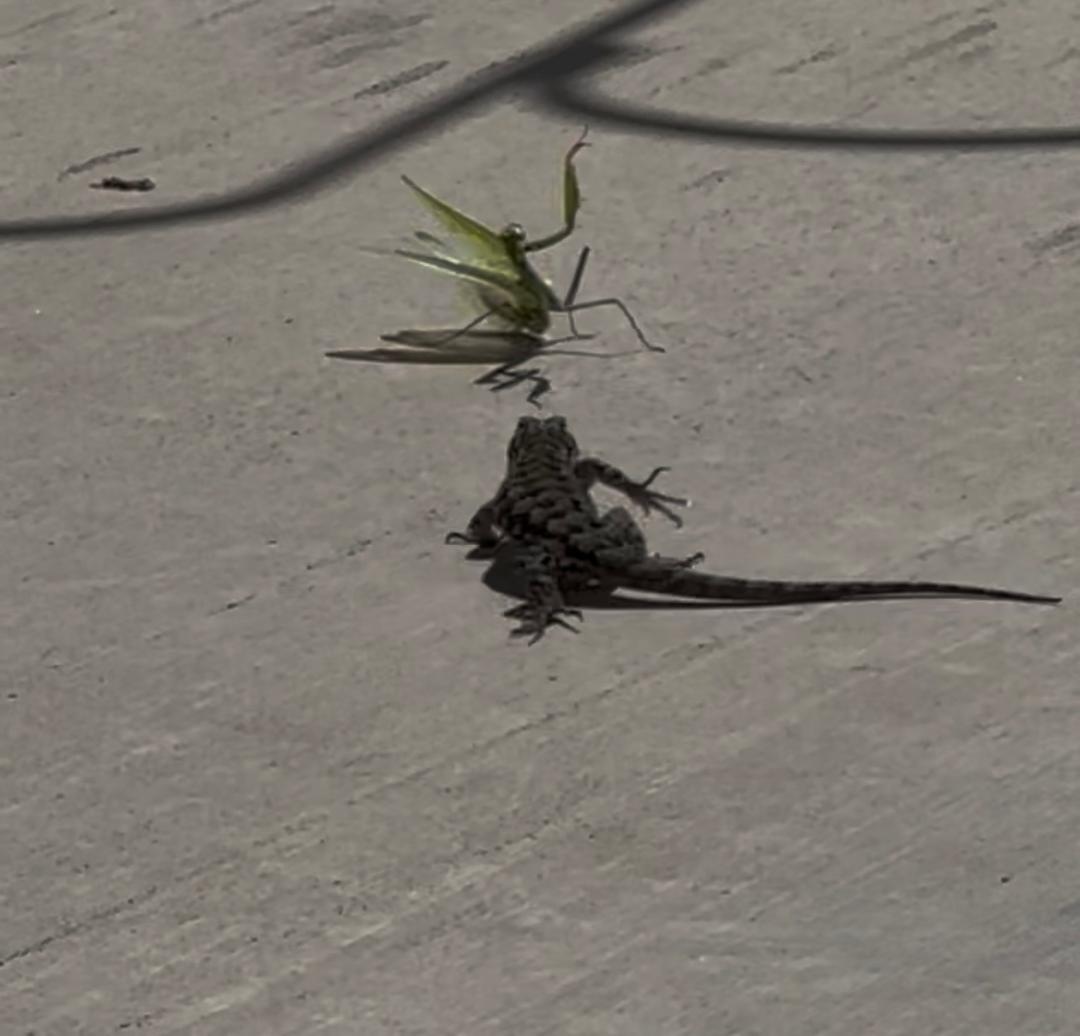
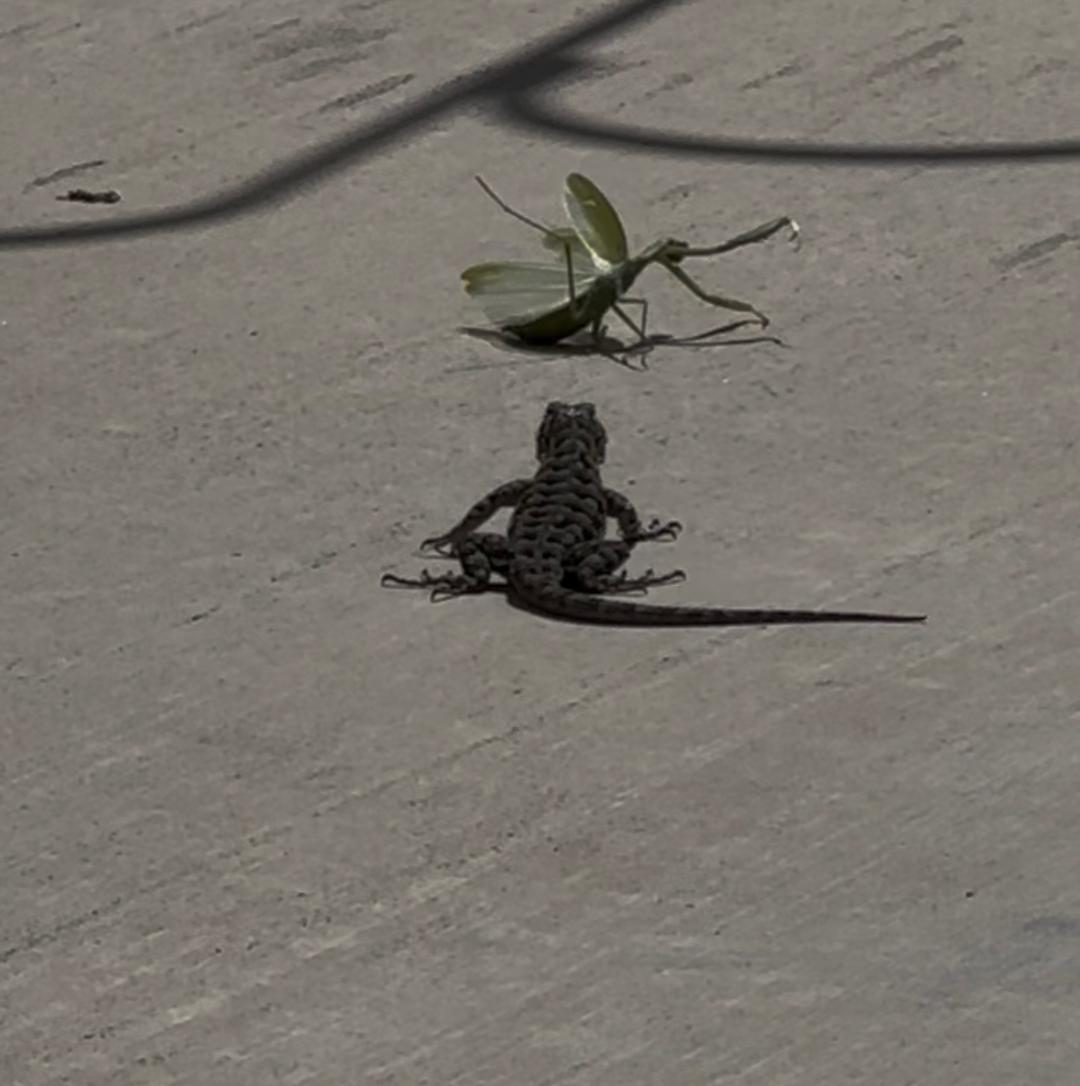
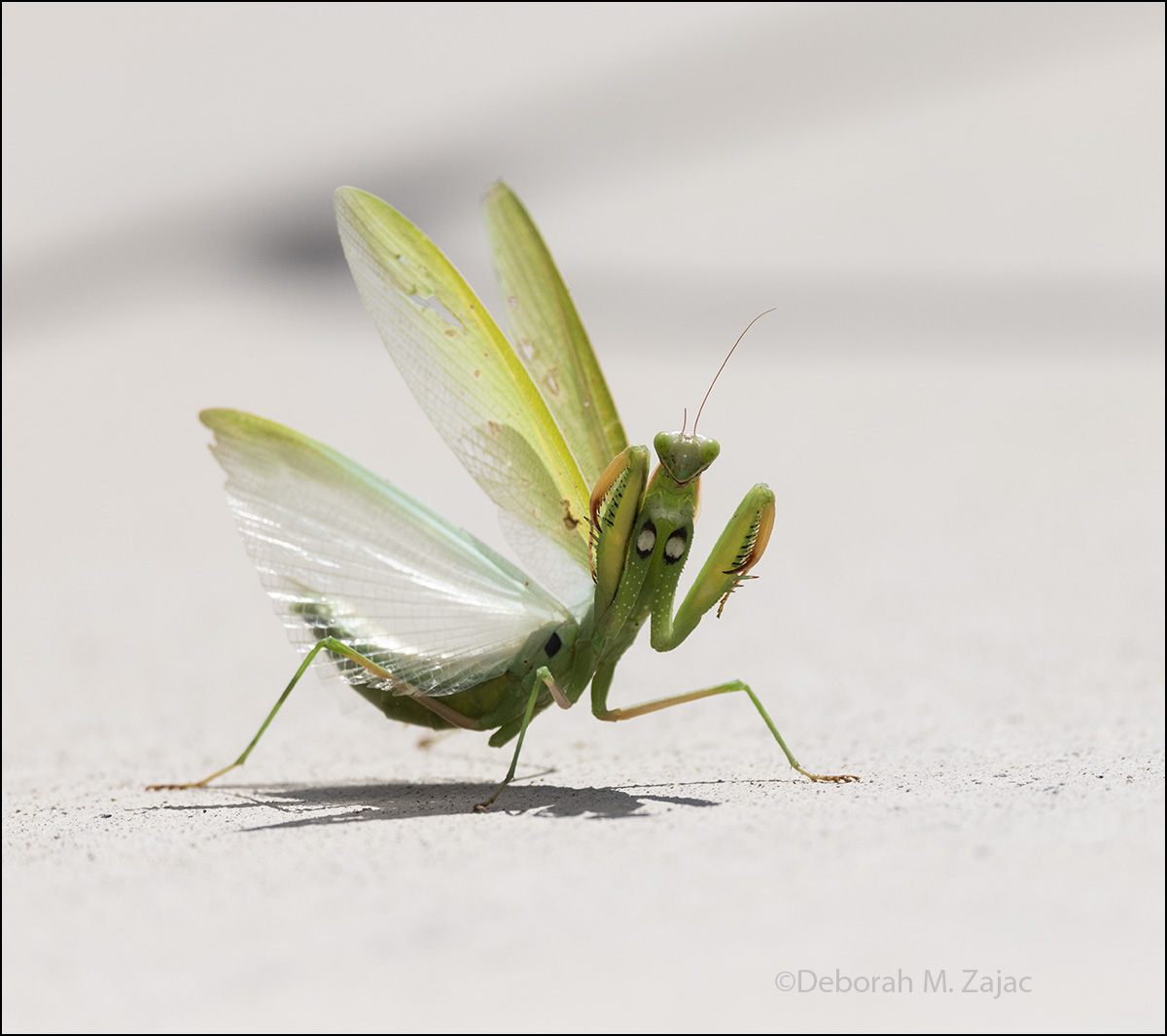
Two weekends ago I was passing my backdoor when I caught a Desert fence lizard going after a big European Praying Mantis. The lizard had the Mantis on the run then quick as lightening it sprang for it! Perceiving the Lizard’s move, in a flash the Mantis did this amazing spin and came up in a fighting stance and punched the lizard. The lizard backed up just a bit. There they stood each looking at each other for minutes. I’d run to get my phone and camera. The lizard sensing me ran off, but the Praying Mantis changed poses and stared right at me! It was a Nat Geo moment!!
Now, I’m on my stomach with my camera at my face with the door open only 10 ft from the Mantis. It was staring at me intently, not moving. Just poised to strike and staring at me. I don’t mind telling you that was eerie. I thought, oh man, if it flies at me I won’t be able to close the door in time! It’s going to get me!! Do they bite? All this went through my head in a second. Mesmerized I didn’t move, well, other than my shutter finger taking photos. Oh, and my sister and had been texting right before all this started so I began giving her play by play texts. Both of us now caught up in the drama. 😂
I looked around and spied the lizard. It had run to the shade under my whirling Butterfly Guaro plant and the Praying Mantis just stood there staring at me.
I grabbed some really crumby stills from the even crumbier short video I managed to make. I apologize. A videographer I am not.
After 10 minutes it dropped to the ground and began crawling toward me. It was then that I saw it was injured. A broken leg I think. Then a gust of wind came through and carried the mantis to the edge of my patio. It began crawling back toward me but, veered a bit and headed ever so slowly toward my outdoor dining table. It got under the table and I lost sight of it. I looked for it later and the following day, but I’ve not seen it since.
Meanwhile, my sister having seen the photos was doing research on the type of Praying Mantis it was. She identified it as the European Praying Mantis by the two eye like ovals on its body.
Then I looked up how they got here.
Fun Facts:
In 1899 it was accidently introduced from Europe by ship with plant shipments and garden nursery items. It was found in New York in 1899. There is some speculation that it may have arrived much earlier.
In the 1930’s they were introduced to help with the Gypsy Moth (Spongy Moth) population. Since then they have been moving west, and are even in parts of Canada. It is considered invasive, but the impact is less severe than other larger invasive Praying Mantis…the Chinese Praying Mantis.
Praying Mantis eat pollinators like bees, and butterflies so it is worth keeping an eye on them. Its own cannibalism, and predation by birds keeps the population from exploding.
They’re a low grade ecological concern, and are well integrated in the US.
PLEASE DO NOT USE MY IMAGES WITHOUT EXPRESSED WRITTEN PERMISSION.
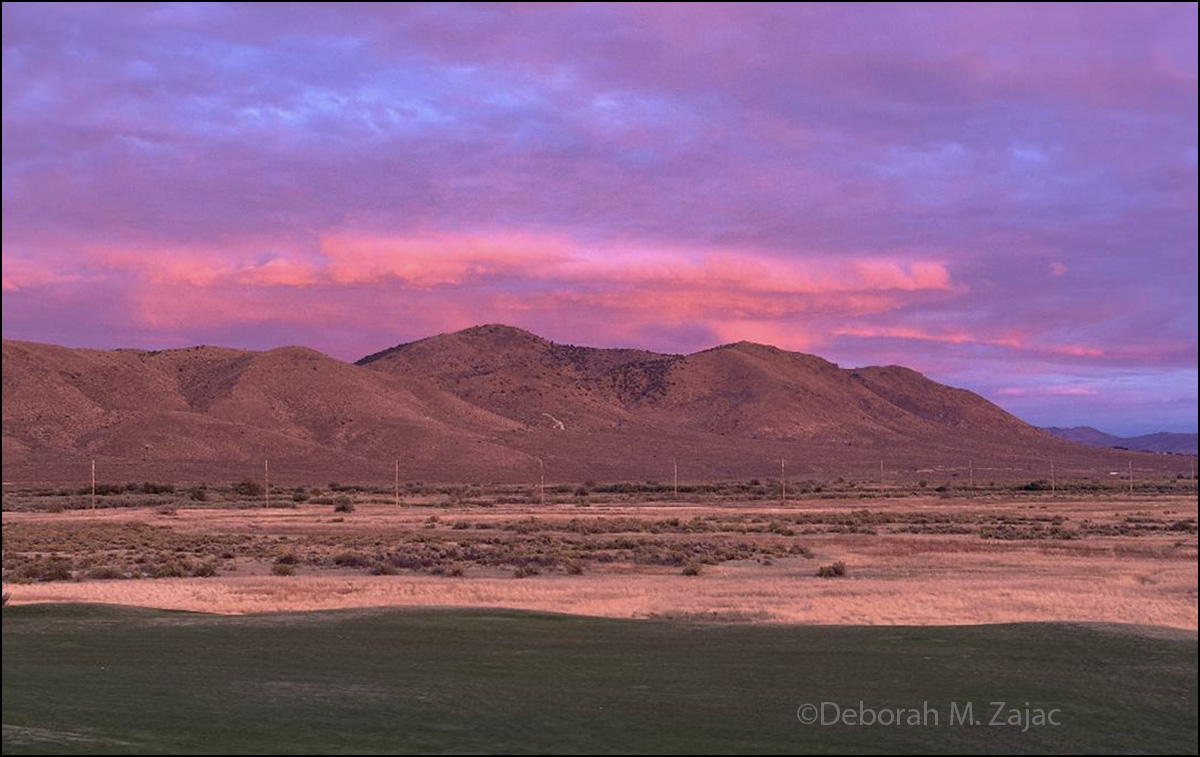
I was hoping to photograph the Eclipse on August 27th, but we’d had rain, and clouds for a couple of days and on Eclipse day it wasn’t looking promising out here. I set up anyway hoping for a pocket or a hole in the clouds.
No luck. Skunked again. We did have a beautiful pink sunset that evening though so, it kind of made up for missing the Eclipse.
PLEASE DO NOT USE MY IMAGES WITHOUT EXPRESSED WRITTEN PERMISSION.
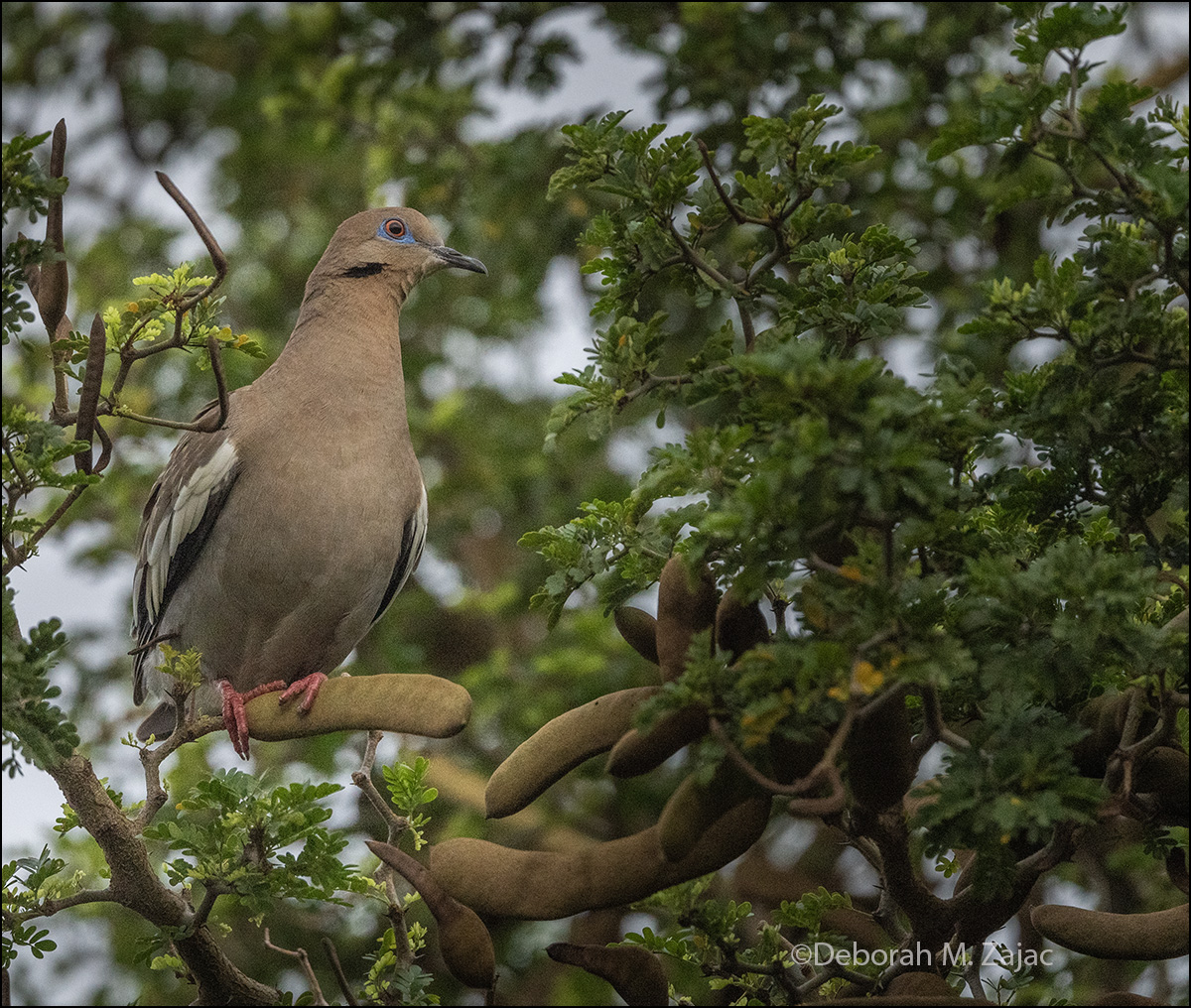
The very first new to me bird that I saw while in Texas in April was the White-winged Dove. I’ve wanted to see one since I first heard Stevie Nicks sing On the Edge of Seventeen way back in the 80’s.
They are so much more colorful than I thought they’d be with their orange eyes, contrasting blue eye lore, and orange red legs and feet.
In the Sonoran Desert, nesting White-winged Doves eat mostly the nectar, pollen, fruit, and seeds of the saguaro cactus. They’re so dependent on the saguaro they time their migration and nesting to match its fruiting schedule. Saguaro seeds are the only small seeds that a White-winged Dove will bother with—possibly because they sit in a large, cup-shaped fruit that makes them easy to eat.
Like other doves and pigeons, White-winged Doves have some unusual abilities. They can suck and swallow water without moving their heads. And they use a secretion from the esophagus, known as crop milk, to feed nestlings. Both parents may consume snails and bone fragments to help their bodies create the nutritious fluid.
Although the White-winged Dove is mostly resident in the Southwest, it is expanding its range, and individuals can be found far afield. White-winged Doves have been seen from Alaska to Ontario, Maine, Newfoundland, and most places in between.
During the twentieth century, habitat loss and heavy hunting led to a serious drop in White-winged Dove populations in Texas—from as many as 12 million to fewer than 1 million by 1939. But with proactive management of hunting and the species’ ability to adapt to urban living, the population rebounded to some 2.2 million by 2001, and its range is still expanding.
In the early 1980s, the singer Stevie Nicks introduced millions of Americans to the White-winged Dove with her song “Edge of Seventeen,” which hit #11 on the Billboard charts.
The oldest White-winged Dove on record was at least 21 years and 9 months old. It was banded in Arizona in 1958 and recovered in Mexico in 1980.
I’m birding this morning so will be late reading your posts and comments.
PLEASE DO NOT USE MY IMAGES WITHOUT EXPRESSED WRITTEN PERMISSION.
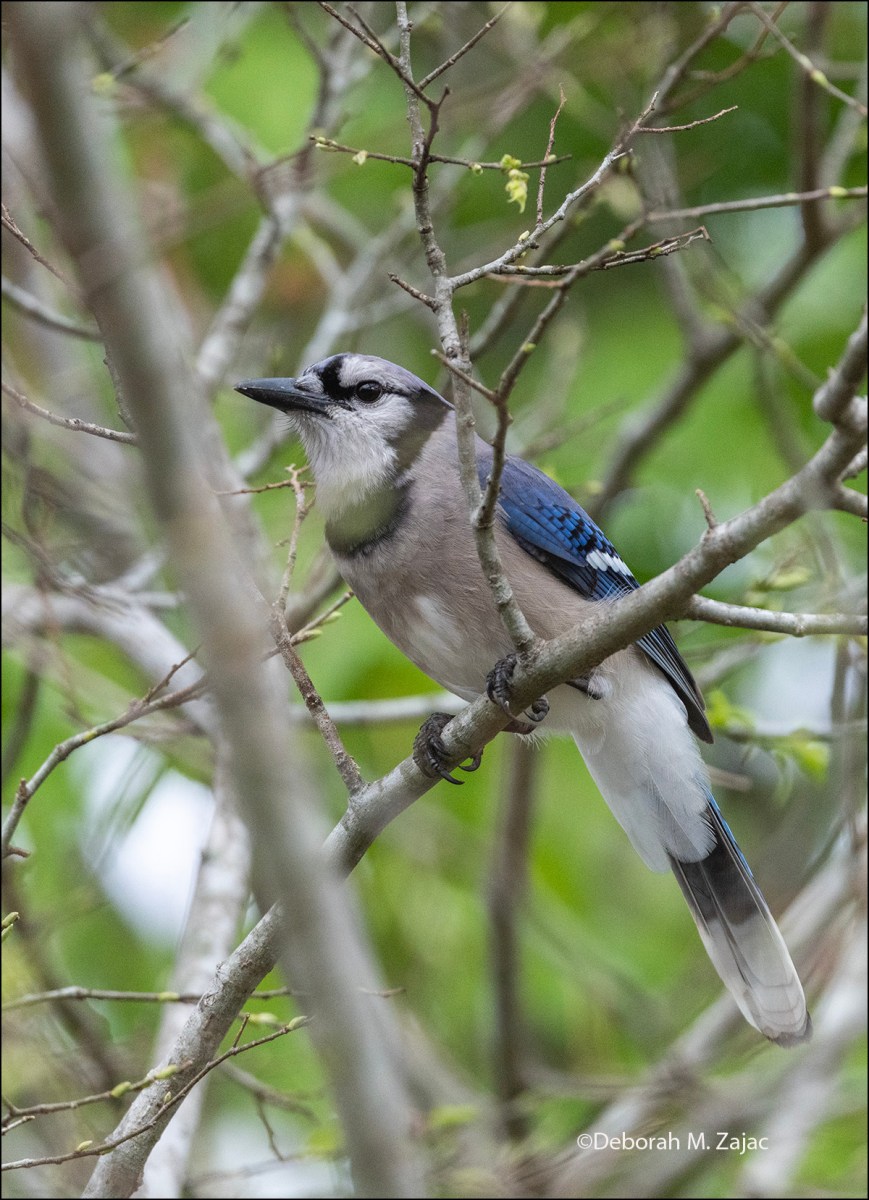
It’s been awhile since I shared any of the birds I’ve been seeing. As I mentioned I was overwhelmed getting my life list up to date after March’s Florida trip, and April’s Texas trip. Today, I’m sharing 3 North American Jays that I added to my Life List this year.
Some of you know how badly I’ve wanted to get a decent photo of the Blue Jay since I first saw one in FL in 2024. They seem to know when I’m in Florida and Ohio with my camera. They toyed with me…hiding in the foliage or giving me a brief look and flying away as soon as I lifted my camera. Well, in March I had two full days to bird with my friend Mary. I spied a Blue Jay and doggedly followed it for 20 minutes to get a photo that wasn’t blurry, or a butt shot.
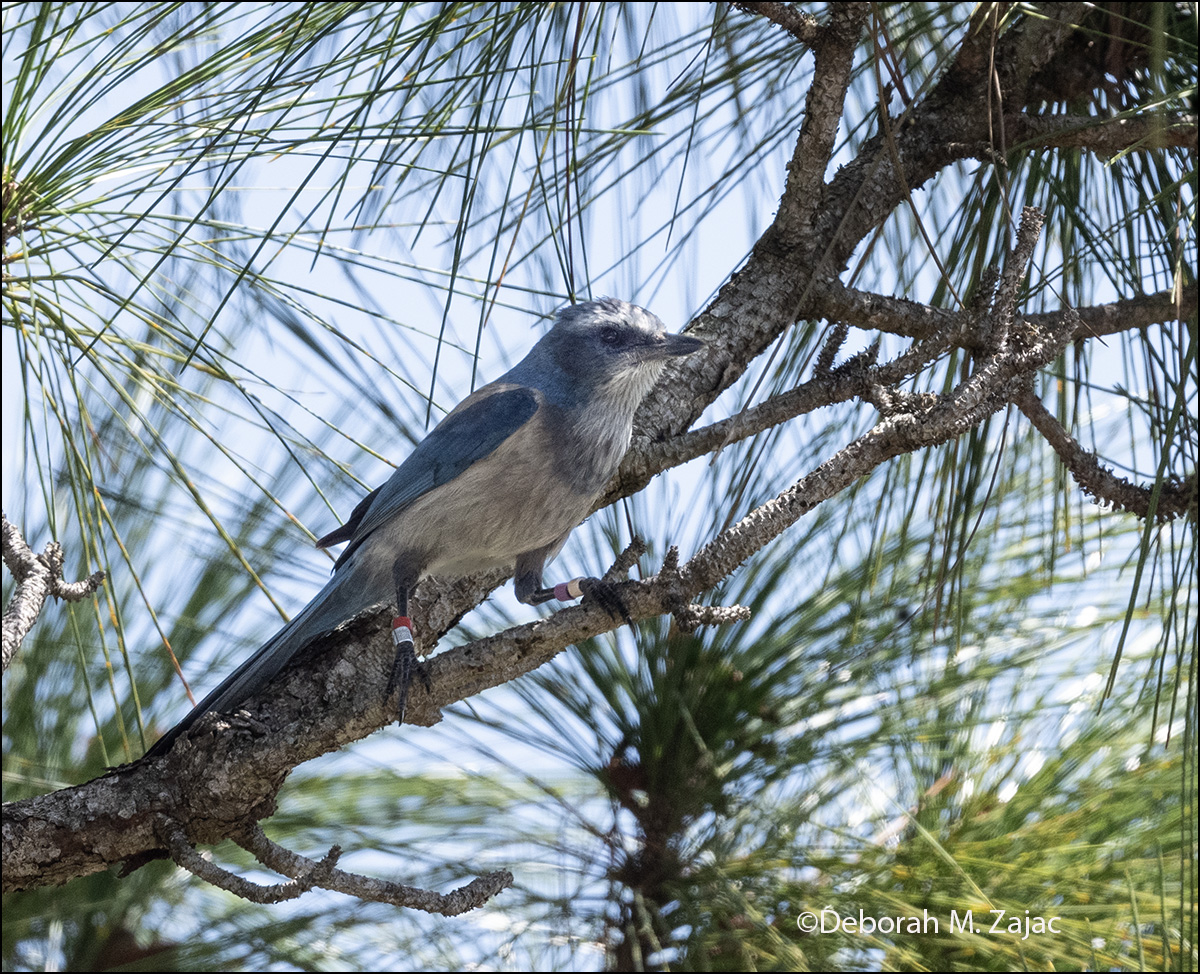
On my last day of birding with Mary we saw four Florida Scrub-Jays and we thought two of them were banded. I don’t have any information about this Jay from the bands unfortunately. It was backlit so I had to do some masking to lighten up its face a bit.
While in Texas the bird I had hoped to be an easy one to see was the Green Jay. I got lucky and saw a few but, getting an image was tricky. I did get some at a World Birding Site. They set out feeding stations for the birds and the Green Jay flew in for some nibbles.
These three Jays take me to seeing 7/10 Jays of North America. I’ve seen the Blue Jay, California Scrub-Jay, Steller’s Jay, Pinyon Jay, Green Jay, the Florida Scrub-Jay, and the Woodhouse Scrub-Jay. Maybe one day I’ll see them all, but if not I’m so excited to see as many as I have.
It’s been an amazing birding year for me. My bird count for this year is 361 species. With any luck, I hope to pick up a couple more with fall and winter migration. I think this is going to be the best year of birding I had in my life.
I’m birding this morning with the group so will be late getting to your blogs and comments.
PLEASE DO NOT USE MY IMAGES WITHOUT EXPRESSED WRITTEN PERMISSION.
In February this year while I was in FL I had hoped to see my Sister-in-Law, but she was in New Zealand and came home the day before I was leaving for home. Our timing didn’t work out but, while she was in New Zealand she was sending me photos of some neat birds she was seeing, some gorgeous vistas, and she sent some door pics!
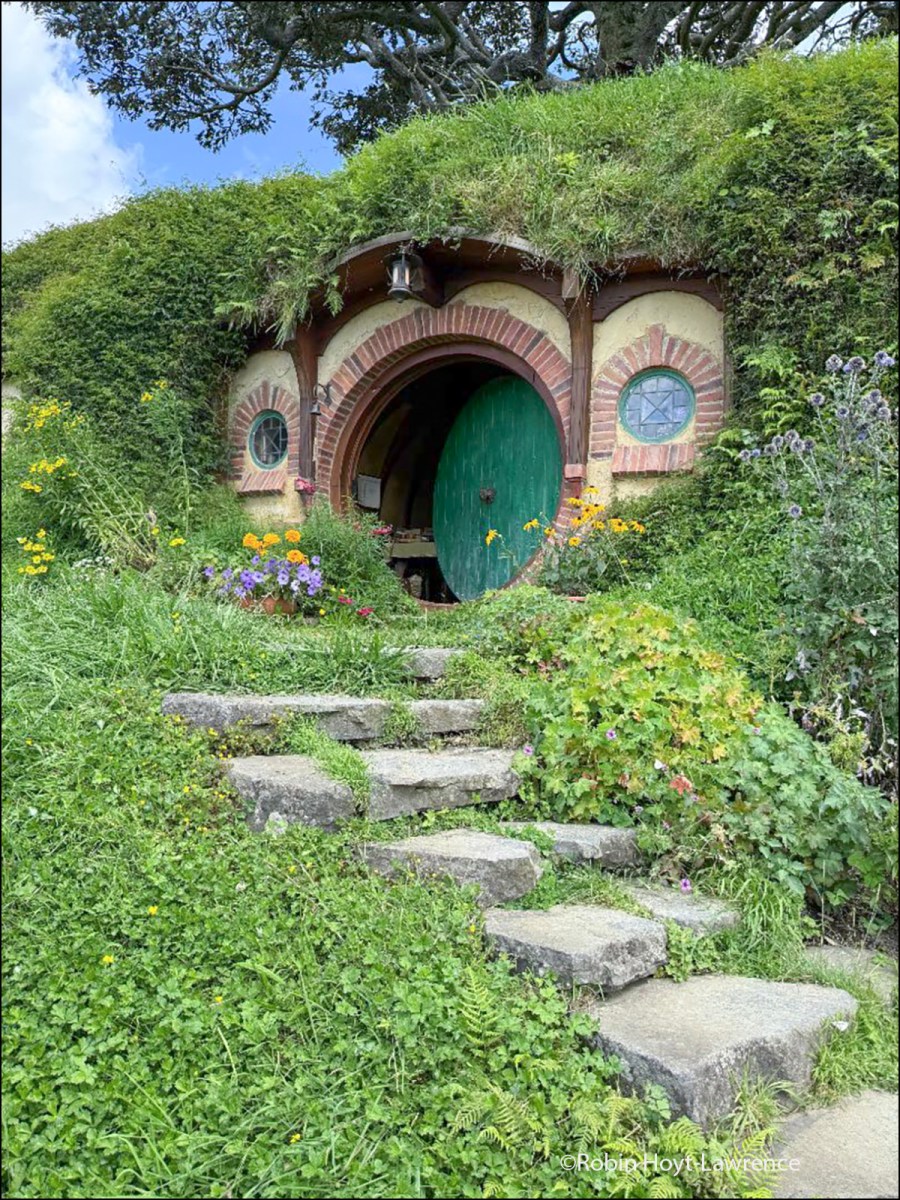
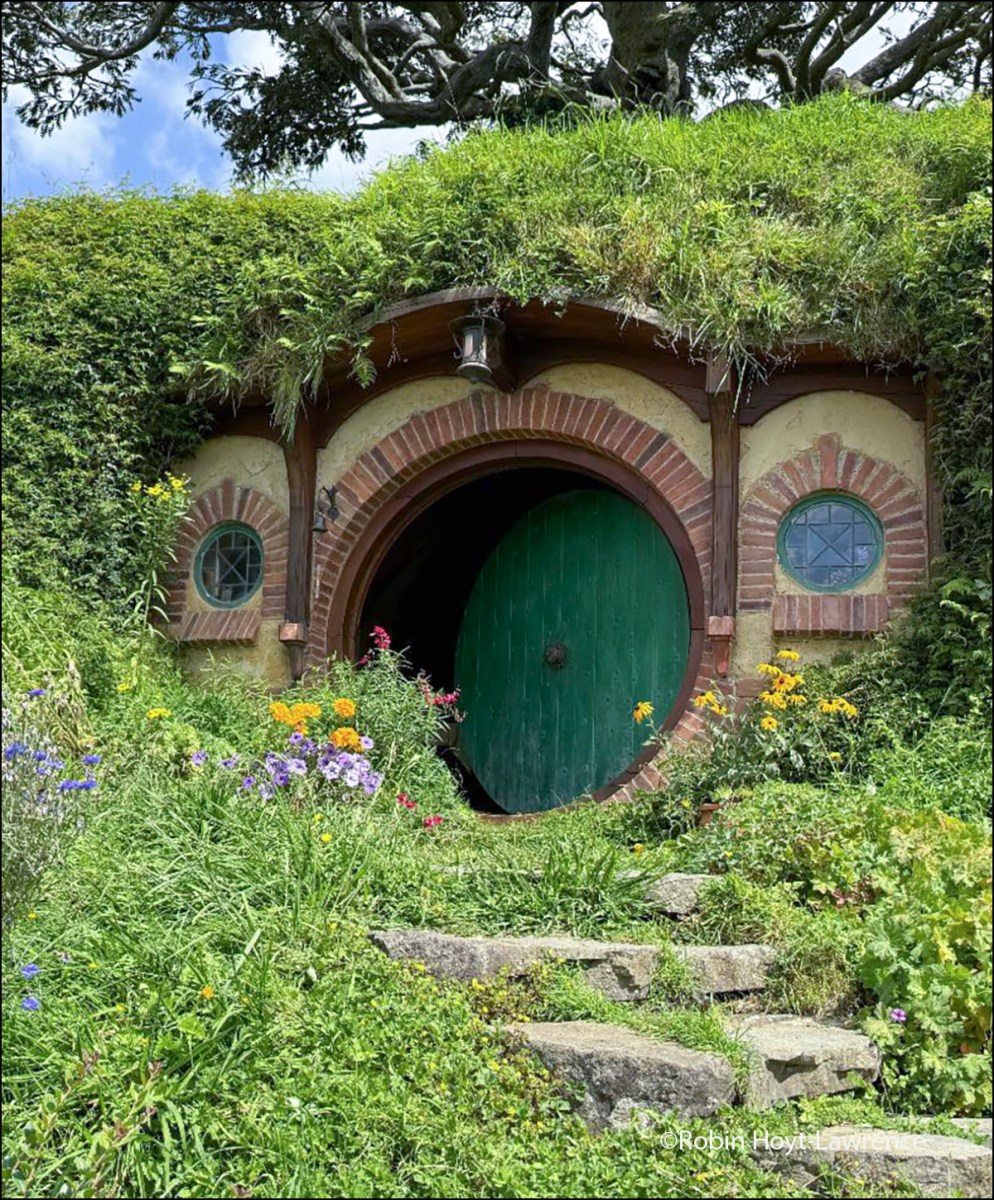
She and my nephew went to Hobbiton, the preserved movie film location for the Shire for the Lord of the Rings and The Hobbit trilogies. The site has 44 permanent Hobbit holes including Bag End, the Party Tree, Bagshot Row, and the Green Dragon Inn.
What she didn’t know then was that my favorite book from J.R.R. Tolkien is The Hobbit. I’ve read it twice, and bits and pieces since…you know, favorite passages and quotes. Bilbo Baggins and Gandalf are my favorite characters, so when she sent a photo of Bag End I was thrilled. Bag End you see, is Bilbo Baggin’s hobbit-hole.
She said it’s okay to share the photos with you too.
While prepping for this post I dug out my old paperback copy of The Hobbit to see what Tolkien says about Bilbo’s house and door. Chapter 1, he says, ” In a hole in the ground there lived a hobbit. Not a nasty, dirty, wet hole, filled with the ends of worms and an oozy smell, nor yet a dry, bare, sandy hole with nothing in it to sit down on or to eat: it was a hobbit-hole, and that means comfort.
It had a perfectly round door like a porthole, painted green, with a shiny yellow brass knob in the exact middle. The door opened on to a tube-shaped hall like a tunnel: a very comfortable tunnel without smoke.”
From there he or the narrator of the story goes on about the inside of the house and how it is laid out, so we’ll skip that and go right to Robin’s images.
PLEASE DO NOT USE MY IMAGES WITHOUT EXPRESSED WRITTEN PERMISSION.
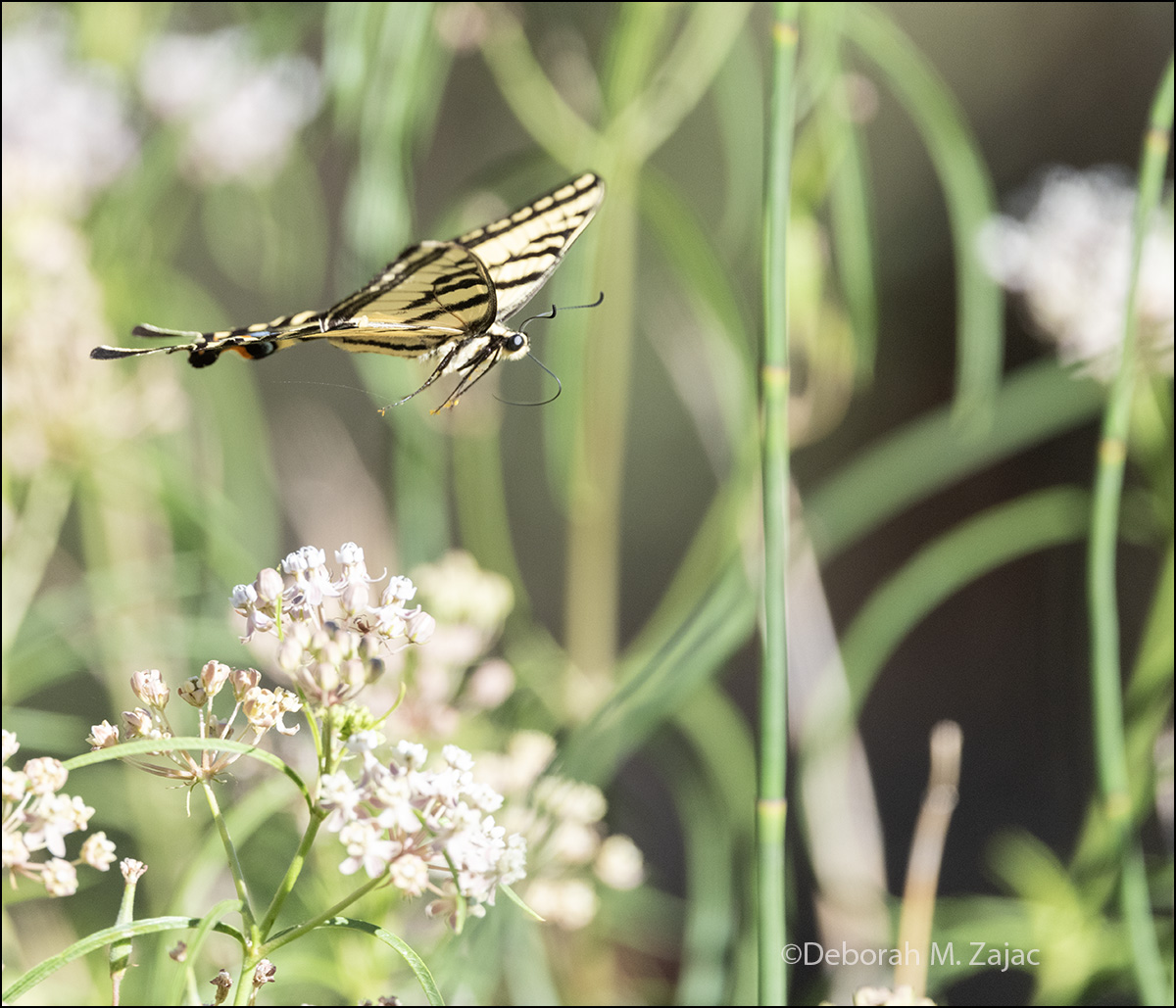
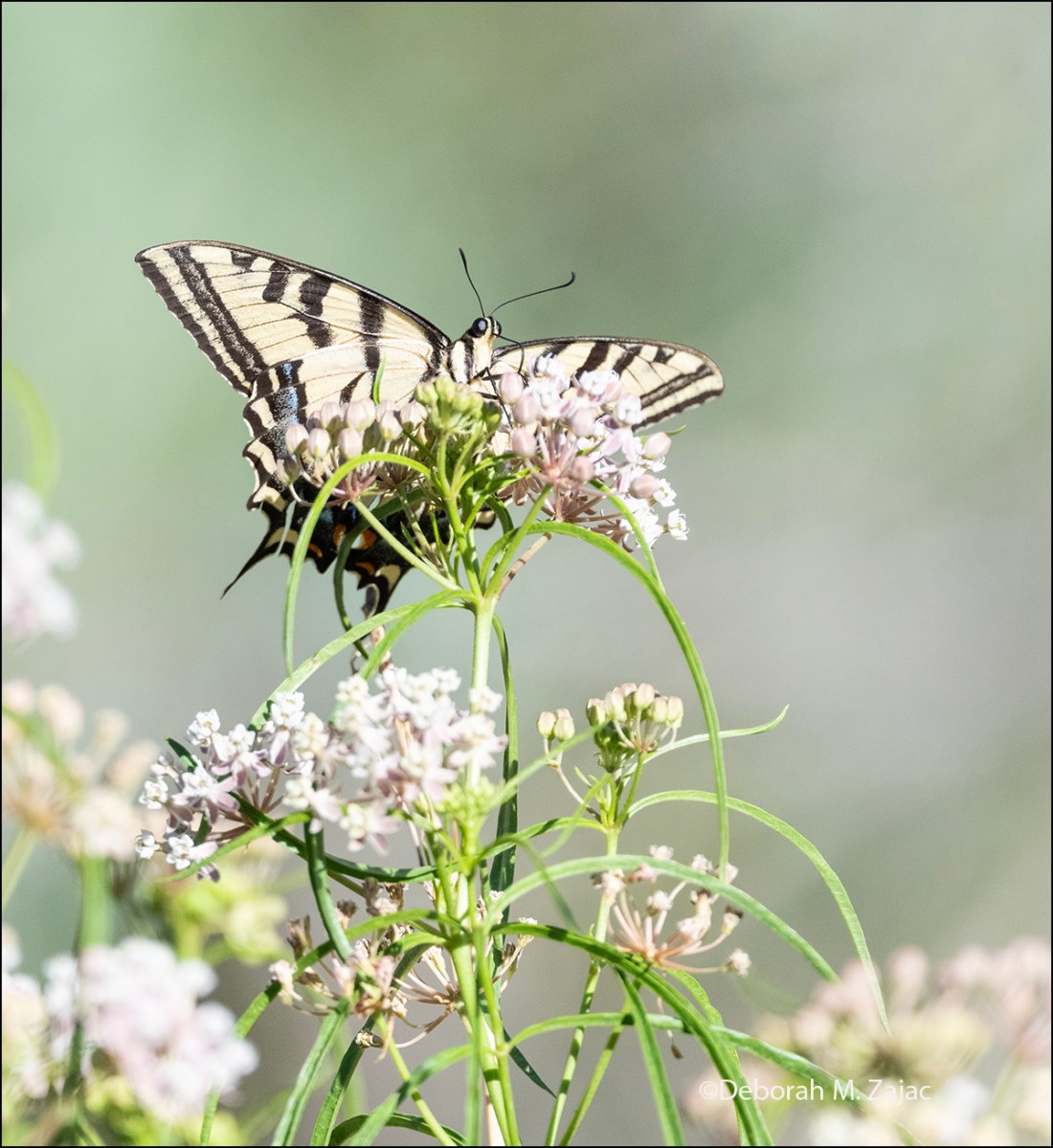
The Tiger Swallowtails were out in abundance last month zipping and flitting from flower to flower feeding and resting. The flower of favor was the Narrowleaf Milkweed that is native to No. Nevada.
Summer update-It’s been busy around here. We had the exterior of the house painted. It looks nice and clean and, all the divots in the back walls from getting hit by errant golf balls are fixed!
We’d also been having water pressure issues that the plumbers and water company couldn’t figure out. They decided it had to be the water pressure valve even though the bib tests said it was fine, so after two weeks of this we agreed to replace the water pressure valve. After replacing it the water pressure issues were not fixed. The plumbers left scratching their heads saying they were going to brainstorm with the boss, and come up with other diagnostics to try and pin point the problem. A few hours after they left He-Man and I were going to run up to Reno, which is a 40 minute drive, so as you do I went to the bathroom and turned on the tap to wash my hands expecting the same little dribble of water to come out that we’d been having, when low and behold the tap was back to normal and my toilet bowl filled up really fast…as it should! I mentioned it to He-Man, so he flushed the toilet in the hall bathroom, and turned on the tap and, Voila! The problems we’d been having seemed fixed! Maybe the new valve just needed to settle in a bit? Who knows. We’re thrilled it seems fixed and the plumber is happy it’s fixed as well.
We rarely use the dining room as a dining room, but I have been using the dining room table to puzzle on and we play board games on it as well, so last week I decided to make my dining room a dining, library, game room. I’ve moved bookcases and almost all my books in there and bought a new recliner to go where one bookcase used to live in the living room. I can’t wait for it to arrive. Next up, I’ll be weeding out the books and stuff in my bookcase in my “retreat”. I sold the daybed I had in my retreat and now am trying to figure out how I’m going to refurnish this room. I’m in a season of change.
I’ve been birding, but was so behind updating my Life List after FL and TX trips that I haven’t been motivated to work on any images. I’m finally caught up and have begun to process some images. I hope to return to my Friday’s Feathered Friends posts soon.
How about you, are you in a season of change as well?




You must be logged in to post a comment.