Thursday Doors 43/52 WigWam Motel

Copyright ©2016 Deborah M. Zajac. ALL RIGHTS RESERVED

About 6 weeks ago I spent a week-end touring a small part of U.S. Route 66 with friends.
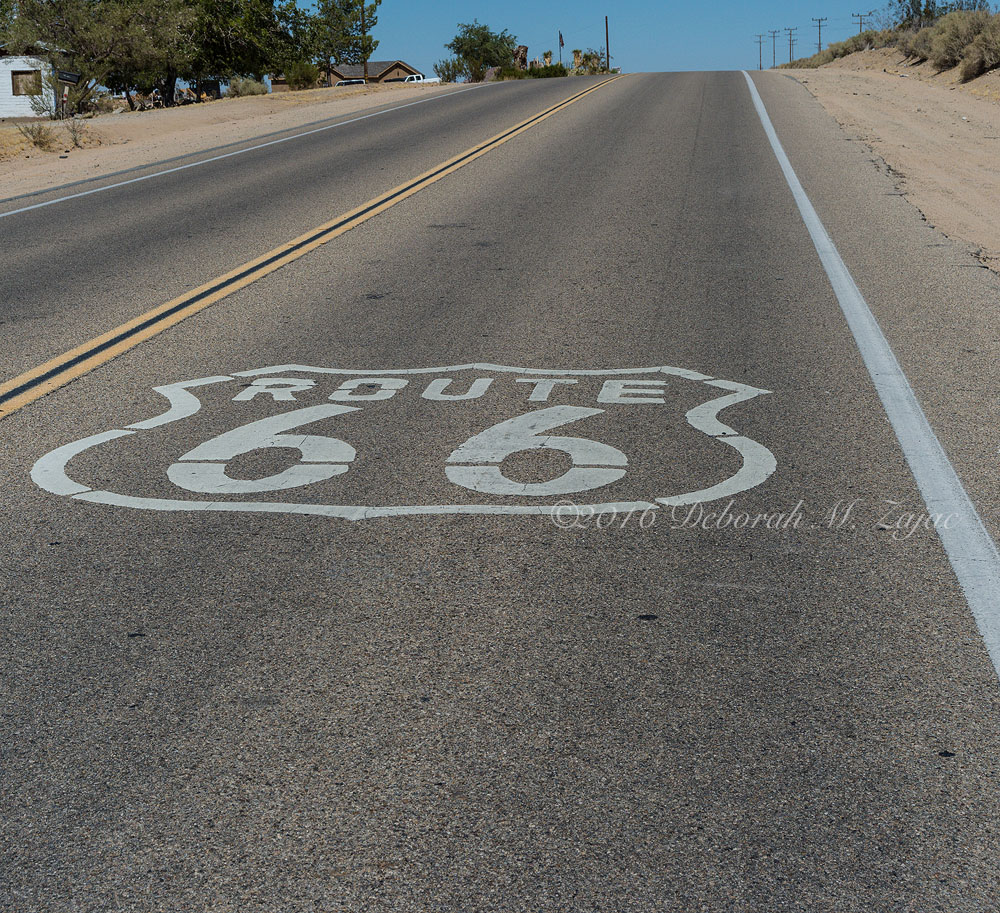
painted-road-sign-rte-66_dmz6233

One of the places we stopped along the Route to check out was the WigWam Motel in Rialto, California.
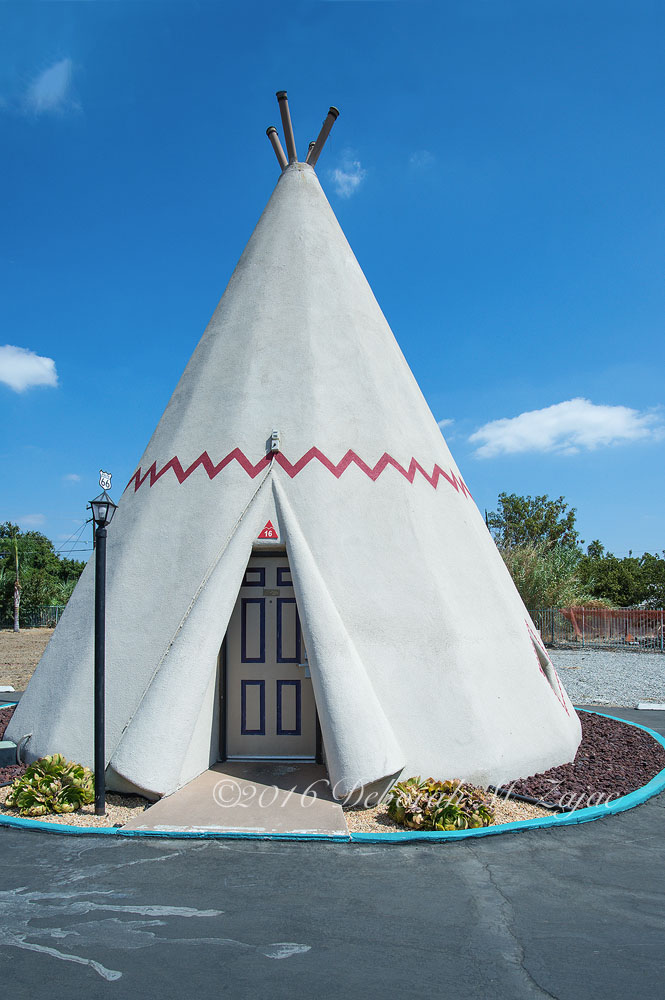
N°16 WigWam Motel

Several of the Tipis’ were empty and had their doors open so I inquired if I could take a peek inside of one; the proprietor graciously allowed me to take a tour of one. The shower stall is behind the entryway door. There was no room for it in the bathroom proper.
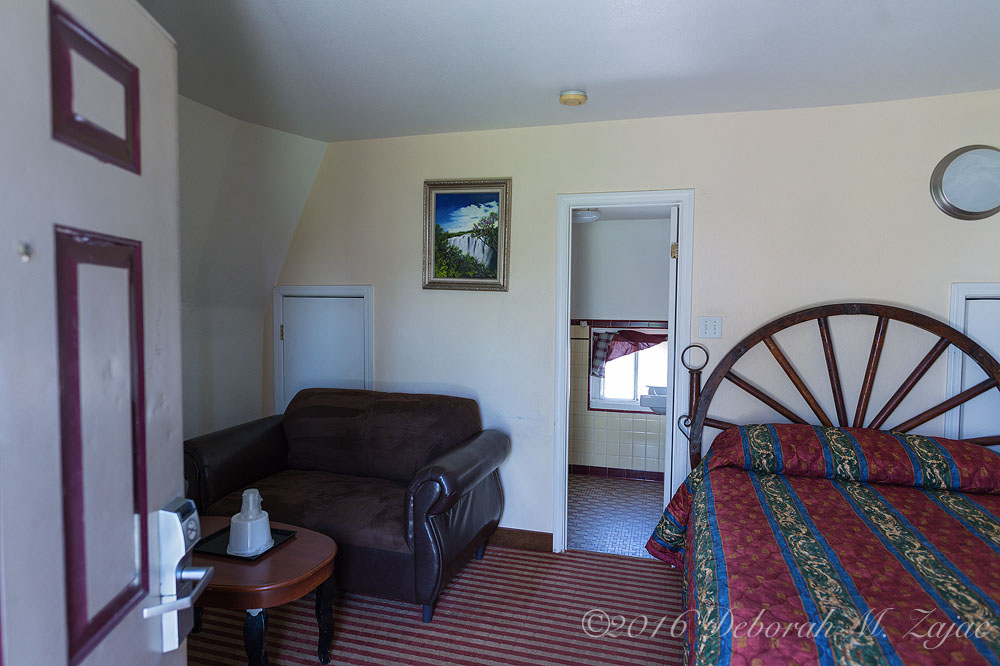
N°16 WigWam Motel Room Interior

There are 19 Tipis’ in this Village, a swimming pool,
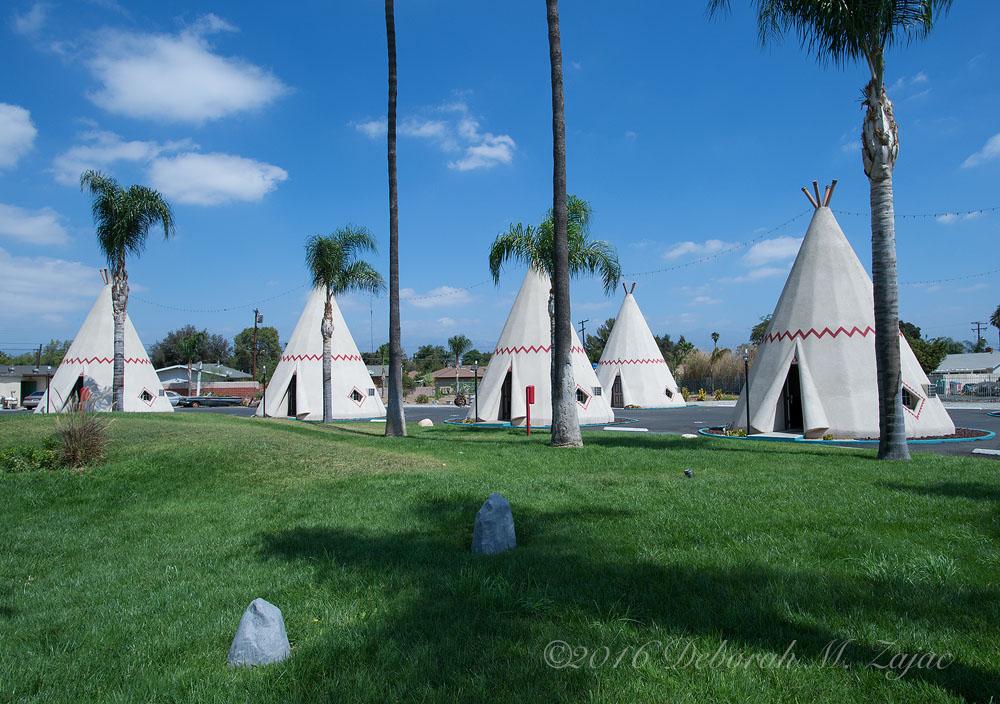
WigWam Motel

…and several vintage cars on the property. I couldn’t resist making an image of the old WigWam Motel Van.
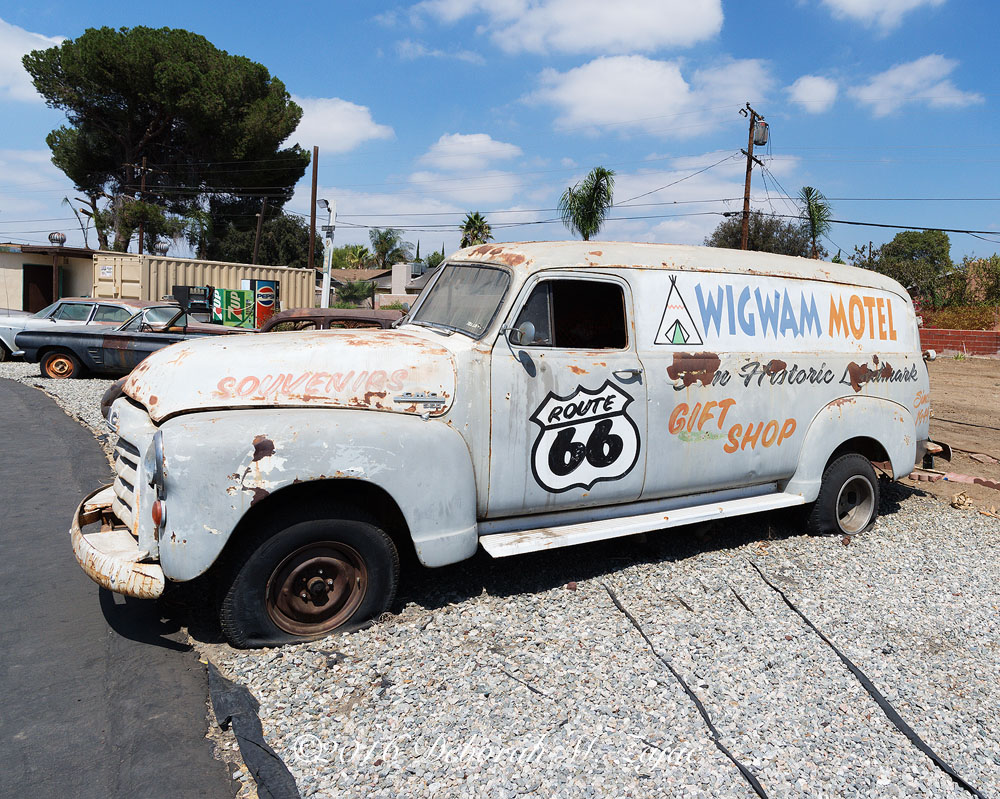
WigWam Motel Vintage Van

For the History Buffs:

“The Wigwam Motels, also known as the “Wigwam Villages“, is a motel chain in the United Statesbuilt during the 1930s and 1940s. The rooms are built in the form of tipis, mistakenly referred to as wigwams.[3] It originally had seven different locations: two locations in Kentucky and one each in Alabama, Florida, Arizona, Louisiana, and California.

They are very distinctive historic landmarks. Two of the three surviving motels are located on historic U.S. Route 66: in Holbrook, Arizona, and on the city boundary between Rialto and San Bernardino, California. All three of the surviving motels are listed on the National Register of Historic Places: the Wigwam Motel in Cave City, Kentucky, was listed in 1988 under the official designation of Wigwam Village #2; the Wigwam Motel in Arizona was listed as Wigwam Village #6 in 2002; and the Wigwam Motel in California was listed in 2012 as Wigwam Village #7.

Village #7: Rialto/San Bernardino, California, Wigwam Village No. 7

Frank Redford built this complex for himself in 1947–49 and not as a franchise. The address of the motel is Rialto, California, but the motel is physically located in San Bernardino. It is on the boundary between the two cities on historic Route 66, with an address of 2728 East Foothill Boulevard, Rialto, California.[11]

Unlike the one arch of wigwams in other surviving villages, Village #7 has a double row of wigwam guest rooms. They total 19 in number, as well as a base for what seems to be another never-completed wigwam in the back of the property. A central building is currently used as an office, with a lobby that is open 24 hours a day. There is also a swimming pool, a large grass front and palm trees surround the property.

The property had become very run down and rooms were rented by the hour, aggravated by a sign advertising “Do it in a Tee Pee” that is still on site in the back.[12] The complex underwent renovation, for which the National Historic Route 66 Federation awarded the Cyrus Avery Award in 2005.[13][14] Attention to detail was the main focus during renovation, as the wigwams lost their zigzag pattern.

Since 2012, the motel has been listed on the National Register of Historic Places.[11][15]

“U.S. Route 66 (US 66 or Route 66), also known as the Will Rogers Highway, the Main Street of America or the Mother Road, was one of the original highways within the U.S. Highway System. US 66 was established on November 11, 1926, with road signs erected the following year.[4] The highway, which became one of the most famous roads in America, originally ran from Chicago, Illinois, through Missouri, Kansas, Oklahoma, Texas, New Mexico, and Arizona before ending at Santa Monica, California, covering a total of 2,448 miles (3,940 km).[5] It was recognized in popular culture by both the hit song “(Get Your Kicks on) Route 66” and the Route 66 television show in the 1960s.

US 66 served as a major path for those who migrated west, especially during the Dust Bowl of the 1930s, and the road supported the economies of the communities through which it passed. People doing business along the route became prosperous due to the growing popularity of the highway, and those same people later fought to keep the highway alive in the face of the growing threat of being bypassed by the new Interstate Highway System.

US 66 underwent many improvements and realignments over its lifetime, and it was officially removed from the United States Highway System in 1985,[2] after it had been replaced in its entirety by segments of the Interstate Highway System. Portions of the road that passed through Illinois, Missouri, New Mexico, and Arizona have been designated a National Scenic Byway of the name “Historic Route 66“, which is returning to some maps.[6][7] Several states have adopted significant bypassed sections of the former US 66 into the state road network as State Route 66.”

420px-map_of_us_66-svg

History and Map Image credit: WikiPedia.com

We had a fun time and crammed a lot in over the course of the week-end.  I have more images from Calico Ghost Town, and Barstow’s train station that I’m saving for future posts.

Nikon Df| Nikkor 20mm f/1.8G & 28-105mm lenses| Delkin Digital Film| Hand-held and Tripod

This post is part of Norm 2.0’s Thursday Doors.  If you love doors and would like to see the doors others are posting, or post doors you’ve photographed and join other door lovers from around the world click here.

At the end of Norm’s latest Thursday Door post is a little Blue Link-up/View button click it to be taken to a page with all the links to view all the posts, and add your own if you’re a door enthusiast too.

More to come…
Fall Colors in the Eastern Sierras

Copyright ©2016 Deborah M. Zajac. ALL RIGHTS RESERVED

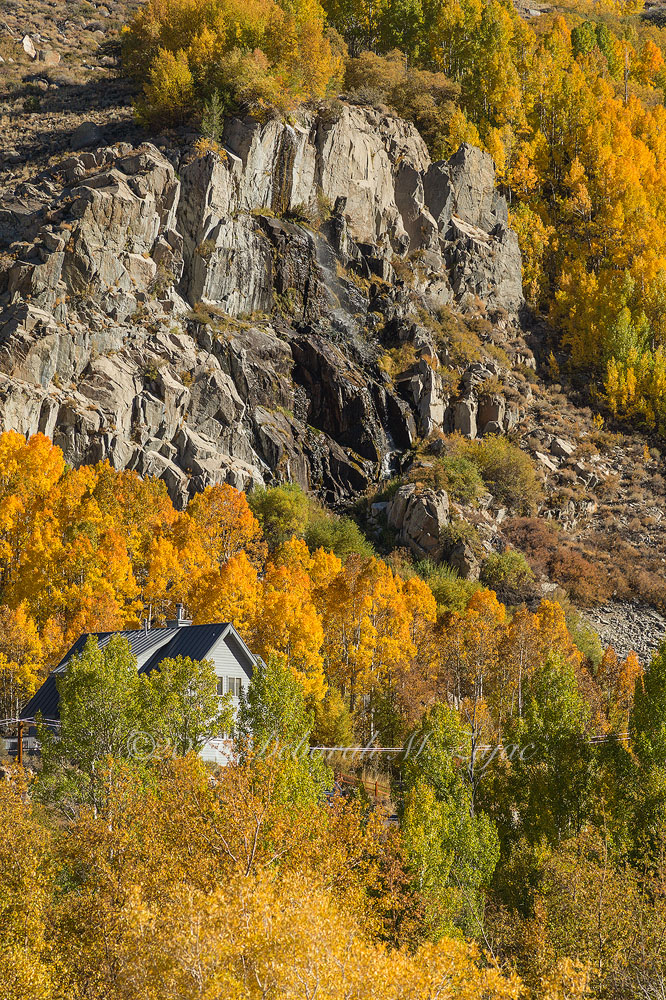
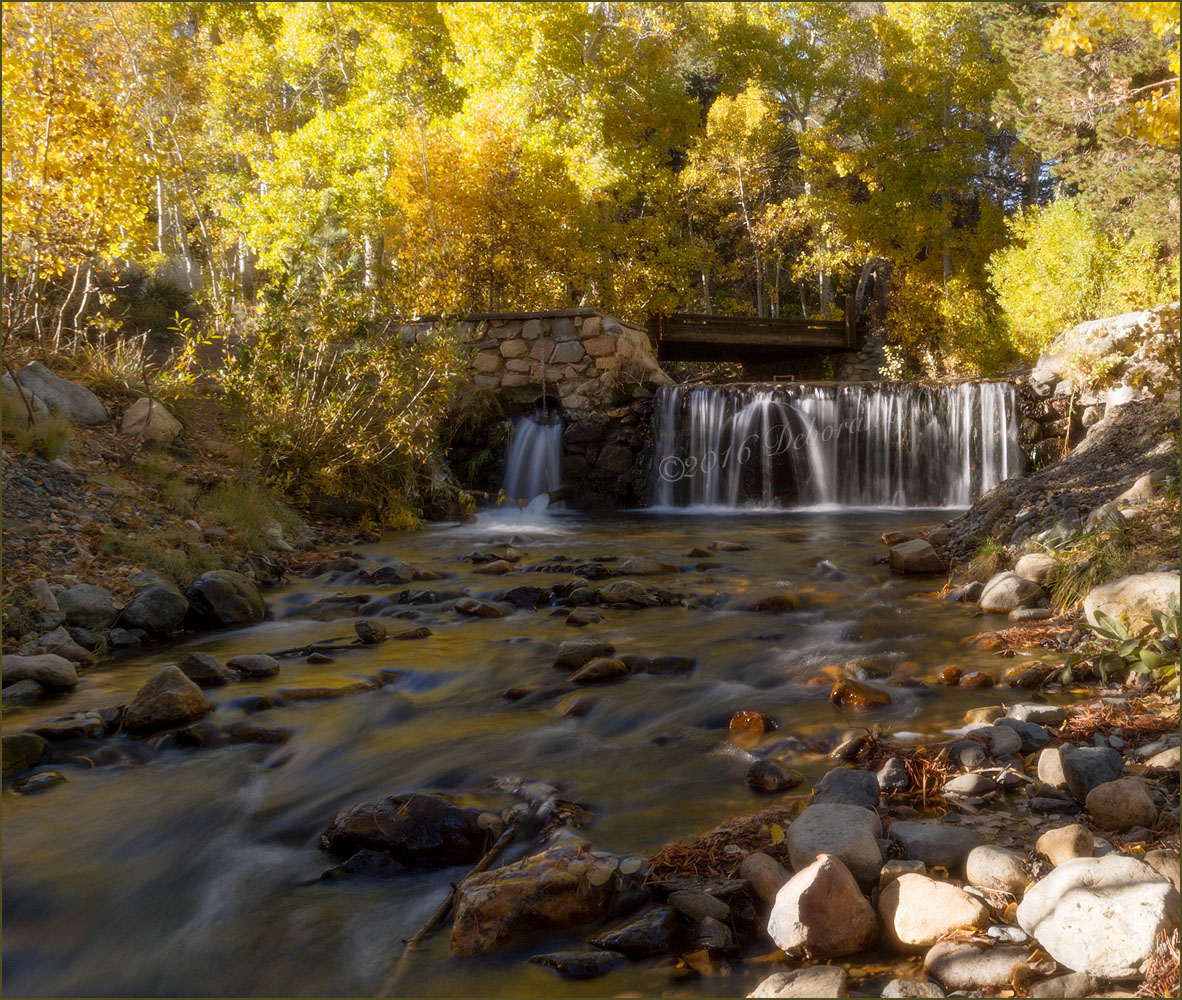
Here are several images I made while in the Eastern Sierras looking for Fall Colors.

A spillover along a creek…

Spill Over

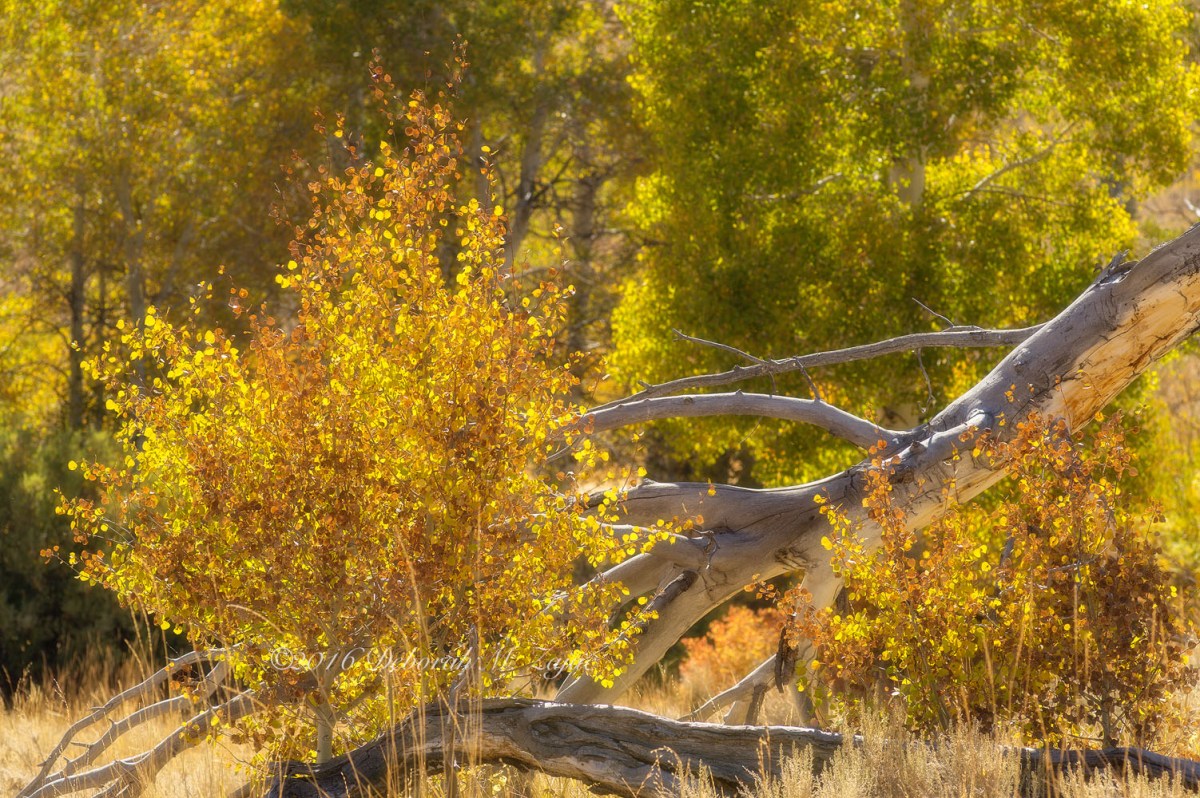
The back-light was gorgeous on this little tree, but the broken branch looked like an arm with fingers placing the tree in the light to me.

Backlit Leaves

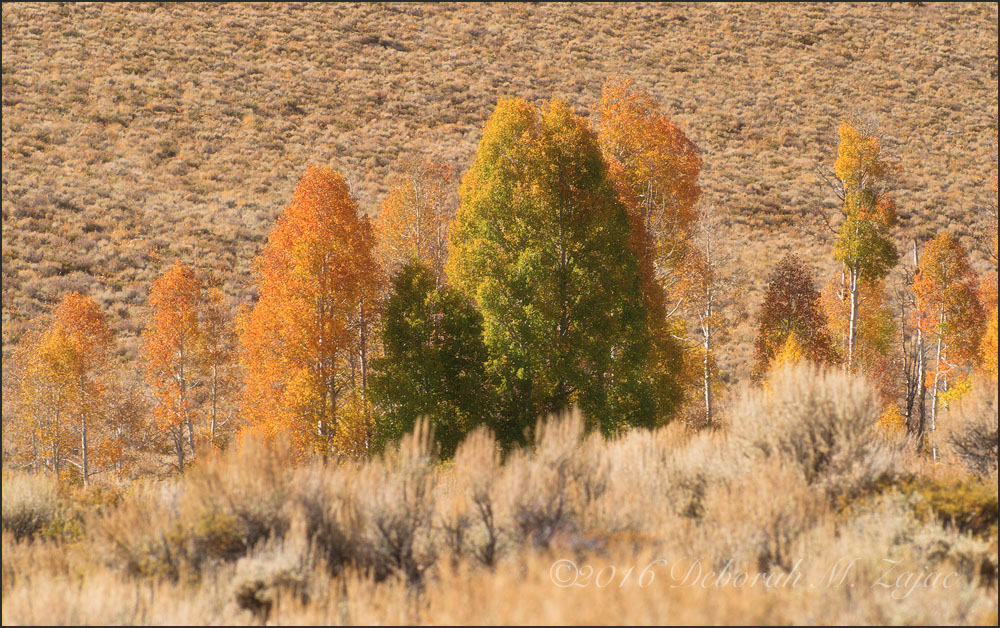
a little cluster of color among the sage brush…Fall Colors

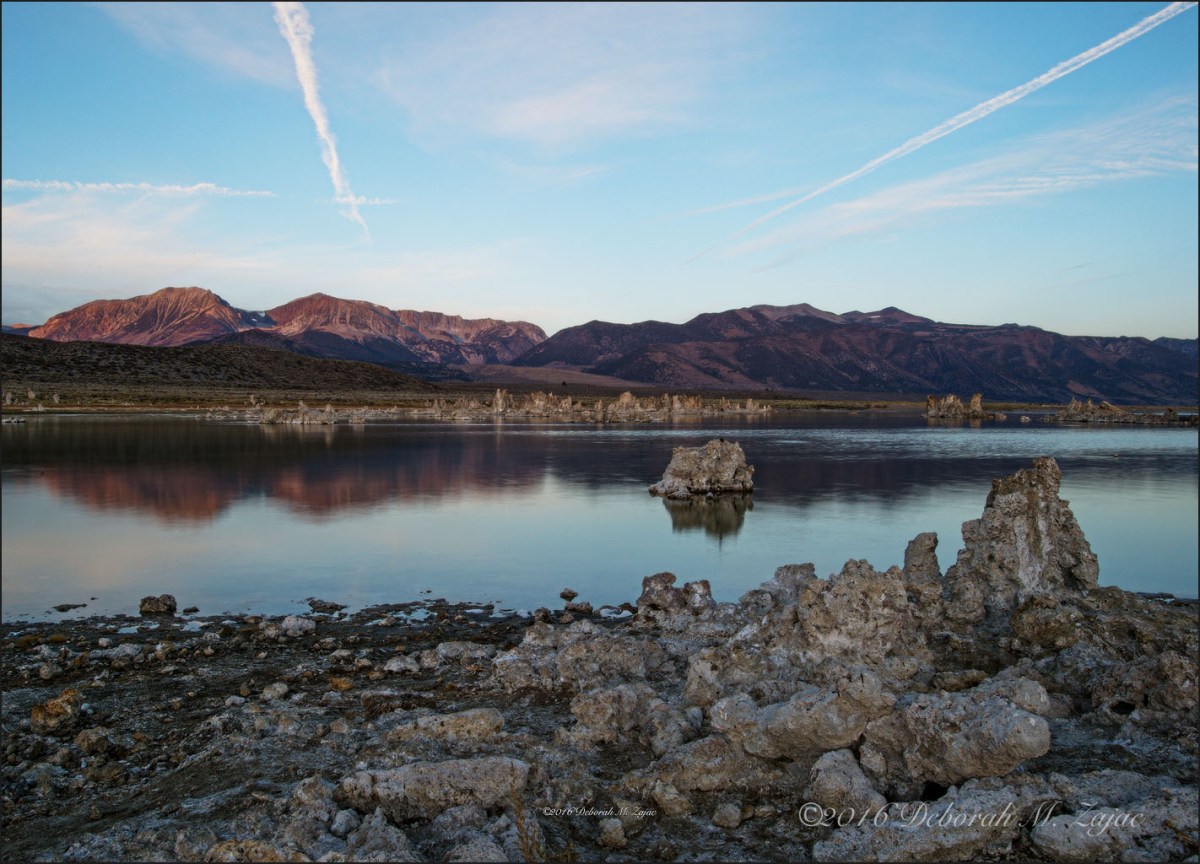
After sunrise I turned around and saw some Alpine Glow on the Sierras so hustled over to the this side to make a quick image. The reflections were nice too.

Alpine Glow on Eastern Sierras from Mono Lake

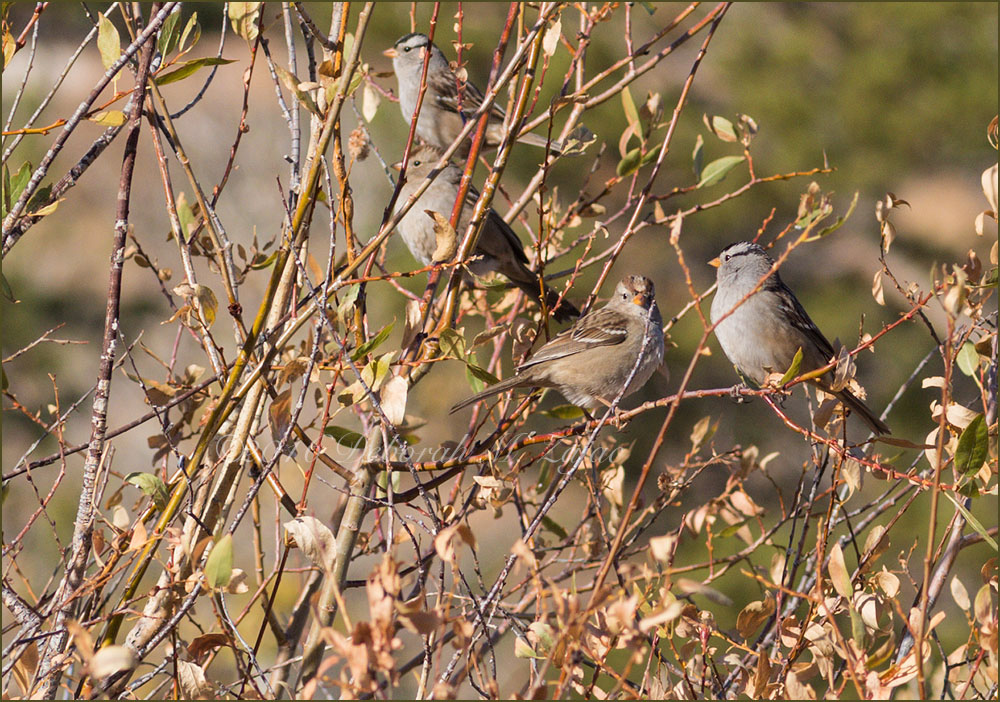
I was delighted to see a little flock of White Crowned Sparrows. They’re just beginning to show up in the Bay Area to winter where I live.

White Crowned Sparrows

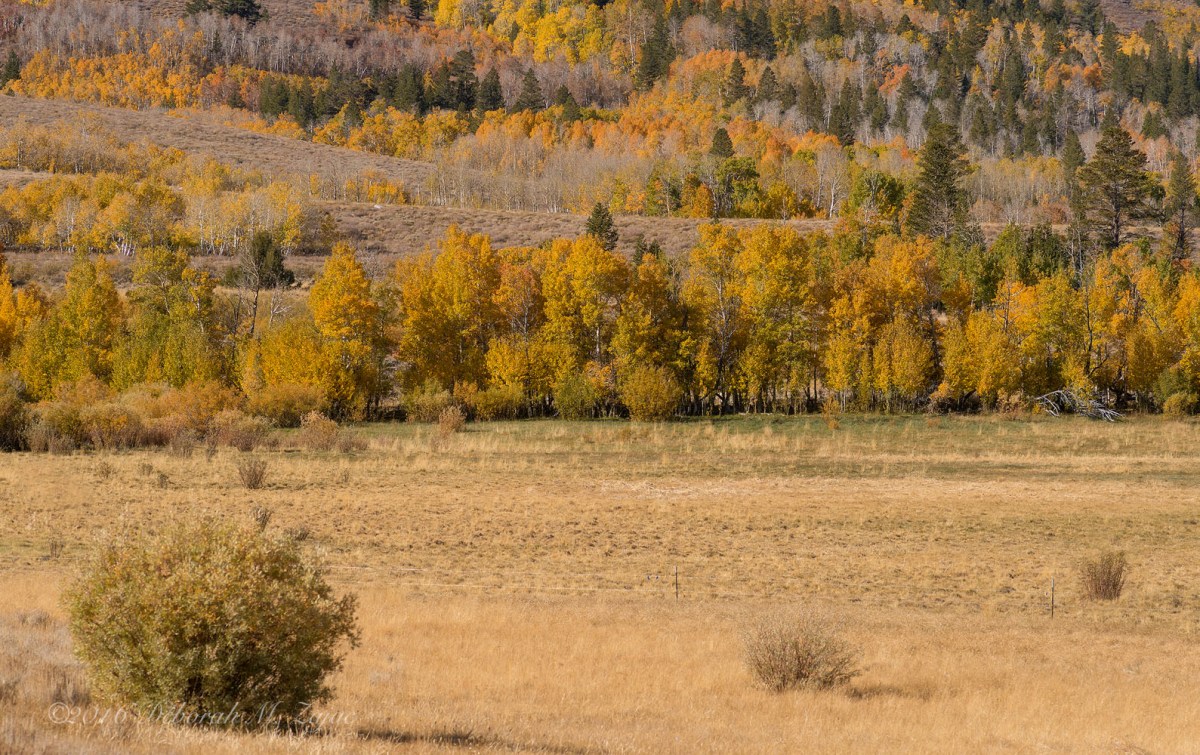
a valley full of color!

Fall Colors

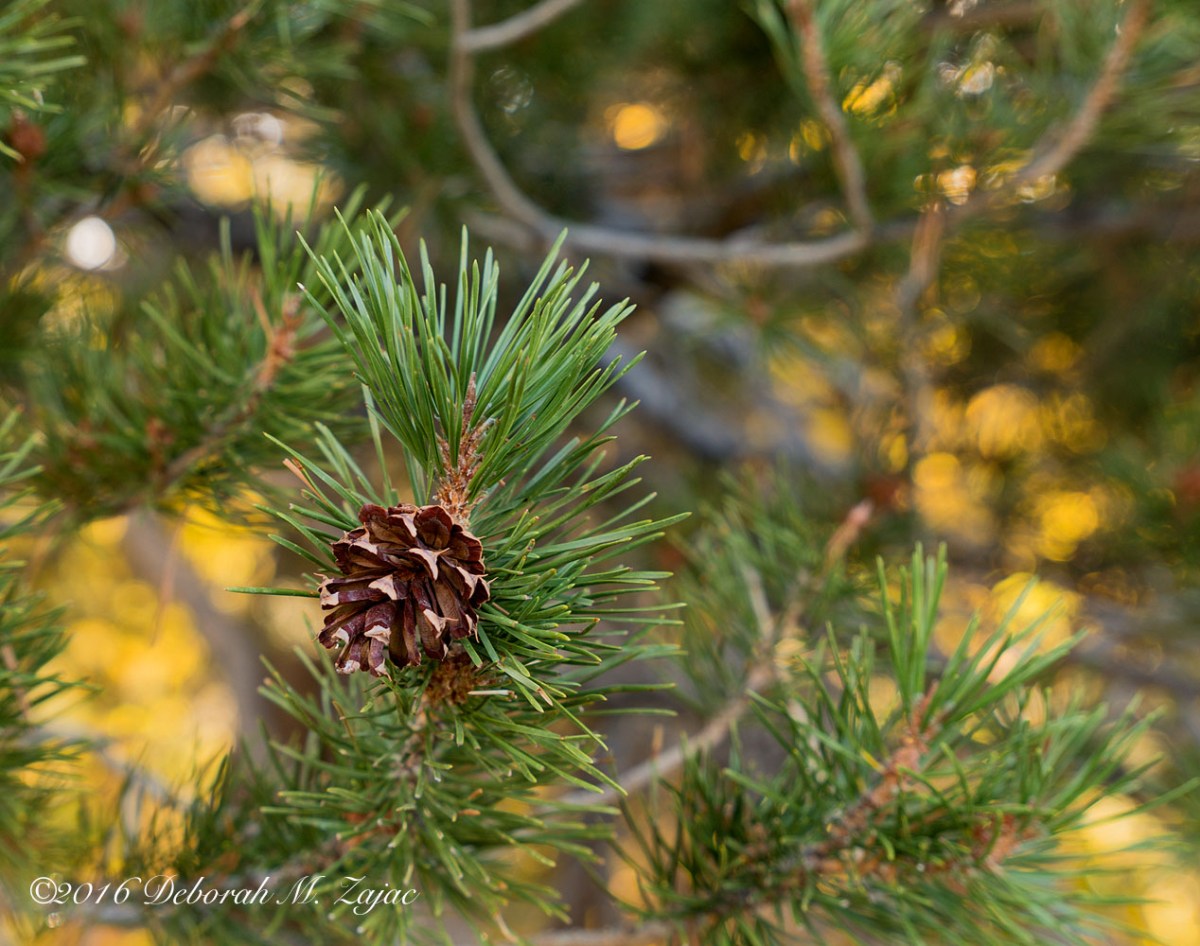
I couldn’t resist a little close up of the new pinecone with the golden Bokeh gleaming behind it.  Feels like Christmas in October. 🙂

Pinecone  Virginia Lake Area

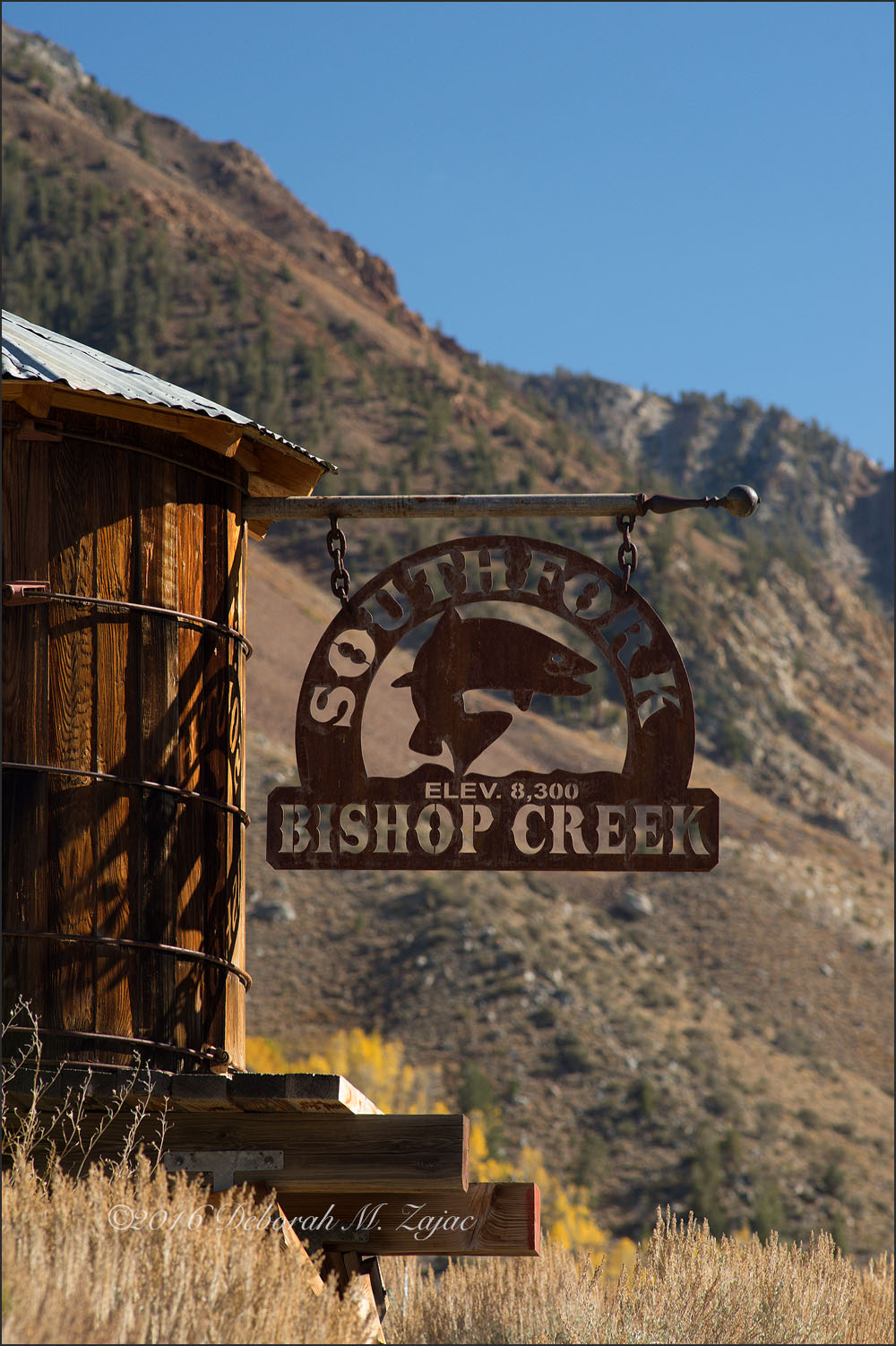
I walked back from Misty Fall about a quarter mile to get this shot.  I’m so glad I did. I love this sign!

South Fork Bishop Creek Canyon


Nikon Df| Nikkor 17-35mm & 180mm lenses| Delkin Digital Film| Tripod & Hand-held

More to come…

Thursday Doors 42/52

Copyright ©2016 Deborah M. Zajac. ALL RIGHTS RESERVED

N° 100F- The Stardust’s Blue Door

N° 100F

Nikon Df| Delkin Digital Film|

This post is part of Norm 2.0’s Thursday Doors.  If you love doors and would like to see the doors others are posting, or post doors you’ve photographed and join other door lovers from around the world click here.

At the end of Norm’s latest Thursday Door post is a little Blue Link-up/View button click it to be taken to a page with all the links to view all the posts, and add your own if you’re a door enthusiast too.

More to come…
Evening Color in the Eastern Sierras

Copyright ©2016 Deborah M. Zajac. ALL RIGHTS RESERVED

On the first night of the Fall Color week-end in the Eastern Sierras my friends and I had very little time to go far to photograph sunset, and it was looking like the sunset might be a pretty one because there were good clouds in the sky.

I knew a spot with a good view of the Minarets that had been a good sunset spot for me in the past, and it was close by so that’s where we headed.

To our delight it was a gorgeous sunset.

Minarets Sunset

The Minarets are the jagged, saw-tooth peaks in the mountains in the heart of Ansel Adams Wilderness. They’re located in a part of the Sierras called Ritter Range. The highest peaks in the Minarets are Clyde at 12, 261ft,  Eichorn at 12,255ft, and Michael at 12,240ft. There are 17 minarets that have been named. They were named after the first mountain climbers to climb the peaks, but in some cases the second mountain climbers name was used to avoid duplication.

For the History Buffs:

While both Ritter and Banner were climbed in the 19th century, the Minarets did not see activity until the 1920’s. Charles Michael, a Yosemite postmaster, along with his wife Enid were the first to record an ascent in 1923 of Michael Minaret. Over the next ten years most of the remaining minarets were climbed by various parties involving many of the famous climbers of the era, including Norman Clyde, Walter Starr, Jules Eichorn and Glen Dawson, among others. In 1948, Dyer Minaret was the last (and most difficult) of the group to be climbed. In 1933, Walter Starr’s son went missing on a solo trip to the area. An intense search ensued, culminating in the discovery of his fallen body high on the slopes of Michael Minaret. His body was interred where it lay, and still rests there to this day.

Today, there are dozens of routes among the many pinnacles, but the reputation for poor rock quality keeps most enthusiasts away. The picturesque lakes that lie on the approach routes are very popular with backpackers, but only a small portion of the visitors venture to the summits of the Minarets where solitude and a grand sense of adventure are certain to be found.” ~http://www.summitpost.org/minarets/247994

Nikon Df| Nikkor 17-35mm| Delkin Digital Film| Singh-Ray Reverse Grad| Tripod

More to come…

Save

Save

Thursday Doors 41/52

Copyright ©2016 Deborah M. Zajac. ALL RIGHTS RESERVED

I’m feeling rather “door” lite    weak this week as I was in the Eastern Sierras last week-end and wasn’t focused on doors, and I didn’t photograph any during the week.

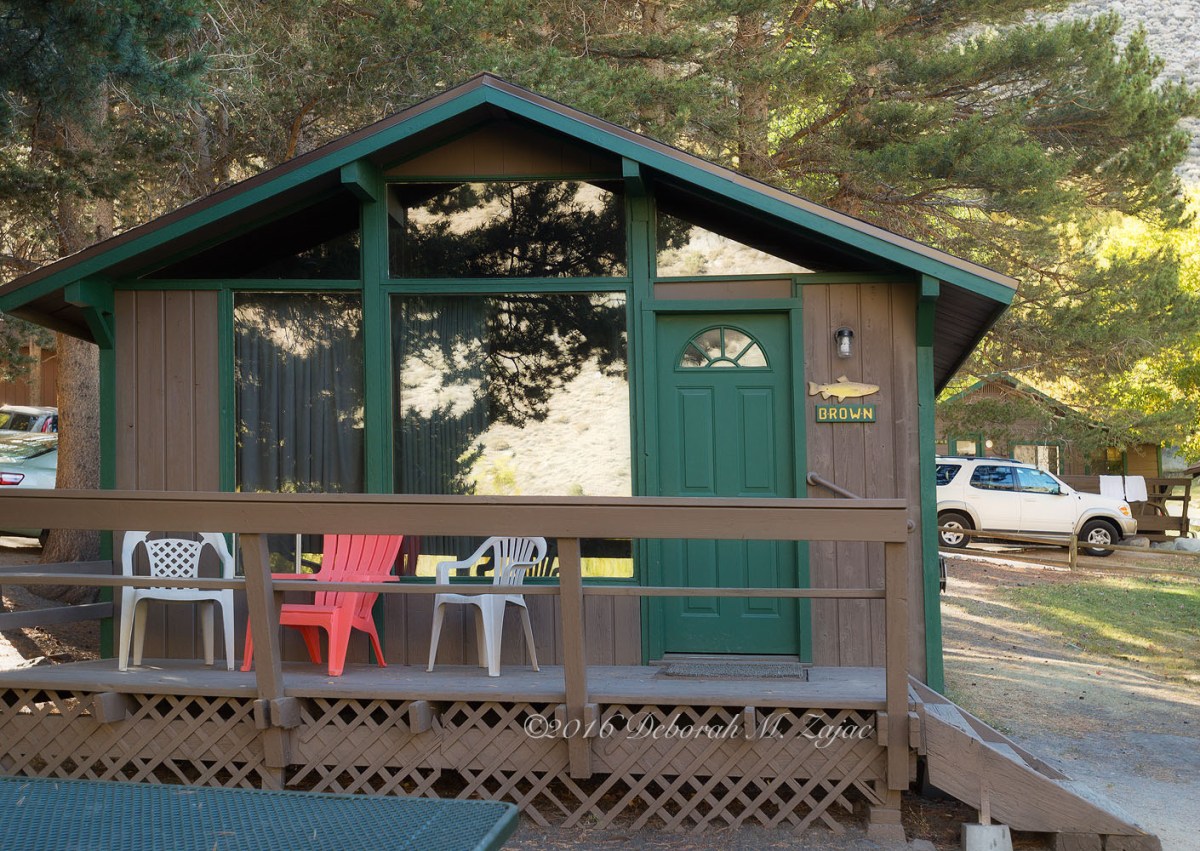
However, I did come across a fishing cabin with a green  door and lovely tree reflections in the big window so, I made a quick image of that.

Fishing Cabin in the Eastern Sierras

This cabin and the others in this resort area sit across the road from Misty Fall which is what I was in the area photographing.

Misty Fall South Fork Bishop Crk

It’s a pretty place to go fishin’.

Nikon Df| Nikkor 17-35mm| Delkin Digital Film

This post is part of Norm 2.0’s Thursday Doors.  If you love doors and would like to see the doors others are posting, or post doors you’ve photographed and join other door lovers from around the world click here.

At the end of Norm’s latest Thursday Door post is a little Blue Link-up/View button click it to be taken to a page with all the links to view all the posts, and add your own if you’re a door enthusiast too.

More to come…
Eastern Sierras with iPhone 7 Plus

Copyright ©2016 Deborah M. Zajac. ALL RIGHTS RESERVED

Long overdue for a cell phone upgrade I ordered the iPhone 7 Plus after watching the promotion video, and several youtube reviews.  My ship date was way out Nov. 7-11th. Sigh. Oh boy, this phone is popular I thought.

To my delight I received an email saying my new iPhone 7 Plus was shipped I’d have it the following day!  I received it Thursday late afternoon, and began the process of updating my iTunes, backing up my iPhone 5’s data, images, etc., then followed the steps to get my new phone up and running.  It took a long time, and it wasn’t without a few glitches, but I was able to take it with me to the Eastern Sierras for the week-end to try it out while I was photographing Fall Colors with a group of photographers, and friends.

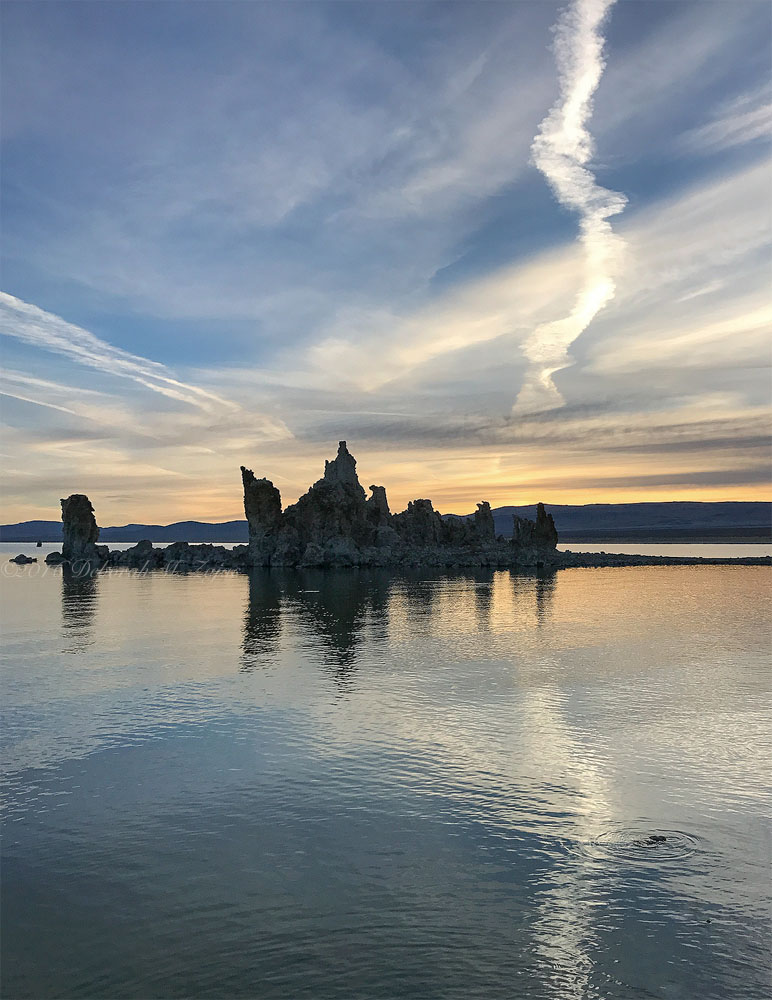
I was really excited to try out the dual lenses in the new iPhone.

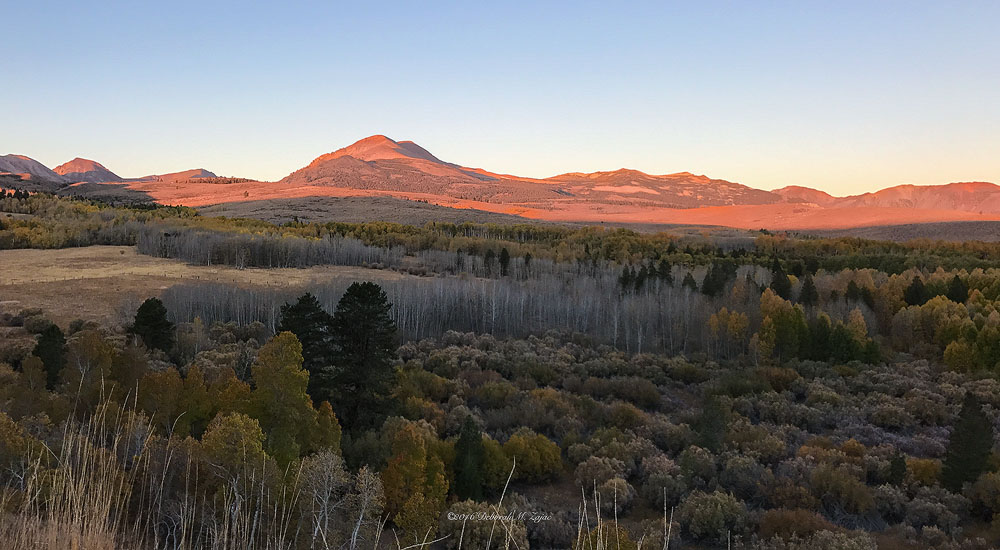
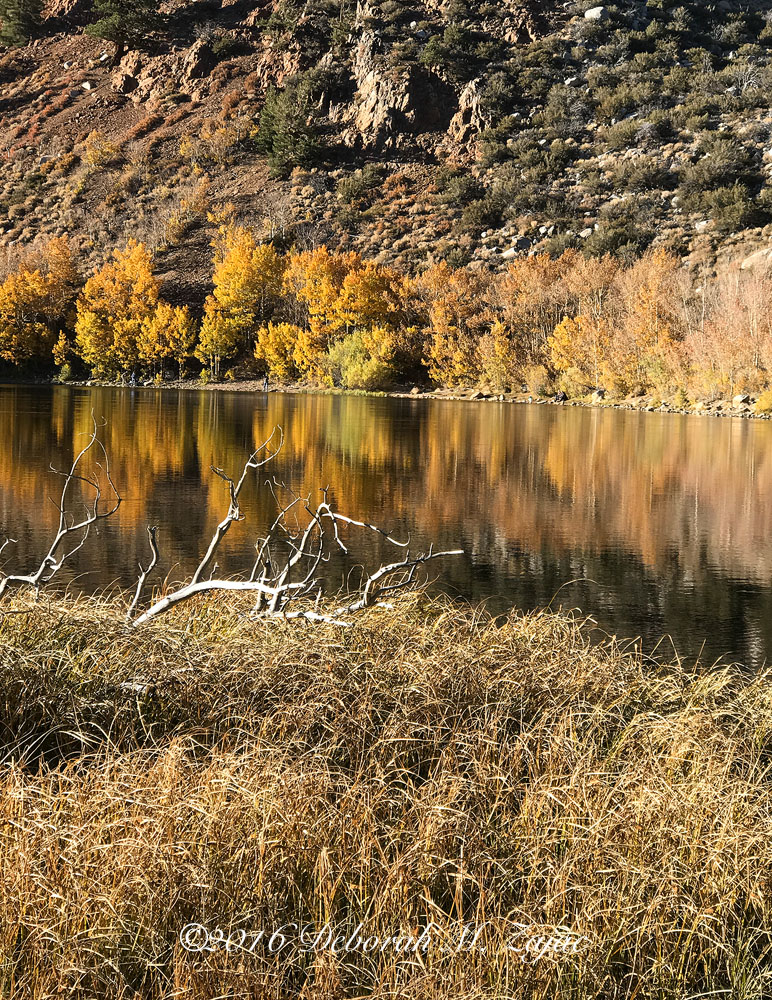
Here are three images I made using it.

Mono (moh-noh) Lake South Tufa Area Daybreak.   Tufa is pronounced (too-fah).

On the top two images I used Adobe Camera Raw after uploading the images to my computer. I applied my standard settings:  I opened up the shadows, and tweaked the blacks, and highlights. Then I added a bit of contrast, vibrance, and cropped off bits that didn’t add anything to the image or to strengthen the composition. I added sharpening for the web and resized them for web viewing.

South Tufas Mono Lake

Conway Summit Alpine Glow (Sunrise)

Conway Summit Morning Alpine Glow

North Lake: This image is SOC = Straight out of the camera aside from resizing for the web, and cropping off a bit at the top. North Lake

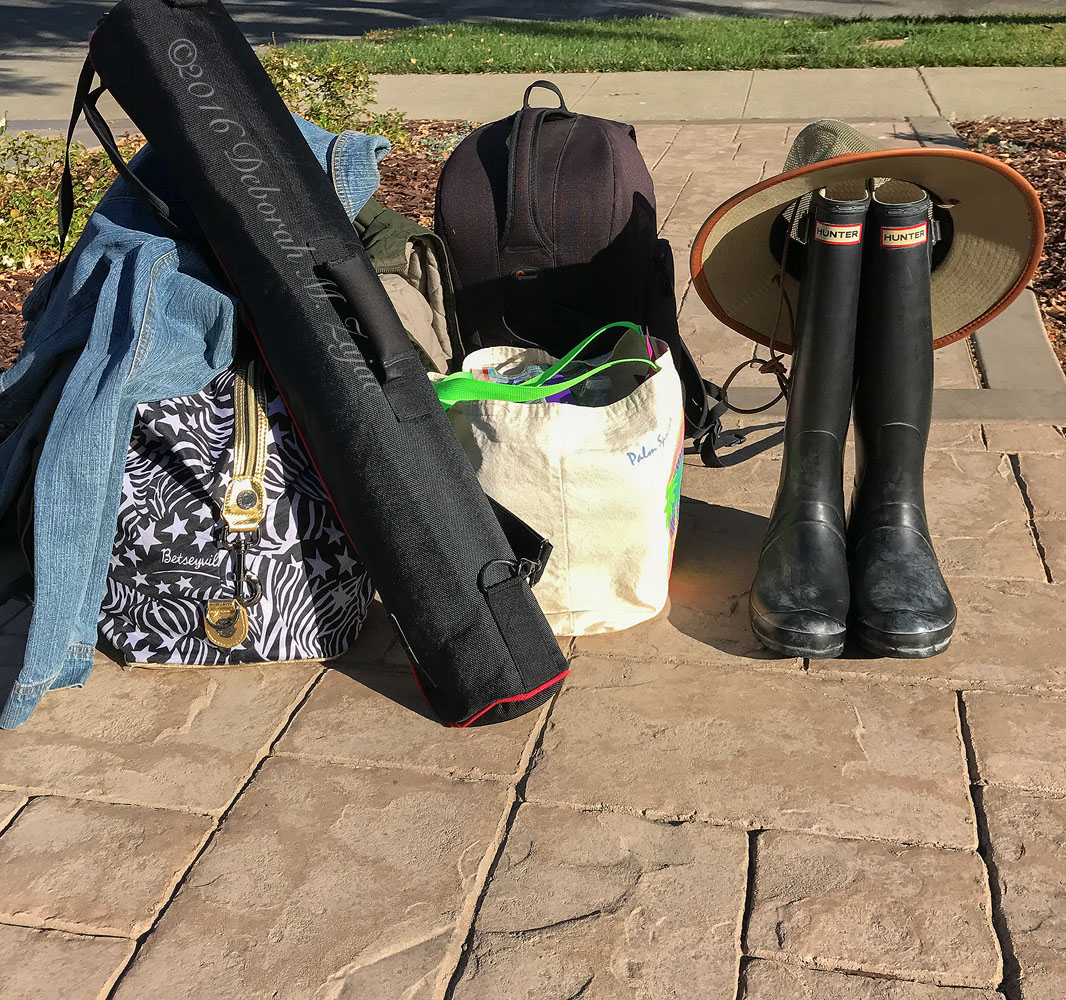
+1 MORE: I packed lite, really I DID!

Packing Lite

The camera won’t replace my DSLR, but I’m impressed with it and will probably start using my phone camera more than I have been.  I wonder if my FZ200 will be the camera that gets shelved for this camera though?

I have oodles of images I made over the week-end made with my trusty Df. I’ll be sharing those soon.

Apple iPhone 7 Plus| Adobe Camera Raw| PS CC 2015.5

More to come…