Clark’s Grebes

Copyright ©2016 Deborah M. Zajac. ALL RIGHTS RESERVED

Today I thought I share some images from my Spring Grebe excursion.   We met at 5:45am to get out on the water to see the sun rise over the mountains and get that great light.

We were so fortunate to have a lovely morning with a rosy glow, and the Grebes were up and feeding already as well.

The male Grebes impressed me by how hard they work to feed the family.  I’ll try to convey that with some images.

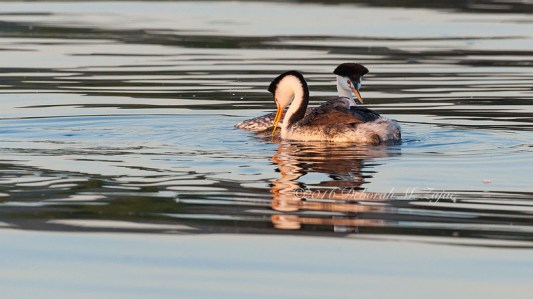
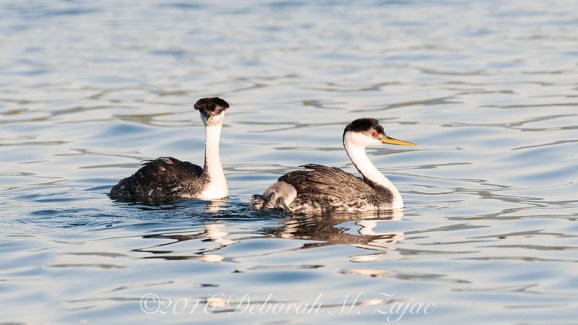
The male making a fish transfer to his mate and a hungry chick poking its head out in anticipation;

Clark's Grebe Pair making fish transfer

…but that little fish was a slippery one and she dropped it, fortunately, she was able to retrieve it quickly!

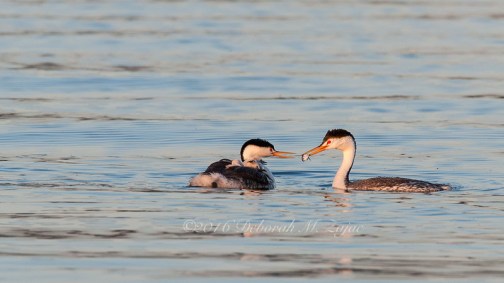
Clark Grebe Pair

Here a Clark’s Grebe male is just about to make the transfer;

Clark's Grebe Male making Fish Transfer to Female

Here’s a Clark’s Grebe male feeding a fish directly to a chick. That fish looks too big for that tiny bill!

Clark's Grebe Male Transferring Fish to Grebe Chick

With several mouths to feed the male does a whole lot of fishing!

He helps with swimming lessons, and even gives the female a break by allowing the chicks to swim from Mom’s back to his. Western Grebes:  Yes, it’s a butt shot. 🙂

Western Grebes

Seeing this was so exciting and so darn adorable!!

Nikon D700| Nikkor 200-500mm| Lexar Professional Digital Film| PS CC 2015.5

Have a wonderful week-end Everyone!

More to come…


Humpback Whales

Copyright ©2016 Deborah M. Zajac. ALL RIGHTS RESERVED.

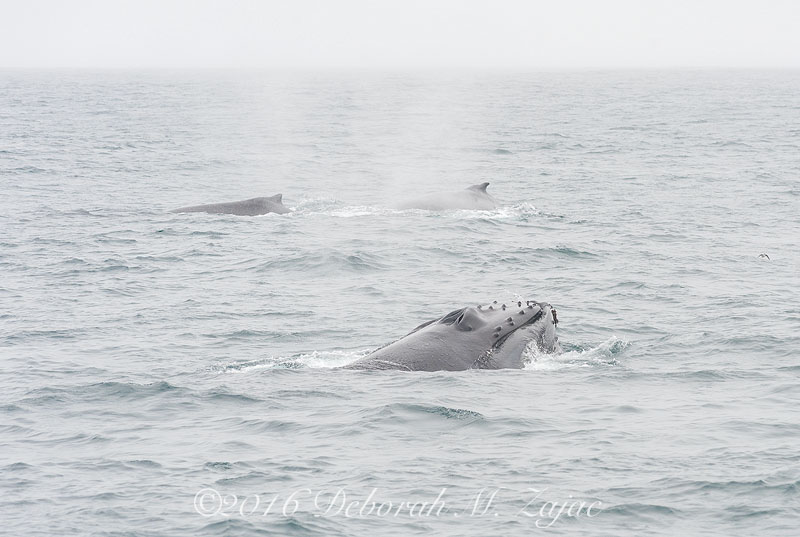
Saturday I spent late morning until early afternoon at sea Whale Watching outside of Monterey, CA. We sailed about 12 miles off shore to the Monterey Submarine Canyon where there were quite a number of Humpback Whales, Gray Whales, and a Blue Whale feeding on Krill, and other little fishes that were abundant on Saturday.

“The Monterey Submarine Canyon is quite large…an undersea Grand Canyon. It’s 470 kilometers (292 miles) long and approximately 12 kilometers (39 ft) at its widest point with a maximum rim to floor relief of 1,700 meters (5,577feet).”  ~Simon Sanctuary

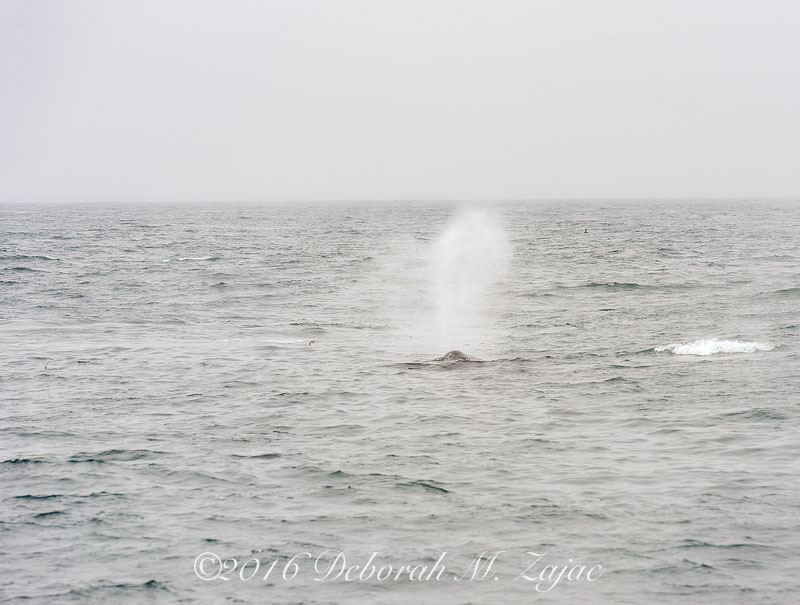
It’s was quite exciting seeing the Whales! I didn’t see a Breach this time out, but saw lots of Spouting, or Blowing.

Humpback Whale Spouting

It was overcast, windy, and a bit choppy out at sea the whole time. The Sun only peeked out a couple of times.

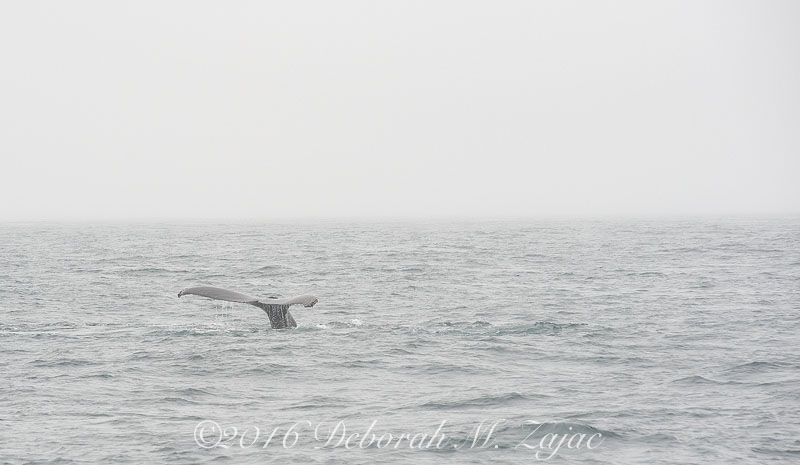
I saw some Fluking when the whales  are going to dive down as much as 50 meters.

Humpback Whale Fluking

Humpback Whale Fluking

Once they reach the depth they want they begin to slowly rise by spiraling up to the surface often in teams creating a Bubble Net.  The purpose of the bubble is to congregate the Krill and prey and force them to the surface. The Krill and fish see the bubbles as a net and feeling trapped they stay in the center of the  Bubble Net. The Whales come up with an explosion of air with their mouths wide open eating all they can.

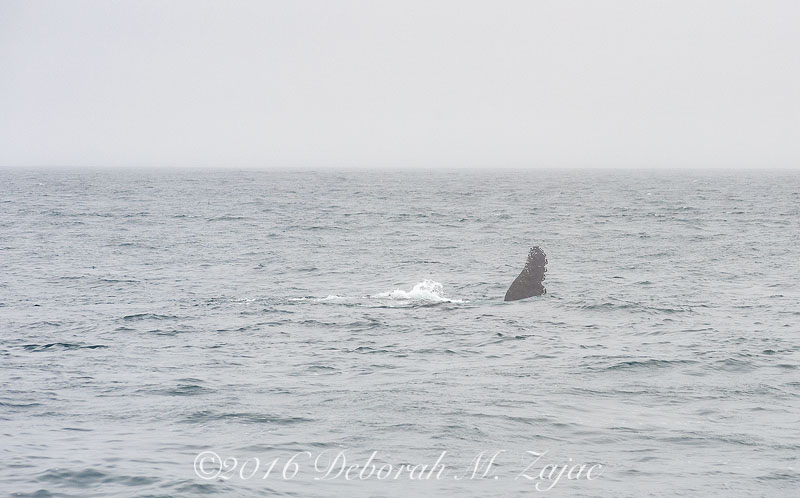
Here are two images of  a fin  of a Humpback Whale when it breaks the surface while they’re under the surface spinning.

Humpback Whale Spouting w Flipper showing

Humpback Whale Flipper;

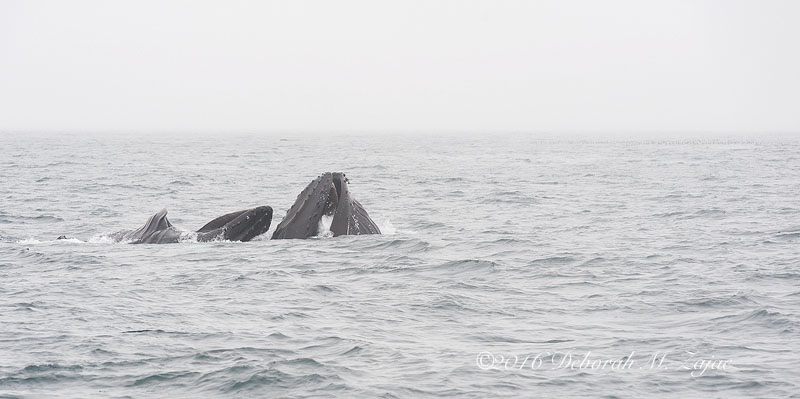
The Humpback often get under that Bubble Net and Lunge up with their mouths gaping open scooping up the prey. Here you see at least 3 working as a team.

Humpback Whale Lunge Feeding

I see four working together here.

Humpback Whales Lunge Feeding

Humpback Whale Lunge feeding.

Humpback Whale Lunge Feeding

Humpback Whales spend the winter in the warm waters near Costa Rica and Hawaii. Humpbacks, including mothers with calves travel thousands of miles to feast on krill, and schooling fish in the Monterey Bay while they migrate north to their feeding waters in Alaska.  They grow to be 45ft to 62ft (14-19 meters) long!

I missed quite a few good photo ops b/c for the first time in my life I got sea sick. It’s NOT FUN! I will go again but, I’m taking medicine before hand.

The images are not converted to Black & White. It was so gray out that they look black and white.

Nikon D700| Nikkor 80-200mm| Lexar Digital Film| Hand-held| Developed in PS CC 2015.5

More to come…


Insects of Point Reyes National Seashore

Copyright ©2016 Deborah M. Zajac. ALL RIGHTS RESERVED

I had pretty good luck spotting insects while hiking in Point Reyes National Seashore last week-end.  I saw Butterflies, Beetles, and Grubs. Here’s a sampler. 🙂

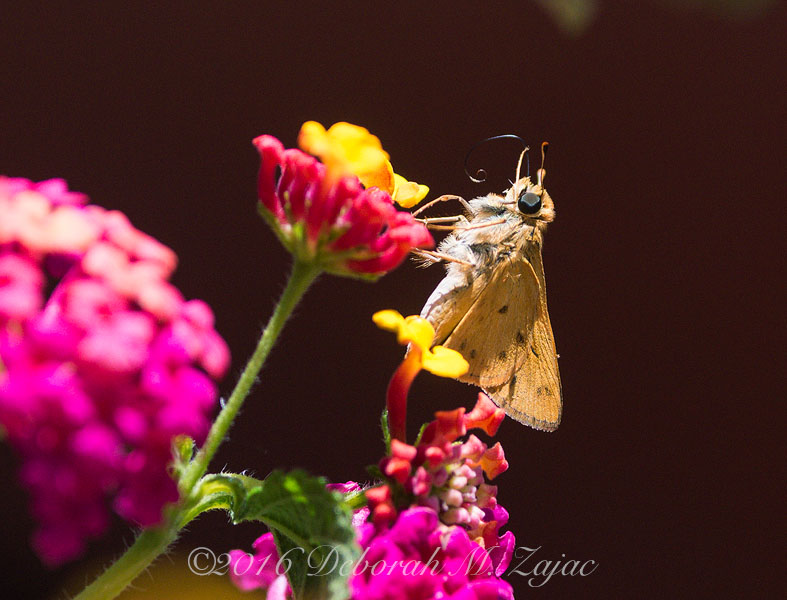
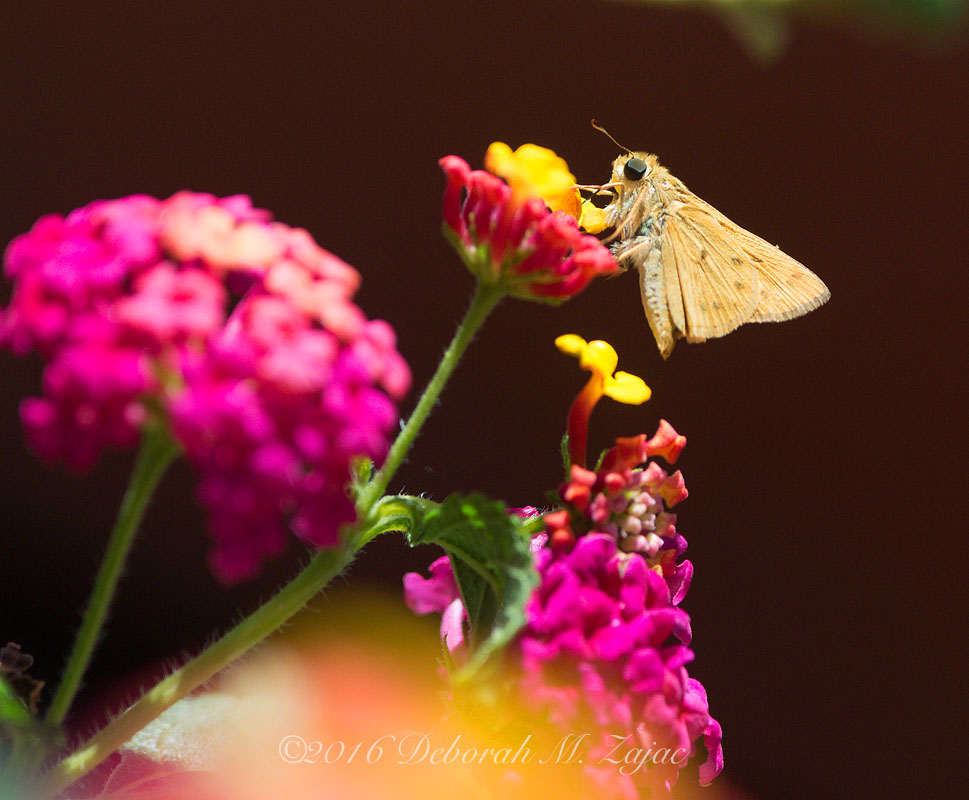
I’m pretty sure this is a Skipper, but I can’t find anything that looks exactly like it in my books, or online so, don’t know what it is.  I found it in Point Reyes National Seashore last week-end; July 9,2016.  Anyone know what it is and what it is called?

Unknown Skipper or Butterfly?

Other insects I found while exploring different areas of the park were:

A ladybug, one of several I saw…

Copyright ©2016  Deborah M. Zajac
ALL RIGHTS RESERVED

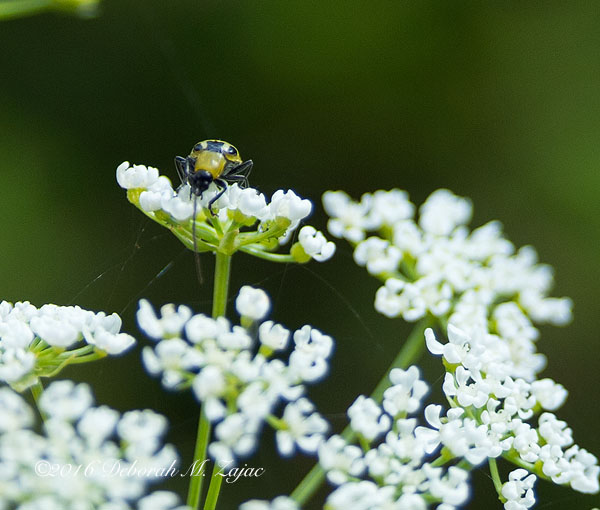
a green and black beetle called a Spotted Cucumber Beetle,

Spotted Cucumber Beetle

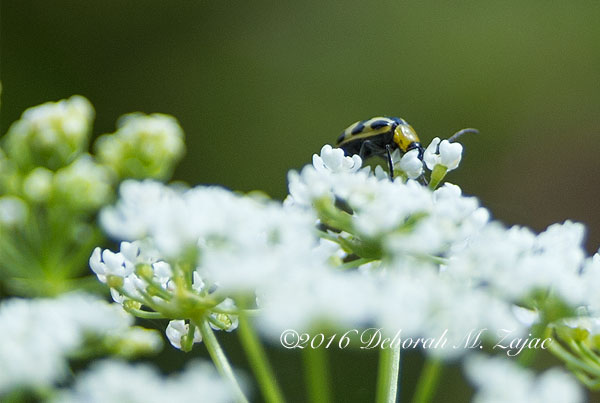
who was pretty hungry,

Spotted Cumcumber Bettle

…a Common Buckeye Butterfly

Common Buckeye Butterfly

…and a grub or grasshopper served a la carte to a White Crown Sparrow that is banded. It’s the first time I’ve ever seen a banded sparrow.

Banded White Crown Sparrow

Nikon Df w/28-105mm lens and Delkin Digital Film, and  Lumix FZ200 w/ Lexar Digital Film- Hand-held

More to come…


Thursday Doors 28/52

Copyright ©2016 Deborah M. Zajac. ALL RIGHTS RESERVED

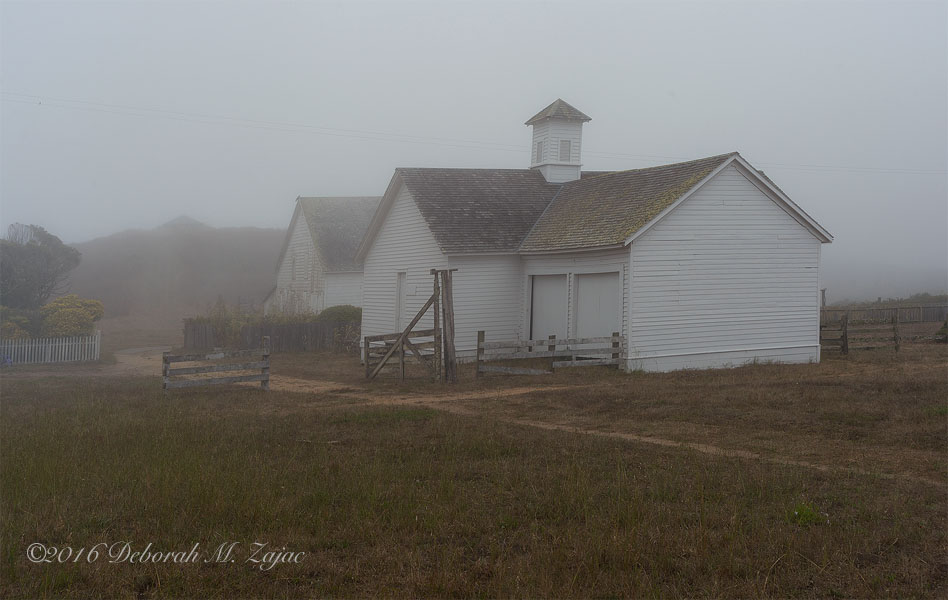
Last week-end while in Point Reyes National Seashore I went out to Pierce Point Ranch which is where the road ends heading north in the park.   I was planning to hike out to see the herd of Tule Elk, but it was so foggy reports from hikers returning from the trail said they’d not seen or heard the Elk.  So, instead of hiking I stayed at the ranch and took photographs of some of the buildings and doors.

For the History Buffs:

The Ranch was constructed by Solomon Pierce in the 1860’s. It was the most successful “butter rancho” in Point Reyes Township.  

In the 1880’s the ranch was leased to a series of tenants, and in the mid 1930’s it was sold to the McClure family which operated it’s Grade B dairy until the about 1945, when dairy ranching ceased after 90 years. 

The complex includes the 1869 and earlier sections of the two-story main house, the tank house, school, woodshed, carpenter shop, blacksmith shop, dairy, horse barn, slaughter house, hay barn, hog sheds,  and pens.  It represents the most extensive surviving historic complex in the Point Reyes National Seashore. 

The Pierce Point Ranch on Tomales Point ceased operations in 1973. Three years later, Congress authorized creation of the wilderness area incorporating that ranch as habitat for the reintroduction of Tule Elk. Beginning in 1980, NPS invested in the rehabilitation of the ranch core, citing it as the best example of a nineteenth century west Marin dairy ranch. Pierce Point Ranch was added to the National Register of Historic Places in 1985, and was subsequently opened to the public as an interpretive site.“~http://wikimapia.org/100600/Pierce-Point-Ranch

Dairy/Long Barn Doors:
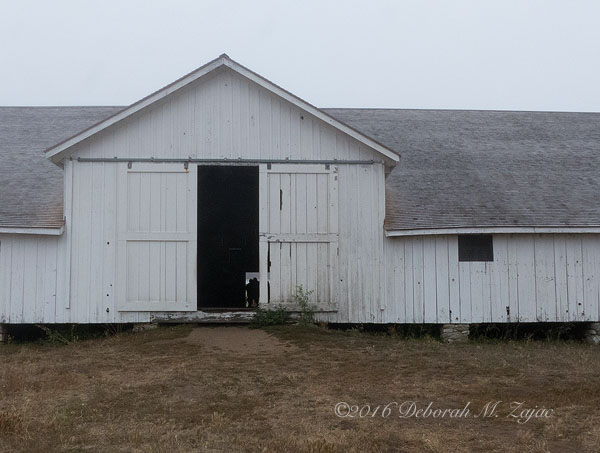
Long Barn Doors Pierce Point Ranch

The Dairy/Long Barn- It was so foggy the sky was white so, I converted this image to Black and White.

Long Barn Pierce Ranch

another image of the Dairy and shed with a couple more doors.
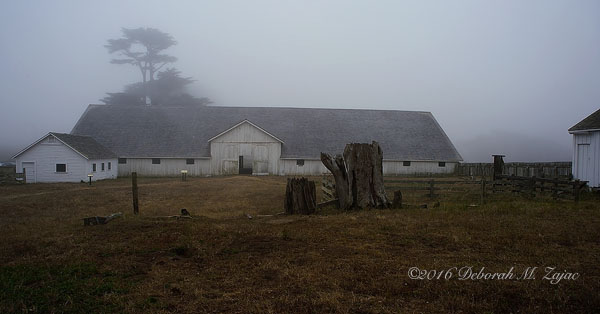
Dairy Barn Pierce Point Ranch

This might be the school house,

Pierce Point Ranch Point Reyes National Seashore

Closer look of door of possible school,
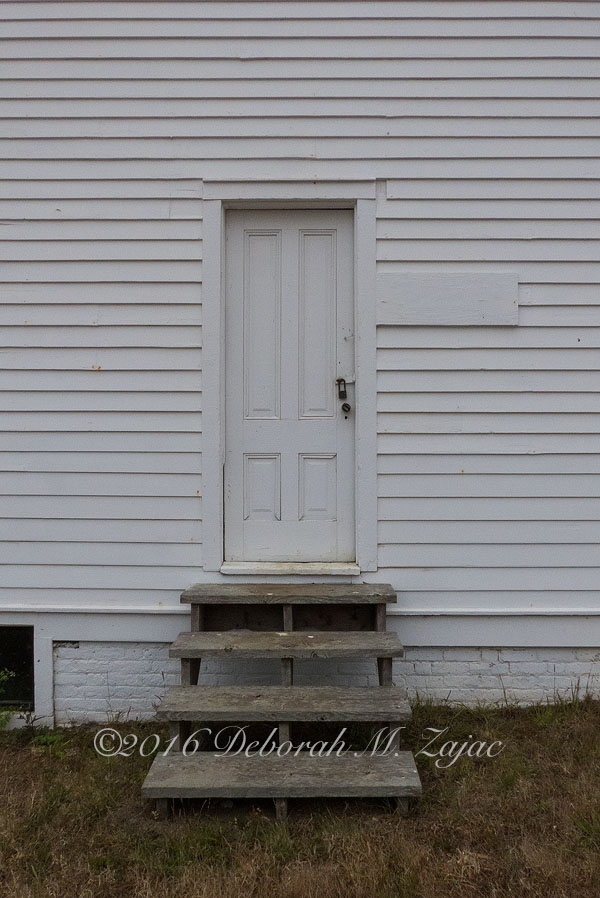
Door to building at Pierce Point Ranch

A closer look at that door knob, and pad lock,
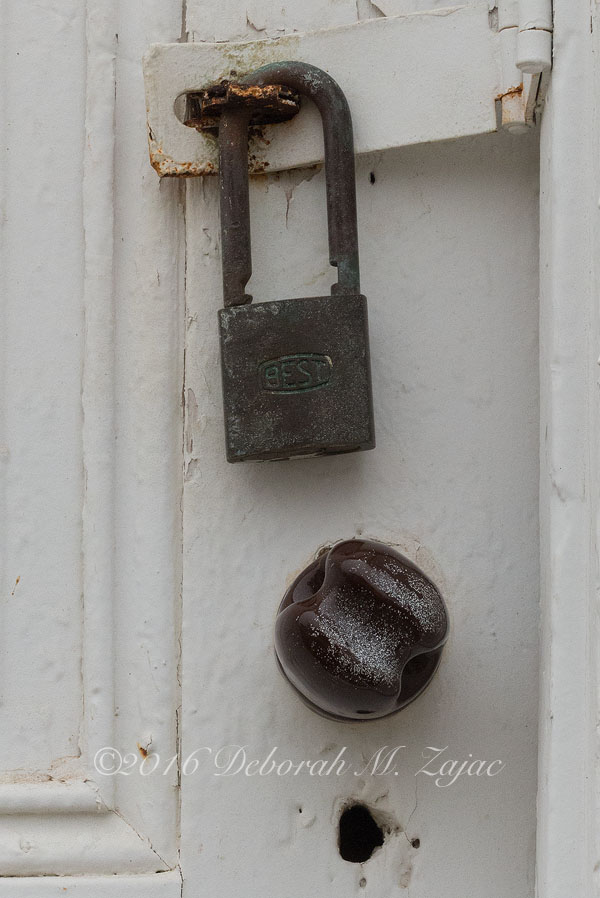
Door knob and Best Lock Pierce Point Ranch

Here’s an image of a male Tule Elk that I took here back in 2012. Can you see the velvet hanging off his antlers around his face? He’s scratching it off and polishing his antlers.  I saw him on Bachelors Hill.
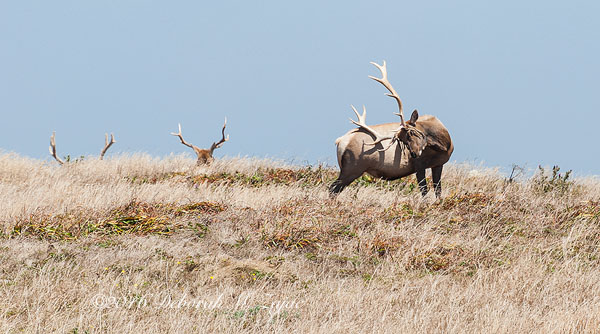
Tule Elk Male

The Bachelor’s; There were quite a few of them that year.  They were also pretty far away. My lens was stretched beyond its limits that day too.
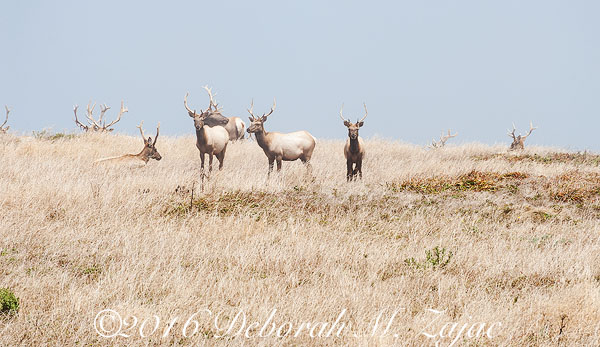
Tule Elk Males

The only wildlife I saw while at the ranch Saturday was an Alligator Lizard sunning itself.
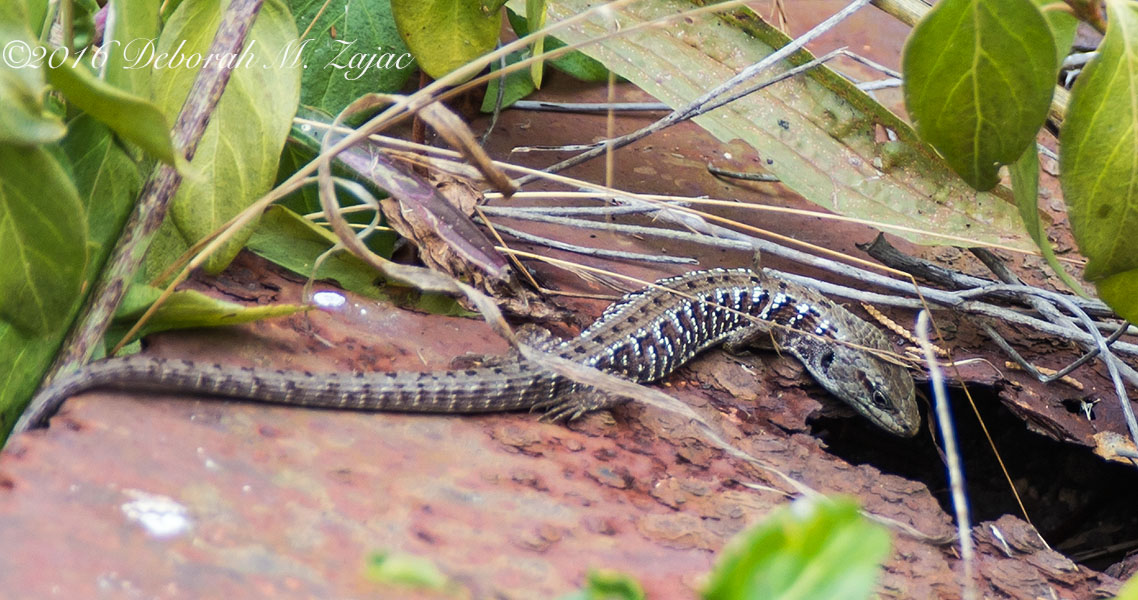
 

Alligator Lizard

It was a great day despite the fog and no Elk.

Nikon Df w/ Nikkor 28-105mm| Delkin Digital Film, and Lumix FZ200, Lexar Digital Film,

The 2012 images were made with the Nikon D700 w/Nikkor 70-300mm VR, SanDisk Digital Film

This post is part of Norm 2.0’s Thursday Doors.  If you love doors and would like to see the doors others are posting, or post doors you’ve photographed and join other door lovers from around the world click here.

At the end of Norm’s latest Thursday Door post is a little Blue Link-up/View button click it to be taken to a page with all the links to view all the posts, and add your own if you’re a door enthusiast too.

More to come…
Trees and Foliage Abstract

Copyright ©2016 Deborah M. Zajac. ALL RIGHTS RESERVED

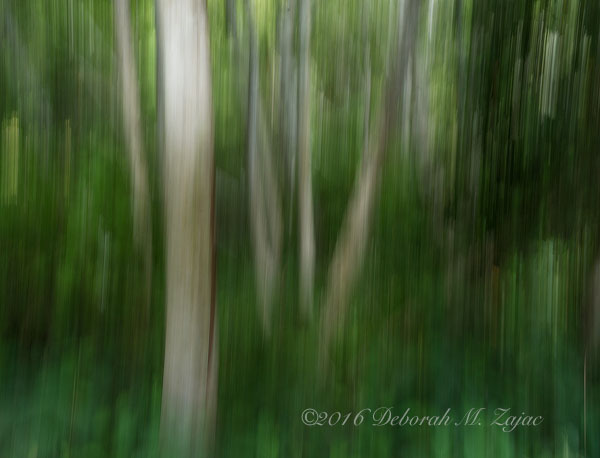
I was up north in Point Reyes National Seashore on Saturday photographing nature, while walking through a wooded section I stopped to photograph the trees. They were Birch I think; they had tall, on the thin side white trunks and lovely green foliage.

I always like to play around with Intentional Camera Movement when I happen upon a wooded area with nice trunks, and foliage.

Trees and Foliage Abstract

I find the technique works best with tall stalked flowers and trees. One lowers the shutter speed enough to cause blur then you intentionally move the camera/lens in an up or down motion to cause the blur. For this image my settings were f/13, ISO 400, 1/13s.

I moved my camera/lens from up to down fairly fast to create the blurred image.

The key is slowing down the shutter speed and drag the lens in an up or down motion to create the blur. It takes a bit a practice to get it, but with several tries one can usually attain a pleasing blur=ICM image.  You can create interesting affects zooming in and out, or shivering ever so slightly as well.

Here’s an image I made in 2014 with Agapanthus using the same technique.Agapantha Abstract

Nikon Df| 28-105mm| Delkin Digital Film| PS CC 2015

More to come…


Lazuli Bunting Watercolor

Copyright ©2016 Deborah M. Zajac. ALL RIGHTS RESERVED

Here we are already on July 8th! Which means it’s Draw-a-Bird Day over on CreateArtEveryday, and it’s also #WorldWatercolorMonth created by Charlie O’Shields over at doodlewash.com. 

Yesterday afternoon I felt inspired to paint a Lazuli Bunting I photographed back in May 2014. I used a Pentel Graphic Gear 0.7 to lightly sketch the beak, and snag it’s perched on, but kept the rest the painting loose.  I’m pleasantly surprised how well it came out for not trying to sketch the whole bird.

The Lazuli Bunting is a Spring/Breeding visitor in my region of Northern California.  I was very excited to see it him and add him to my “life list” back in the Spring of 2014.

Lazuli Bunting in Watercolor

The image I used as my reference is here.P52 18 of 52 Lazuli Bunting-1st yr Male

Paint, Paper, Brush:

Sennelier L’Aquarelle in Cinereous Blue, French Vermillion, Bright Red, Burnt Umber, Ivory Black, Naples Yellow Deep, Warm Sepia, Hooker’s green, Phthalo Green Light.

I painted this in my Strathmore Watercolor Art Journal 400 Series 8.5″ X 5.5″ 140lb paper.

Brush:  Di Vinci Artissimo Rd #1

I’m posting this on both Creatarteveryday’s Draw a Bird Day, and #WorldWatercolormonth.  If you have a moment please head over and check out the amazing work being done by artists all over the world.

More to come…
 

What’s blooming?

Copyright ©2016 Deborah M. Zajac. ALL RIGHTS RESERVED

Copyright © 2016 Deborah M. Zajac ALL RIGHTS RESERVED

My Agapanthus are blooming right now, and this sweet bud just opening inspired me to try to paint it.

Painted on Arches Hot Press 140lb watercolor paper, with Sennelier paints.
I used, Naples Yellow, Indian Yellow, Cobalt Violet Deep, Ultramarine Deep, Forest Green, Emerald Green, Burnt Umber, Raw Sienna, and Ivory Black.

I received a gift card to Amazon for my birthday last month so, I splurged on a Di Vinci Artissmo brush #1 rd. I used it, along with an Escoda Reserva #2, and a Robert Simmons Sapphire 10/0 brushes.
WOW, does  the Artissmo brush hold water! I’m having to learn to paint all over again with this brush.


watercolor

I’m really happy with how this little bud came out. I’m feeling brave enough to try the whole pom pom blossom. To be continued. 🙂

Charlie O’ Shield’s over at doodlewash  has invited artist, and dabblers in paint to tag their  nature paintings, or watercolor  work in the month of June to share our work using the tag

#naturedoodlewash. He’ll compile a list of all those who participated at the end of the month.

Image made with Lumix FZ200| Lexar Professional Digital Film| PS CC 2015

More to come…