Copyright ©2023 Deborah M. Zajac. ALL RIGHTS RESERVED.
PLEASE DO NOT USE MY IMAGES WITHOUT EXPRESSED WRITTEN PERMISSION.

Nikon D810| Nikkor 500mm Pf-E| PS CC 24.6.0
more to come…
“A good snapshot keeps a moment from running away.” ― Eudora Welty
Copyright ©2023 Deborah M. Zajac. ALL RIGHTS RESERVED.
PLEASE DO NOT USE MY IMAGES WITHOUT EXPRESSED WRITTEN PERMISSION.
Nikon D810| Nikkor 500mm Pf-E| PS CC 24.6.0
more to come…
Copyright ©2023 Deborah M. Zajac. ALL RIGHTS RESERVED.
PLEASE DO NOT USE MY IMAGES WITHOUT EXPRESSED WRITTEN PERMISSION.
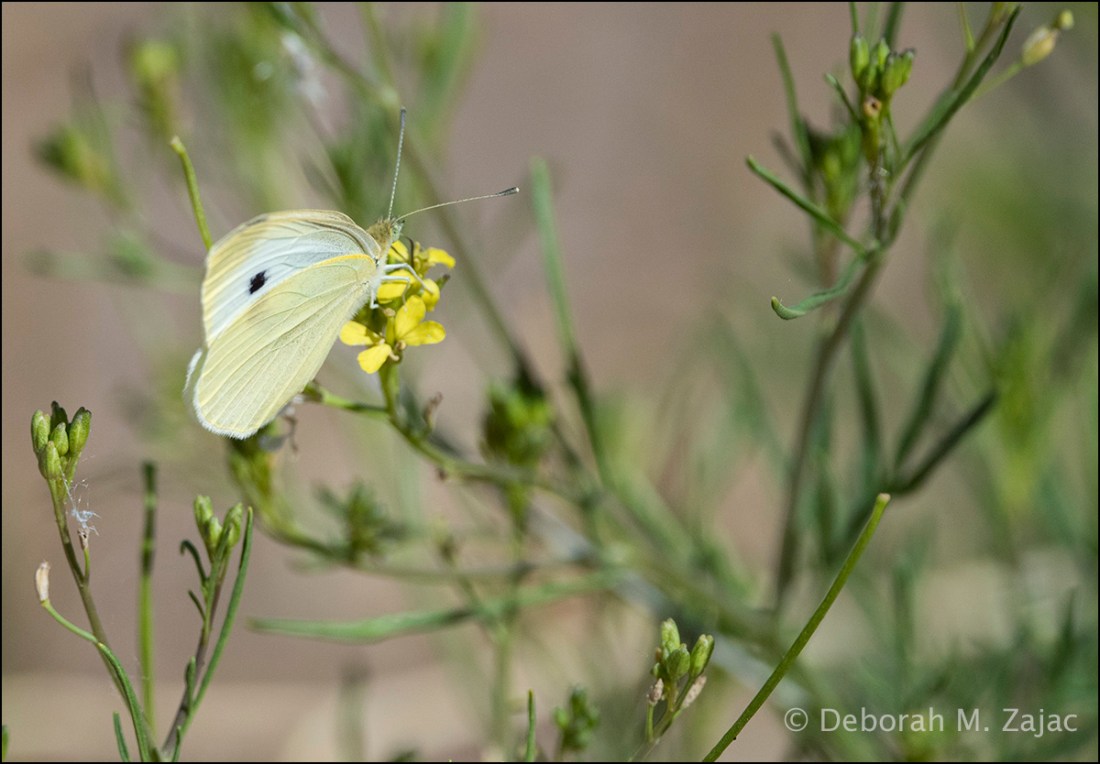
Nikon D810| Nikkor 500mm PF-e| PS CC 24.6
more to come…
Copyright ©2023 Deborah M. Zajac. ALL RIGHTS RESERVED.
PLEASE DO NOT USE MY IMAGES WITHOUT EXPRESSED WRITTEN PERMISSION.
We’ve been having thunderstorms with lightening almost every day lately so I wasn’t sure I’d be able to see or photograph this month’s full Moon. The day before the full Moon we had storm clouds rolling in all afternoon, but then it cleared up about an hour before Moonrise so, I thought I’d photograph it in case the following night was too overcast to photograph it.
While waiting for the moon to rise enough to get past the mountains I saw a couple of people in Motorized-gliders flying around the mountain where the moon would rise. I hoped they were going to stay long enough for the moon to rise, and fingers crossed one or both would do a moon fly-by. One did!!
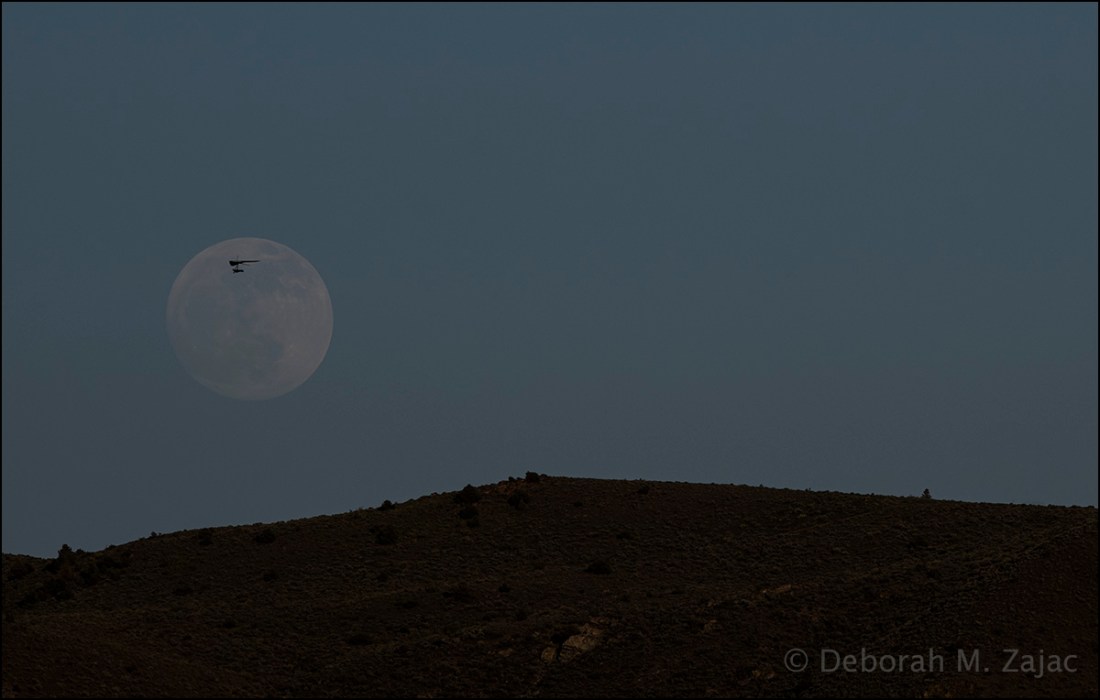
It looks like a big bug doesn’t it? The sun was still up so the moon is really faded/washed out.
The following night there were enough breaks in the clouds that I was able to photograph the Full Moon. This is a two frame composite image.
One frame exposed for the sky and foreground and the other exposed for the Moon. I blended the frames in Photoshop.
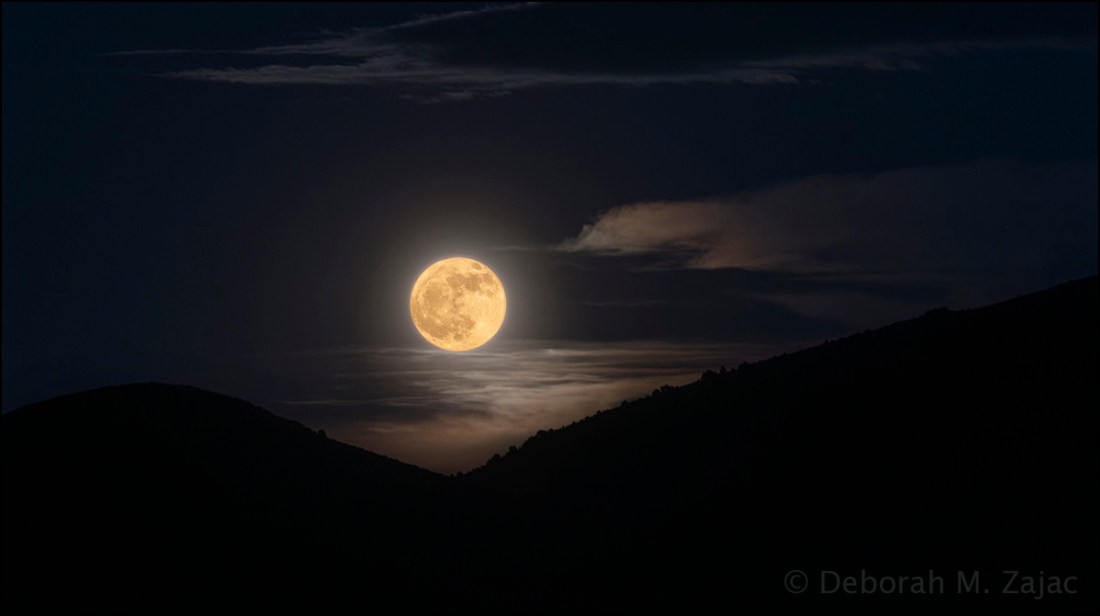
June’s full moon gets one of its names from the wild strawberries that begin to ripen during the early summer and be gathered by Native American tribes.
Other names for June’s Full Moon are:
Rose Moon, Hot Moon, and Mead Moon.
Yesterday the wind really picked up tossing two patio chairs across the patio, one cushion was blow across the entire patio, and a planter tipped over. The Zephyr wind wins again!😂 We also had some thunder and a little lightening, but both were several miles away.
Saturday #1 Grandson is coming to visit for a week or two for summer. We have plans to hit the grocery store and library straight-away. We hope the weather improves so we can go to the lake and take him paddling.
That’s all from here. I hope you’re having a good week!
Nikon D810| Nikkor 300mmf/4| PS CC 24.5.0
Copyright ©2023 Deborah M. Zajac. ALL RIGHTS RESERVED. DO NOT USE MY IMAGES WITHOUT EXPRESSED WRITTEN PERMISSION!
I heard from a friend that along the river where I found the Owlets there was a family of Wood Ducks so, I went to check it out and sure enough I found some of them. My friend said there were 6 chicks, but I only saw 3.
I hope the others were just napping.
Here’s the male…aka Dad Wood Duck. Isn’t he a beautiful duck!

Here’s Mama. It looks like I caught her just after her bath. It must have been a fast one b/c now she’s after the chicks making sure they’re alright.
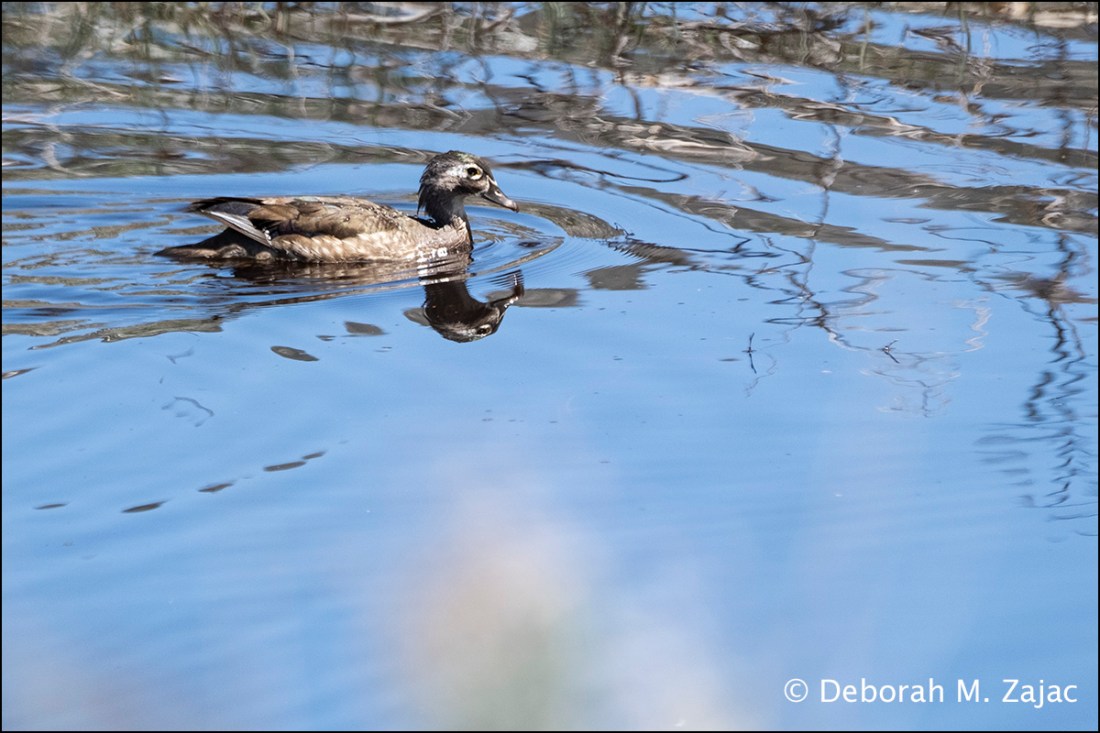
Here’s the first chick I spied. This is the only chick I was able to get a decent image of as the other two stayed in the reeds.

Wood Duck Fun Facts:
Fun Facts gleaned from https://www.allaboutbirds.org/guide/Wood_Duck/
Fuji X-T3| Fuji 100-400mm| PS CC 24.5
I hope you all have a good week-end!
more to come…
Copyright ©2023 Deborah M. Zajac. ALL RIGHTS RESERVED.
PLEASE DO NOT USE MY IMAGES WITHOUT EXPRESSED WRITTEN PERMISSION.
It looks worse than it is. It’ll grow back!
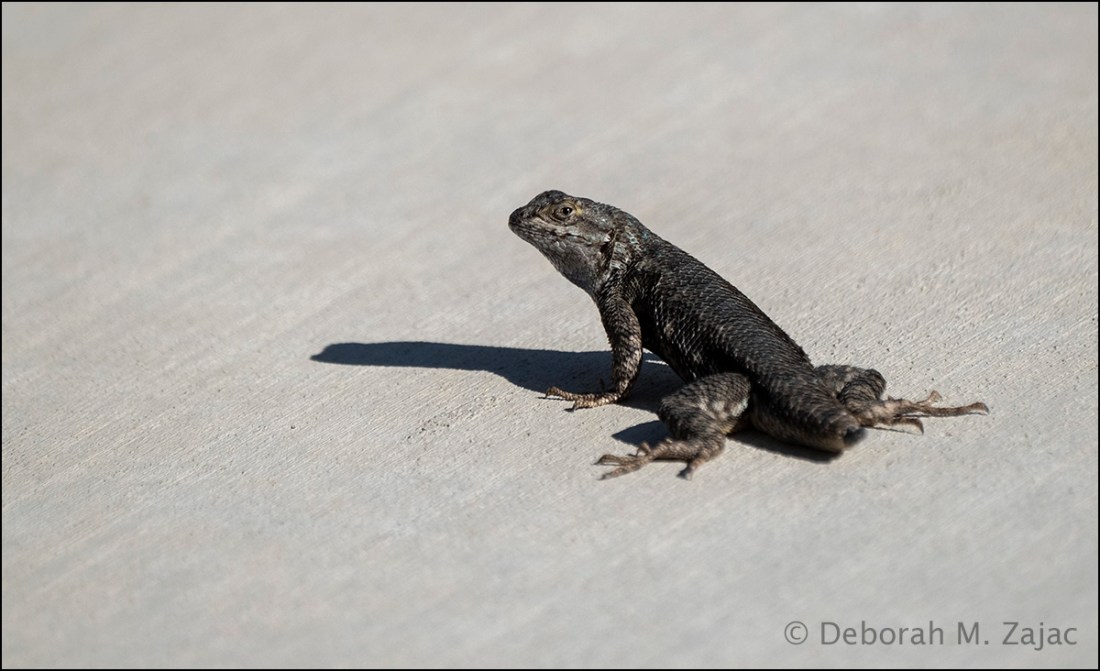
After I set up my new birdbath 3 lizards came to check it out straight-away…this was one of them and the bravest of the 3.
Fuji X-T3| Fujinon 100-400mm| PS CC 24.4.1
more to come...
Copyright ©2023 Deborah M. Zajac. ALL RIGHTS RESERVED. DO NOT USE MY IMAGES WITHOUT EXPRESSED WRITTEN PERMISSION!
HAPPY NEW YEAR!!
For several weeks we’ve had a Cooper’s Hawk perching on a neighbor’s tree out back. With all the White-crown Sparrows, and Quail about I’m sure it’s hoping for a meal.
I’ve been enjoying seeing it perched there.

Fun Facts-
Fun Facts gleaned from allaboutbirds.org
Fuji X-T3| Fujinon 100-400mm| PS CC 24.1.0
more to come…
Copyright ©2022 Deborah M. Zajac. ALL RIGHTS RESERVED. DO NOT USE MY IMAGES WITHOUT EXPRESSED WRITTEN PERMISSION!

Wishing all my family, friends, and contacts a safe, and healthy MERRY CHRISTMAS!
Fuji X-T3| Fujinon 100-400mm| PS CC 24.1.0
more to come…
 Circadianreflections Blog
You must be logged in to post a comment.