Friday’s Feathered Friends- Jays

Copyright ©2026 Deborah M. Zajac. ALL RIGHTS RESERVED.

PLEASE DO NOT USE MY IMAGES WITHOUT EXPRESSED WRITTEN PERMISSION.

It’s been awhile since I shared any of the birds I’ve been seeing. As I mentioned I was overwhelmed getting my life list up to date after March’s Florida trip, and April’s Texas trip. Today, I’m sharing 3 North American Jays that I added to my Life List this year.

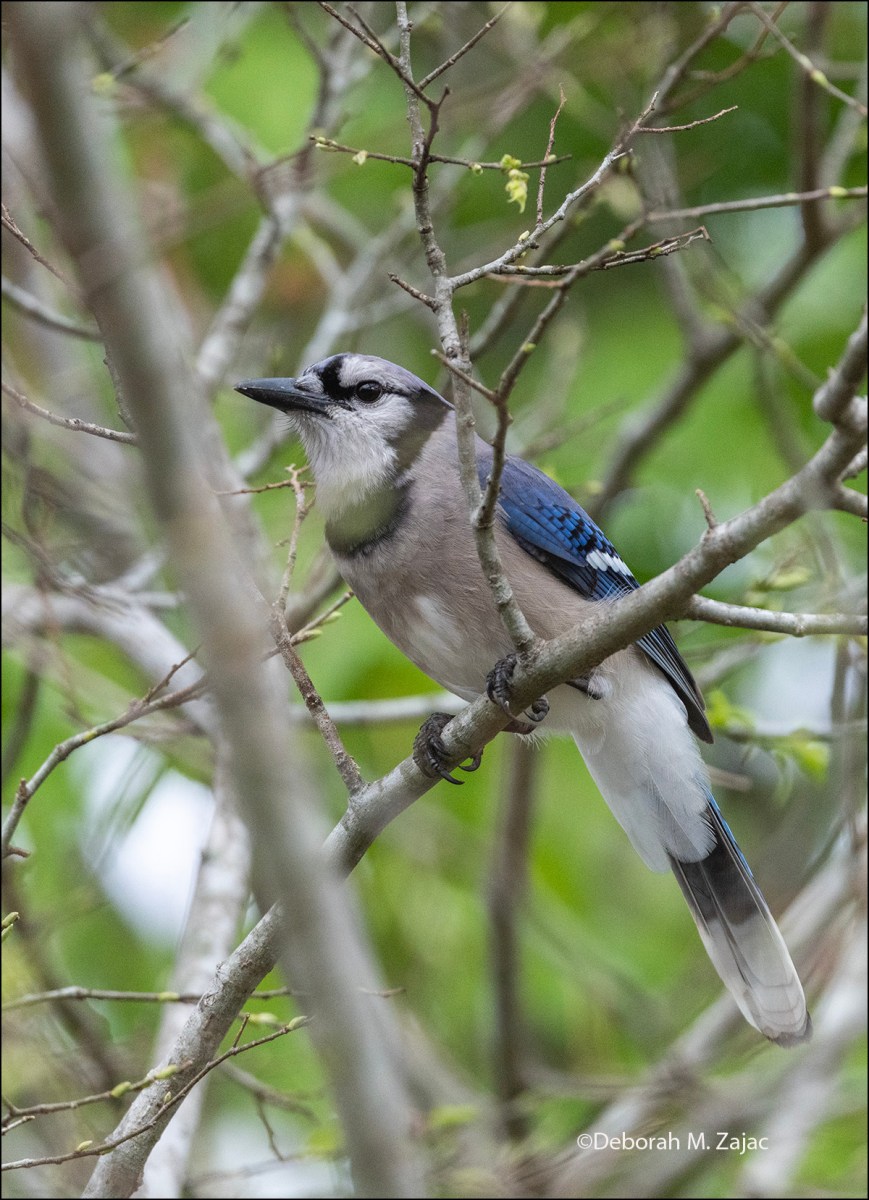
Some of you know how badly I’ve wanted to get a decent photo of the Blue Jay since I first saw one in FL in 2024. They seem to know when I’m in Florida and Ohio with my camera. They toyed with me…hiding in the foliage or giving me a brief look and flying away as soon as I lifted my camera. Well, in March I had two full days to bird with my friend Mary. I spied a Blue Jay and doggedly followed it for 20 minutes to get a photo that wasn’t blurry, or a butt shot.
©Deborah M. Zajac | http//:circadianreflections.com
Blue Jay-showing only a bit of its beautiful markings, and there’s a dreaded branch right in front of its face. Sigh. I kept following it…
©Deborah M. Zajac | http//:circadianreflections.com
Blue Jay- Finally, a decent photo of one!

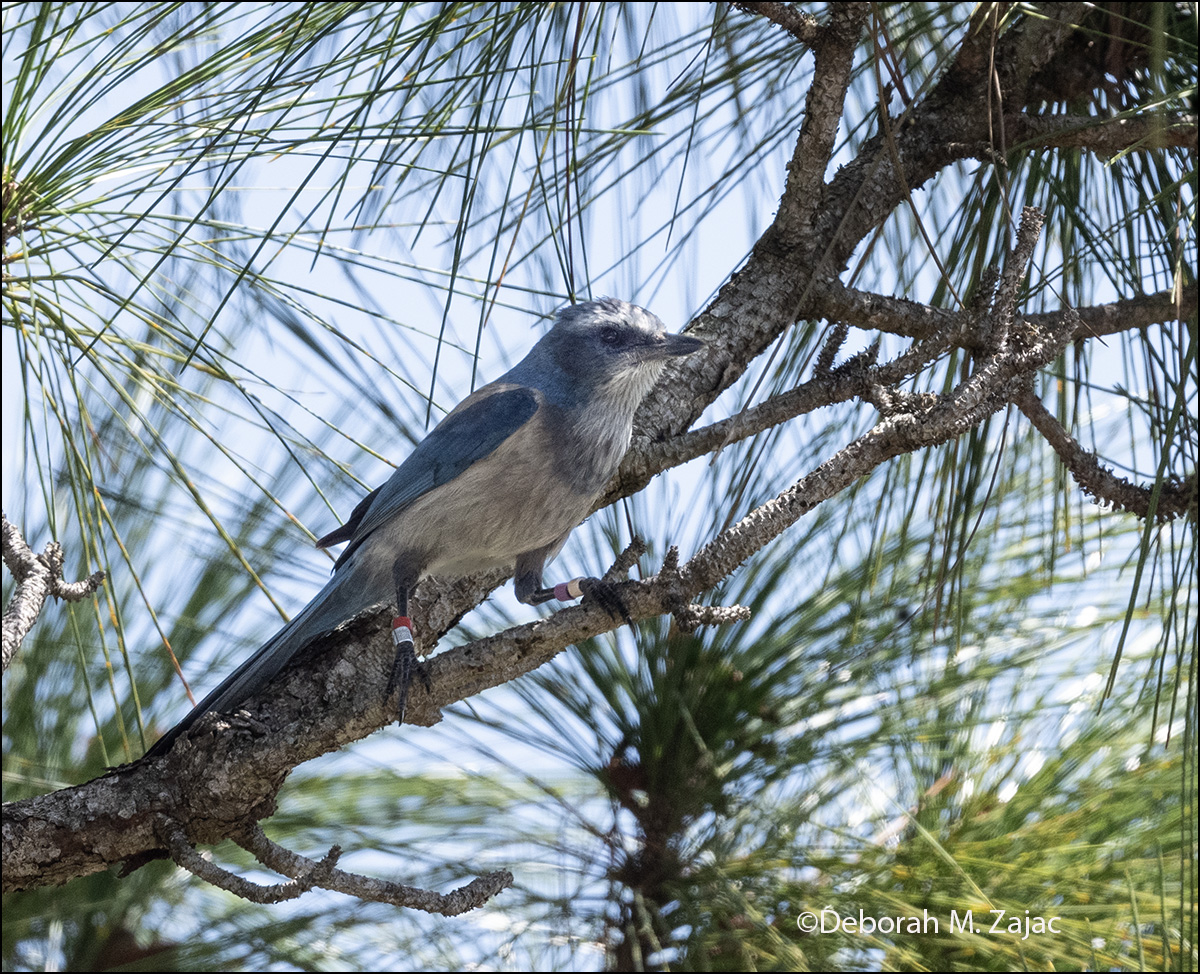
On my last day of birding with Mary we saw four Florida Scrub-Jays and we thought two of them were banded. I don’t have any information about this Jay from the bands unfortunately. It was backlit so I had to do some masking to lighten up its face a bit.
©Deborah M. Zajac | http//:circadianreflections.com
Florida Scrub-Jay

While in Texas the bird I had hoped to be an easy one to see was the Green Jay. I got lucky and saw a few but, getting an image was tricky. I did get some at a World Birding Site. They set out feeding stations for the birds and the Green Jay flew in for some nibbles.

©Deborah M. Zajac | http//:circadianreflections.com Image

These three Jays take me to seeing 7/10 Jays of North America. I’ve seen the Blue Jay, California Scrub-Jay, Steller’s Jay, Pinyon Jay, Green Jay, the Florida Scrub-Jay, and the Woodhouse Scrub-Jay. Maybe one day I’ll see them all, but if not I’m so excited to see as many as I have.

It’s been an amazing birding year for me. My bird count for this year is 361 species. With any luck, I hope to pick up a couple more with fall and winter migration. I think this is going to be the best year of birding I had in my life.

I’m birding this morning with the group so will be late getting to your blogs and comments.

I hope everyone has a lovely week-end!

more to come…

Friday’s Feathered Friends- Ruddy’s got the Blues

Copyright ©2024 Deborah M. Zajac. ALL RIGHTS RESERVED. 

PLEASE DO NOT USE MY IMAGES WITHOUT EXPRESSED WRITTEN PERMISSION.

Things are changin’, Ruddy is showing off his Blues and Ruddy feathers for Spring and hoping he’s got what it takes to persuade a cute little female Ruddy Duck to be his love for the season.

Ruddy Duck in Breeding Plumage

Fun Facts:

    • Ruddy Ducks lay big, white, pebbly-textured eggs—the largest of all duck eggs relative to body size. Energetically expensive to produce, the eggs hatch into well-developed ducklings that require only a short period of care.
    • The bright colors and odd behavior of male Ruddy Ducks drew attention from early naturalists, though they didn’t pull any punches. One 1926 account states, “Its intimate habits, its stupidity, its curious nesting customs and ludicrous courtship performance place it in a niche by itself…. Everything about this bird is interesting to the naturalist, but almost nothing about it is interesting to the sportsman.”
    • Pleistocene fossils of Ruddy Ducks, at least 11,000 years old, have been unearthed in Oregon, California, Virginia, Florida, and Illinois.
    • Ruddy Ducks are very aggressive toward each other and toward other species, especially during the breeding season. They are even known to chase rabbits feeding on the shore.
    • Though Ruddy Ducks are native to the Americas, one population became established in England after captive ducks escaped in 1952. This population grew to about 3,500 individuals by 1992, and now appears to be expanding into the Netherlands, France, Belgium, and Spain.
    • Ruddy Ducks get harassed by Horned Grebes, Pied-billed Grebes, and American Coots during the breeding season. The grebes sometimes attack Ruddy Ducks from below the water, a behavior known as “submarining.”
    • The oldest Ruddy Duck on record was a male and at least 13 years, 7 months old when he was found in Oregon in 1964. He was banded in British Columbia in 1951.

Fun Facts gleaned from https://www.allaboutbirds.org/guide/Ruddy_Duck/

Nikon D810| Nikkor 500mm PF| PS CC 25.4

more to come…

Whatever Weds. Sunset Colors & Swirly Clouds

Copyright ©2022 Deborah M. Zajac. ALL RIGHTS RESERVED.

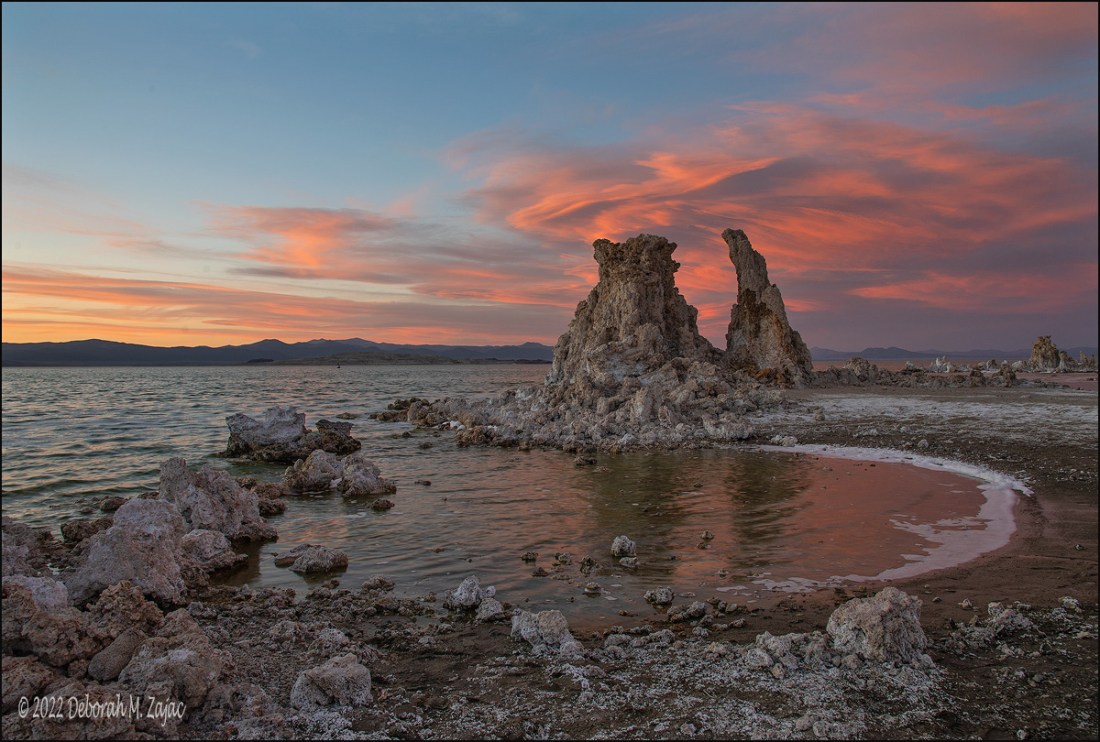
I’m home from a long week-end of camping and photography with friends old and new. I’m still culling images, but here’s one from Mono Lake taken shortly after sunset. I was set up to shoot west but looking around I saw this cloud developing to the northeast so I turned my camera around and waited for this to unfold. This cloud formation and color were wonderful and a beautiful end to a fun day.

Mono Lake, Clouds, and Tufas. Friday April, 8, 2022

Nikon D810| 24-120mm@24mm| f/10| ISO 100| PS CC 23.2.2

more to come…

Friday’s Feathered Friends- Red, White, and Blue

Copyright ©2021 Deborah M. Zajac. ALL RIGHTS RESERVED

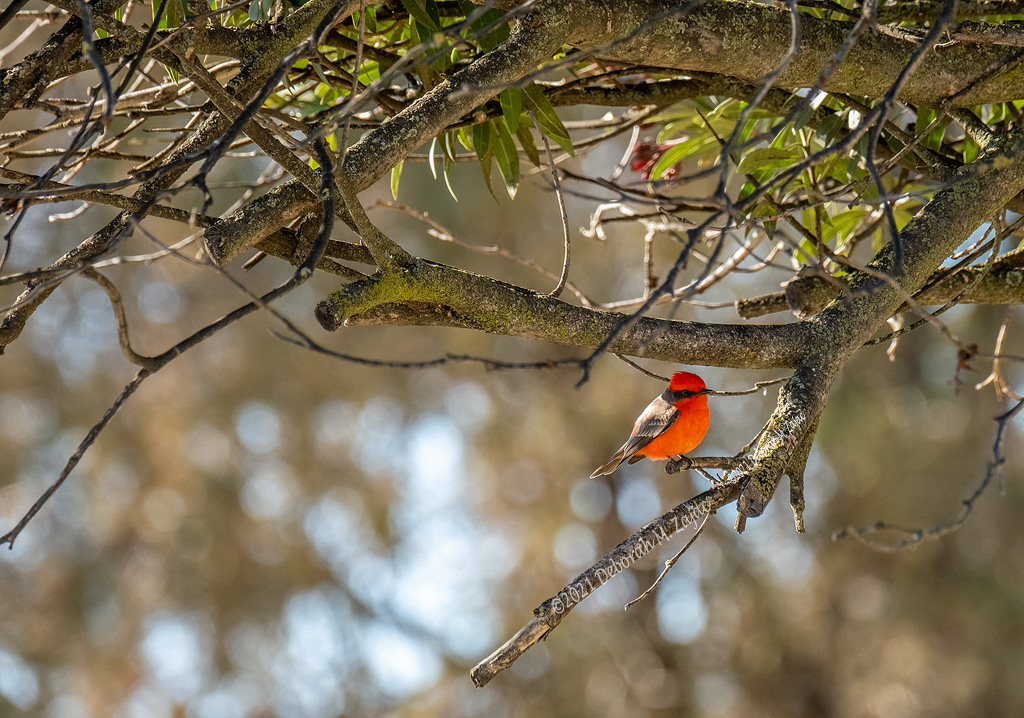
I told you I would show you the beautiful Vermilion Flycatcher that I went to see in Maxwell, CA a few week ago, and today is the day! He’s a year round resident of Mexico and South America. He does come north to So. Texas and So. California for breeding season, and has been seen in the states along the gulf coast states. How this one found his way up here in Central Calif. is a mystery, but it’s been returning for 5 winters now. He’s rare there.

Isn’t he pretty?

Fuji X-T3 w/ Fuji 100-400mm lens @400mm

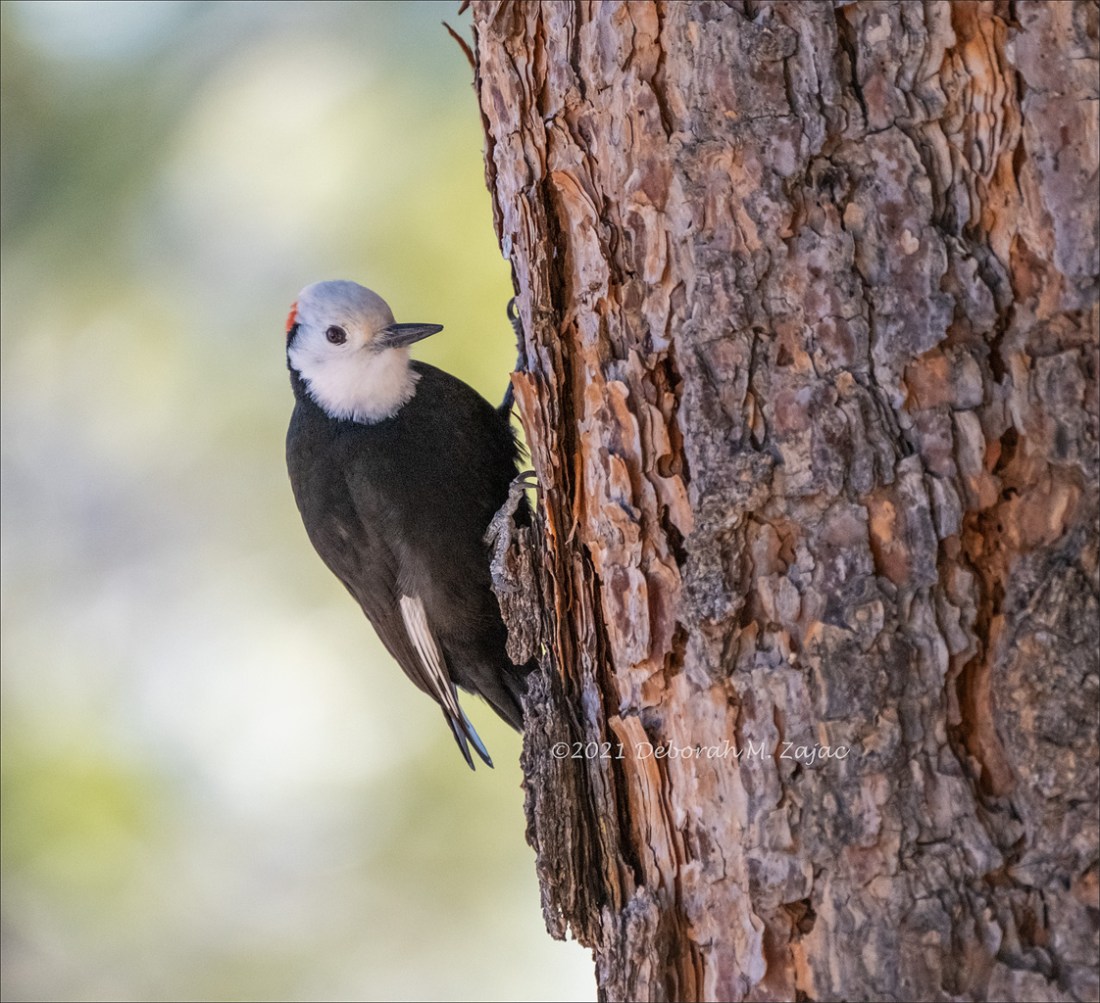
Almost two weeks ago He-Man went up to Washoe Co. the next county over to go on a bike ride and I went with him not to ride, but to bird while he rode and guess who I saw? The White-headed Woodpecker! This is a male. I only saw this species for the first time last year so I still do a happy dance when I see one.

This one was so busy foraging he didn’t care about me too much. Once in awhile he did check me out.

Fuji X-T3| Fuji 100-400mm @400mm

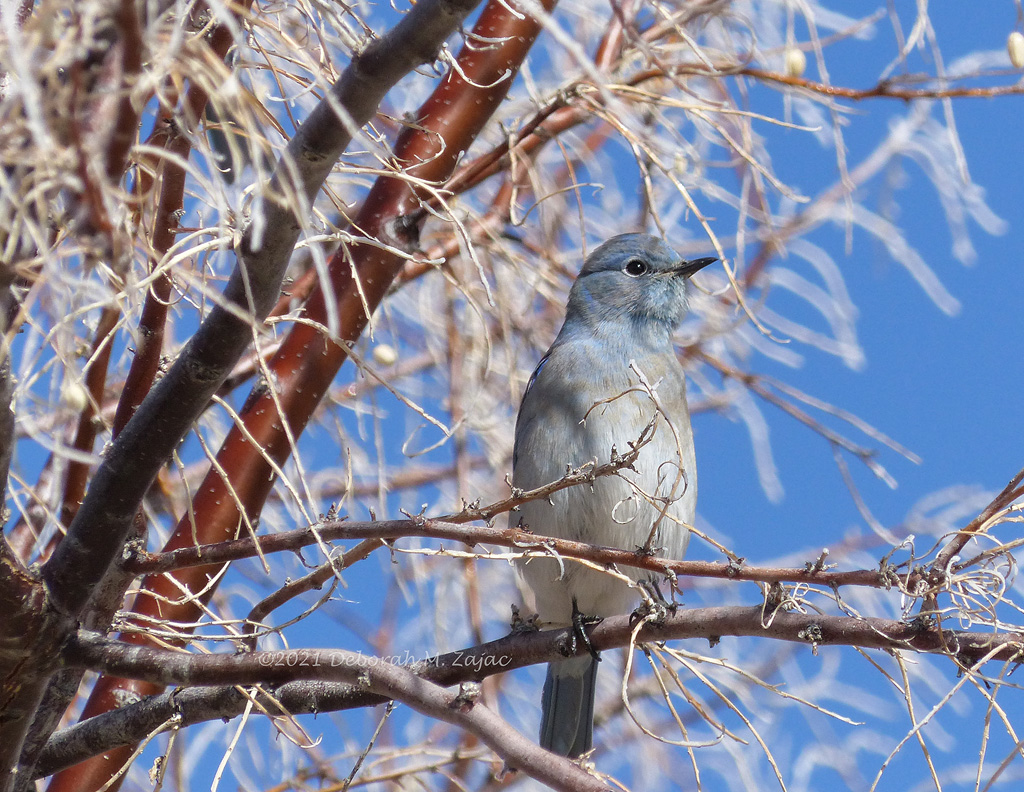
Sunday two neighbors and I went for our walk and we decided to go further than the mailbox and go up the hill and come home the back way where we saw Mountain Bluebirds foraging in the Russian Olive trees. The Olives are like little nuts that they seem to really like.

I saw this species for the first time last Spring, but didn’t have my camera with me but, by the time I raced home on foot to get the camera and return to the spot I saw one it was gone. I am so glad I had a camera with me on Sunday! Mountain Bluebird Male

Panasonic Lumix FZ200 @600mm

It’s been a good birdy couple of weeks that has been waylaid by weather. We’ve had snow! I won’t be out birding for a few days.

I hope you all have a lovely weekend, stay healthy, and safe.

more to come…

Sunset on the Pond

Copyright ©2017 Deborah M. Zajac. ALL RIGHTS RESERVED

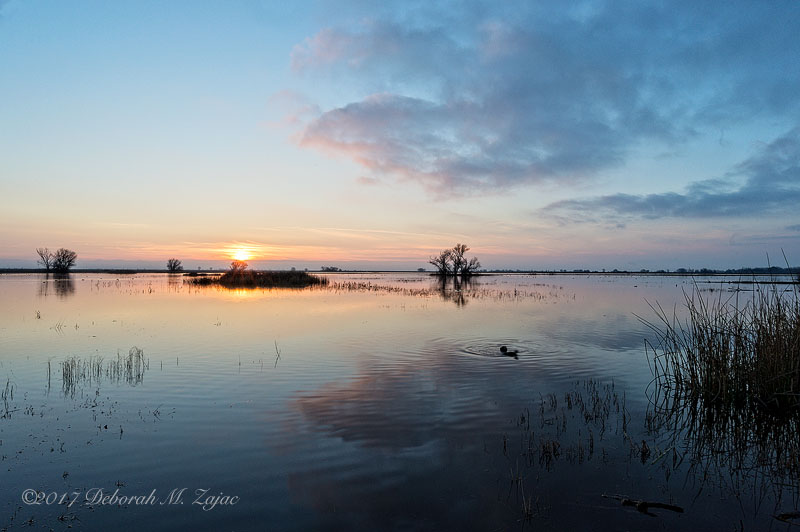
I spent the day  with friends in Merced County birding in the wildlife refuges near there. It was a great day of birding, and I’ll be sharing the birds I photographed in the near future, but today I wanted to share the lovely sunset we had on the pond.

Sunset on the Pond

Nikon Df| Nikkor 20mm f/1.8g @f/16| Delkin Digital Film| PS CC 2017 & On1 Photo 10.5

More to come…