Copyright ©2026 Deborah M. Zajac. ALL RIGHTS RESERVED.
PLEASE DO NOT USE MY IMAGES WITHOUT EXPRESSED WRITTEN PERMISSION.
It’s been awhile since I shared any of the birds I’ve been seeing. As I mentioned I was overwhelmed getting my life list up to date after March’s Florida trip, and April’s Texas trip. Today, I’m sharing 3 North American Jays that I added to my Life List this year.
Some of you know how badly I’ve wanted to get a decent photo of the Blue Jay since I first saw one in FL in 2024. They seem to know when I’m in Florida and Ohio with my camera. They toyed with me…hiding in the foliage or giving me a brief look and flying away as soon as I lifted my camera. Well, in March I had two full days to bird with my friend Mary. I spied a Blue Jay and doggedly followed it for 20 minutes to get a photo that wasn’t blurry, or a butt shot.
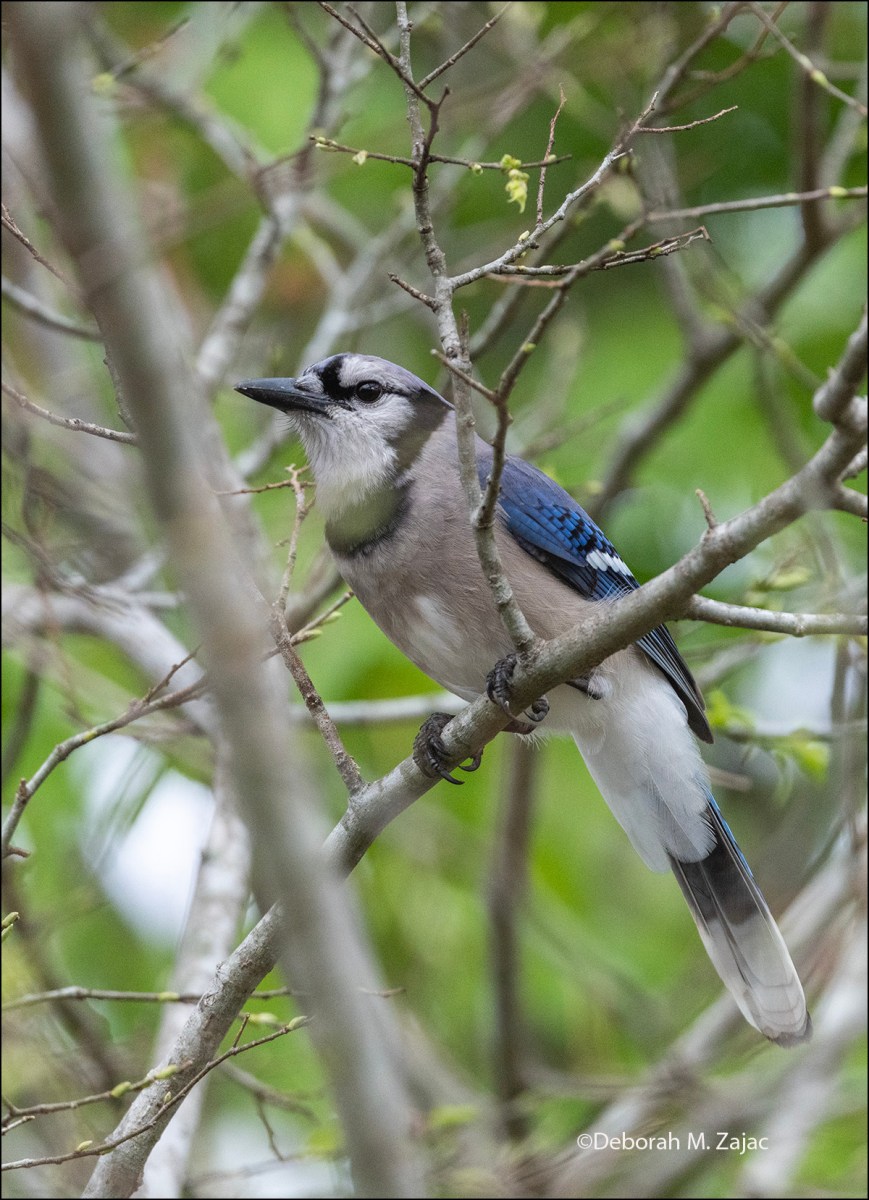
Blue Jay-showing only a bit of its beautiful markings, and there’s a dreaded branch right in front of its face. Sigh. I kept following it…

Blue Jay- Finally, a decent photo of one!
On my last day of birding with Mary we saw four Florida Scrub-Jays and we thought two of them were banded. I don’t have any information about this Jay from the bands unfortunately. It was backlit so I had to do some masking to lighten up its face a bit.
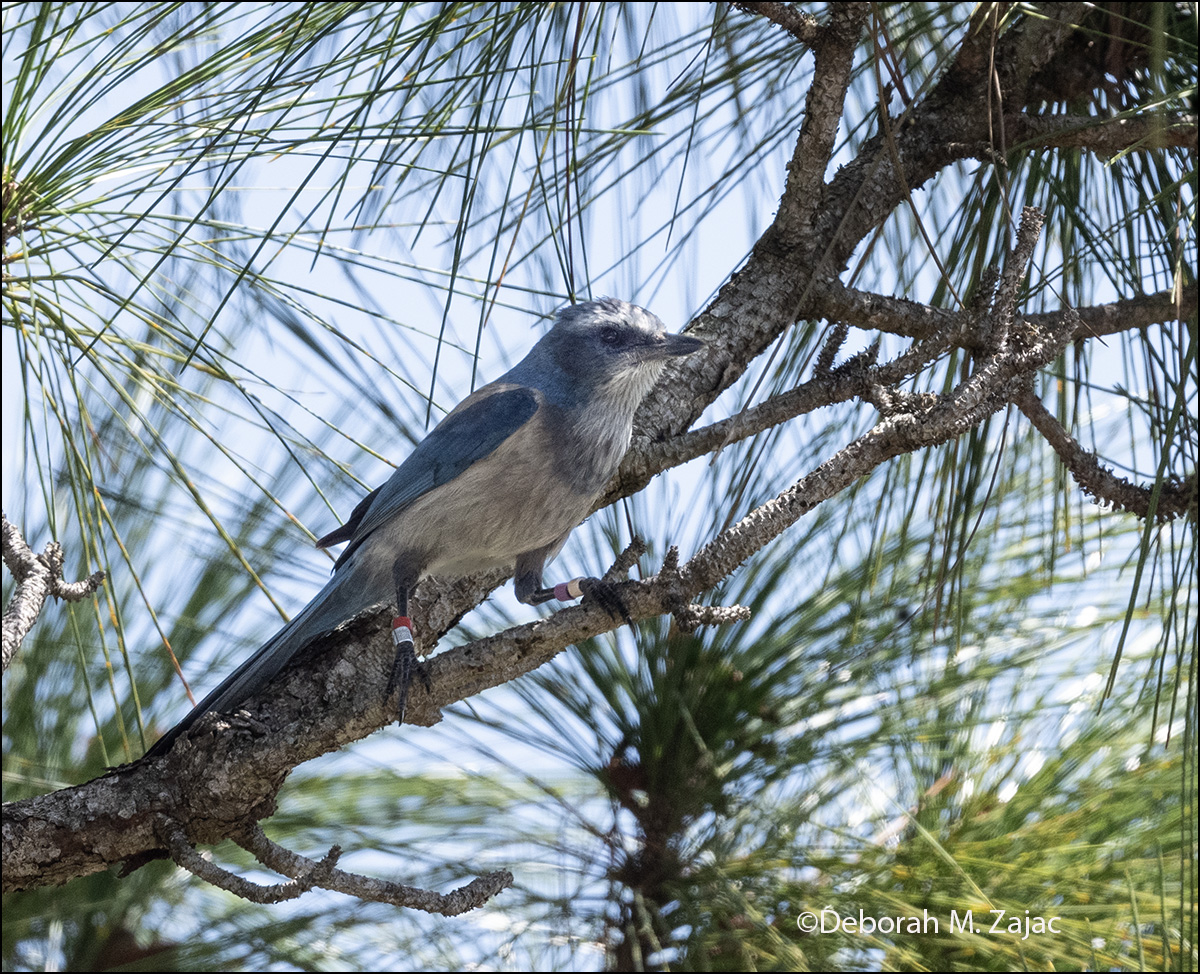
Florida Scrub-Jay
While in Texas the bird I had hoped to be an easy one to see was the Green Jay. I got lucky and saw a few but, getting an image was tricky. I did get some at a World Birding Site. They set out feeding stations for the birds and the Green Jay flew in for some nibbles.

These three Jays take me to seeing 7/10 Jays of North America. I’ve seen the Blue Jay, California Scrub-Jay, Steller’s Jay, Pinyon Jay, Green Jay, the Florida Scrub-Jay, and the Woodhouse Scrub-Jay. Maybe one day I’ll see them all, but if not I’m so excited to see as many as I have.
It’s been an amazing birding year for me. My bird count for this year is 361 species. With any luck, I hope to pick up a couple more with fall and winter migration. I think this is going to be the best year of birding I had in my life.
I’m birding this morning with the group so will be late getting to your blogs and comments.
I hope everyone has a lovely week-end!
more to come…




You must be logged in to post a comment.