For several weeks we’ve had a Cooper’s Hawk perching on a neighbor’s tree out back. With all the White-crown Sparrows, and Quail about I’m sure it’s hoping for a meal.
I’ve been enjoying seeing it perched there.
Cooper’s Hawk
Fun Facts-
Dashing through vegetation to catch birds is a dangerous lifestyle. In a study of more than 300 Cooper’s Hawk skeletons, 23 percent showed old, healed-over fractures in the bones of the chest, especially of the furcula, or wishbone.
A Cooper’s Hawk captures a bird with its feet and kills it by repeated squeezing. Falcons tend to kill their prey by biting it, but Cooper’s Hawks hold their catch away from the body until it dies. They’ve even been known to drown their prey, holding a bird underwater until it stopped moving.
Once thought averse to towns and cities, Cooper’s Hawks are now fairly common urban and suburban birds. Some studies show their numbers are actually higher in towns than in their natural habitat, forests. Cities provide plenty of Rock Pigeon and Mourning Dove prey. Though one study in Arizona found a downside to the high-dove diet: Cooper’s Hawk nestlings suffered from a parasitic disease they acquired from eating dove meat.
Life is tricky for male Cooper’s Hawks. As in most hawks, males are significantly smaller than their mates. The danger is that female Cooper’s Hawks specialize in eating medium-sized birds. Males tend to be submissive to females and to listen out for reassuring call notes the females make when they’re willing to be approached. Males build the nest, then provide nearly all the food to females and young over the next 90 days before the young fledge.
The oldest recorded Cooper’s Hawk was a male and at least 20 years, 4 months old. He was banded in California in 1986, and found in Washington in 2006.
I didn’t think I’d be able to see the Lunar Eclipse this time around because snow and cloud cover was predicted in the forecast. I set my alarm anyway and thought I’d just photograph Totality since it was in the middle of the night and cold.
When I got up and looked out the window I couldn’t believe it, it was clear and barely a breeze blowing!
It was just a few minutes after 2:00 A.M. PST…(I think that’s the time we’re in now? 🤷♀️ ), when I started taking my test shot.
Totality began at 2:16A.M here and I was ready for it. This image was made at 2:221A.M
The next Total Lunar eclipse to be visible in the USA won’t be until March 14, 2025. Until then my mind will be shifting from the
Moon to the Sun as there is an Annular Solar Eclipse in October 2023. The last time I photographed an Annular Solar Eclipse was back in 2012. You can see that post here . I’m hoping I can get to the sweet spot to photograph it again.
It snowed here all day yesterday and is looking magical and very much like Winter is here.
I hope you’re all having a good week, and are staying warm and safe.
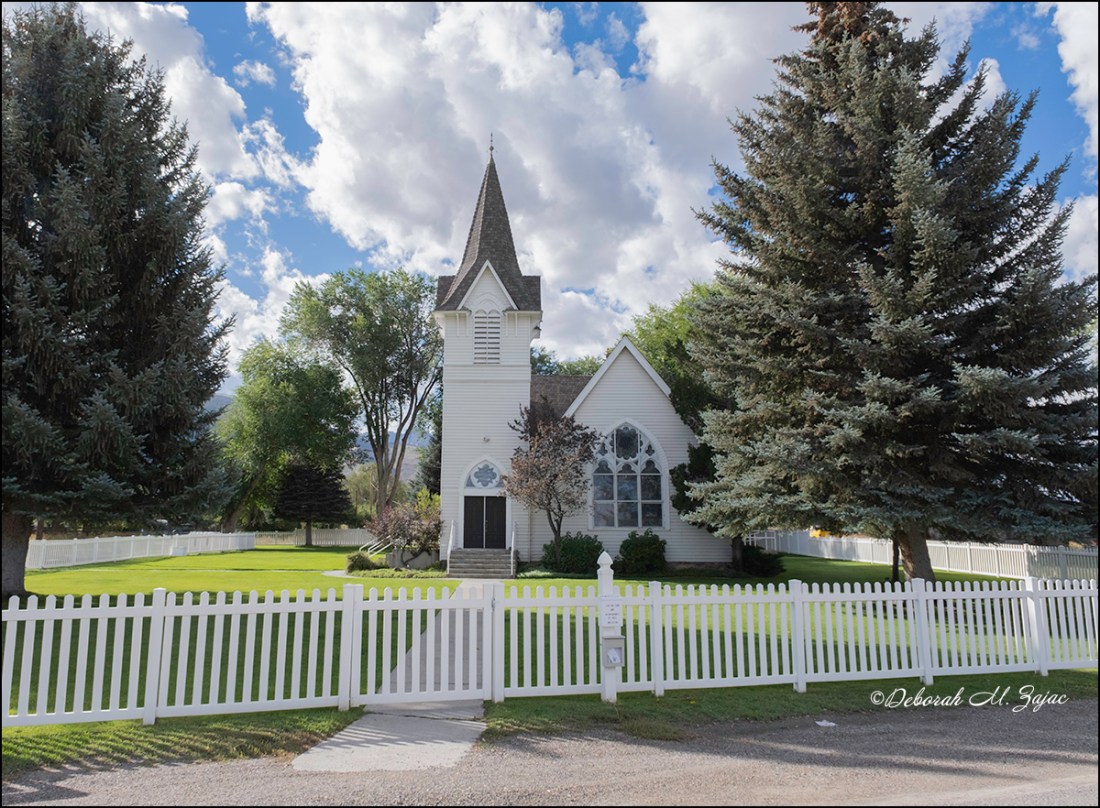
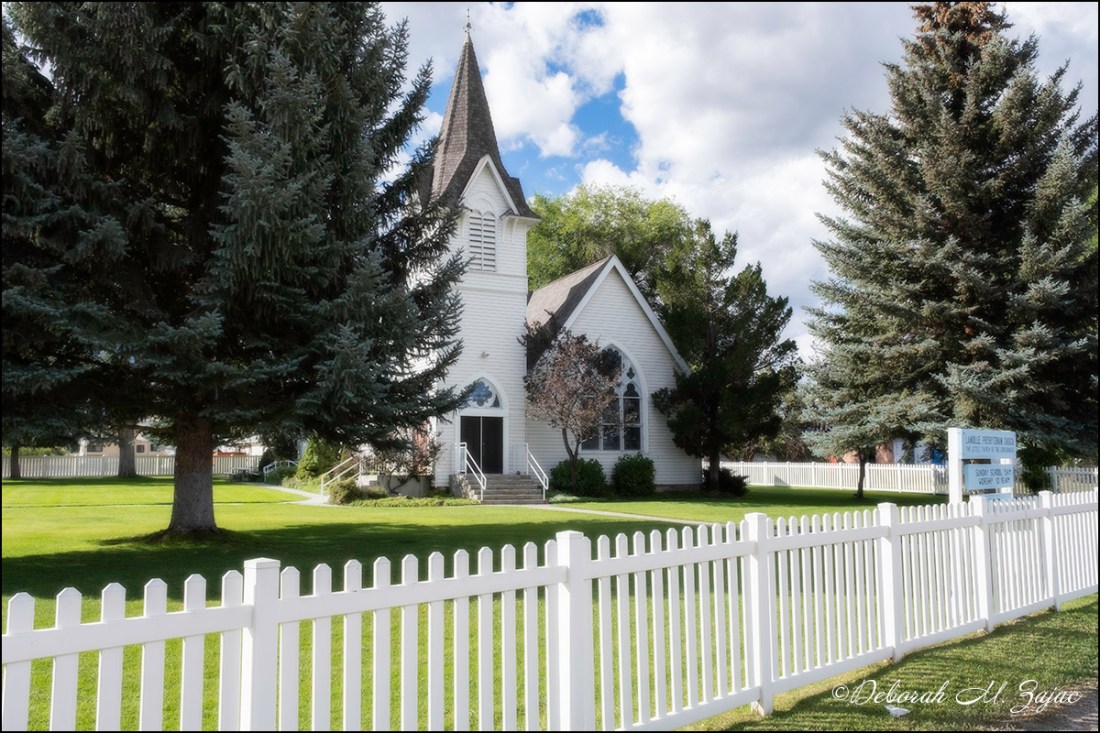
He-Man and I are beginning to explore a bit more of our new home state of Nevada this time we spent a couple of days in Elko County exploring Lamoille Canyon in the Ruby Mountains. While on the scenic highway I spied this beautiful little church and had to stop for a photo or two.
Lamoille Presbyterian Church
From the church’s website found here they say the congregation had its first church service in Lamoille in 1872, and in 1890 the Organization of the First Presbyterian Church of Lamoille was established.
In 1905 they layed the first cornerstone for the building.
Since then it has gone through some changes and even closed for a time because of a decline in population and non use. It came back though and has been restored and had a second addition added in 1983, and in 2005 the community celebrated its 100th anniversary!
Closer look at the DoorLamoille Presbyterian Church
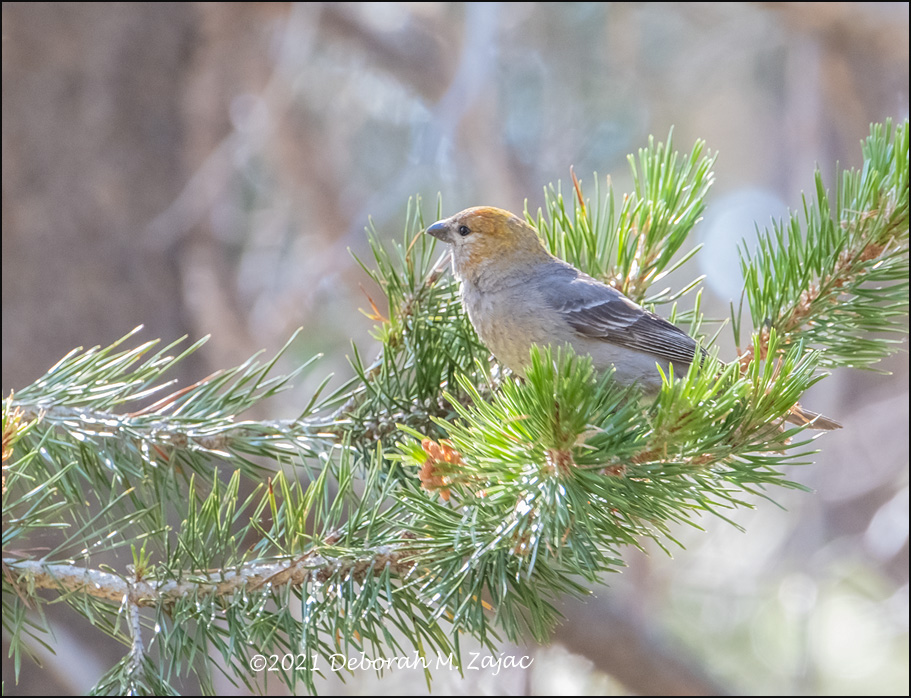
Last week I went birding with the Audubon Group and we were treated to a sighting that not only was a new to me bird, but a rare bird to this area too. Lifer number 6 for 2021 is the Pine Grosbeak. This is a female.
This was a “lifer” for about half the group and there were only 9 of us birding that morning. It was quite exciting!
Pine Grosbeaks eat a lot of plants, but it can be tough for their nestlings to eat and digest all that vegetation. Instead of feeding plants directly to their nestlings, they regurgitate a paste of insects and vegetable matter that they store in pouches at the lower part of their jaw on either side of their tongues.
Not all Pine Grosbeaks are the same. Not only do they differ in the amount and intensity of red across their range, they are also different sizes. Body size and wing and tail length generally increase from Newfoundland westward to the Yukon Territory. But birds on Haida Gwaii (Queen Charlotte Island) in British Columbia, Canada, and in California are among the smallest of all Pine Grosbeaks. Wings and tails of birds on Haida Gwaii are around a half inch smaller than birds in Alaska.
Pine Grosbeaks aren’t just in North America. They also breed in subalpine evergreen forests from eastern Asia to Scandinavia.
The tameness and slow-moving behavior of the Pine Grosbeak prompted locals in Newfoundland to affectionately call it a “mope.”
Winter flocks may stay near a tree with abundant fruit until all of it is consumed.
The oldest recorded Pine Grosbeak was a male, and at least 9 years, 9 months old when he was found in Quebec in 1970. He was first captured and banded in Connecticut in 1961.
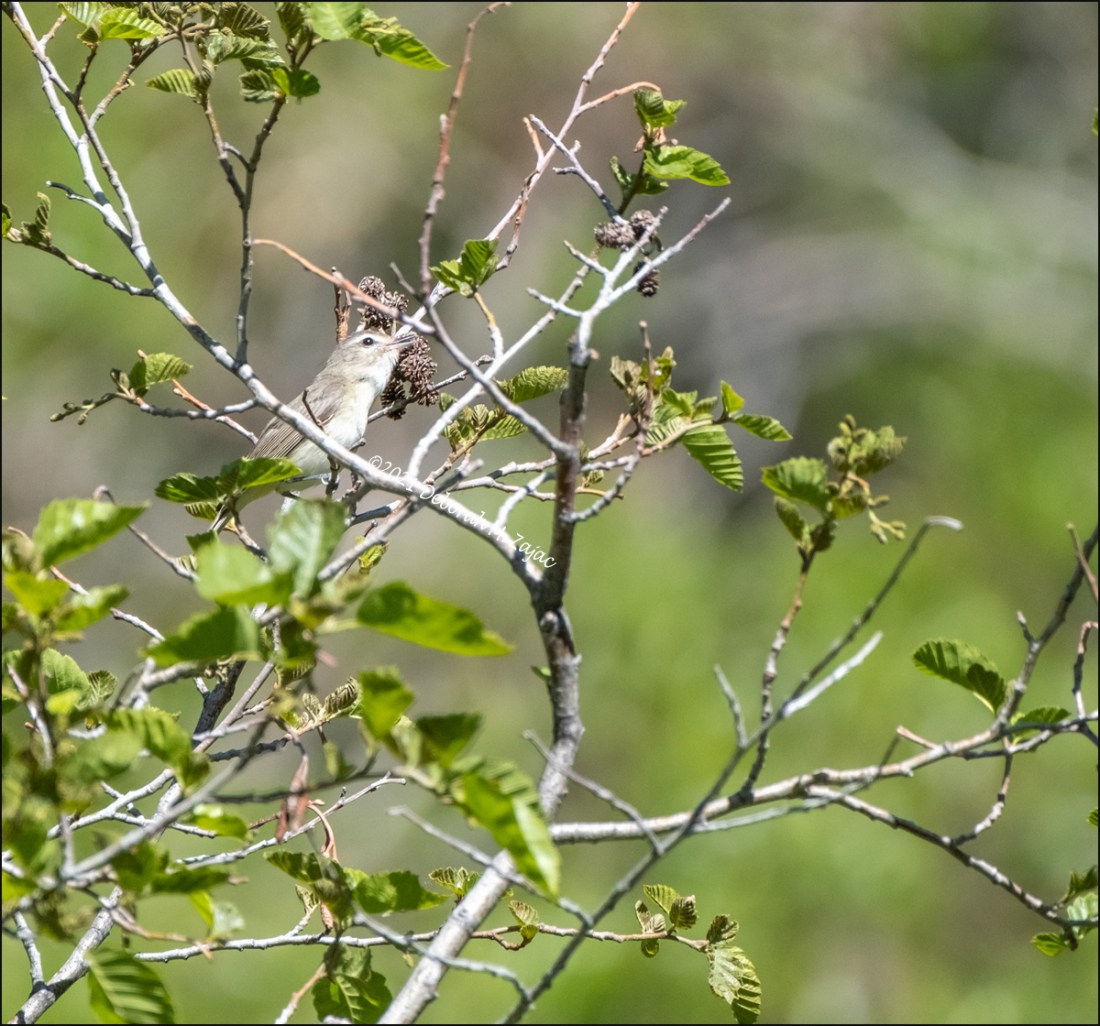
Continuing on with the newest “lifers” that I’ve picked up this year I present Lifer N° 2 for 2021…the Warbling Vireo.
I confess I would have missed this bird had I not been out with a local birding group. The leader for that day’s outing recognized its song, and I started peering into the foliage and spotted something flitting around. Hoping for it come out in the open for peek I waited, and waited. Finally a brief look!!
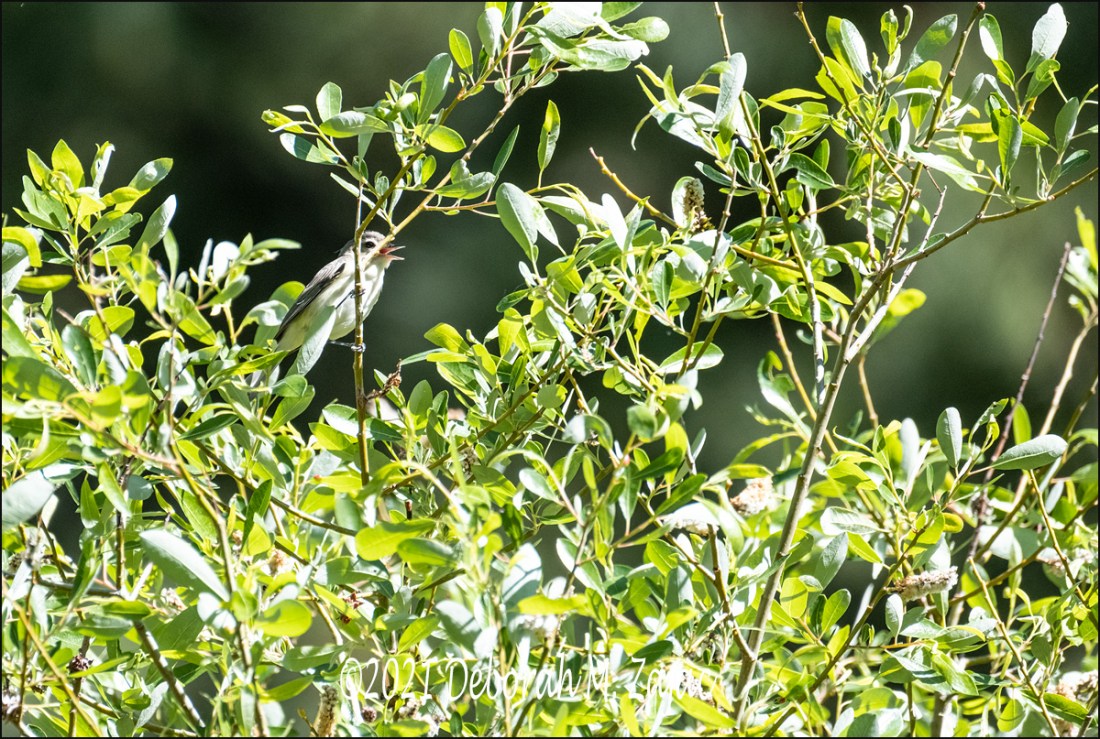
Then just as quickly it flew to another bush behind a branch and began singing its morning song.
These are the only decent images I was able to get of it, but I’m happy to have them!
They have a large range in the United States, but breed here in the Summer months.
Since this little one is singing in the last image I thought I’d try to add a sound file so you can hear one of its songs. Nuts! The link didn’t embed the sound file.
Clicking the link will open a new window with the recording of the Western Warbling Vireo
Warbling Vireos have a good name—the males sing a fast, up-and-down, rollicking song that suits the word “warbling.” The early twentieth century ornithologist William Dawson described the song this way: “fresh as apples and as sweet as apple blossoms comes that dear, homely song from the willows.” The highly variable song usually ends on a high note, leading the birder Pete Dunne to describe it as sounding “like a happy drunk making a conversational point at a party.”
Across their wide range, Warbling Vireos differ from one population to another in several characteristics, including overall size, bill shape, plumage coloring, molt patterns, wintering areas, and vocalizations. The differences are significant enough to lead ornithologists to recognize six separate subspecies of Warbling Vireo, and at one time divided them into two species.
Brown-headed Cowbirds frequently deposit their own eggs in the nests of Warbling Vireos. In some instances, the vireo pair incubates the alien egg and raises the young cowbird until it fledges. Female vireos in some eastern populations, however, tend to puncture and eject interlopers’ eggs.
Researchers speculate that Warbling Vireo song is at least partially learned rather than hard-wired. They base this supposition in part on observations of one individual whose song more closely resembled that of a Red-eyed Vireo than that of its parents. The garbled song, they concluded, probably resulted from a flawed learning process during the bird’s development.
The longest-lived Warbling Vireo on record—a male that was originally banded in July 1966—was at least 13 years, 1 month old when it was recaptured and rereleased during banding operations in California.
I hope you enjoyed seeing these Warbling Vireo images today, and I hope your Friday is going well, and you have a lovely week-end and I wish an early Happy Father’s Day to all the Dad’s in the US!




 Circadianreflections Blog
You must be logged in to post a comment.