Friday’s Feathered Friends- Bald Eagles

Copyright ©2022 Deborah M. Zajac. ALL RIGHTS RESERVED

At the end of February I met up with some friends one of them Gordon from https://undiscoverdimagesamongstus2.wordpress.com/ We met up in Oregon in the Klamath Basin region to do some birding. We were hoping to see American Bald Eagles and the other usual winter suspects.

What we didn’t expect was to see 17 American Bald Eagles around and on the first pond we went to!

You know we hit that pond several times while there mornings, and afternoons.

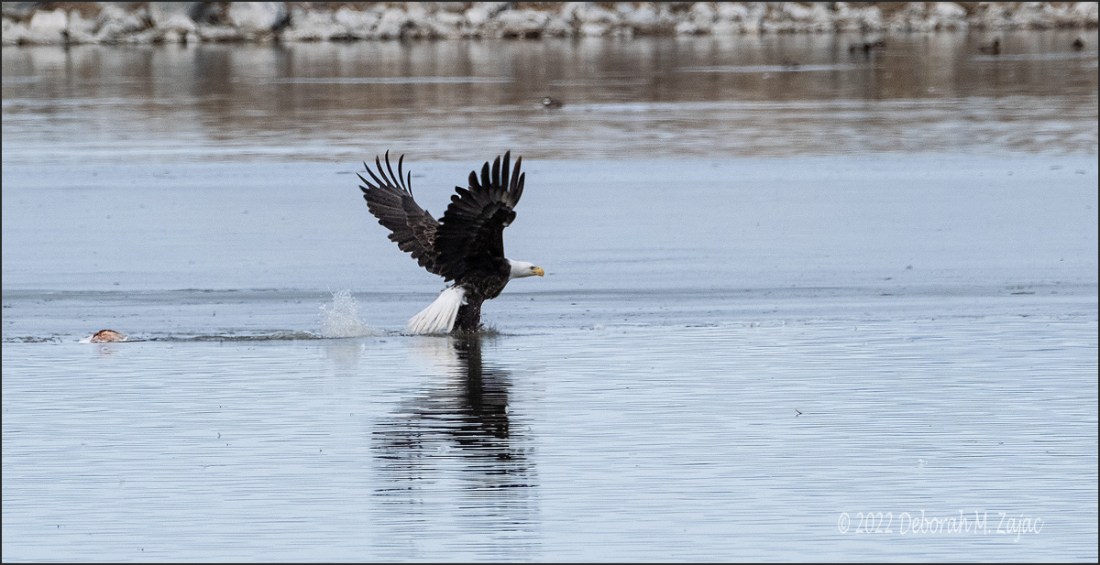
The first morning we were all together was Saturday we rose early and headed to the pond. It was a chilly 14 degrees Fahrenheit, but we saw Eagles. Later that afternoon we went back and saw an Eagle trying to retrieve its prey from the icy pond water.

American Bald Eagle- Incoming!

It missed, but oh, it was so cool seeing it try.

Missed!

It landed in the water then pulled up and swung around again for another pass.

Landed in icy water
Pull up!

This time it tried a different approach, and missed again!

American Bald Eagle over the Target!

Then it just flew away leaving us wondering if this was just retrieving practice?
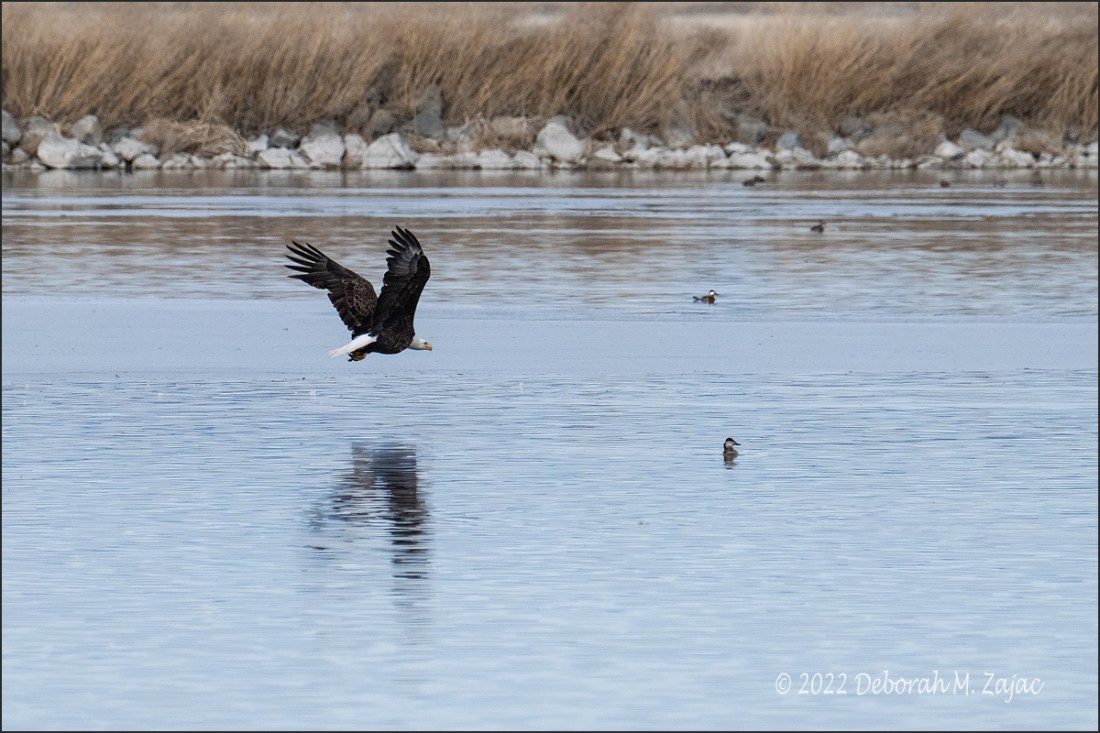
American Bald Eagle Adult in Flight

It was quite exciting and entertaining to watch and one of the highlights of the week-end.

Fun Facts:

The American Bald Eagle has been the national emblem of the United States since 1782.

These magnificent birds aren’t really bald, but their white-feathered heads gleam in contrast to their chocolate brown bodies and wings.

Rather than do their own fishing, Bald Eagles often go after other creatures’ catches. A Bald Eagle will harass a hunting Osprey until the smaller raptor drops its prey in midair, where the eagle swoops it up. A Bald Eagle may even snatch a fish directly out of an Osprey’s talons. Fishing mammals (even people sometimes) can also lose prey to Bald Eagle piracy.

Had Benjamin Franklin prevailed, the U.S. emblem might have been the Wild Turkey. In 1784, Franklin disparaged the national bird’s thieving tendencies and its vulnerability to harassment by small birds. “For my own part,” he wrote, “I wish the Bald Eagle had not been chosen the Representative of our Country. He is a Bird of bad moral Character. He does not get his Living honestly. … Besides he is a rank Coward: The little King Bird not bigger than a Sparrow attacks him boldly and drives him out of the District.”

Sometimes even the national bird has to cut loose. Bald Eagles have been known to play with plastic bottles and other objects pressed into service as toys. One observer witnessed six Bald Eagles passing sticks to each other in midair.

The largest Bald Eagle nest on record, in St. Petersburg, Florida, was 2.9 meters in diameter and 6.1 meters tall. Another famous nest—in Vermilion, Ohio—was shaped like a wine glass and weighed almost two metric tons. It was used for 34 years until the tree blew down.

Immature Bald Eagles spend the first four years of their lives in nomadic exploration of vast territories and can fly hundreds of miles per day. Some young birds from Florida have wandered north as far as Michigan, and birds from California have reached Alaska.

Bald Eagles occasionally hunt cooperatively, with one individual flushing prey towards another.

Bald Eagles can live a long time. The oldest recorded bird in the wild was at least 38 years old when it was hit and killed by a car in New York in 2015. It had been banded in the same state in 1977.

Once endangered by hunting and pesticides, Bald Eagles have flourished under protection.

Fun Facts gleaned from All About Birds

https://www.allaboutbirds.org/guide/Bald_Eagle/

I will be sharing more images from this trip in future posts. Until then I hope you cut loose a little and have a lovely week-end! 😀

Fuji X-T3| Fujinon 100-400mm| PS CC 23.2.1

more to come…
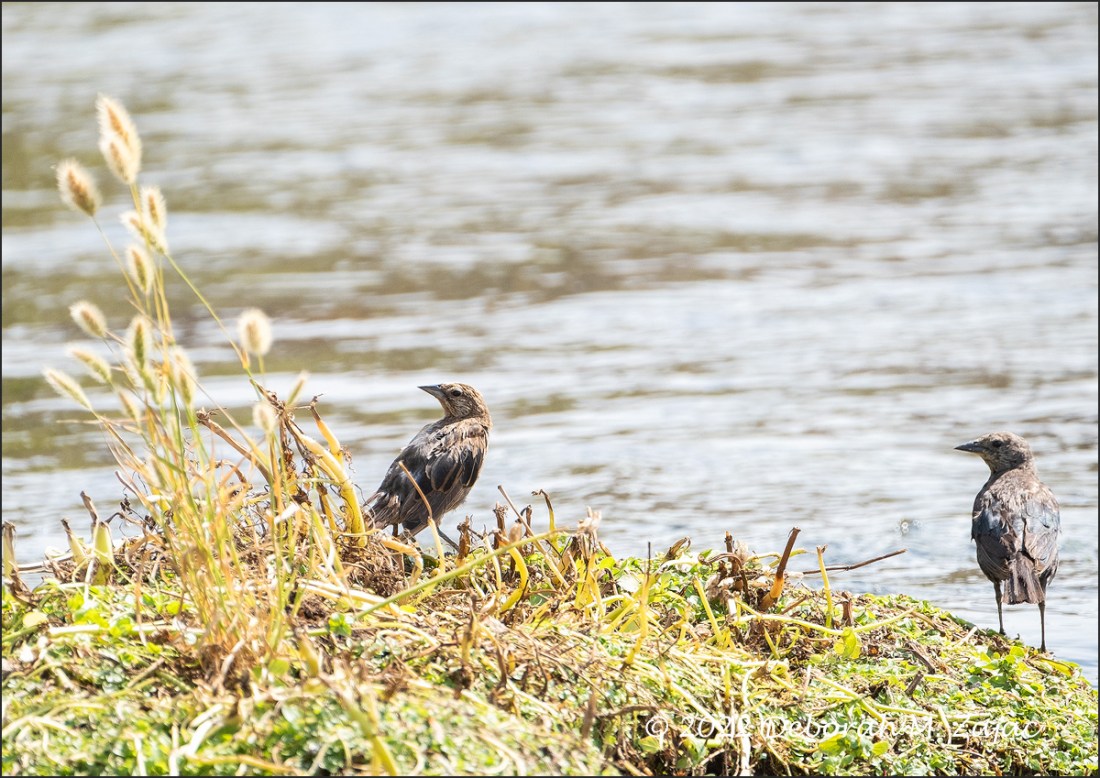
Whatever Weds. North American Elk

Copyright ©2022 Deborah M. Zajac. ALL RIGHTS RESERVED

One of the highlights we had while visiting Rocky Mountain National Park last October were the North American Elk herds. The surprising thing is just how BIG they are. They stand 5 feet tall at the shoulder, and weigh several hundred pounds. The females are half their size. Only the males have antlers which they shed each winter. Their antler can grow up to an inch a day!

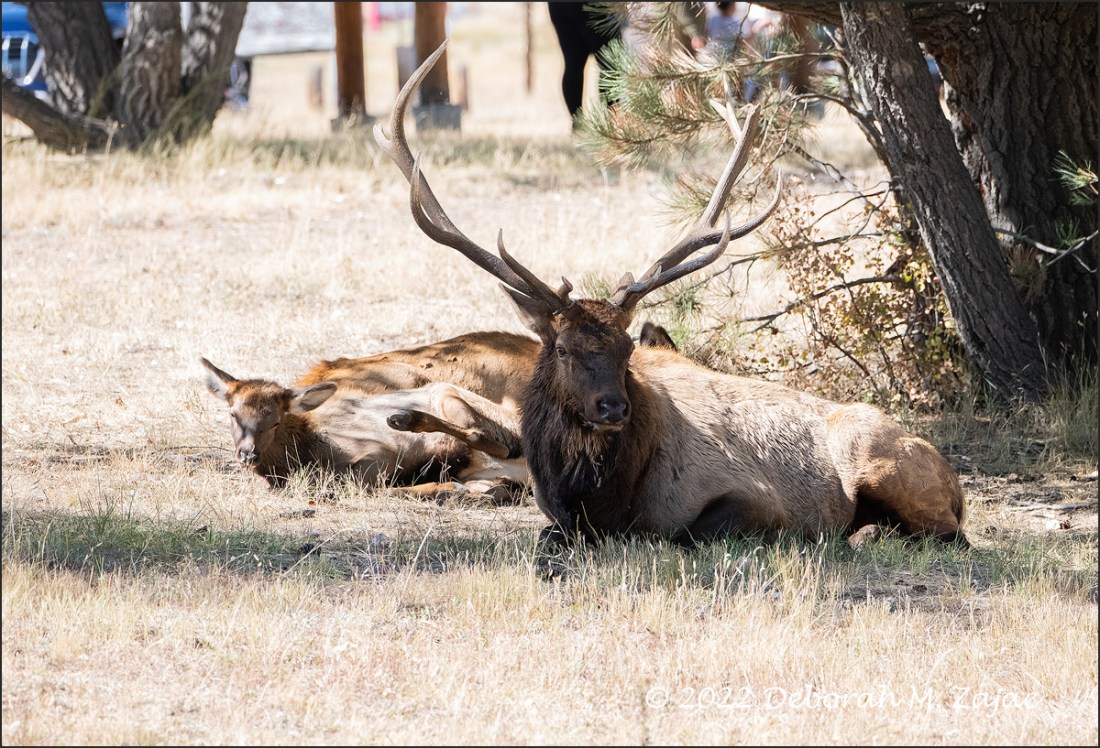
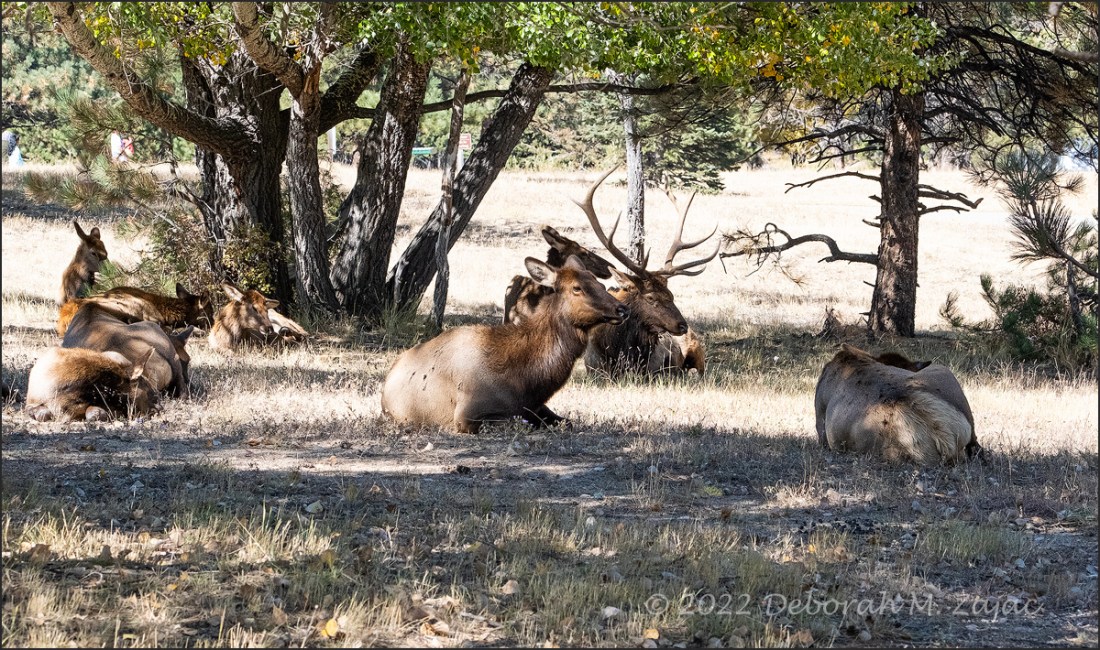
One morning while in Estes Park I saw a Bull laying in the shade with his harem and made my over to get some images of them.

The bull …

North American Elk Bull

He had about dozen females (called cows) in his harem. Here he is with some of them just chillin.

Bull Elk with some of his harem

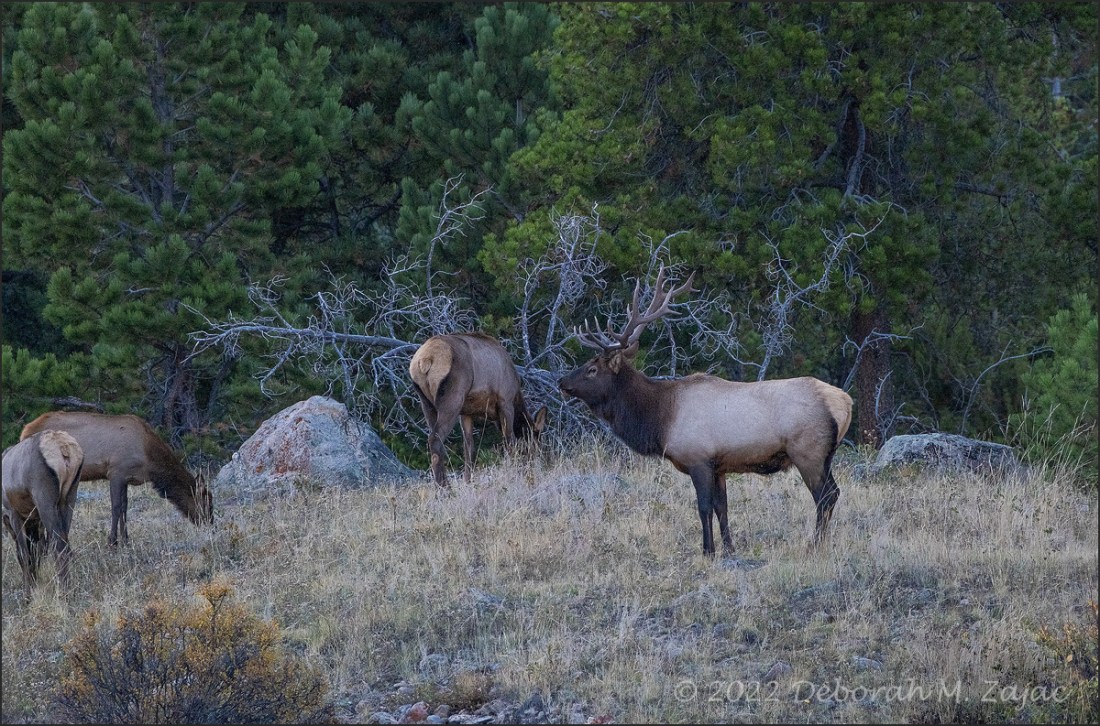
Here’s an image of a bull and some of his harem we saw the night before just after the sun went behind the mountains while in Rocky Mountain National Park.

North American Elk Bull with Harem

The rutting season begins in October so the bulls were on high alert keeping a close eye on their harems and keeping them close by.

Fun Fact-

Free roaming elk have a lifespan of 10-13 years in the wild.

https://www.nps.gov/romo/learn/nature/elk.htm

We really enjoyed seeing these wonderful animals while we in the park. They really do enrich the visit.

Fuji X-T3| Fujinon 100-400mm| PS CC 23.1.1

more to come

Whatever Weds. Cattails

Copyright ©2022 Deborah M. Zajac. ALL RIGHTS RESERVED

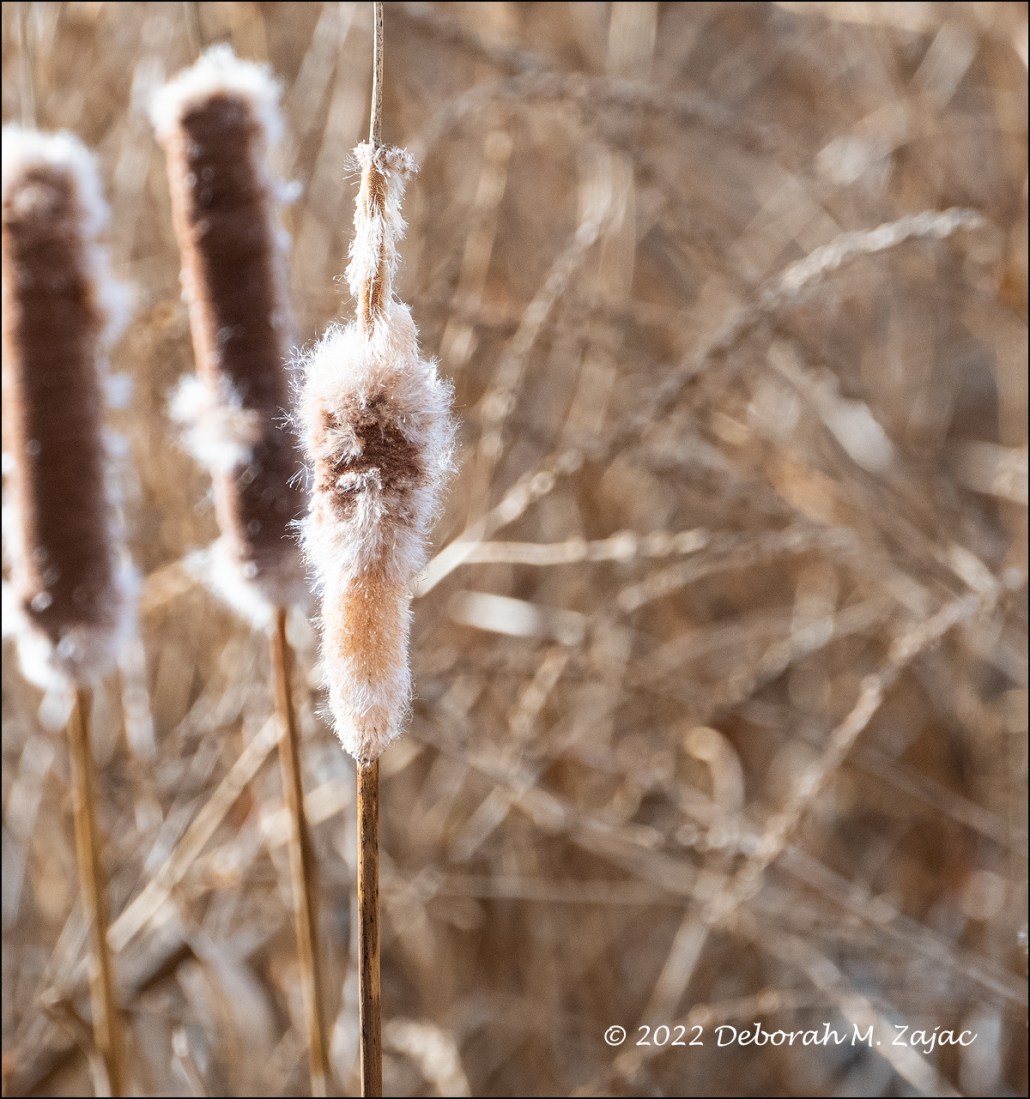
I like cattails even when they get all crazy and fluffy. I always think of it as organized chaos.

I’ve also always liked this bit of Mary Oliver’s poem regarding cattails,

“the long tapers
of cattails
are bursting and floating away over
the blue shoulders

of the ponds,
and every pond,
no matter what its
name is, is

nameless now.”

From her poem- In Blackwater Woods.

Happy Hump Day! I hope your week is going well.

Fuji X-T3| Fujinon 100-400mm| PS CC 23.0.0

more to come…

Friday’s Feathered Friends- American Bald Eagle

Copyright ©2022 Deborah M. Zajac. ALL RIGHTS RESERVED

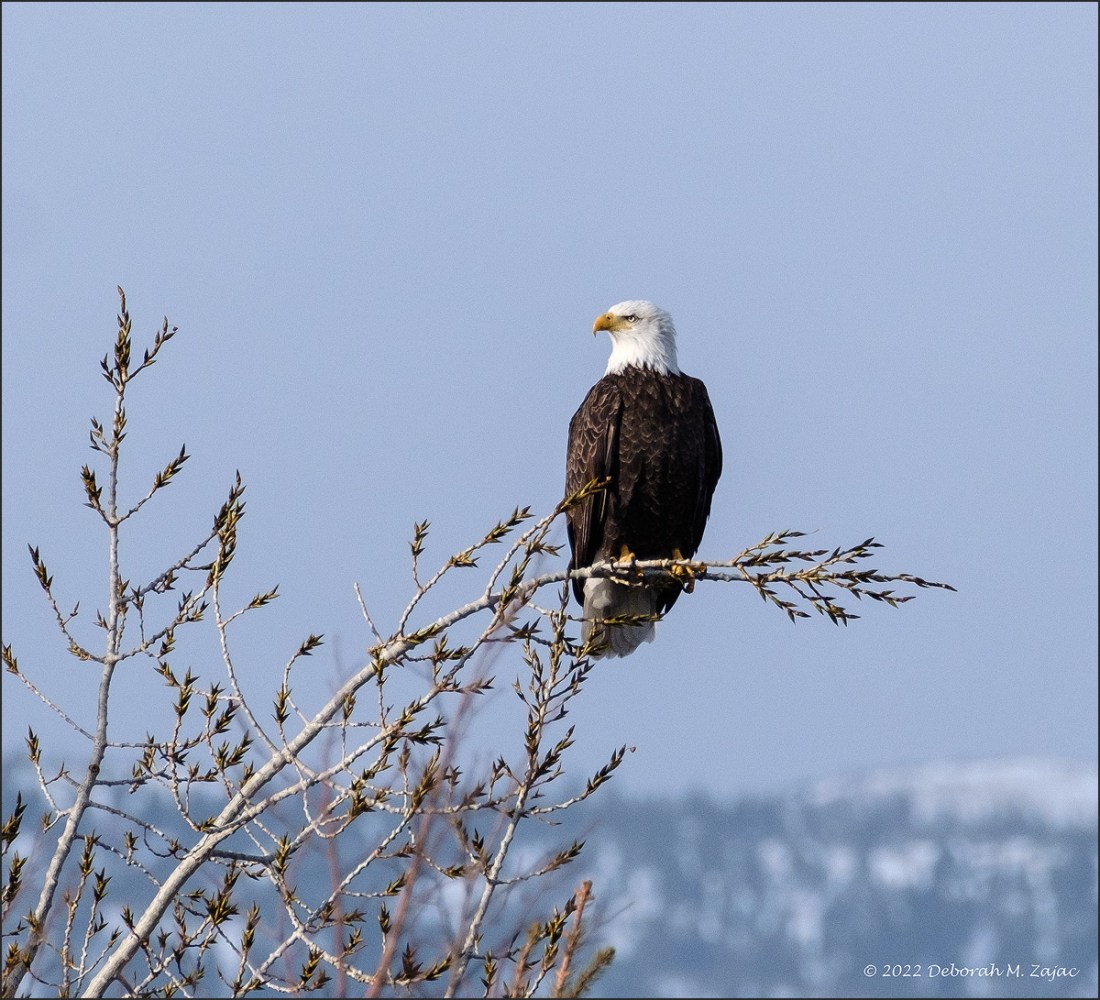
While out birding with the birding group at the beginning of the month we saw this wonderfully majestic bird fly in low and land on this branch above a pond.

American Bald Eagle

It stayed there for quite awhile just taking in its surroundings. I turned my attention to another bird for a second and poof! Off flew the Eagle.

I’m way behind with your blogs as I spent the better part of this week at Baby Girl’s doing school runs, and playing with Littlest while she was swamped with training meetings. I’m home now and beginning to play catch up.

I hope you all have a wonderful week-end. I’ll be catching up with laundry, emails, snail mail, and blogs, and speaking of blogs WP sent me a notice today wishing me a happy 12th Blogversary.12 years! It doesn’t feel that long to me. Thank you all so much for finding my blog, for the comments, conversations, and most of all for the friendships we’ve forged throughout these years. 🥰 Thank you all so much!!

Fuji X-T3| Fujinon 100-400mm| PS CC 23.0.0

more to come…

Friday’s Feathered Friends- Rock Wren in Red Rocks Park

Copyright ©2021 Deborah M. Zajac. ALL RIGHTS RESERVED

Hi! He-Man and I are home from a trip to the Denver, CO area for a wedding and vacation.

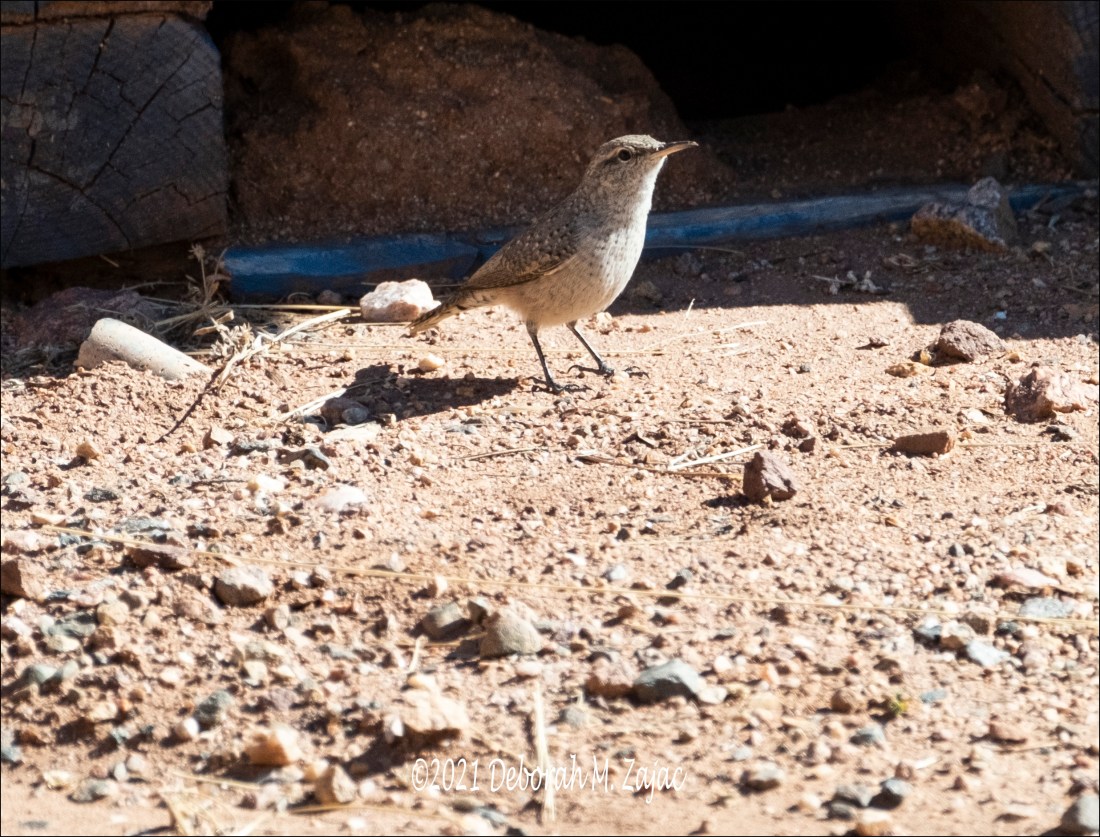
I haven’t uploaded too many images from the week yet, but here’s a little Rock Wren I spied while hiking in Red Rocks Park on the Red Rocks Trail. It was hunting for breakfast in a fenced off maintenance area just off the trail.

Rock Wren

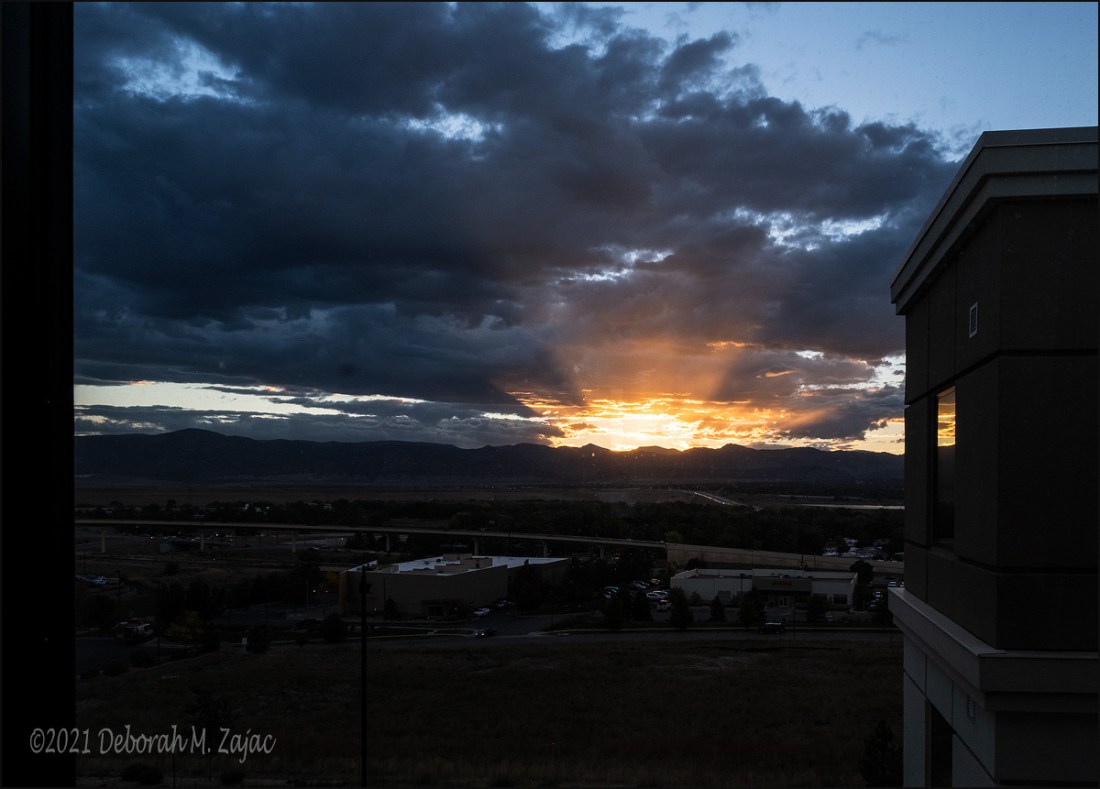
Our last night there we had a lovely sunset …the first one all week actually. I grabbed a quick shot through our hotel room’s window.

Sunset

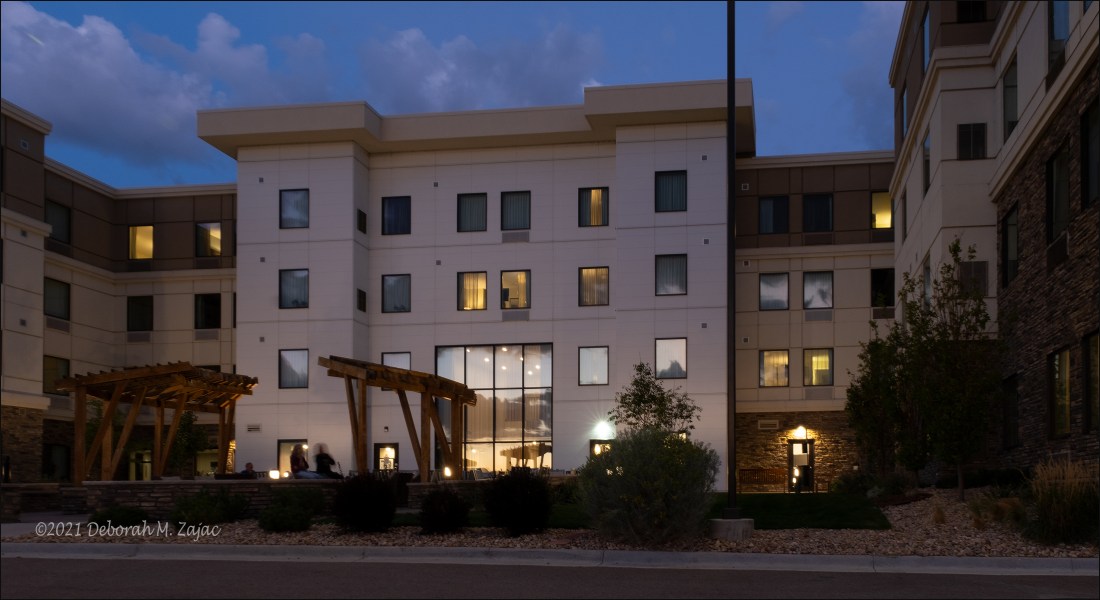
Then I went down stairs to make an image of the courtyard with an evening blue sky and clouds behind it. I hoped for more sunset color but, it was too cloudy.

We had a great time, and visited several beautiful parks which I’ll be sharing images of soon.

I’ll be catching up with laundry, mail, and your blogs. What have I missed?

Happy Friday and week-end everyone!

Fuji X-T3| Fujinon 100-400mm & 16-80mm| PS CC 22.5.0

more to come…

Whatever Weds. Red-tailed Hawk Immature

Copyright ©2021 Deborah M. Zajac. ALL RIGHTS RESERVED

Red-tailed Hawks are the most common hawk in North America and certainly the one I see most often. While birding with the birding group a few weeks ago another lady and I veered away from the group a few minutes to check out another path and saw this Red-tail perched with its back to us. It stayed for a good bit then turned and flew right over our heads. That’s when I got this shot. It’s probably a 1st year since it doesn’t have its red tail feathers yet.

Fun Facts- gleaned from allaboutbirds.org

  • The Red-tailed Hawk has a thrilling, raspy scream that sounds exactly like a raptor should sound. At least, that’s what Hollywood directors seem to think. Whenever a hawk or eagle appears onscreen, no matter what species, the shrill cry on the soundtrack is almost always a Red-tailed Hawk.
  • Birds are amazingly adapted for life in the air. The Red-tailed Hawk is one of the largest birds you’ll see in North America, yet even the biggest females weigh in at only about 3 pounds. A similar-sized small dog might weigh 10 times that.
  • The “Harlan’s Hawk” breeds in Alaska and northwestern Canada, and winters on the southern Great Plains. This very dark form of the Red-tailed Hawk has a marbled white, brown, and gray tail instead of a red one. It’s so distinctive that it was once considered a separate species, until ornithologists discovered many individuals that were intermediate between Harlan’s and more typical Red-tailed Hawks.
  • Courting Red-tailed Hawks put on a display in which they soar in wide circles at a great height. The male dives steeply, then shoots up again at an angle nearly as steep. After several of these swoops he approaches the female from above, extends his legs, and touches her briefly. Sometimes, the pair grab onto one other, clasp talons, and plummet in spirals toward the ground before pulling away.
  • Red-tailed Hawks have been seen hunting as a pair, guarding opposite sides of the same tree to catch tree squirrels.
  • The oldest known wild Red-tailed Hawk was at least 30 years, 8 months old when it was found in Michigan in 2011, the same state where it had been banded in 1981.

The Scrub Jays here mimic the Red-tail Hawk’s call and has been fooling me a lot lately! I’ve been listening to calls so I’m not so easily fooled next time. Ha!!😂

After the group broke up I headed east in search of another bird, but had no joy finding it but, the river was pretty. I saw a few mallards, and Yellow-rumped Warblers and people so headed home for lunch.

Truckee River Bend

The image of the Red-tail looks so bad here on WordPress! I’m beyond frustrated with this happening all the time. I haven’t changed the way I process and resize my images in a decade so it must be WordPress! I need a tutorial! Any help or pointers would be greatly appreciated.

My images look fine and the way I want them to on flickr. Here’s the link to the same image of the Red-tail. https://www.flickr.com/photos/dmzajac2004/51529739409/in/dateposted/

See what I mean? I’m really not happy with WordPress at the moment! Any ideas for a not savvy computer person to fix it?

Fuji X-T3| Fujinon 100-400mm| PS CC 22.5| iPhone 7Plus

more to come…