Plan B is for the Birds

Copyright ©2016 Deborah M. Zajac. ALL RIGHTS RESERVED

My original Photography plans for last week-end fell apart mid-week when one of the friends I was going with fell ill.  Rather than go anyway which didn’t sit well with me or my friend Theresa we two switched gears and decided to go birding in the Central Valley to see what birds if any had arrived early.

I had read a few reports of early migrants in the area; we hoped to find one or two, and spend some time catching up with each other.

I left for T’s house early (6:30am) so we’d get to the Refuge in the morning when the birds are more active.

We found the first pond completely sans water. Fish and Wildlife have just started filling the ponds we discovered. Many of the ponds we’re used to seeing full of water were bone dry, but it is early in the season!

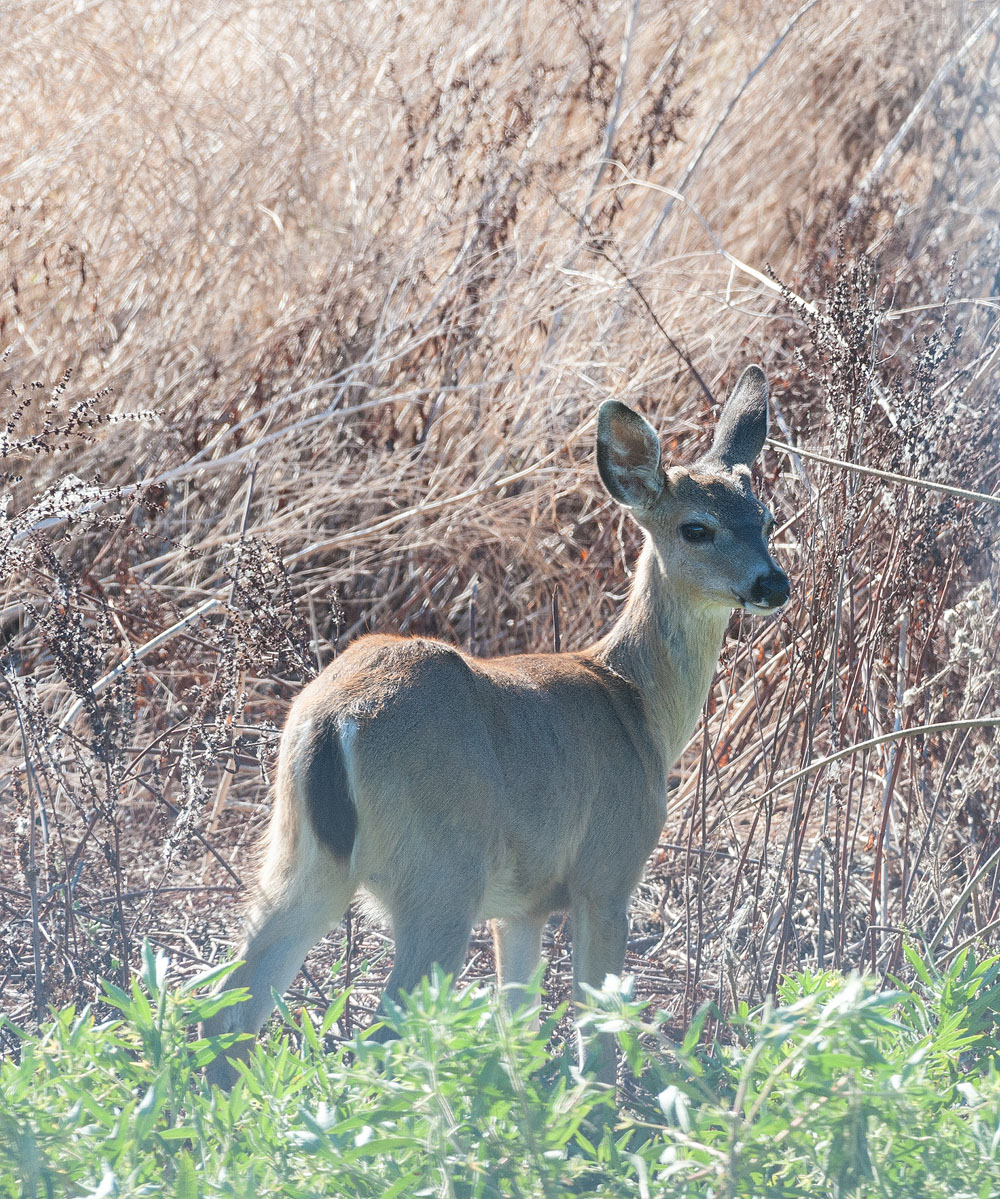
Just as we were starting the auto-route we spied a Doe and her Fawn in the tall grass. I didn’t get an image of them together. Mom decided her male Fawn was too close to the road and moved to higher grass.  Honestly, I think she looks young!
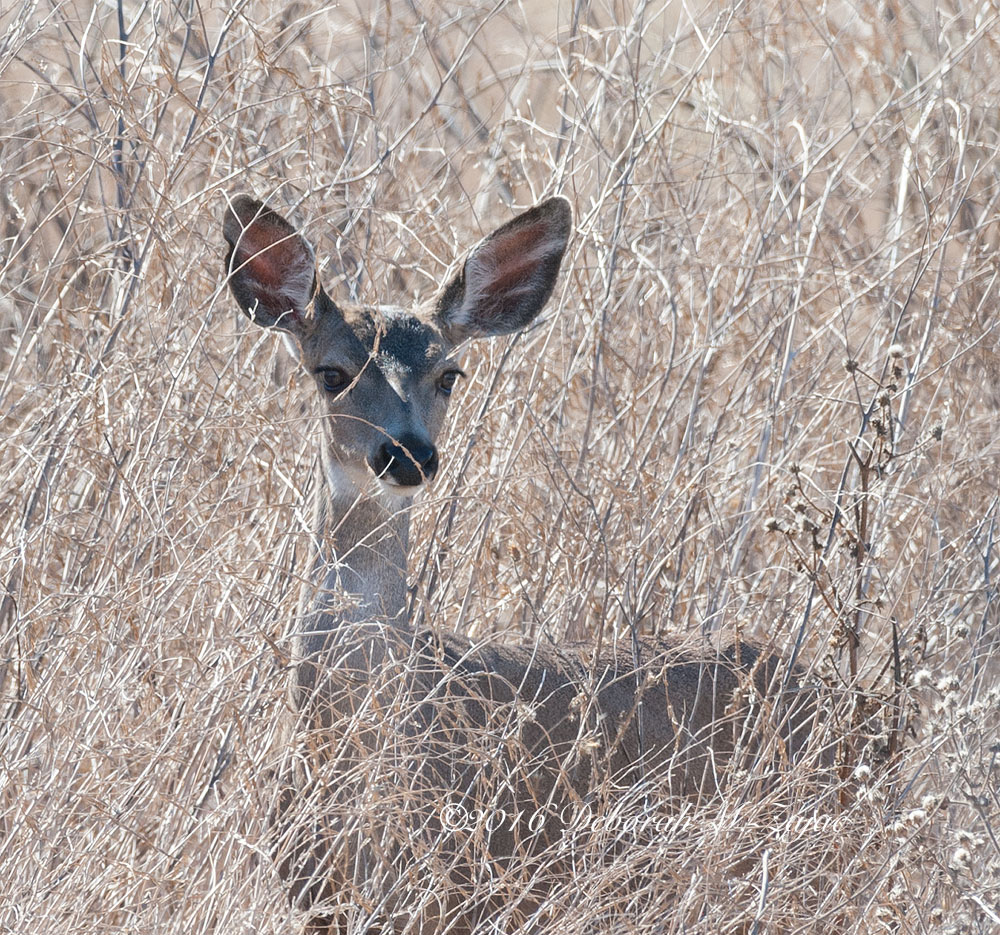
Doe  Deer Female

The Fawn has two little adorable antler nubs.Fawn Male
Early arrivals: There were quite a few White-fronted Geese on the little islands in the ponds that had water.

White-fronted Goose

Northern Pintails, and Shovelers are showing up, but I didn’t make any images of the Shovelers they were too far out. You see a Northern Pintail in image above giving me a one wing salute. 🙂

Among the usual suspects here were thousands of Dragonflies,

Dragon Fly

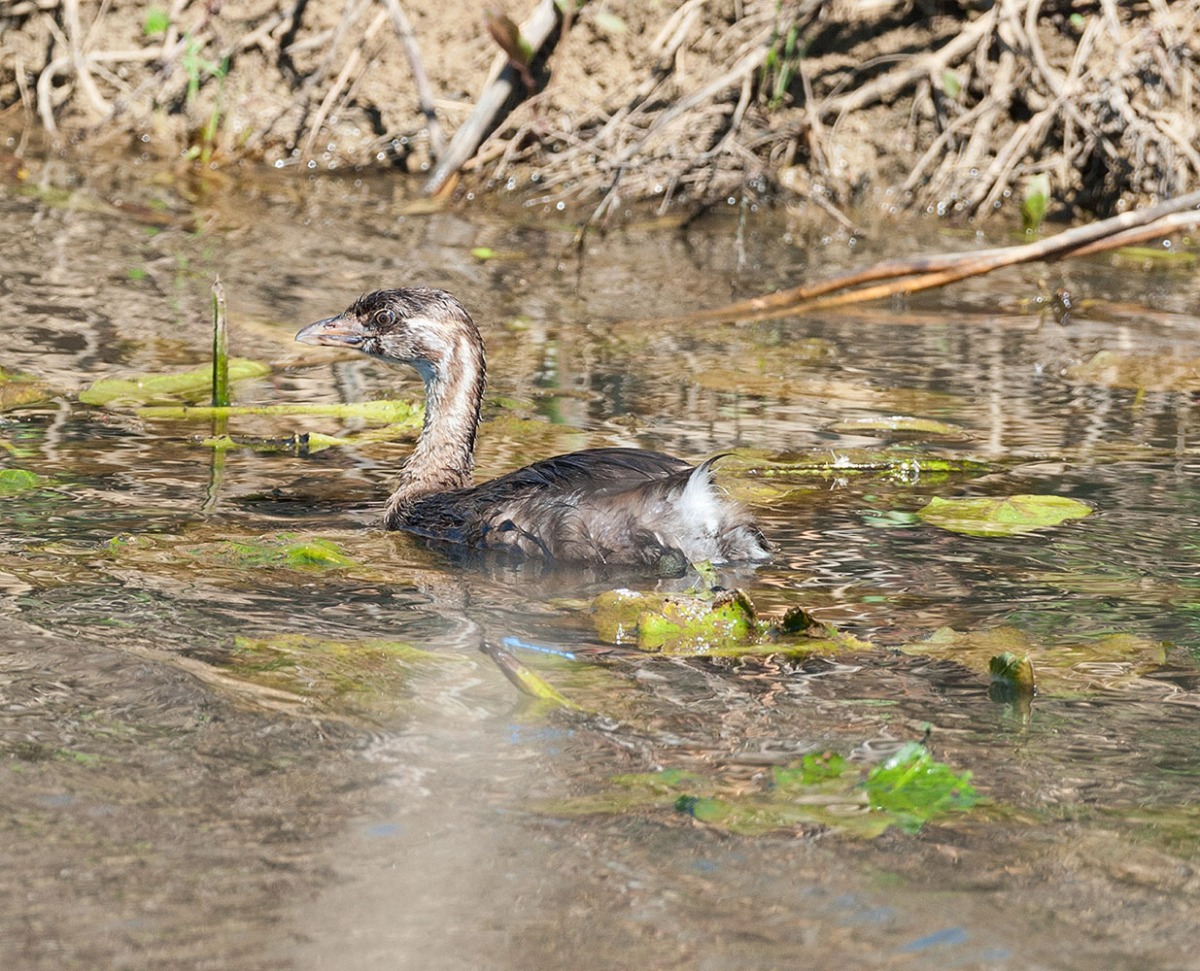
Pied-billed Grebes

Pied-billed Grebe

Night Herons; most were deep in the foliage, but one was on Sentry duty,
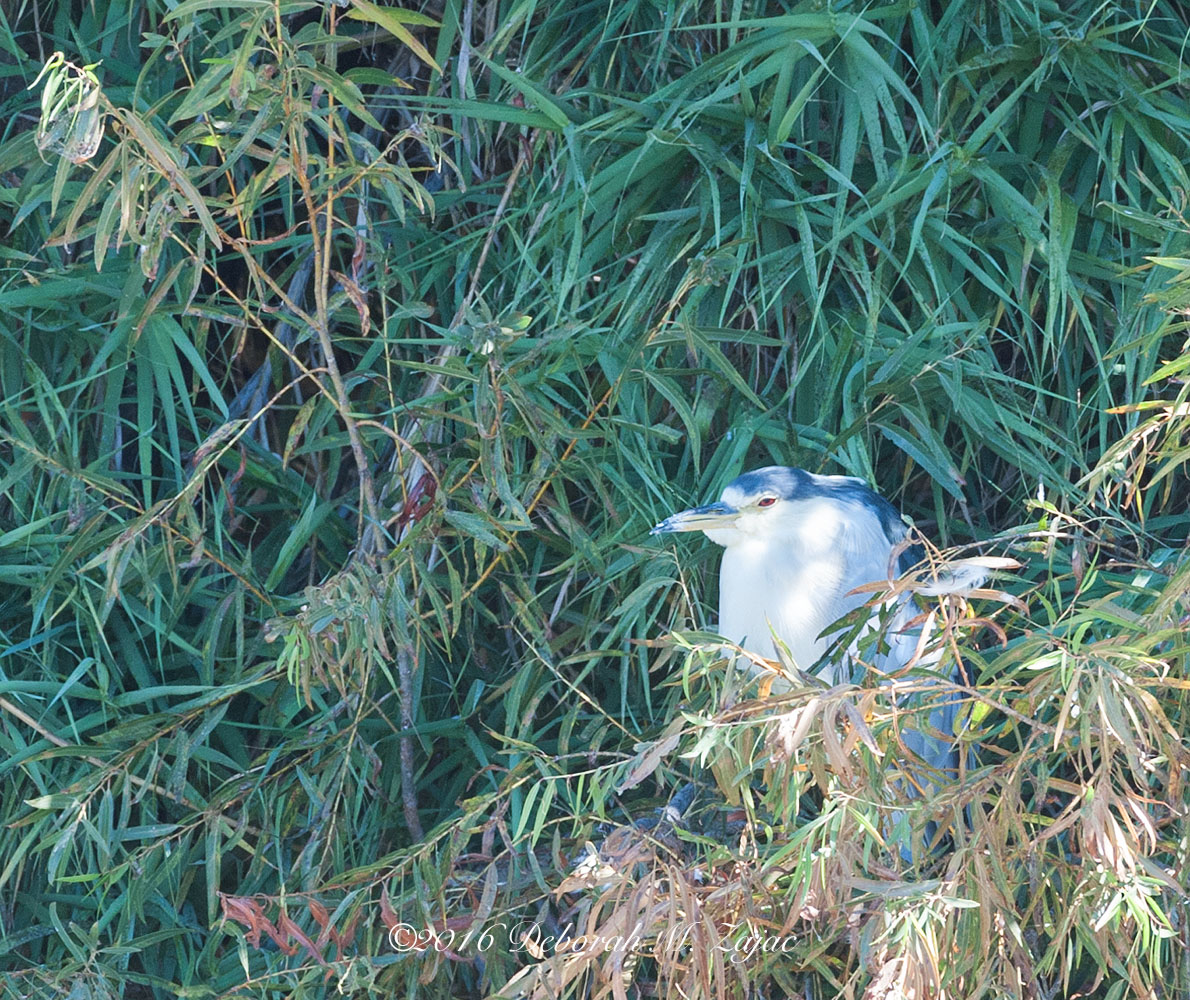
Night Heron

We saw a female Harrier flying low in the distance hunting, a few Red-tail Hawks, and as we approached the tree the Bald Eagles hang out in there we saw there was a Peregrine Falcon perched on a snag surveying the land.
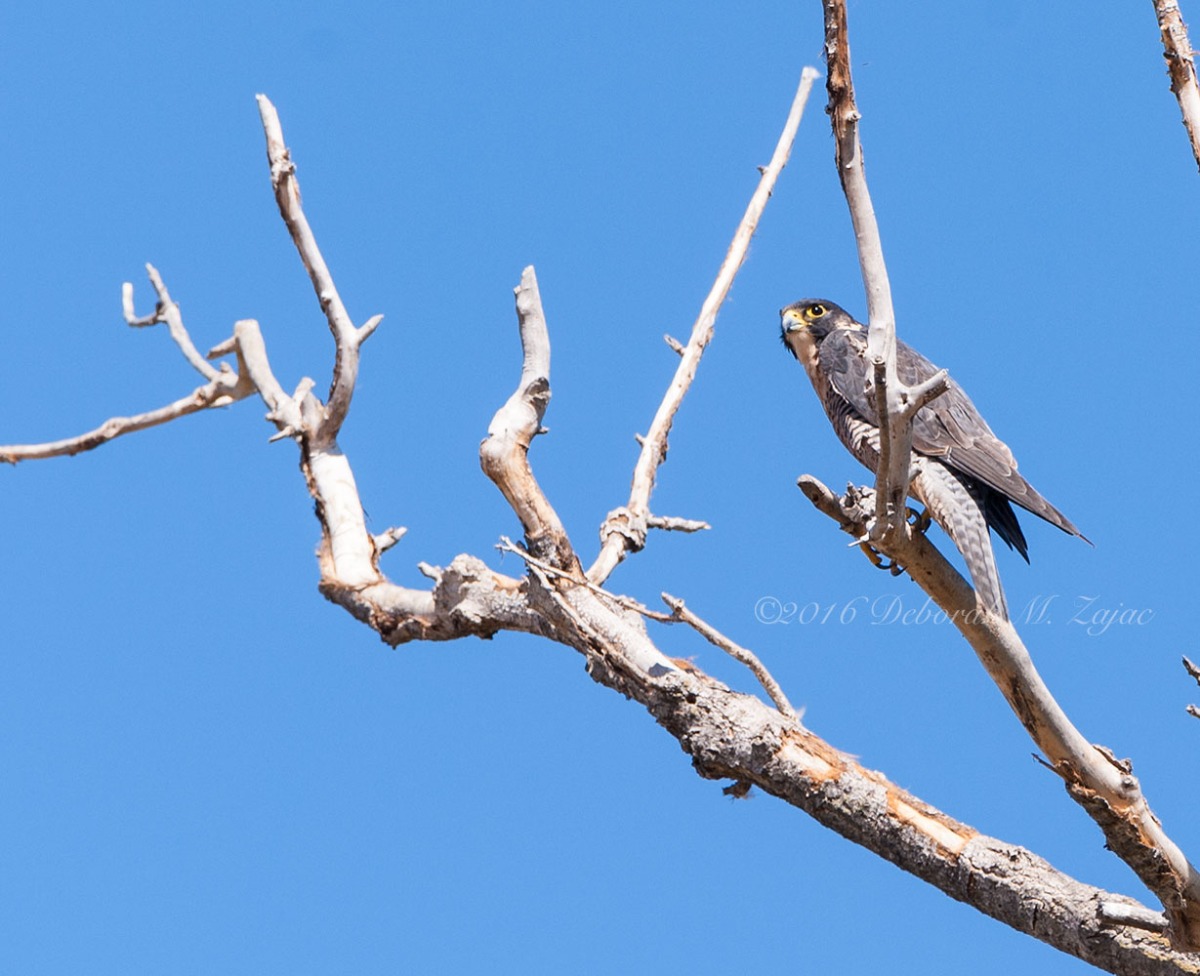
Copyright © 2016 Deborah M. Zajac ALL RIGHTS RESERVED

Once the Eagles return I doubt we’ll be seeing this Falcon in this tree. 🙂

Plan B turned out to be a great day, and it was lovely  hanging out with Theresa. You can find her images on flickr here.

Nikon D700| Nikkor 200-500mm VR| Lexar Professional Digital Film| PS CC 2015.5

More to come…
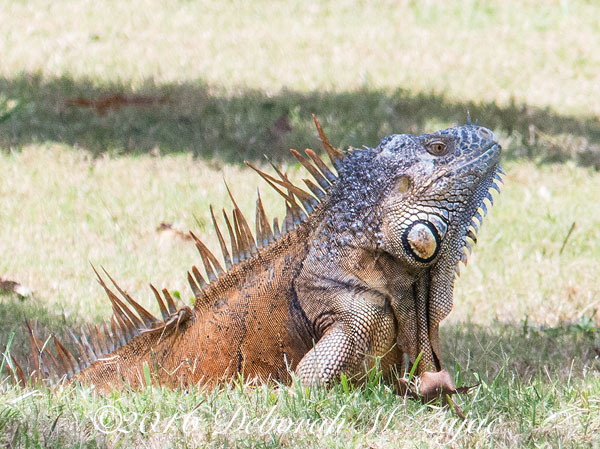


Iguana-Male

© 2015-2016 Deborah M. Zajac
ALL RIGHTS RESERVED

While in Belize and Honduras last September we saw quite a few Iguanas. They’re the biggest I’ve ever seen!
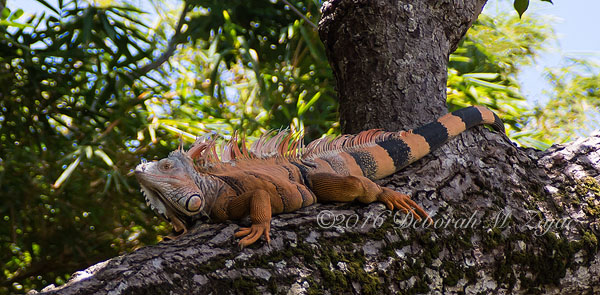
I also didn’t realize they can be orange.

Iguana Male

They’re so prehistoric looking aren’t they.

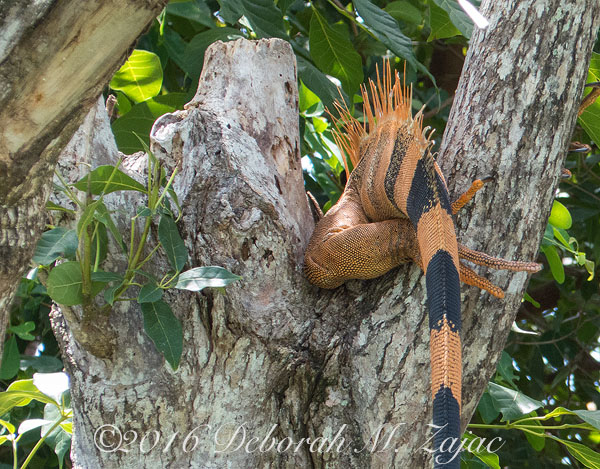
Here’s the back end of an Iguana showing its huge tail, and really long toes.

Tail of Iguana Male

Another one chillin’ high over the Ladies Den

Iguana Male Honduras

Some of the Females hung out together in the shade on a slab of cement:

Iguanas Females

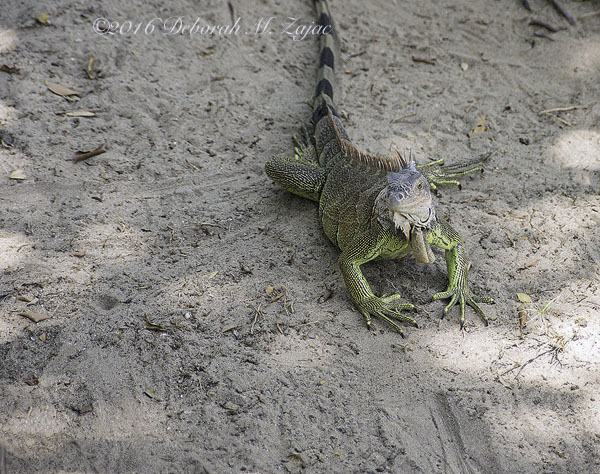
… and this one posed for me. “)

Iguana- The Poser

We saw some really neat wildlife in addition to the Iguana while on this trip. The Capuchin Monkey’s were super cute! I’ll be sharing images of them in the future.

Nikon Df & Lumix FZ200| Hand-held

I hope you all have a great week-end, and to those of you in the northeast USA I’m keeping you in my thoughts, and am hoping the storm isn’t too bad.  Stay warm and safe!

More to come…


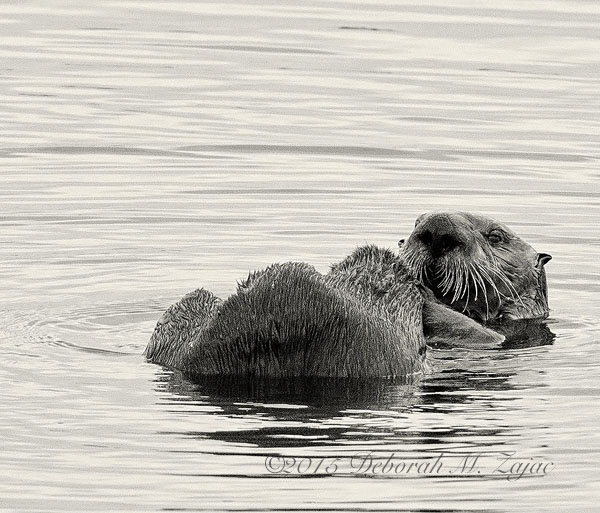
Monochrome Madness 2/10: Sea Otter

Copyright ©2015 Deborah M. Zajac. ALL RIGHTS RESERVED

MM2-10 Sea Otter

Taken in Moss Landing, CA last Saturday while out birding.  He was alone  in the lagoon, just floating, grooming, and occasionally diving for food.

To see all the other Monochrome Madness2 posts for this week (wk10) click here!

Nikon D300s| AF-S Nikkor 300mm f4| Hoodman STEEL Ultra High Speed Digital Film| Tripod| CS6 & Silver Efex Pro2|

More to come…

A day in the Wild

Copyright © 2014 Deborah M. Zajac. ALL RIGHTS RESERVED

I spent Saturday at two Wildlife Refuges: Merced National Wildlife Refuge, and San Luis National Wildlife Refuge.

It’s takes just about 2 hours to get there from my house even with a stop for coffee along the way. It’s a fairly easy drive, and the only worrisome part of the drive is crossing Pacheco Pass, and only in the two lane windy section. Fortunately traffic was light going, and not much worse on the way home.

I was hoping to see Sandhill Cranes which my friend Judi shared were starting to return for the Winter.

With the drought being pretty severe here the Refuges have had their water allotments cut way back so, there’s not much water there. I suspect that will influence the number of birds that winter there, and the numbers will be a lot fewer than in past years.

At Merced National Wildlife Refuge there are a couple of observation decks, and a large auto-route with quite a few pull-outs. I arrived not long after the gate opened, and only saw one other car ahead of me. For two hours we were the only people in the refuge. It was really nice not having cars pass me and frighten the birds.

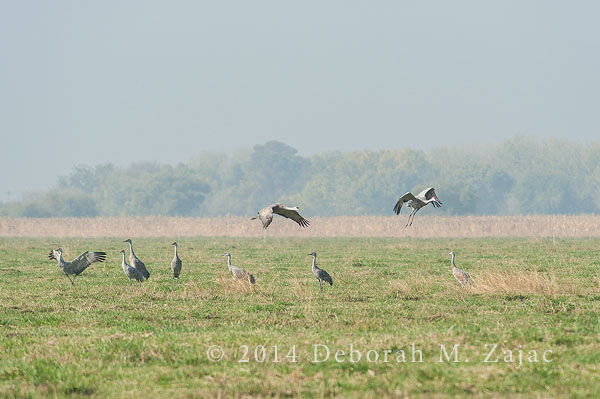
Here are the only Sandhill Cranes I saw. They were in the last field, and as always very skittish. They started moving deeper into the field when I stopped. While I was imaging the group I had the good luck to see two more fly in.

Sandhill Crane Fly-in

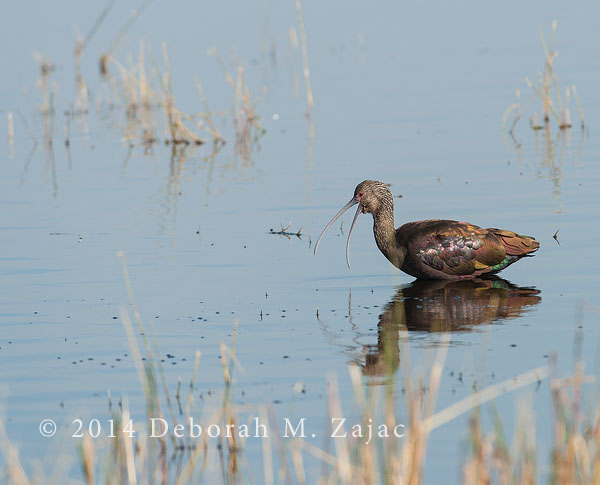
There was a flock of White-faced Ibis here, and they were so hungry they didn’t worry about me at all. There were a few quite close to the road. This one just yawned when I crept up. I love the colors in their feathers.

White-faced Ibis: Adult Winter

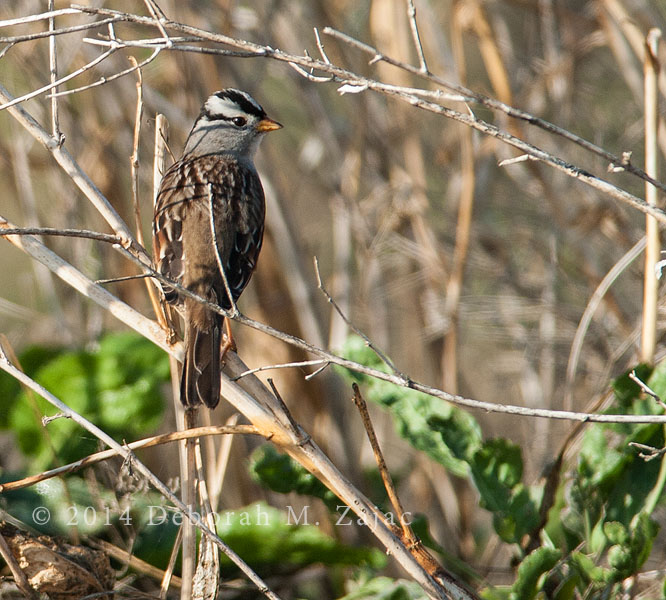
The White Crowned Sparrows are returning everywhere, even here.

White Crowned Sparrow

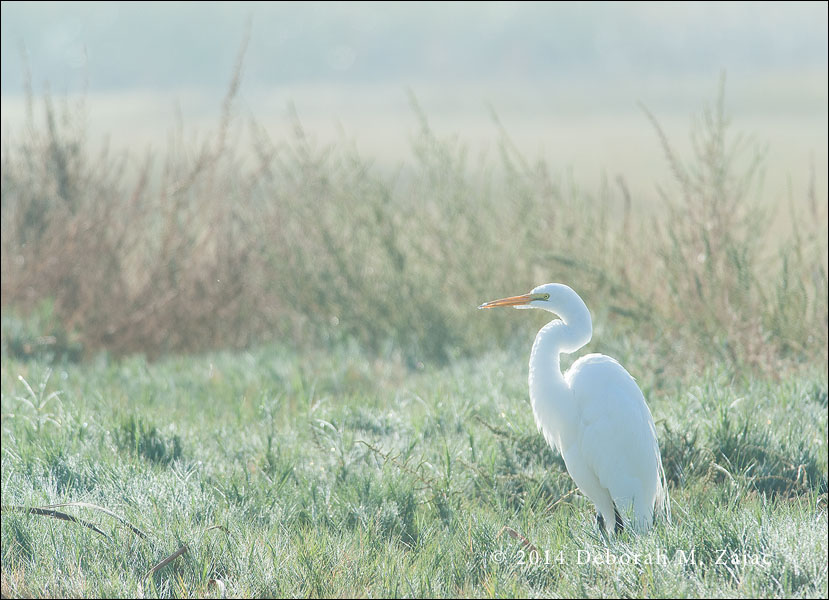
It was foggy when I left home, and there was haze around the countryside, and Refuge. I had hoped to meet my friend Judi here, but the air quality was really bad. There had been a report the night before that the air quality would be bad and people should not go out. I got Judi’s message about that too late; after I arrived at the Refuge. She’s on bottled air and didn’t dare leave the house. You can see the haze in several of the images, but especially in this image of a Great Egret I saw. He didn’t bat an eyelash at my presence! Their stillness and concentration are amazing. I liked the back lighting, and the haze gave the image a soft, dreamy look.

Backlit Great Egret

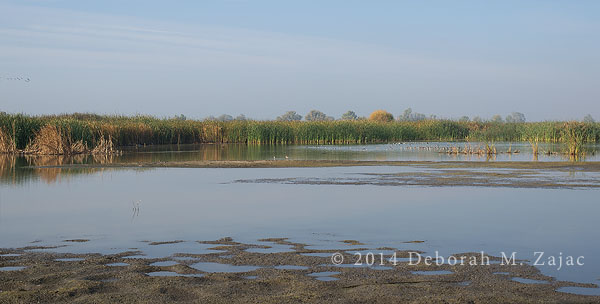
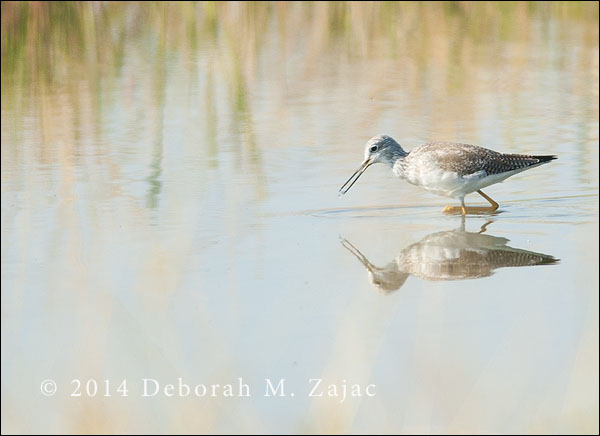
The Coots are back, as are the Shovelers, Mallards, and some Greater Yellowlegs.  While photographing the Greater Yellowlegs I put down my camera to take in the pond. You can see how much the water has already receded/evaporated.

Pond at MErced NWR

…a Greater Yellowlegs

Greater Yellowlegs

I have a lot of images to go through and can’t share them all in this post. I haven’t even got to the second refuge images yet.

Nikon D700| AF-S Nikkor 300mm f/4| AF-S Nikkor 14eII Teleconverter| braced with this beanbag.

More to come…

Life in the Garden

Copyright © 2014 Deborah M. Zajac. ALL RIGHTS RESERVED.

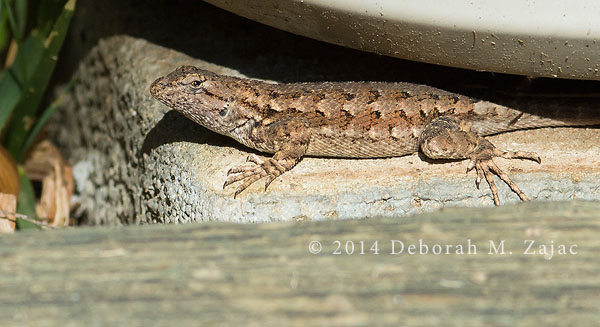
#1 Grandson, Diva Dog, and I weren’t the only ones in the backyard soaking up the warm rays of the sun after the rain.

Life in the Garden

It was on the brick flower border sunbathing until I scared it with my camera. It sought the shelter of the AC unit. I crept as closely as I could to make this image of it, but I pushed my luck moving too close, and off he ran under the unit, and out of sight.

Nikon Df| AF Nikkor 105mm f/2.8D micro lens @f8| 1/1000s| ISO 400| Hand-held

More to come…

Catch of the Day!

Copyright © 2014 Deborah M. Zajac ALL RIGHTS RESERVED.

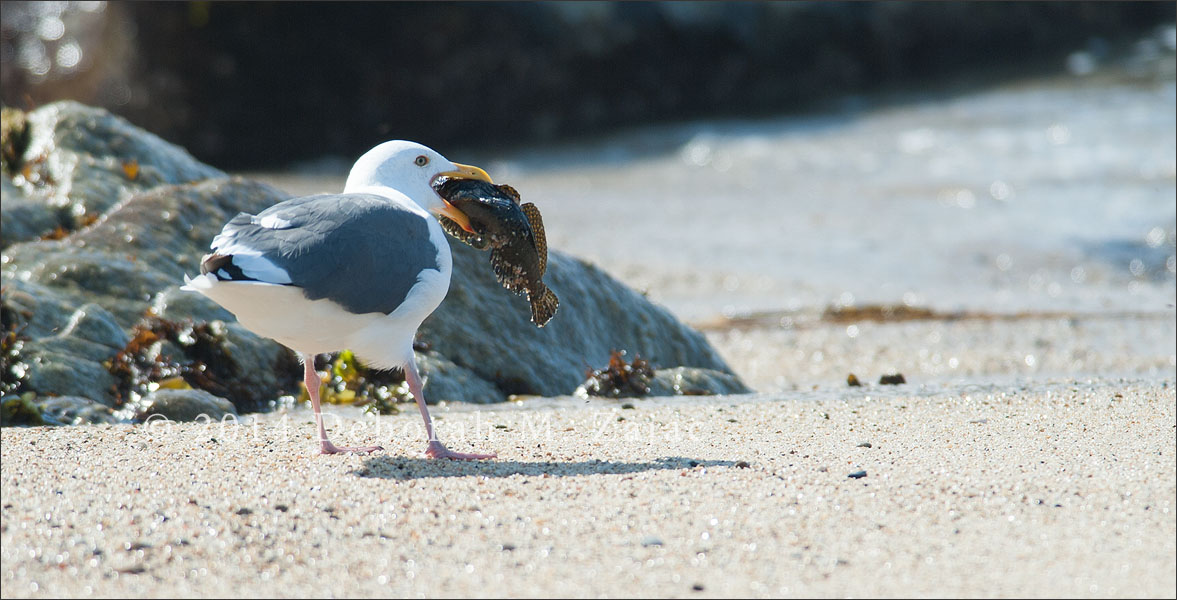
Catch of the Day

The fish this Seagull caught was so big it kept slipping out of the Gull’s mouth onto the sand. It was still alive and flopping about too. Several times the waves came up threatening to pull the fish back to sea, but that Gull would grab a fin and pull it back to the dry sand and try to eat it over and over. Finally he managed to swallow it.

Carmel by the Sea-  Nikon D700| AF-S Nikkor 300mm f4| AF-S Nikkor 14eII Teleconverter

P52 36/52 Guarding his Territory!

Copyright © 2014 Deborah M. Zajac. All Rights Reserved.

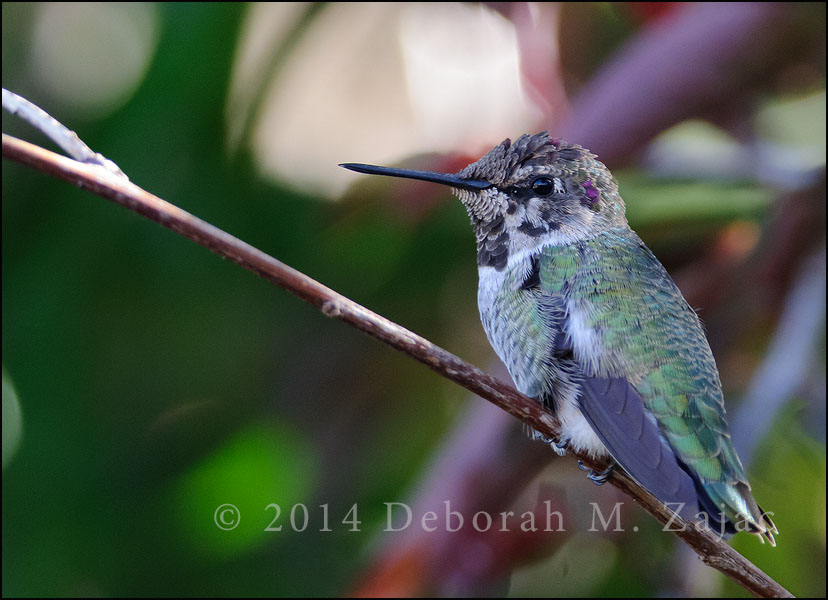
Guarding his TerritoryI set up a little blind in my backyard hoping I’d be able to make a decent image of the Hummingbirds that come to the feeder. I used the cover of the sandbox as a blind by bracing it against my Camilla bush,  then I set up my tripod, camera, and comfy seat behind it then waited.

  It took about a half hour and a few over my head buzzes before the Hummingbirds felt safe enough to stop at the Feeder for a drink.
  After lunch I moved the sandbox cover to the edge of the lawn for a different angle bracing the cover on the Patio Cover’s post. I heard the Hummingbird chitting away in the Flowering Plum beside me so turned to see if I could see him and there he was sitting on a branch watching the feeder.
There’s been another male coming by and this one chases him off whenever he comes around. He sat there for long enough for me to photograph him for several minutes.
He was in the shade of many branches overhead so, while the image is sharp there is more noise than I’d like. I tried Auto ISO during this shoot to see how it would do, mainly to see if I would be able to concentrate more on shooting than having to change my ISO setting frequently to adjust for the light changes. I was also shooting a Butterfly that would occasionally come by to sip on the Lantana Bush which was in much better light than the feeder, and the tree. Auto ISO worked very well for me in these conditions.

 I used Adobe’s Camera Raw noise reduction a little bit to help remove some of the noise. 

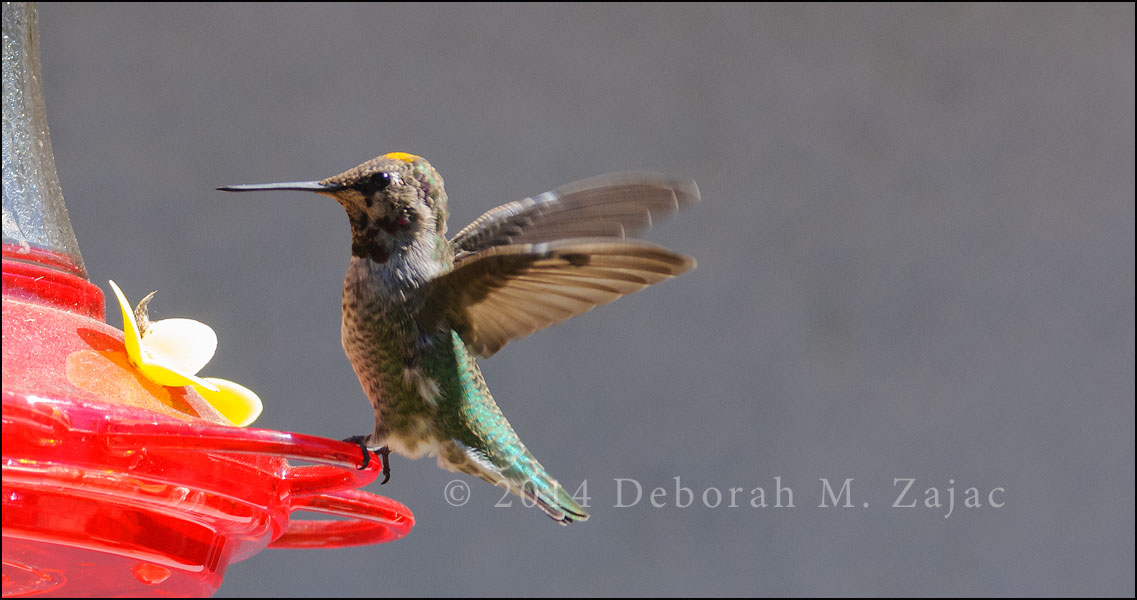
Here’s another image of an Anna’s Hummingbird at the Feeder. He’s just about to take off after drinking some nectar.

Ready for Take OffThat sandbox cover worked a treat as a blind.

Nikon D300s| AF-S Nikkor 300mm f4 +  Nikon 14eII Teleconverter

More to come