Copyright ©2026 Deborah M. Zajac. ALL RIGHTS RESERVED.
PLEASE DO NOT USE MY IMAGES WITHOUT EXPRESSED WRITTEN PERMISSION.
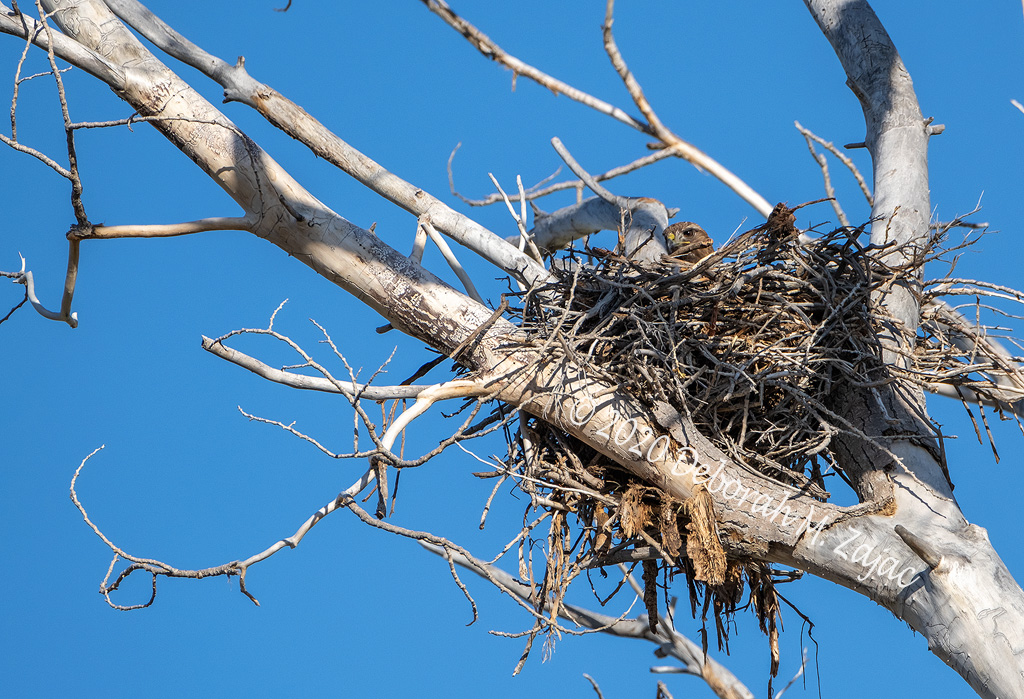
Spring is…Owlets!
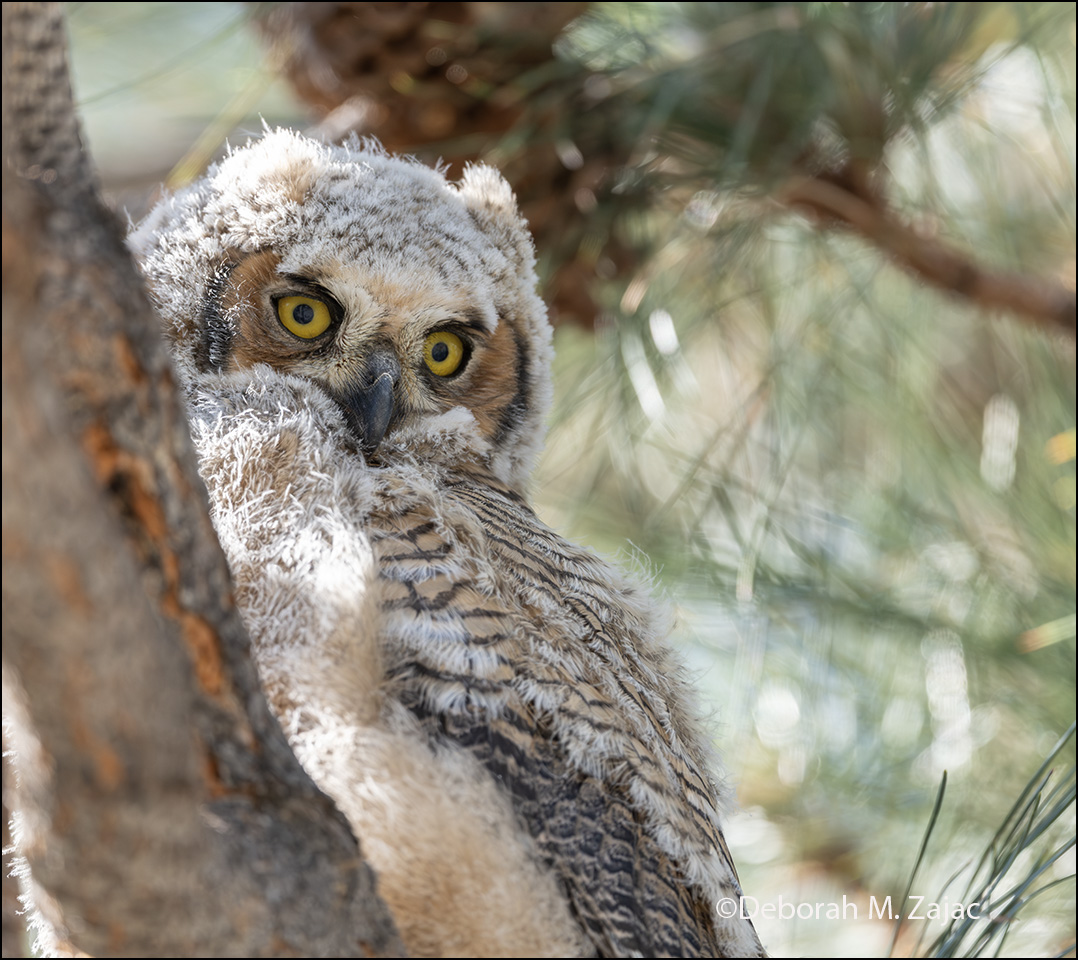
Oldest Owlet…roughly 3 weeks old and branching.
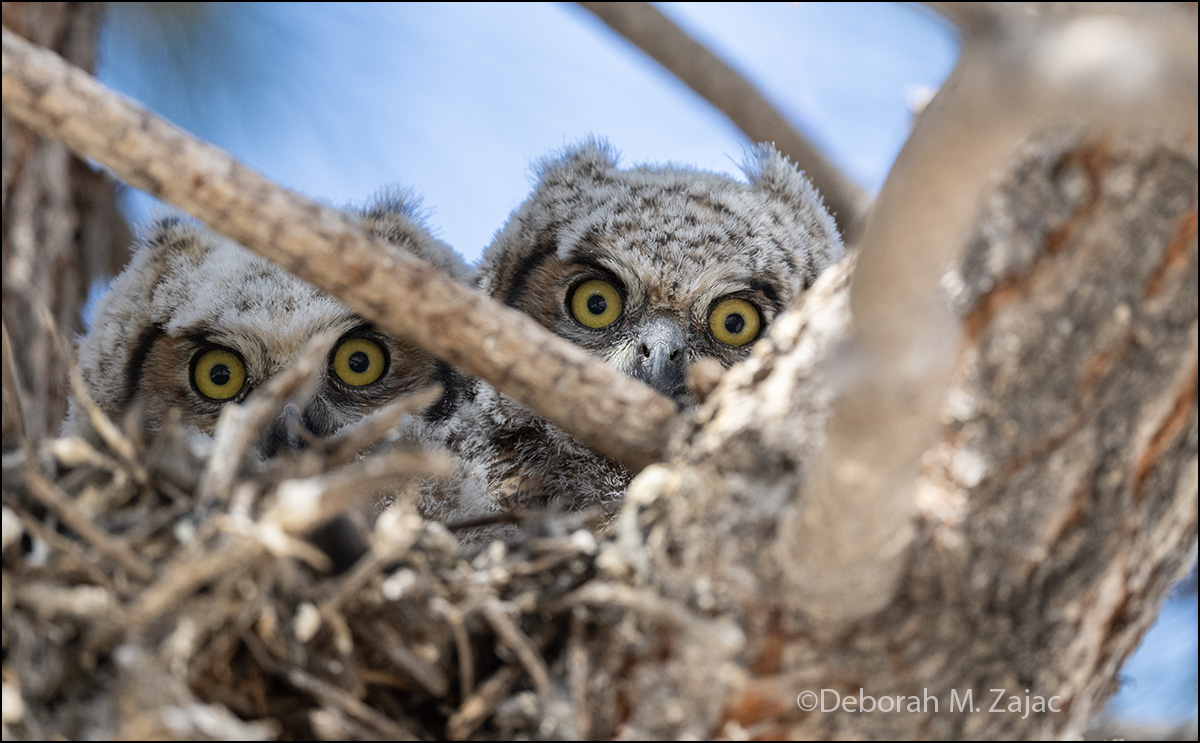
Younger two Owlets. One of these is branching now as well.
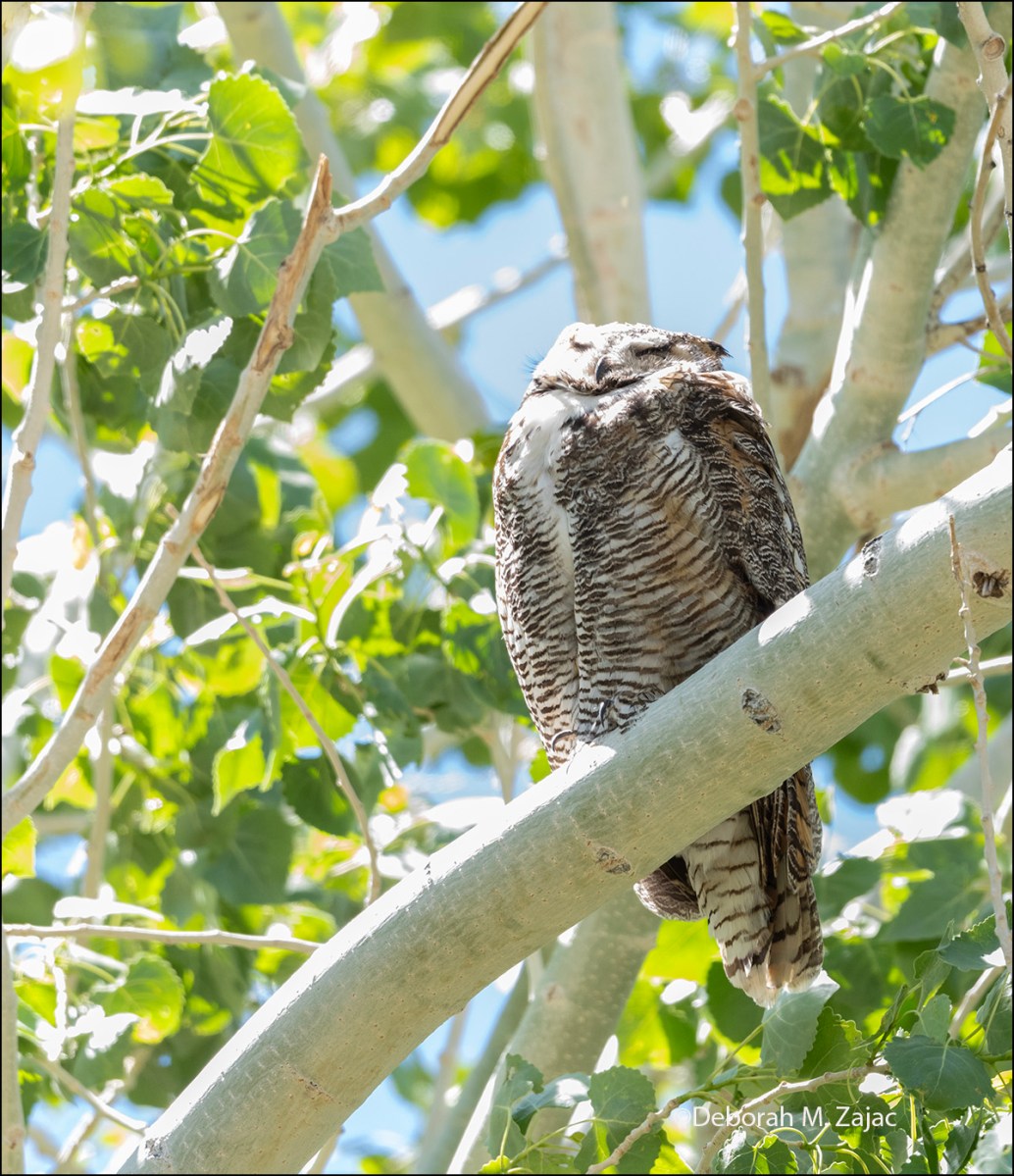
Mama GH Owl getting some zzz’s nearby the nest.
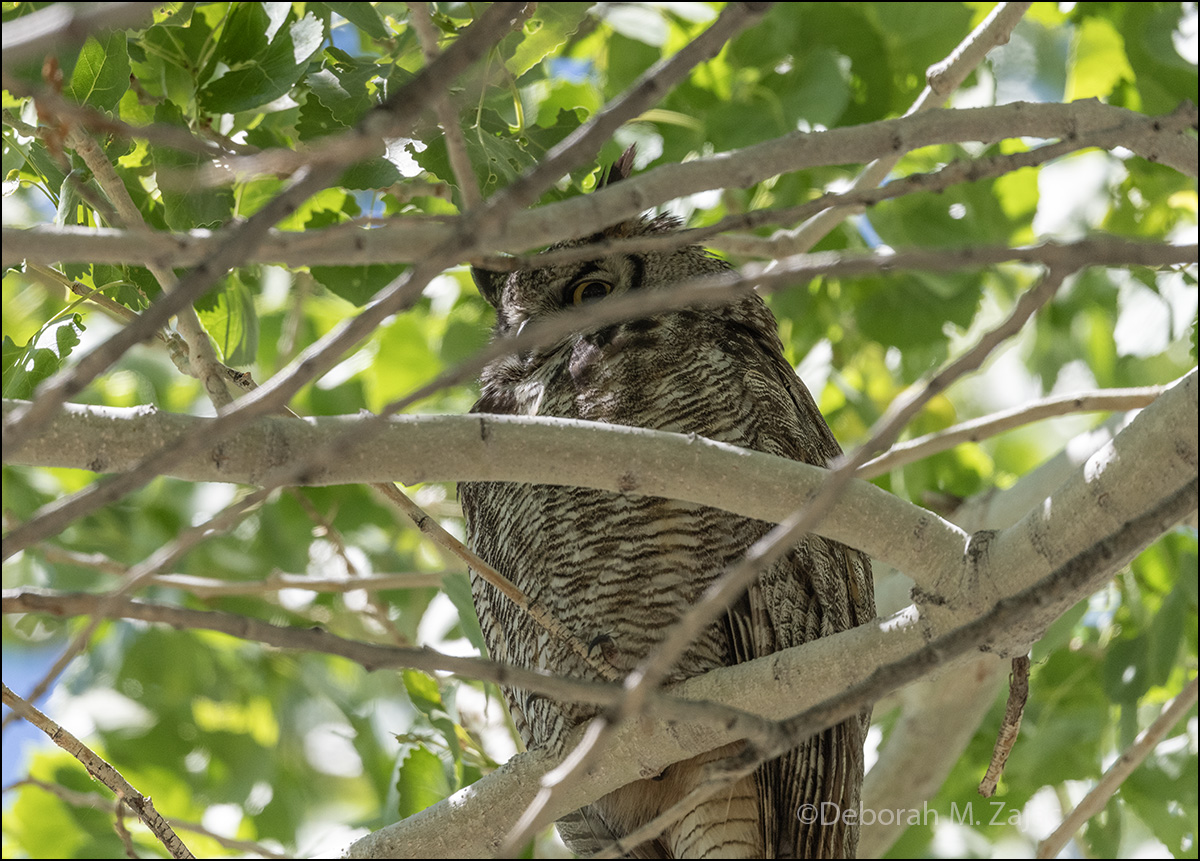
Dad GH Owl keeping one eye on me.
This little Owl family was a treat to find and see this month.
Fun Facts:
- Great Horned Owls are fierce predators that can take large prey, including raptors such as Ospreys, Peregrine Falcons, Prairie Falcons, and other owls. They also eat much smaller items such as rodents, frogs, and scorpions.
- When clenched, a Great Horned Owl’s strong talons require a force of 28 pounds to open. The owls use this deadly grip to sever the spine of large prey.
- If you hear an agitated group of cawing American Crows, they may be mobbing a Great Horned Owl. Crows may gather from near and far and harass the owl for hours. The crows have good reason, because the Great Horned Owl is their most dangerous predator.
- Even though the female Great Horned Owl is larger than her mate, the male has a larger voice box and a deeper voice. Pairs often call together, with audible differences in pitch.
- Great Horned Owls are covered in extremely soft feathers that insulate them against the cold winter weather and help them fly very quietly in pursuit of prey. Their short, wide wings allow them to maneuver among the trees of the forest.
- Great Horned Owls have large eyes, pupils that open widely in the dark, and retinas containing many rod cells for excellent night vision. Their eyes don’t move in their sockets, but they can swivel their heads more than 180 degrees to look in any direction. They also have sensitive hearing, thanks in part to facial disc feathers that direct sound waves to their ears.
- The oldest Great Horned Owl on record was at least 28 years old when it was found in Ohio in 2005.
Fun Facts gleaned from allaboutbirds.org
I’m out birding early this morning as it’s light out much earlier so I’ll be a little later getting to your posts and comments.
more to come…




You must be logged in to post a comment.