Friday’s Feathered Friends- Ruddy’s got the Blues

Copyright ©2024 Deborah M. Zajac. ALL RIGHTS RESERVED. 

PLEASE DO NOT USE MY IMAGES WITHOUT EXPRESSED WRITTEN PERMISSION.

Things are changin’, Ruddy is showing off his Blues and Ruddy feathers for Spring and hoping he’s got what it takes to persuade a cute little female Ruddy Duck to be his love for the season.

Ruddy Duck in Breeding Plumage

Fun Facts:

    • Ruddy Ducks lay big, white, pebbly-textured eggs—the largest of all duck eggs relative to body size. Energetically expensive to produce, the eggs hatch into well-developed ducklings that require only a short period of care.
    • The bright colors and odd behavior of male Ruddy Ducks drew attention from early naturalists, though they didn’t pull any punches. One 1926 account states, “Its intimate habits, its stupidity, its curious nesting customs and ludicrous courtship performance place it in a niche by itself…. Everything about this bird is interesting to the naturalist, but almost nothing about it is interesting to the sportsman.”
    • Pleistocene fossils of Ruddy Ducks, at least 11,000 years old, have been unearthed in Oregon, California, Virginia, Florida, and Illinois.
    • Ruddy Ducks are very aggressive toward each other and toward other species, especially during the breeding season. They are even known to chase rabbits feeding on the shore.
    • Though Ruddy Ducks are native to the Americas, one population became established in England after captive ducks escaped in 1952. This population grew to about 3,500 individuals by 1992, and now appears to be expanding into the Netherlands, France, Belgium, and Spain.
    • Ruddy Ducks get harassed by Horned Grebes, Pied-billed Grebes, and American Coots during the breeding season. The grebes sometimes attack Ruddy Ducks from below the water, a behavior known as “submarining.”
    • The oldest Ruddy Duck on record was a male and at least 13 years, 7 months old when he was found in Oregon in 1964. He was banded in British Columbia in 1951.

Fun Facts gleaned from https://www.allaboutbirds.org/guide/Ruddy_Duck/

Nikon D810| Nikkor 500mm PF| PS CC 25.4

more to come…

Friday’s Feathered Friends- Cedar Waxing

Copyright ©2024 Deborah M. Zajac. ALL RIGHTS RESERVED. 

PLEASE DO NOT USE MY IMAGES WITHOUT EXPRESSED WRITTEN PERMISSION.

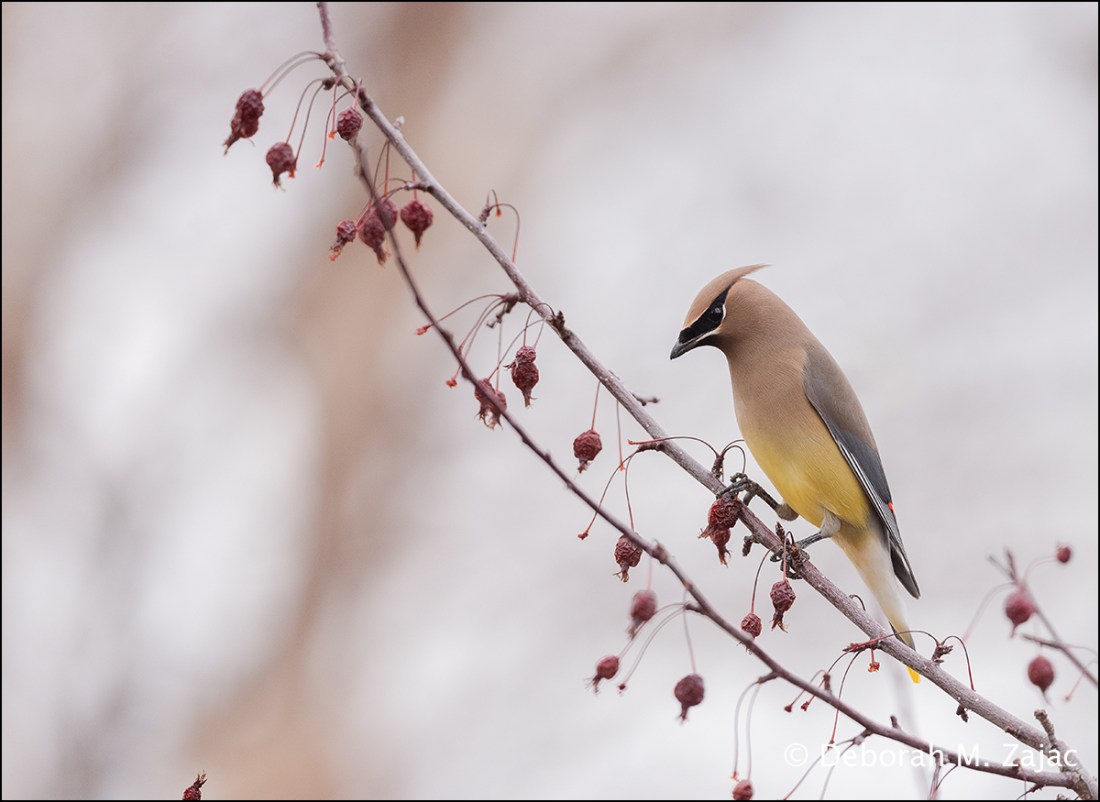
Last week while birding I saw so many Cedar Waxwings at 2 places I visited. There were about 120 in all! At one of the places they were gorging on ripe, plump red berries.

I was doing my happy dance to see that!

“I think this one looks yummy”
Gulp!

It was a great birdy day.

Fun Facts:

  • The name “waxwing” comes from the waxy red secretions found on the tips of the secondaries of some birds. The exact function of these tips is not known, but they may help attract mates.
  • Cedar Waxwings with orange instead of yellow tail tips began appearing in the northeastern U.S. and southeastern Canada in the 1960s. The orange color is the result of a red pigment picked up from the berries of an introduced species of honeysuckle. If a waxwing eats enough of the berries while it is growing a tail feather, the tip of the feather will be orange.
  • The Cedar Waxwing is one of the few North American birds that specializes in eating fruit. It can survive on fruit alone for several months. Brown-headed Cowbirds that are raised in Cedar Waxwing nests typically don’t survive, in part because the cowbird chicks can’t develop on such a high-fruit diet.
  • Many birds that eat a lot of fruit separate out the seeds and regurgitate them, but the Cedar Waxwing lets them pass right through. Scientists have used this trait to estimate how fast waxwings can digest fruits.
  • Because they eat so much fruit, Cedar Waxwings occasionally become intoxicated or even die when they run across overripe berries that have started to ferment and produce alcohol.
  • Building a nest takes a female Cedar Waxwing 5 to 6 days and may require more than 2,500 individual trips to the nest. They occasionally save time by taking nest materials from other birds’ nests, including nests of Eastern Kingbirds, Yellow-throated Vireos, orioles, robins, and Yellow Warblers.
  • The oldest recorded Cedar Waxwing was a male and at least 7 years, 1 month old when he was recaptured and rereleased during banding operations in Maryland in 2014. He was originally banded in the same state in 2008.

Fun facts gleaned from https://www.allaboutbirds.org/guide/Cedar_Waxwing

It’s snowing as I type this but, supposed to be sunny but cold on Saturday. I hope to go out birding for a bit if that forecast holds. I hope you all have a grand week-end!

more to come…

Friday’s Feathered Friends-Golden-crowned Sparrow

Copyright ©2024 Deborah M. Zajac. ALL RIGHTS RESERVED. 

PLEASE DO NOT USE MY IMAGES WITHOUT EXPRESSED WRITTEN PERMISSION.

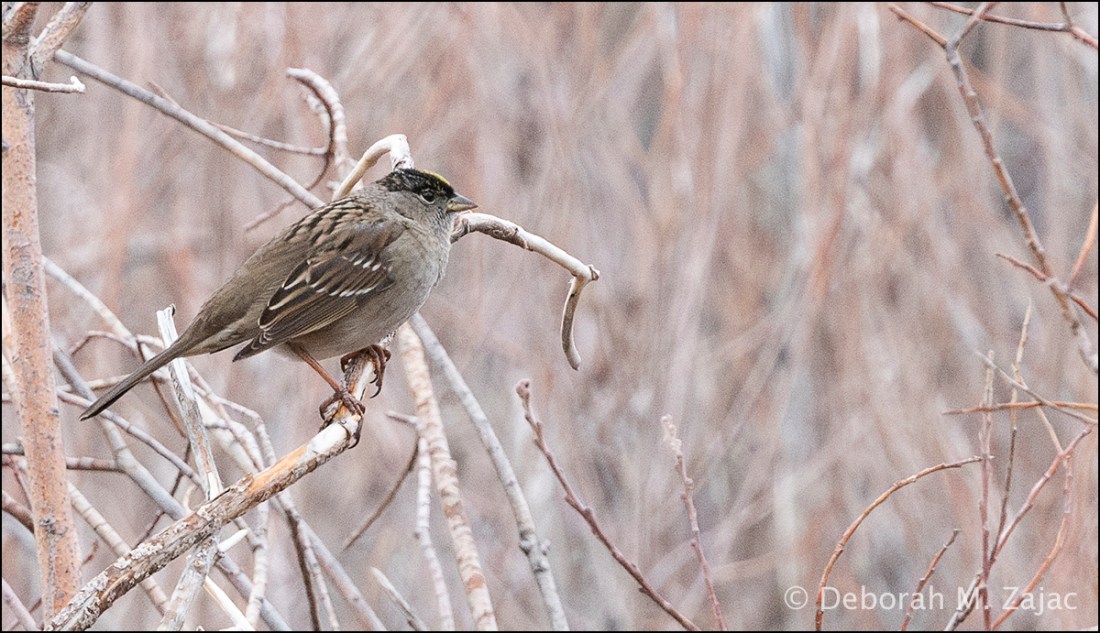
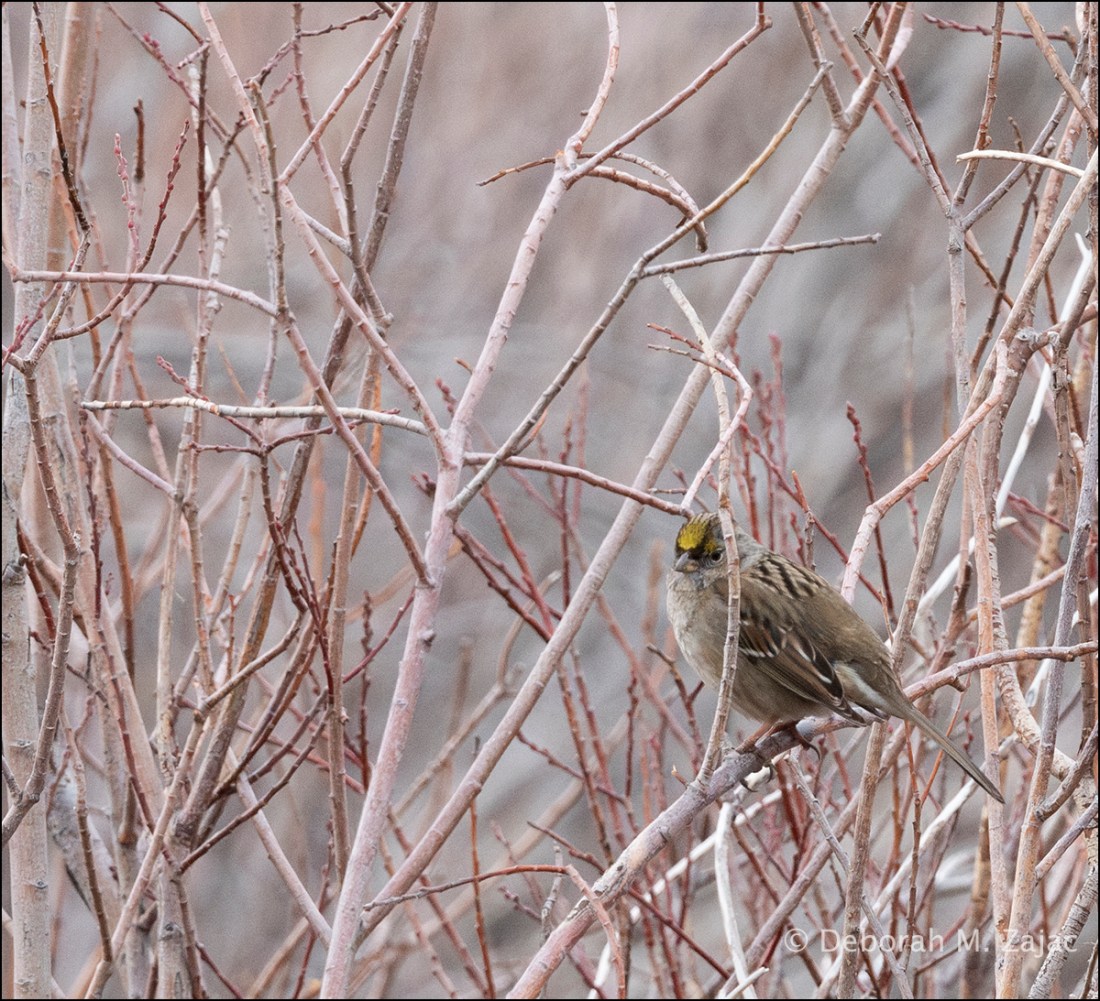
I last shared this Sparrow in 2015. I don’t see many of them and I only see them during the Winter migration hanging out with the White-crowned Sparrows, but sadly, never at my feeder. Last week I saw this one.

Male Golden-crowned Sparrow

He was pretty skittish. Every time I tried getting closer he flew further away so these are pretty well cropped.

Fun Facts:

    • This sparrow is one of the least known of our songbirds, particularly on its northern breeding grounds. It has been the subject of only a few laboratory and field studies, so most of what we know about it comes from scattered notes in scientific journals.
    • Miners in the Yukon at the turn of the twentieth century woefully referred to the Golden-crowned Sparrow as the “no gold here” bird, because its song resembled that depressing phrase. They also interpreted its song to say “I’m so tired,” prompting them to dub the bird “Weary Willie.”
    • The Golden-crowned Sparrow arrives earlier and stays longer on its California wintering grounds than almost any other bird species.
    • When day length increases in the spring, the Golden-crowned Sparrow detects the change through photoreceptors (light-sensitive cells). Its body responds by putting on fat and getting an urge to migrate.
    • The oldest Golden-crowned Sparrow on record was at least 10 years, 6 months old. It was caught by a bird bander in California in 1970 and released.

Fun facts gleaned from allaboutbirds.org

I hope you all have a great week-end!

Nikon D810| Nikkor 500mm PF-e| PS CC 25.3.1

more to come…

Friday’s Feathered Friends- Wood Ducks

Copyright ©2023 Deborah M. Zajac. ALL RIGHTS RESERVED. DO NOT USE MY IMAGES WITHOUT EXPRESSED WRITTEN PERMISSION!

I heard from a friend that along the river where I found the Owlets there was a family of Wood Ducks so, I went to check it out and sure enough I found some of them. My friend said there were 6 chicks, but I only saw 3.

I hope the others were just napping.

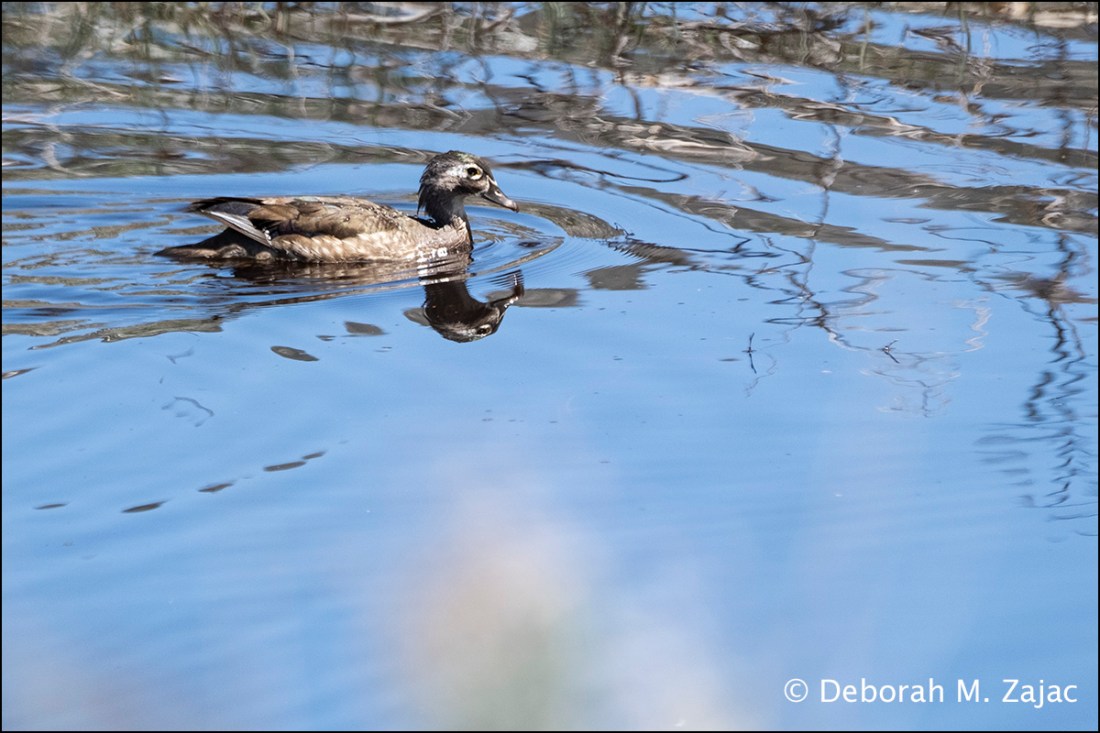
Here’s the male…aka Dad Wood Duck. Isn’t he a beautiful duck!

Here’s Mama. It looks like I caught her just after her bath. It must have been a fast one b/c now she’s after the chicks making sure they’re alright.

Here’s the first chick I spied. This is the only chick I was able to get a decent image of as the other two stayed in the reeds.

Wood Duck Fun Facts:

  • Natural cavities for nesting are scarce, and the Wood Duck readily uses nest boxes provided for it. If nest boxes are placed too close together, many females lay eggs in the nests of other females.
  • Wood Ducks pair up in January, and most birds arriving at the breeding grounds in the spring are already paired. The Wood Duck is the only North American duck that regularly produces two broods in one year.
  • The Wood Duck nests in trees near water, sometimes directly over water, but other times over a mile away. After hatching, the ducklings jump down from the nest tree and make their way to water. The mother calls them to her, but does not help them in any way. The ducklings may jump from heights of over 50 feet without injury.
  • The oldest recorded Wood Duck was a male and at least 22 years, 6 months old. He was banded in Oregon and found in California.

Fun Facts gleaned from https://www.allaboutbirds.org/guide/Wood_Duck/

Fuji X-T3| Fuji 100-400mm| PS CC 24.5

I hope you all have a good week-end!

more to come…

Friday’s Feathered Friends- April Sightings

Copyright ©2023 Deborah M. Zajac. ALL RIGHTS RESERVED. 

PLEASE DO NOT USE MY IMAGES WITHOUT EXPRESSED WRITTEN PERMISSION.

I haven’t shared any of the birds I’ve been seeing lately so thought I’d share some of the birds I’ve seen in the last month or so .

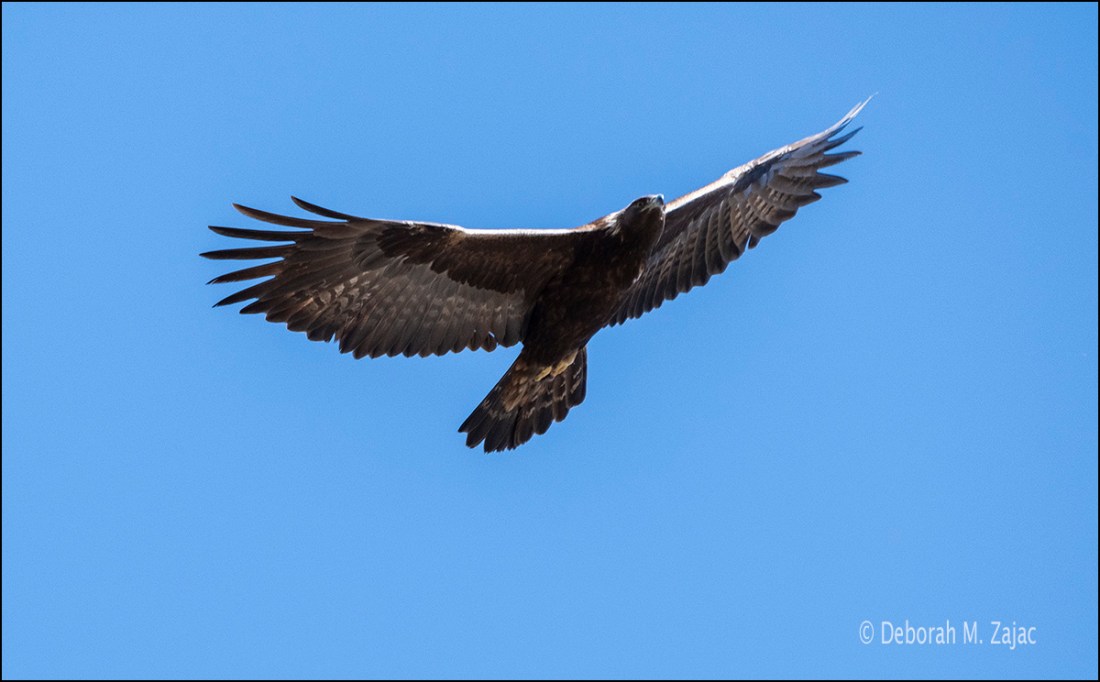
Golden Eagle
Mama Owl in her nest.
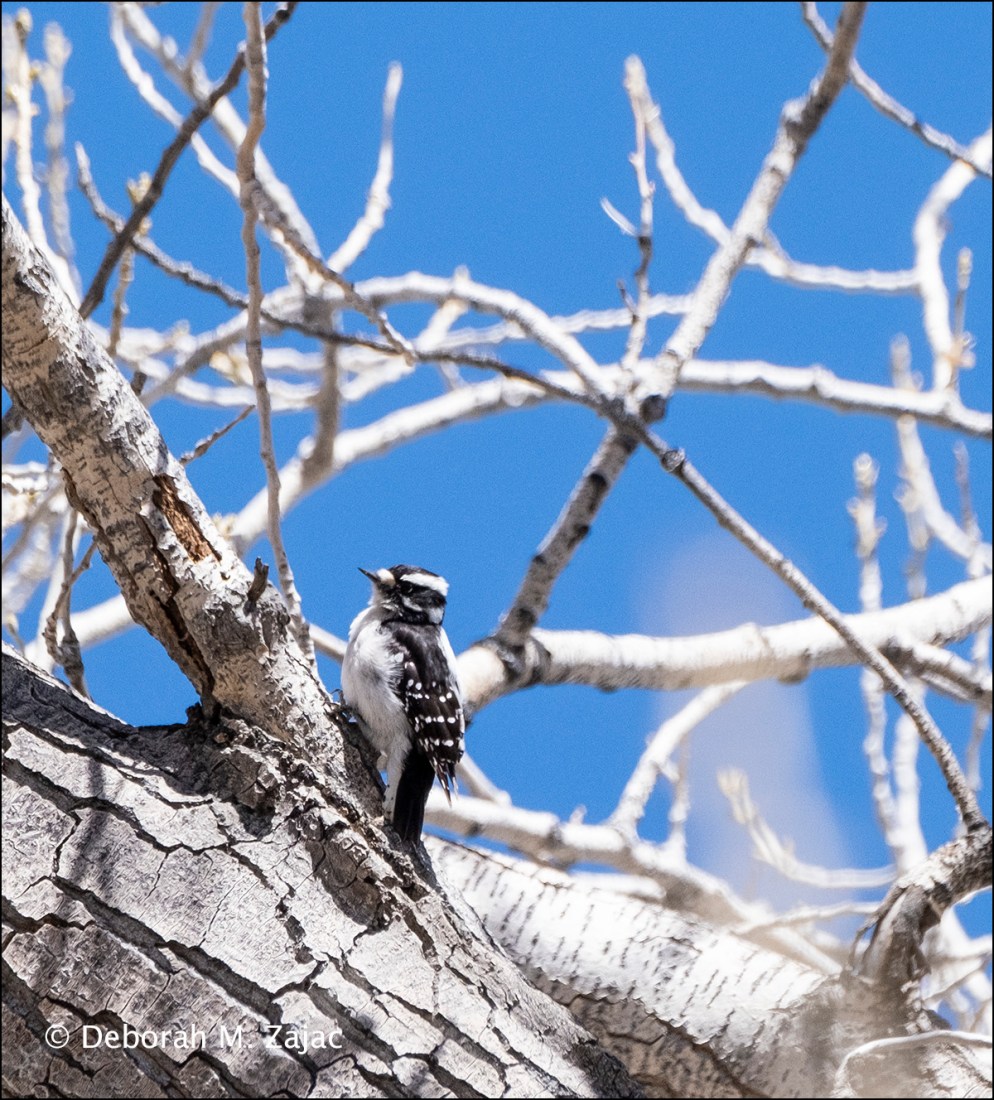
Downy Woodpecker-Female
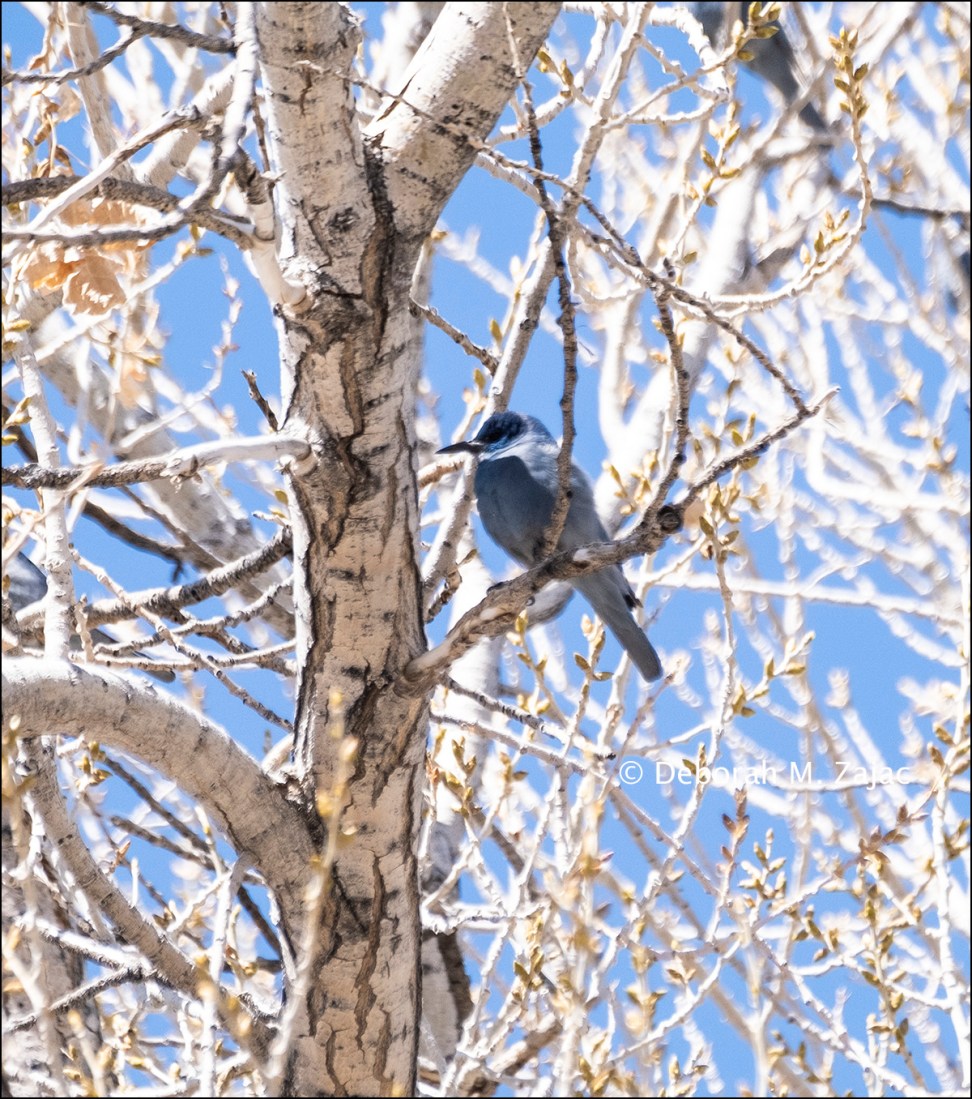
Pinyon Jay
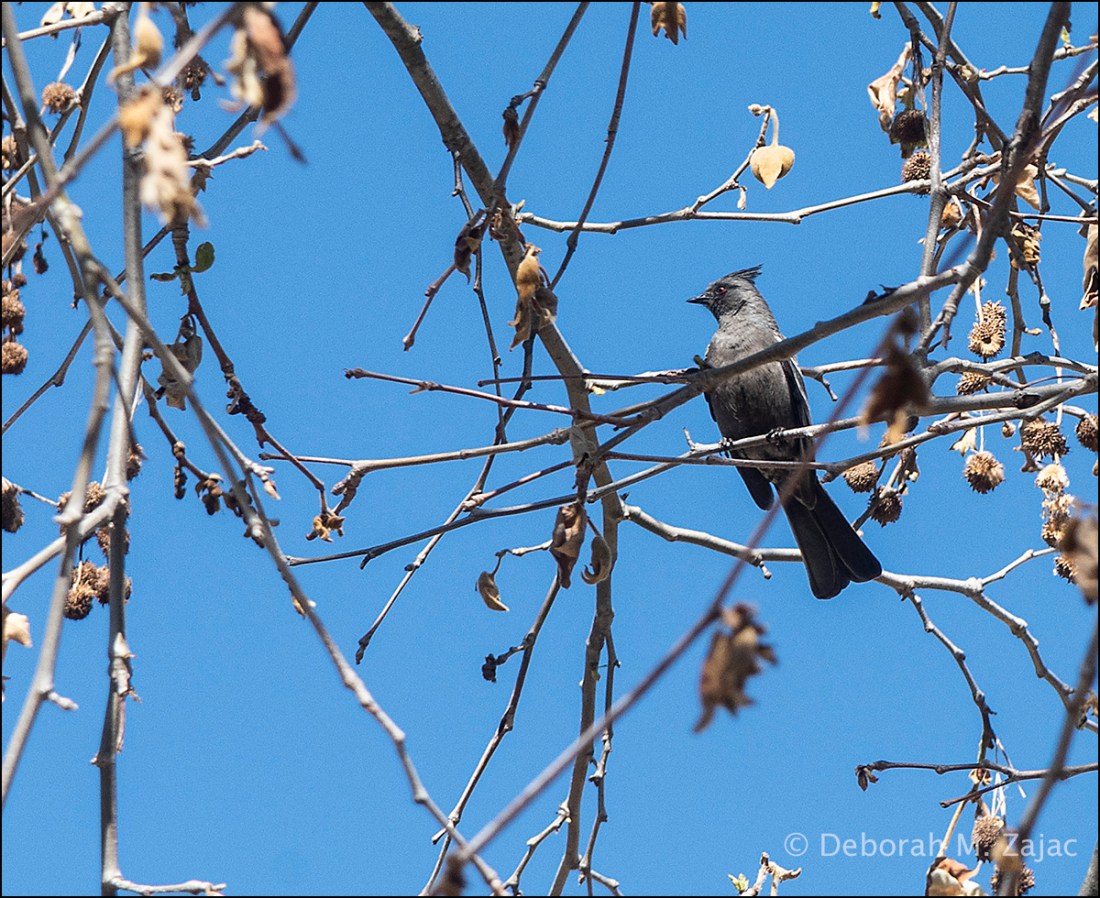
Phainopepla-Female

The Yellow-headed, and Red-winged Blackbirds are back, and I’ve seen several Robins, and some water birds, but I’ll share those soon.

The weather has warmed up so we’re turning the sprinklers back on, and breaking out the outdoor cushions this week-end, and setting up my new birdbath!

I hope you all have a lovely week-end!

Fuji X-T3| Fujinon 100-400mm| Nikon D810| Nikkor 120mm| PS CC 24.4.1

more to come…

Friday’s Feathered Friends-Northern Cardinal Male

Copyright ©2022 Deborah M. Zajac. ALL RIGHTS RESERVED. DO NOT USE MY IMAGES WITHOUT EXPRESSED WRITTEN PERMISSION!

Hello! I’m back from taking a short blogging break. I have a few exciting things to share but, I haven’t been able to turn my mind to writing about them or processing my images yet. When I got home from my latest trip I came home to find #1 Grandson here for a summer visit!! He’s staying until next week then we’ll take him home. His school resumes in late August! It seems like summer is going by too fast. Already it’s dark here by 8:30 P.M.!

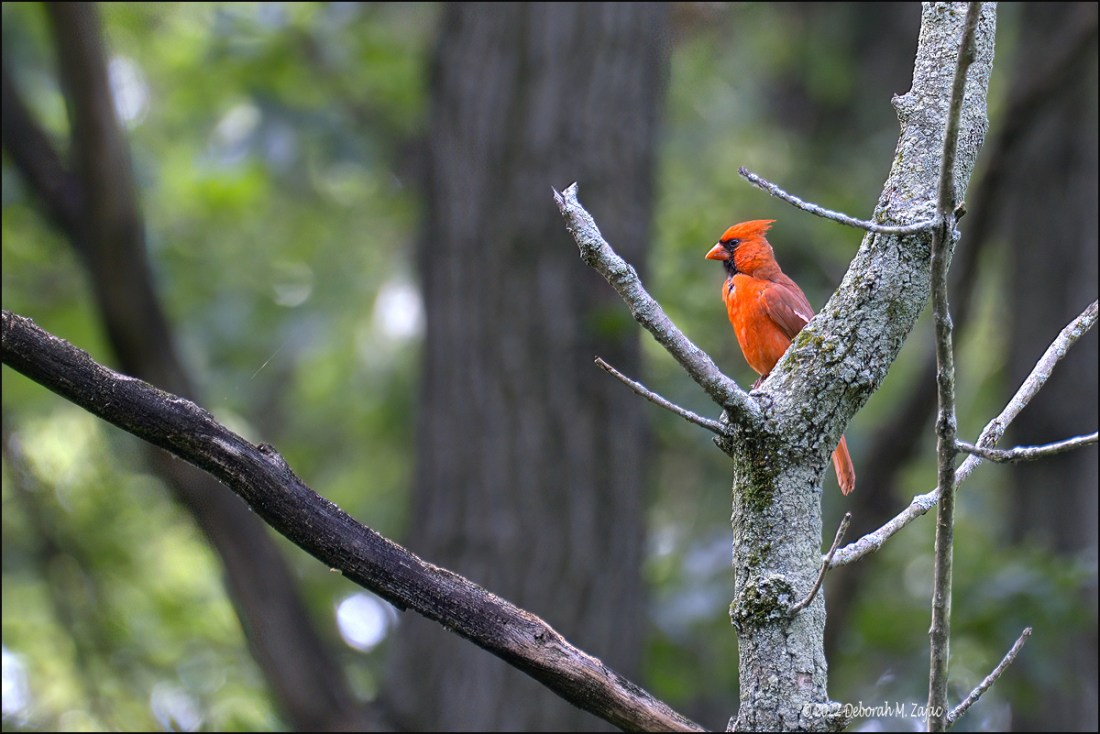
I’m so far behind processing and sharing images I fear I’ll never catch up, but let’s go back to my trip to Illinois which was in July this year. The day after my son’s wedding I went birding and He-Man came along for the walk, while we were at The Little Red Schoolhouse Nature Center I ran into a birder and we got to chatting about birds we’d each seen so far that morning, and I asked him if he’d seen any Northern Cardinals in the area and he said he had just up the trail!! We were off on the hunt. It wasn’t long too long after that I saw a red streak fly by in the trees ahead. I raced forward, He-Man raced forward as now he too was excited and on the hunt!! I saw it dive into the bushes but, couldn’t see it then suddenly it flew up to a dead tree snag and perched!!!

Northern Cardinal-Male

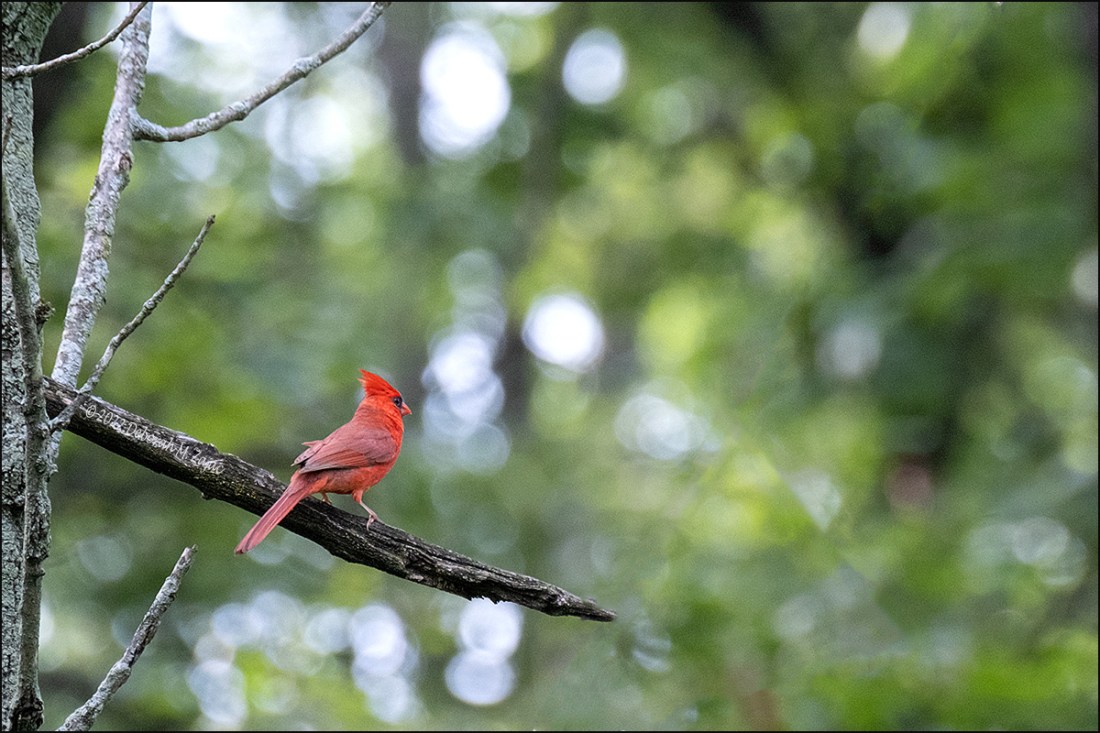
I’ve been dreaming of seeing this bird for what seems my whole life…more so since I started birding more seriously in 2010. Can you see me doing my happy dance? 💃💃 I still am so excited to have finally see this beautiful bird! One day I hope to see the Female so that’s still on my list.

Northern Cardinal-Male

I saw one other “Lifer” here at this Nature Center that I’ll be sharing soon, and I’ll be telling you all about my trip to Wyoming where I met up with Janet from This, That, and the Other Thing!!

I hope this finds you all well, you have a wonderful week-end!

Fuji X-T3| Fujinon 100-400mm @ 400mm| PS CC 23.4.2

more to come…

Friday’s Feathered Friends-Red-Tail Hawk Chick

Copyright ©2022 Deborah M. Zajac. ALL RIGHTS RESERVED. DO NOT USE MY IMAGES WITHOUT EXPRESSED WRITTEN PERMISSION!

The Red-Tail Hawk is back using the same nest as last year for this year’s breeding season. Yipee!

On the 15th while on my walk I think I spied a little head so when I got home I grabbed my camera and went back out to take photos of the nest and sure enough there was a chick in the nest and Mom too.

Red-Tail Hawk and sleepy chick

It wasn’t long before Mom took flight to stretch her wings. She flew into a tree across the way a bit to keep watch and once in awhile she called out letting the chick know she was near…I think. I kept waiting hoping the chick would sit up and it paid off.

Red-tail Hawk Chick

Look how fuzzy and soft it looks! 2 weeks later look how big it is and there’s less fuzz and more brown.

Red-tail Hawk Chick

The tree has leafed out quite a bit too making it a bit more difficult to see the chick. This is heavily cropped as well.

I’ll keep checking in on it and hopefully, I won’t miss the fledging like I did last year.

Fun Facts-gleaned from allaboutbirds.org

  • The Red-tailed Hawk has a thrilling, raspy scream that sounds exactly like a raptor should sound. At least, that’s what Hollywood directors seem to think. Whenever a hawk or eagle appears onscreen, no matter what species, the shrill cry on the soundtrack is almost always a Red-tailed Hawk.
  • Birds are amazingly adapted for life in the air. The Red-tailed Hawk is one of the largest birds you’ll see in North America, yet even the biggest females weigh in at only about 3 pounds. A similar-sized small dog might weigh 10 times that.
  • The “Harlan’s Hawk” breeds in Alaska and northwestern Canada, and winters on the southern Great Plains. This very dark form of the Red-tailed Hawk has a marbled white, brown, and gray tail instead of a red one. It’s so distinctive that it was once considered a separate species, until ornithologists discovered many individuals that were intermediate between Harlan’s and more typical Red-tailed Hawks.
  • Courting Red-tailed Hawks put on a display in which they soar in wide circles at a great height. The male dives steeply, then shoots up again at an angle nearly as steep. After several of these swoops he approaches the female from above, extends his legs, and touches her briefly. Sometimes, the pair grab onto one other, clasp talons, and plummet in spirals toward the ground before pulling away.
  • Red-tailed Hawks have been seen hunting as a pair, guarding opposite sides of the same tree to catch tree squirrels.
  • The oldest known wild Red-tailed Hawk was at least 30 years, 8 months old when it was found in Michigan in 2011, the same state where it had been banded in 1981.

I hope you all have a lovely week-end!

Fuji X-T3| Fuji 100-400mm lens| PS CC 23.2.2

more to come…