Friday’s Feathered Friends- Yellow Warbler

Copyright ©2025 Deborah M. Zajac. ALL RIGHTS RESERVED.

PLEASE DO NOT USE MY IMAGES WITHOUT EXPRESSED WRITTEN PERMISSION.

Myself and He-Man went to Ohio for several days of birding Wood Warblers. I hoped to see some I didn’t see last year and see those I did see last year again. It was a great trip. Not only did I see a number of the Warblers I saw last year, I also saw some new species of Warblers plus a couple of other birds. 14 new to me birds or in birder speak ” Lifers”. On Monday the 12th (my birthday) I saw 7 Lifers! What a gift!!

I have thousands of images to cull but, I’m hoping I have a few good images to share in upcoming posts.

In the meantime here’s a cheerful Yellow Warbler I saw while there. These guys were everywhere on May 11th. They were singing and filling up on insects in all the trees in bloom getting ready for their over night migration to get to their breeding grounds in the USA, and some flew over the 26 miles of Lake Erie to get to Canada where their breeding grounds are.

On May 12th their numbers at the marsh were remarkably lower than the day before. I only saw a few.

©Deborah M. Zajac | http//:circadianreflections.com Image

I’m catching up with mail, email, bills, of course the laundry, and your blogs.

I hope you have a lovely week-end.

Fun facts:

  • In addition to the migratory form of the Yellow Warbler that breeds in North America, several other resident forms can be found in Mexico, Central America, and the Caribbean. Males in these populations can have chestnut caps or even chestnut covering the entire head.
  • The nests of the Yellow Warbler are frequently parasitized by the Brown-headed Cowbird. The warbler often builds a new nest directly on top of the parasitized one, sometimes resulting in nests with up to six tiers.
  • Life can be dangerous for a small bird. Yellow Warblers have occasionally been found caught in the strands of an orb weaver spider’s web.
  • The oldest-known Yellow Warbler was a female and was at least 11 years old when she was recaught and rereleased during banding operations in New York. ~https://www.allaboutbirds.org/guide/Yellow_Warbler

more to come…

Friday’s Feathered Friends-Couples

Copyright ©2025 Deborah M. Zajac. ALL RIGHTS RESERVED.

PLEASE DO NOT USE MY IMAGES WITHOUT EXPRESSED WRITTEN PERMISSION.

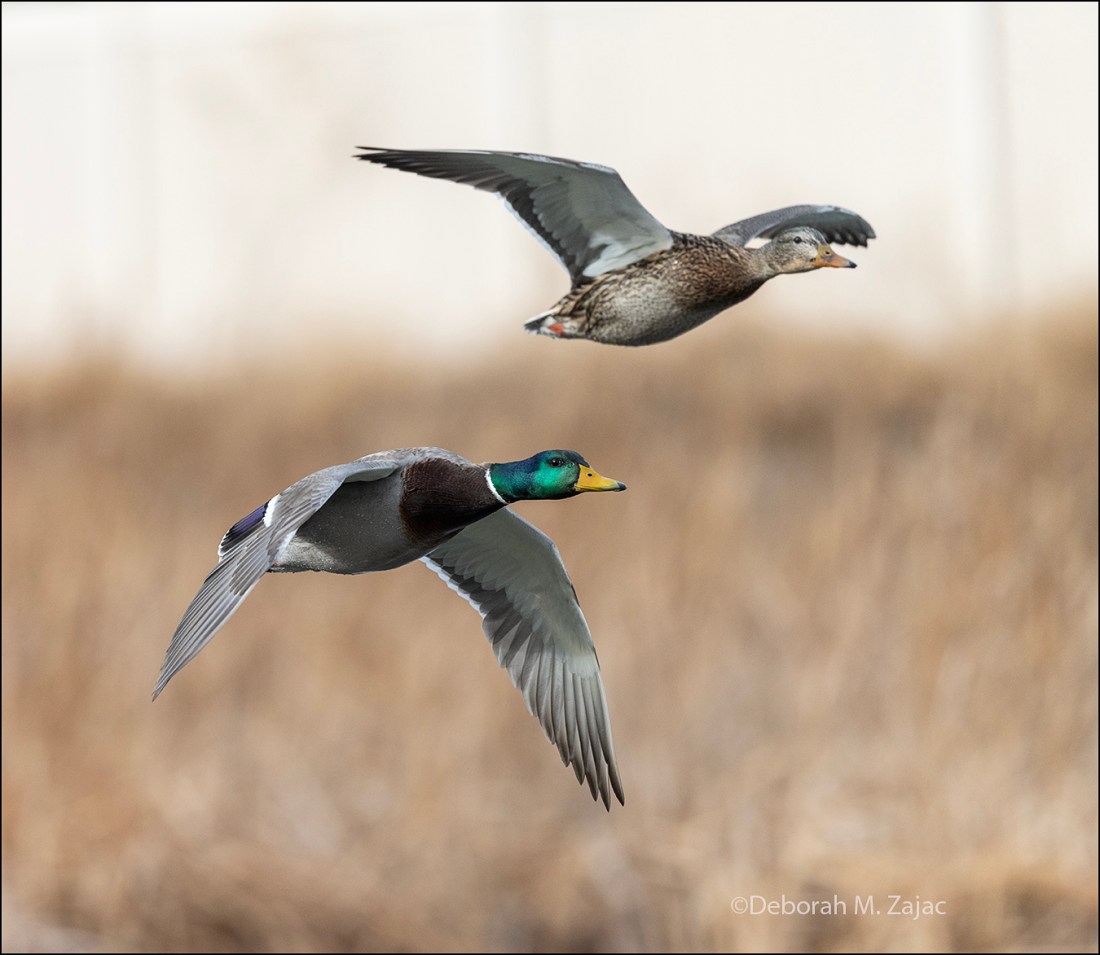
Being Valentine’s Day today I thought I’d share a couple of bird pairs/couples.

Mallard pair

©Deborah M. Zajac | http//:circadianreflections.com Image

Hooded Merganser pair

©Deborah M. Zajac | http//:circadianreflections.com Image

I hope you all have a lovely Valentine’s Day and great weekend.

Nikon D850| Nikkor 500mm| PS CC

more to come…

Friday’s Feathered Friends- Tundra Swan

Copyright ©2025 Deborah M. Zajac. ALL RIGHTS RESERVED.

PLEASE DO NOT USE MY IMAGES WITHOUT EXPRESSED WRITTEN PERMISSION.

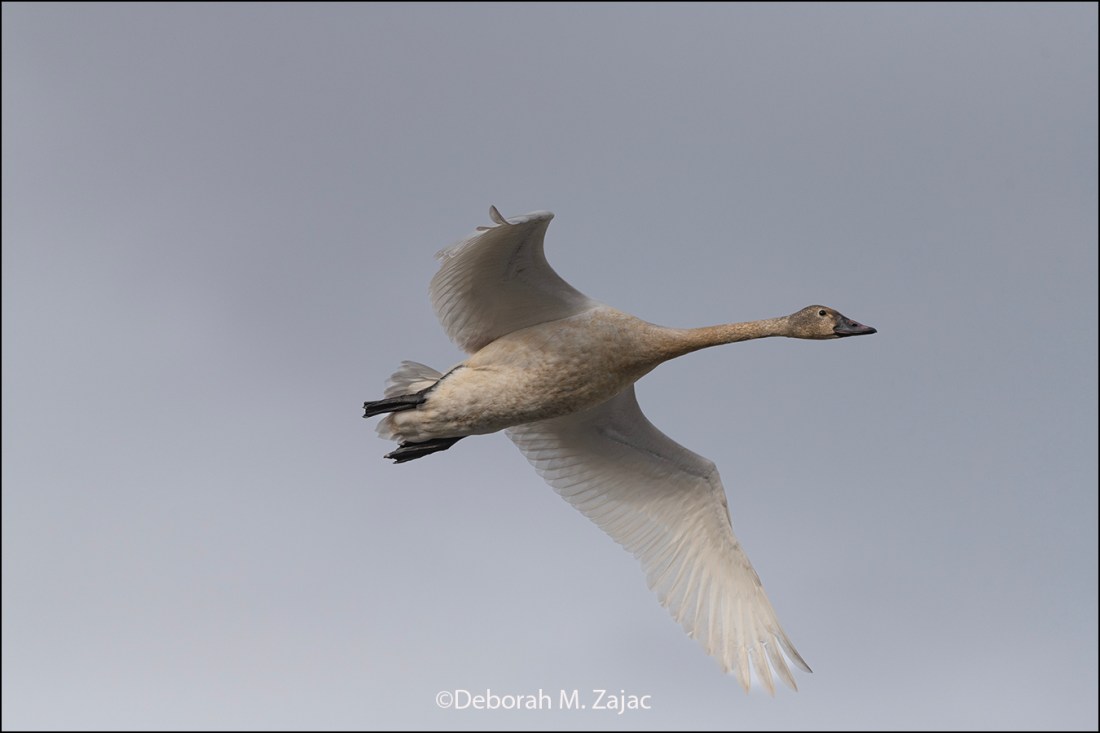
While out birding with the group last Friday morning we had the pleasure of a Tundra Swan fly-by. The single Swan flew by three times actually. Probably checking out the slough and ponds to see if that was the place to land or if his partner was there. We didn’t see a another swan and after three passes we didn’t see it again.

©Deborah M. Zajac | http//:circadianreflections.com Image

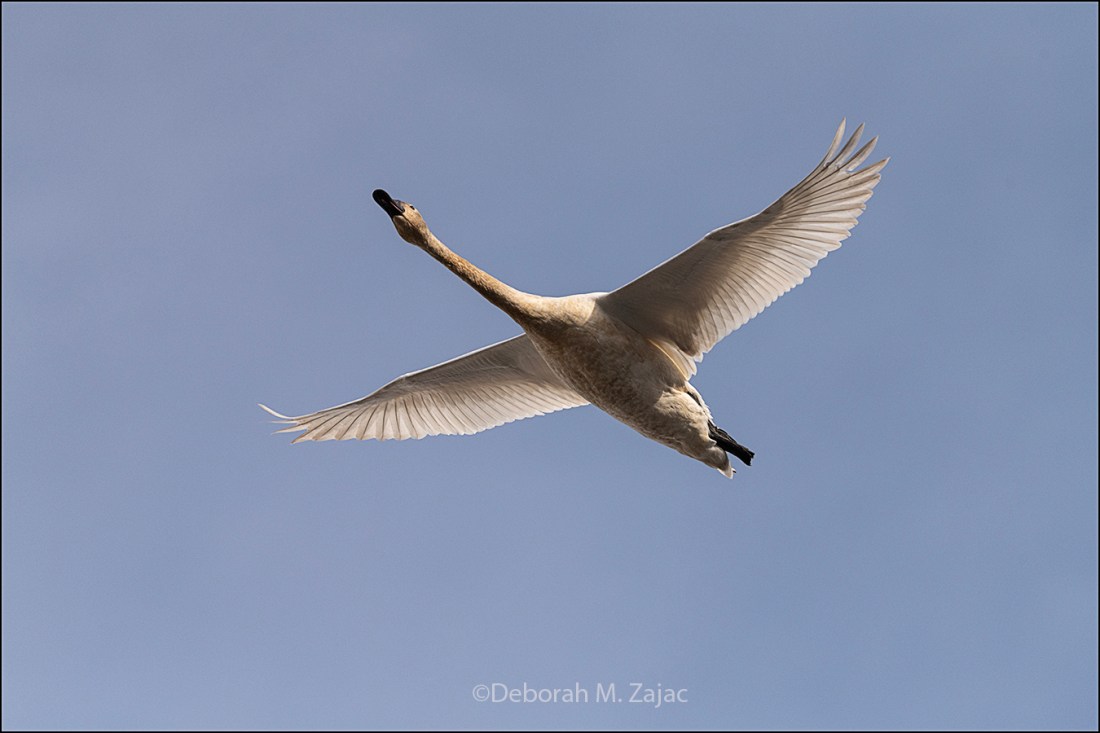
Here it was flying over my head.

©Deborah M. Zajac | http//:circadianreflections.com Image

Both images are cropped a bit. It was higher in the sky than these make it look.

Fun Facts:

  • Lewis and Clark provided the first written description of the Tundra Swan during their expedition to the West, where the birds’ whistle-like calls prompted Meriwether Lewis to dub them “whistling swans.”
  • The whistling swan, the American race of the Tundra Swan, currently is considered the same species as the Eurasian race, the Bewick’s swan. They were considered separate species in the past, distinguished by the large yellow patches on the face of the Bewick’s swan.
  • The Tundra Swan stays in flocks except when on a breeding territory. Although most swans spread out to breed, a large proportion of the population on the breeding grounds still can be found in flocks. These swans are not breeding, and may be young birds that have not yet bred, adult pairs whose breeding attempts failed, or adults that bred in the past but for some reason do not in that year.
  • During the breeding season the Tundra Swan sleeps almost entirely on land, but in the winter it sleeps more often on water.
  • Tundra Swans breed in the remote arctic of North America. Parents defend their nests and young against a host of predators including foxes, weasels, wolves, and bears, as well as birds such as Glaucous Gulls, Common Ravens, Parasitic Jaegers, Pomarine Jaegers, and Golden Eagles. If the parents are present, they are able to defend the nest and nestlings from these threats. Wolves, people, and bears, however, are too big to fight, and most incubating swans leave their nests while these large predators are far away. By leaving quickly when large predators approach, the parents may make the nest harder to find.
  • Tundra Swans wintering in Chesapeake Bay feed almost exclusively on clams that they dislodge from the mud. But it can be challenging to enjoy a peaceful meal: often the swan has to fend off a Ring-billed, Herring, or Greater Black-backed gull that swoops in to grab a clam from the swan’s bill – a successful tactic in about half of these “kleptoparasitic” encounters.
  • Swans have long been associated with ideals of romance. Added to their elegant outlines and all-white plumage is their tendency to form permanent pair bonds by the time they’re 2-3 years old. Once a pair forms, Tundra Swans feed and roost together year-round.
  • Based on banding records, the oldest known Tundra Swan was a female and at least 23 years, 7 months old when she was identified by her band in the wild, in Ohio. She was originally banded in the same state.

Fun Facts gleaned from allaboutbirds.org

If the rain holds off this morning I’ll be birding so I may be late getting to your blogs, and comments.

more to come…

Friday’s Feathered Friends- Hermit Thrush

Copyright ©2025 Deborah M. Zajac. ALL RIGHTS RESERVED.

PLEASE DO NOT USE MY IMAGES WITHOUT EXPRESSED WRITTEN PERMISSION.

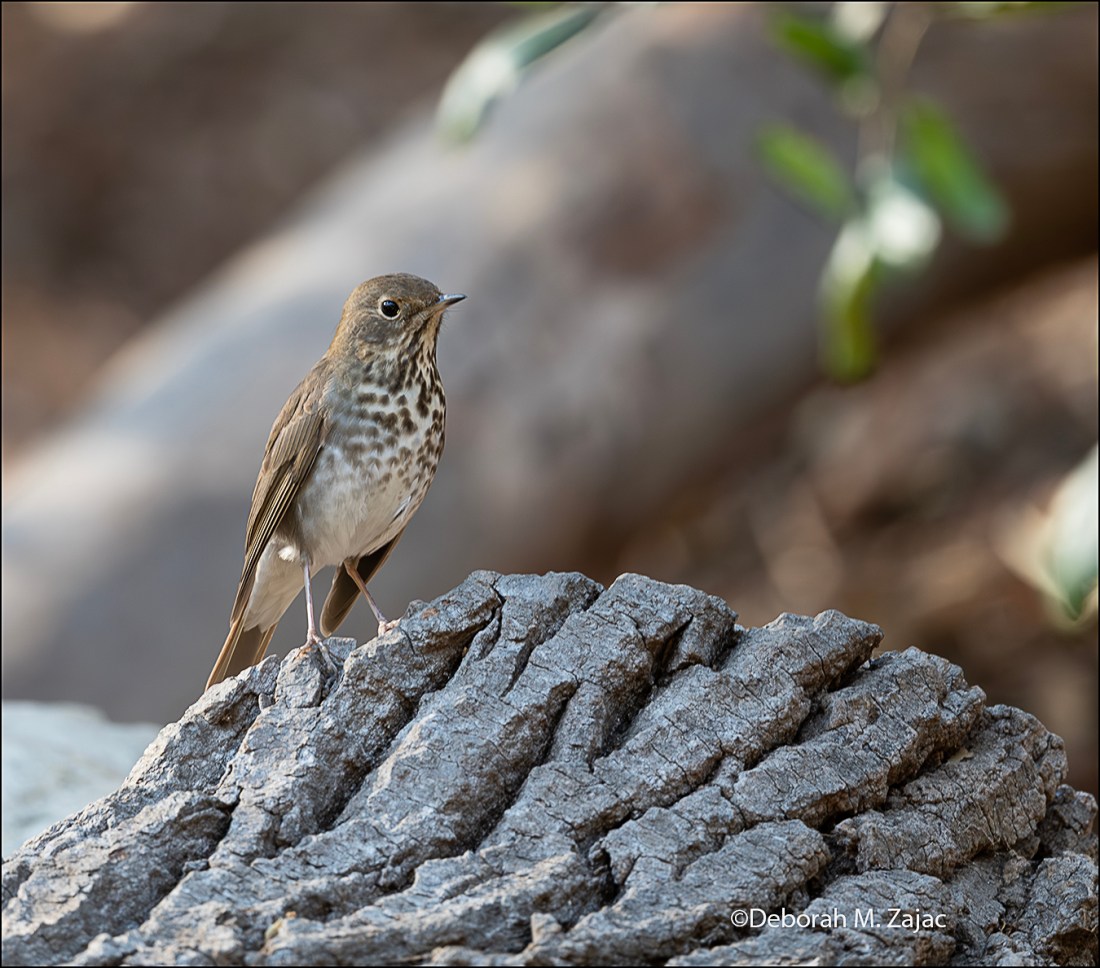
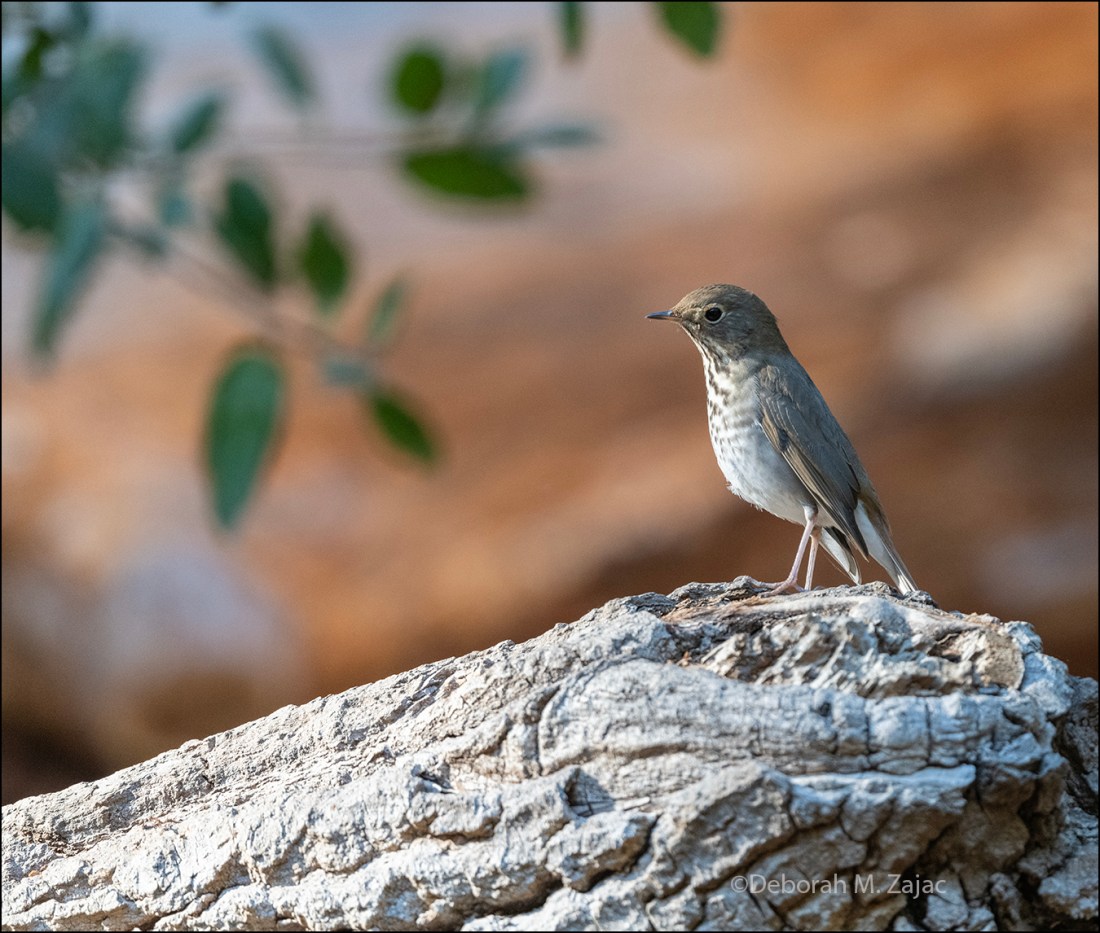
While we were visiting the Santa Barbara Botanical gardens recently He-Man stopped in a little garden rest area with a bench to retie his shoe and out popped a Hermit Thrush! I was so excited because I don’t see these shy birds too often.

©Deborah M. Zajac | http//:circadianreflections.com Image

We got several minutes of good looks at it while it was foraging around area.

Fun Facts-

  • Males usually gather food for the nest, while females feed the nestlings. The young birds start by eating bits of larvae, then grasshoppers, moths, and spiders. They sometimes eat small vertebrates such as salamanders.
  • Hermit Thrushes usually make their nests in and around trees and shrubs, but they can also get more creative. Nests have been found on a cemetery grave, on a golf course, and in a mine shaft.
  • Hermit Thrushes sometimes forage by “foot quivering,” where they shake bits of grass with their feet to get insects. They also typically begin to quiver their feet as they relax after seeing a flying predator.
  • East of the Rocky Mountains the Hermit Thrush usually nests on the ground. In the West, it is more likely to nest in trees.
  • Hermit Thrushes make several distinct calls around their nests. They will sometimes make a rising byob sound similar to a mewing kitten. Females frequently rearrange their eggs while making quit quit noises. In the morning, two adults meeting near the nest will greet each other with a pweet pweet call.
  • Hermit Thrushes are part of a genus (Catharus) that includes four other similar thrushes in North America: the Veery, Swainson’s Thrush, Gray-cheeked Thrush, and Bicknell’s Thrush. In the northeastern mountains, the Veery lives at the lowest elevations, Hermit Thrushes at middle elevations, and Swainson’s Thrushes at high elevations.
  • The oldest recorded Hermit Thrush was at least 10 years, 10 months old when it was recaptured and rereleased during banding operations in Maryland in 2009. It was originally banded there in 1999.

Fun facts gleaned as always from allaboutbirds.org

I’ll be a little late replying to your comments as I’m out birding this morning.

Nikon D850|Nikkor 500mm PF-e lens

more to come…

Friday’s Feathered Friends- The Anhinga

Copyright ©2024 Deborah M. Zajac. ALL RIGHTS RESERVED.

PLEASE DO NOT USE MY IMAGES WITHOUT EXPRESSED WRITTEN PERMISSION.

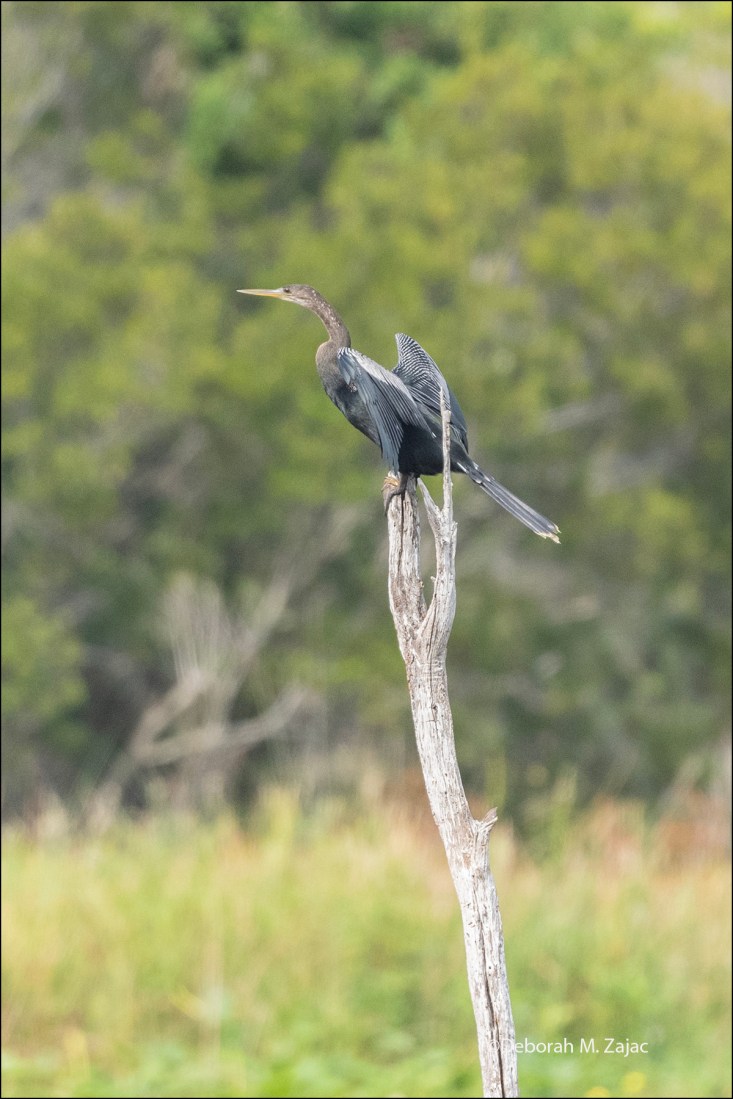
The Anhinga was one of 4 birds I really wanted to see while I was in Florida in September and I saw 3 of them! One male and two Females…I think.

It’s another pre-historic cool looking bird.

I think this is a male because his neck is black. He’s drying his wings.

©Deborah M. Zajac | http//:circadianreflections.com Image

Here’s the female also drying out her wings. Like Cormorants they don’t have waterproof feathers so they get on a perch or land and spread them open to dry them out.

©Deborah M. Zajac | http//:circadianreflections.com
As I crept closer to her to get a better shot I spooked her and off she flew.

Fun Facts:

  • The Anhinga’s distinctive shape earned it the nickname “water turkey” for its turkeylike tail, and “snake bird” for its long snakelike neck as it slithers through the water.
  • Unlike most waterbirds, the Anhinga doesn’t have waterproof feathers. While that may seem like a disadvantage for their watery lifestyle, their wet feathers and dense bones help them slowly submerge their bodies under the water so they can slyly stalk fish.
  • The name Anhinga comes from the Tupi Indians in Brazil, meaning “devil bird” or “evil spirit of the woods.”
  • The oldest recorded Anhinga was at least 12 years old when it was shot in Louisiana in 1948.

Fun facts gleaned from https://www.allaboutbirds.org/guide/Anhinga/overview

We may have a break from the wind and beat the rain this morning so I’m going birding with friends which means I’ll be a bit late checking out your blogs, and reading comments.

more to come…

Friday’s Feathered Friends-Birds!

Copyright ©2024 Deborah M. Zajac. ALL RIGHTS RESERVED.

PLEASE DO NOT USE MY IMAGES WITHOUT EXPRESSED WRITTEN PERMISSION.

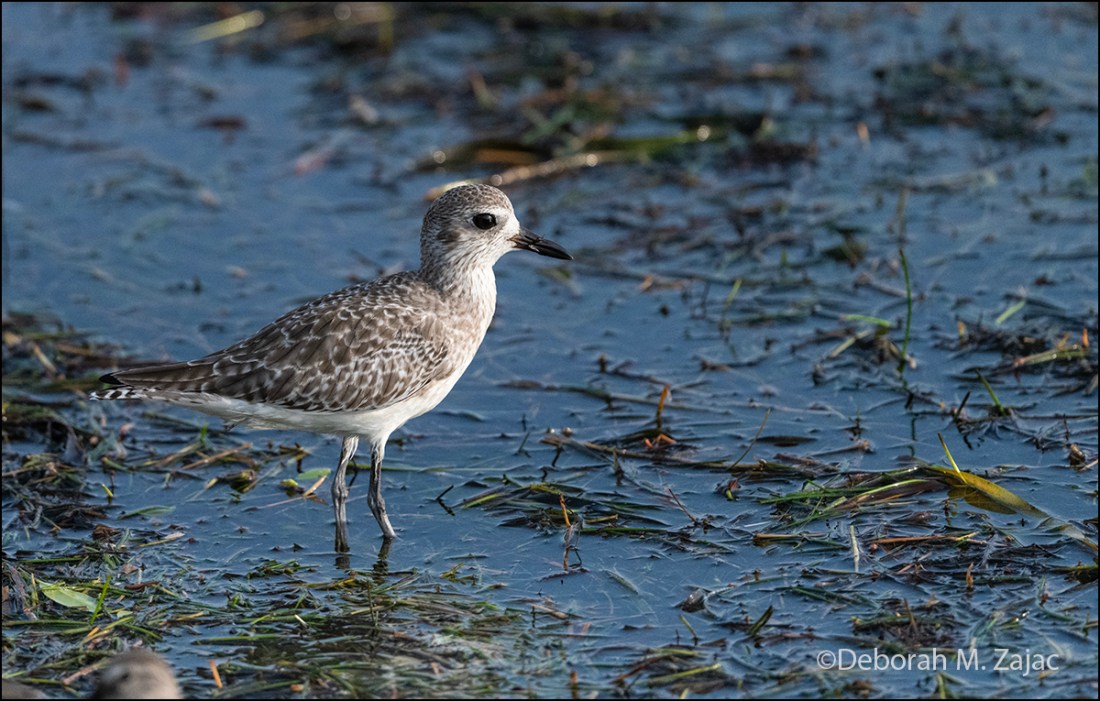
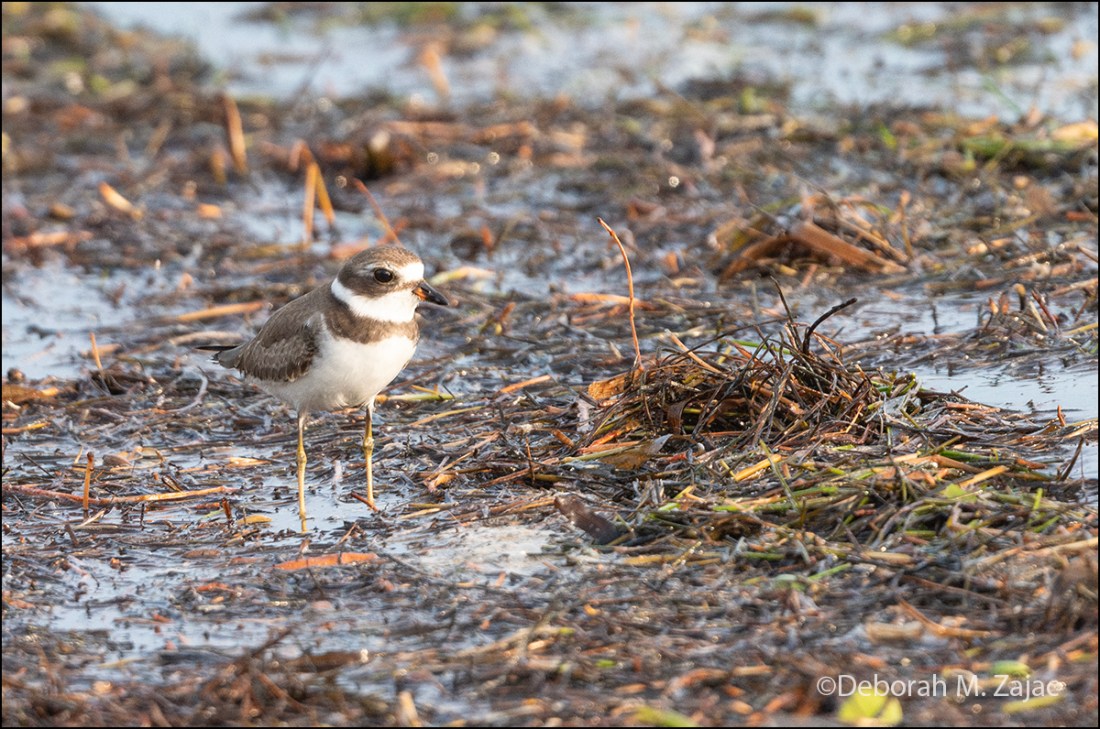
It’s been awhile since I shared any birds so I’m going to share several I saw while in Florida this past September. It was a fantastic trip. I saw 21 new to me birds aka “Lifers”. I won’t share all of them in this post. 😊

Black-bellied Plover

©Deborah M. Zajac | http//circadianreflections.com Image

Semipalmated Plover

©Deborah M. Zajac | http//circadianreflections.com Image

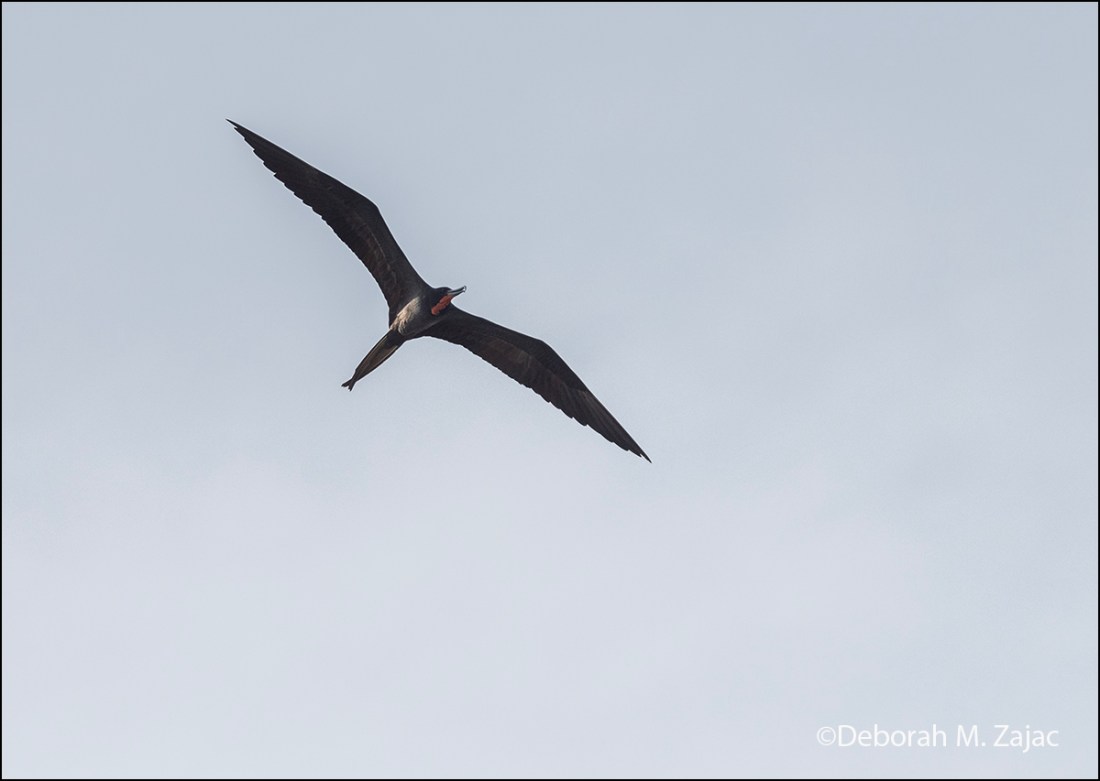
A Magnificent Frigatebird. This was the first time I’d ever seen it in the United States. I have seen it in Mexico before.

©Deborah M. Zajac | http//circadianreflections.com Image

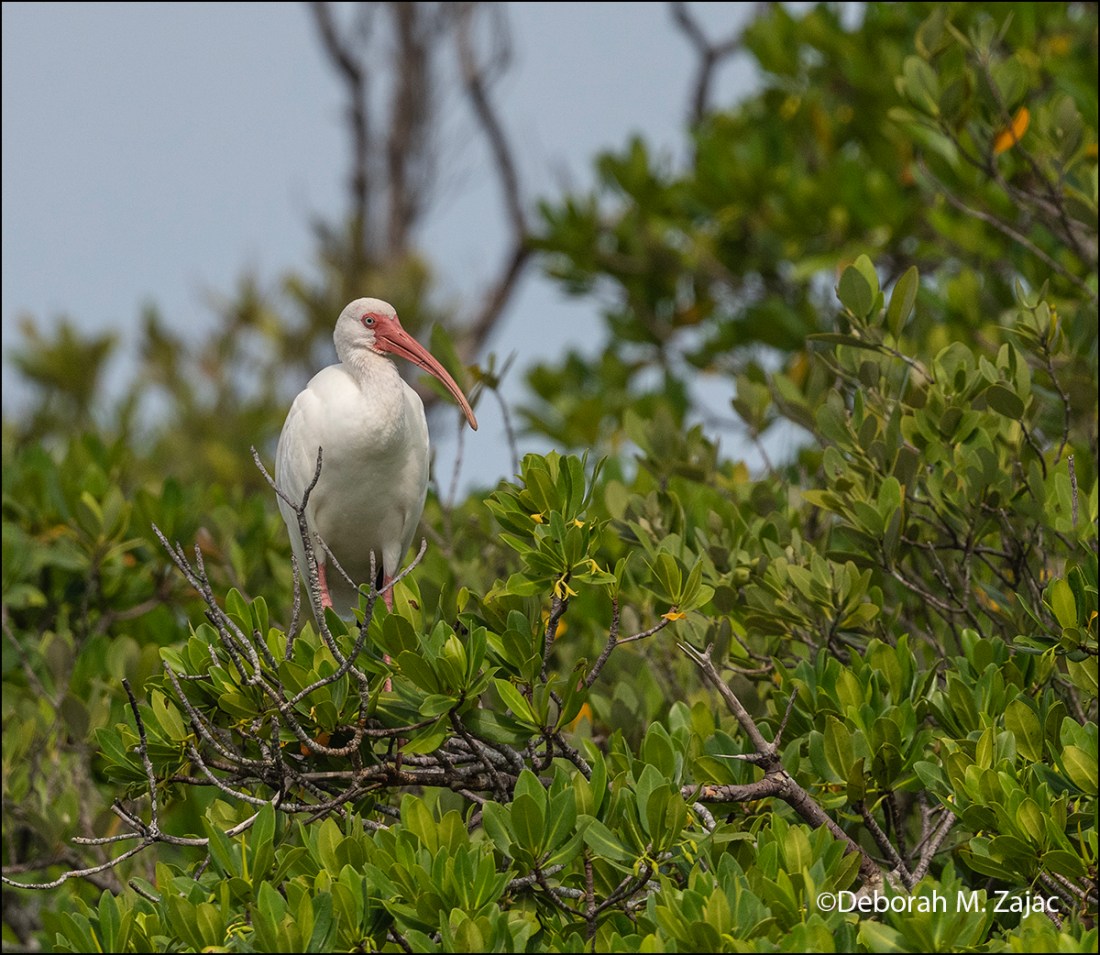
And a White Ibis

©Deborah M. Zajac | http//circadianreflections.com
Image

Aren’t they great? I’m still excited to have seen them.

How’d you all do with the time change for those of you in states and places that end Daylight Savings Time? How many clocks did you have to reset? We have 8 clocks we needed to change including the thermostat and our cars. I’ve been waking up earlier than normal so back to my natural rhythm at last!

I hope you all have a lovely week-end.

Nikon D850|Nikkor 500mm| PS CC

more to come…

Friday’s Feathered Friends- American Redstart

Copyright ©2024 Deborah M. Zajac. ALL RIGHTS RESERVED.

PLEASE DO NOT USE MY IMAGES WITHOUT EXPRESSED WRITTEN PERMISSION.

Going back to my Spring trip to Ohio for these images. The American Redstart male.

He’s a Warbler. I’m on the edge of it’s range. If only one or two would stray a bit further west I wouldn’t have needed to go to Ohio to this one. 😂

©Deborah M. Zajac | http//circadianreflections.com

Here’s an audio clip of its song.

https://www.bird-sounds.net/american-redstart/

Fun Fact:

  • Like the Painted Redstart and other “redstarts” of the Neotropics, the American Redstart flashes the bright patches in its tail and wings. This seems to startle insect prey and give the birds an opportunity to catch them. Though these birds share a common name, they are not closely related to each other. In fact, there are other unrelated birds around the world—such as the fantails of Australia and southeastern Asia, and other redstarts of Europe—that share the same foraging tricks.
  • Young male American Redstarts have gray-and-yellow plumage, like females, until their second fall. Yearling males sing vigorously in the attempt to hold territories and attract mates. Some succeed, but most do not breed successfully until the following year when they develop black-and-orange breeding plumage.
  • The male American Redstart sometimes has two mates at the same time. While many other polygamous bird species involve two females nesting in the same territory, the redstart holds two separate territories that can be separated by a quarter-mile. The male begins attracting a second female after the first has completed her clutch and is incubating the eggs.
  • The oldest American Redstart was at least 10 years and one month old, when he was recaptured and rereleased during a banding operation in Ontario.

Fun facts gleaned from allaboutbirds.org

I may be late replying this morning as I’m starting my week-end birding a new to me area in South Lake Tahoe. I hope you all have a great day and week-end.

more to come…