PLEASE DO NOT USE MY IMAGES WITHOUT EXPRESSED WRITTEN PERMISSION.
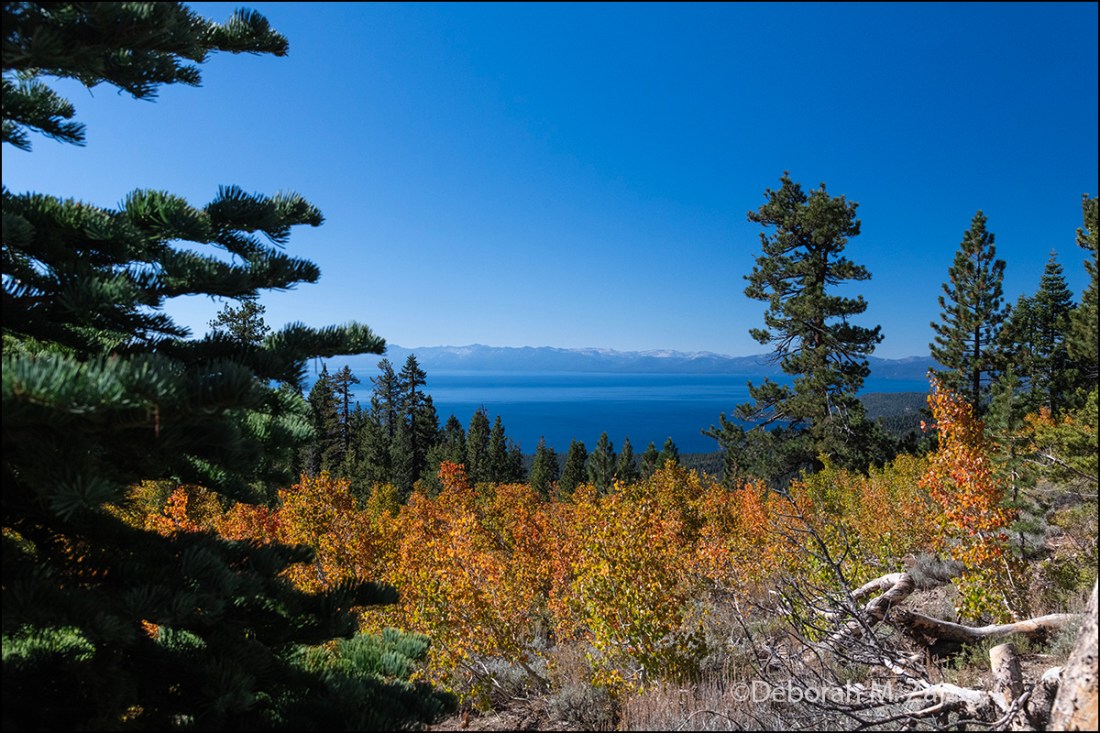
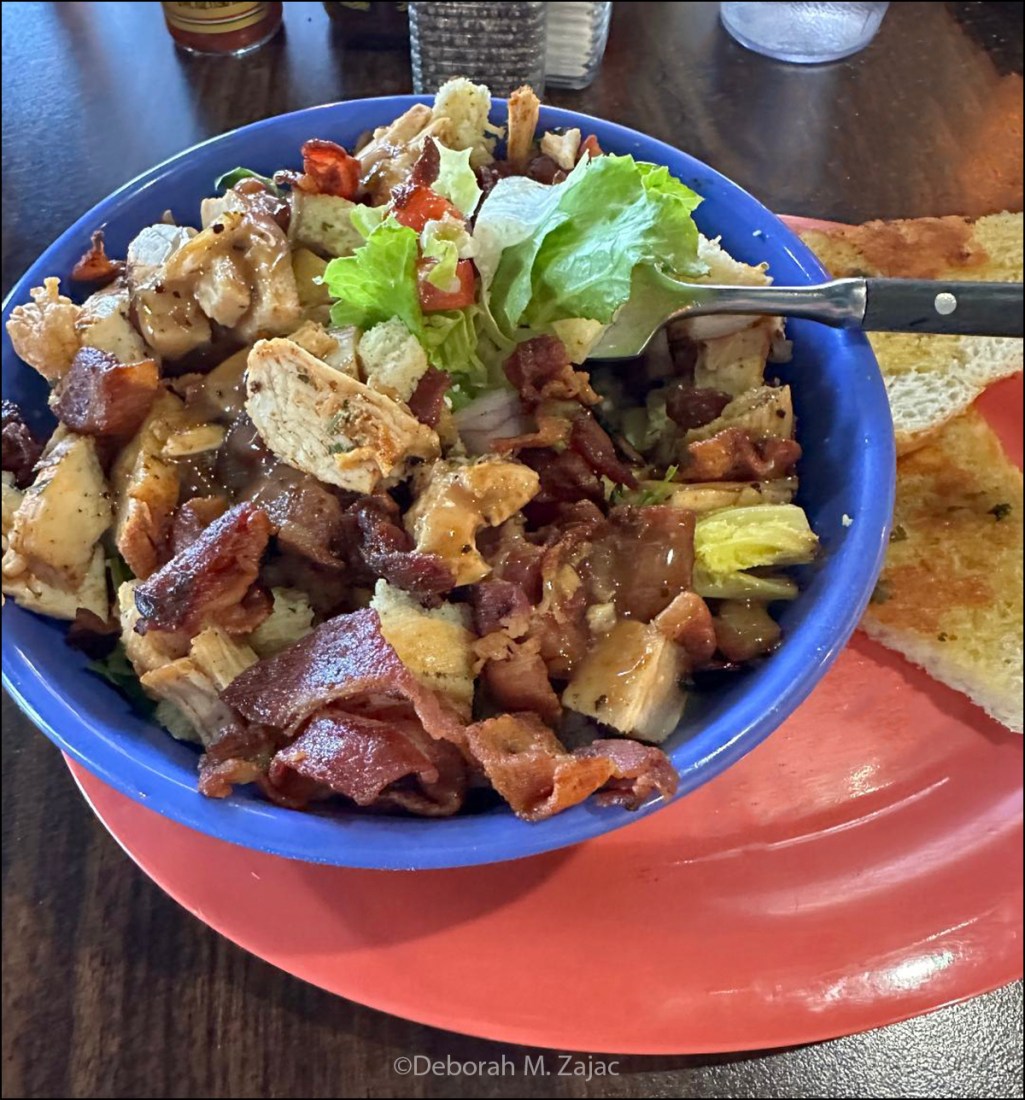
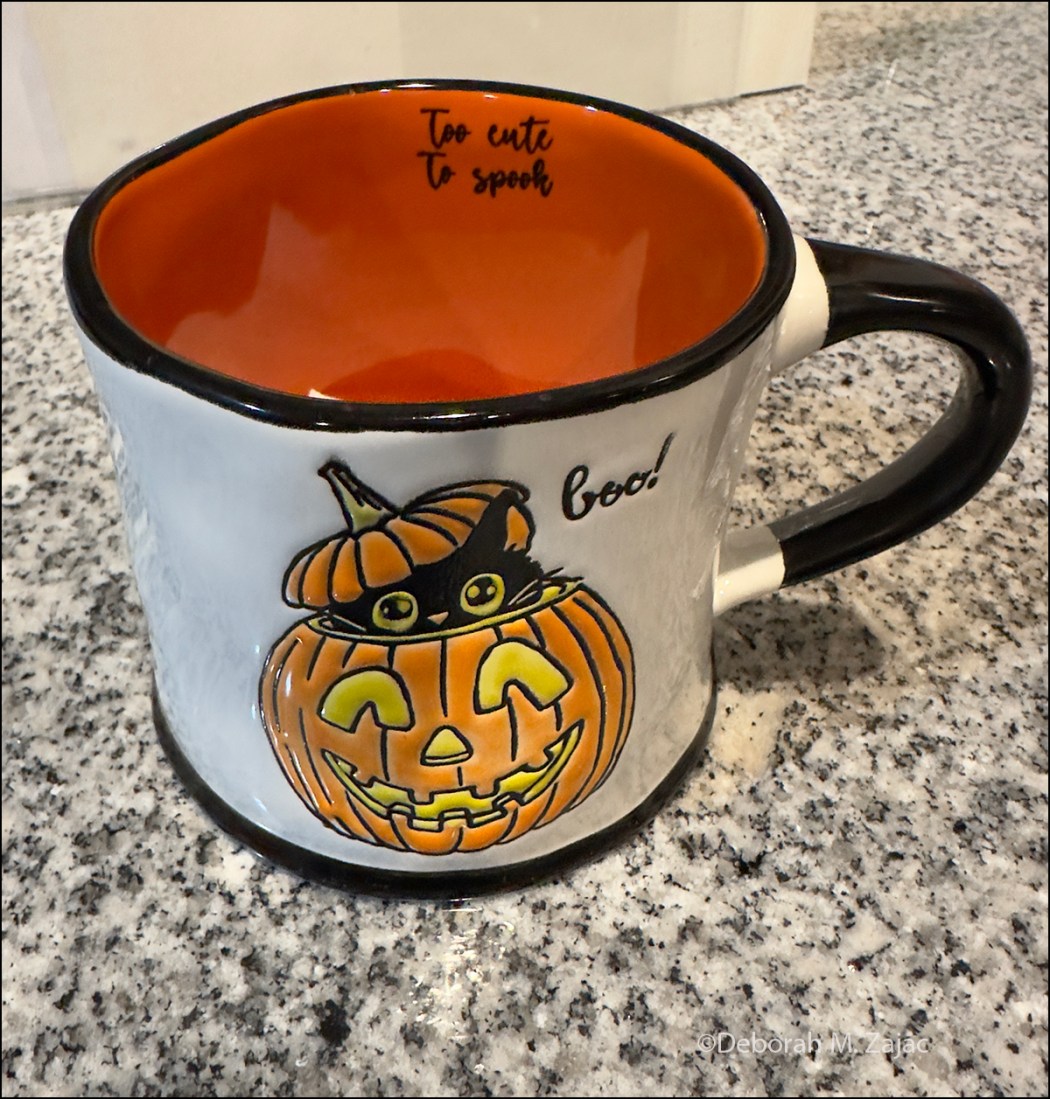
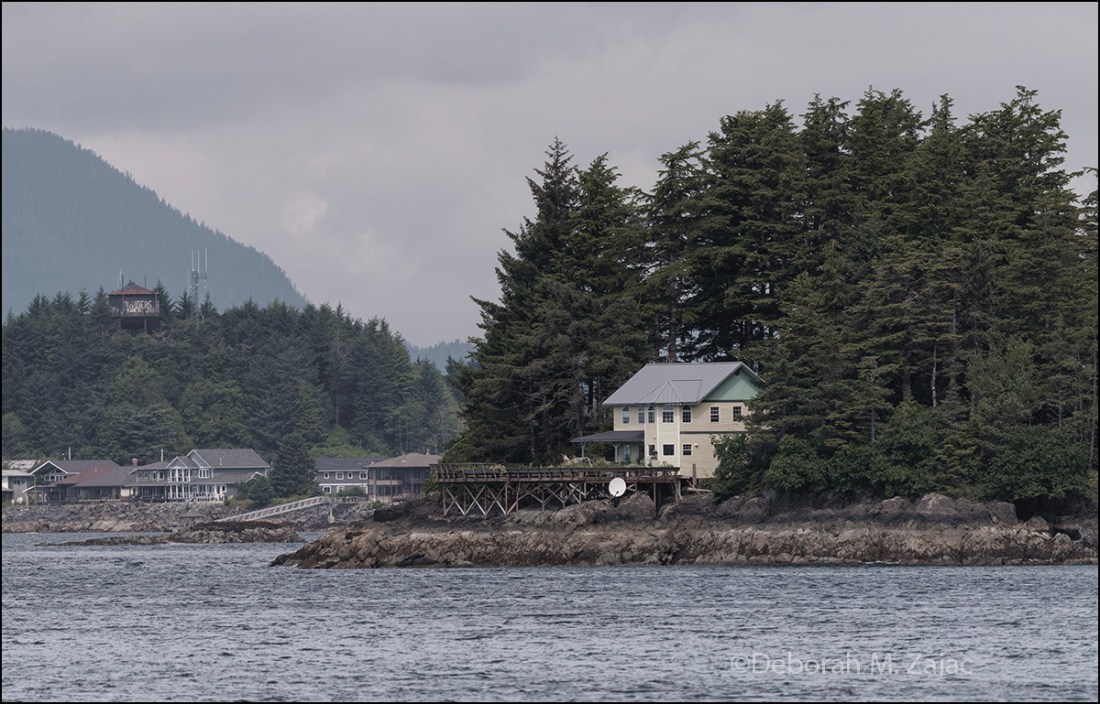
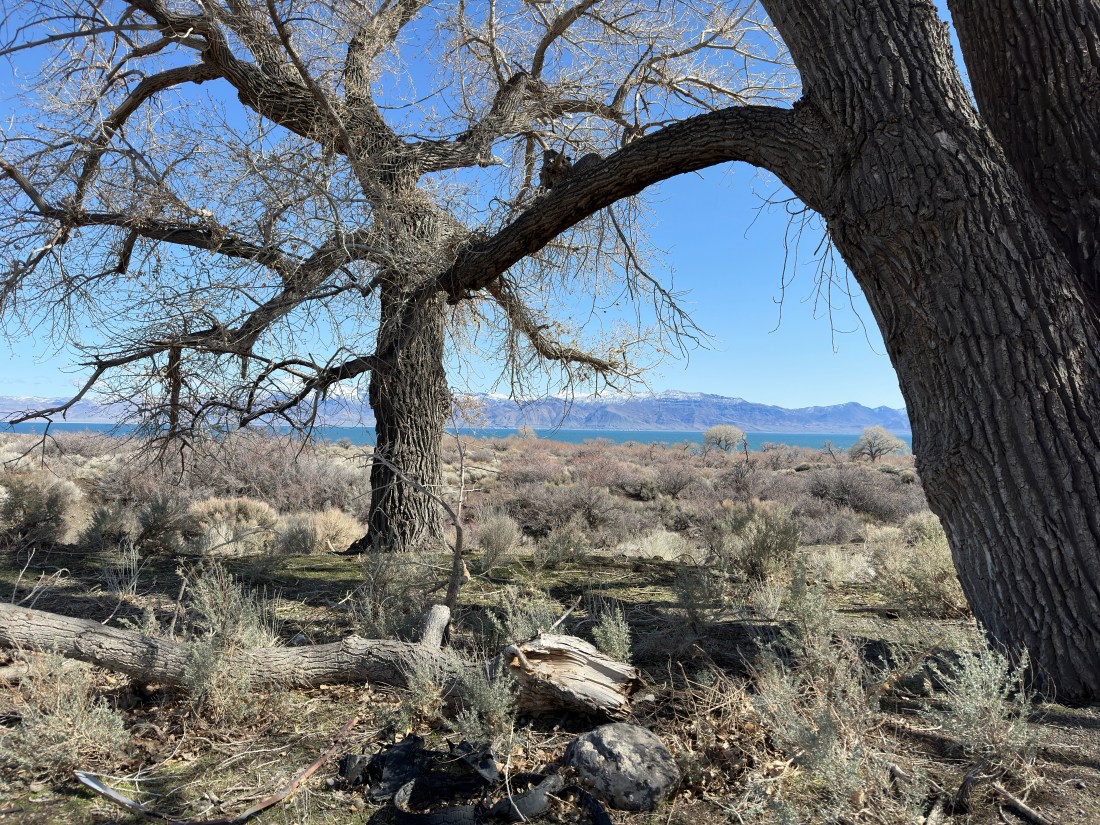
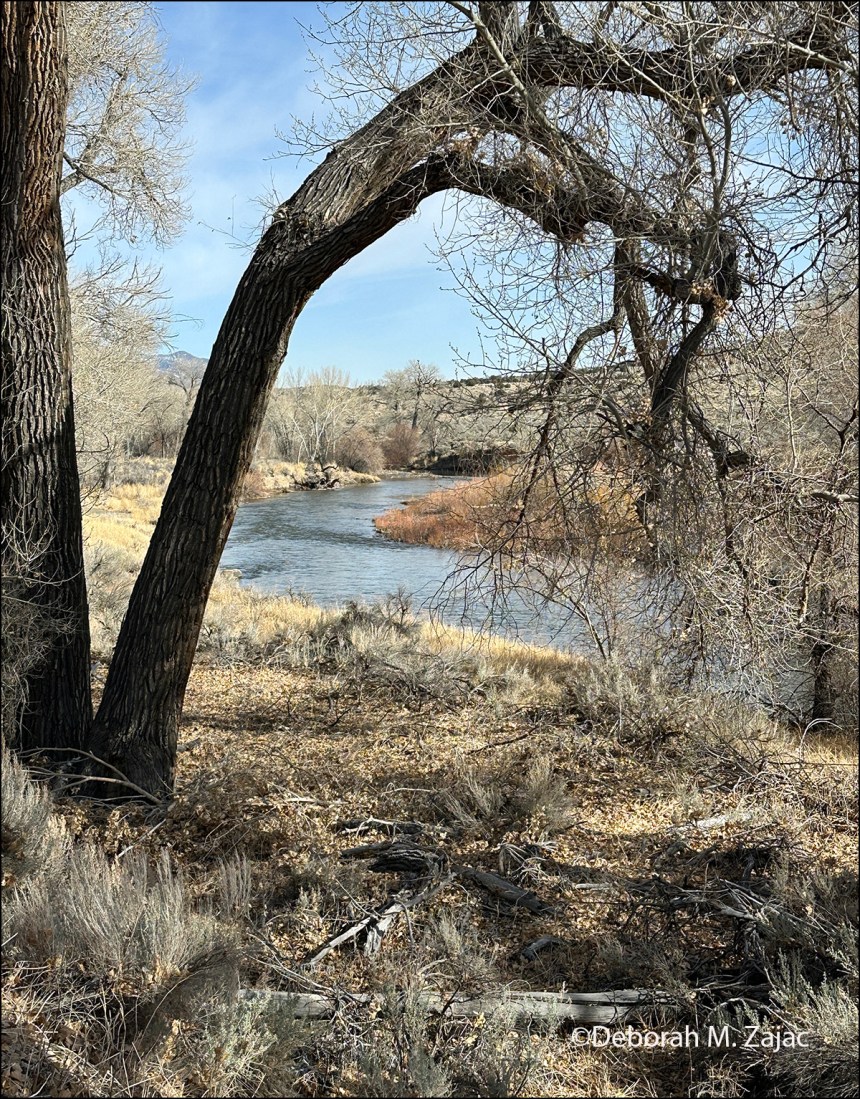
This week for Cee’s Fun Foto Challenge they’re doing Subjects Framed by Nature. Here are 4 I’ve selected from my archives for this challenge. I might not ever share these were not for this challenge. 😊
PLEASE DO NOT USE MY IMAGES WITHOUT EXPRESSED WRITTEN PERMISSION.
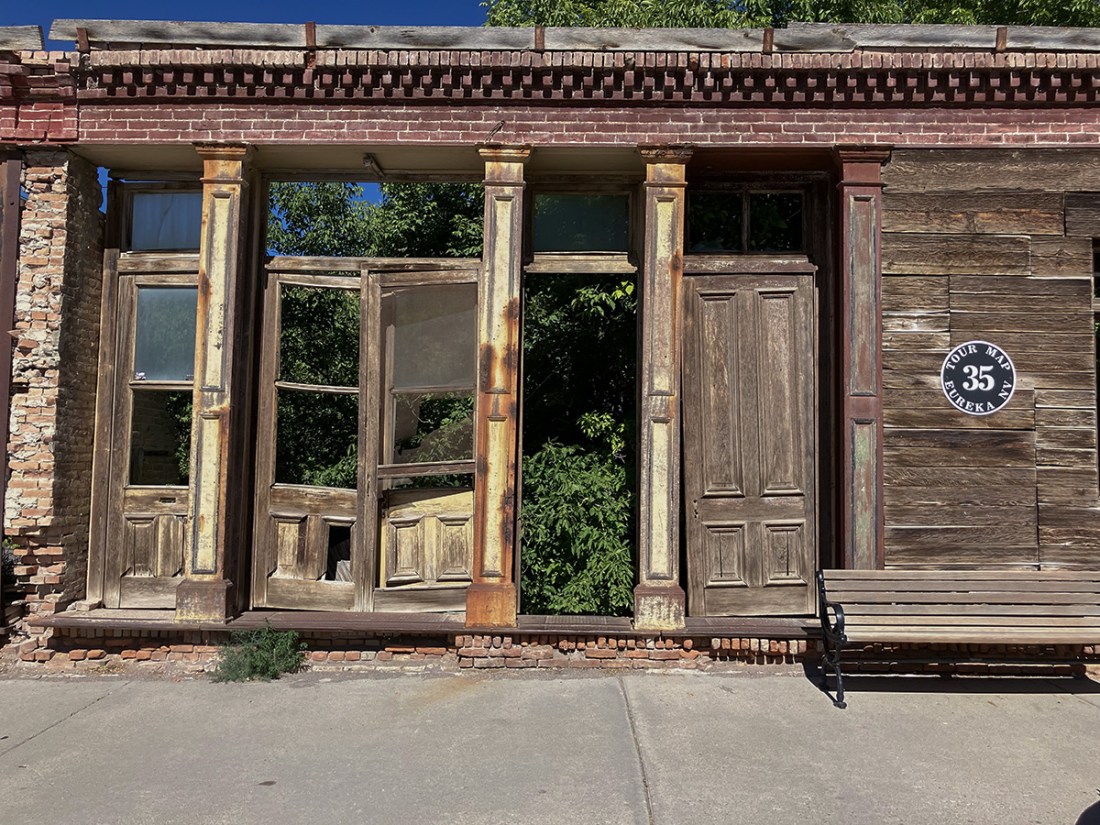
Several weeks ago a girlfriend of mine sent me a photo of a building in Eureka, NV via a text message. She said, “Here’s a door picture for you! ❤️ Eureka, NV.
I asked her if I could share it with you all and she said, “Yes. I knew you’d like those.”
It has 4 doors!
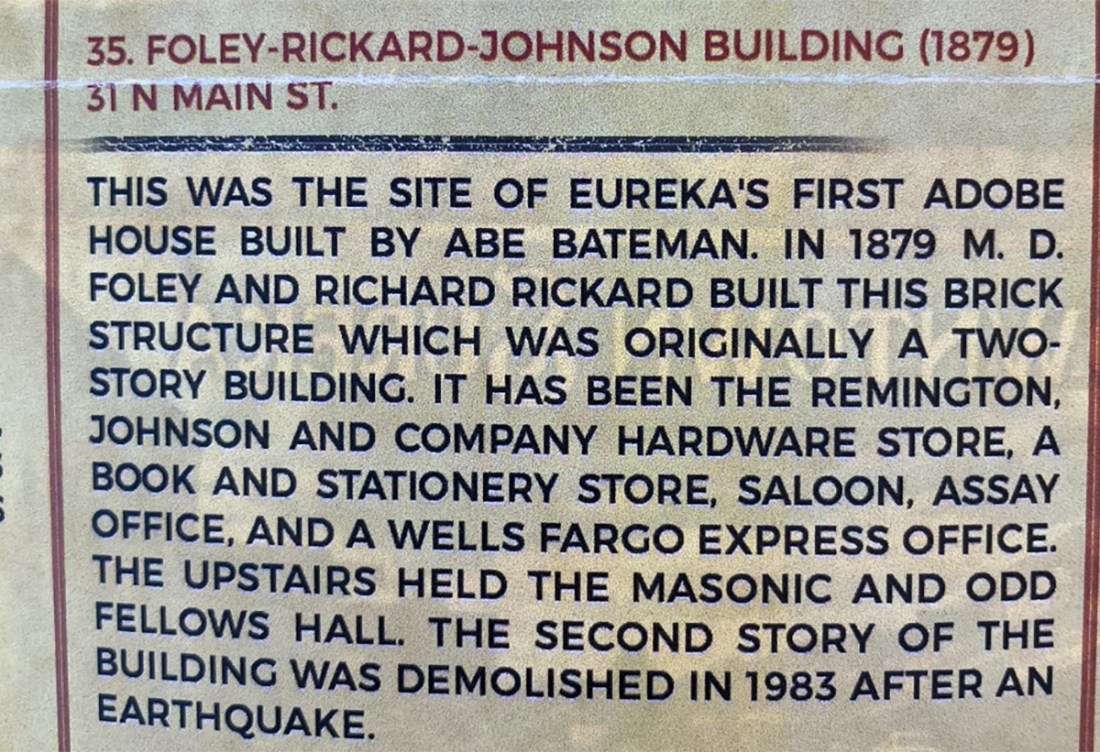
Foley-Rickard-Johnson Building (1879)
She said she did the walking tour and this building is number 35 on the tour. She sent the passage about the history of this site/building too.
Photos by Jarlath
I hadn’t heard of Eureka, NV prior to her sending me these images so, I looked it up. Travel Nevada says, ” Eureka, Nevada bills itself as the Friendliest Town on the Loneliest Road in America. This charming little town is one of the American West’s best-preserved mining communities, thanks to dozens of beautifully intact historic buildings to admire and plenty of hands-on history to explore, along with modern comforts, tasty food, and drink, and endless outdoor adventure a stone’s throw away.”
“In 1864 several prospectors made their way east from booming Austin in search of less crowded diggin’s, which they found—at least for a brief moment. Eventually, their “eureka” moment arrived in the form of a silver strike that would become the state’s largest, second only to the unrivaled Comstock Lode in Virginia City.
Unlike thousands of Western boomtowns that quickly went bust, Eureka continued to prosper, thanks to its proximity to troves of silver, lead, zinc, and (still today) gold. At its height, Eureka could churn out 700 tons of ore in a single day, a feat that secured status as the seat of the richest county in the Silver State.”
PLEASE DO NOT USE MY IMAGES WITHOUT EXPRESSED WRITTEN PERMISSION.
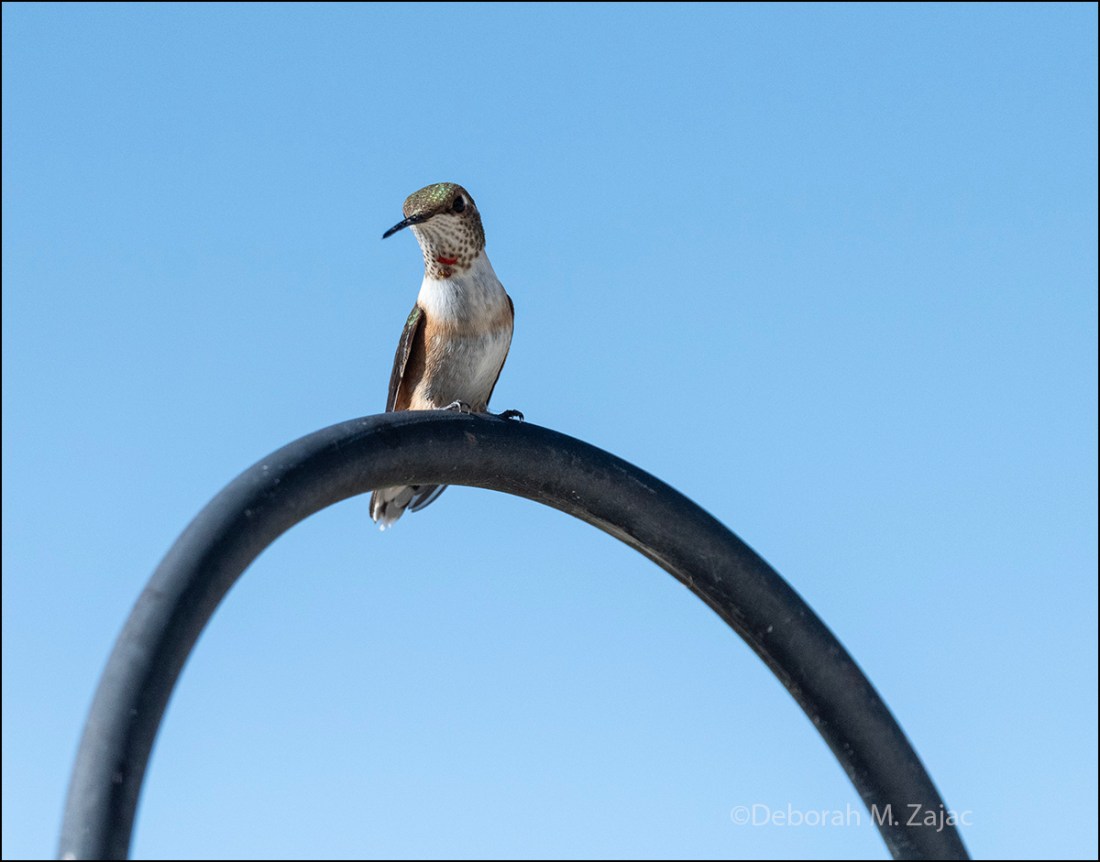
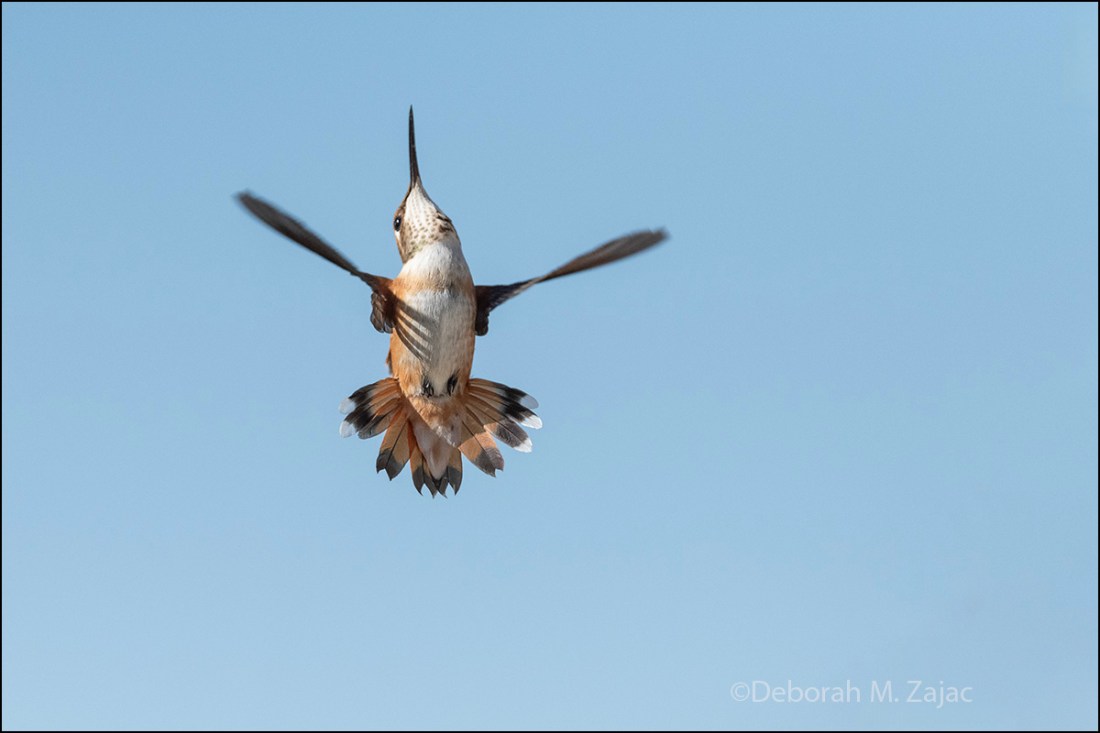
A few weeks ago a pair of Rufous Hummingbirds returned to my backyard feeder. They’ve been chasing off the Black-chinned and having skirmishes all day everyday since their return.
I’m beginning to think I need to add another Shepard’s hook and feeder so the territorial squabbling gets better.
Here’s what I think is a female perched on top of the hook claiming possession. She lands here on and off all day long letting the other Hummingbirds know this is her feeder. You can see a little bit of her Gorget on her throat.
I could be wrong about her sex as it could also be an immature female/ male. If you know which it is please let me know.
Fun Facts:
The Rufous Hummingbird is a common visitor to hummingbird feeders. It is extremely territorial at all times of year, attacking any visiting hummingbird, including much larger species. They’ve been seen chasing chipmunks away from their nests.
The Rufous Hummingbird makes one of the longest migratory journeys of any bird in the world, as measured by body size. At just over 3 inches long, its roughly 3,900-mile movement (one-way) from Alaska to Mexico is equivalent to 78,470,000 body lengths. In comparison, the 13-inch-long Arctic Tern’s one-way flight of about 11,185 mi is only 51,430,000 body lengths. (AAB)
During their long migrations, Rufous Hummingbirds make a clockwise circuit of western North America each year. They move up the Pacific Coast in late winter and spring, reaching Washington and British Columbia by May. As early as July they may start south again, traveling down the chain of the Rocky Mountains. People first realized this pattern after examining detailed field notes and specimens, noting the birds’ characteristic dates of arrival on each part of the circuit.
The Rufous Hummingbird has an excellent memory for location, no doubt helping it find flowers from day to day, or even year to year. Some birds have been seen returning from migration and investigating where a feeder had been the previous year, even though it had since been moved.
The Rufous Hummingbird breeds as far north as southeastern Alaska – the northernmost breeding range of any hummingbird in the world. Of the western hummingbirds that occasionally show up in the east, the Rufous Hummingbird is the most frequent.
Rufous Hummingbirds, like most other hummingbirds, beat their wings extremely fast to be able to hover in place. The wingbeat frequency of Rufous Hummingbirds has been recorded at 52–62 wingbeats per second.
The Rufous Hummingbird is not a colonially nesting species; however, there have been reports from Washington state that have 20 or more Rufous Hummingbird nests only a few yards apart in the same tree. (From the BNA)
Hummingbirds are hard to catch, but there are records of Rufous Hummingbirds being caught by a large flycatcher (Brown-crested Flycatcher) and by a frog.
The oldest recorded Rufous Hummingbird was a female, and at least 8 years, 11 months old when she was recaught and rereleased during banding operations in British Columbia in 2004.
I’ve been slower to your blogs this week as I’m visiting with family, and I will be for the next several days, but I’ll catch up!
PLEASE DO NOT USE MY IMAGES WITHOUT EXPRESSED WRITTEN PERMISSION.
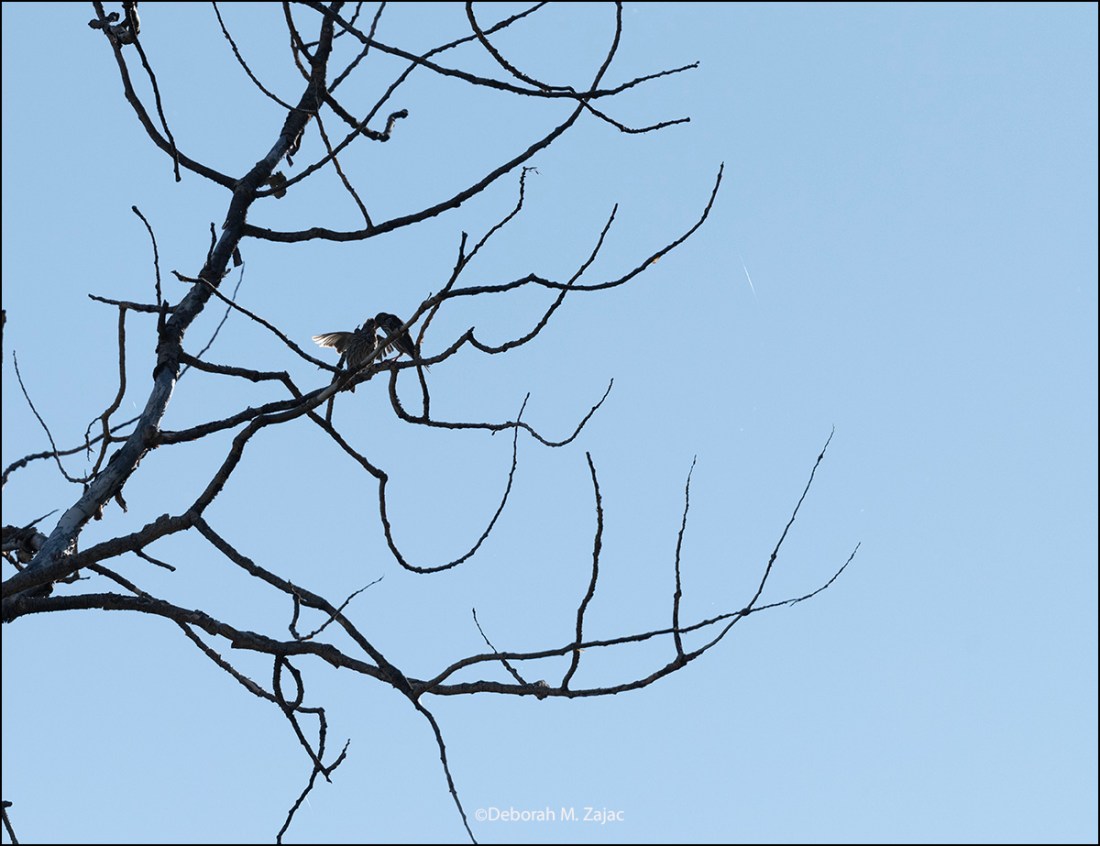
While birding last week I saw a Cassin’s Finch chick being fed by its parent and made several images of it. Unfortunately, they were facing me with the sun to their backs and in my face. So, the image isn’t great but, what is… is what I discovered once I uploaded my images.
Off to the right of the birds is a satellite flare. I think it’s a Starlink flare/glint which would be the first time I’ve photographed one of those.
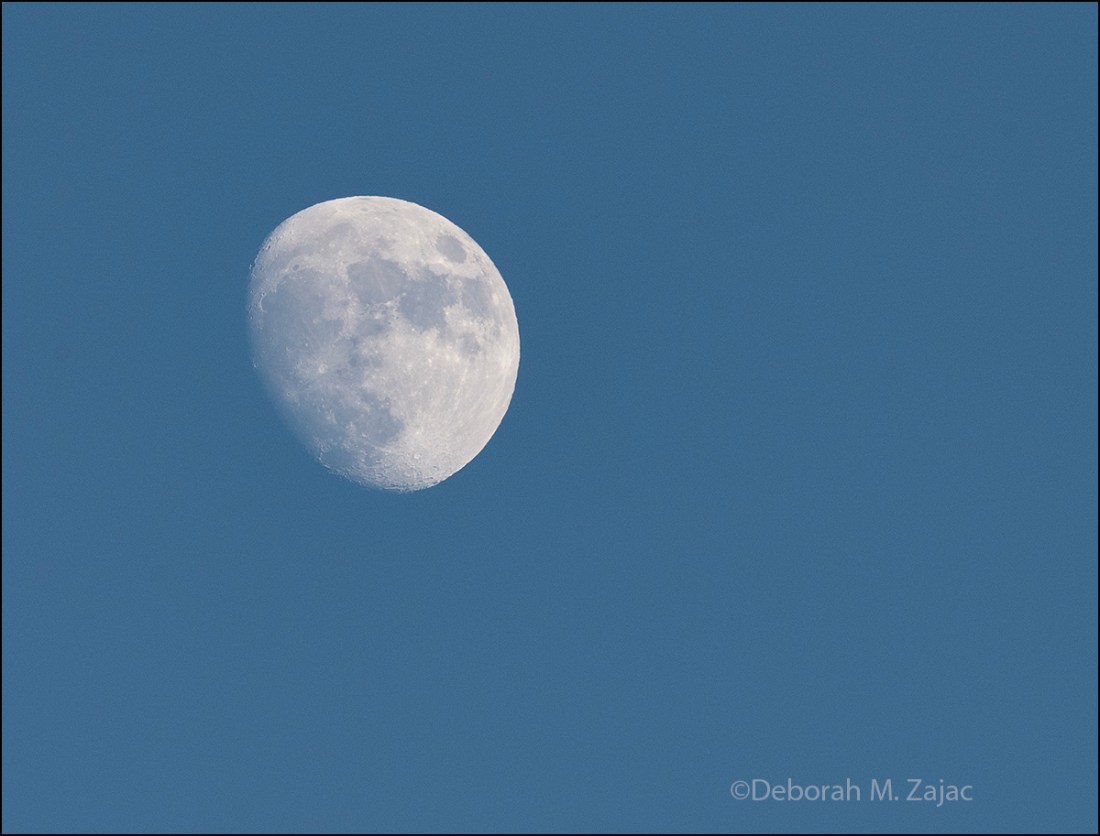
Regarding this next image- A friend had been sharing his images of the Moon several days ago with me so, the other evening when I saw the Moon shining out my living room window I was inspired to get up and photograph it.
Here’s the moon at 82.7% percent full. A waxing Gibbous Moon from July 6th.
The bottom crater is Tycho. I really like its crusty textured bits. I know the other large crater off on the left below the Sea of Showers is the Copernicus Crater. I wish I didn’t need a poster to help me every single time with the other sea and crater names, but I do.
July’s Full Moon is called the Buck Moon. It also has several other names like Thunder Moon, and Hay Moon.
The Full Moon this month is July 10th.
Fun Facts:
This full moon coincides with a Major Lunar Standstill in 2025, making the moon appear especially low in the sky after sunset due to its orbital path and the recent summer solstice.
It will be the farthest full moon from the Sun in 2025, occurring shortly after Earth reached aphelion — the point in its orbit farthest from the Sun.
In some regions, such as India, the full moon coincides with Guru Purnima, a spiritually significant event, enhancing its cultural importance.
The Buck Moon gets its name from the Algonquin-speaking Native American tribes, as July is the time when male deer (bucks) begin to grow new antlers covered in velvet, symbolizing renewal and growth.
Introducing the Silver State Standard: The Nevada DMV mandates that all vehicles must be painted silver by January 1, 2026 according to the Statewide Vehicle Color Standardization Act. Read more here: https://tinyurl.com/ut7jukn6
Clicking on the link opens a page that says, ” Statewide Vehicle Color Standardization Act
Please ensure your vehicles are painted silver to adhere to the state’s mandate.
What is it?
In an effort to reinforce Nevada’s proud identity as the Silver State, the Nevada Department of Motor Vehicles is declaring the Statewide Vehicle Color Standardization Act, taking effect on January 1, 2026. Under this new initiative, all personal, commerical, and government-owned vehicles registered in Nevada will be required to be painted silver.
The purpose of this act is to promote state pride, improve traffic flow aesthetics and create the country’s first color-coordinated highway system.
The DMV encourages customers to begin painting their vehicles silver or purchasing vehicles that follow this guideline to avoid violation fees.
In Case You’re Still Reading
We cannot enforce a statewide vehicle color compliancy. We hope we made you laugh. Happy April Fool’s Day!”
I thought it was pretty funny and thought I’d share it since it was the most unique pun I saw all day. It had the most comments and likes I’ve seen on a Nextdoor post in my feed.
Later that evening I saw the Northern Lights for the first time ever. That post is here. It was glorious.
Friday morning I birded with my usual birding group and we had a great morning seeing 40 species of birds. Along with the birds I noticed some spooky Zombie Pirates lurking by the pond. Here’s one.
Saturday morning I was up early and met up with two girl friends to do my first Big Day. It’s a 24 hour global birding marathon put on by Cornell Lab of Ornithology. We didn’t sign up as team or register our day but we, birded from 8AM until after 4PM. I saw 45 species. It was pretty fun day. We posted our sightings on ebird.org so they’ll have our record for their counts and information. Unfortunately, the next afternoon I got sick, and shortly afterwards I was hearing from my companions from the day before that they where also sick. We think the deli we stopped at to have lunch is where we picked up food poisoning. I brought home half my sandwich which I shared with He-Man and yep, he got it too. UGH.
Monday still weak, and very tired I was determined to locate and see Comet C/2023 A3 (Tsuchinshan-ATLAS) but, I wasn’t in shape to drive anywhere so I just stepped out on my back patio and photographed it there. It’s so cool and it has a great long tail!
What a week! What a month it’s been so far! The Aurora, and the Comet really made my month. Everything else has been icing on the cake.
My tummy is still sketchy, but I’m on the mend and so are He-Man and my friends. I plan to be out photographing Halloween things, birding, and maybe the Comet with a better composition soon. I hope your week is going well. Oh, and watch out for the Zombies and Ghoulies! 👻
You must be logged in to post a comment.