It was the first time I’ve seen the White-Lined Sphinx. Some people call it the Hummingbird Moth because it looks and acts like a Hummingbird. It was so cool seeing it fly and hover over these flowers feeding.
Hum, I don’t know what’s happening but my images look soft in WP lately. Sigh. Any ideas?
I had company last week-end then we went over the mountains to see the boys, Baby Girl, and The Handsome Surveyor for a couple of days so I am behind, but I’ll catch up with you in a tick!
A friend came up for the week-end and we birded, and admired wildflowers, and hiked. He-Man even joined us on the longest hike which was just over 6 miles, and we climbed 640ft in the Eastern Sierras.
We also had the pleasure of seeing several butterflies. Here are two.
I think this is a Fritillary maybe a Meadow Fritillary? If you know what it is I’d love to know for sure.
Fritillary? Wildflower?
This one I was able to identify as the Western White Butterfly.
Western White Butterfly
This one is a first for me!
The wildflowers in the high country are in full bloom and gorgeous, and I’ve picked up a few new to me birds! I’ll be sharing those in future posts…after I have nailed down their identities. I’m still not quite certain on two of them.
Merlin my bird app isn’t giving me a definitive answer so, I’m still trying to figure them out.
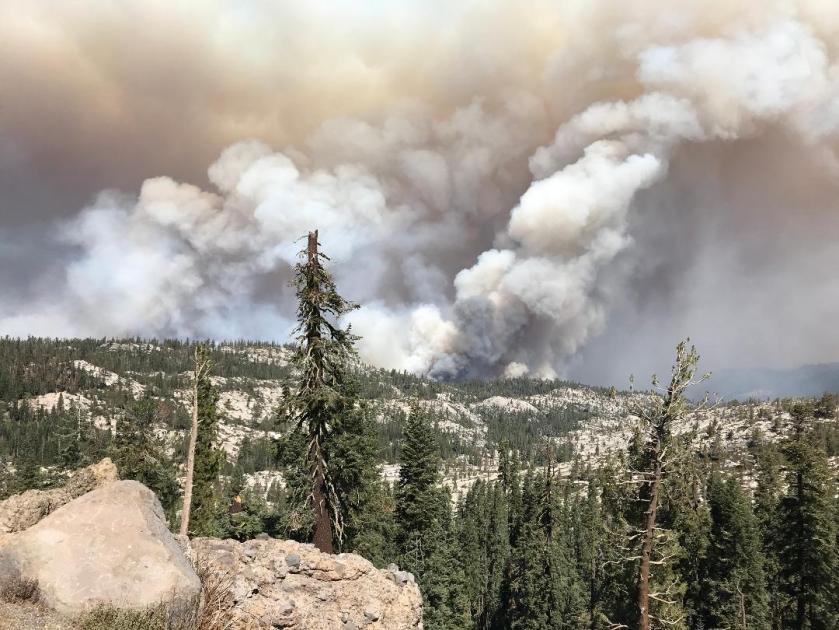
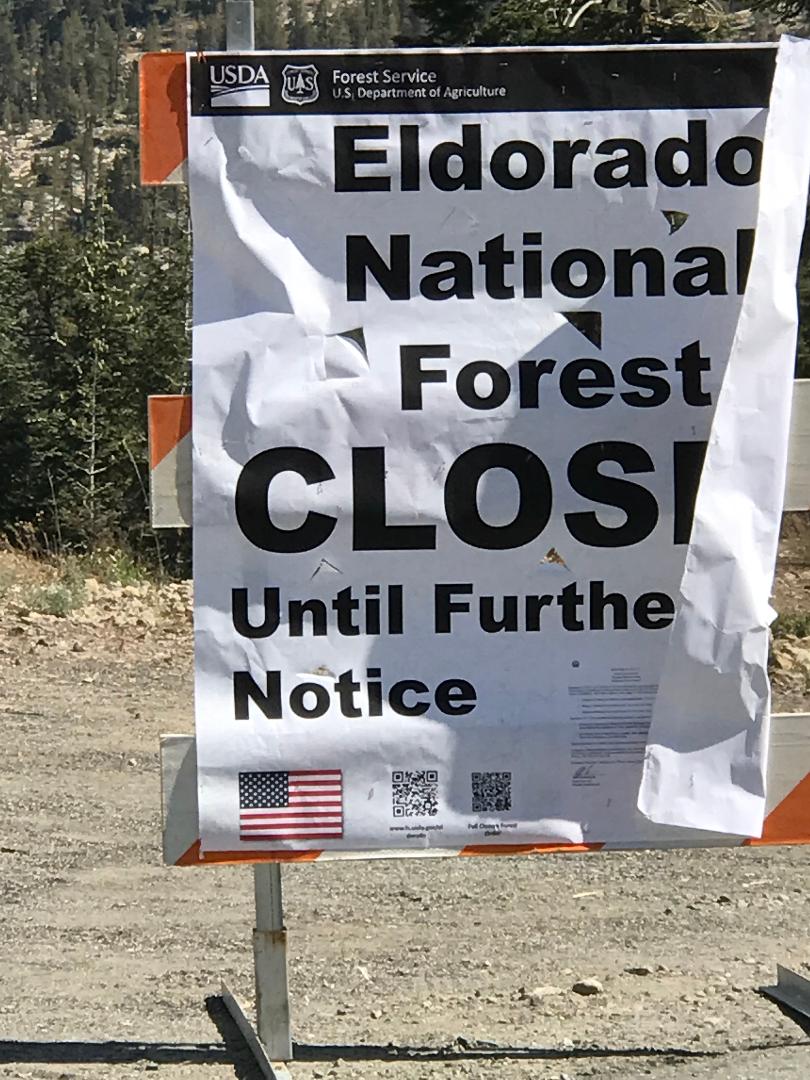
The smoke here seems to get better, then it gets worse. The Tamarack Fire is still burning and when I last checked it was still 0% contained and the winds in the afternoon have been very gusty not helping the fire crews at. all!
I am hopeful that fire crews will be able to get it under control sooner rather than later.
That’s about it from here. I hope your week is going well.
We adhered to the the Corona Virus Covid-19 guidelines by each driving their own car, and when out of the car we wore our masks and stood well apart. I can’t tell you how great it was to see friends I’d not seen in quite awhile. We had great birdy day with great weather for it too.
Upon my arrival while walking to the duck pond I crossed paths with another birder whom I didn’t know, but I ask him if he’d been seeing good birds and he replied while pointing that there was a Great Horned Owl just down there, and told me where to look. When I got to the pond I shared this info with my friends and we all headed up the trail to find the tree. While the Owl wasn’t in the tree he or she wasn’t too far away and we got some great looks, and images of it.
It’s not “in” the tree where it has its nest, but what a great look we got here. Wide awake!
Great Horned Owls are fierce predators that can take large prey, including raptors such as Ospreys, Peregrine Falcons, Prairie Falcons, and other owls. They also eat much smaller items such as rodents, frogs, and scorpions.
When clenched, a Great Horned Owl’s strong talons require a force of 28 pounds to open. The owls use this deadly grip to sever the spine of large prey.
If you hear an agitated group of cawing American Crows, they may be mobbing a Great Horned Owl. Crows may gather from near and far and harass the owl for hours. The crows have good reason, because the Great Horned Owl is their most dangerous predator.
Even though the female Great Horned Owl is larger than her mate, the male has a larger voice box and a deeper voice. Pairs often call together, with audible differences in pitch.
Great Horned Owls are covered in extremely soft feathers that insulate them against the cold winter weather and help them fly very quietly in pursuit of prey. Their short, wide wings allow them to maneuver among the trees of the forest.
Great Horned Owls have large eyes, pupils that open widely in the dark, and retinas containing many rod cells for excellent night vision. Their eyes don’t move in their sockets, but they can swivel their heads more than 180 degrees to look in any direction. They also have sensitive hearing, thanks in part to facial disc feathers that direct sound waves to their ears.
The oldest Great Horned Owl on record was at least 28 years old when it was found in Ohio in 2005.
Late in the afternoon we returned to this refuge and went to look for the Owl again. It wasn’t in the nest, but perched on top of branch.
Great Horned Owl on a tree top
The Great Horned Owl is one of the most common owls in North America. It lives in deserts, wetlands, forests, grasslands, backyards, cities, and just about any other semi-open habitat between the Artic and the tropics. We were really excited and happy to see this one.
OT- My 11th Blogaverisary on WP was Wednesday I’d like to thank everyone who has followed me, left comments, for the conversations, lessons learned, and the friendships I’ve made with quite a few of you over the years. Thank you!🥰
Here are a couple of images I created for the Shooting for the Season’s course I’m taking.
Place setting-
Cozy dining table-
This week is lighting. I hope I can come up with a couple more creative and cute compositions for that!
Last week I went to Baby Girl’s for a few days and early one morning I had my morning tea on her deck, and had my camera handy. Out in the poison oak I spied a little bird so left my tea to cool on the deck and headed down to the field and sat on a little lichen covered rock and waited to see if the little bird would return to the poison oak bush. I didn’t have to wait too long.
It was a Ruby Crowned Kinglet Female.
Baby Girl and family are settling in nicely in their new home, and the boys love the space and freedom the land affords them, and number 1 Grandson is thrilled to be back in a live classroom making new friends, he likes his teacher, and he had a huge surprise on his first day in class. A classmate of his from last year has moved to the same town and is in his class! Small world!
It’s supposed to warm up today which will be nice since we’ve been having highs in the 50’s and lows in high teens lately.
I hope you’re all having a great week!
Nikon D810 w/ 50mm f/1.8G Nikkor lens and Fuji X-T3 w/ 100-400mm XF lens| PS CC 22.0.0
This is a Breeding adult which you can easily ID by the fan of golden feathers at the “ear”. This image is from early spring where I spied it swimming in one of the ponds at the golf course where we live.
Fun fact- Grebes have lobed rather than fully webbed feet that sit at the rear of their body.
Fuji X-T3| Fujinon XF 100-400mm@400mm| PS CC 21.2.1
You must be logged in to post a comment.