Whatever Weds.-Classic Cars

Copyright ©2024 Deborah M. Zajac. ALL RIGHTS RESERVED.

PLEASE DO NOT USE MY IMAGES WITHOUT EXPRESSED WRITTEN PERMISSION.

Last week I was making my way around a big loop birding and at one stop I happened upon a Classic Car group just as they were starting to pull out. I hurriedly grabbed my other camera with a wide angle lens and ran to a place near the exit to get a few images. I wasn’t fast enough to get an image of all the cars, but I did get a several. Here are some of my favorites.

Classic Car in Cream.

This one is just so cool. Is it a muscle car? I’m sorry I didn’t get there earlier to note the makes and models of all the cars. Look at that engine though.

Classic Car Yellow with cool Engine Exposure
Classic Car in Yellow

The drivers were pretty cool when they saw me with my camera they slowed down and let me get some nice images. 😊

Classic Car Pontiac I think. I love the sun guard over the windshield.

Look at those white walls with red accent stripe. Nice.

And last, but not least my favorite Red car of the lot.

Classic Car in Red

That was a fun surprise.

What wasn’t fun was waking up yesterday morning to the “DREADED BLACK SCREEN”! My computer was good and truly looking dead. Thankfully, He-Man found a way to get it back up, but it required a whole new start from my backup system. So all my documents, and files are here, but all my apps have to be reinstalled and all my preferences reset. My Photoshop Actions are all gone so I’m starting from scratch remaking those and slowly adding my presets and apps back in.
It’s been a chore, but I’m so grateful for having a backup system in place. I highly recommend one or two if you haven’t got yourself one already. In the meantime I think it’s time to start shopping for a new computer desktop tower because this one might be on the way out.

I hope your week is going well and there are no unpleasant surprises in it!

Fuji X-T3| Fujinon 16-80mm| PS CC 25.7.0

more to come…

Friday’s Feathered Friends- Ruddy’s got the Blues

Copyright ©2024 Deborah M. Zajac. ALL RIGHTS RESERVED. 

PLEASE DO NOT USE MY IMAGES WITHOUT EXPRESSED WRITTEN PERMISSION.

Things are changin’, Ruddy is showing off his Blues and Ruddy feathers for Spring and hoping he’s got what it takes to persuade a cute little female Ruddy Duck to be his love for the season.

Ruddy Duck in Breeding Plumage

Fun Facts:

    • Ruddy Ducks lay big, white, pebbly-textured eggs—the largest of all duck eggs relative to body size. Energetically expensive to produce, the eggs hatch into well-developed ducklings that require only a short period of care.
    • The bright colors and odd behavior of male Ruddy Ducks drew attention from early naturalists, though they didn’t pull any punches. One 1926 account states, “Its intimate habits, its stupidity, its curious nesting customs and ludicrous courtship performance place it in a niche by itself…. Everything about this bird is interesting to the naturalist, but almost nothing about it is interesting to the sportsman.”
    • Pleistocene fossils of Ruddy Ducks, at least 11,000 years old, have been unearthed in Oregon, California, Virginia, Florida, and Illinois.
    • Ruddy Ducks are very aggressive toward each other and toward other species, especially during the breeding season. They are even known to chase rabbits feeding on the shore.
    • Though Ruddy Ducks are native to the Americas, one population became established in England after captive ducks escaped in 1952. This population grew to about 3,500 individuals by 1992, and now appears to be expanding into the Netherlands, France, Belgium, and Spain.
    • Ruddy Ducks get harassed by Horned Grebes, Pied-billed Grebes, and American Coots during the breeding season. The grebes sometimes attack Ruddy Ducks from below the water, a behavior known as “submarining.”
    • The oldest Ruddy Duck on record was a male and at least 13 years, 7 months old when he was found in Oregon in 1964. He was banded in British Columbia in 1951.

Fun Facts gleaned from https://www.allaboutbirds.org/guide/Ruddy_Duck/

Nikon D810| Nikkor 500mm PF| PS CC 25.4

more to come…

Friday’s Feathered Friends- Cedar Waxing

Copyright ©2024 Deborah M. Zajac. ALL RIGHTS RESERVED. 

PLEASE DO NOT USE MY IMAGES WITHOUT EXPRESSED WRITTEN PERMISSION.

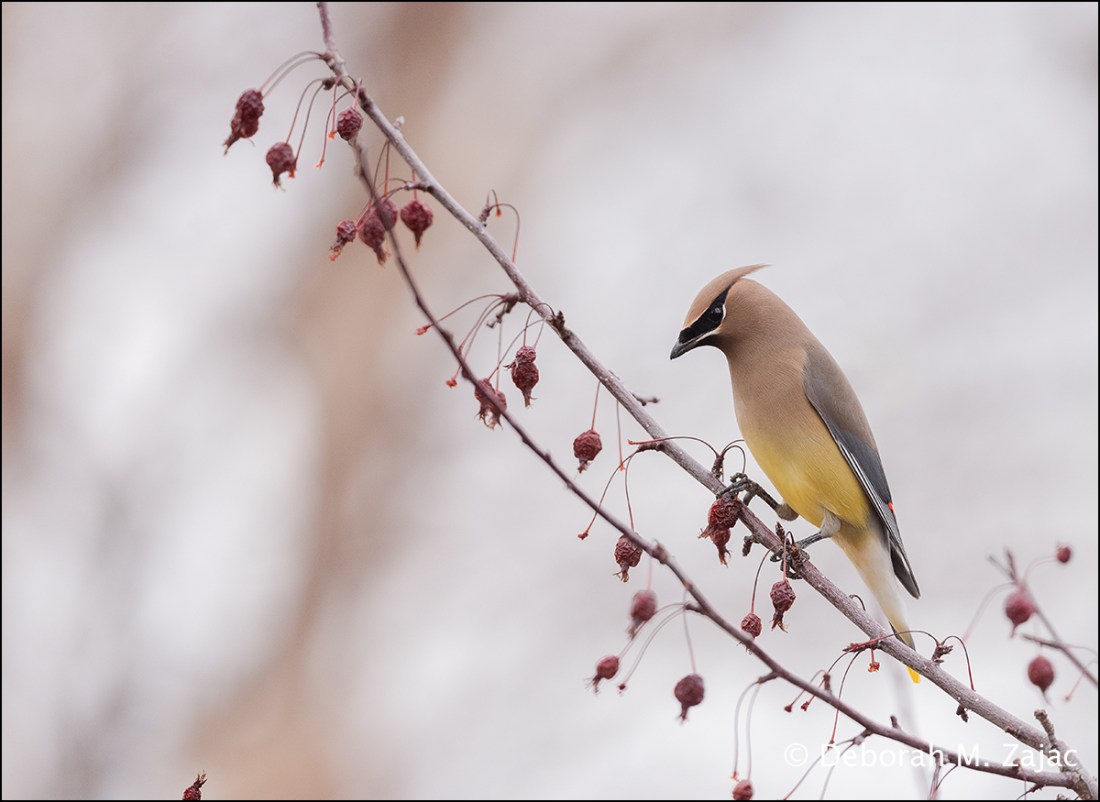
Last week while birding I saw so many Cedar Waxwings at 2 places I visited. There were about 120 in all! At one of the places they were gorging on ripe, plump red berries.

I was doing my happy dance to see that!

“I think this one looks yummy”
Gulp!

It was a great birdy day.

Fun Facts:

  • The name “waxwing” comes from the waxy red secretions found on the tips of the secondaries of some birds. The exact function of these tips is not known, but they may help attract mates.
  • Cedar Waxwings with orange instead of yellow tail tips began appearing in the northeastern U.S. and southeastern Canada in the 1960s. The orange color is the result of a red pigment picked up from the berries of an introduced species of honeysuckle. If a waxwing eats enough of the berries while it is growing a tail feather, the tip of the feather will be orange.
  • The Cedar Waxwing is one of the few North American birds that specializes in eating fruit. It can survive on fruit alone for several months. Brown-headed Cowbirds that are raised in Cedar Waxwing nests typically don’t survive, in part because the cowbird chicks can’t develop on such a high-fruit diet.
  • Many birds that eat a lot of fruit separate out the seeds and regurgitate them, but the Cedar Waxwing lets them pass right through. Scientists have used this trait to estimate how fast waxwings can digest fruits.
  • Because they eat so much fruit, Cedar Waxwings occasionally become intoxicated or even die when they run across overripe berries that have started to ferment and produce alcohol.
  • Building a nest takes a female Cedar Waxwing 5 to 6 days and may require more than 2,500 individual trips to the nest. They occasionally save time by taking nest materials from other birds’ nests, including nests of Eastern Kingbirds, Yellow-throated Vireos, orioles, robins, and Yellow Warblers.
  • The oldest recorded Cedar Waxwing was a male and at least 7 years, 1 month old when he was recaptured and rereleased during banding operations in Maryland in 2014. He was originally banded in the same state in 2008.

Fun facts gleaned from https://www.allaboutbirds.org/guide/Cedar_Waxwing

It’s snowing as I type this but, supposed to be sunny but cold on Saturday. I hope to go out birding for a bit if that forecast holds. I hope you all have a grand week-end!

more to come…

Whatever Weds. House Finch

Copyright ©2023 Deborah M. Zajac. ALL RIGHTS RESERVED. 

PLEASE DO NOT USE MY IMAGES WITHOUT EXPRESSED WRITTEN PERMISSION.

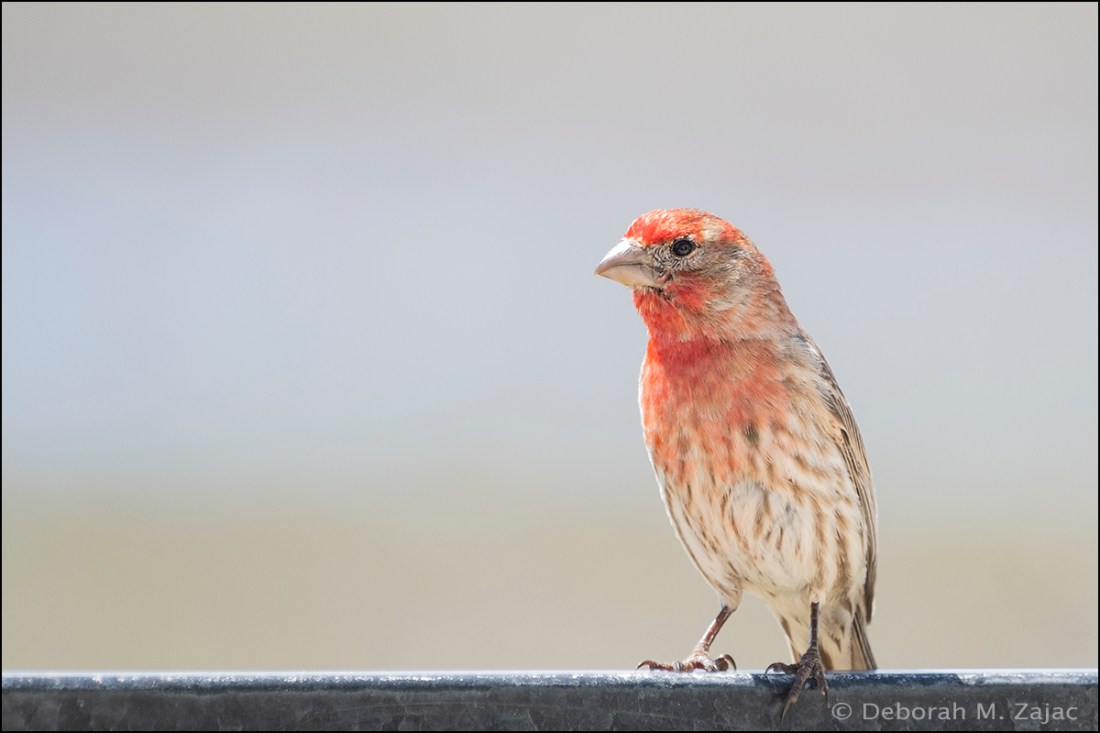
I’ve been MIA again and I’ll probably be on and off again for awhile. A family member is having some medical issues we’re working through.

Copyright ©2023 Deborah M. Zajac. ALL RIGHTS RESERVED. 

PLEASE DO NOT USE MY IMAGES WITHOUT EXPRESSED WRITTEN PERMISSION.

House Finch Male

I’ll catch up with you all soon. Stay well!

Fuji X-T3| Fujinon 100-400mm| PS CC 24.6

more to come…

Friday’s Feathered Friends-Northern Cardinal Male

Copyright ©2022 Deborah M. Zajac. ALL RIGHTS RESERVED. DO NOT USE MY IMAGES WITHOUT EXPRESSED WRITTEN PERMISSION!

Hello! I’m back from taking a short blogging break. I have a few exciting things to share but, I haven’t been able to turn my mind to writing about them or processing my images yet. When I got home from my latest trip I came home to find #1 Grandson here for a summer visit!! He’s staying until next week then we’ll take him home. His school resumes in late August! It seems like summer is going by too fast. Already it’s dark here by 8:30 P.M.!

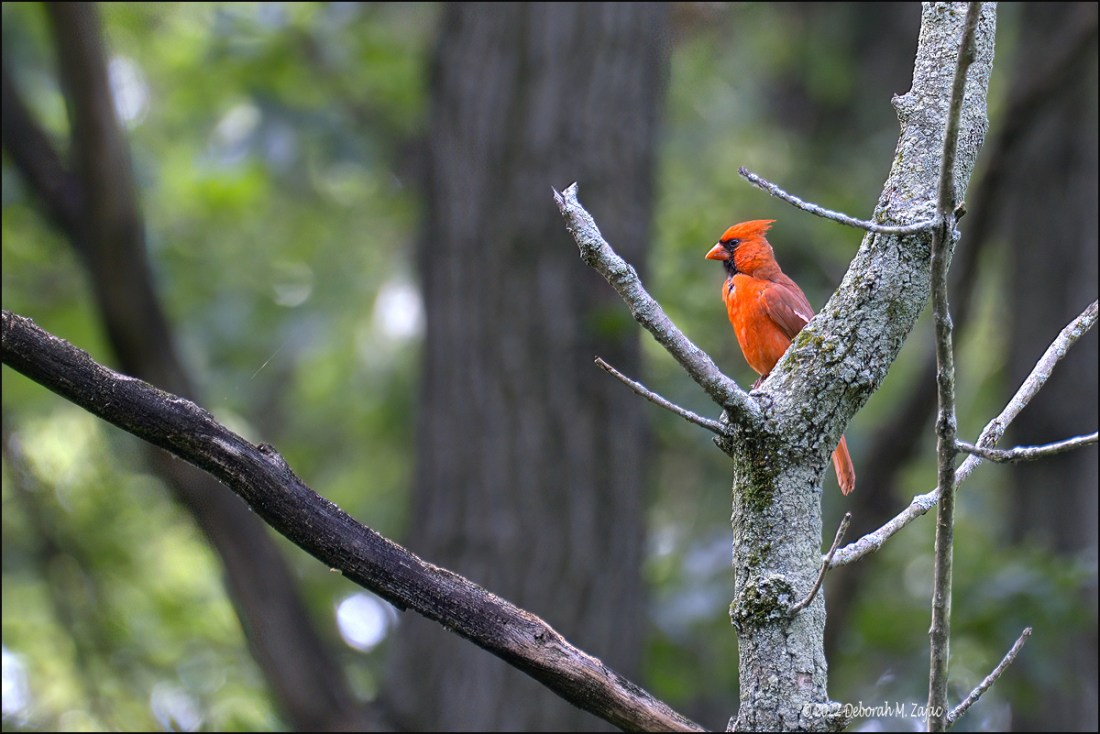
I’m so far behind processing and sharing images I fear I’ll never catch up, but let’s go back to my trip to Illinois which was in July this year. The day after my son’s wedding I went birding and He-Man came along for the walk, while we were at The Little Red Schoolhouse Nature Center I ran into a birder and we got to chatting about birds we’d each seen so far that morning, and I asked him if he’d seen any Northern Cardinals in the area and he said he had just up the trail!! We were off on the hunt. It wasn’t long too long after that I saw a red streak fly by in the trees ahead. I raced forward, He-Man raced forward as now he too was excited and on the hunt!! I saw it dive into the bushes but, couldn’t see it then suddenly it flew up to a dead tree snag and perched!!!

Northern Cardinal-Male

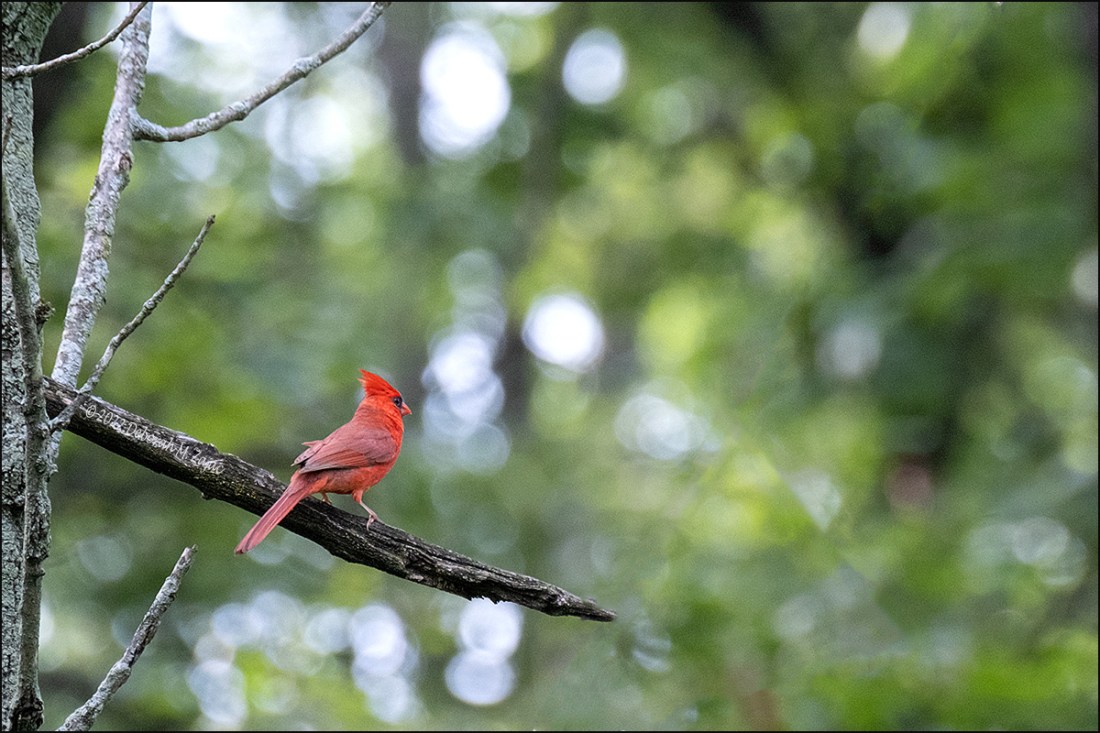
I’ve been dreaming of seeing this bird for what seems my whole life…more so since I started birding more seriously in 2010. Can you see me doing my happy dance? 💃💃 I still am so excited to have finally see this beautiful bird! One day I hope to see the Female so that’s still on my list.

Northern Cardinal-Male

I saw one other “Lifer” here at this Nature Center that I’ll be sharing soon, and I’ll be telling you all about my trip to Wyoming where I met up with Janet from This, That, and the Other Thing!!

I hope this finds you all well, you have a wonderful week-end!

Fuji X-T3| Fujinon 100-400mm @ 400mm| PS CC 23.4.2

more to come…

Friday’s Feathered Friends- Red, White, and Blue

Copyright ©2021 Deborah M. Zajac. ALL RIGHTS RESERVED

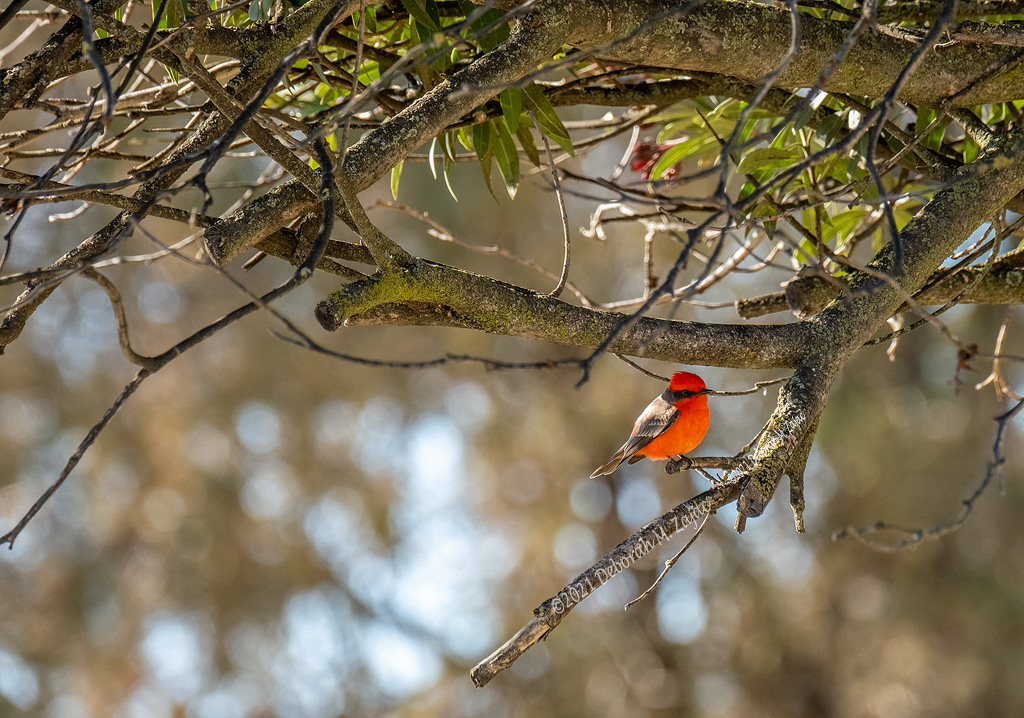
I told you I would show you the beautiful Vermilion Flycatcher that I went to see in Maxwell, CA a few week ago, and today is the day! He’s a year round resident of Mexico and South America. He does come north to So. Texas and So. California for breeding season, and has been seen in the states along the gulf coast states. How this one found his way up here in Central Calif. is a mystery, but it’s been returning for 5 winters now. He’s rare there.

Isn’t he pretty?

Fuji X-T3 w/ Fuji 100-400mm lens @400mm

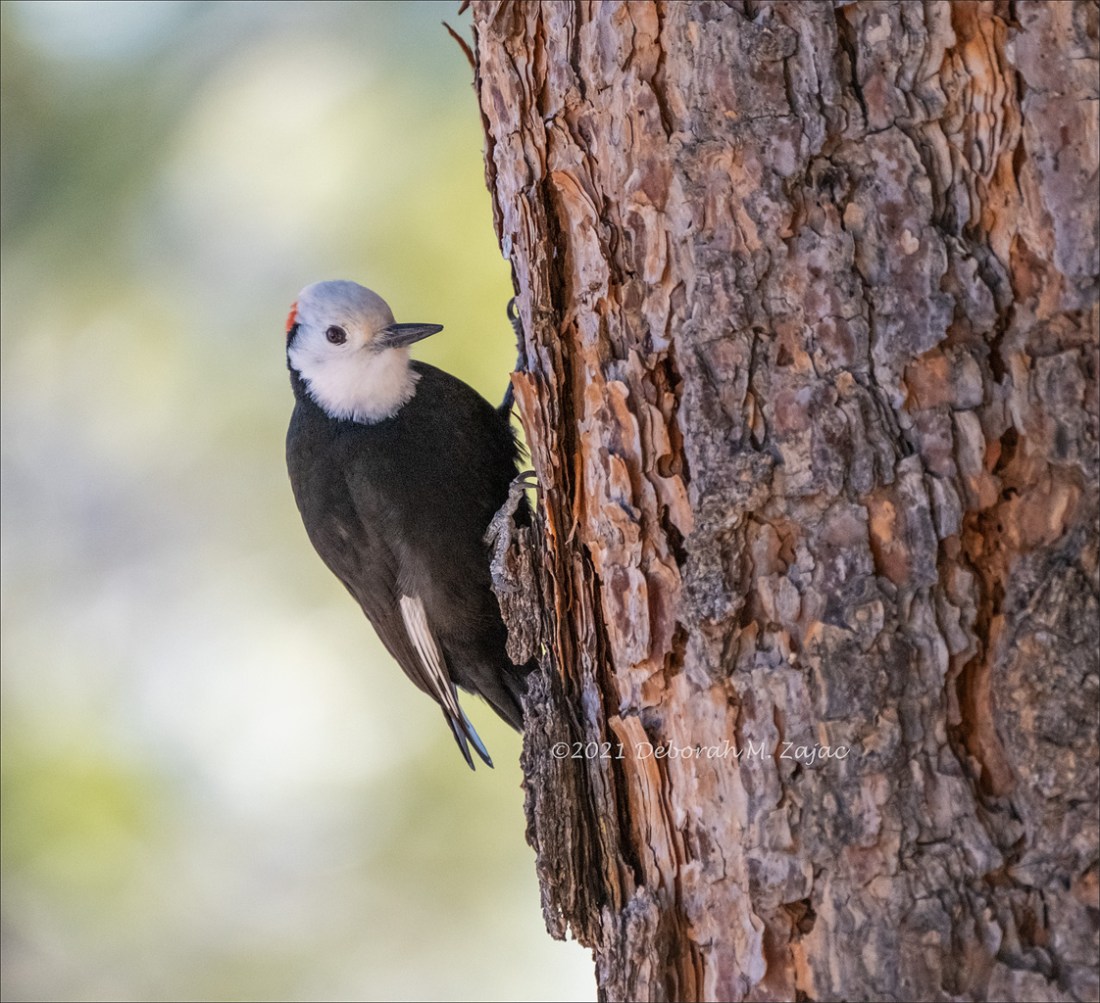
Almost two weeks ago He-Man went up to Washoe Co. the next county over to go on a bike ride and I went with him not to ride, but to bird while he rode and guess who I saw? The White-headed Woodpecker! This is a male. I only saw this species for the first time last year so I still do a happy dance when I see one.

This one was so busy foraging he didn’t care about me too much. Once in awhile he did check me out.

Fuji X-T3| Fuji 100-400mm @400mm

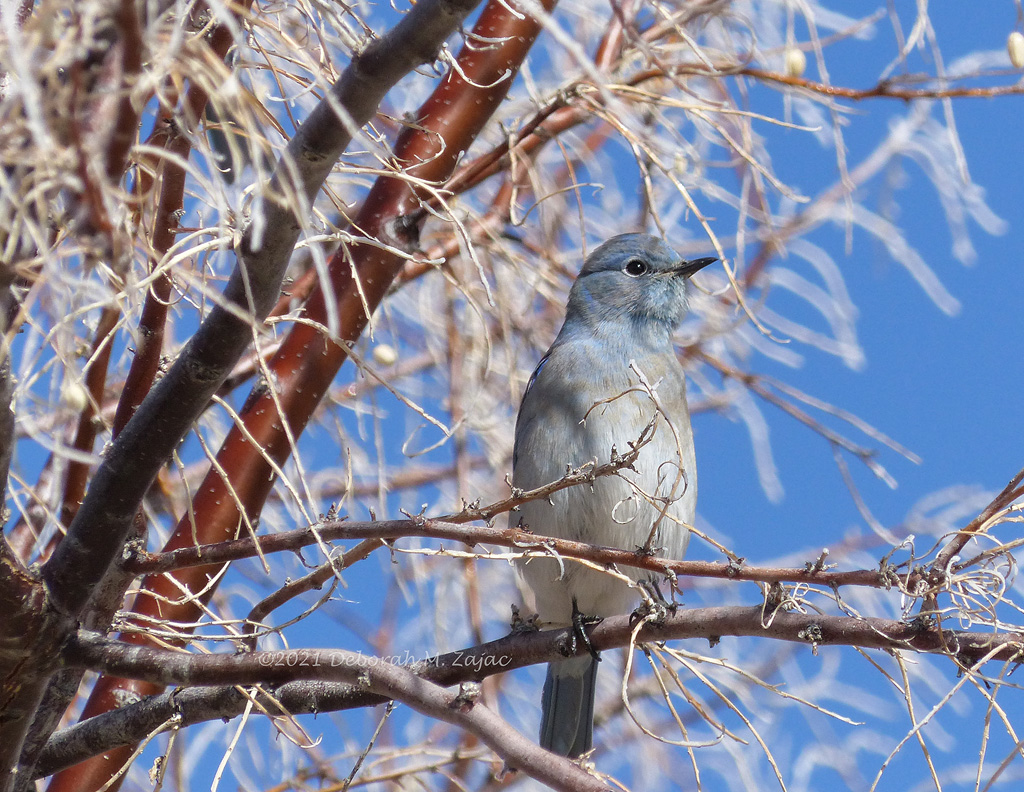
Sunday two neighbors and I went for our walk and we decided to go further than the mailbox and go up the hill and come home the back way where we saw Mountain Bluebirds foraging in the Russian Olive trees. The Olives are like little nuts that they seem to really like.

I saw this species for the first time last Spring, but didn’t have my camera with me but, by the time I raced home on foot to get the camera and return to the spot I saw one it was gone. I am so glad I had a camera with me on Sunday! Mountain Bluebird Male

Panasonic Lumix FZ200 @600mm

It’s been a good birdy couple of weeks that has been waylaid by weather. We’ve had snow! I won’t be out birding for a few days.

I hope you all have a lovely weekend, stay healthy, and safe.

more to come…

Friday’s Feathered Friends-Western Tanager

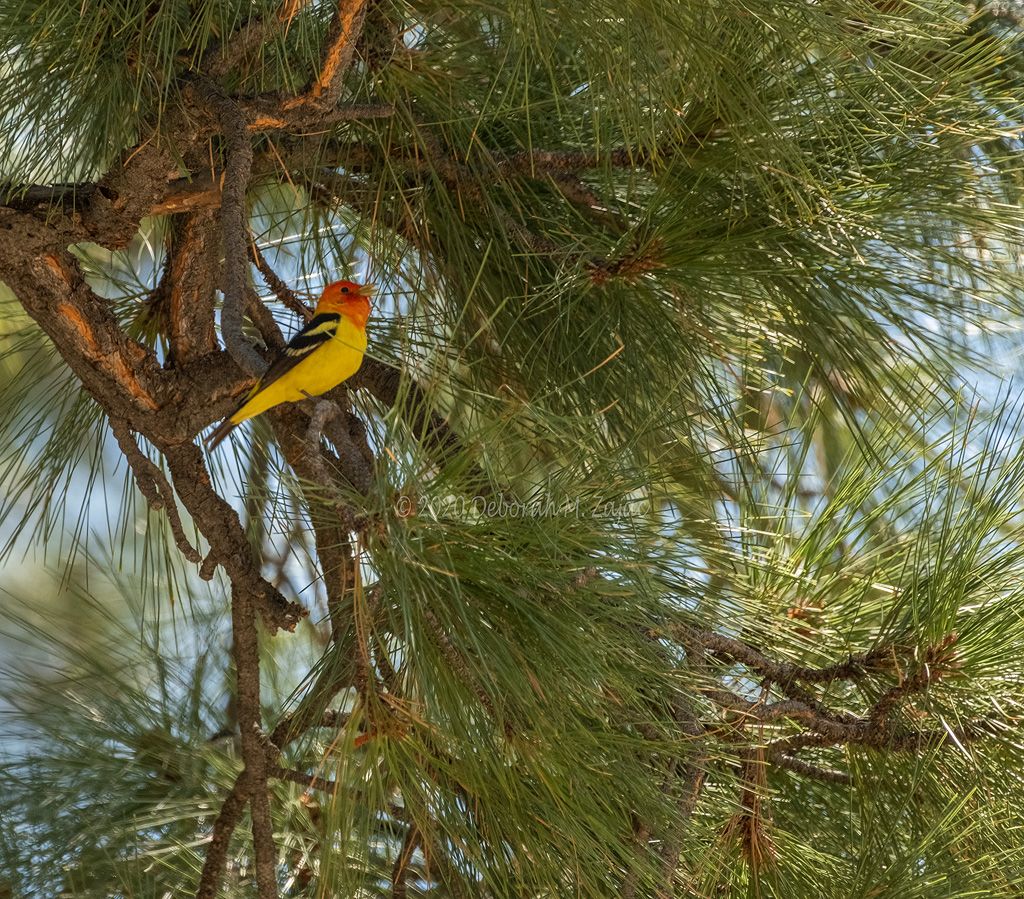
Copyright ©2020 Deborah M. Zajac. ALL RIGHTS RESERVEDWestern Tanager Male

Happy Friday!  I hope you all have a lovely week-end!

Fuji X-T3| Fujinon XF 100-400mm| SanDisk Digital Film| PS CC 21.1.2

more to come…