Red-Tailed Hawk: light morph

Copyright © 2012 Deborah M. Zajac. All Rights Reserved.

Several friends and I went out to Central CA to a National Wildlife Refuge to see if any Sandhill Cranes or Snow Geese had arrived and photograph them.

While on the auto-tour we spotted this Red-tailed Hawk on a post. We had a good vantage point to photograph it so we all started framing and firing our cameras which spooked him.

It was just what we hoped for. We all got some really nice shots of him taking off, and flying low in the marsh grass.
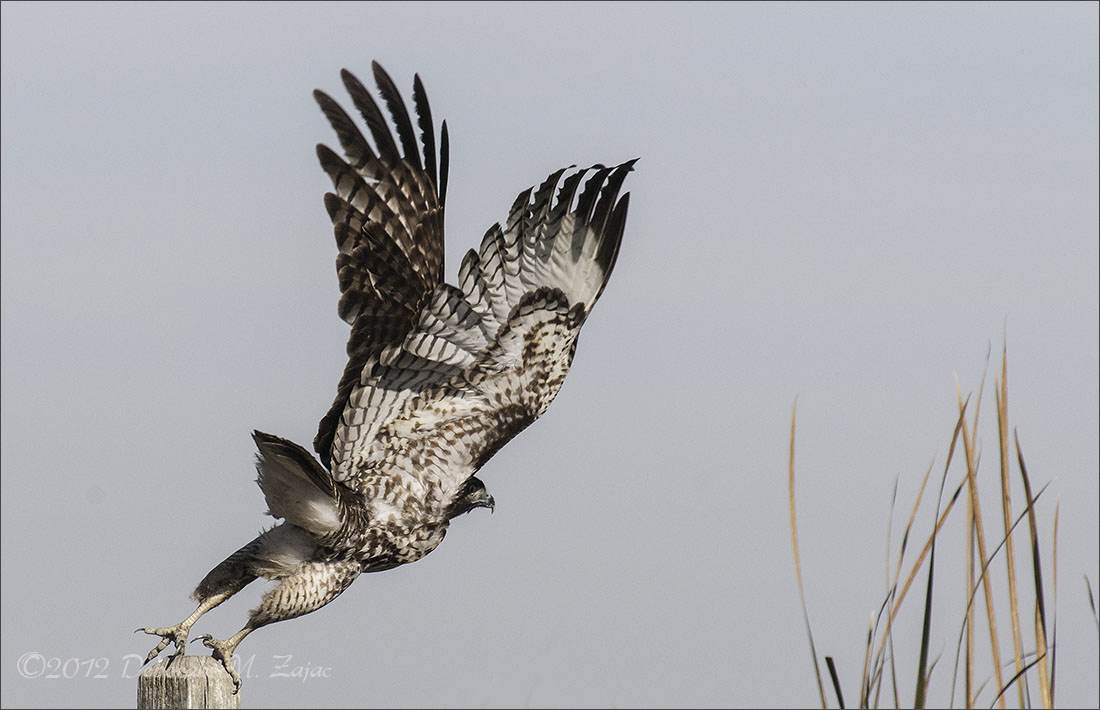
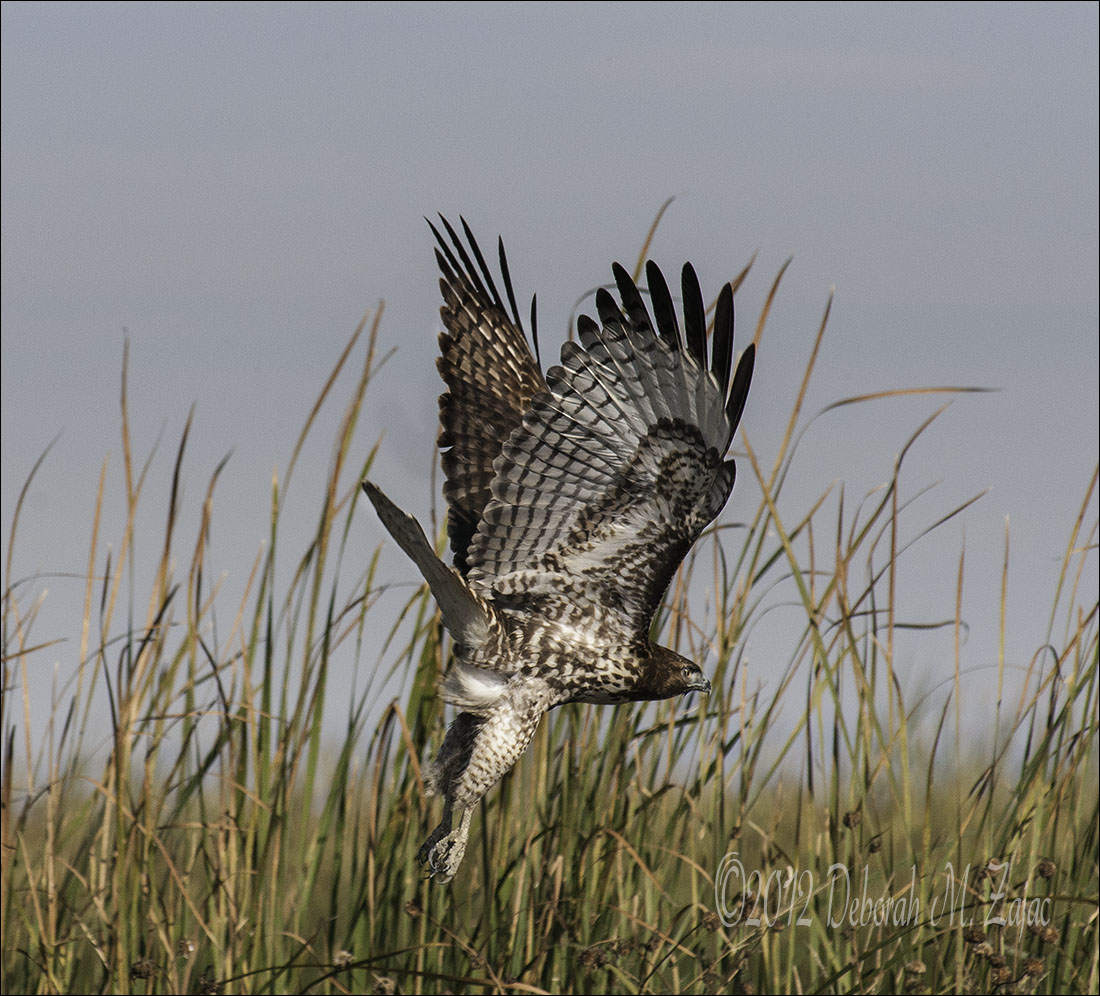
Lift off!


Wings up…


Downward flap

I needed  help identifying this Red-tail. My National Geographic bird book isn’t very clear on the Light and Dark Morphs. Thanks to my friend Dali for I.D.ing it for me. Since then I’ve purchased a new bird guide-book:  Stokes Field Guide to the Birds of North America. Between the two books I hope to be able to ID birds more easily.

Nikon D300s| Nikkor 80-200@ 200mm + Tamron 1.4x Teleconverter| f7.1| 1/2000sec| ISO 640| Manual Priority| Hand-held

Get a Grip!

Get a Grip!, originally uploaded by dmzajac2004-.

Via Flickr:
Copyright © 2012 Deborah M. Zajac. All Rights Reserved.

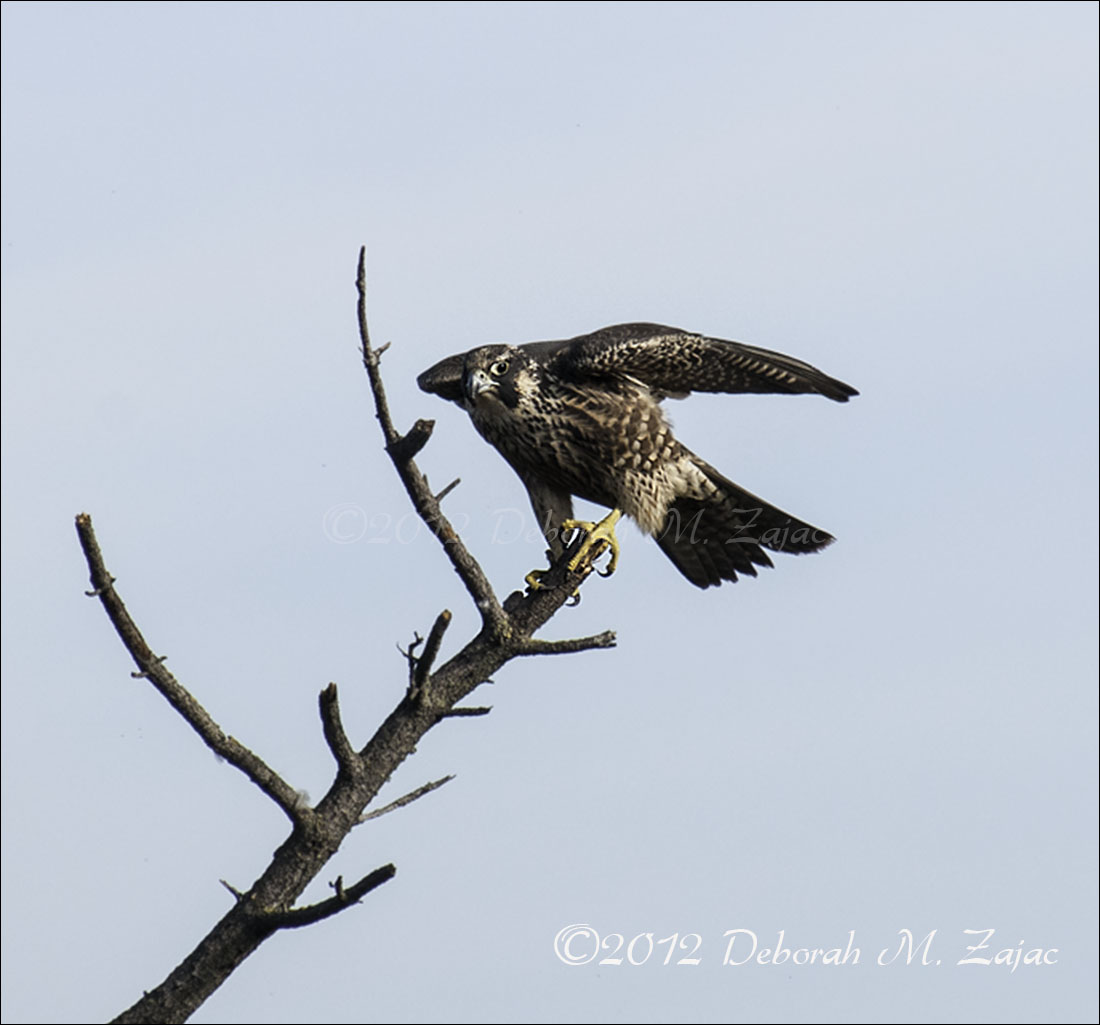
Here’s another shot of the Peregrine landing after an unsuccessful sortie.

Nikon D300s| Nikkor80-200@200mm+ Tamron 1.4T f5.6| 1/1600sec| ISO 640| Manual Priority| Hand-held


Peregrine Falcon

Copyright © 2012 Deborah M. Zajac. All Rights Reserved.

I’m not sure if this is a juvenile or not. Anyone know? It was thrilling to see him. I knew he was in the area and went out last week with my photography friend Dali, but it didn’t come around that afternoon, but we did see the White Tailed Kite then. This morning Dali emailed me early and asked if I wanted to go out to look for the Peregrine again and I said, “Yes!”. We spotted it perched straight-away. We had the pleasure of observing and photographing it for a couple of hours. This is only the second time I’ve seen and photographed a Peregrine Falcon.

Nikon D300s| Nikkor 80-200@200 + Tamron 1.4x TC|f5.6| 1/600sec| ISO 640| Manual Priority|hand-held

3,186 seconds under Heaven

3186 seconds under Heaven, originally uploaded by dmzajac2004-.

Via Flickr:
Copyright © 2012 Deborah M. Zajac. All Rights Reserved.

That little bit of mist on the lake was cool. It would come and go all the while my companions and I shot here. While shooting on the other side of the lake an hour before we heard a pack of coyotes howling and yipping in the distance. While shooting these star trails something caught my eye moving just to the left on the shore. I thought it was a coyote and in the dark you know how your eyes play tricks on you right…well thankfully it was a only a lone Doe walking by.
I wondered why she was alone and not already fast asleep safely in her den at that hour.
Her belly looked a little large so my thought was she was pregnant. I couldn’t get a shot of her it was too dark… and I admit it I darted behind Enrico when I first caught sight of her in the dark. 🙂 Yes, my instinct is flight not fight.

Nikon D700| Nikkor 24mm @ 3.2| 54 frames at 59 s 1 frame 33s| ISO 320| Manual Priority| Tripod

Misty Valley


Copyright © 2012 Deborah M. Zajac. All Rights Reserved

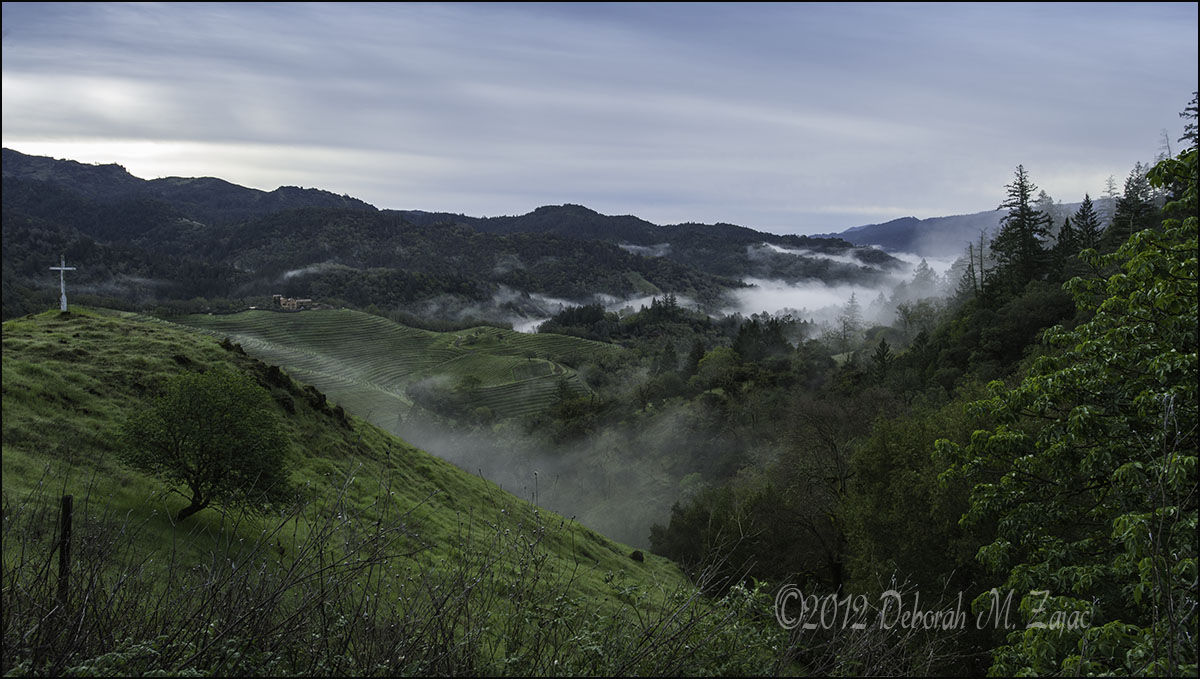
This poem Mist Valley
by James Longenbach came to my mind when I came across this old photo of mine a few days ago.

At the end of August, when all
The letters of the alphabet are waiting,
You drop a teabag in a cup.
The same few letters making many different words,
The same words meaning different things.

Often you’ve rearranged them on the surface of the fridge.
Without the surface
They’re repulsed by one another.

Here are the letters.
The tea is in your cup.

At the end of August, the mind
Is neither the pokeweed piercing the grass
Nor the grass itself.
As Tony Cook says in The Biology of Terrestrial Mollusks

The right thing to do is nothing, the place
A place of concealment,
And the time as often as possible.

Nikon D700| Nikkor 17-35@26mm| f11| 1/60sec| ISO 200| Manual Priority| Tripod


They dance!

Copyright © 2012 Deborah M. Zajac. All Rights Reserved.

I’ve been a bit  behind working on my photographs from my trip to Oregon to see Clark and Western Grebes do their Spring mating courtship and Dance. I’ve still not transferred my files from my laptop to my PC where I do my processing and editing, but I have finally finished some.

By the last morning of our trip I still had not taken any photographs of the Grebes dancing that I liked. I had nearly given up hope of getting any really good photos as they tend to be very shy; keeping themselves pretty far from shore which really tested the limits of my focal range of 300mm + a 2x Teleconverter which gave me an effective range of 600mm. It wasn’t far enough!

We decided to go back once more before leaving for home. After spending 2 mornings on the pond we learned they’re awake and most active beginning about 8AM and settling down by 10AM, so arriving just before 8AM we set up in our favorites spots and waited for them wake up. About half past 8AM this is what I saw and captured with my camera…

The Visual Connection


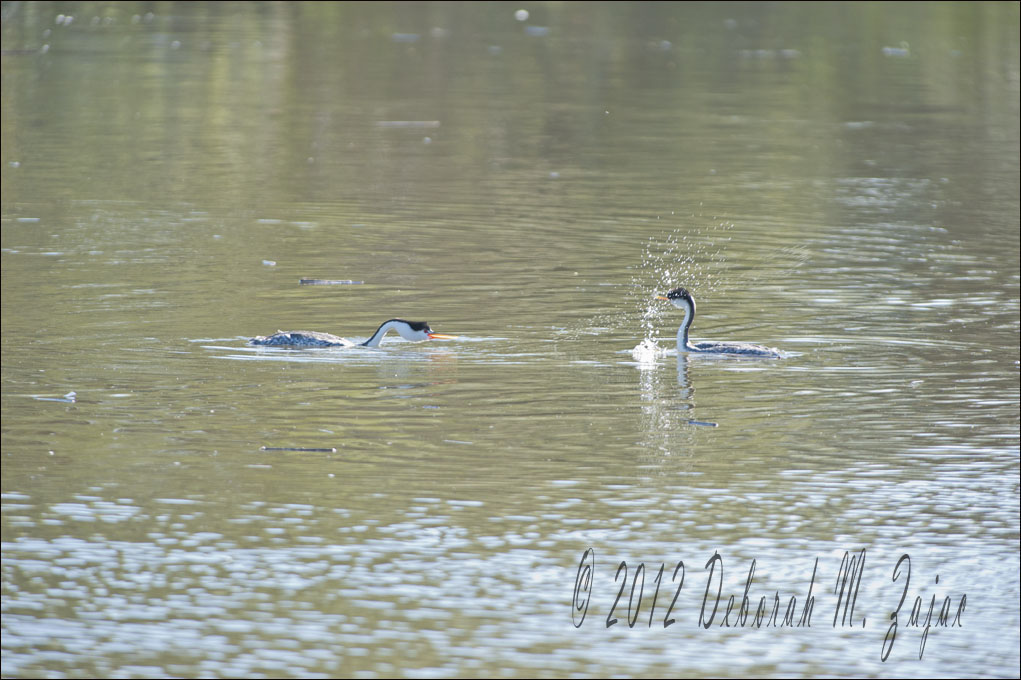
After a quick sizing up one after the other dipped their heads in the water and then flung the water off!

I feel the tension rising as both were totally oblivious to anyone or anything around them. They only saw each other as they flung the water over and over again. This went on for a full minute!

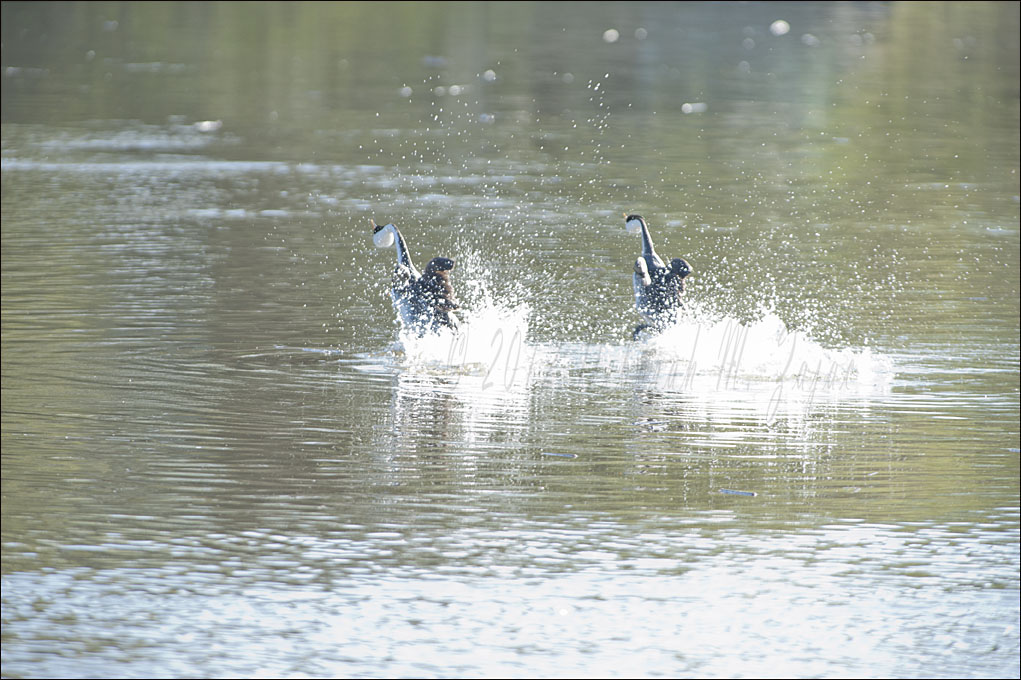
and suddenly they were up gliding across the water in perfect synchronization!

The sound of the beating water was the only sound I heard. It was marvelous, and thrilling to watch. I feel very blessed to have seen it, and to have shared the experience with good friends.

Nikon D700| Nikkor 300mmVRII + 20eIII TC =600mm| Tripod| Wimberley Sidekick

Sun May 17, 2012

Copyright © 2012 Deborah M. Zajac. All Rights Reserved.

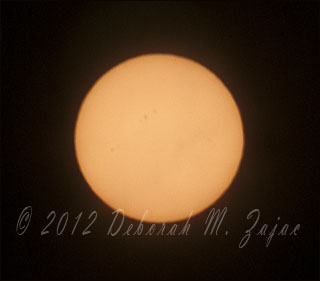
Still practicing for the upcoming Annular Solar Eclipse.

I’m working on getting the exposure right using Live View, and reading lots and lots of articles written by other photographers about how to go about photographing it.

This is a bit blurry you’ll notice. I think this is due to all the atmosphere between me and the sun;wind, dust, clouds, etc. This morning we have clouds in the sky.

Here’s an article I liked that has  handy settings charts for a good starting base. Here’s my friend Steven’s advice on Solar Filters. Don’t try to watch or photograph this event without proper protection for your eyes and camera! I use this Solar Filter.

I’ll be driving with friends 4-5hours away from home to view this event. Will you be traveling to view the Annular Solar Eclipse?

Nikon D300s| Nikkor 80-200@200mm+ Tamron 1.4x TC=420mm|f11| 1/200s| ISO 200| Manual Priority| Tripod| Orion Solar Filter