Copyright ©2024 Deborah M. Zajac. ALL RIGHTS RESERVED.
PLEASE DO NOT USE MY IMAGES WITHOUT EXPRESSED WRITTEN PERMISSION.
I’m guessing it wasn’t a good day fishing?

Nikon D810| Nikkor 500mm PF-e| PS CC 25.4.0
more to come…
“A good snapshot keeps a moment from running away.” ― Eudora Welty
Copyright ©2024 Deborah M. Zajac. ALL RIGHTS RESERVED.
PLEASE DO NOT USE MY IMAGES WITHOUT EXPRESSED WRITTEN PERMISSION.
I’m guessing it wasn’t a good day fishing?
Nikon D810| Nikkor 500mm PF-e| PS CC 25.4.0
more to come…
Copyright ©2024 Deborah M. Zajac. ALL RIGHTS RESERVED.
PLEASE DO NOT USE MY IMAGES WITHOUT EXPRESSED WRITTEN PERMISSION.
Things are changin’, Ruddy is showing off his Blues and Ruddy feathers for Spring and hoping he’s got what it takes to persuade a cute little female Ruddy Duck to be his love for the season.

Fun Facts:
Fun Facts gleaned from https://www.allaboutbirds.org/guide/Ruddy_Duck/
Nikon D810| Nikkor 500mm PF| PS CC 25.4
more to come…
Copyright ©2024 Deborah M. Zajac. ALL RIGHTS RESERVED.
PLEASE DO NOT USE MY IMAGES WITHOUT EXPRESSED WRITTEN PERMISSION.
Last week while birding I saw so many Cedar Waxwings at 2 places I visited. There were about 120 in all! At one of the places they were gorging on ripe, plump red berries.
I was doing my happy dance to see that!
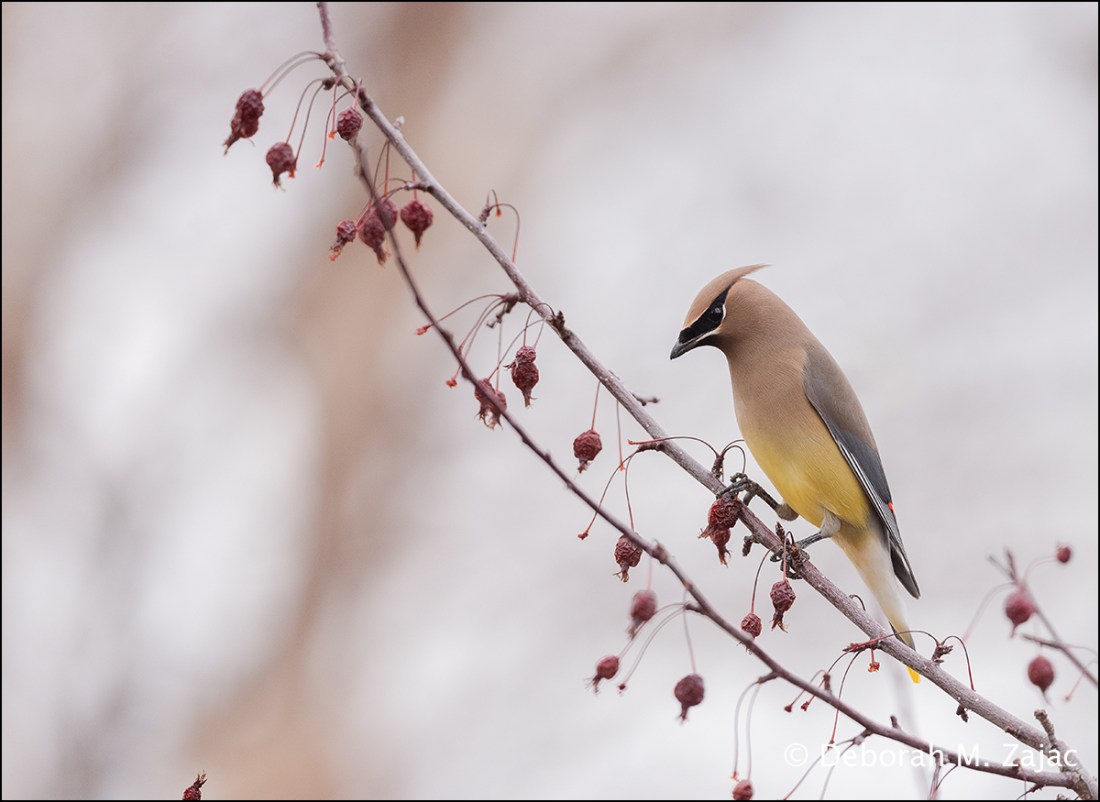

It was a great birdy day.
Fun Facts:
Fun facts gleaned from https://www.allaboutbirds.org/guide/Cedar_Waxwing
It’s snowing as I type this but, supposed to be sunny but cold on Saturday. I hope to go out birding for a bit if that forecast holds. I hope you all have a grand week-end!
more to come…
Copyright ©2024 Deborah M. Zajac. ALL RIGHTS RESERVED.
PLEASE DO NOT USE MY IMAGES WITHOUT EXPRESSED WRITTEN PERMISSION.
I don’t want the week to go by without a post so here we have me posting on a rare Saturday.
This little Kinglet is so cute, but very flitty normally but, on this day earlier this month I was able to get quite a few good looks at this one.

They’re a small bird being only 3.5-4.3 inches in length, and weigh 0.2-0.3 ounces.
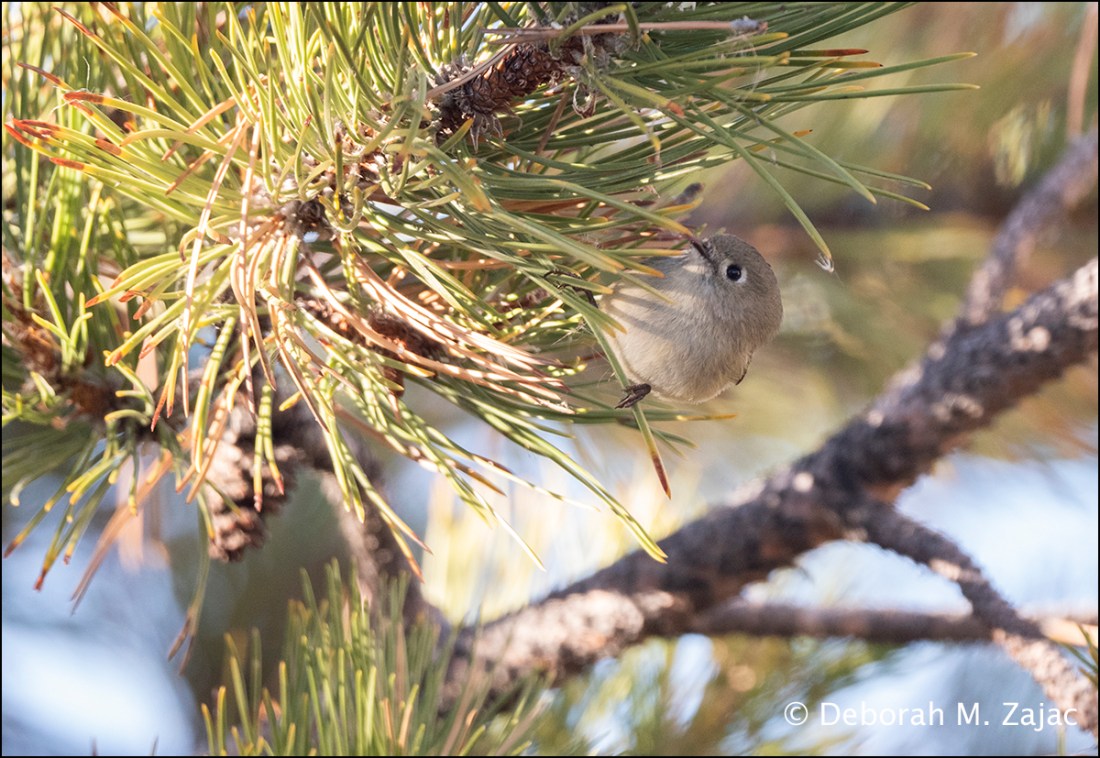
I have yet to see it flared, but here’s a look at the top of its head showing the Ruby spot.
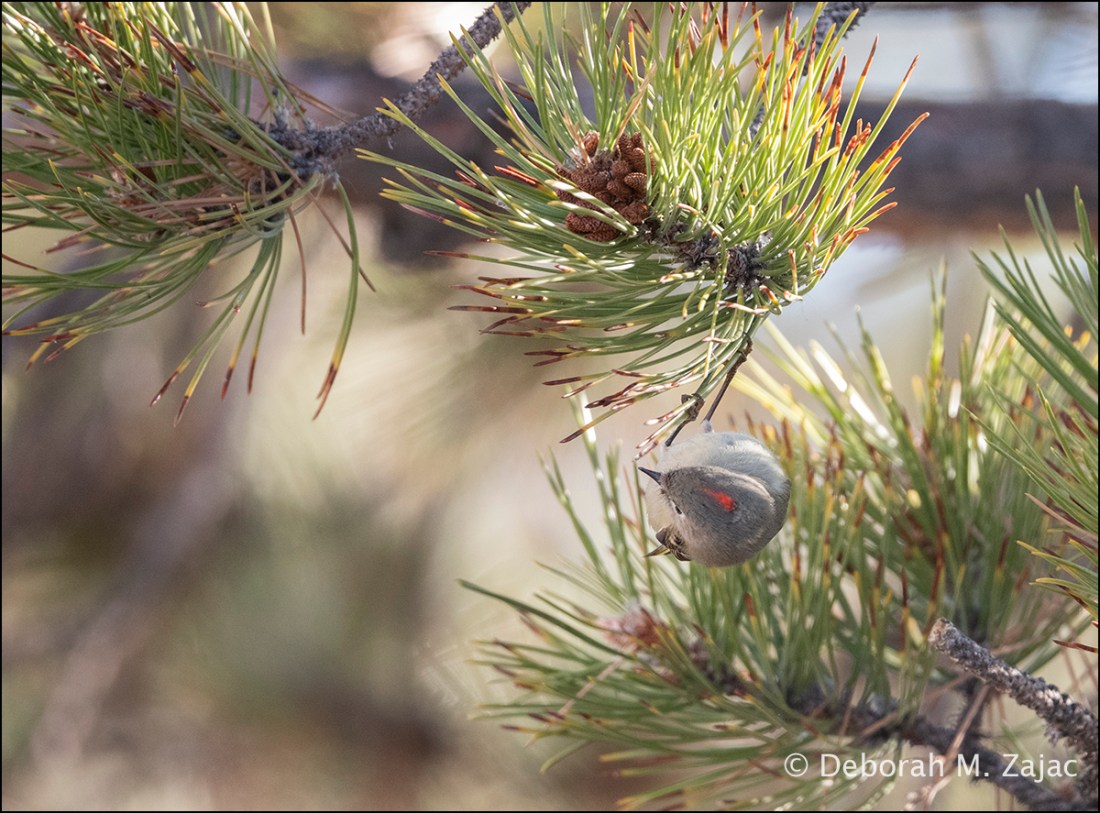
This one is busy being an acrobat which afforded me a good look at its Ruby Spot which was a treat. Just look at how light they are it’s holding onto those pine needles and they aren’t bending!
Fun Facts:
Fun facts gleaned from allaboutbirds.orghttps://www.allaboutbirds.org/guide/Ruby-crowned_Kinglet/overview
I hope you all have a great week-end!
Nikon D810| Nikkor 500mm PF-e| PS CC 25.3.1
more to come…
Copyright ©2023 Deborah M. Zajac. ALL RIGHTS RESERVED.
PLEASE DO NOT USE MY IMAGES WITHOUT EXPRESSED WRITTEN PERMISSION.
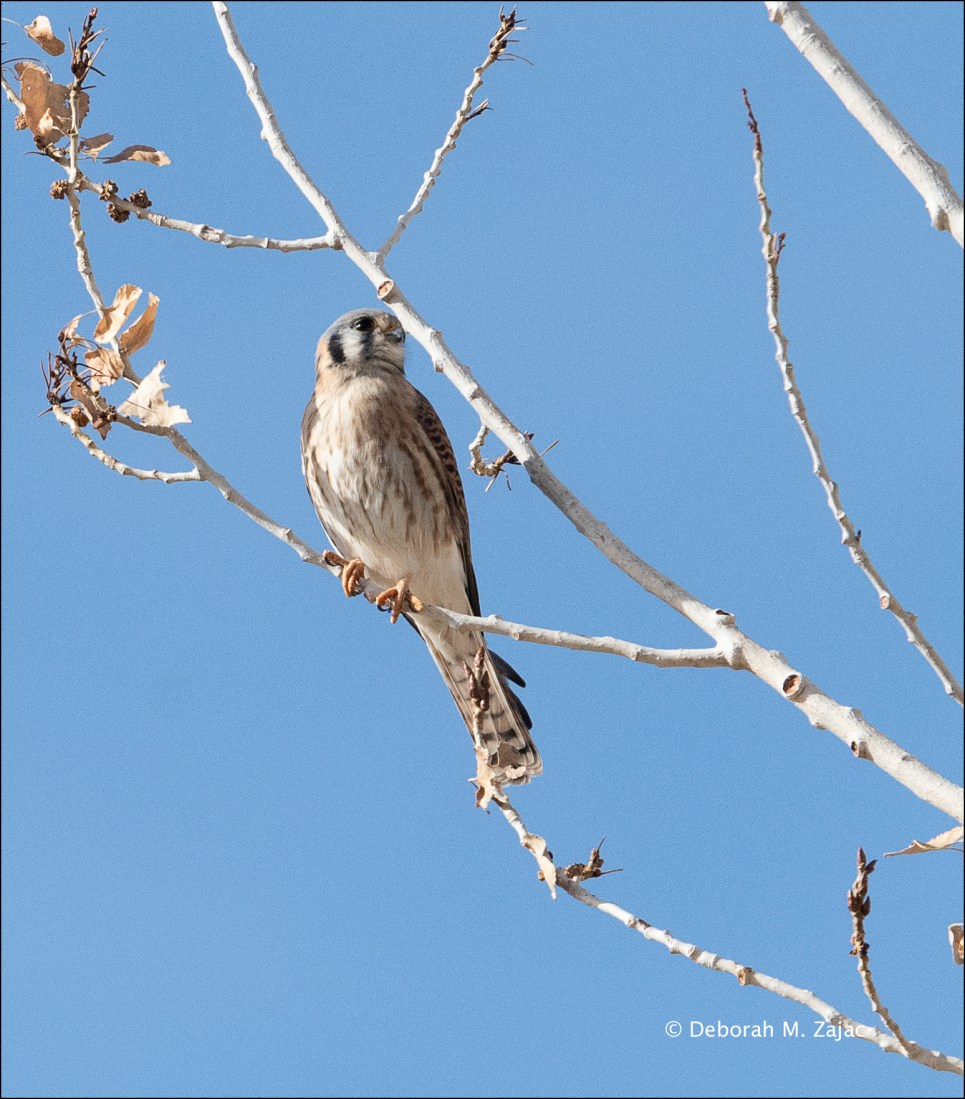
This is a Kestrel I saw in December. I’ll show her from the two sides I got to observe her from. It’s a treat to actually get two side views of a bird.
When I first spotted her high in a Cottonwood tree-
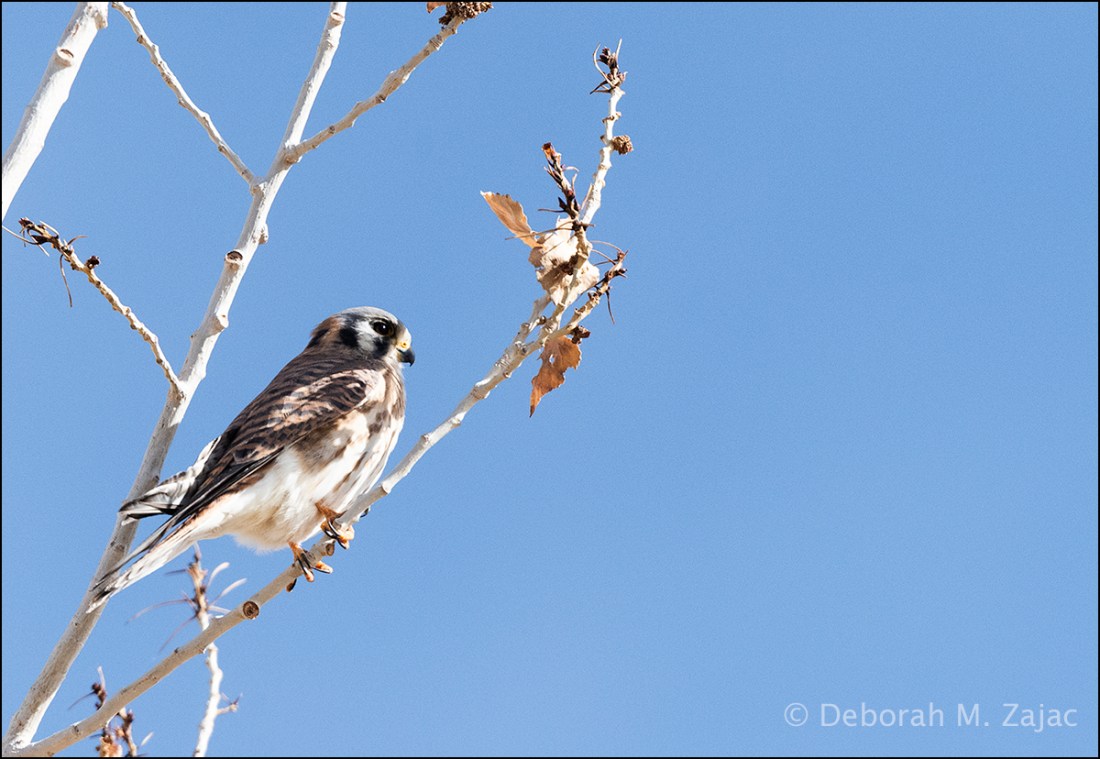
They’re one of the smallest birds of prey, but so cute.
Here she is from the other side, with her chest showing.
Fun Facts:
“Like neon diner signs”! 😂 I loved that description.
Fun facts gleaned from allaboutbirds.org
Happy New Year to all my blogging friends, and visitors!
Nikon D810| Nikkor 500mm| PS CC 25.3.1
more to come…
Copyright ©2023 Deborah M. Zajac. ALL RIGHTS RESERVED.
PLEASE DO NOT USE MY IMAGES WITHOUT EXPRESSED WRITTEN PERMISSION.
I saw this one foraging in a shallow pond earlier in the month. I think it’s a Lesser Yellowlegs, but if I’m wrong let me know! It’s so hard to tell it apart from the Greater Yellowlegs. I’m going on the bill not being too much longer than its head.
I don’t see this type of bird too often so it’s pretty neat when I do. It’s either passing through or hanging out for winter migration.

Fun Facts:
more to come…
Copyright ©2023 Deborah M. Zajac. ALL RIGHTS RESERVED.
PLEASE DO NOT USE MY IMAGES WITHOUT EXPRESSED WRITTEN PERMISSION.

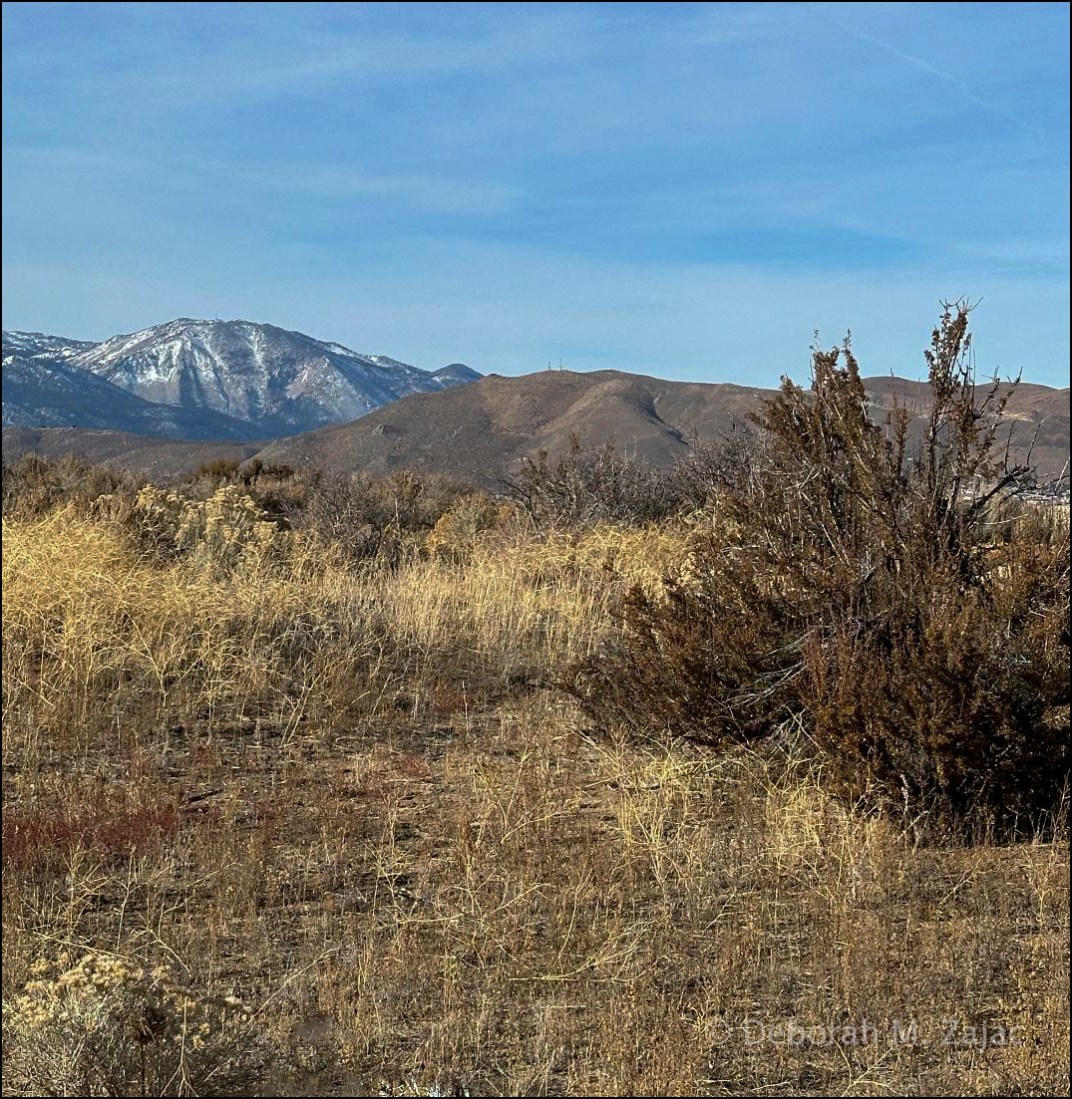
Nikon D810| Nikkor 24-120mm & iPhone 14 Pro
more to come…
 Circadianreflections Blog
You must be logged in to post a comment.