Friday’s Feathered Friends-Western Kingbird

Copyright ©2022 Deborah M. Zajac. ALL RIGHTS RESERVED

While out for good long walk along the river recently I spied a Spring/ Summer visitor perched on a fence. The Western Kingbird. They’re one of the birds with lovely yellow in their coloring that visit here.

I think they’re so cheery with their bright yellow feathers, and gray heads.
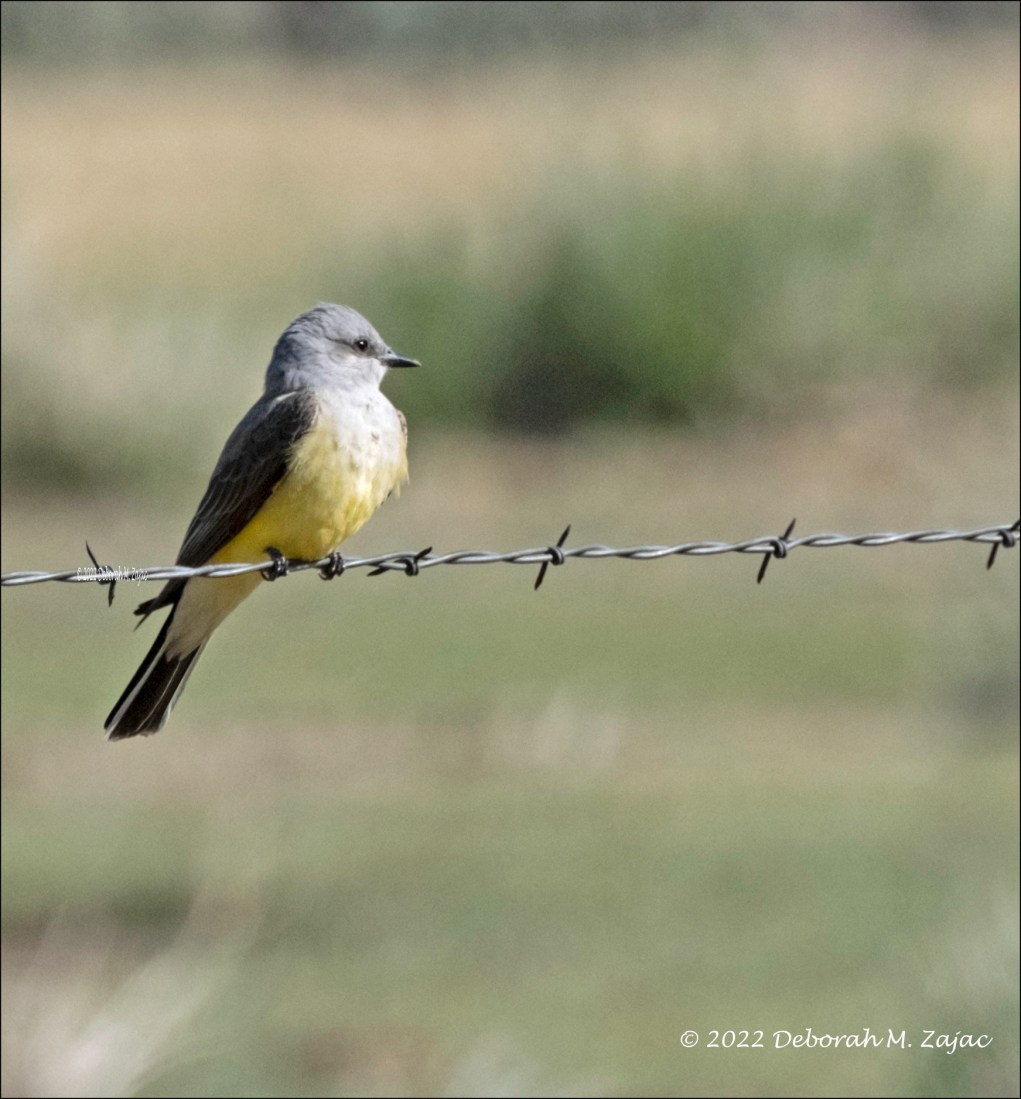
They are in the Flycatcher family that hunts flying insects from its perch on a fence, trees, or utility wires.

They’re also famous for chasing and scolding intruders like Red-tailed Hawks, and American Kestrels.

Fun Facts gleaned from allaboutbirds.org

  • The Western Kingbird’s breeding range has been spreading for the last century as an unplanned result of human activities. By planting trees and installing utility poles in open areas, people have provided hunting perches and nest sites, and by clearing forests they have created open habitats suitable for foraging.
  • Though known as birds of the West, Western Kingbirds tend to wander during fall migration. They show up along the East Coast, between Florida and Newfoundland, every autumn—but only rarely during the spring. In 1915 Western Kingbirds began spending winters in Florida, where they are now regular winter residents.
  • Western Kingbirds aggressively fend off predators and other kingbirds from their territories. The males warn off intruders with harsh buzzes or whirring wings. Both males and females snap their bills and raise their red crowns (normally hidden under gray feathers on their heads) when provoked. As the breeding season wears on, each pair defends a smaller and smaller territory. By mid-incubation time the territory includes the nest tree and little else.
  • The Western Kingbird was originally known as the Arkansas Kingbird, but scientists changed its name to acknowledge its wide range across western North America.
  • The oldest Western Kingbird on record was a male, and at least 6 years, 11 months old, when he was found in South Dakota. ~allaboutbirds.org

We’ve been having big, strong winds lately so my sinus’ are a bit of a mess, but we’re looking at nice sunny days for the week-end here and hopefully the wind mellows out too.

I’ve been thinking about photographing the upcoming Lunar Eclipse. I won’t be able to see the entire thing from start to finish, but I’ll be able to see Totality. I’ll probably just photograph it from my yard. What about you, are you planning to watch it or photograph it?

I hope you all have a lovely week-end, and to all the Mom’s and Grandmother’s, I wish you a very Happy Mother’s Day! 🌼💗

Fuji X-T3| Fujinon 100-400mm| PS CC 23.2.2

more to come…
Friday’s Feathered Friends- American Bald Eagle

Copyright ©2022 Deborah M. Zajac. ALL RIGHTS RESERVED

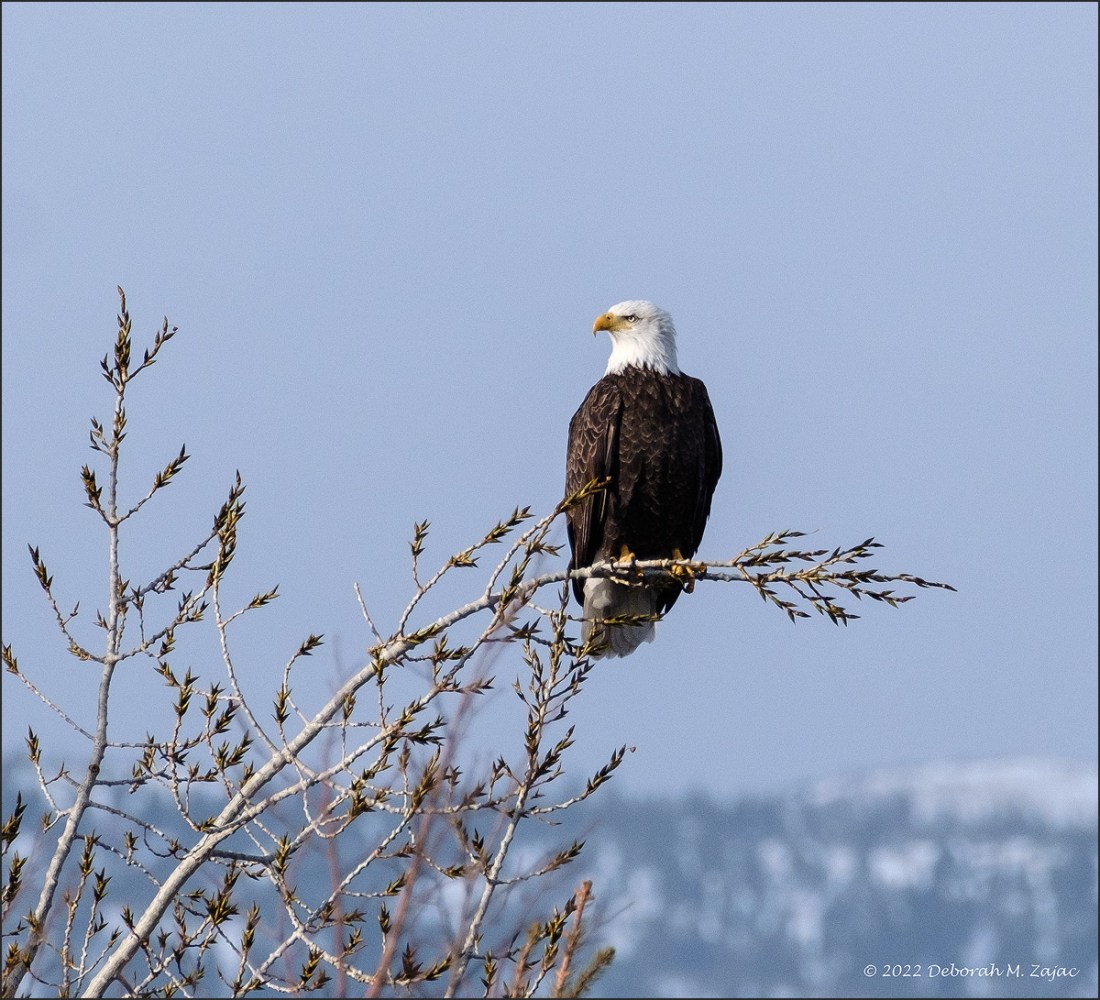
While out birding with the birding group at the beginning of the month we saw this wonderfully majestic bird fly in low and land on this branch above a pond.

American Bald Eagle

It stayed there for quite awhile just taking in its surroundings. I turned my attention to another bird for a second and poof! Off flew the Eagle.

I’m way behind with your blogs as I spent the better part of this week at Baby Girl’s doing school runs, and playing with Littlest while she was swamped with training meetings. I’m home now and beginning to play catch up.

I hope you all have a wonderful week-end. I’ll be catching up with laundry, emails, snail mail, and blogs, and speaking of blogs WP sent me a notice today wishing me a happy 12th Blogversary.12 years! It doesn’t feel that long to me. Thank you all so much for finding my blog, for the comments, conversations, and most of all for the friendships we’ve forged throughout these years. 🥰 Thank you all so much!!

Fuji X-T3| Fujinon 100-400mm| PS CC 23.0.0

more to come…

Friday’s Feathered Friends- Wood Duck

Copyright ©2021 Deborah M. Zajac. ALL RIGHTS RESERVED

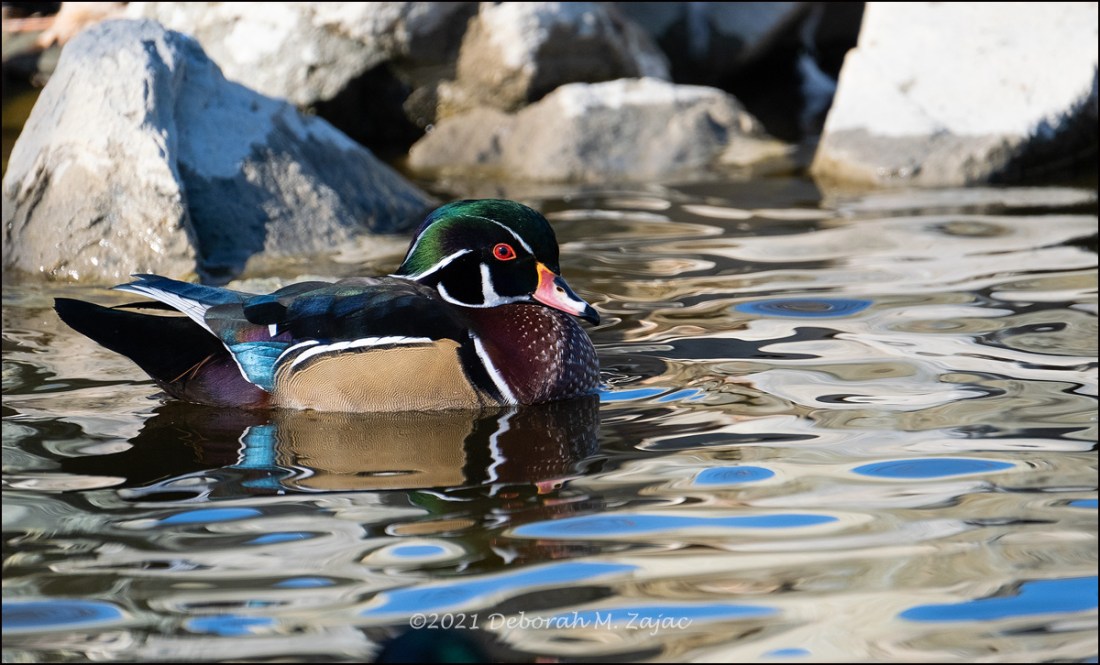
A couple of week ago I discovered a new park with a pond not far from home and this beautiful male Wood Duck was there among the mallards and geese.

Wood Duck Male

I heard there was a female there too but, I never saw her. She too is quite striking and pretty. Here’s an image I made last year along the river of a female Wood Duck checking out a tree for a nesting spot I thought as they nest in holes in trees or if available a nesting box. They have claws that can grip bark so they can perch on branches.

The Wood Duck is one of the prettiest ducks of all the waterfowl.

Fun facts:

  • Natural cavities for nesting are scarce, and the Wood Duck readily uses nest boxes provided for it. If nest boxes are placed too close together, many females lay eggs in the nests of other females.
  • Wood Ducks pair up in January, and most birds arriving at the breeding grounds in the spring are already paired. The Wood Duck is the only North American duck that regularly produces two broods in one year.
  • The Wood Duck nests in trees near water, sometimes directly over water, but other times over a mile away. After hatching, the ducklings jump down from the nest tree and make their way to water. The mother calls them to her, but does not help them in any way. The ducklings may jump from heights of over 50 feet without injury.
  • The oldest recorded Wood Duck was a male and at least 22 years, 6 months old. He had been banded in Oregon and was found in California.

We got a good snow dump during the night and early morning hours on Tuesday. It made everything so pretty! As I write this (Thursday) we’re supposed to get more snow today. #1 Grandson will be celebrating his 9th year on this planet next week. I hope we can get over the mountains to see him to help him celebrate. 9 years old! Time is flying by.

What are you doing this week-end, anything good? Have you finished your holiday shopping?

Fuji X-T3| Fujinon 100-400mm| PS CC 23.0.0

more to come…

Friday’s Feathered Friends-Yellow Warbler

Copyright ©2021 Deborah M. Zajac. ALL RIGHTS RESERVED

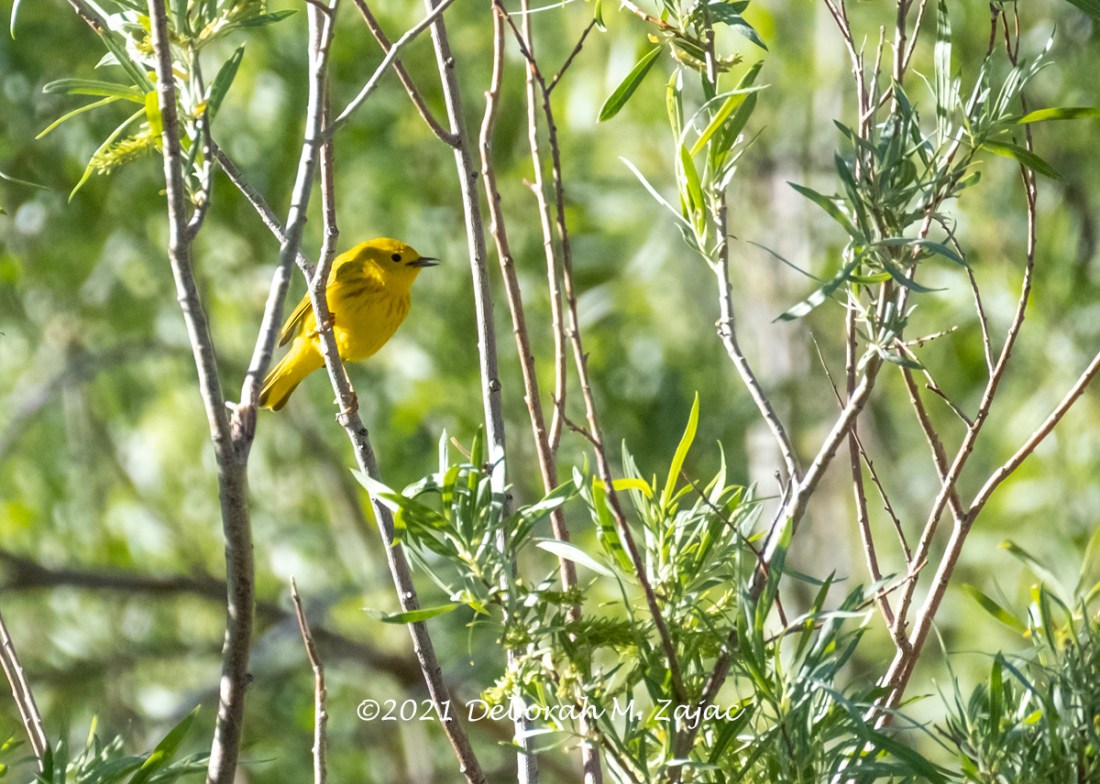
Isn’t he cheerful? This was the second time I’ve ever seen this bird. There are more than 50 species of Warblers but few are as brilliant yellow as he is. The females aren’t as bright and lack the rich chestnut streaking, but do have the black eyes, and warm yellow tones.

Yellow Warbler

Fun Facts:

  • In addition to the migratory form of the Yellow Warbler that breeds in North America, several other resident forms can be found in Mexico, Central America, and the Caribbean. Males in these populations can have chestnut caps or even chestnut covering the entire head.
  • The nests of the Yellow Warbler are frequently parasitized by the Brown-headed Cowbird. The warbler often builds a new nest directly on top of the parasitized one, sometimes resulting in nests with up to six tiers.
  • Life can be dangerous for a small bird. Yellow Warblers have occasionally been found caught in the strands of an orb weaver spider’s web.
  • The oldest-known Yellow Warbler was a female, and was at least 11 years old when she was recaught and rereleased during banding operations in New York.~allaboutbirds.org

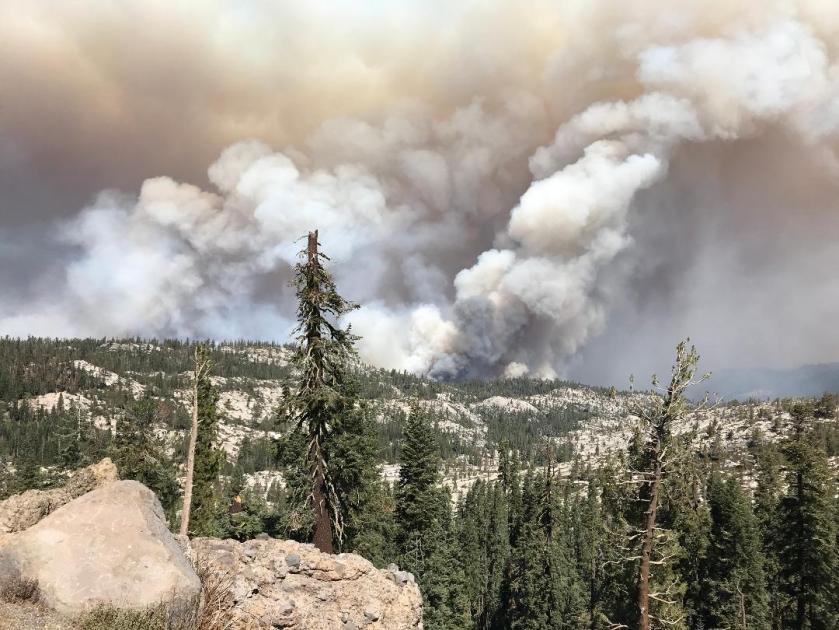
Sunday we drove over the mountains to go visit Baby Girl, The Handsome Surveyor, and the boys. Along the way we stopped at Maiden’s Grave pullout to view the horrible smoke plume from the Caldor Fire burning in the El Dorado National forest.

View from Maiden’s Grave, SR 88, CA.

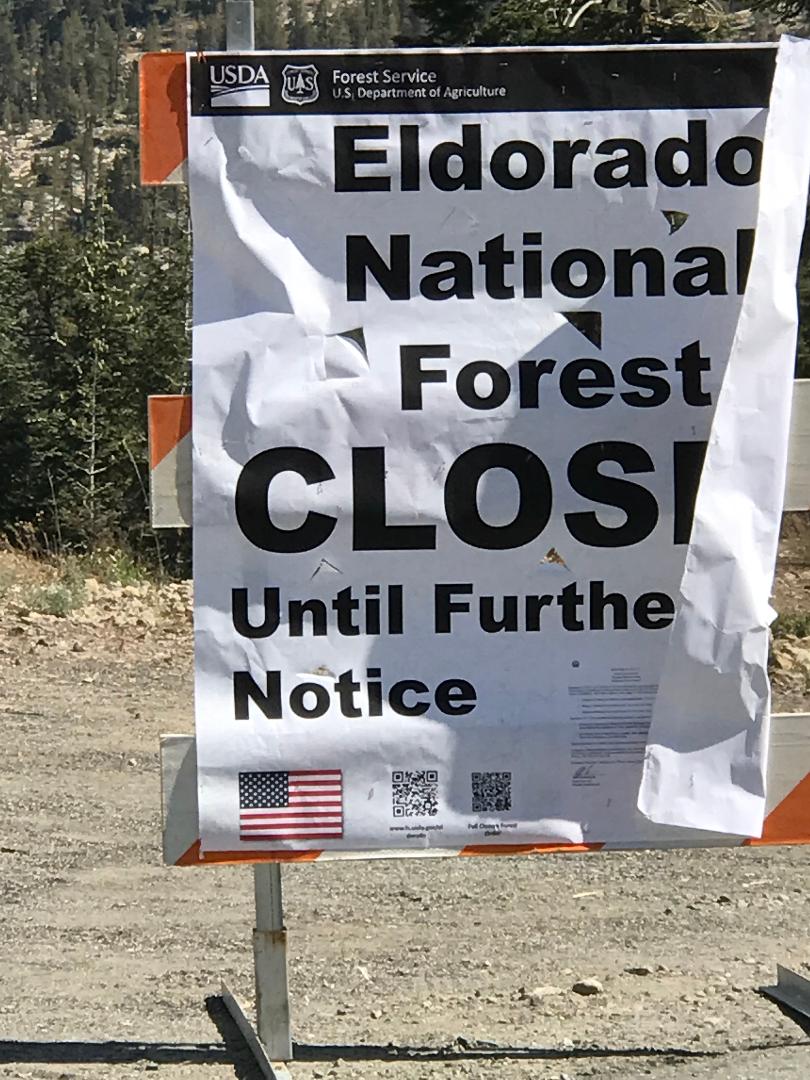
All through the forest we kept seeing these signs- Every campground, and park is closed. 😭

Forest Closed Sign

The reports on the fire are somewhat better today. They’re allowing some residents to return their homes in South Lake Tahoe, and the cooler temperatures, and less wind in the week-end forecast is promising and should help the firefighters with the fight.

The smoke is still in the unhealthy range here, but the sun is trying to burn through it today so I’m feeling a wee bit more positive today on the fire front.

We haven’t any week-end plans since we’ve been gone a lot these last two weeks visiting our kids and grandkids. What about you any plans? Whatever your plans I hope you have a good week-end!

Fuji X-T3| Fuji 100-400mm| and iPhone 7Plus| PS CC 22.5

more to come…

Friday’s Feathered Friends- Lifers 3, 4, & 5 for 2021

Copyright ©2021 Deborah M. Zajac. ALL RIGHTS RESERVED

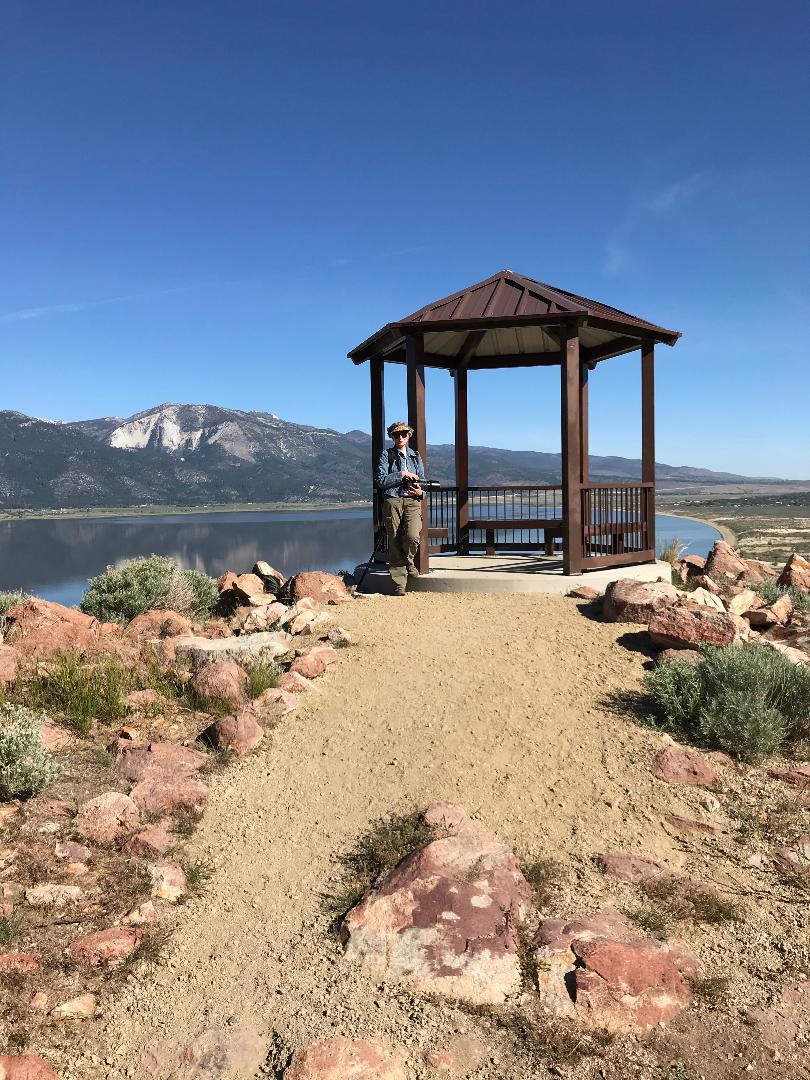
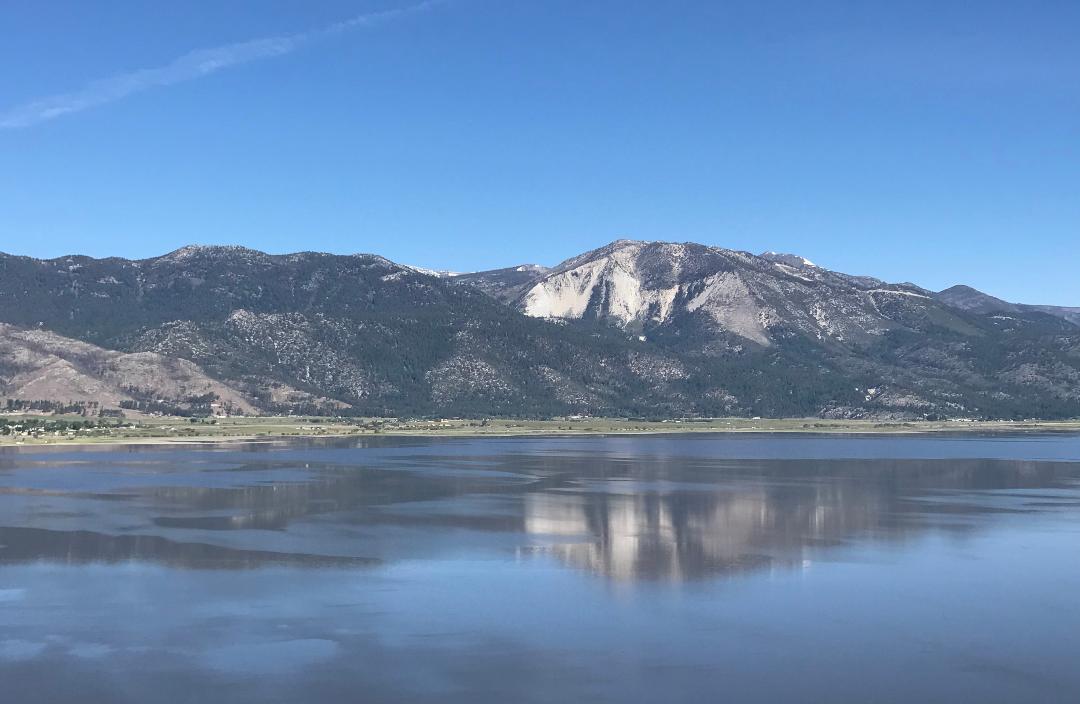
At the end of May He-Man and I went for a hike on a new to us trail called Deadman’s Creek Trail. It’s a nice short trail just a wee bit over a mile up and 280 foot elevation gain with a wonderful payoff at the end. There’s a lovely gazebo at the top of the hill, and the view is gorgeous.

Washoe Lake with Slide Mountain in the background
Washoe Lake Reflecting Slide Mountain

To top this off being a nice hike it was an even better hike because I saw three new to me birds on this trail!!

Number 3 new bird for the year was the Rock Wren. It posed for me nicely. Later it sang for us too.

Rock Wren

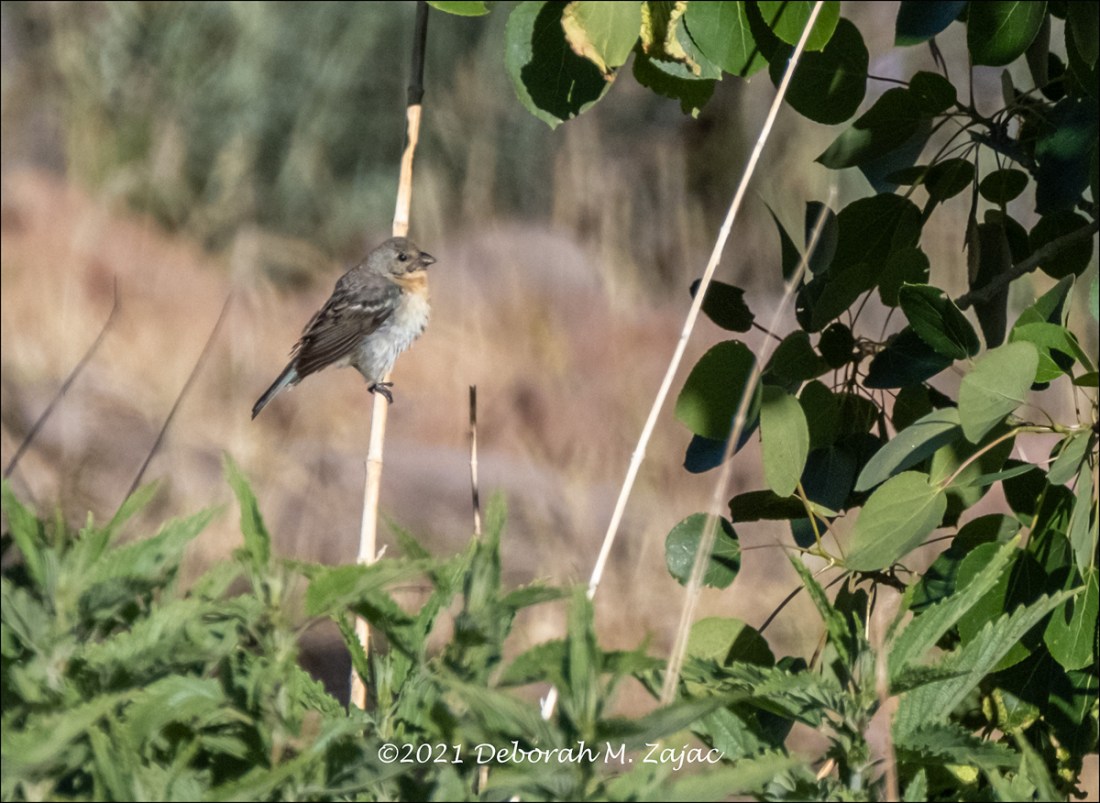
On the way down I saw the next two. First was the Female Lazuli Bunting. It’s not a great image as she was out of range of my lens, but it was a good enough look to get her identified. I’ve seen the male before but, not the female so I was excited to have now seen both the male and female of the species.

Lazuli Bunting Female

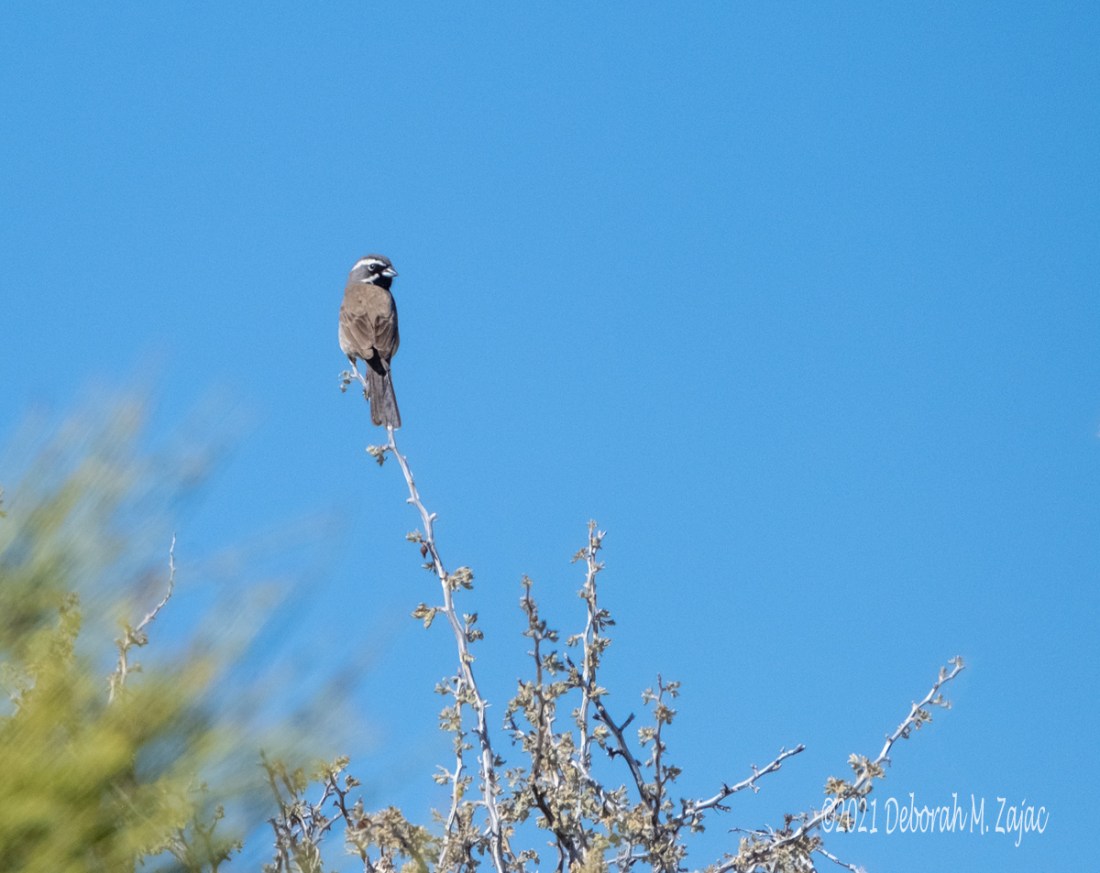
The last new to me bird was the Black-throated Sparrow. I’ve been back to try to get a better image of it twice, but I haven’t seen it again.

Black-throated Sparrow

All I know of how the trail got its name is back in the 1860’s a man bought a ranch near here and grew produce to sell to the miners in the valley. In 1864 he sold half his ranch to another man who became his business partner, but in 1865 the two ranchers were found shot dead. It was first thought they were murdered, but later they changed the thinking to a murder suicide situation. It’s a story true to the Wild West tales that’s for sure.

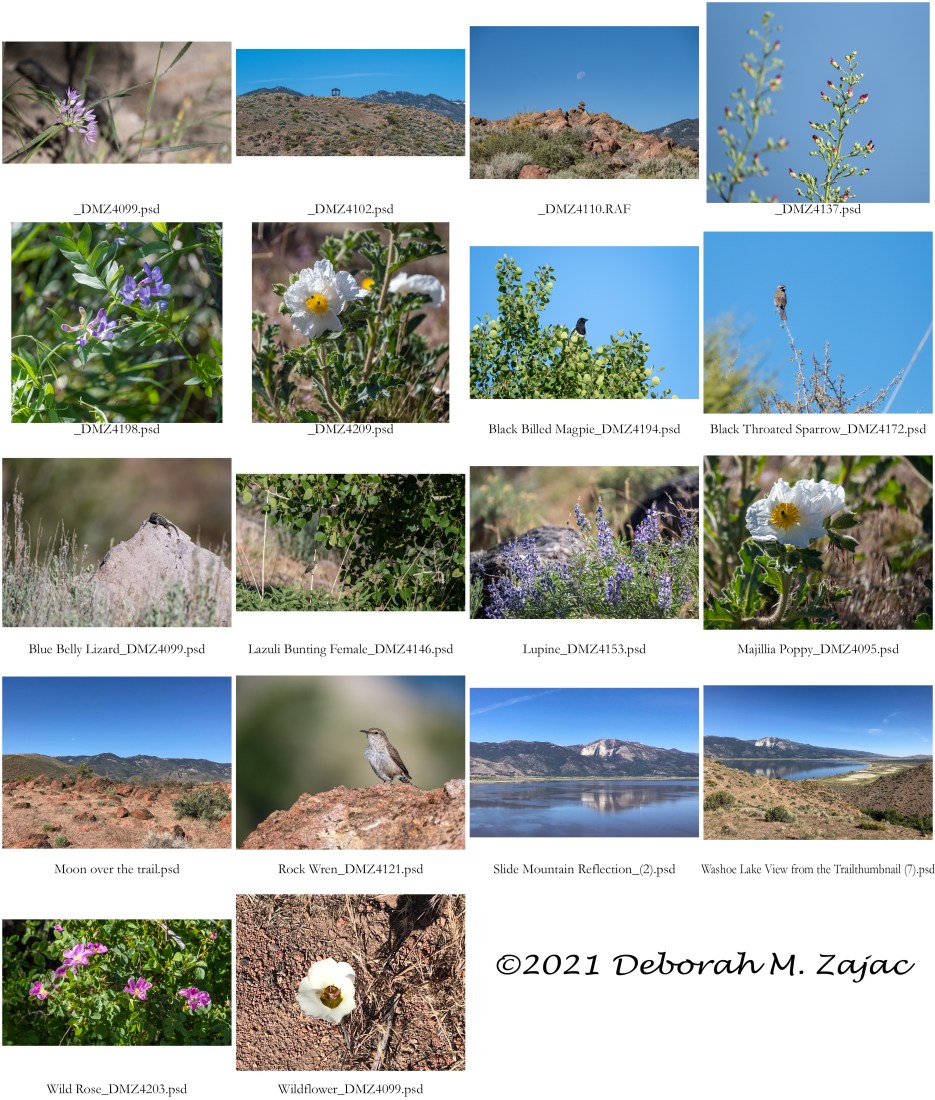
On a happier note there were wildflowers in bloom along the trail too. I put together a Contact Sheet with several thumbnail images of the highlights of the hike to share.

Deadman’s Creek Trail, Washoe County, Nevada

We’ve had #1 Grandson with us for 11 days and Big Baby Boy flew up for a short visit too. We’ve been going to the lake to beat the heat and paddle on my SUP board. If you follow me on Instagram you may have seen some of my images and videos of that so I won’t repeat that here.

Big Baby Boy left Tuesday, and Baby Girl, The Handsome Surveyor, and Littlest are arriving this evening for a short overnight stay and take #1 Grandson home tomorrow. The visits went by too fast!! That catches you up on my doings. What’s new with you?

I hope you’re all having a lovely week, and you have a great week-end!

Fuji X-T3| Fuji 100-400mm| iPhone 7Plus| Photoshop CC 22.4.2

more to come…

Friday’s Feathered Friends- American Dippers

Copyright ©2021 Deborah M. Zajac. ALL RIGHTS RESERVED.

I’ve been rather slow at telling you about several new to me birds that I’ve seen this year. There have been 5 so far this year.

The first one I saw was back in February. Yeah, I know. I love making the images, going out hiking, birding, etc., but processing the images and writing…not so much.

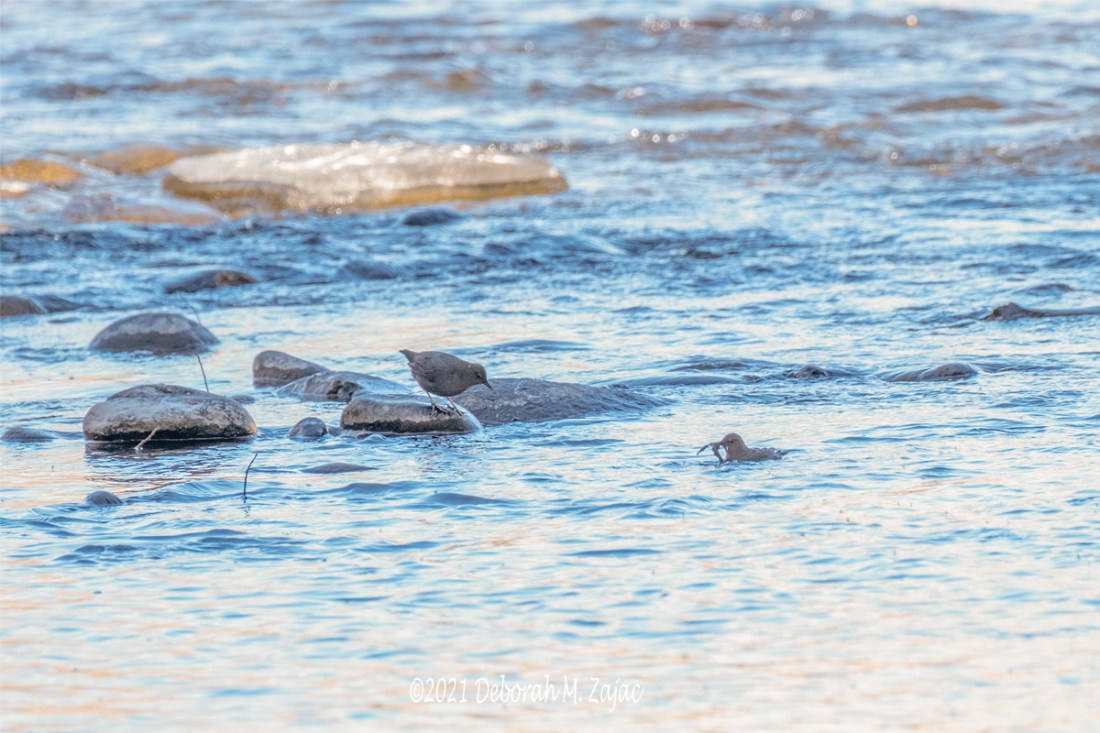
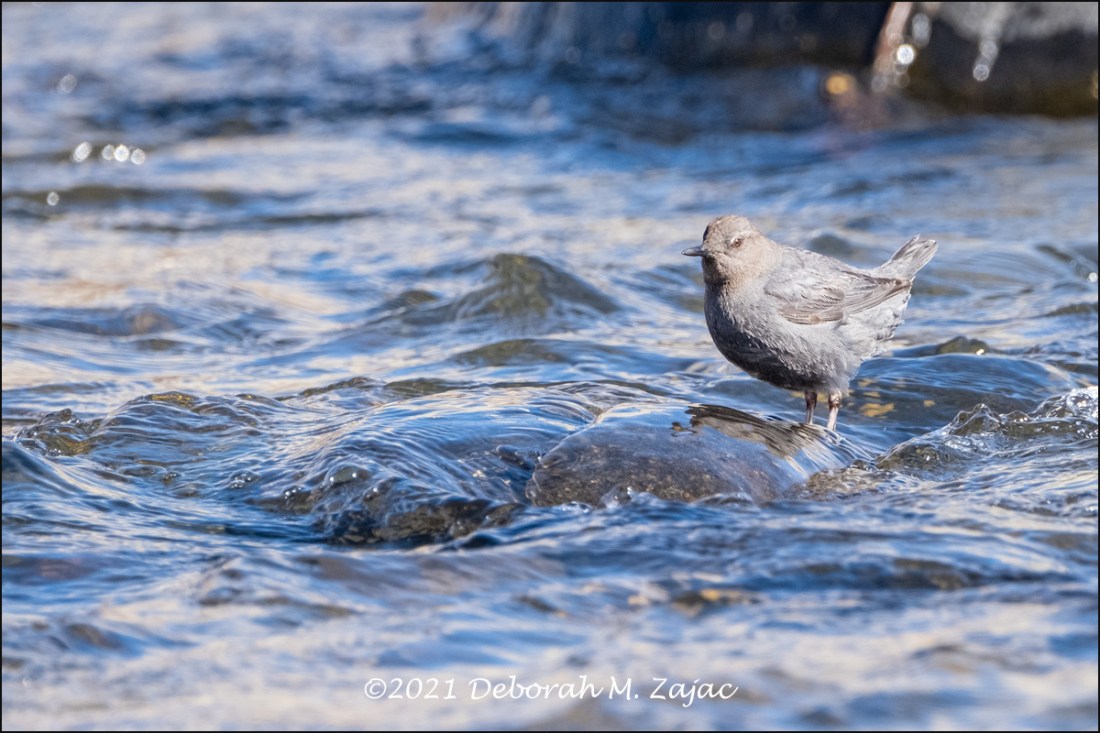
So, this bird I saw in February really made me do my happy dance… jumping for joy happy dance because I tried to find this bird several times over a couple of years while I lived in San Jose sans success. Just less than two years after moving to Nevada I found not one but a pair!! Here without further ado is the American Dipper.

They were gathering nesting material under an overpass and flying into a hole under it. Lighting conditions weren’t great. They were in the shadow of the bridge making it hard to get a good image of them. I opened up the shadows in post editing.

Th

This next image shows the white eyelid they have that you only see when they blink.

Finally, I got lucky and one flew out into the sunlight!

Fun Facts: Gleaned from allaboutbirds.org

  • The American Dipper chooses a nest site, invariably along a stream, that provides security from floods and predators. Availability of suitable nest sites appears to limit its populations.
  • To be able to survive in cold waters during the winter, the American Dipper has a low metabolic rate, extra oxygen-carrying capacity in its blood, and a thick coat of feathers.
  • Unlike most other songbirds, but similarly to ducks, the American Dipper molts its wing and tail feathers all at once in the late summer. The bird is flightless during this time.
  • The oldest American Dipper was over 8 years old, when it was recaptured and rereleased during a banding operation in South Dakota.

The American Dipper is North America’s only truly aquatic songbird. I’m so happy I finally saw them!

I hope you all have a great week-end!

Fuji X-T3| Fujinon 100-400mm| PS CC 22.4.1

more to come…

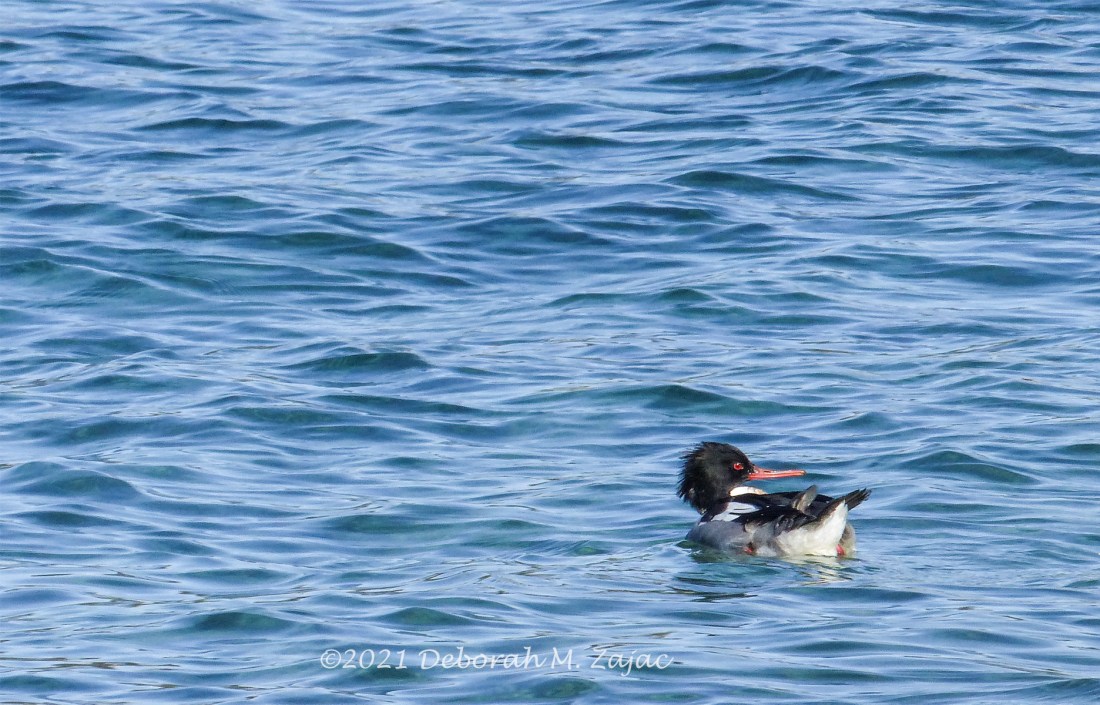
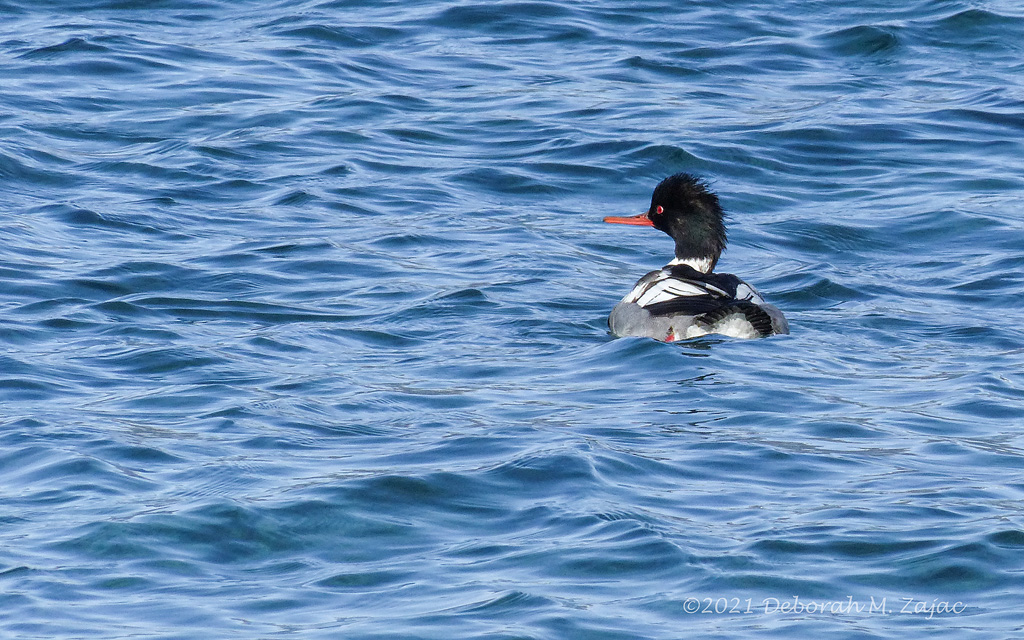
Friday’s Feathered Friends- Red-breasted Merganser Male

Copyright ©2021 Deborah M. Zajac. ALL RIGHTS RESERVED

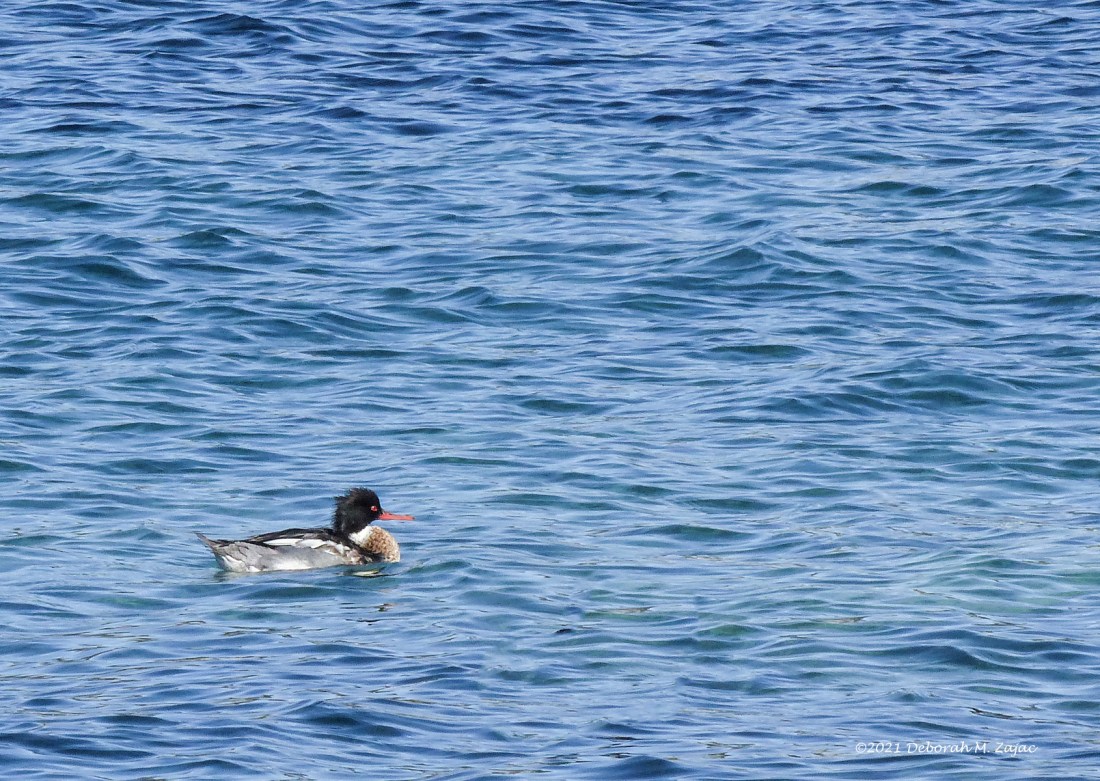
Late in January, I heard there was a Red-necked Grebe in Lake Tahoe and it’s a bird I’ve never seen so wanting to get out of the house between storms He-Man and I drove over there for a walk-about and see what we could see. No grebe anywhere, but I did see a small group of Common Mergansers, and one that didn’t look quite like the others, but looked like a Merganser. I made some images and when I got home uploaded the images and discovered to my delight the one in the group that was a little different was a Red-breasted Merganser Male. A new bird for me, and Lifer number one for 2021!

They weren’t doing much of anything when I saw the group. I think it was a bit early and they were still waking up. 😀

Male Red-breasted Merganser Lake Tahoe 2021

Fun facts about them gleaned from my favorite source allaboutbirds.org

  • The Red-breasted Merganser breeds farther north and winters farther south than the other American mergansers.
  • Red-breasted Mergansers don’t acquire breeding plumage until they are 2 years old.
  • Red-breasted Mergansers need to eat 15 to 20 fish per day, which researchers suggest means they need to dive underwater 250–300 times per day or forage for 4–5 hours to meet their energy needs.
  • The oldest recorded Red-breasted Merganser was a female, and at least 9 years, 6 months old when she was shot in Alaska, the same state where she had been banded.

That’s a lot of diving and foraging isn’t it!

I hope you all a lovely week-end!

Panasonic Lumix FZ200| PS CC 22.3.0

more to come…