Friday’s Feathered Friends-Birds, Birds, Birds

Copyright ©2025 Deborah M. Zajac. ALL RIGHTS RESERVED.

PLEASE DO NOT USE MY IMAGES WITHOUT EXPRESSED WRITTEN PERMISSION.

I thought I’d share some of the birds I’ve seen the last couple of weeks.

Starting with a little Pygmy Nuthatch. It was flying to and from its nest the hole in a tree trunk you can sort of see behind it.

©Deborah M. Zajac | http//:circadianreflections.com Image

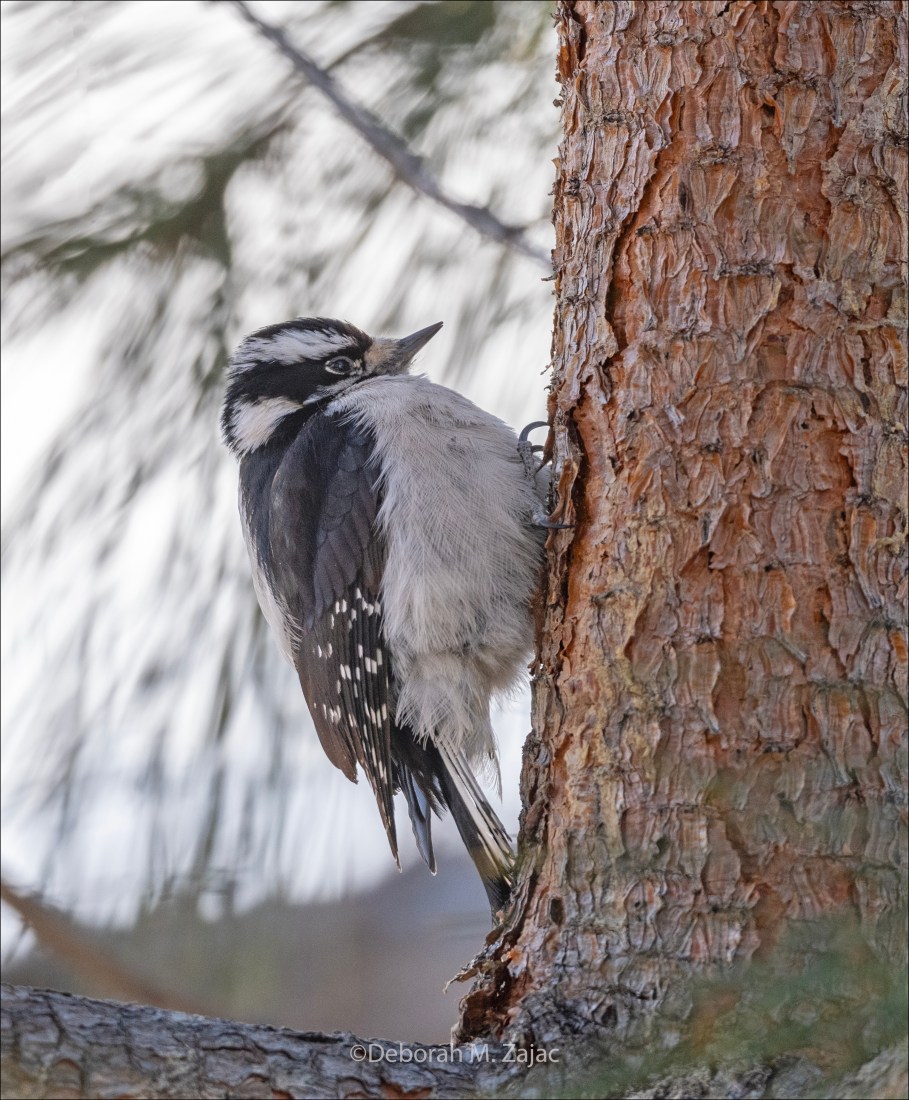
A female Downy Woodpecker who was cold that morning. It was 15 degrees F when we started birding. She didn’t move from that tree for the longest time.
©Deborah M. Zajac | http//:circadianreflections.com Image

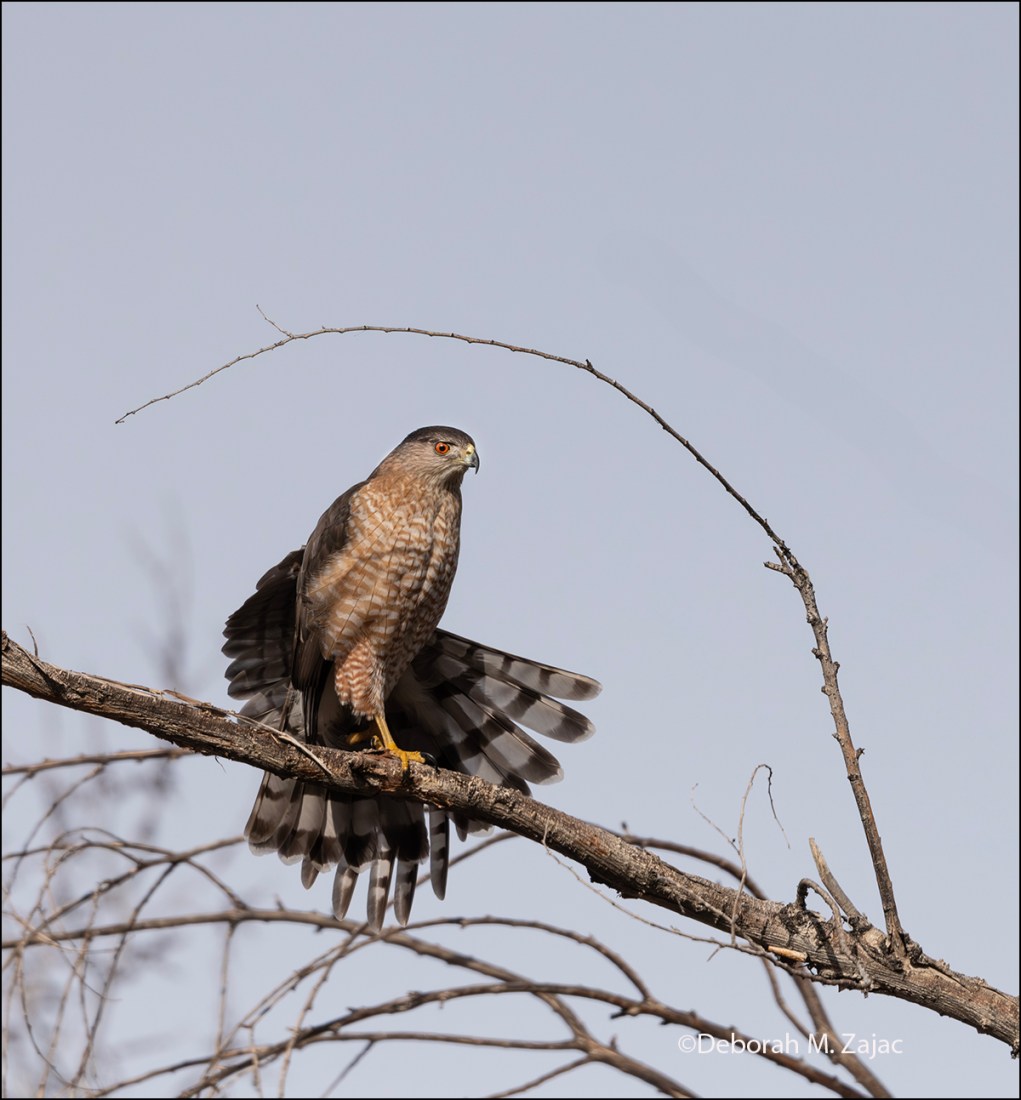
Another morning I had the pleasure of viewing a posing Cooper’s Hawk. Look at that tail!
©Deborah M. Zajac | http//:circadianreflections.com Image

Then it showed off its wing.

©Deborah M. Zajac | http//:circadianreflections.com Image

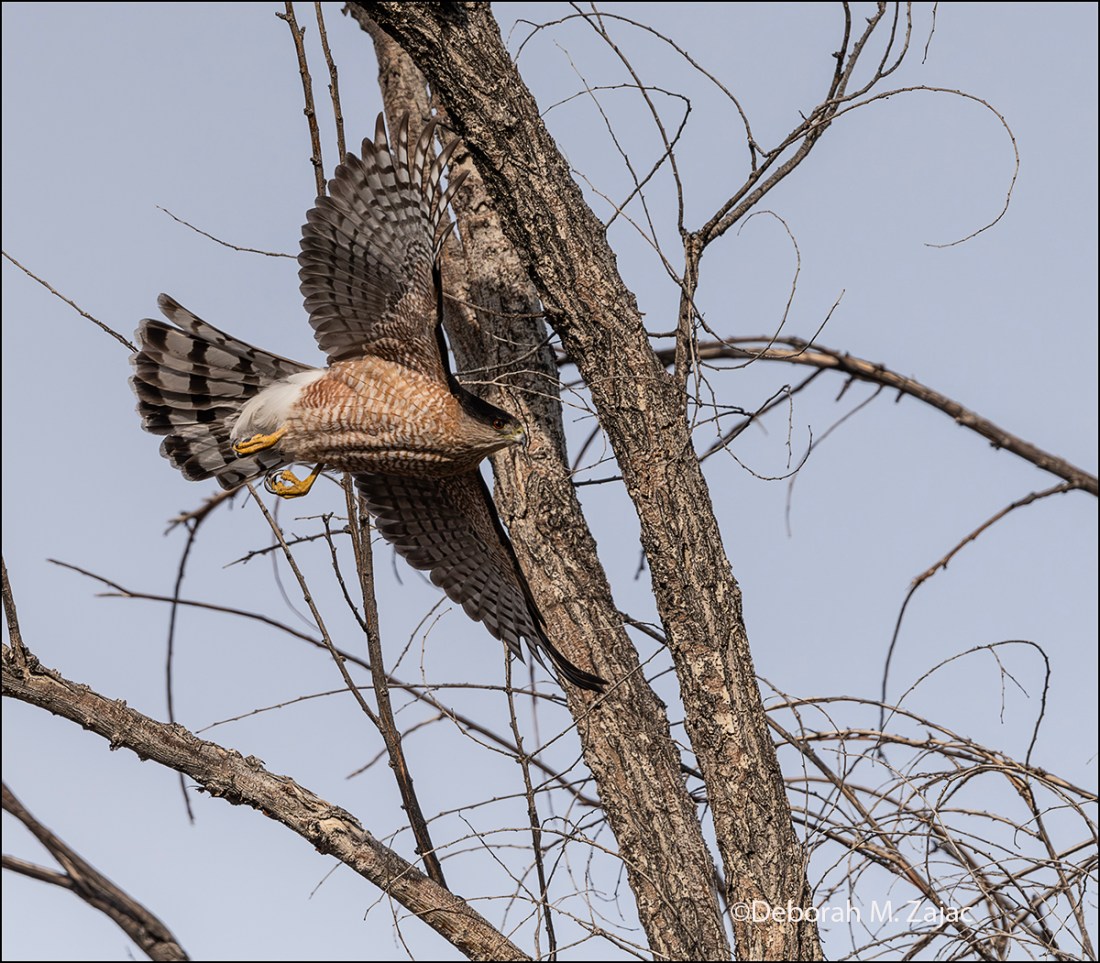
Then it flew showing off its wing span.
©Deborah M. Zajac | http//:circadianreflections.com Image

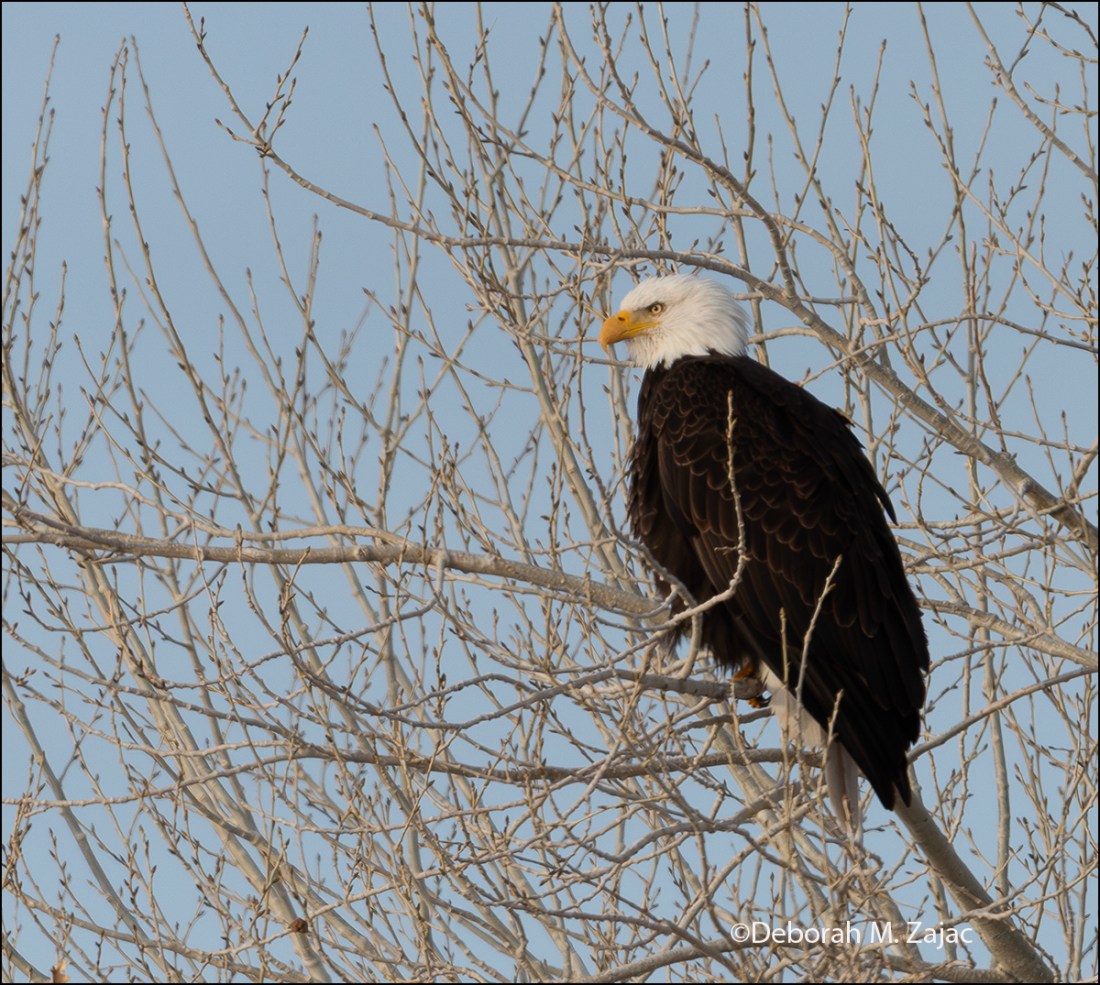
Last but not least, I saw the pair of Bald Eagles in their tree near my house on my way out last week. He was obscured by all the branches, but she was up high and in the open. I had to stop for a photo of her.
©Deborah M. Zajac | http//:circadianreflections.com Image

That’s all I have for you this week. I may be late getting to your posts and blogs this morning as I’m birding with my bird group.

More to come…

Friday’s Feathered Friends- The Anhinga

Copyright ©2024 Deborah M. Zajac. ALL RIGHTS RESERVED.

PLEASE DO NOT USE MY IMAGES WITHOUT EXPRESSED WRITTEN PERMISSION.

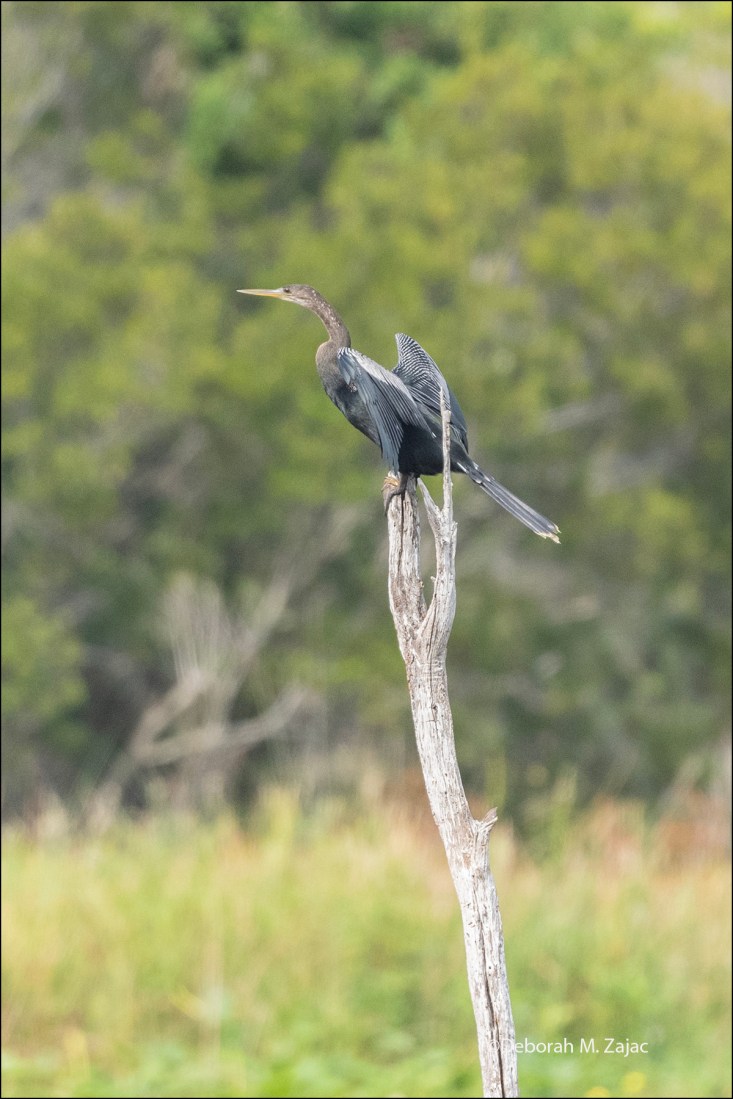
The Anhinga was one of 4 birds I really wanted to see while I was in Florida in September and I saw 3 of them! One male and two Females…I think.

It’s another pre-historic cool looking bird.

I think this is a male because his neck is black. He’s drying his wings.

©Deborah M. Zajac | http//:circadianreflections.com Image

Here’s the female also drying out her wings. Like Cormorants they don’t have waterproof feathers so they get on a perch or land and spread them open to dry them out.

©Deborah M. Zajac | http//:circadianreflections.com
As I crept closer to her to get a better shot I spooked her and off she flew.

Fun Facts:

  • The Anhinga’s distinctive shape earned it the nickname “water turkey” for its turkeylike tail, and “snake bird” for its long snakelike neck as it slithers through the water.
  • Unlike most waterbirds, the Anhinga doesn’t have waterproof feathers. While that may seem like a disadvantage for their watery lifestyle, their wet feathers and dense bones help them slowly submerge their bodies under the water so they can slyly stalk fish.
  • The name Anhinga comes from the Tupi Indians in Brazil, meaning “devil bird” or “evil spirit of the woods.”
  • The oldest recorded Anhinga was at least 12 years old when it was shot in Louisiana in 1948.

Fun facts gleaned from https://www.allaboutbirds.org/guide/Anhinga/overview

We may have a break from the wind and beat the rain this morning so I’m going birding with friends which means I’ll be a bit late checking out your blogs, and reading comments.

more to come…

Something for Sunday- First Snow in the Valley

Copyright ©2024 Deborah M. Zajac. ALL RIGHTS RESERVED.

PLEASE DO NOT USE MY IMAGES WITHOUT EXPRESSED WRITTEN PERMISSION.

I woke up Friday morning pretty early to go birding with a group I’m in. When I opened the garage door to leave I discovered there was snow on the ground and flurries still swirling.

I was heading about an hour northeast from home so, I checked my email to make sure they hadn’t canceled the outing…they hadn’t so off I went.

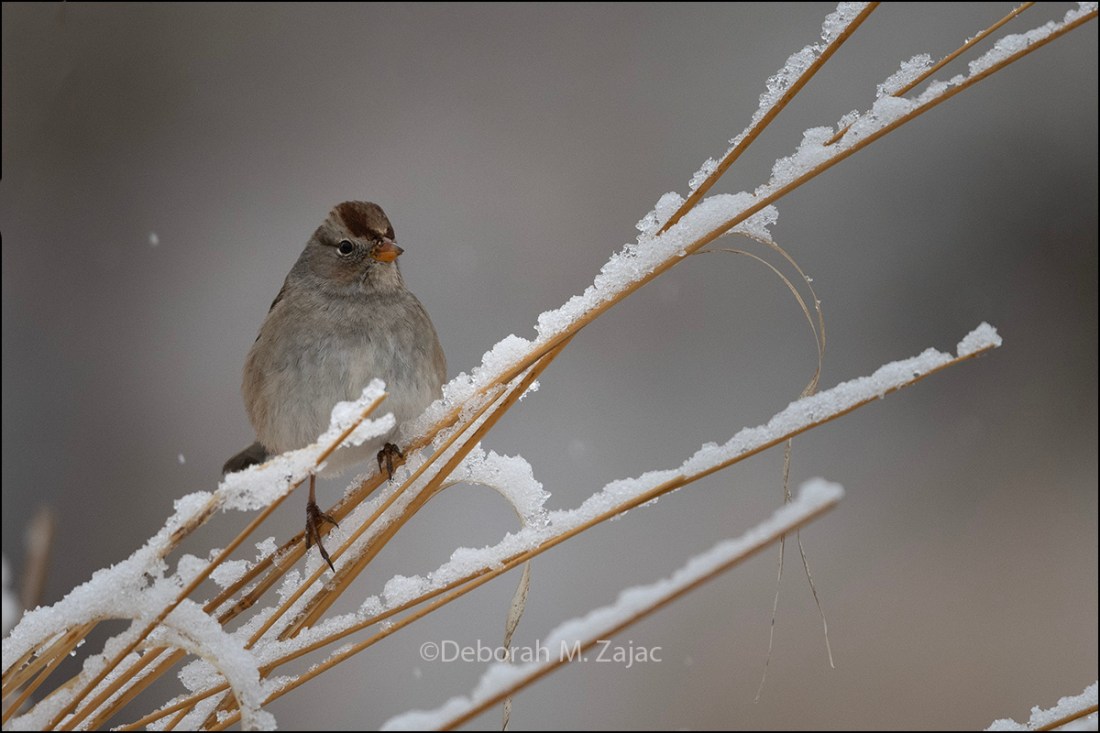
It wasn’t snowing when I arrived at the meeting spot but, while birding the snow started to fall pretty heavy. It wasn’t in the weather forecast the day before! It was still a good morning of birding. We saw 22 species of birds. One White-crown Sparrow favored us with a nice look perched on snowy grass.

©Deborah M. Zajac | http//:circadianreflections.com Image

By the time we left it had quit snowing so my drive home was easy, and while the snow was sticking to the ground where I was birding it hadn’t had home. The upcoming 10 day forecast looks like we’re snow free.

Nikon D850| Nikkor 500mm| PS CC

more to come…

Friday’s Feathered Friends- American Redstart

Copyright ©2024 Deborah M. Zajac. ALL RIGHTS RESERVED.

PLEASE DO NOT USE MY IMAGES WITHOUT EXPRESSED WRITTEN PERMISSION.

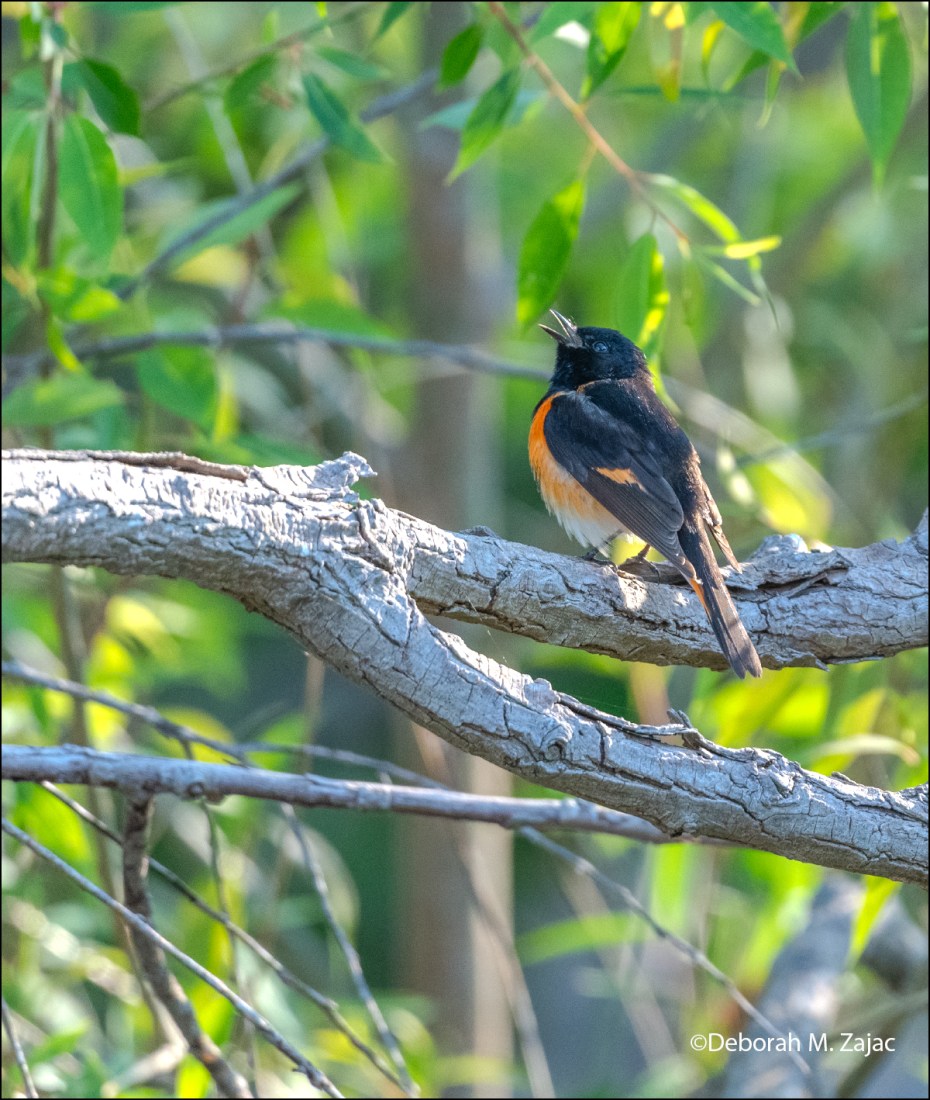
Going back to my Spring trip to Ohio for these images. The American Redstart male.

He’s a Warbler. I’m on the edge of it’s range. If only one or two would stray a bit further west I wouldn’t have needed to go to Ohio to this one. 😂

©Deborah M. Zajac | http//circadianreflections.com

Here’s an audio clip of its song.

https://www.bird-sounds.net/american-redstart/

Fun Fact:

  • Like the Painted Redstart and other “redstarts” of the Neotropics, the American Redstart flashes the bright patches in its tail and wings. This seems to startle insect prey and give the birds an opportunity to catch them. Though these birds share a common name, they are not closely related to each other. In fact, there are other unrelated birds around the world—such as the fantails of Australia and southeastern Asia, and other redstarts of Europe—that share the same foraging tricks.
  • Young male American Redstarts have gray-and-yellow plumage, like females, until their second fall. Yearling males sing vigorously in the attempt to hold territories and attract mates. Some succeed, but most do not breed successfully until the following year when they develop black-and-orange breeding plumage.
  • The male American Redstart sometimes has two mates at the same time. While many other polygamous bird species involve two females nesting in the same territory, the redstart holds two separate territories that can be separated by a quarter-mile. The male begins attracting a second female after the first has completed her clutch and is incubating the eggs.
  • The oldest American Redstart was at least 10 years and one month old, when he was recaptured and rereleased during a banding operation in Ontario.

Fun facts gleaned from allaboutbirds.org

I may be late replying this morning as I’m starting my week-end birding a new to me area in South Lake Tahoe. I hope you all have a great day and week-end.

more to come…

Whatever Weds. Eclipse

Copyright ©2024 Deborah M. Zajac. ALL RIGHTS RESERVED. 

PLEASE DO NOT USE MY IMAGES WITHOUT EXPRESSED WRITTEN PERMISSION.

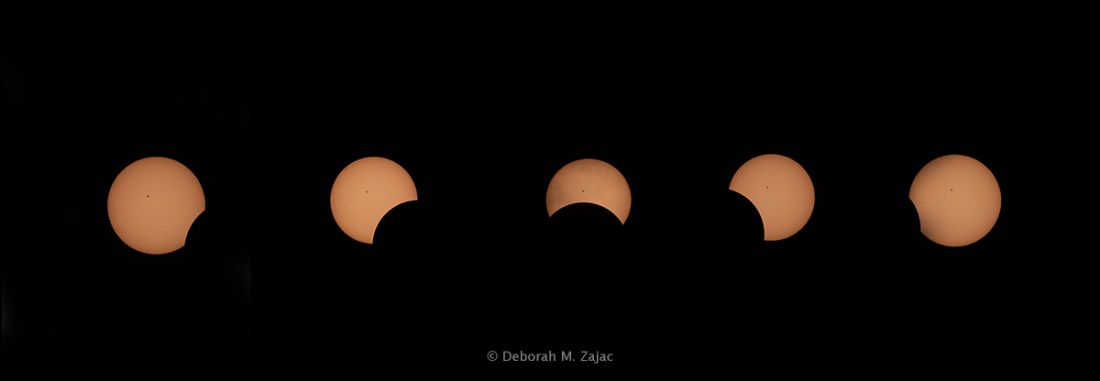
I wasn’t in the path of Totality for the eclipse on Monday but, I did watch the it from my patio. The Partial we saw covered 47% of the Sun’s face.

He-Man, myself, and a neighbor enjoyed the birds singing, and watching golfers play through without ever looking up to see what was happening in the sky above us.

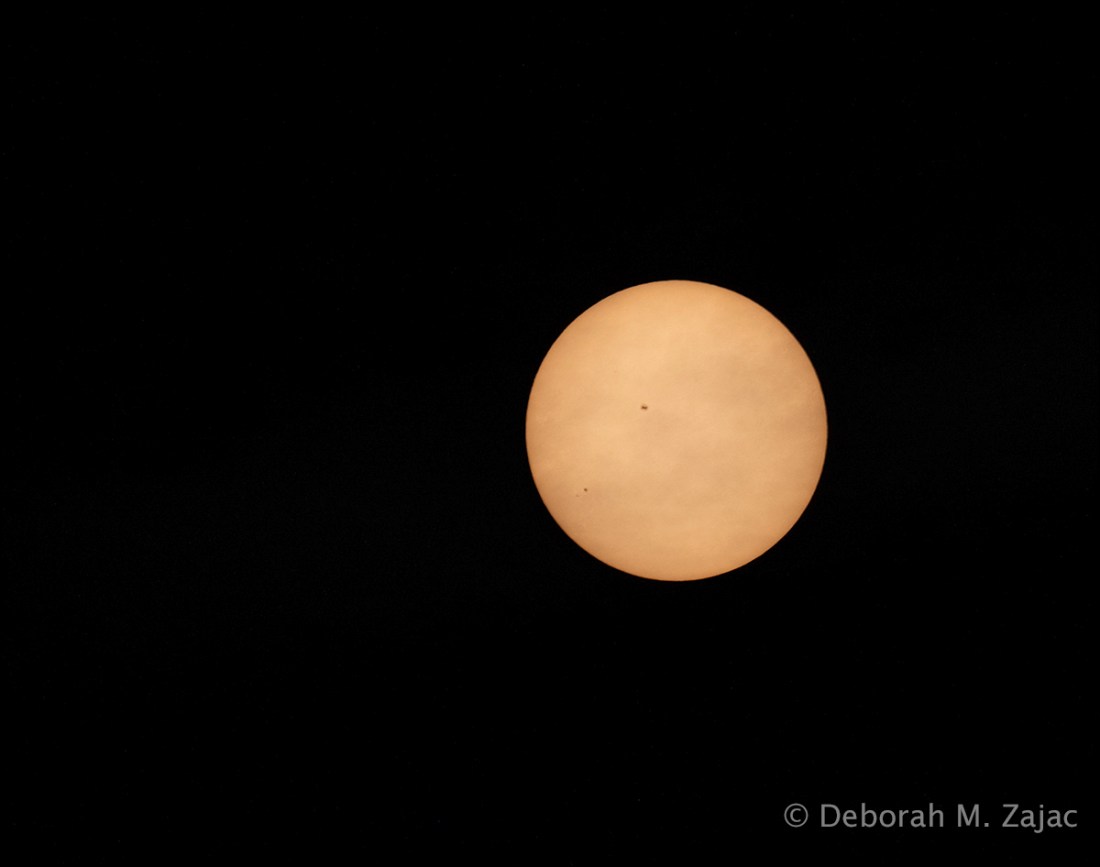
I made an image of the full sun first before the eclipse started.

Sun, April 8, 2024

The large sunspot is 3628, and the smaller one is 3633.

This image below is a 5 frame composite showing the sequence of the partial eclipse from shortly after the beginning to the end with the Maximum coverage image in the middle.

Image-5 Frame Composite

The dark shadows you see on the face of the images of the sun are clouds that were rolling across the Sun/Moon during the eclipse.

Now that eclipse madness has passed and it’s sunny, the snow has melted here in the valley and our lawn has turned green I’m ready to turn my attention to looking for spring flowers and more birds.

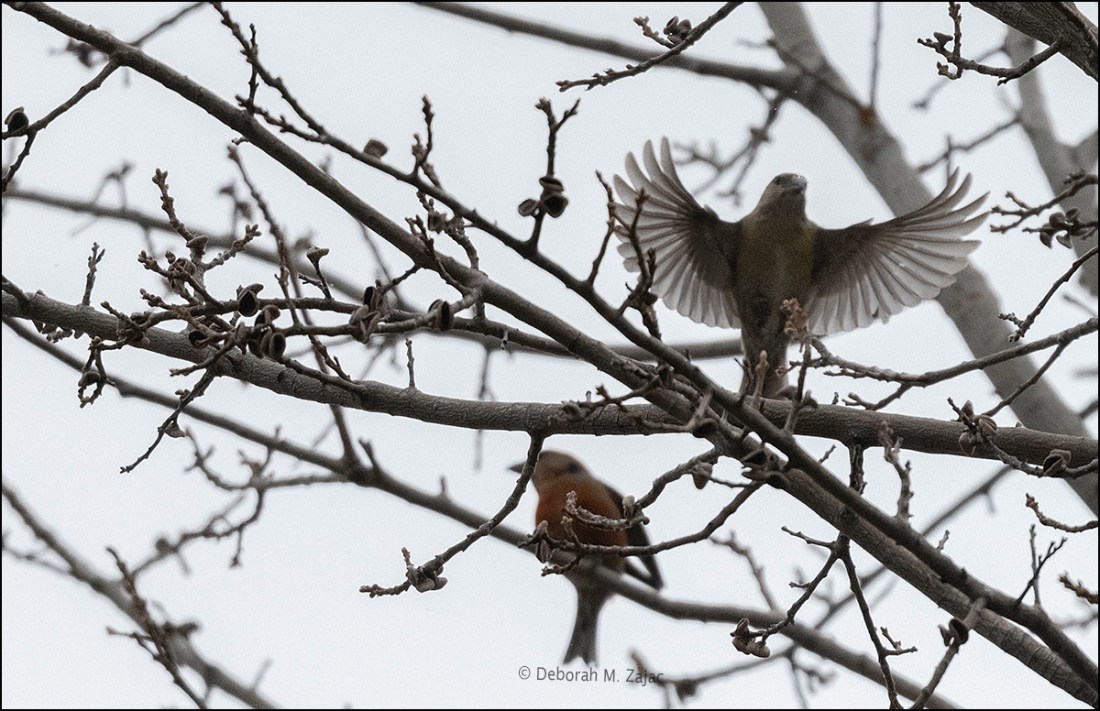
Speaking of birds. I got a “lifer pair” last Friday. A pair of Red Crossbills.

They were a bit out of range for my lens but, I did get an image that positively identified them. It’s noisy and soft, but it’s a keeper.

Red Crossbill Pair

This is the female with her wings spread ready to fly, and her mate in the back. I was doing my happy dance when I got a positive ID on these two.

So, did you see the eclipse in partial or in Totality? Wasn’t it cool!

Happy Wednesday!

Nikon D850|Nikkor 500mm PF-e| Orion Glass Solar Filter| PS CC 25.5.1

more to come…

Friday’s Feathered Friends- Western Wood Peewee

Copyright ©2024 Deborah M. Zajac. ALL RIGHTS RESERVED. 

PLEASE DO NOT USE MY IMAGES WITHOUT EXPRESSED WRITTEN PERMISSION.

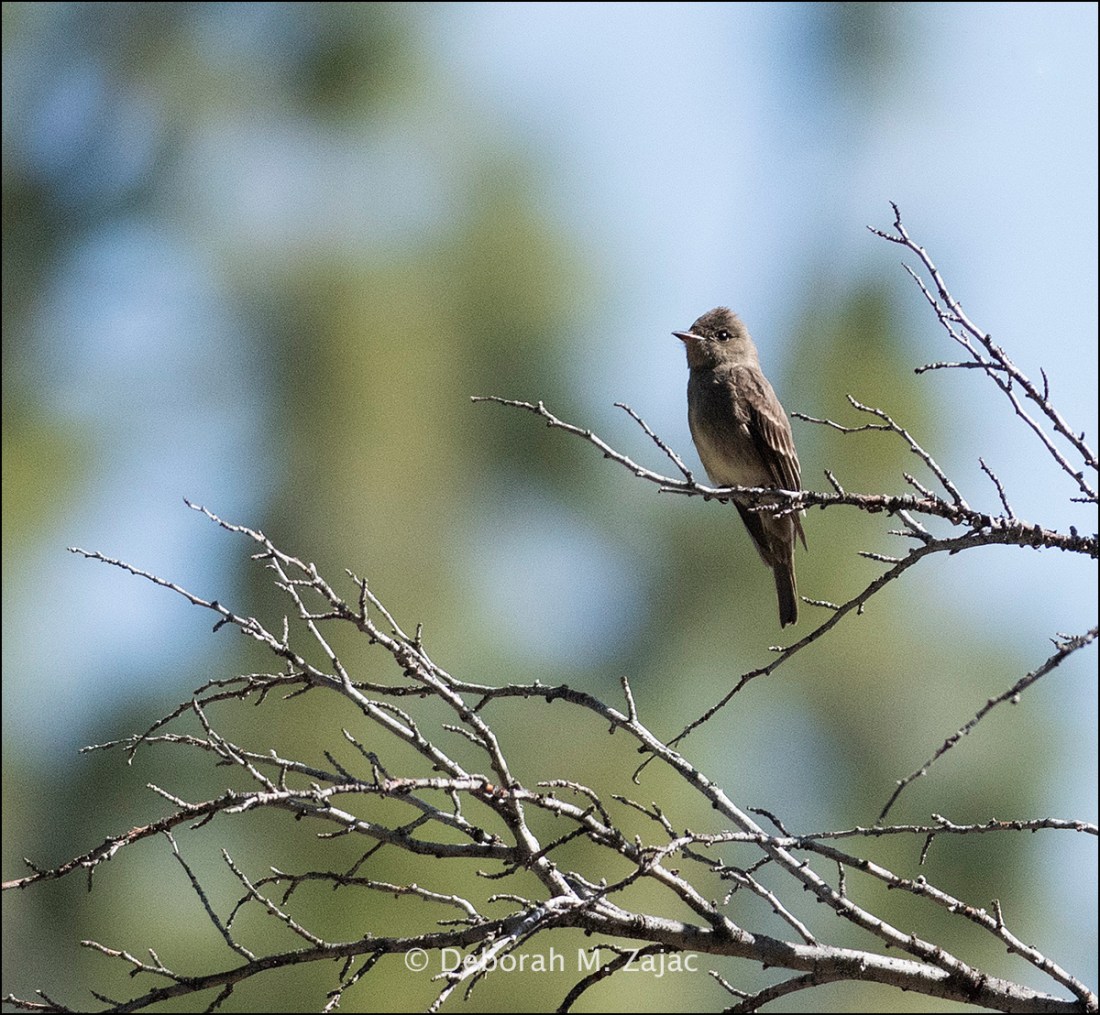
I don’t think I’ve ever shared this bird before. This is an image I made last summer.

Western Wood Peewee

Fun Facts:

  • The breeding ranges of the nearly identical Eastern and Western Wood-Pewees overlap only in a very narrow zone in the Great Plains. Despite the birds’ physical similarity, no evidence has ever been found that the two species interbreed in that area—perhaps because their songs sound so different.
  • Where exactly the Western Wood-Pewee goes in the winter is still a mystery. Both Eastern and Western Wood-Pewees migrate to northern South America, but because they look so similar and they don’t call much on the wintering ground it’s hard to say for certain where each species spends its winter.
  • The scientific name of the Western Wood-Pewee is Contopus sordidulusContopus comes from the Greek word kontos which means short and pous which means foot—referring to the relatively short legs on Contopus flycatchers. Sordidulus means dirty or unkempt, a reference to the dusky brown wash to the breast and flanks.
  • The Western Wood-Pewee makes a clapping noise with its bill while chasing and attacking intruders in nest defense.
  • The oldest recorded Western Wood-Pewee was a female, and at least 8 years, 1 month old when she was recaptured and rereleased during banding operations in California in 2002. She had been banded in the same state in 1995.
  • Fun Facts gleaned from allaboutbirds.org

Nikon D810| Nikkor 300mm f/4| PS CC

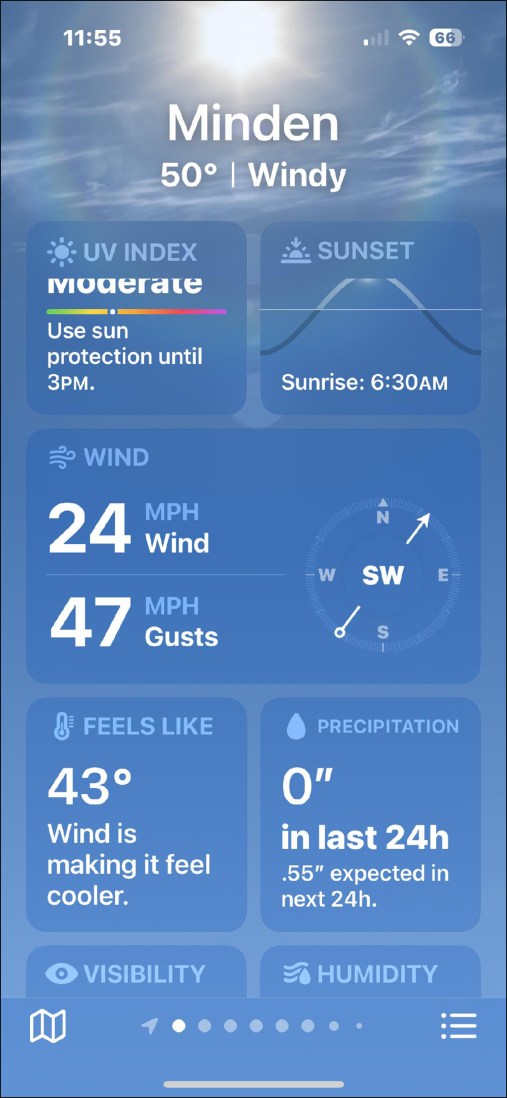
We’ve been under a high wind and storm watch since yesterday morning. As I write this the wind is howling at 24 mph with gusts up to 47 mph. They’re saying we may get 8 inches of snow between now and Saturday. The sun is out, the clouds are big white and fluffy in some spots to the east but, gray and looming over the Sierras to the west. As you can imagine we’re hanging out at home.

I was planning to go birding with a local birding group this morning, but due to the weather that’s been rescheduled.

I’ve been re-watching The Expanse while waiting for the new season of Vera to be released on Wednesday. After I finish The Expanse I’ll be binge watching Vera if all the episodes are available, and I’m still working my way through the Woodlands and Trees Ready to Paint class in a book. I finished exercise 6 but, the little wood bridge over the creek came out really wonky…even more wonky than my normal wonky so, I’m on my second attempt with that one, and I mixed up a dark green shade of paint that I don’t like on this second pass, so they’ll probably be a 3rd attempt at mastering exercise #6. 😀

That’s me all caught up. What’s happening with you?

more to come…

Friday’s Feathered Friends- Ruddy’s got the Blues

Copyright ©2024 Deborah M. Zajac. ALL RIGHTS RESERVED. 

PLEASE DO NOT USE MY IMAGES WITHOUT EXPRESSED WRITTEN PERMISSION.

Things are changin’, Ruddy is showing off his Blues and Ruddy feathers for Spring and hoping he’s got what it takes to persuade a cute little female Ruddy Duck to be his love for the season.

Ruddy Duck in Breeding Plumage

Fun Facts:

    • Ruddy Ducks lay big, white, pebbly-textured eggs—the largest of all duck eggs relative to body size. Energetically expensive to produce, the eggs hatch into well-developed ducklings that require only a short period of care.
    • The bright colors and odd behavior of male Ruddy Ducks drew attention from early naturalists, though they didn’t pull any punches. One 1926 account states, “Its intimate habits, its stupidity, its curious nesting customs and ludicrous courtship performance place it in a niche by itself…. Everything about this bird is interesting to the naturalist, but almost nothing about it is interesting to the sportsman.”
    • Pleistocene fossils of Ruddy Ducks, at least 11,000 years old, have been unearthed in Oregon, California, Virginia, Florida, and Illinois.
    • Ruddy Ducks are very aggressive toward each other and toward other species, especially during the breeding season. They are even known to chase rabbits feeding on the shore.
    • Though Ruddy Ducks are native to the Americas, one population became established in England after captive ducks escaped in 1952. This population grew to about 3,500 individuals by 1992, and now appears to be expanding into the Netherlands, France, Belgium, and Spain.
    • Ruddy Ducks get harassed by Horned Grebes, Pied-billed Grebes, and American Coots during the breeding season. The grebes sometimes attack Ruddy Ducks from below the water, a behavior known as “submarining.”
    • The oldest Ruddy Duck on record was a male and at least 13 years, 7 months old when he was found in Oregon in 1964. He was banded in British Columbia in 1951.

Fun Facts gleaned from https://www.allaboutbirds.org/guide/Ruddy_Duck/

Nikon D810| Nikkor 500mm PF| PS CC 25.4

more to come…