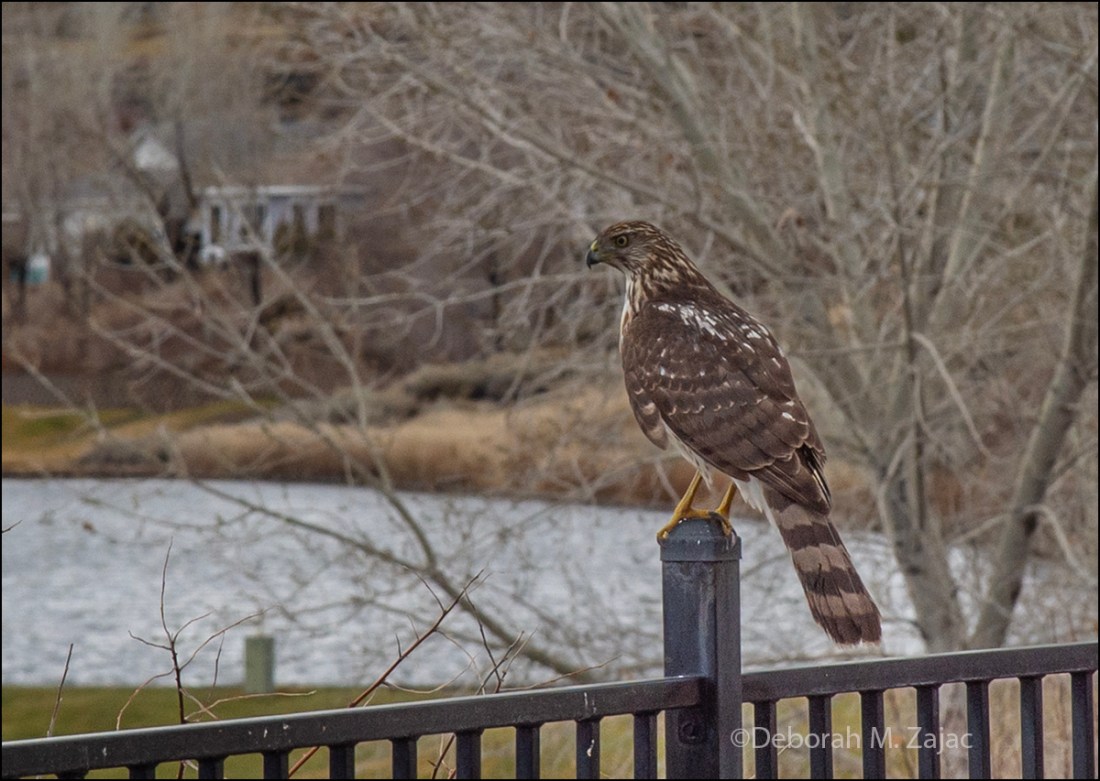
Friday’s Feathered Friends- Greater Roadrunner

Copyright ©2025 Deborah M. Zajac. ALL RIGHTS RESERVED.

PLEASE DO NOT USE MY IMAGES WITHOUT EXPRESSED WRITTEN PERMISSION.

Last month about a week before Thanksgiving I went on a quick road trip to Las Vegas/Henderson with a girl-friend. She was wanting to see her parents who live in Vegas, and I was wanting to go to Henderson which is just 20 minutes south of downtown Vegas to do some birding. So we got a plan together and went. While she was hanging out with her parents I was birding at the Henderson Bird Viewing Preserve. I was hoping to see the Long-tailed Duck that is back this winter, alas, I did not see it, but I had a fantastic meeting with a Greater Roadrunner.

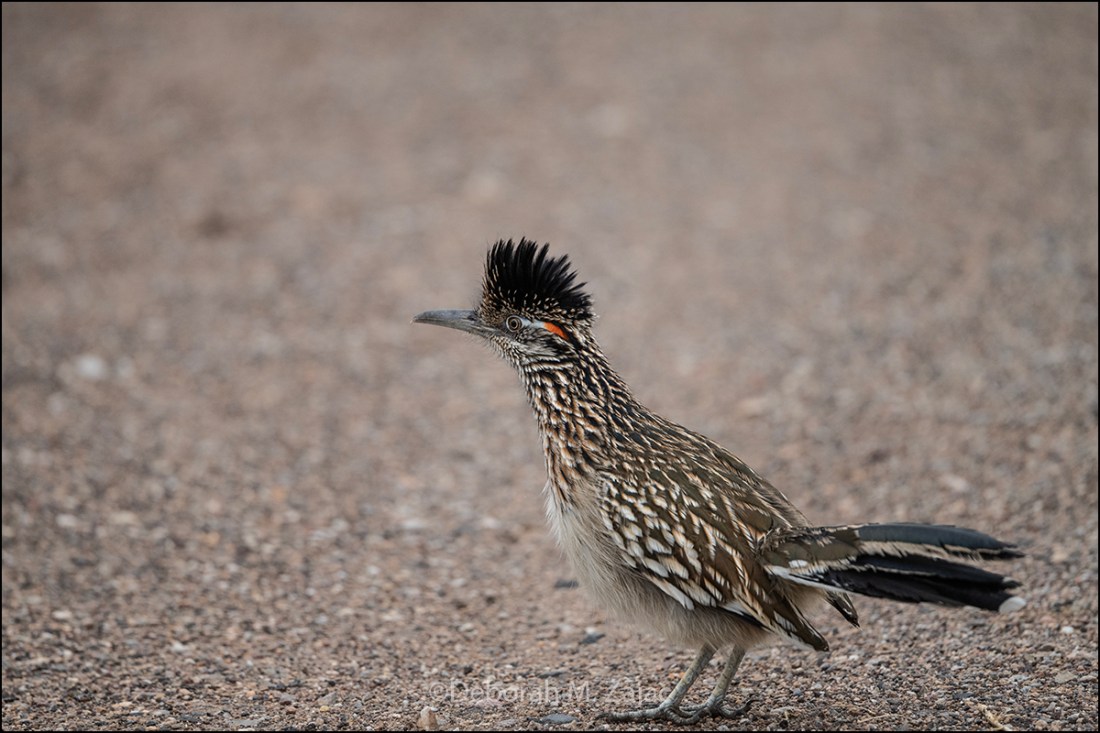
I was walking up a path and turned a corner and there it was standing in the middle of the path. I stopped. It jumped back and looked at me. There we stood eyeing each other up. When it was apparent it wasn’t going to flee and be flighty I started making photographs of it. After a minute it approached me! I backed up to keep it in my focal range. It was too close!!! Such a problem to have right? 😂 This profile is the best image I made showing its colorful skin behind its eye. The colors say Southwest to me.

©Deborah M. Zajac | http//:circadianreflections.com
Greater Roadrunner

I didn’t back up enough because as you see I nearly cut off his feet!

Here it is showing me its lovely long tail.

©Deborah M. Zajac | http//:circadianreflections.com
Greater Roadrunner- I backed up more for to make this image.

I can’t tell if it is a male or female. I do know it’s an adult though. It stayed on the path walking back and forth in front of me, and crossing the path from side to side for nearly 5 minutes! I have quite a few images of it. I think it must have had a nest nearby guarding it perhaps? Anyway, I figured I’d better get moving and let the Roadrunner get back to doing whatever it does. I thanked it for such a lovely encounter and as quietly as I could walked up the path then when the Roadrunner thought I was too close it darted into the bushes.

That was only the 3rd Roadrunner I’ve ever seen and by far the best encounter with one ever!

Fun Facts: Gleaned from AllAboutBirds.org

    • For a generation of Americans, the familiar “beep, beep” of Warner Brothers’ cartoon Roadrunner was the background sound of Saturday mornings. Despite the cartoon character’s perennial victories over Wile E. Coyote, real-life coyotes present a real danger. The mammals can reach a top speed of 43 miles an hour—more than twice as fast as roadrunners.
    • Roadrunners have evolved a range of adaptations to deal with the extremes of desert living. Like seabirds, they secrete a solution of highly concentrated salt through a gland just in front of each eye, which uses less water than excreting it via their kidneys and urinary tract. Moisture-rich prey including mammals and reptiles supply them otherwise-scarce water in their diet. Both chicks and adults flutter the unfeathered area beneath the chin (gular fluttering) to dissipate heat.
    • Greater Roadrunners eat poisonous prey, including venomous lizards and scorpions, with no ill effect, although they’re careful to swallow horned lizards head-first with the horns pointed away from vital organs. Roadrunners can also kill and eat rattlesnakes, often in tandem with another roadrunner: as one distracts the snake by jumping and flapping, the other sneaks up and pins its head, then bashes the snake against a rock. If it’s is too long to swallow all at once, a roadrunner will walk around with a length of snake still protruding from its bill, swallowing it a little at a time as the snake digests.
    • Based on banding records, the oldest roadrunner was at least 7 years old.
    • Roadrunners hold a special place in Native American and Mexican legends and belief systems. The birds were revered for their courage, strength, speed, and endurance. The roadrunner’s distinctive X-shaped footprint—with two toes pointing forward and two backward—are used as sacred symbols by Pueblo tribes to ward off evil. The X shape disguises the direction the bird is heading, and is thought to prevent evil spirits from following.

Isn’t that folklore about its X shaped footprint interesting! I didn’t know that until I read the fun facts. 😊

I hope you all have a lovely week-end. Beep, beep!

more to come…

Friday’s Feathered Friends- Hermit Thrush

Copyright ©2025 Deborah M. Zajac. ALL RIGHTS RESERVED.

PLEASE DO NOT USE MY IMAGES WITHOUT EXPRESSED WRITTEN PERMISSION.

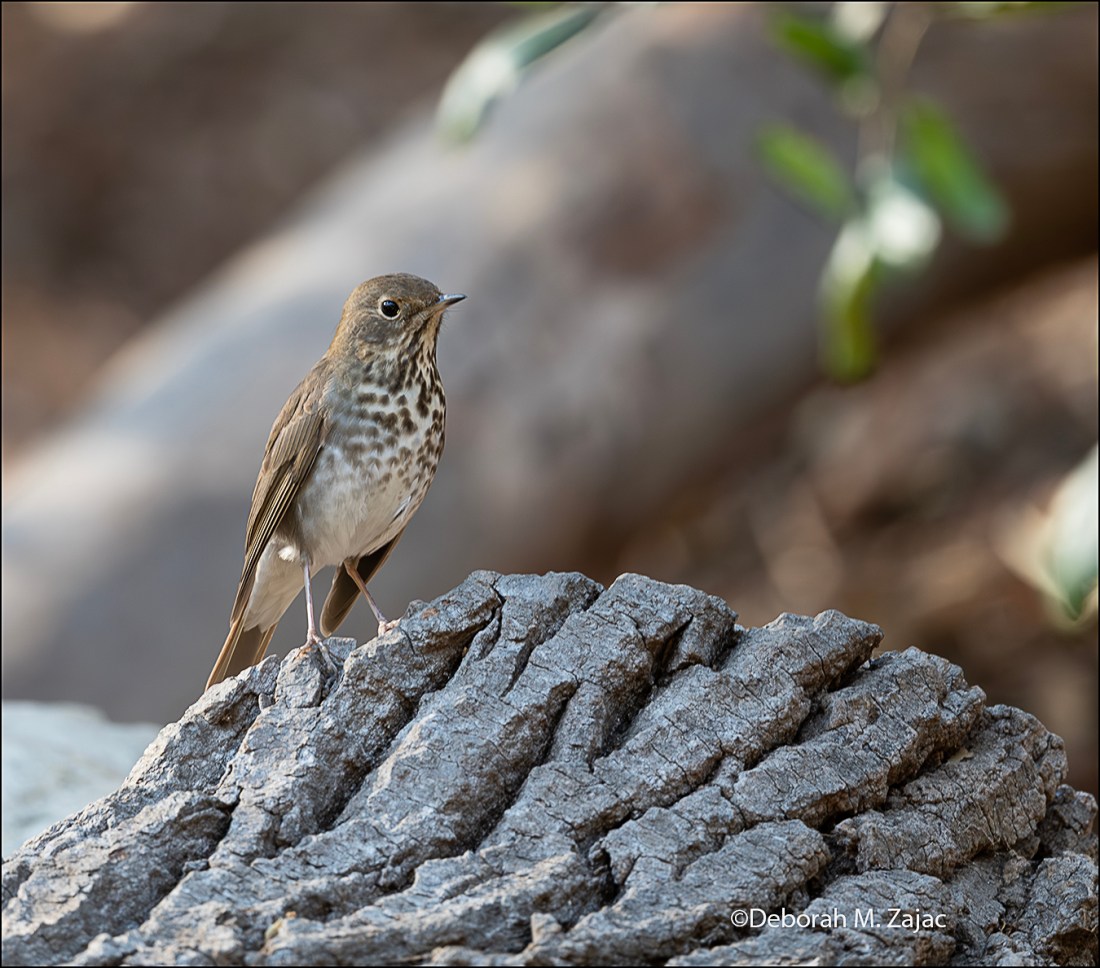
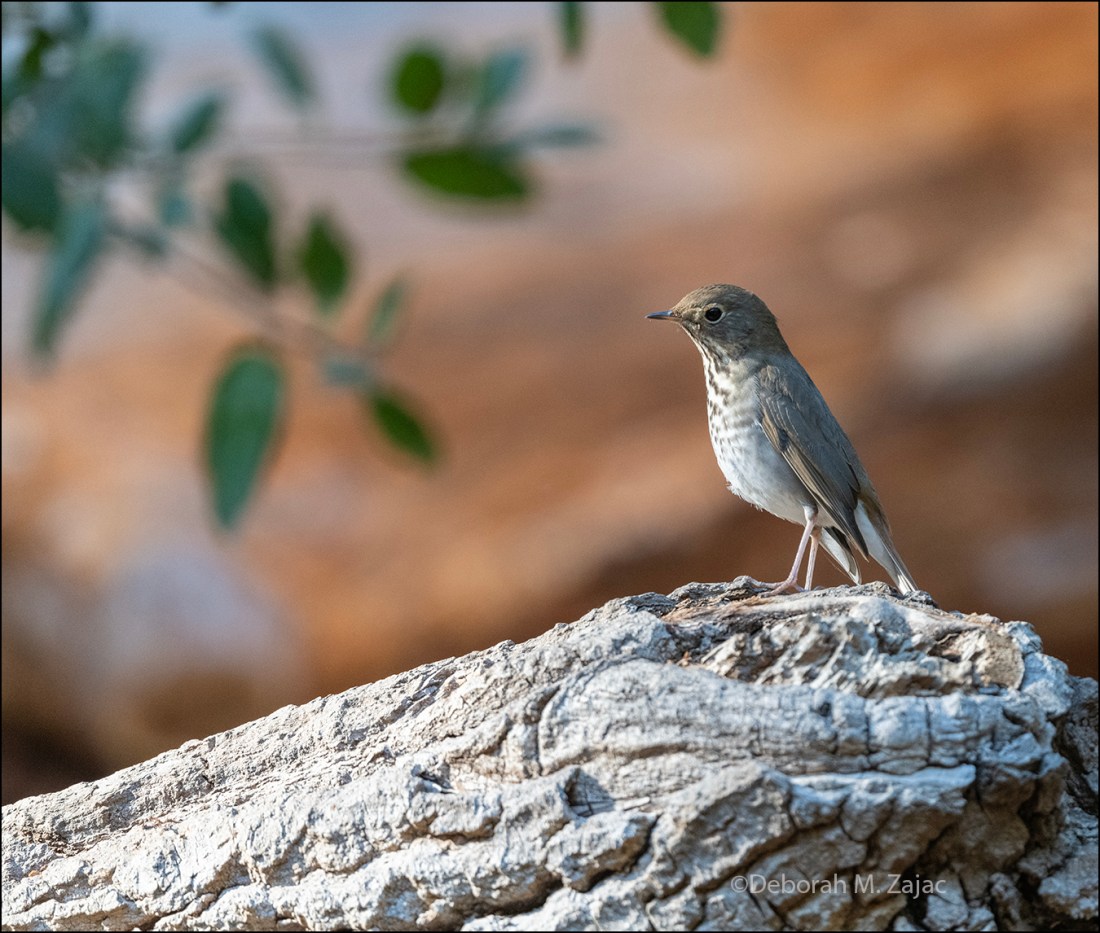
While we were visiting the Santa Barbara Botanical gardens recently He-Man stopped in a little garden rest area with a bench to retie his shoe and out popped a Hermit Thrush! I was so excited because I don’t see these shy birds too often.

©Deborah M. Zajac | http//:circadianreflections.com Image

We got several minutes of good looks at it while it was foraging around area.

Fun Facts-

  • Males usually gather food for the nest, while females feed the nestlings. The young birds start by eating bits of larvae, then grasshoppers, moths, and spiders. They sometimes eat small vertebrates such as salamanders.
  • Hermit Thrushes usually make their nests in and around trees and shrubs, but they can also get more creative. Nests have been found on a cemetery grave, on a golf course, and in a mine shaft.
  • Hermit Thrushes sometimes forage by “foot quivering,” where they shake bits of grass with their feet to get insects. They also typically begin to quiver their feet as they relax after seeing a flying predator.
  • East of the Rocky Mountains the Hermit Thrush usually nests on the ground. In the West, it is more likely to nest in trees.
  • Hermit Thrushes make several distinct calls around their nests. They will sometimes make a rising byob sound similar to a mewing kitten. Females frequently rearrange their eggs while making quit quit noises. In the morning, two adults meeting near the nest will greet each other with a pweet pweet call.
  • Hermit Thrushes are part of a genus (Catharus) that includes four other similar thrushes in North America: the Veery, Swainson’s Thrush, Gray-cheeked Thrush, and Bicknell’s Thrush. In the northeastern mountains, the Veery lives at the lowest elevations, Hermit Thrushes at middle elevations, and Swainson’s Thrushes at high elevations.
  • The oldest recorded Hermit Thrush was at least 10 years, 10 months old when it was recaptured and rereleased during banding operations in Maryland in 2009. It was originally banded there in 1999.

Fun facts gleaned as always from allaboutbirds.org

I’ll be a little late replying to your comments as I’m out birding this morning.

Nikon D850|Nikkor 500mm PF-e lens

more to come…

Friday’s Feathered Friends- The Anhinga

Copyright ©2024 Deborah M. Zajac. ALL RIGHTS RESERVED.

PLEASE DO NOT USE MY IMAGES WITHOUT EXPRESSED WRITTEN PERMISSION.

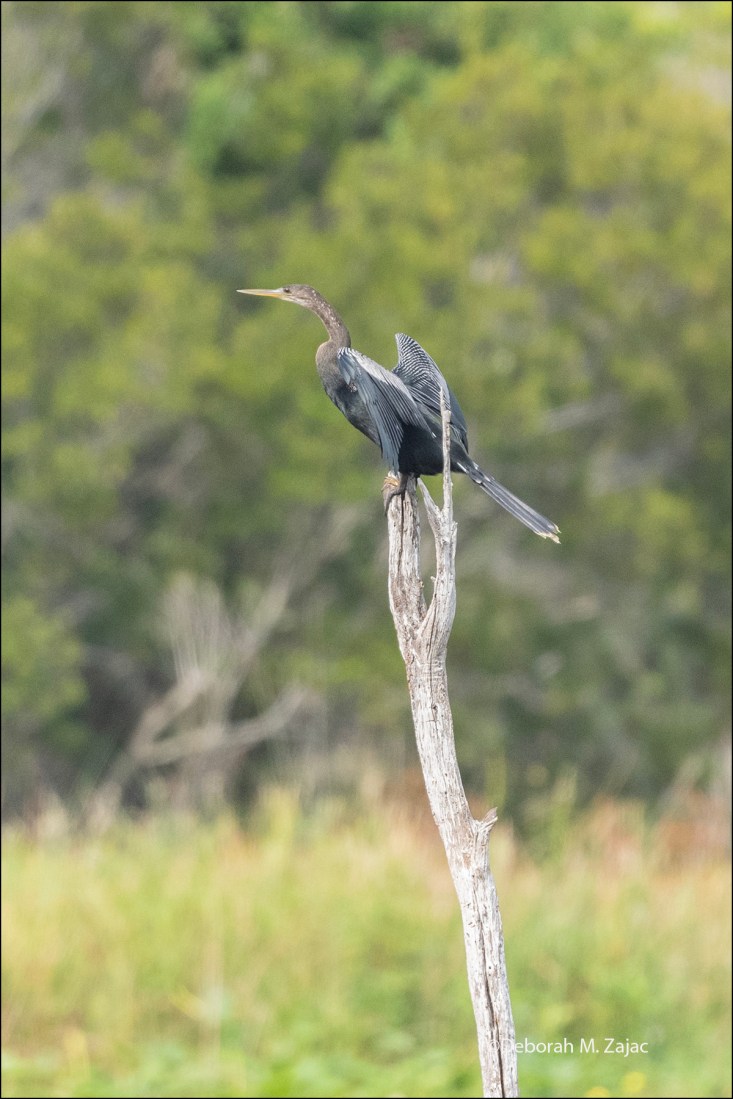
The Anhinga was one of 4 birds I really wanted to see while I was in Florida in September and I saw 3 of them! One male and two Females…I think.

It’s another pre-historic cool looking bird.

I think this is a male because his neck is black. He’s drying his wings.

©Deborah M. Zajac | http//:circadianreflections.com Image

Here’s the female also drying out her wings. Like Cormorants they don’t have waterproof feathers so they get on a perch or land and spread them open to dry them out.

©Deborah M. Zajac | http//:circadianreflections.com
As I crept closer to her to get a better shot I spooked her and off she flew.

Fun Facts:

  • The Anhinga’s distinctive shape earned it the nickname “water turkey” for its turkeylike tail, and “snake bird” for its long snakelike neck as it slithers through the water.
  • Unlike most waterbirds, the Anhinga doesn’t have waterproof feathers. While that may seem like a disadvantage for their watery lifestyle, their wet feathers and dense bones help them slowly submerge their bodies under the water so they can slyly stalk fish.
  • The name Anhinga comes from the Tupi Indians in Brazil, meaning “devil bird” or “evil spirit of the woods.”
  • The oldest recorded Anhinga was at least 12 years old when it was shot in Louisiana in 1948.

Fun facts gleaned from https://www.allaboutbirds.org/guide/Anhinga/overview

We may have a break from the wind and beat the rain this morning so I’m going birding with friends which means I’ll be a bit late checking out your blogs, and reading comments.

more to come…

Something for Sunday- First Snow in the Valley

Copyright ©2024 Deborah M. Zajac. ALL RIGHTS RESERVED.

PLEASE DO NOT USE MY IMAGES WITHOUT EXPRESSED WRITTEN PERMISSION.

I woke up Friday morning pretty early to go birding with a group I’m in. When I opened the garage door to leave I discovered there was snow on the ground and flurries still swirling.

I was heading about an hour northeast from home so, I checked my email to make sure they hadn’t canceled the outing…they hadn’t so off I went.

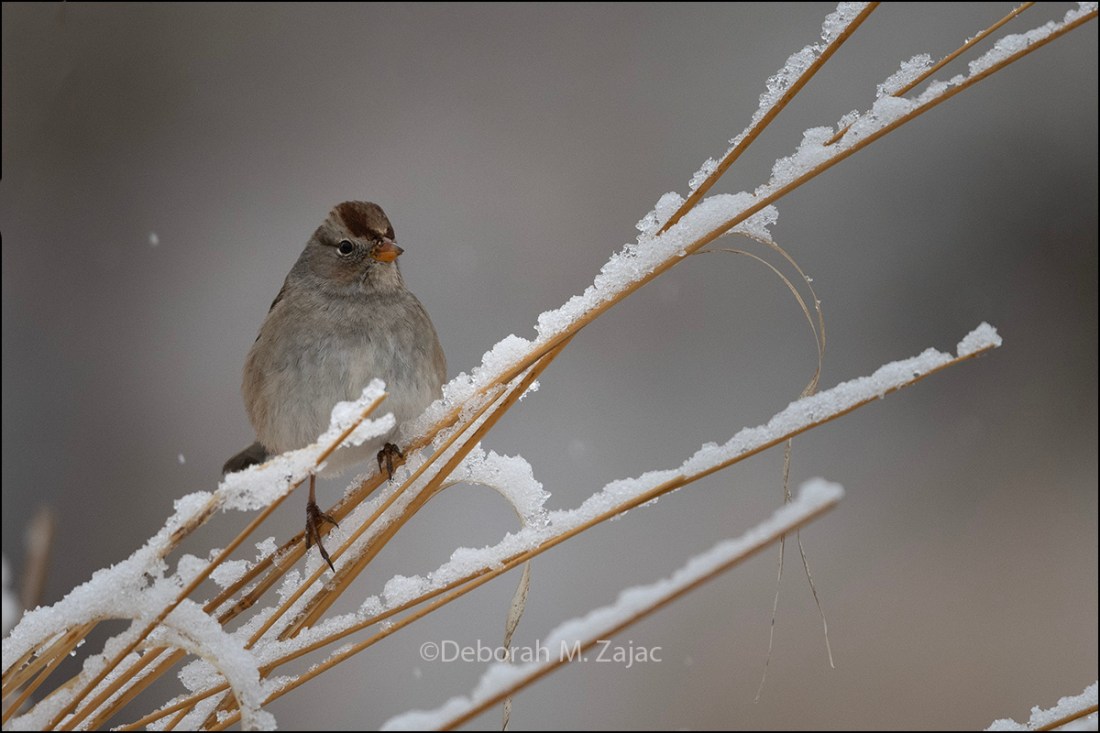
It wasn’t snowing when I arrived at the meeting spot but, while birding the snow started to fall pretty heavy. It wasn’t in the weather forecast the day before! It was still a good morning of birding. We saw 22 species of birds. One White-crown Sparrow favored us with a nice look perched on snowy grass.

©Deborah M. Zajac | http//:circadianreflections.com Image

By the time we left it had quit snowing so my drive home was easy, and while the snow was sticking to the ground where I was birding it hadn’t had home. The upcoming 10 day forecast looks like we’re snow free.

Nikon D850| Nikkor 500mm| PS CC

more to come…

Friday’s Feathered Friends-Birds!

Copyright ©2024 Deborah M. Zajac. ALL RIGHTS RESERVED.

PLEASE DO NOT USE MY IMAGES WITHOUT EXPRESSED WRITTEN PERMISSION.

It’s been awhile since I shared any birds so I’m going to share several I saw while in Florida this past September. It was a fantastic trip. I saw 21 new to me birds aka “Lifers”. I won’t share all of them in this post. 😊

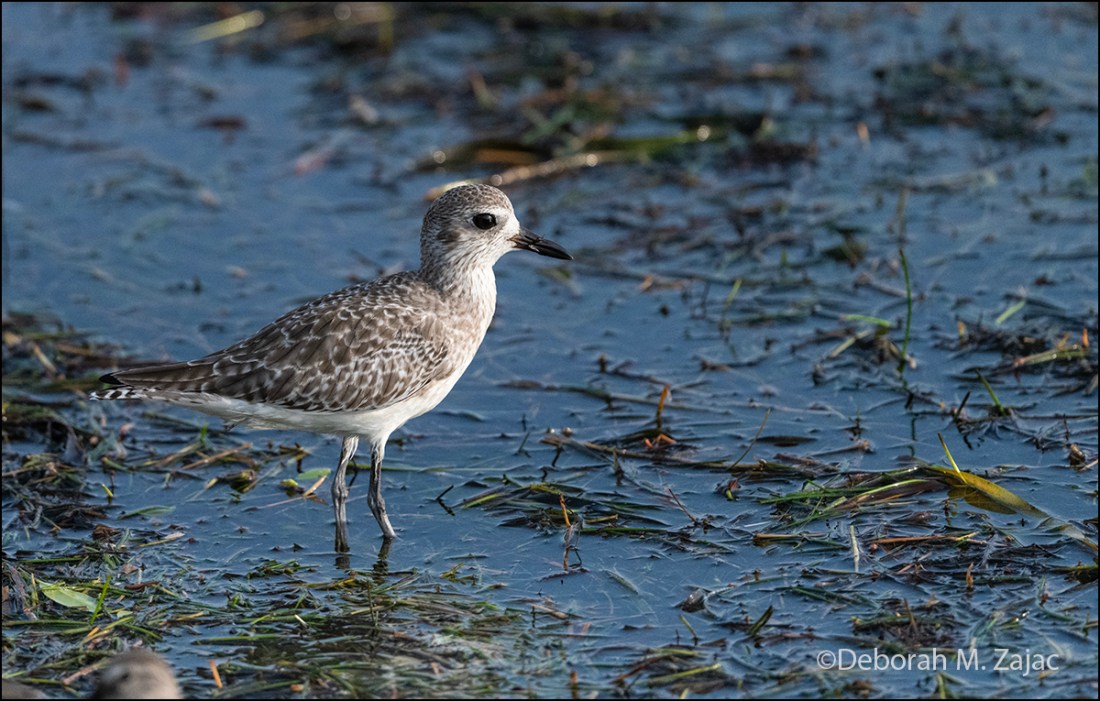
Black-bellied Plover

©Deborah M. Zajac | http//circadianreflections.com Image

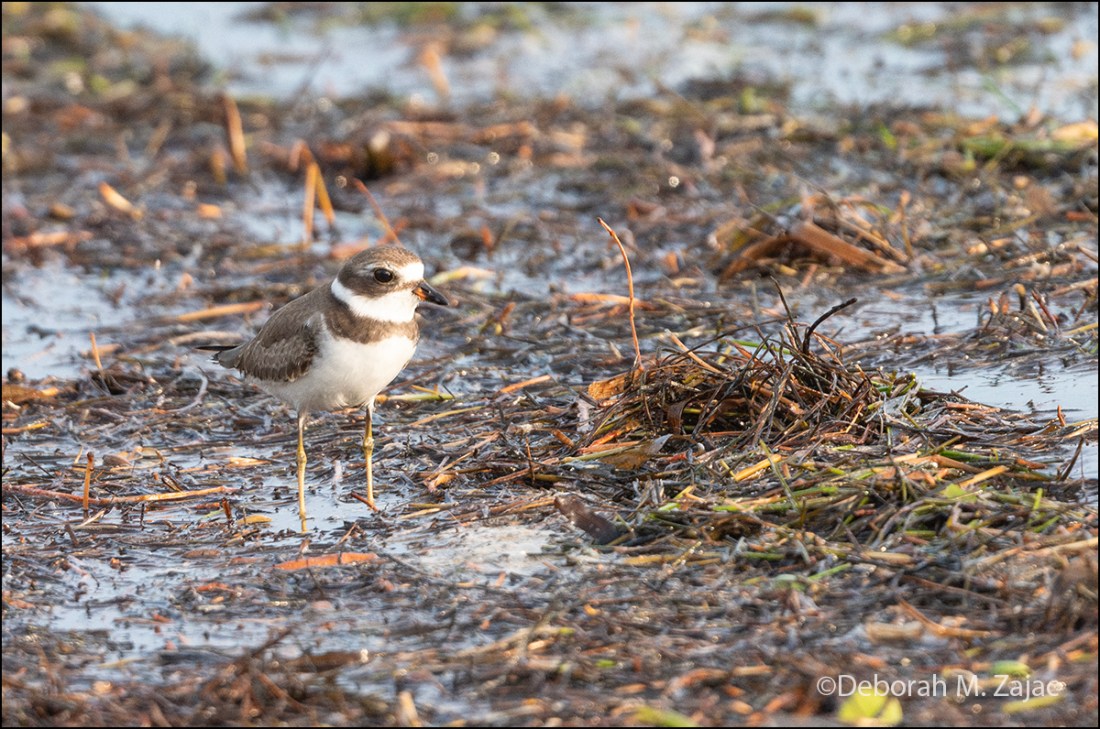
Semipalmated Plover

©Deborah M. Zajac | http//circadianreflections.com Image

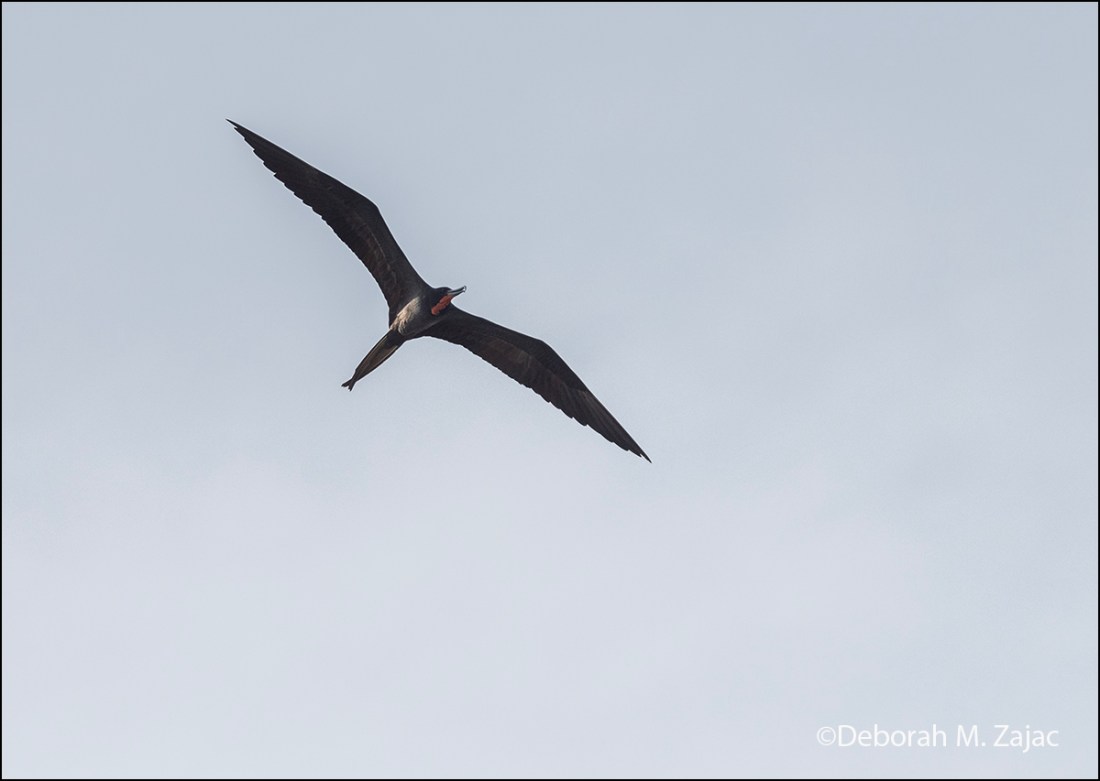
A Magnificent Frigatebird. This was the first time I’d ever seen it in the United States. I have seen it in Mexico before.

©Deborah M. Zajac | http//circadianreflections.com Image

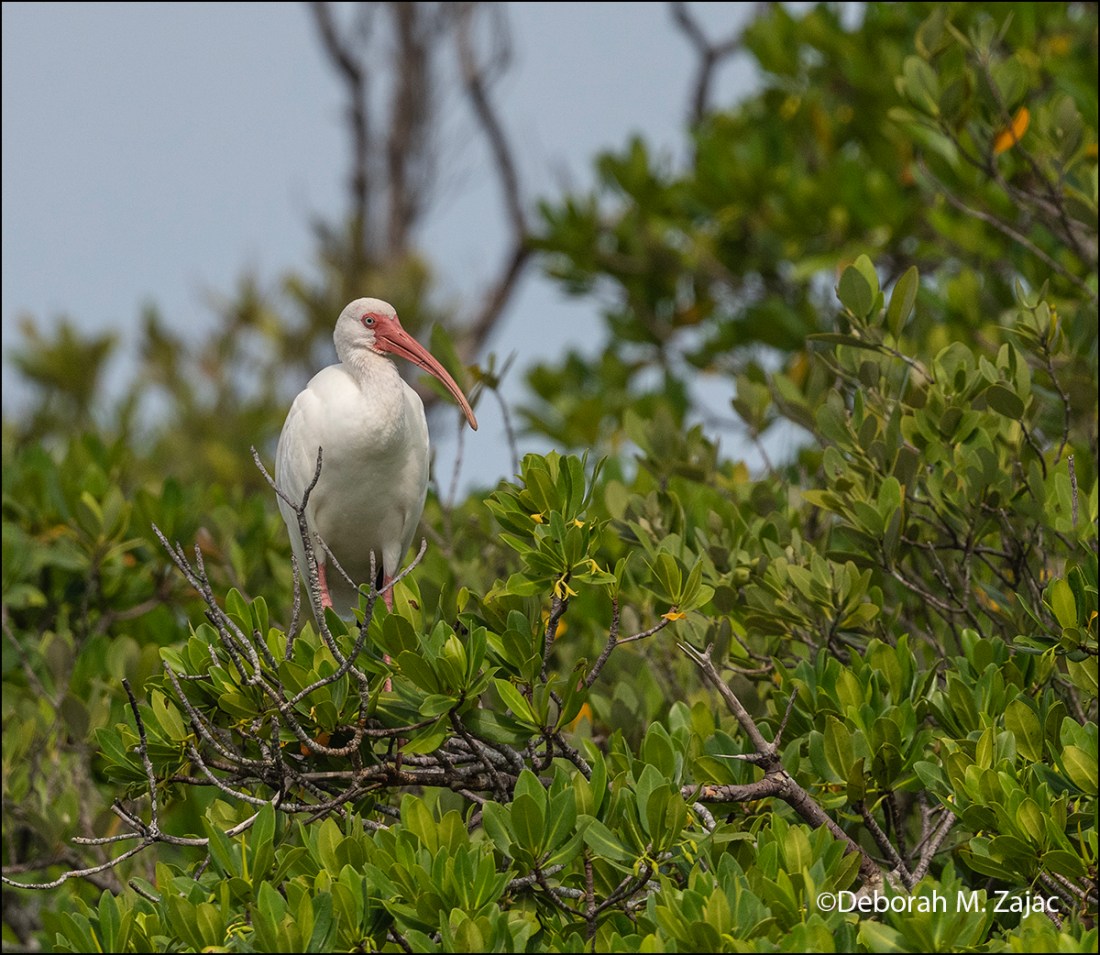
And a White Ibis

©Deborah M. Zajac | http//circadianreflections.com
Image

Aren’t they great? I’m still excited to have seen them.

How’d you all do with the time change for those of you in states and places that end Daylight Savings Time? How many clocks did you have to reset? We have 8 clocks we needed to change including the thermostat and our cars. I’ve been waking up earlier than normal so back to my natural rhythm at last!

I hope you all have a lovely week-end.

Nikon D850|Nikkor 500mm| PS CC

more to come…

Whatever Weds. Purple

Copyright ©2024 Deborah M. Zajac. ALL RIGHTS RESERVED.

PLEASE DO NOT USE MY IMAGES WITHOUT EXPRESSED WRITTEN PERMISSION.

©Deborah M. Zajac | http//circadianreflections.com Image

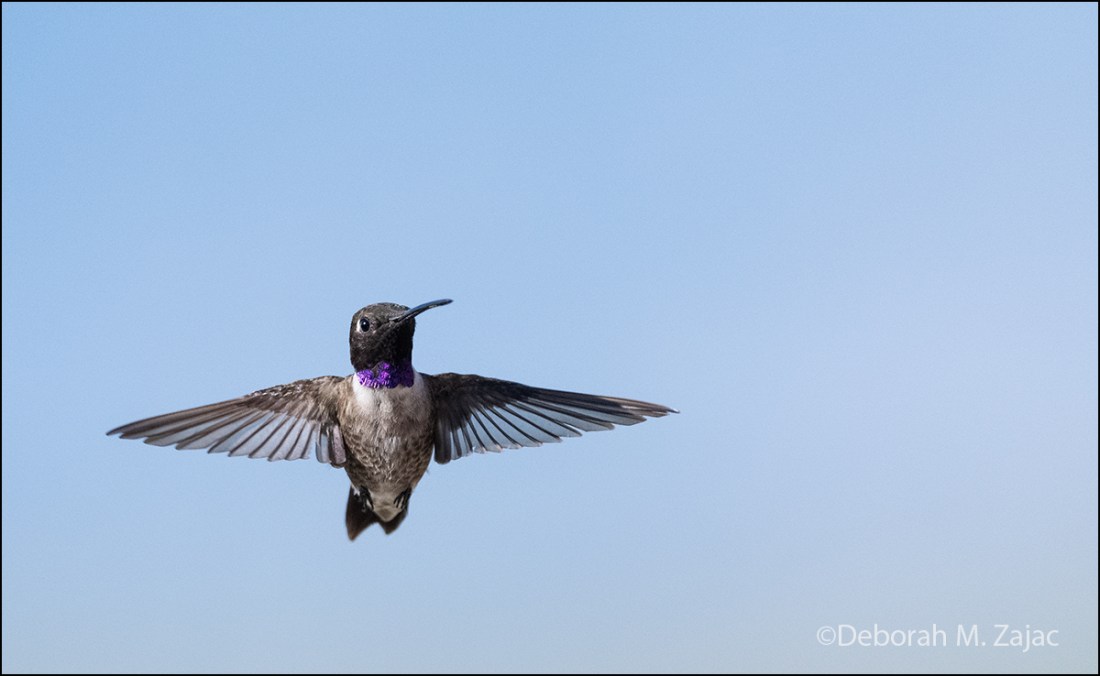
Black-chinned Hummingbird-male

Nikon D850| Nikkor 500mm PF-E

more to come…

Whatever Weds. Owls

Copyright ©2024 Deborah M. Zajac. ALL RIGHTS RESERVED. 

PLEASE DO NOT USE MY IMAGES WITHOUT EXPRESSED WRITTEN PERMISSION.

The first week of March I started hiking out to see if a Great Horned Owl had returned to a nest she has used many times in the past. She wasn’t there. March 9th I returned and she was there!

Great Horned Owl-Female nesting

It was time to start looking for the Owlets. I returned on the 19th, 25th, and 26th of March and saw no owlets but, hoped Mama was sitting on eggs.

I returned on April 4th, 14th, and on April 20th a birding girlfriend sent me an email telling me she went by and there were two Owlets! I went the following day, the 21st. When I arrived I only saw Mama no Owlets. So I birded the area and waited and waited. After an hour or so I saw a little white fuzzy head stirring behind Mama then not too long after that the cutest 2 Owlets you’ve ever seen popped up to see what was happening in their new world. They must have just hatched days before by the looks of them.

Great Horned Owl Female with her Owlets in the nest.

They barely could keep their eyes open. They were so tired. Mama had one eye on me the whole time though.

I’ll be making regular trips over to watch them grow, and hopefully this year will be the year I see them branching. I’ve never seen the previous year’s owlets do that here, and I’ve also never seen the Male GH Owl who I know has to be nearby.

Spring is here so I put out the outdoor cushions Monday morning and wouldn’t you know it Tuesday morning it rained. 🤣

I hope your week is going well.

Nikon D850| Nikkor 500mm PF-e| PS CC

more to come…