PLEASE DO NOT USE MY IMAGES WITHOUT EXPRESSED WRITTEN PERMISSION.
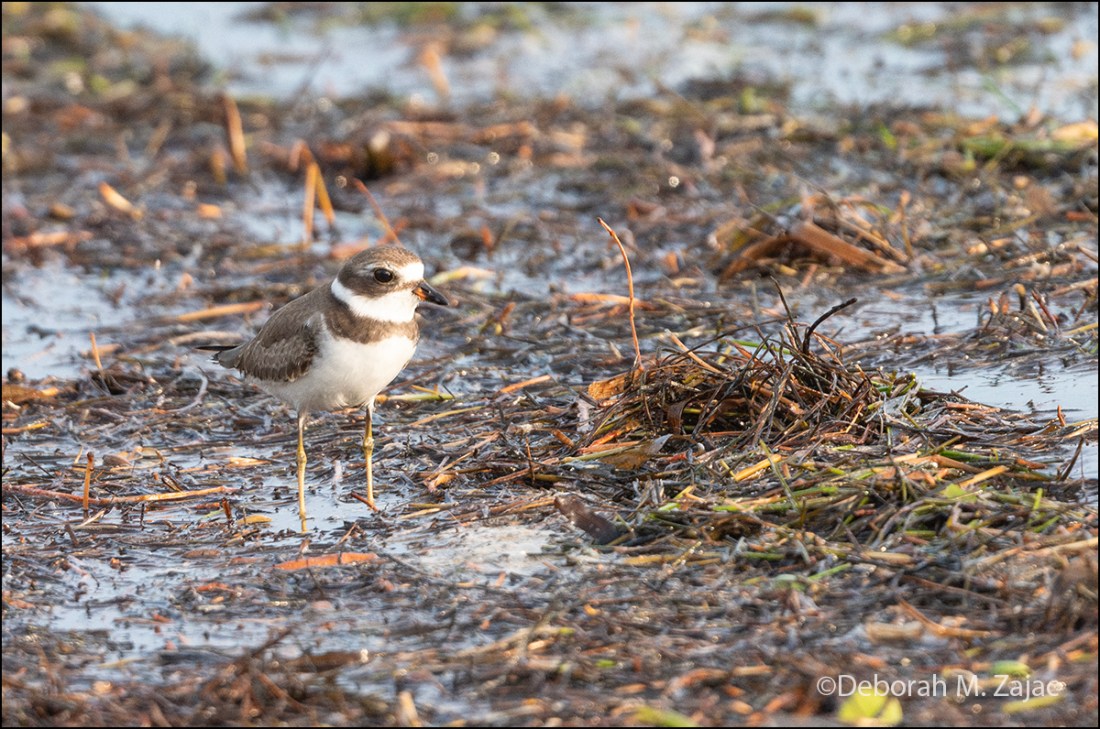
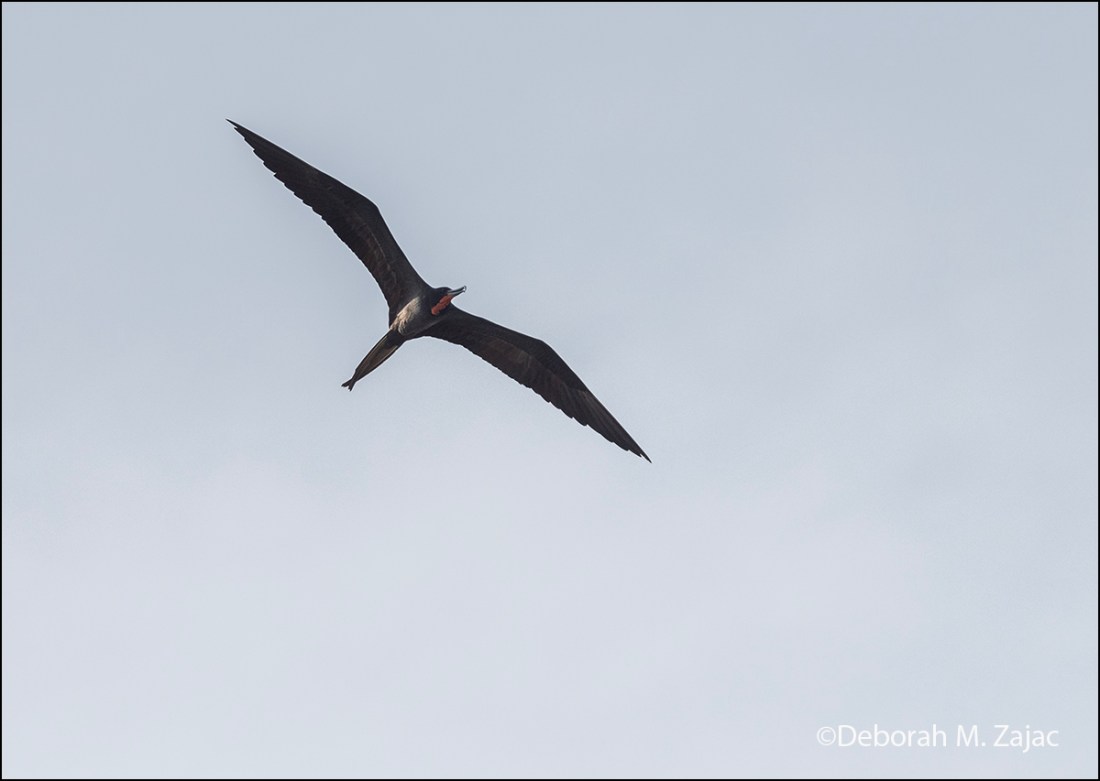
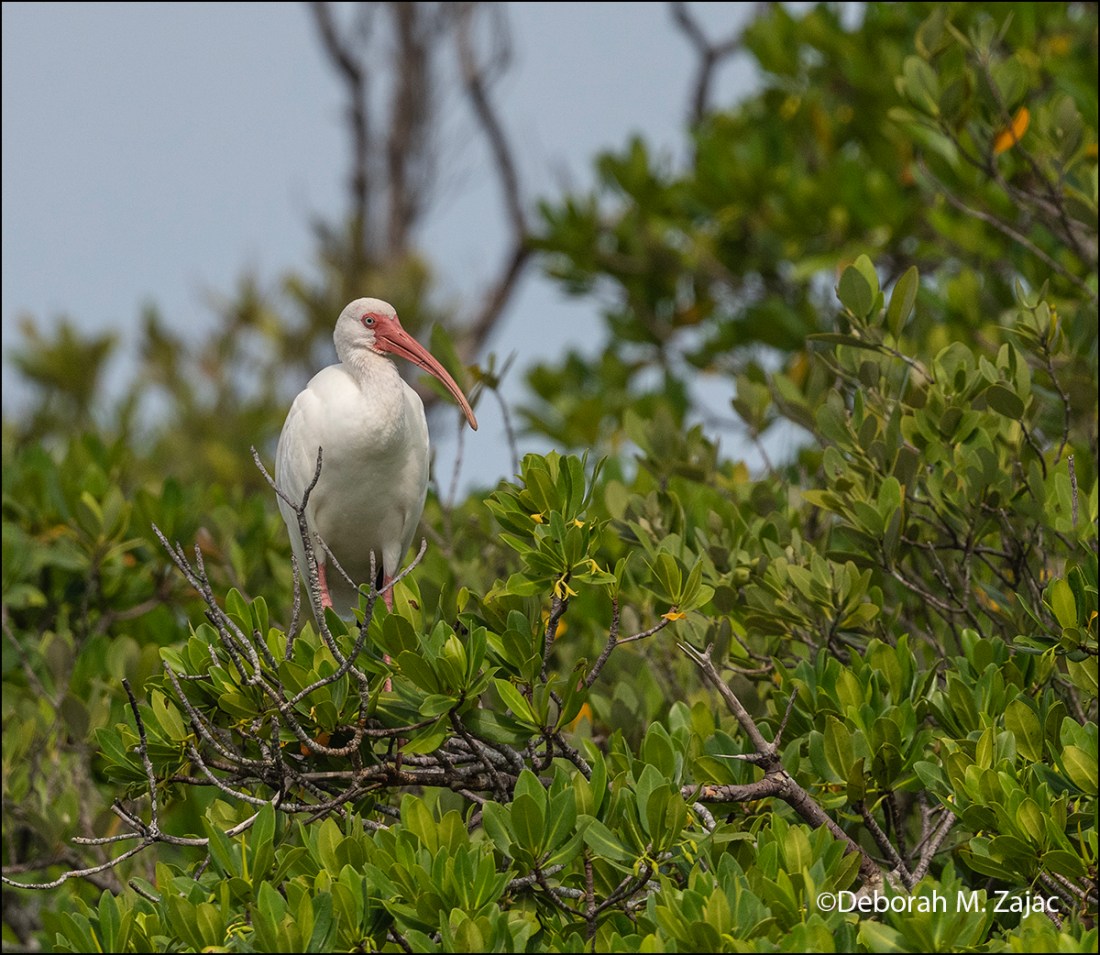
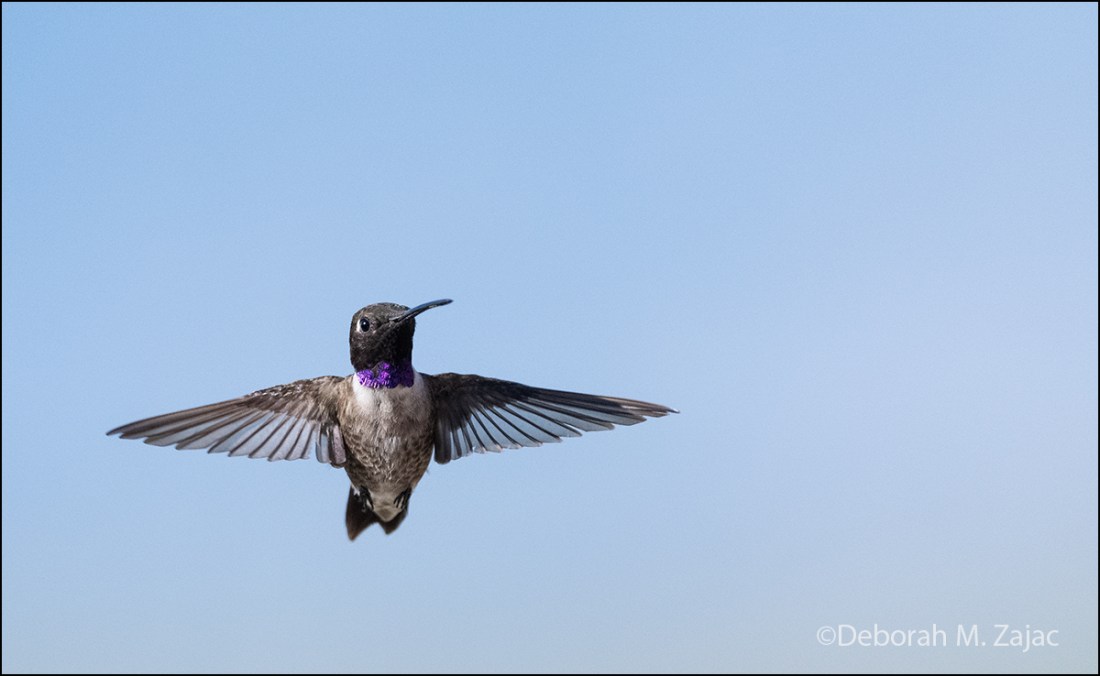
It’s been awhile since I shared any birds so I’m going to share several I saw while in Florida this past September. It was a fantastic trip. I saw 21 new to me birds aka “Lifers”. I won’t share all of them in this post. 😊
Aren’t they great? I’m still excited to have seen them.
How’d you all do with the time change for those of you in states and places that end Daylight Savings Time? How many clocks did you have to reset? We have 8 clocks we needed to change including the thermostat and our cars. I’ve been waking up earlier than normal so back to my natural rhythm at last!
PLEASE DO NOT USE MY IMAGES WITHOUT EXPRESSED WRITTEN PERMISSION.
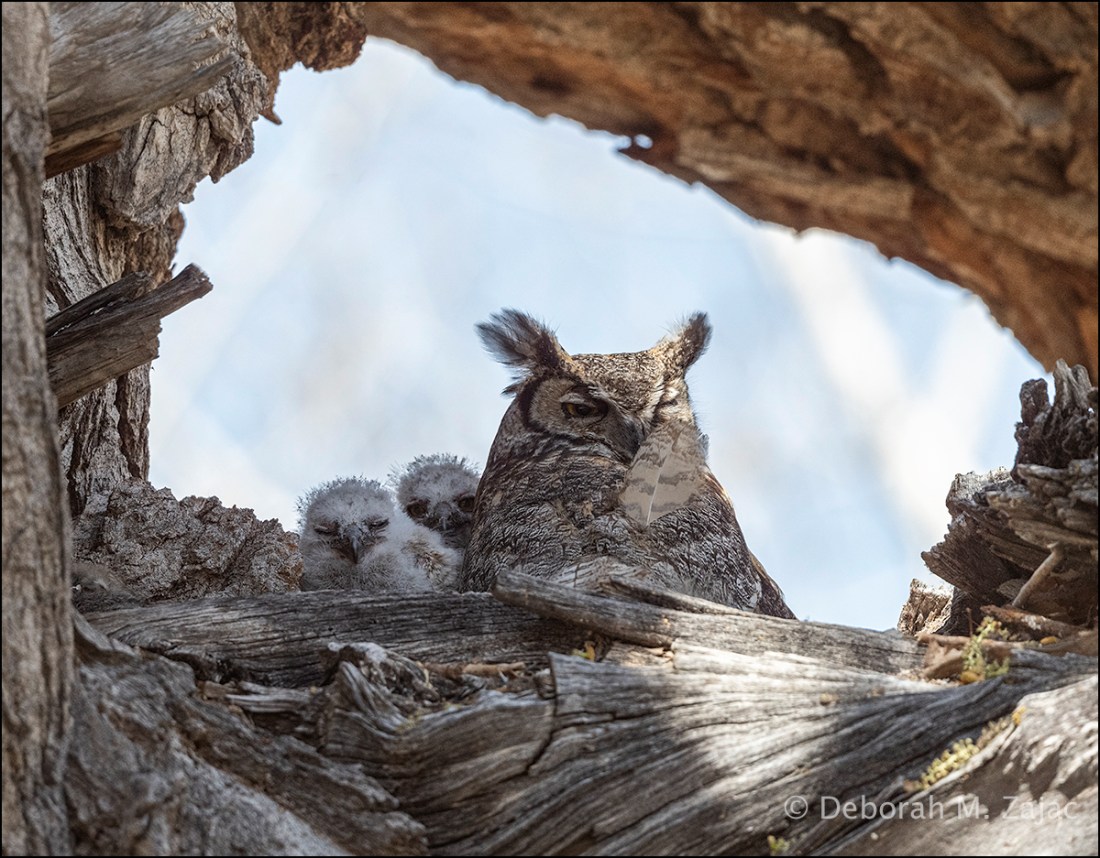
The first week of March I started hiking out to see if a Great Horned Owl had returned to a nest she has used many times in the past. She wasn’t there. March 9th I returned and she was there!
Great Horned Owl-Femalenesting
It was time to start looking for the Owlets. I returned on the 19th, 25th, and 26th of March and saw no owlets but, hoped Mama was sitting on eggs.
I returned on April 4th, 14th, and on April 20th a birding girlfriend sent me an email telling me she went by and there were two Owlets! I went the following day, the 21st. When I arrived I only saw Mama no Owlets. So I birded the area and waited and waited. After an hour or so I saw a little white fuzzy head stirring behind Mama then not too long after that the cutest 2 Owlets you’ve ever seen popped up to see what was happening in their new world. They must have just hatched days before by the looks of them.
Great Horned Owl Female with her Owlets in the nest.
They barely could keep their eyes open. They were so tired. Mama had one eye on me the whole time though.
I’ll be making regular trips over to watch them grow, and hopefully this year will be the year I see them branching. I’ve never seen the previous year’s owlets do that here, and I’ve also never seen the Male GH Owl who I know has to be nearby.
Spring is here so I put out the outdoor cushions Monday morning and wouldn’t you know it Tuesday morning it rained. 🤣
PLEASE DO NOT USE MY IMAGES WITHOUT EXPRESSED WRITTEN PERMISSION.
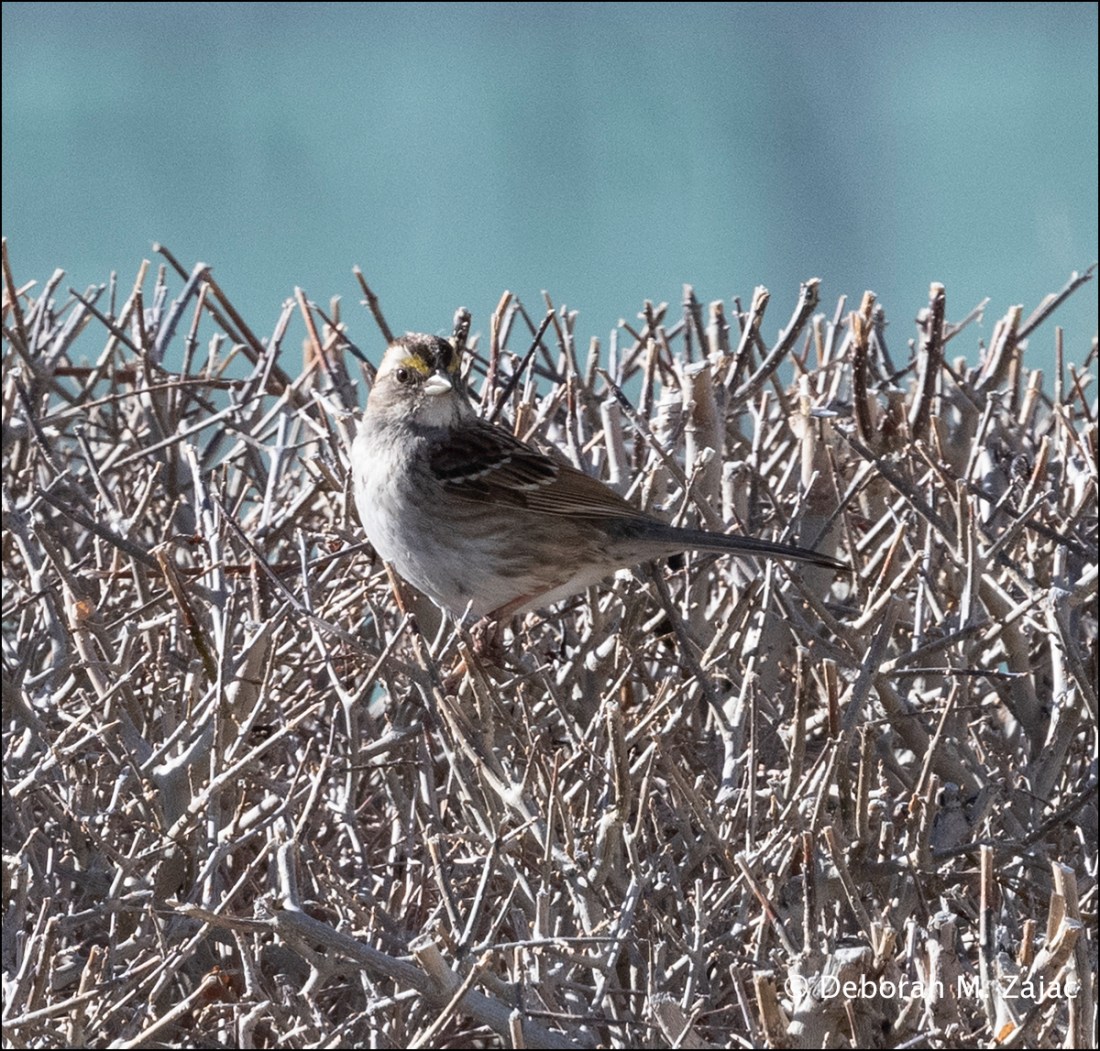
Back in late January or early February I heard there was a White-throated Sparrow up in Carson City. This is a rare bird for Nevada. The map doesn’t show it ever being here rare.
I’d never seen one before so I began the hunt for it. I only had a general location of where it was so I was covering a very large area and staying for hours photographing every sparrow and bird I saw.
I was unsuccessful 6 times over the course of about 6 weeks.
All the while this bird was being seen and reported by one guy almost every day while myself, and my neighbor were not seeing it! I can tell you it was frustrating! During this period there was another one seen, photographed, and reported on the birding site ebird.org up in Reno!
So, my neighbor and I went up and spent hours looking for it but, no joy there either. Sigh.
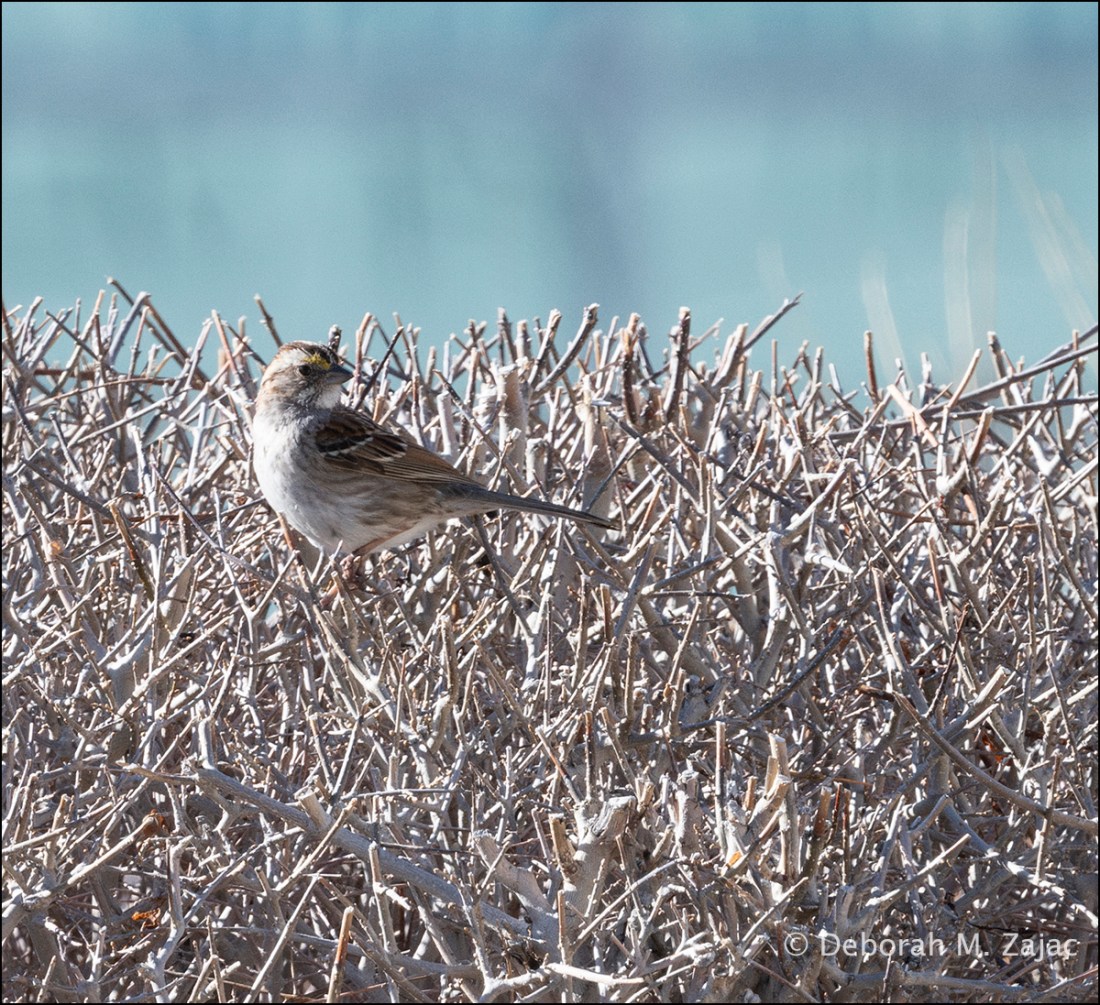
Then on a tip from a fellow birder who had seen it a week before in Carson City told me the which area I should try looking. I went back last week and hung around the area he suggested and got lucky! 💃💃😀The 7th times the charm!
The White-throated Sparrow comes in two color forms: white-crowned and tan-crowned. The two forms are genetically determined, and they persist because individuals almost always mate with a bird of the opposite morph. Males of both color types prefer females with white stripes, but both kinds of females prefer tan-striped males. White-striped birds are more aggressive than tan-striped ones, and white-striped females may be able to outcompete their tan-striped sisters for tan-striped males.
Although they look nothing alike and aren’t particularly closely related, the White-throated Sparrow and the Dark-eyed Junco occasionally mate and produce hybrids. The resulting offspring look like grayish, dully marked White-throated Sparrows with white outer tail feathers.
White-throated Sparrows typically nest on or near the ground. Occasional nests are built up to 15 feet off the ground in conifers. Usually, these nests are second attempts after a pair has had a ground nest robbed by a predator.
The oldest recorded White-throated Sparrow was at least 14 years, 11 months old, when it was recaptured and rereleased during banding operations in Alberta.
I have been birding a lot so have lots of birds to share in the coming weeks.
PLEASE DO NOT USE MY IMAGES WITHOUT EXPRESSED WRITTEN PERMISSION.
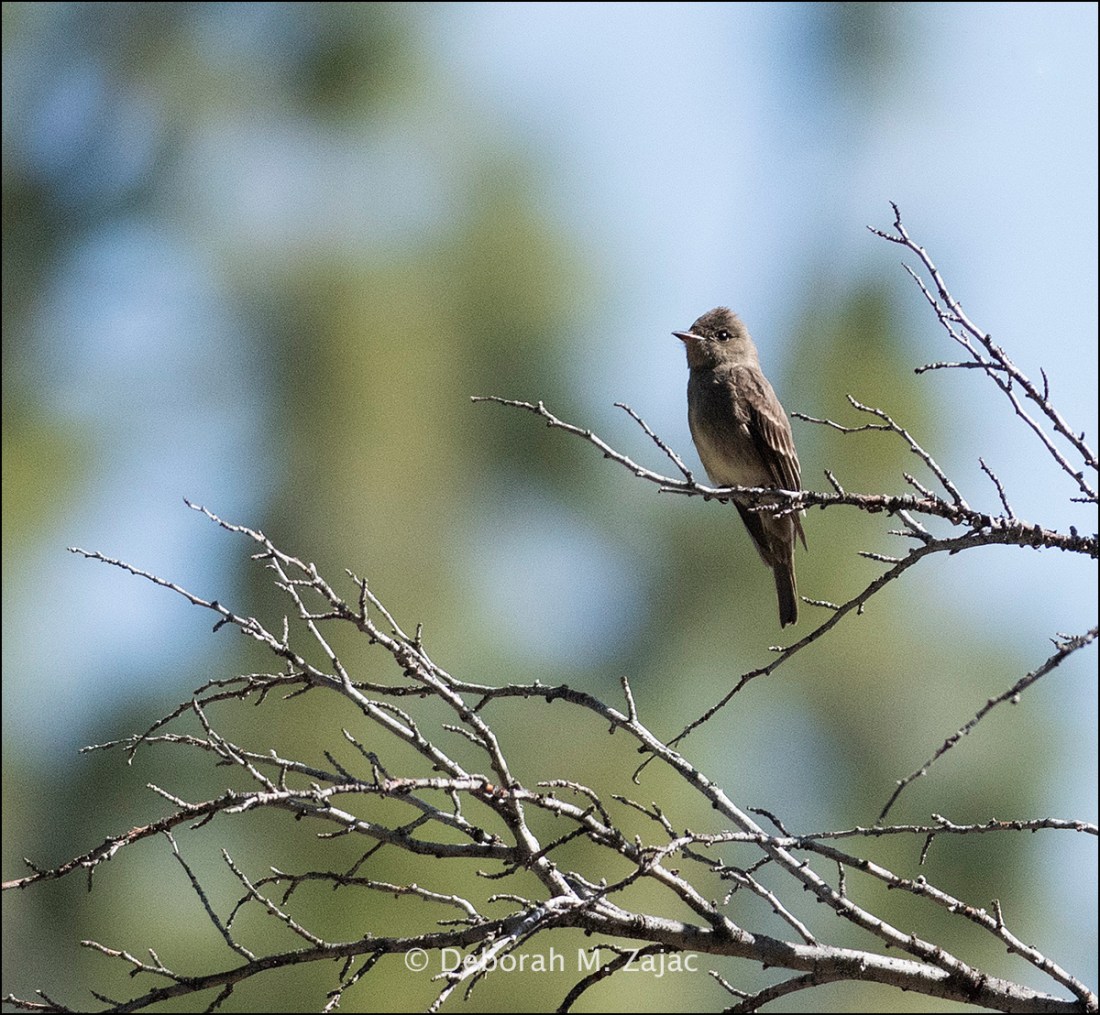
I don’t think I’ve ever shared this bird before. This is an image I made last summer.
Western Wood Peewee
Fun Facts:
The breeding ranges of the nearly identical Eastern and Western Wood-Pewees overlap only in a very narrow zone in the Great Plains. Despite the birds’ physical similarity, no evidence has ever been found that the two species interbreed in that area—perhaps because their songs sound so different.
Where exactly the Western Wood-Pewee goes in the winter is still a mystery. Both Eastern and Western Wood-Pewees migrate to northern South America, but because they look so similar and they don’t call much on the wintering ground it’s hard to say for certain where each species spends its winter.
The scientific name of the Western Wood-Pewee is Contopus sordidulus. Contopus comes from the Greek word kontos which means short and pous which means foot—referring to the relatively short legs on Contopus flycatchers. Sordidulus means dirty or unkempt, a reference to the dusky brown wash to the breast and flanks.
The Western Wood-Pewee makes a clapping noise with its bill while chasing and attacking intruders in nest defense.
The oldest recorded Western Wood-Pewee was a female, and at least 8 years, 1 month old when she was recaptured and rereleased during banding operations in California in 2002. She had been banded in the same state in 1995.
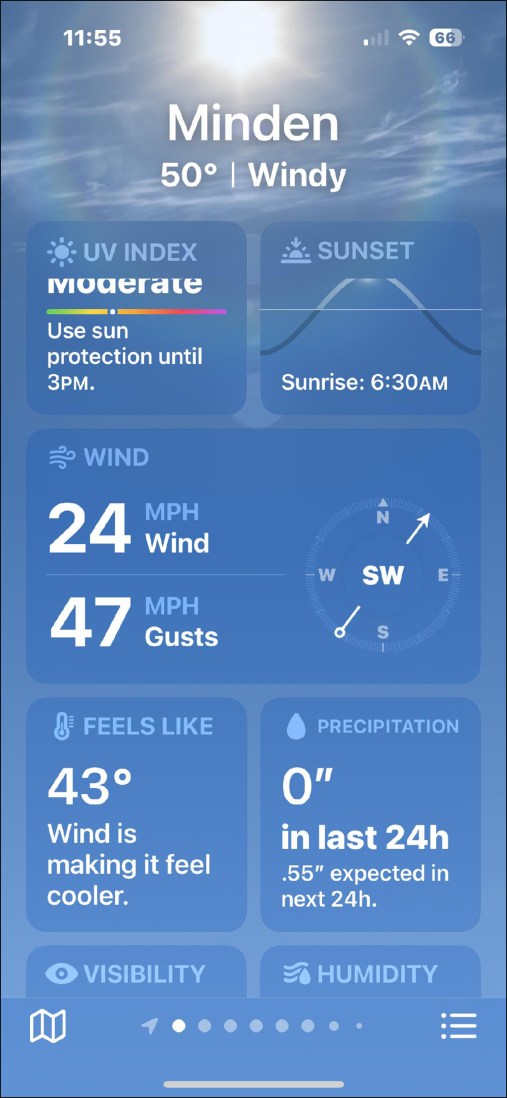
We’ve been under a high wind and storm watch since yesterday morning. As I write this the wind is howling at 24 mph with gusts up to 47 mph. They’re saying we may get 8 inches of snow between now and Saturday. The sun is out, the clouds are big white and fluffy in some spots to the east but, gray and looming over the Sierras to the west. As you can imagine we’re hanging out at home.
I was planning to go birding with a local birding group this morning, but due to the weather that’s been rescheduled.
I’ve been re-watching The Expanse while waiting for the new season of Vera to be released on Wednesday. After I finish The Expanse I’ll be binge watching Vera if all the episodes are available, and I’m still working my way through the Woodlands and Trees Ready to Paint class in a book. I finished exercise 6 but, the little wood bridge over the creek came out really wonky…even more wonky than my normal wonky so, I’m on my second attempt with that one, and I mixed up a dark green shade of paint that I don’t like on this second pass, so they’ll probably be a 3rd attempt at mastering exercise #6. 😀
That’s me all caught up. What’s happening with you?
PLEASE DO NOT USE MY IMAGES WITHOUT EXPRESSED WRITTEN PERMISSION.
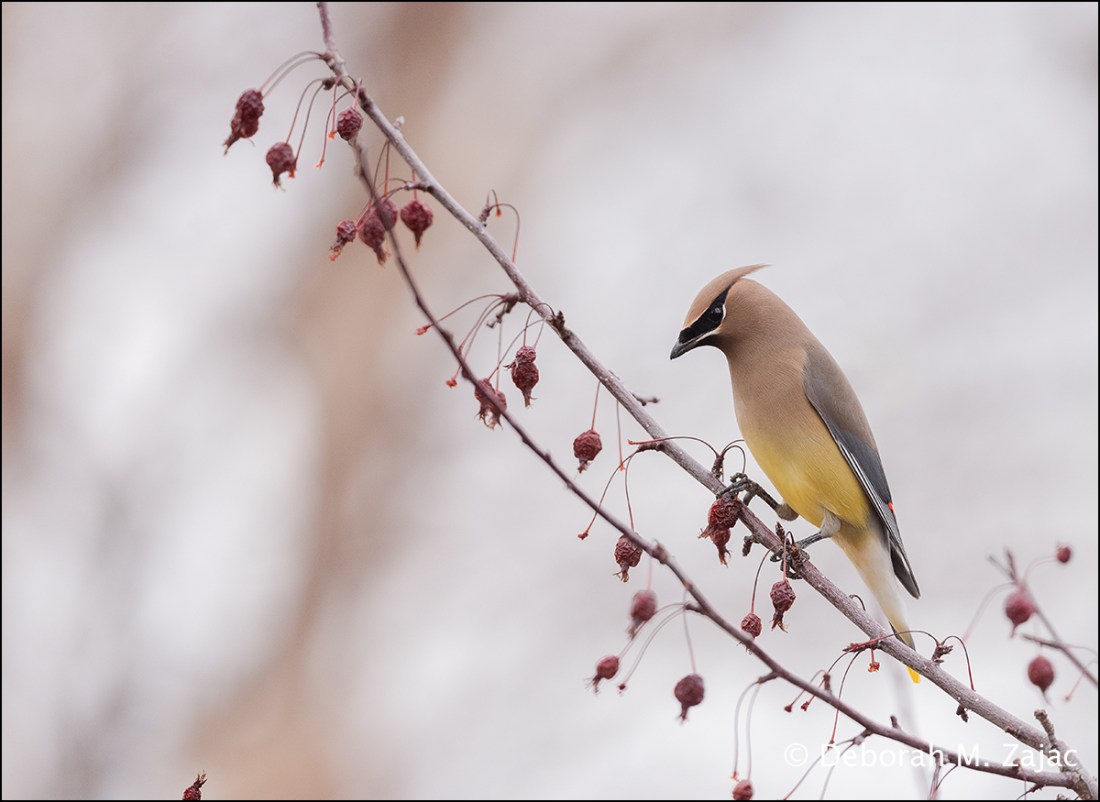
Last week while birding I saw so many Cedar Waxwings at 2 places I visited. There were about 120 in all! At one of the places they were gorging on ripe, plump red berries.
I was doing my happy dance to see that!
“I think this one looks yummy”Gulp!
It was a great birdy day.
Fun Facts:
The name “waxwing” comes from the waxy red secretions found on the tips of the secondaries of some birds. The exact function of these tips is not known, but they may help attract mates.
Cedar Waxwings with orange instead of yellow tail tips began appearing in the northeastern U.S. and southeastern Canada in the 1960s. The orange color is the result of a red pigment picked up from the berries of an introduced species of honeysuckle. If a waxwing eats enough of the berries while it is growing a tail feather, the tip of the feather will be orange.
The Cedar Waxwing is one of the few North American birds that specializes in eating fruit. It can survive on fruit alone for several months. Brown-headed Cowbirds that are raised in Cedar Waxwing nests typically don’t survive, in part because the cowbird chicks can’t develop on such a high-fruit diet.
Many birds that eat a lot of fruit separate out the seeds and regurgitate them, but the Cedar Waxwing lets them pass right through. Scientists have used this trait to estimate how fast waxwings can digest fruits.
Because they eat so much fruit, Cedar Waxwings occasionally become intoxicated or even die when they run across overripe berries that have started to ferment and produce alcohol.
Building a nest takes a female Cedar Waxwing 5 to 6 days and may require more than 2,500 individual trips to the nest. They occasionally save time by taking nest materials from other birds’ nests, including nests of Eastern Kingbirds, Yellow-throated Vireos, orioles, robins, and Yellow Warblers.
The oldest recorded Cedar Waxwing was a male and at least 7 years, 1 month old when he was recaptured and rereleased during banding operations in Maryland in 2014. He was originally banded in the same state in 2008.
It’s snowing as I type this but, supposed to be sunny but cold on Saturday. I hope to go out birding for a bit if that forecast holds. I hope you all have a grand week-end!
PLEASE DO NOT USE MY IMAGES WITHOUT EXPRESSED WRITTEN PERMISSION.
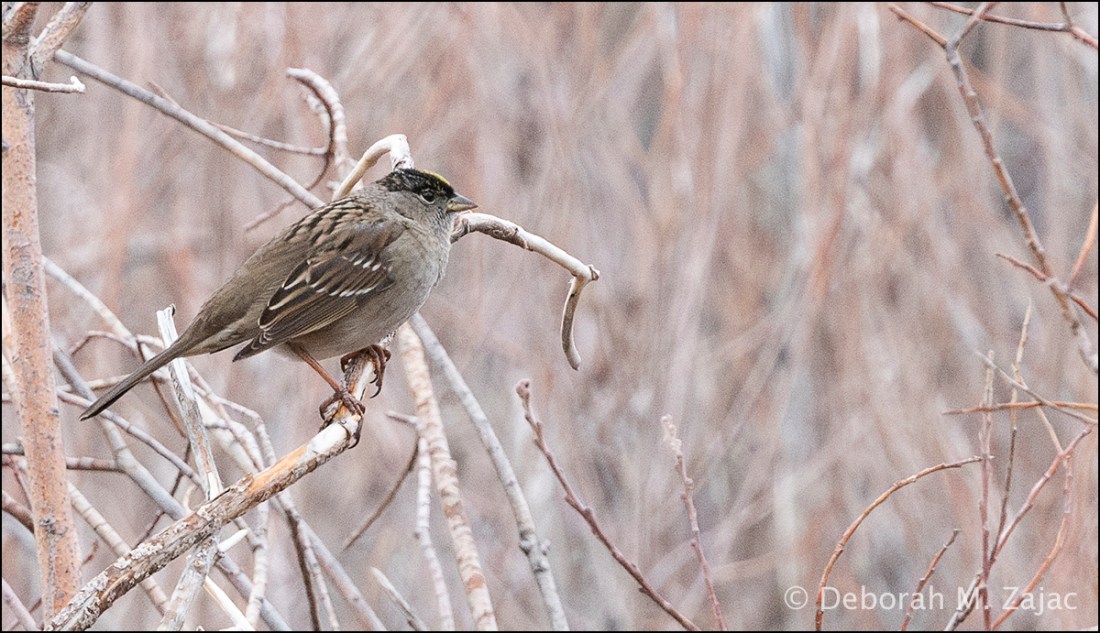
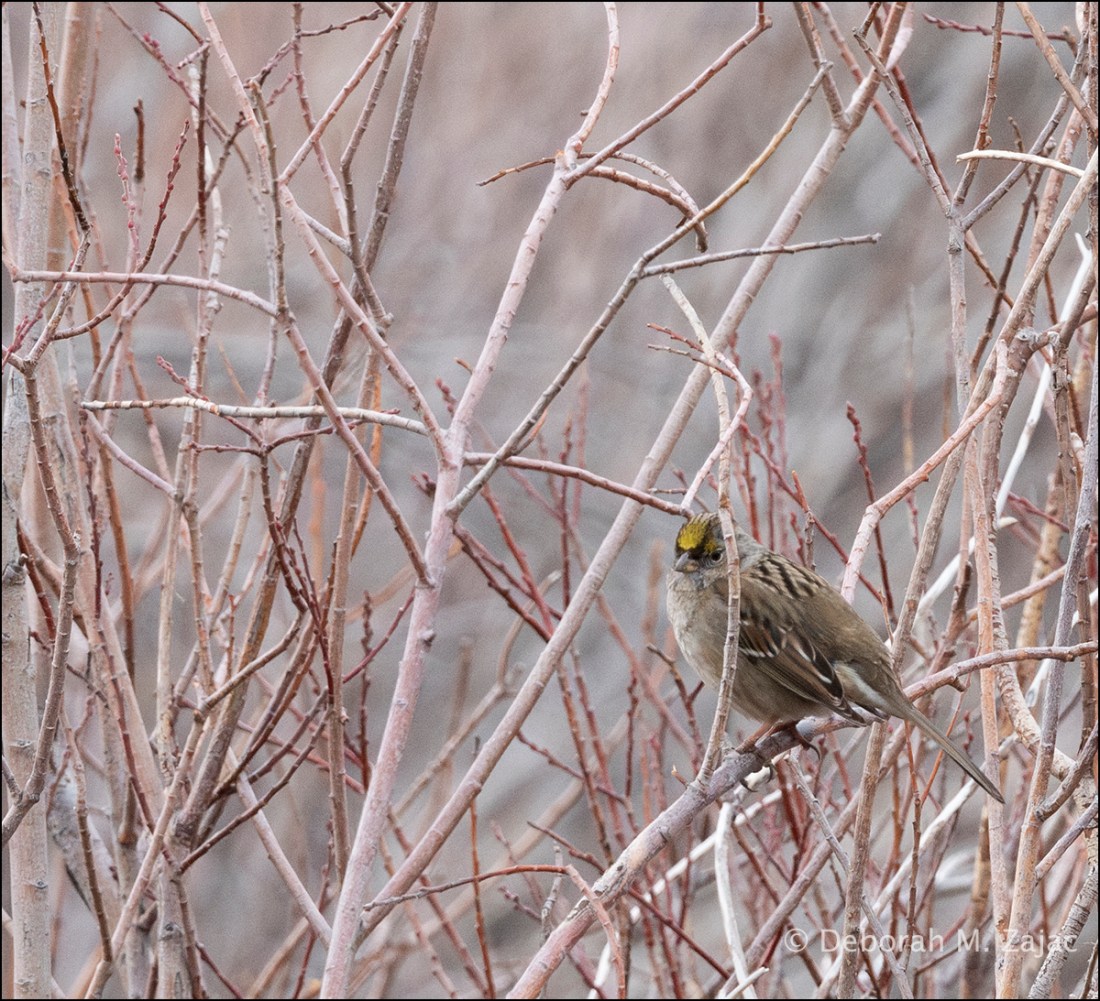
I last shared this Sparrow in 2015. I don’t see many of them and I only see them during the Winter migration hanging out with the White-crowned Sparrows, but sadly, never at my feeder. Last week I saw this one.
Male Golden-crowned Sparrow
He was pretty skittish. Every time I tried getting closer he flew further away so these are pretty well cropped.
Fun Facts:
This sparrow is one of the least known of our songbirds, particularly on its northern breeding grounds. It has been the subject of only a few laboratory and field studies, so most of what we know about it comes from scattered notes in scientific journals.
Miners in the Yukon at the turn of the twentieth century woefully referred to the Golden-crowned Sparrow as the “no gold here” bird, because its song resembled that depressing phrase. They also interpreted its song to say “I’m so tired,” prompting them to dub the bird “Weary Willie.”
The Golden-crowned Sparrow arrives earlier and stays longer on its California wintering grounds than almost any other bird species.
When day length increases in the spring, the Golden-crowned Sparrow detects the change through photoreceptors (light-sensitive cells). Its body responds by putting on fat and getting an urge to migrate.
The oldest Golden-crowned Sparrow on record was at least 10 years, 6 months old. It was caught by a bird bander in California in 1970 and released.







You must be logged in to post a comment.