Friday’s Feathered Friends-Warbling Vireo

Copyright ©2021 Deborah M. Zajac. ALL RIGHTS RESERVED

Continuing on with the newest “lifers” that I’ve picked up this year I present Lifer N° 2 for 2021…the Warbling Vireo.

I confess I would have missed this bird had I not been out with a local birding group. The leader for that day’s outing recognized its song, and I started peering into the foliage and spotted something flitting around. Hoping for it come out in the open for peek I waited, and waited. Finally a brief look!!
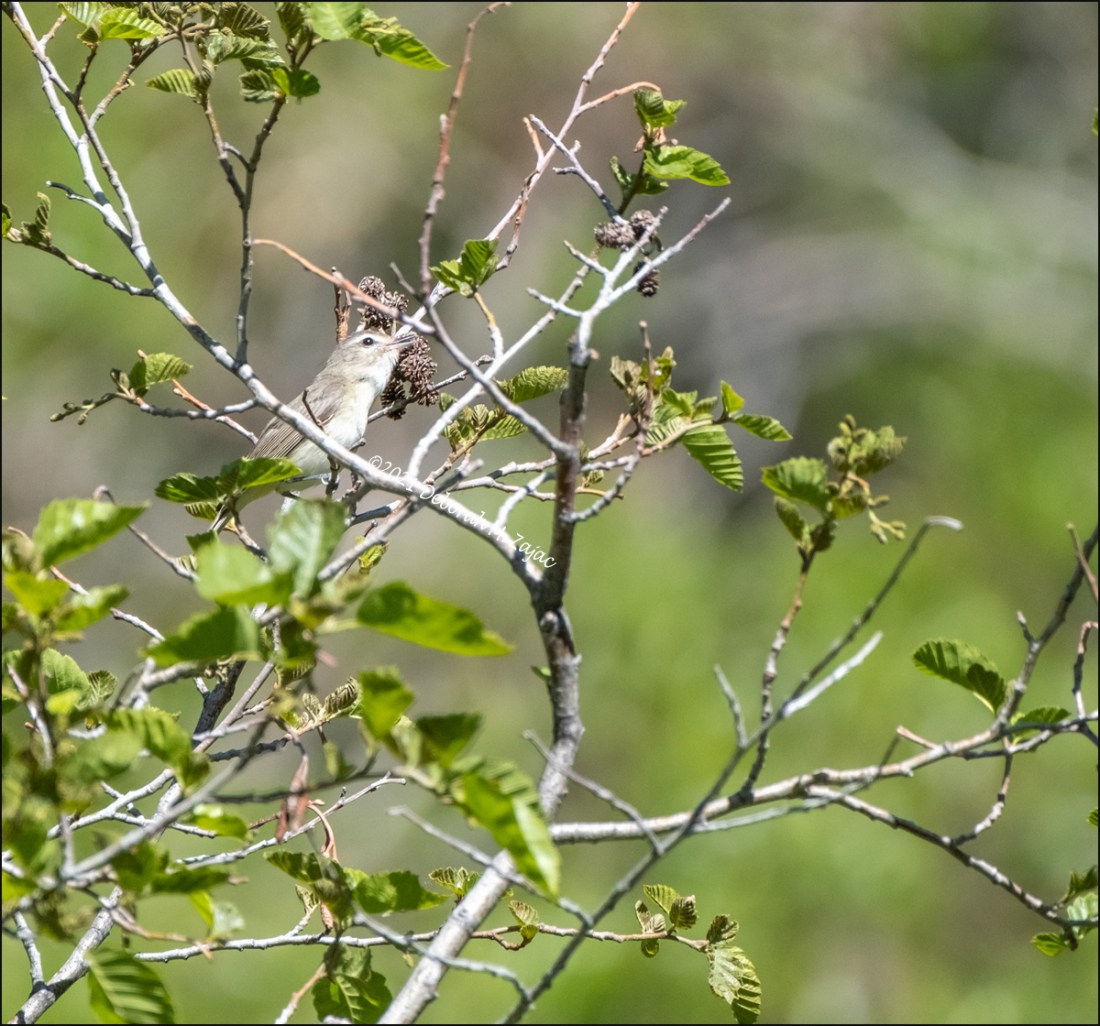
Then just as quickly it flew to another bush behind a branch and began singing its morning song.
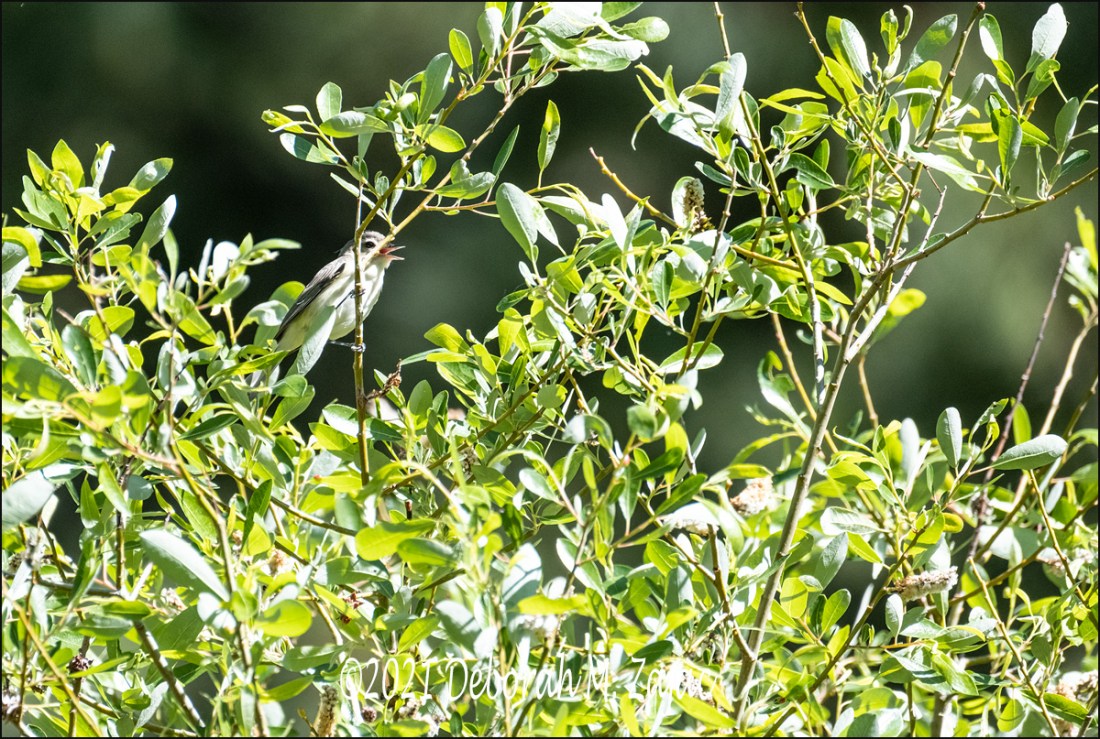
These are the only decent images I was able to get of it, but I’m happy to have them!

They have a large range in the United States, but breed here in the Summer months.

Since this little one is singing in the last image I thought I’d try to add a sound file so you can hear one of its songs. Nuts! The link didn’t embed the sound file.

Clicking the link will open a new window with the recording of the Western Warbling Vireo

https://macaulaylibrary.org/asset/110999

Fun Facts: Gleaned from allaboutbirds.org

  • Warbling Vireos have a good name—the males sing a fast, up-and-down, rollicking song that suits the word “warbling.” The early twentieth century ornithologist William Dawson described the song this way: “fresh as apples and as sweet as apple blossoms comes that dear, homely song from the willows.” The highly variable song usually ends on a high note, leading the birder Pete Dunne to describe it as sounding “like a happy drunk making a conversational point at a party.”
  • Across their wide range, Warbling Vireos differ from one population to another in several characteristics, including overall size, bill shape, plumage coloring, molt patterns, wintering areas, and vocalizations. The differences are significant enough to lead ornithologists to recognize six separate subspecies of Warbling Vireo, and at one time divided them into two species.
  • Brown-headed Cowbirds frequently deposit their own eggs in the nests of Warbling Vireos. In some instances, the vireo pair incubates the alien egg and raises the young cowbird until it fledges. Female vireos in some eastern populations, however, tend to puncture and eject interlopers’ eggs.
  • Researchers speculate that Warbling Vireo song is at least partially learned rather than hard-wired. They base this supposition in part on observations of one individual whose song more closely resembled that of a Red-eyed Vireo than that of its parents. The garbled song, they concluded, probably resulted from a flawed learning process during the bird’s development.
  • The longest-lived Warbling Vireo on record—a male that was originally banded in July 1966—was at least 13 years, 1 month old when it was recaptured and rereleased during banding operations in California.

I hope you enjoyed seeing these Warbling Vireo images today, and I hope your Friday is going well, and you have a lovely week-end and I wish an early Happy Father’s Day to all the Dad’s in the US!

Fuji X-T3| Fuji 100-400mm| PS CC 22.4.2

more to come…
Friday’s Feathered Friends- American Dippers

Copyright ©2021 Deborah M. Zajac. ALL RIGHTS RESERVED.

I’ve been rather slow at telling you about several new to me birds that I’ve seen this year. There have been 5 so far this year.

The first one I saw was back in February. Yeah, I know. I love making the images, going out hiking, birding, etc., but processing the images and writing…not so much.

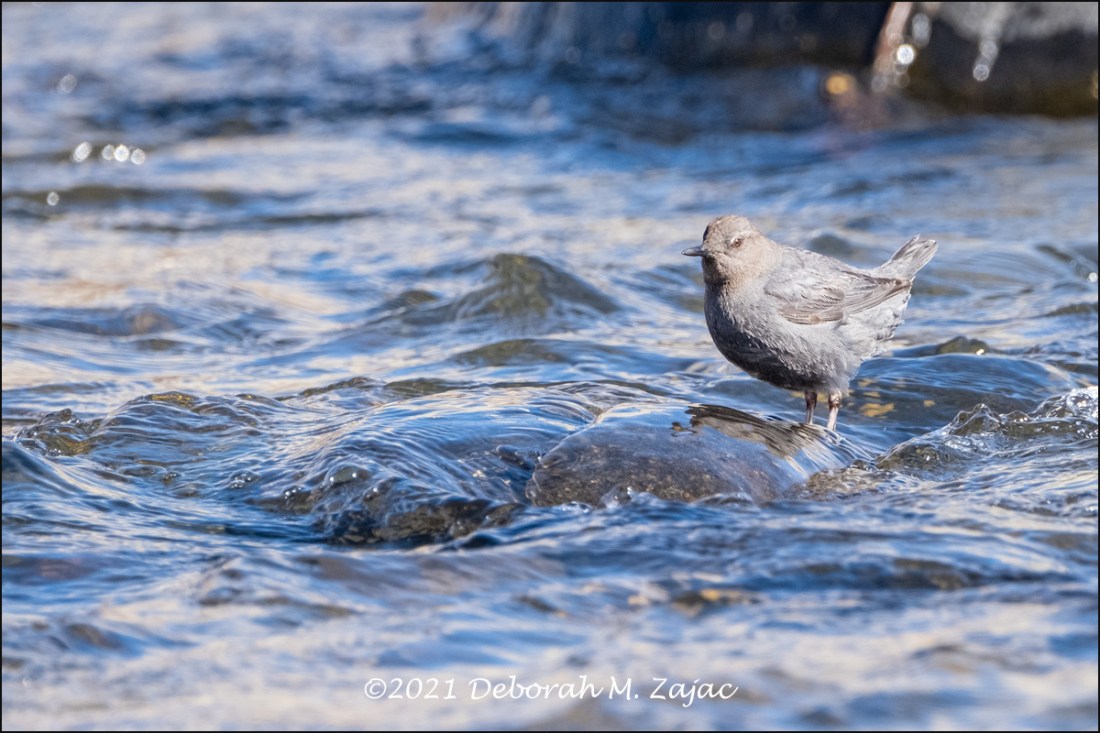
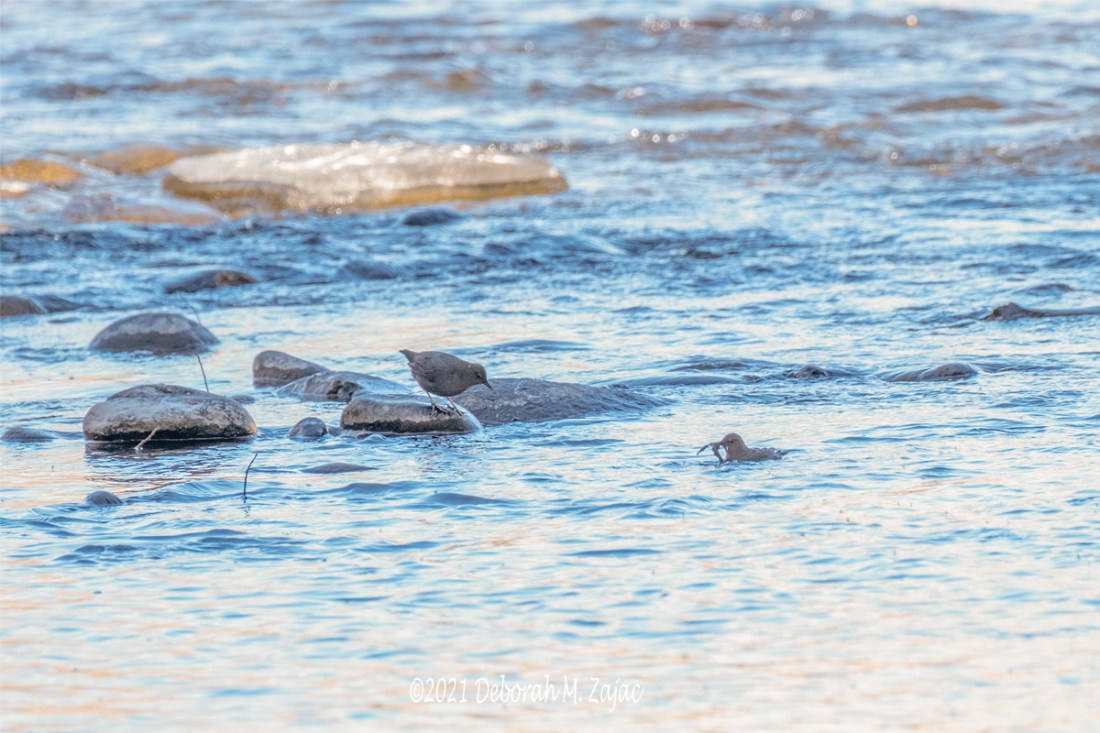
So, this bird I saw in February really made me do my happy dance… jumping for joy happy dance because I tried to find this bird several times over a couple of years while I lived in San Jose sans success. Just less than two years after moving to Nevada I found not one but a pair!! Here without further ado is the American Dipper.

They were gathering nesting material under an overpass and flying into a hole under it. Lighting conditions weren’t great. They were in the shadow of the bridge making it hard to get a good image of them. I opened up the shadows in post editing.

Th

This next image shows the white eyelid they have that you only see when they blink.

Finally, I got lucky and one flew out into the sunlight!

Fun Facts: Gleaned from allaboutbirds.org

  • The American Dipper chooses a nest site, invariably along a stream, that provides security from floods and predators. Availability of suitable nest sites appears to limit its populations.
  • To be able to survive in cold waters during the winter, the American Dipper has a low metabolic rate, extra oxygen-carrying capacity in its blood, and a thick coat of feathers.
  • Unlike most other songbirds, but similarly to ducks, the American Dipper molts its wing and tail feathers all at once in the late summer. The bird is flightless during this time.
  • The oldest American Dipper was over 8 years old, when it was recaptured and rereleased during a banding operation in South Dakota.

The American Dipper is North America’s only truly aquatic songbird. I’m so happy I finally saw them!

I hope you all have a great week-end!

Fuji X-T3| Fujinon 100-400mm| PS CC 22.4.1

more to come…

Friendly Friday Challenge-Hands and Feet

Copyright ©2021 Deborah M. Zajac. ALL RIGHTS RESERVED

Today I’m going to participate in Sandy’s challenge: https://thesandychronicles.blog/2021/04/23/friendly-friday-challenge-hands-feet/

While we were making plans to go to my son’s aka Big Baby Boy place for a few days he asked me, “Mom, you’re bringing your camera right?” I replied that I was and asked him why? He said he and the Dark Haired Beauty had a portrait in their heads and they hoped I would be able to help them create it.

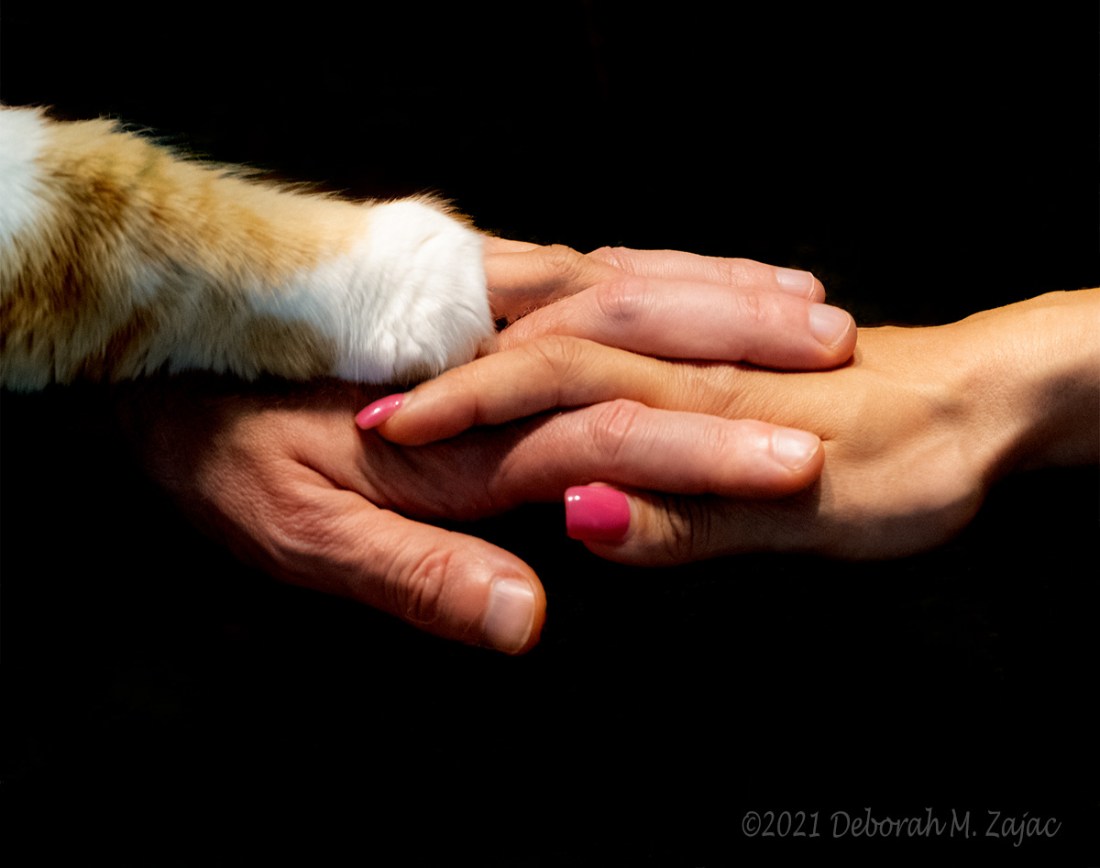
They wanted to be holding hands and have their cat’s paw on their clasped hands. We gave it a go.

Those of you have followed me for awhile know this isn’t what I normally photograph, but it was fun and challenging!

Here’s the image they picked from the ones we made.

We’re all pretty happy with it. They had me print it and they’re getting it framed to hang in their home.

Thank you, Sheree from https://viewfromtheback.com/2021/04/30/friendly-friday-challenge-hands-and-feet/#comment-47165

I never would have seen this challenge if it wasn’t for reading your blog!

If you would like to play along head on over to Sandy’s to get the details click here

Fuji X-T3| Fujinon 16-80mm| PS CC 22.3.0

more to come…

Whatever Weds. San Clemente Pier Plus 1 more…

Copyright ©2021 Deborah M. Zajac. ALL RIGHTS RESERVED

He-Man and I have been traveling between our children’s homes in April which has been fun, and wonderful. Our latest trip we went to see our son in SoCal for several days. One evening we went down to the pier hoping for a good sunset. It wasn’t bad, but the company was perfect.

San Clemente Pier at Sunset

We dined out in restaurants and it was grand! Really. I missed dining out. We ate in places that we don’t have at home like Thai, Greek, and fresh Seafood. I was bad and didn’t take any images of the food at these places. Sorry!

We took after dinner hikes up in the canyon near Big Baby Boy’s and The Dark Haired Beauty’s place, and it was lovely. Spring wildflowers were in bloom.

Here’s a Sweet Pea of some sort- Sandy Beach or Chaparral? They are the largest flowers in the Pea family I’ve ever seen before.

I only took my Fuji X-T3 and my newest lens for it the Fujinon XF 16-80mm.

I’ve had the lens a couple of months now and really haven’t used it all that much, but this trip it got some love. I think it did a good job and its small, as well as light weight so it made a great travel kit.

There’s a nesting Red-tailed Hawk in a tree at the Golf Course where we live. I am hoping to get some good images of the chick and the parents bringing in food. So far I’ve not been lucky.

I hope you’re all having a good week so far. What’s new with you?

Fuji X-T3| Fuji 16-80mm| PS CC 22.3.0

more to come…

Whatever Weds. Spring!

Copyright ©2021 Deborah M. Zajac. ALL RIGHTS RESERVED

On our way to see Baby Girl, The Handsome Surveyor and the boys last week we saw a hillside covered in California Poppies, and I had to stop to make some images.

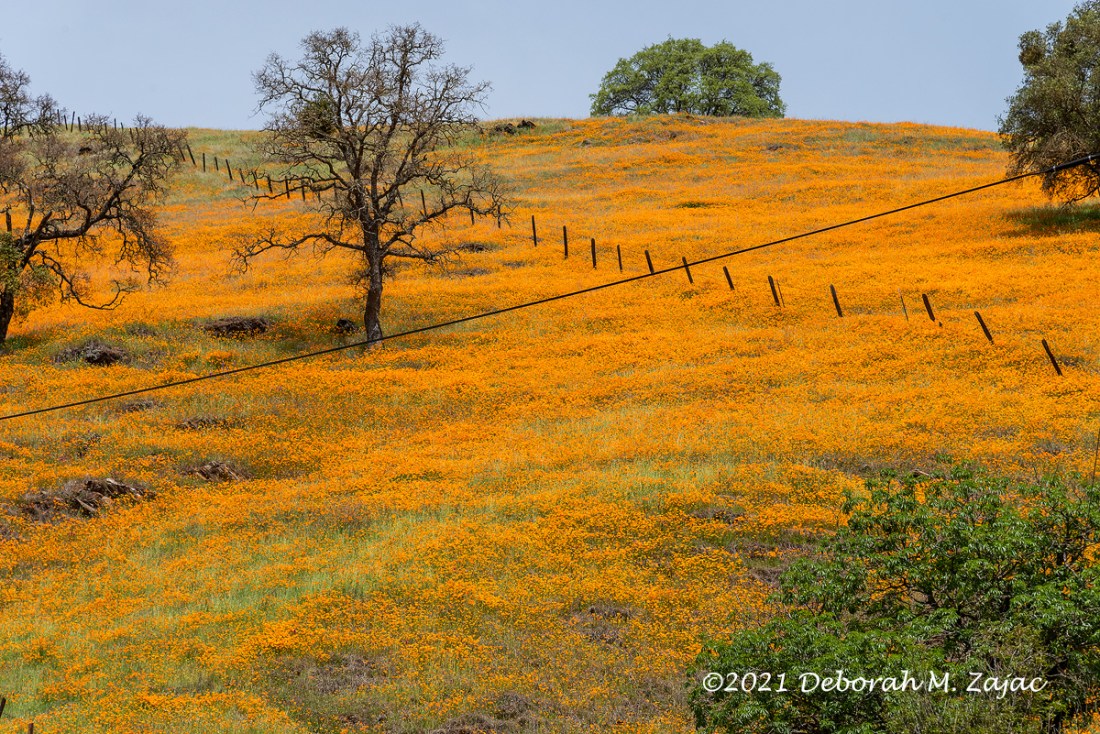
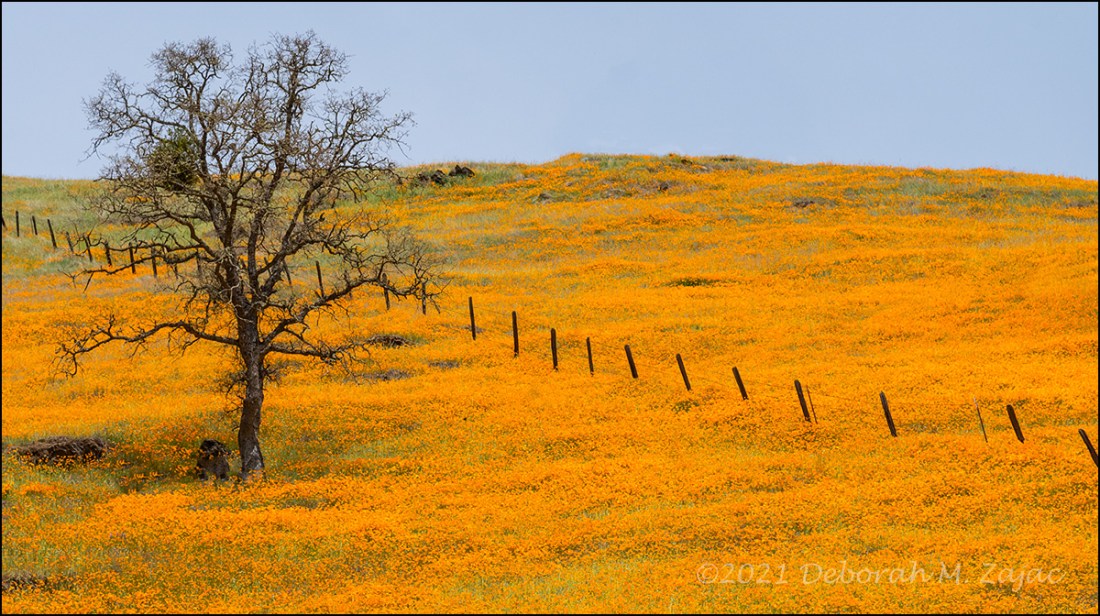
The hillside was steep, mostly on private property so I was unable to climb the hill to get a better composition. There were power lines going through the scene so after I uploaded the images I took to my digital darkroom aka- Photoshop CC to make some additional improvements in addition to my normal tweaks to white balance, whites, and blacks, and camera/lens corrections. I took out the power line using the spot healing brush, then I cropped the image to remove a big bush and some partially showing trees, and lastly I removed a tree top at the top of the image. So the image went from this…

To this…

For some reason the finished image looks a bit washed out here, but not in Photoshop. Hum?

Baby Girl asked for a print of the final image and I wanted one too so, I’m having it printed up. I hope it looks good when they arrive.

Which one do you prefer?

Nikon D810| Nikkor 24-120mm| PS CC 22.3.0

more to come…

Friday’s Feathered Friends- Red-breasted Merganser Male

Copyright ©2021 Deborah M. Zajac. ALL RIGHTS RESERVED

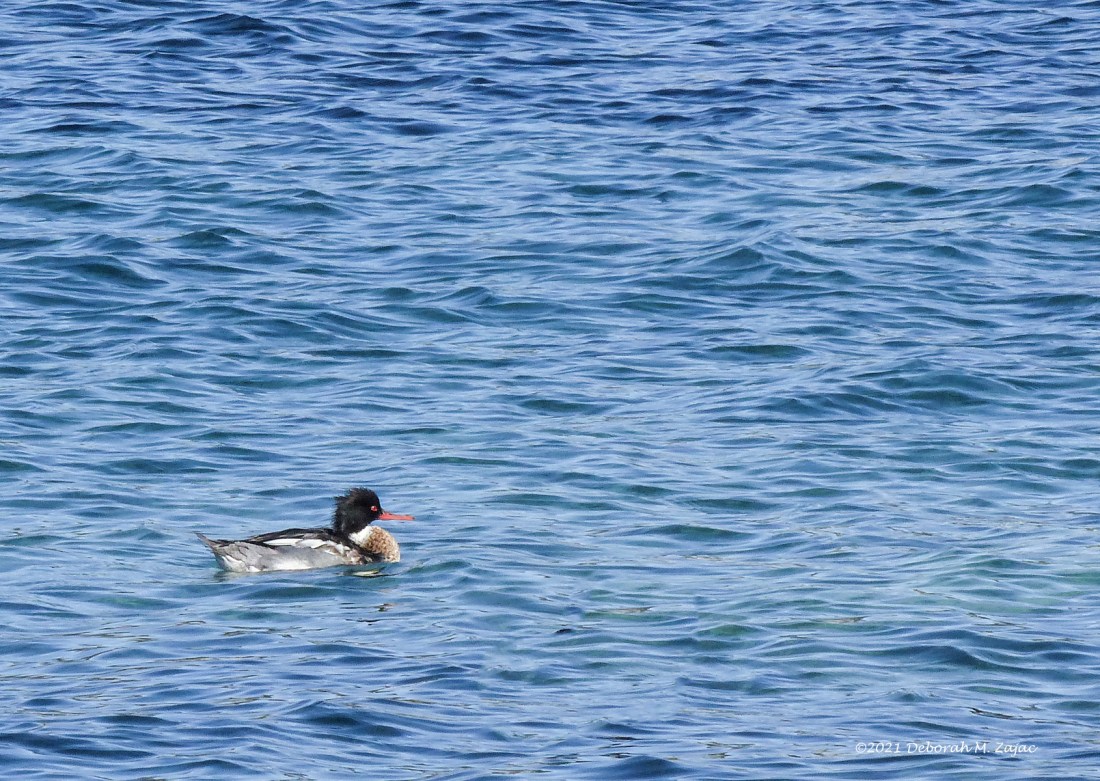
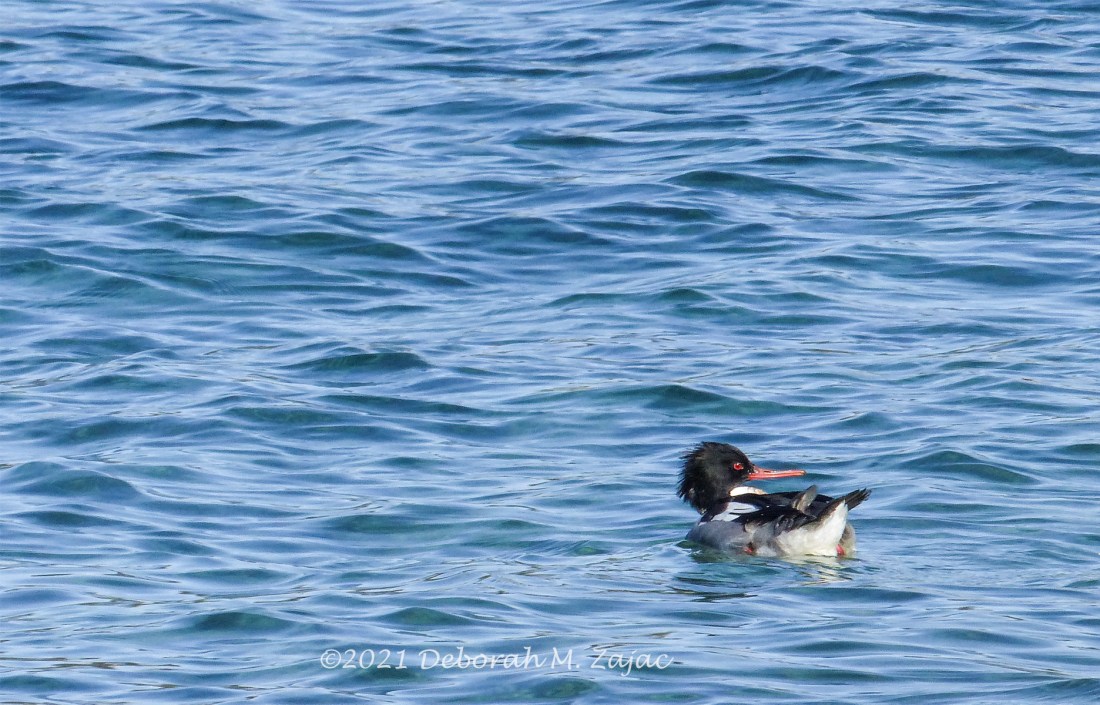
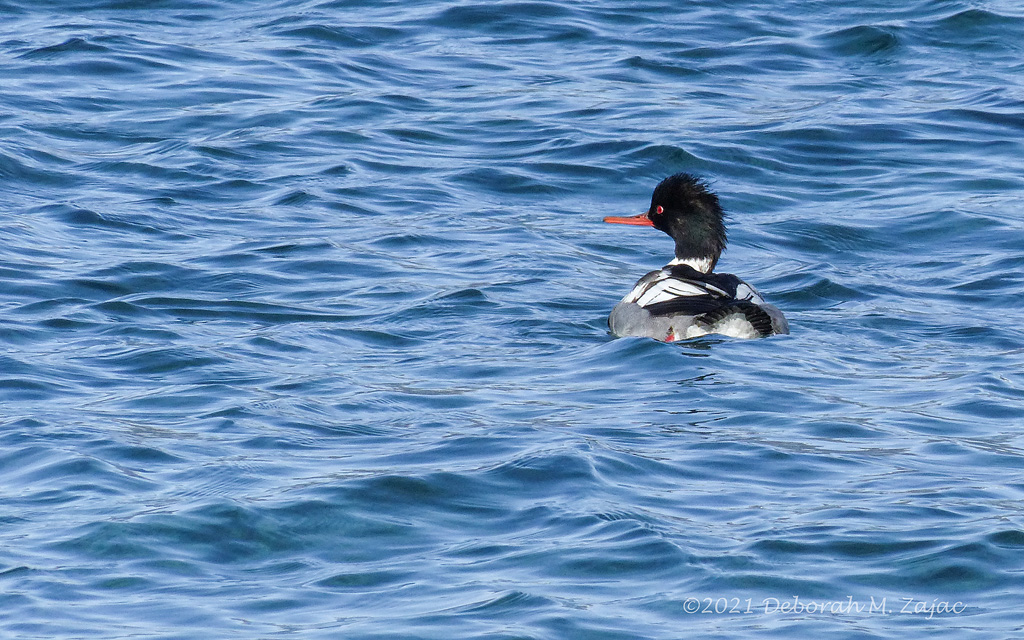
Late in January, I heard there was a Red-necked Grebe in Lake Tahoe and it’s a bird I’ve never seen so wanting to get out of the house between storms He-Man and I drove over there for a walk-about and see what we could see. No grebe anywhere, but I did see a small group of Common Mergansers, and one that didn’t look quite like the others, but looked like a Merganser. I made some images and when I got home uploaded the images and discovered to my delight the one in the group that was a little different was a Red-breasted Merganser Male. A new bird for me, and Lifer number one for 2021!

They weren’t doing much of anything when I saw the group. I think it was a bit early and they were still waking up. 😀

Male Red-breasted Merganser Lake Tahoe 2021

Fun facts about them gleaned from my favorite source allaboutbirds.org

  • The Red-breasted Merganser breeds farther north and winters farther south than the other American mergansers.
  • Red-breasted Mergansers don’t acquire breeding plumage until they are 2 years old.
  • Red-breasted Mergansers need to eat 15 to 20 fish per day, which researchers suggest means they need to dive underwater 250–300 times per day or forage for 4–5 hours to meet their energy needs.
  • The oldest recorded Red-breasted Merganser was a female, and at least 9 years, 6 months old when she was shot in Alaska, the same state where she had been banded.

That’s a lot of diving and foraging isn’t it!

I hope you all a lovely week-end!

Panasonic Lumix FZ200| PS CC 22.3.0

more to come…