Friday’s Feathered Friends- A walk by the slough

Copyright ©2022 Deborah M. Zajac. ALL RIGHTS RESERVED

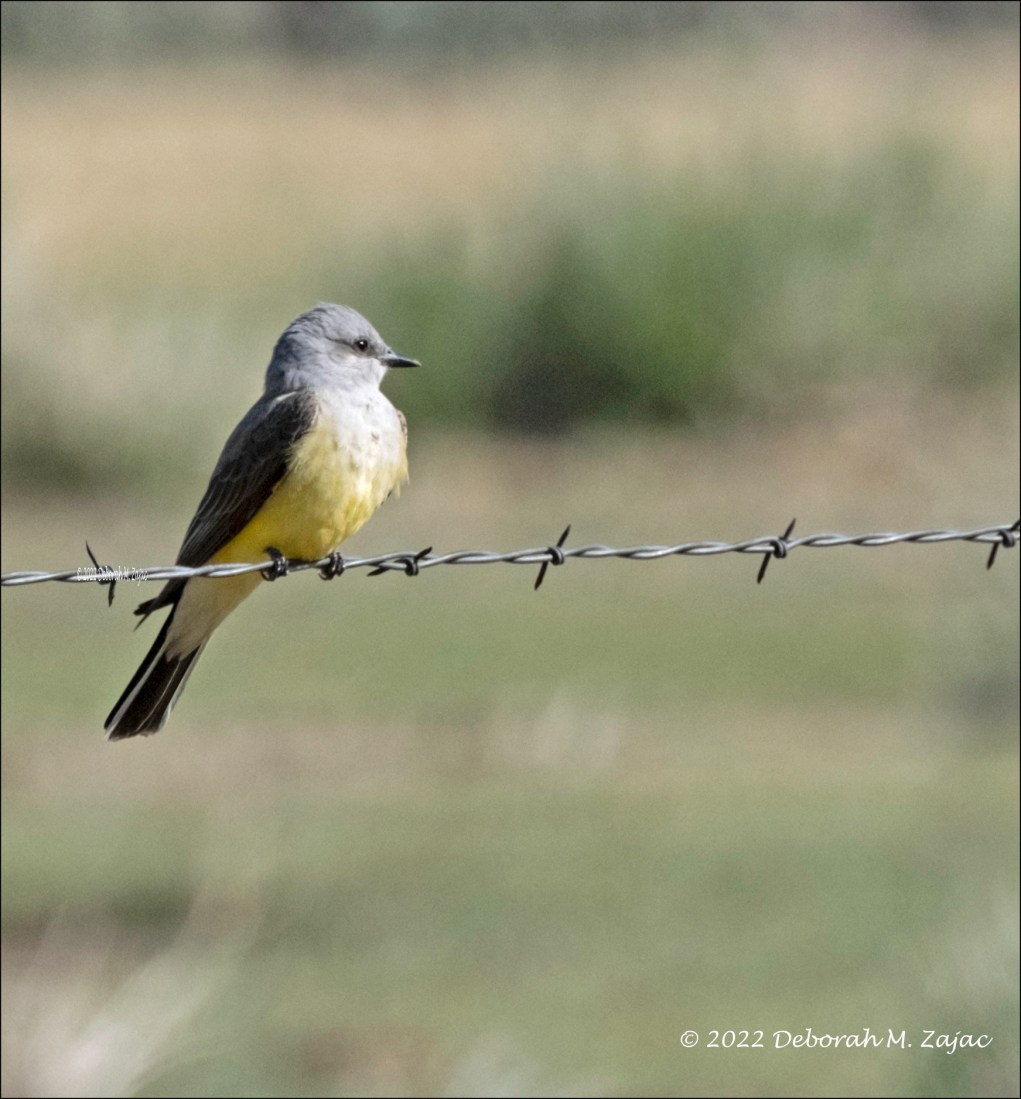
Last week I met up with some local Audubon club members for a bird walk. Here’s some of the exciting birds we saw.

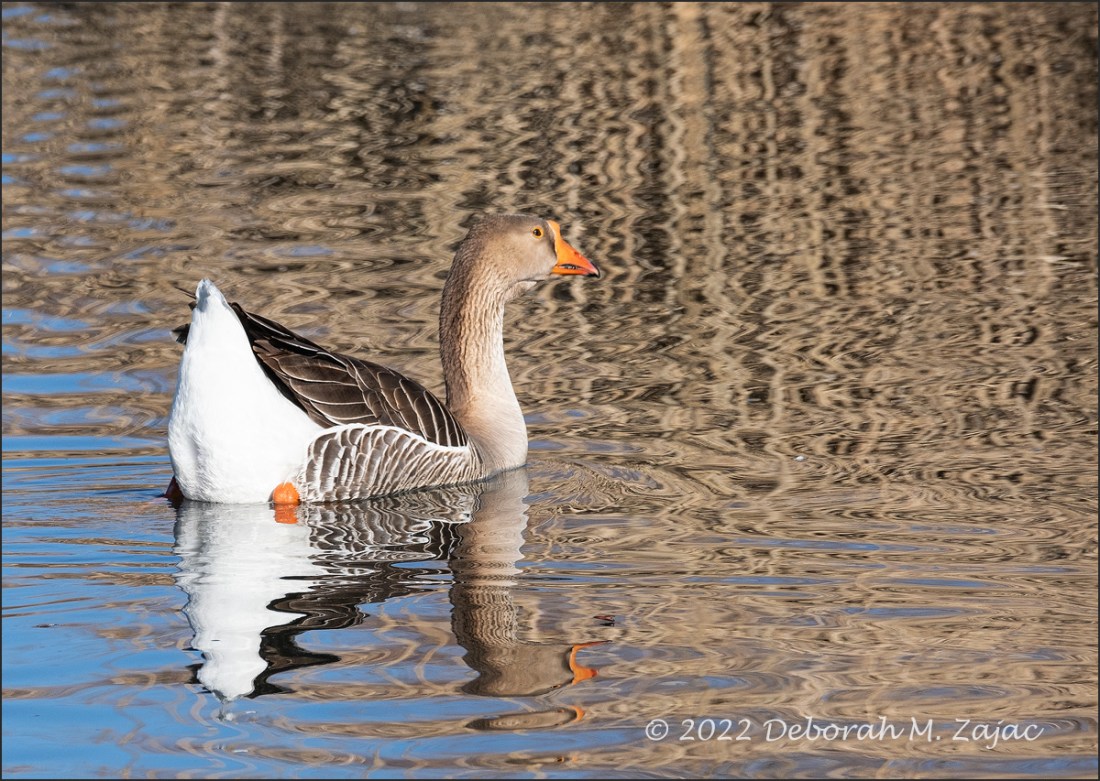
This first bird was a neat sighting. It’s a Graylag x Swan hybrid we discovered. The ebird monitor for Washoe county wrote me after seeing my images of the goose this. “Your documentation shows this is a “Domestic goose with a mix of Graylag and Swan Goose (aka Chinese Goose) ancestry. The dark stripe from the top of the head down the back of the neck, and the bulging forehead are Swan Goose traits, while the orange bill and a few other features are Graylag traits. ” P.H. Isn’t that interesting! It’s a handsome goose and several people we ran into while admiring and photographing it told us they named him. One family called him Barney, and another one calls him Harry. He’s quite the celebrity there.

Graylag Goose

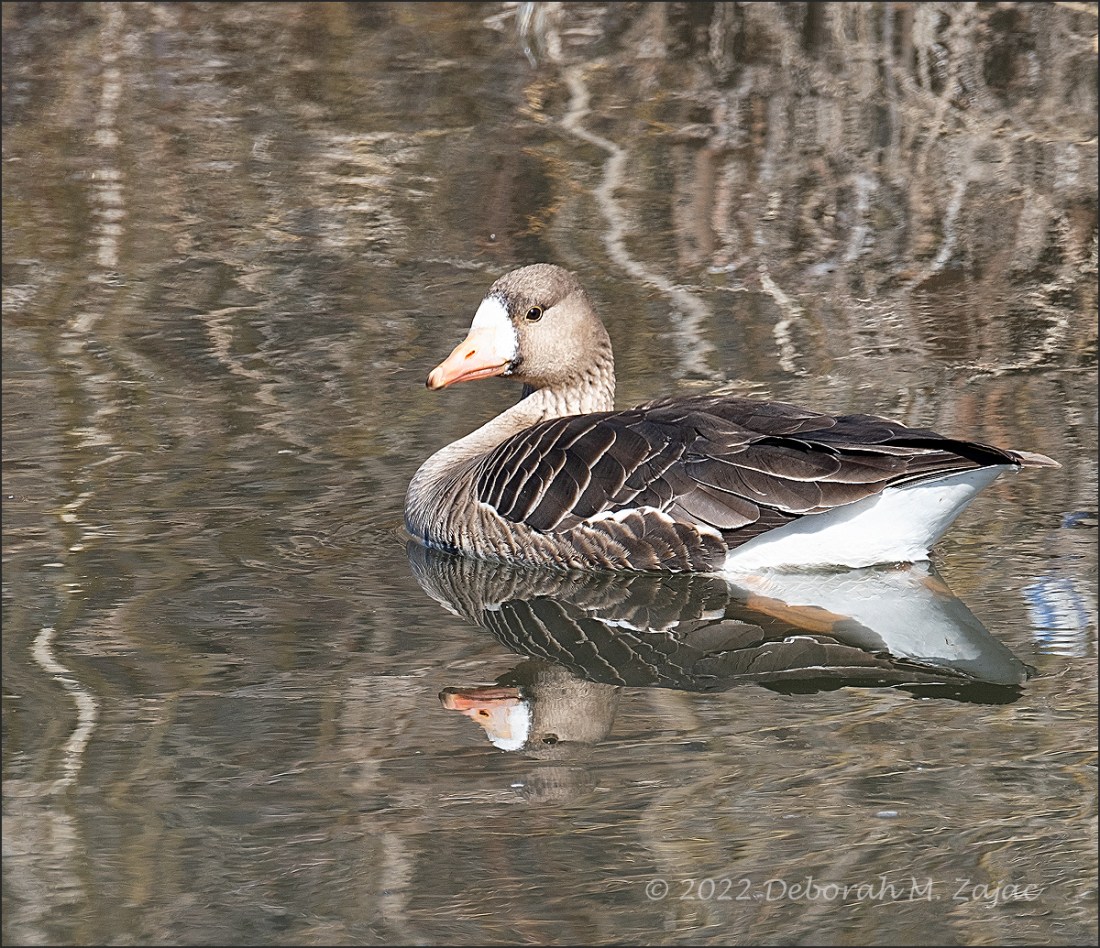
Another exciting sighting was a large group of White-fronted Geese. We don’t see those a lot here so, we watched and photographed them for awhile too.

White-fronted Goose

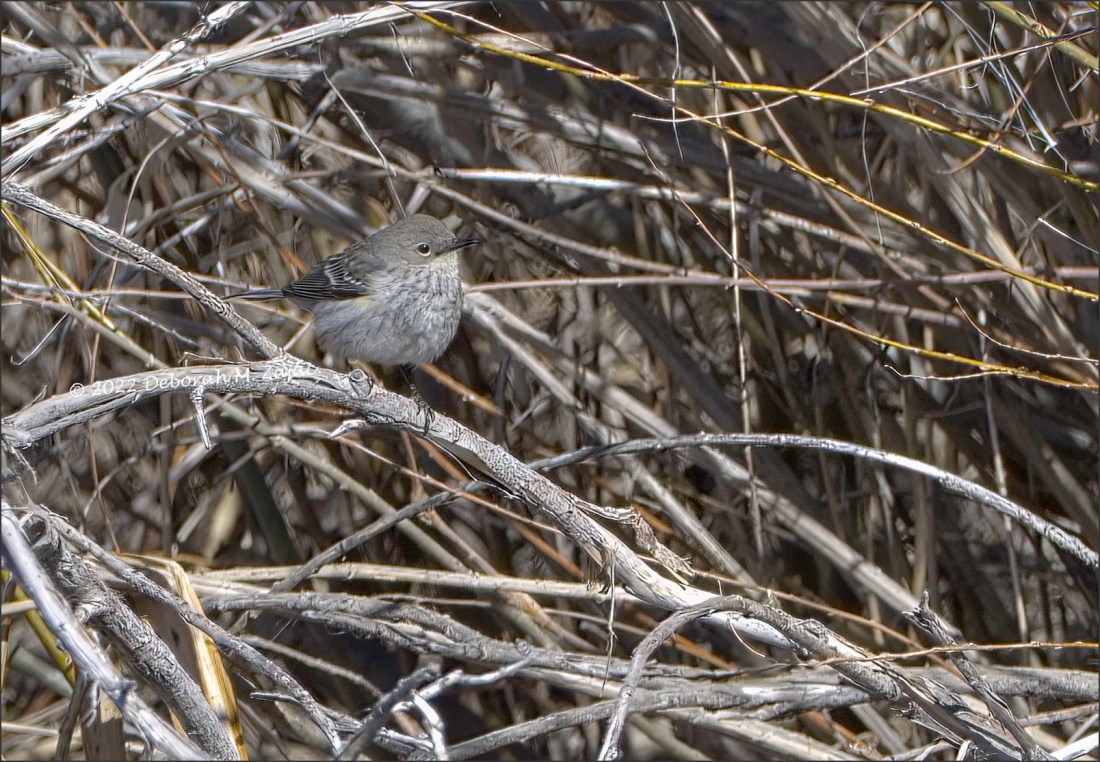
Saving the best for last, and it was the last bird we saw on our way back to the parking before we finished up was the Immature Audubon’s Yellow-rump Warbler. This was a lifer for me! Isn’t it cute!

Audubon’s Yellow-rump Warbler-immature

I’ll be birding with friends this week-end and hoping to see lots of birds. I hope you all have a great week-end!

Fuji X-T3| Fujinon 100-400mm @400mm| PS CC 23.2.0

more to come…

Whatever Weds. North American Elk

Copyright ©2022 Deborah M. Zajac. ALL RIGHTS RESERVED

One of the highlights we had while visiting Rocky Mountain National Park last October were the North American Elk herds. The surprising thing is just how BIG they are. They stand 5 feet tall at the shoulder, and weigh several hundred pounds. The females are half their size. Only the males have antlers which they shed each winter. Their antler can grow up to an inch a day!

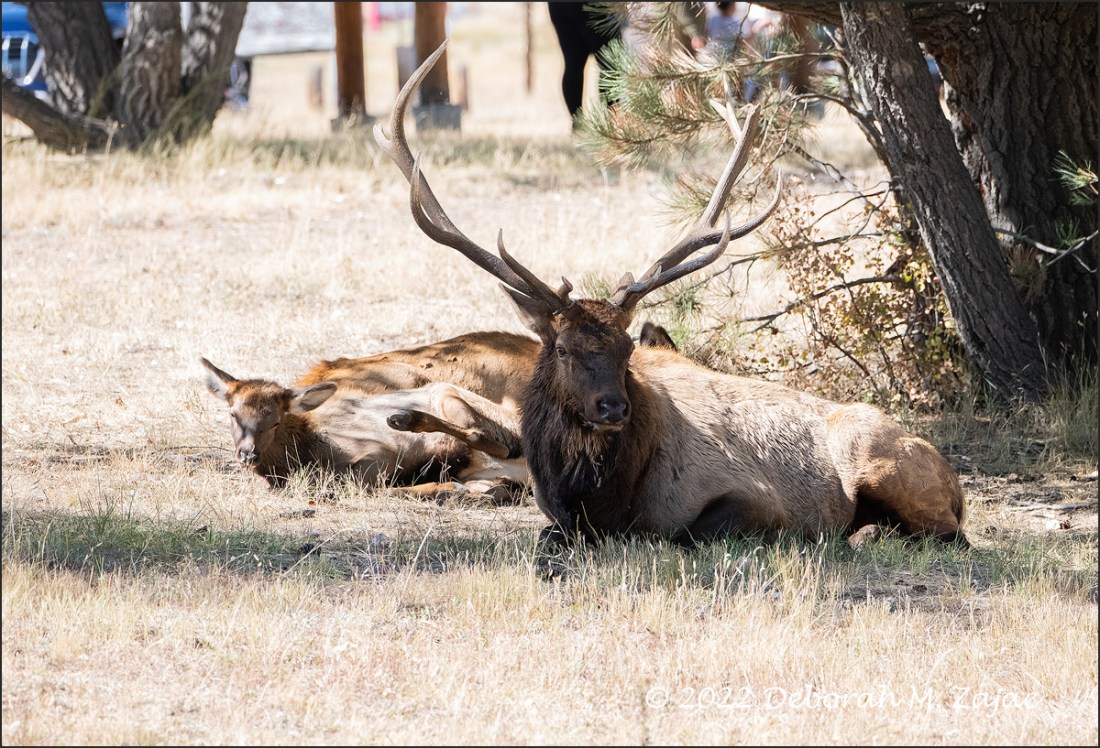
One morning while in Estes Park I saw a Bull laying in the shade with his harem and made my over to get some images of them.

The bull …

North American Elk Bull

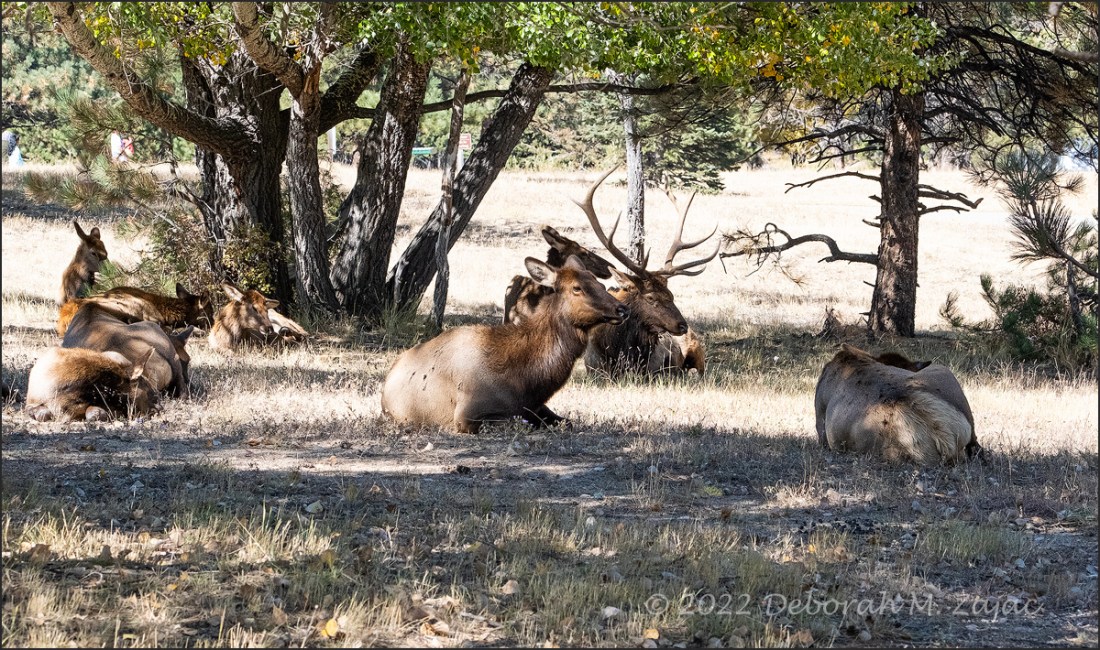
He had about dozen females (called cows) in his harem. Here he is with some of them just chillin.

Bull Elk with some of his harem

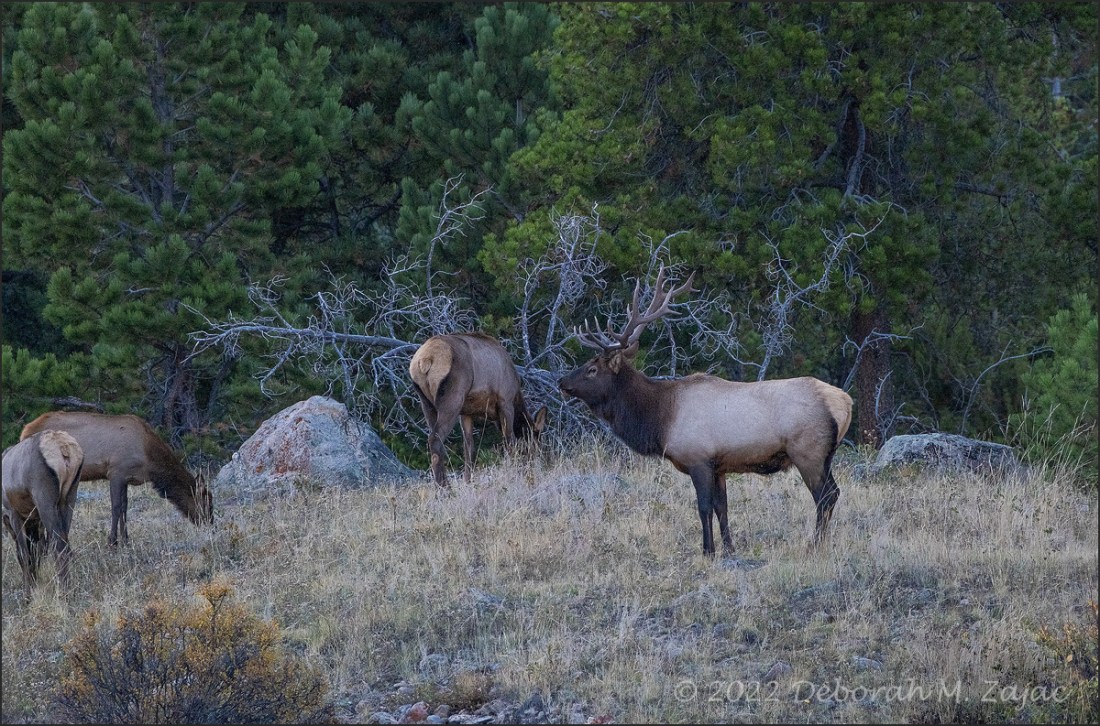
Here’s an image of a bull and some of his harem we saw the night before just after the sun went behind the mountains while in Rocky Mountain National Park.

North American Elk Bull with Harem

The rutting season begins in October so the bulls were on high alert keeping a close eye on their harems and keeping them close by.

Fun Fact-

Free roaming elk have a lifespan of 10-13 years in the wild.

https://www.nps.gov/romo/learn/nature/elk.htm

We really enjoyed seeing these wonderful animals while we in the park. They really do enrich the visit.

Fuji X-T3| Fujinon 100-400mm| PS CC 23.1.1

more to come

Whatever Weds. Cattails

Copyright ©2022 Deborah M. Zajac. ALL RIGHTS RESERVED

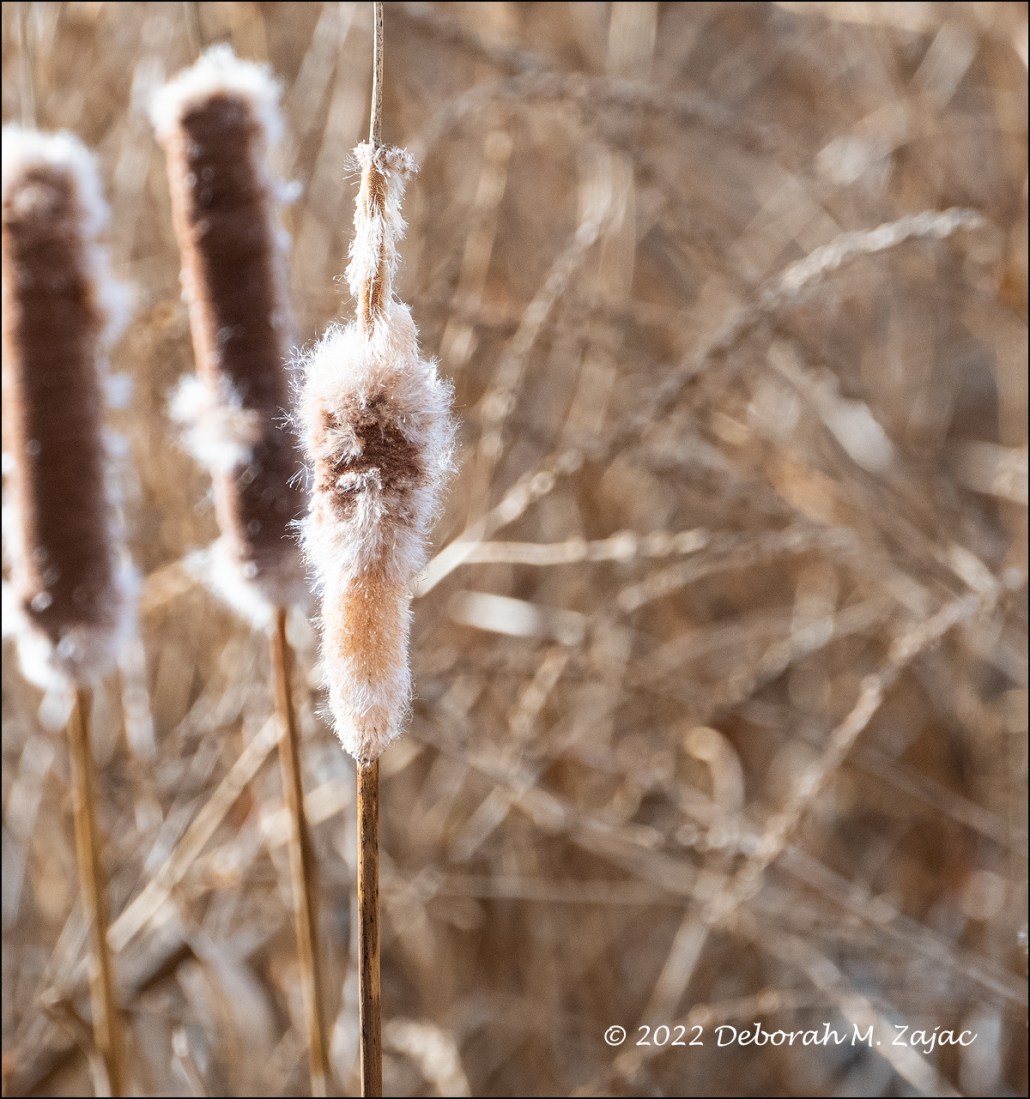
I like cattails even when they get all crazy and fluffy. I always think of it as organized chaos.

I’ve also always liked this bit of Mary Oliver’s poem regarding cattails,

“the long tapers
of cattails
are bursting and floating away over
the blue shoulders

of the ponds,
and every pond,
no matter what its
name is, is

nameless now.”

From her poem- In Blackwater Woods.

Happy Hump Day! I hope your week is going well.

Fuji X-T3| Fujinon 100-400mm| PS CC 23.0.0

more to come…

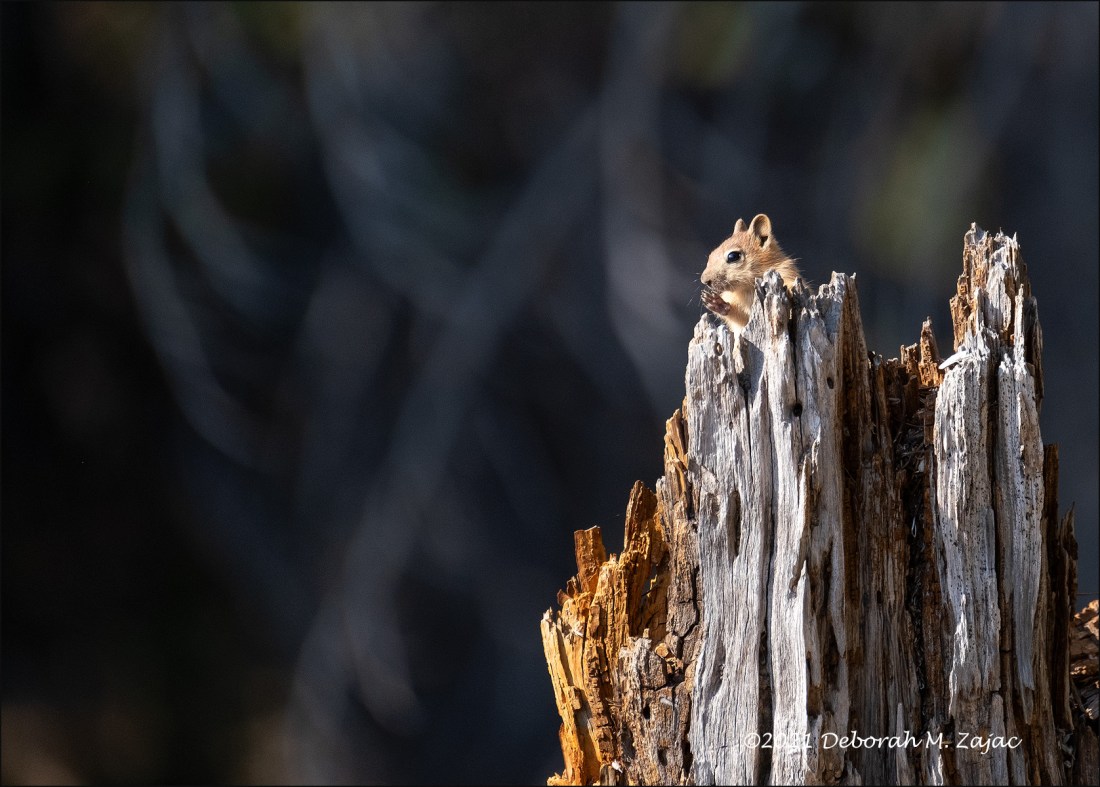
Wordless Weds. Little Red Squirrel-I think!

Copyright ©2021 Deborah M. Zajac. ALL RIGHTS RESERVED

The cutest little thing just popped up and started munching. Birding in the Carson Range 2021

Fuji X-T3| Fuji 100-400mm| PS CC 22.5

more to come…

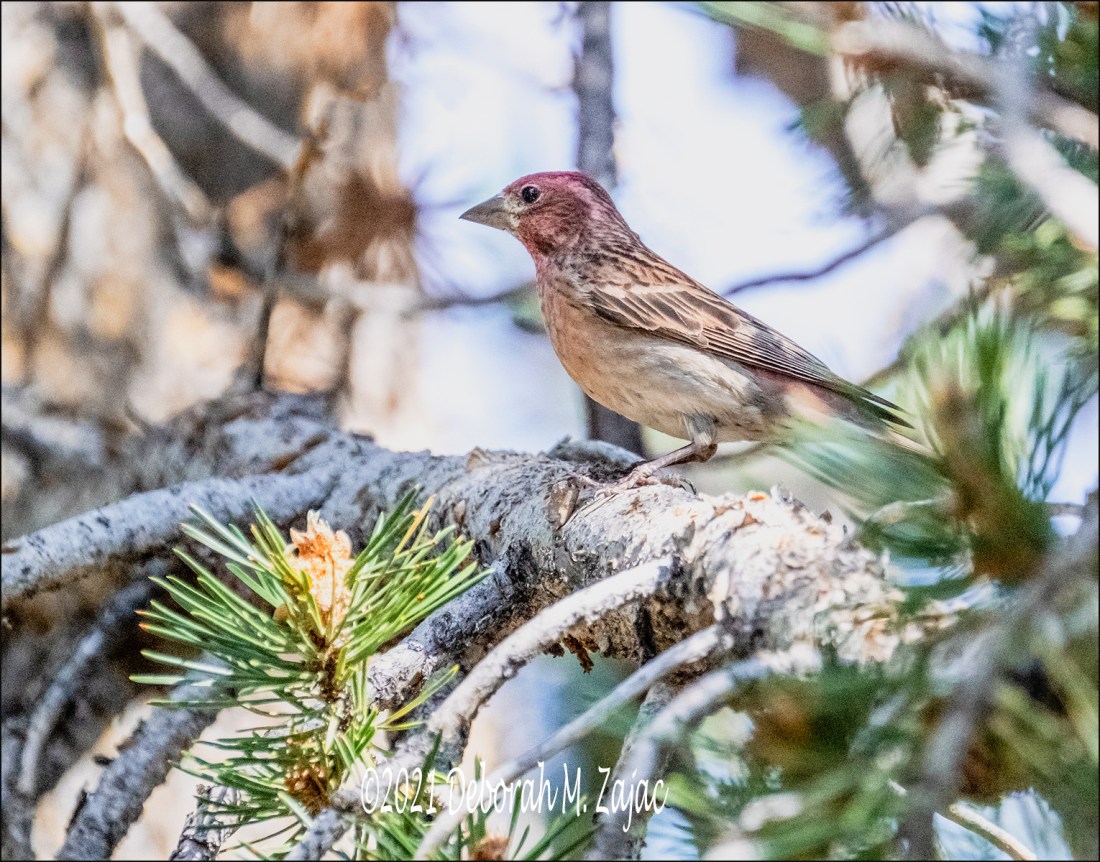
Friday Feathered Friends-Cassin’s Finch

Copyright ©2021 Deborah M. Zajac. ALL RIGHTS RESERVED

Back in July I saw this beauty, he was my 7th Lifer for the year!

Cassin’s Finch-Male

They live in the mountains of western North America. I am really surprised that it took me so long to spot one, but it did.

Fun Facts: gleaned from allaboutbirds.org

The Cassin’s Finch was first collected on an 1850s expedition to the southwestern mountains by the Pacific Railroad Survey. The eminent ornithologist John Cassin, who created illustrations for the survey, called the pink-tinged finch the “greatest bird in the lot.” Cassin asked his friend and colleague Spencer Baird to name the new species after him.

Male Cassin’s Finches have red crown feathers thanks to carotenoid pigments, which they acquire when they swallow colorful foods like the orange berries of firethorn plants.

Male Cassin’s Finches remain brownish and look like females during their first breeding season. During this time they sing, and this may give the false impression that both sexes sing. These young males may group into “bachelor flocks” during that first breeding season.

The Cassin’s Finch is an accomplished mimic, often adding the calls of other species into its own songs.

The Cassin’s Finch breeds semicolonially, with nests on average 80 feet apart. Nests are sometimes as close as 3 feet apart—this usually causes a fight between males until one of the pair gives up. If the first nest is substantially earlier than the other, however, such close nesting may be tolerated.

The Cassin’s Finch craves salt, and is often found visiting mineral deposits on the ground.

The oldest recorded Cassin’s Finch was a male, and at least seven years old when he was recaptured and released during banding operations in Oregon in 1979. He had been banded in the same state in 1974. ~ allaboutbirds.com

We’re still dealing with a lot of smoke from the two biggest fires in California.

As I type this on Thursday our AQI is bad, but not as awful as it was on Monday when we flew into Reno on our way home from visiting Big Baby Boy, and the Dark Haired Beauty. Monday the AQI was a whopping 398!

I saw the pilots on the way out of the plane and said, “I sure am glad you were able to see to land, because I couldn’t see a thing!” One of the pilots replied, ” We had one eye opened and hoped for the best.” 🤣😜

I’m glad it was the good eye!

He-Man said he was thinking about the scene in the movie Airplane. Flying on instruments LOL!!

I hope you all have a great week-end!!

Fuji X-T3| Fujinon 100-400mm| PS CC 22.5.0

more to come…

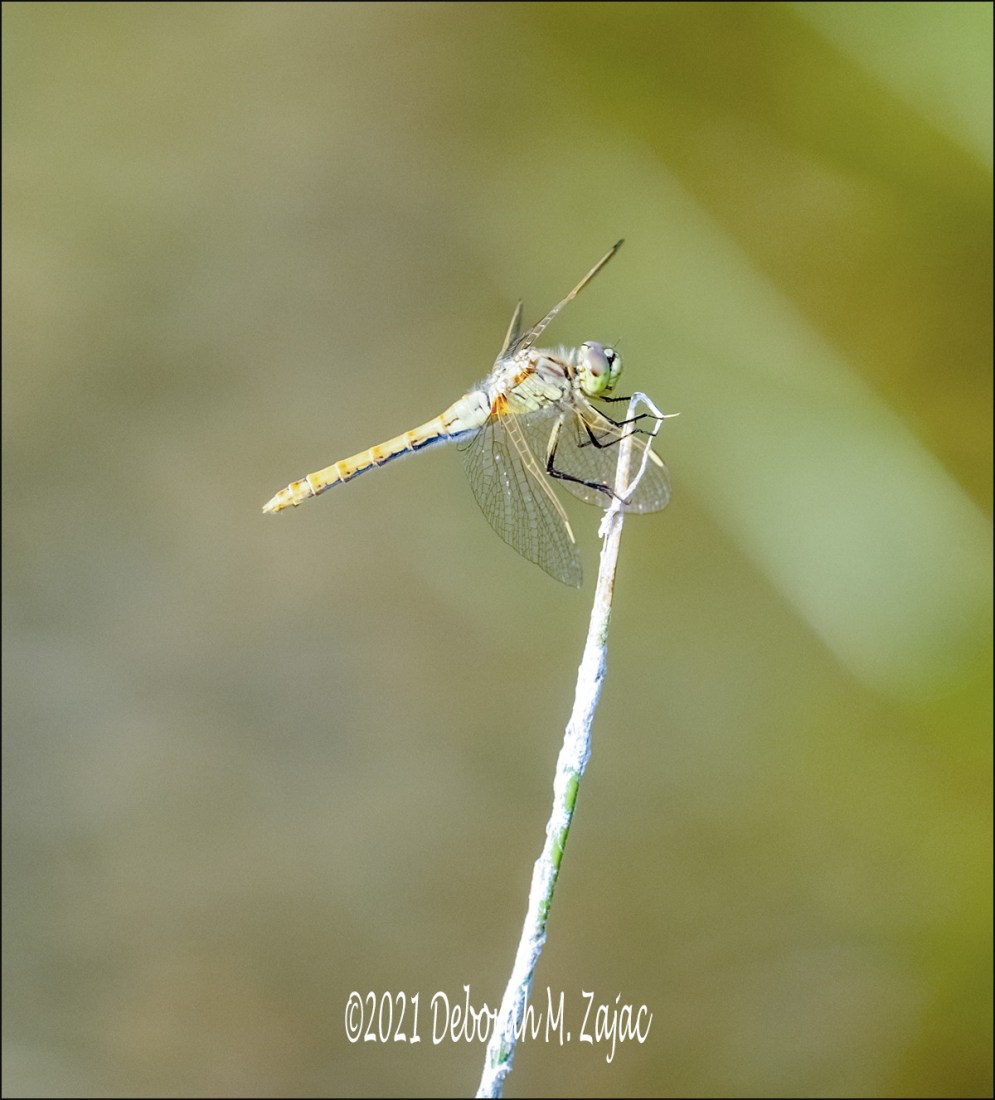
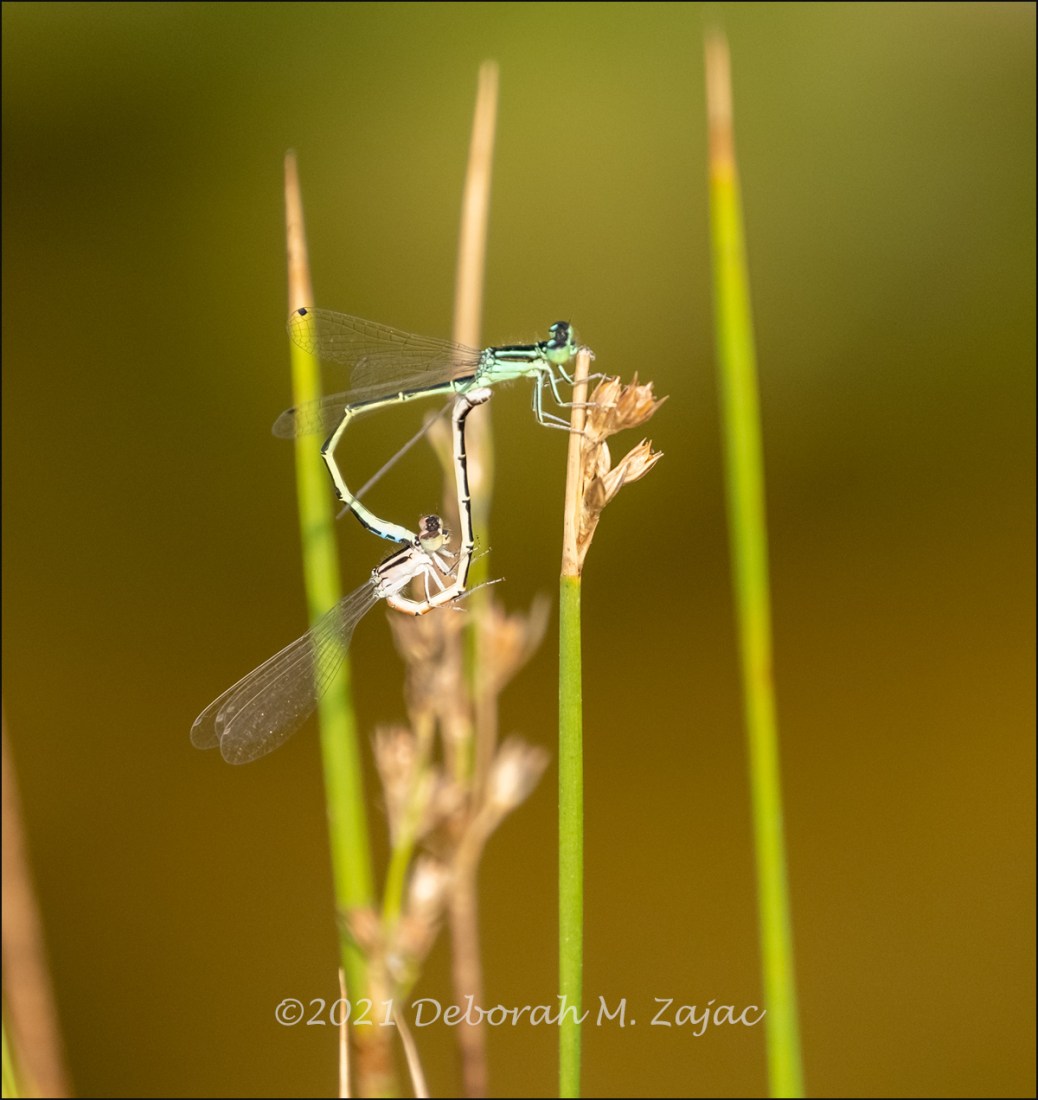
A Dragon, Damsels, and a Sphinx

Copyright ©2021 Deborah M. Zajac. ALL RIGHTS RESERVED

Dragonfly
Damselflies ❤
White-lined Sphinx

It was the first time I’ve seen the White-Lined Sphinx. Some people call it the Hummingbird Moth because it looks and acts like a Hummingbird. It was so cool seeing it fly and hover over these flowers feeding.

Hum, I don’t know what’s happening but my images look soft in WP lately. Sigh. Any ideas?

I had company last week-end then we went over the mountains to see the boys, Baby Girl, and The Handsome Surveyor for a couple of days so I am behind, but I’ll catch up with you in a tick!

I hope you all have a wonderful week-end!

Fuji X-T3| Fujinon 100-400mm| PS CC 22.4.3

more to come…

Friday’s Feathered Friends- Red-breasted Merganser Male

Copyright ©2021 Deborah M. Zajac. ALL RIGHTS RESERVED

Late in January, I heard there was a Red-necked Grebe in Lake Tahoe and it’s a bird I’ve never seen so wanting to get out of the house between storms He-Man and I drove over there for a walk-about and see what we could see. No grebe anywhere, but I did see a small group of Common Mergansers, and one that didn’t look quite like the others, but looked like a Merganser. I made some images and when I got home uploaded the images and discovered to my delight the one in the group that was a little different was a Red-breasted Merganser Male. A new bird for me, and Lifer number one for 2021!

They weren’t doing much of anything when I saw the group. I think it was a bit early and they were still waking up. 😀

Male Red-breasted Merganser Lake Tahoe 2021

Fun facts about them gleaned from my favorite source allaboutbirds.org

  • The Red-breasted Merganser breeds farther north and winters farther south than the other American mergansers.
  • Red-breasted Mergansers don’t acquire breeding plumage until they are 2 years old.
  • Red-breasted Mergansers need to eat 15 to 20 fish per day, which researchers suggest means they need to dive underwater 250–300 times per day or forage for 4–5 hours to meet their energy needs.
  • The oldest recorded Red-breasted Merganser was a female, and at least 9 years, 6 months old when she was shot in Alaska, the same state where she had been banded.

That’s a lot of diving and foraging isn’t it!

I hope you all a lovely week-end!

Panasonic Lumix FZ200| PS CC 22.3.0

more to come…