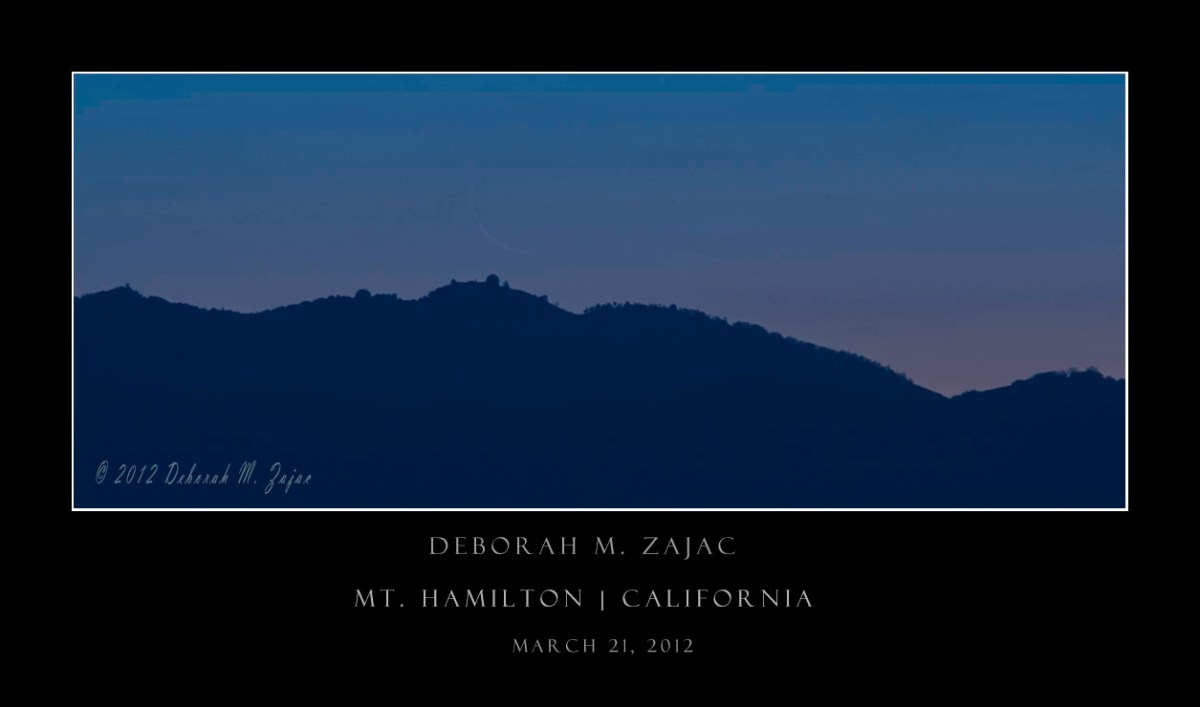
Rising Waning Crescent Moon over Mt. Hamilton

Copyright © 2012 Deborah M. Zajac. All Rights Reserved.


I rose early again this morning to meet 4 friends to try once more to photograph the rising Crescent Moon over Mt. Hamilton. Can you see it? You may have to click the photo once or twice to view larger. Though the sky was much clearer this morning of fog, low clouds, and haze we were competing with the later hour and approaching dawn. I couldn’t see it with my naked eye. Thankfully my camera did, and I was able to tease it out using Lightroom4.

We shot the sunrise shortly after this. I hope to post a photo from that later. I used my new Solar filter for it.

Nikon D300s| Nikkor 80-200mm@200mm+ Tamorn 1.4TC| |f11| 2 sec| ISO 800| Manual Mode| Tripod|

An Ice Plant Sunset

Copyright © 2012 Deborah M. Zajac. All Rights Reserved.

I decided to spend the night in Santa Cruz the night before shooting the Moonset at Pigeon Point Lightstation. I would be able to sleep in an extra 40 minutes. Which meant I could sleep until 3:45AM and only drive 30 minutes to my shooting location, and I would get to spend some time with my friend Rainey.  We met at the University of Santa Cruz Arboretum to photograph the Allen’s Hummingbirds that return each February to the succulent garden at the Arboretum. They are so cute, and very active. This guy hardly stayed still 2 seconds together.  He looked kind of cross about me taking his photo a few times. You don’t suppose he’s sticking his tongue out at me do you?

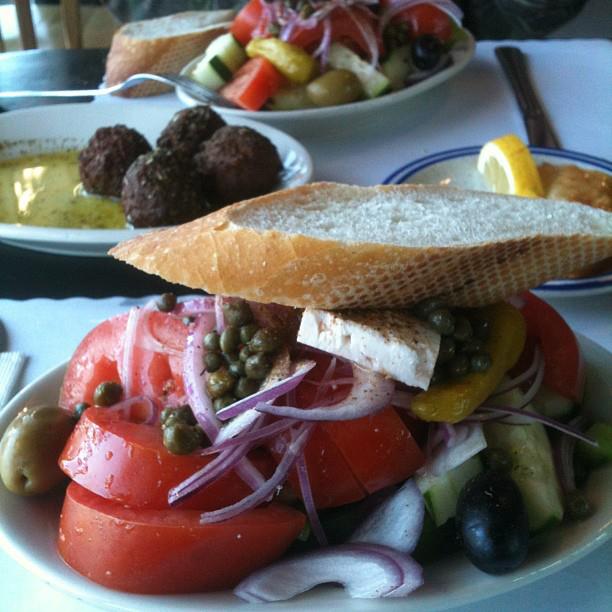
We stayed at the Arboretum until closing time then we went to Vasili’s Greek Restaurant on Mission Blvd. for dinner. We shared an order of SPANIKOPITA: Spinach and Feta Cheese Baked in a Filo Dough Triangle which was served with fresh sliced lemon to squeeze over the warm filo triangles, and an order of KEFTETHAKIA: Greek Meatballs. These were served sitting in a thin layer of extra virgin olive oil, and garlic vinaigrette.  These were to die for! We both wished we had ordered these for our entrée.

We both ordered the HORIATIKI SALATA for our entrée.  A salad of  Capers, Tomatoes, Cucumbers, Bell Peppers, Red Onions, Feta Cheese, Pepperoncini & Greek Olives, tossed with a light vinaigrette and topped with a slice of fresh French bread for dipping into the vinaigrette. They offer 2 sizes small and large. The small was  more than plenty.

Neither one of us had room for dessert. I will definitely be returning to Vasili’s.

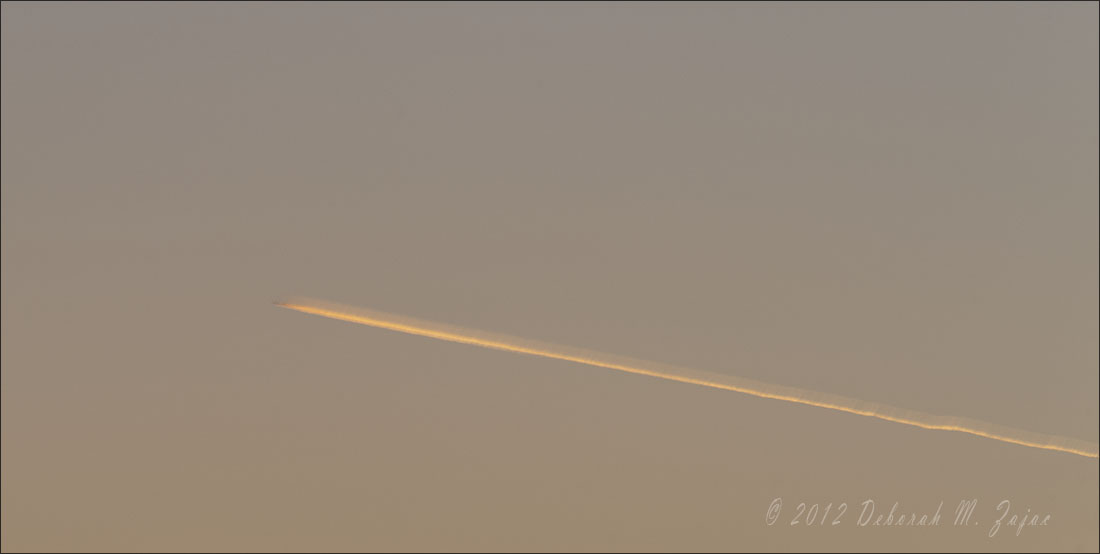
From here we went over the Natural Bridge State Beach to shoot the sunset. (See 1st photo) After the sun went down, and the color faded we began to pack up and call it a night, when a woman who parked in the spot next to me asked,” Are you taking photos of that thing in the sky? What is it?” I looked up and saw what looked like a rocket streaking across the sky heading southwest with a long contrail then at that moment something broke off the contrail and it fell toward the sea.

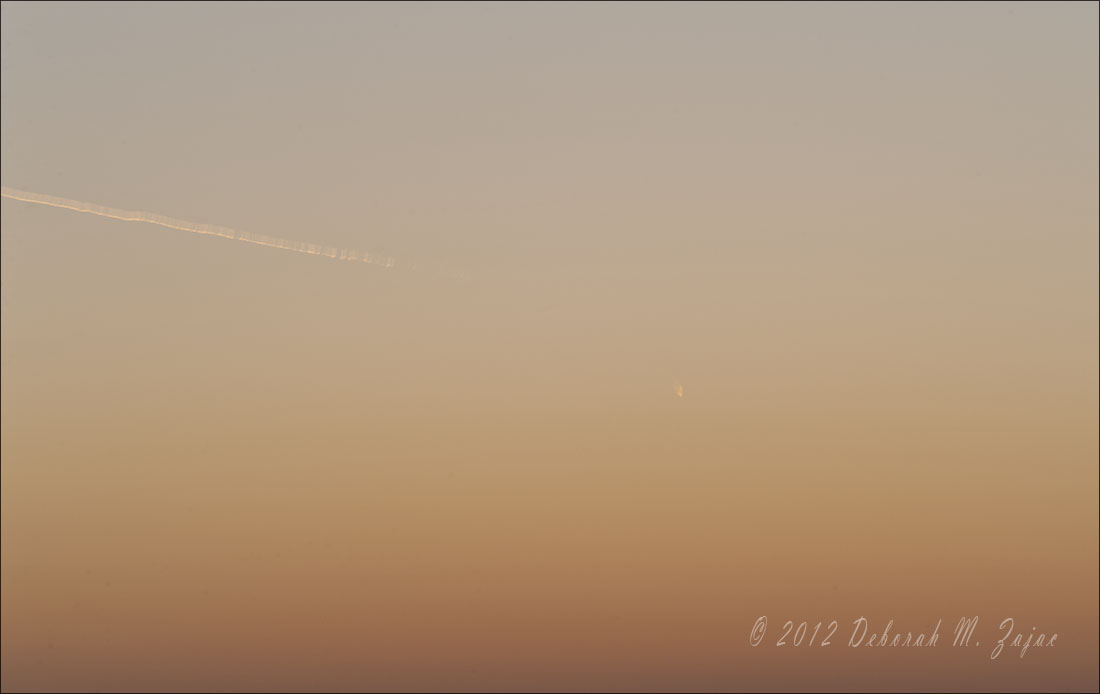
and the end of the contrail with the little piece falling off …

Then it just disappeared. Poof. It burned up. A meteorite? Space junk? We have no idea. There was nothing in the paper. Perhaps it was  just a flare? It made for an interesting end to our afternoon and evening.

Rainey and I went for a coffee, then said good-night  as we both had early wake-up calls. Her’s for work, mine for a Moonset.

Santa Cruz, California, Natural Bridges State Beach, Nikon D700| Nikkor 17-35mm & 80-200mm| Induro Tripod| Dinner photo taken with my iphone


Planetary Conjunction

Copyright © 2012 Deborah M. Zajac. All Rights Reserved.

Copyright © 2012 Deborah M. Zajac. All Rights Reserved.

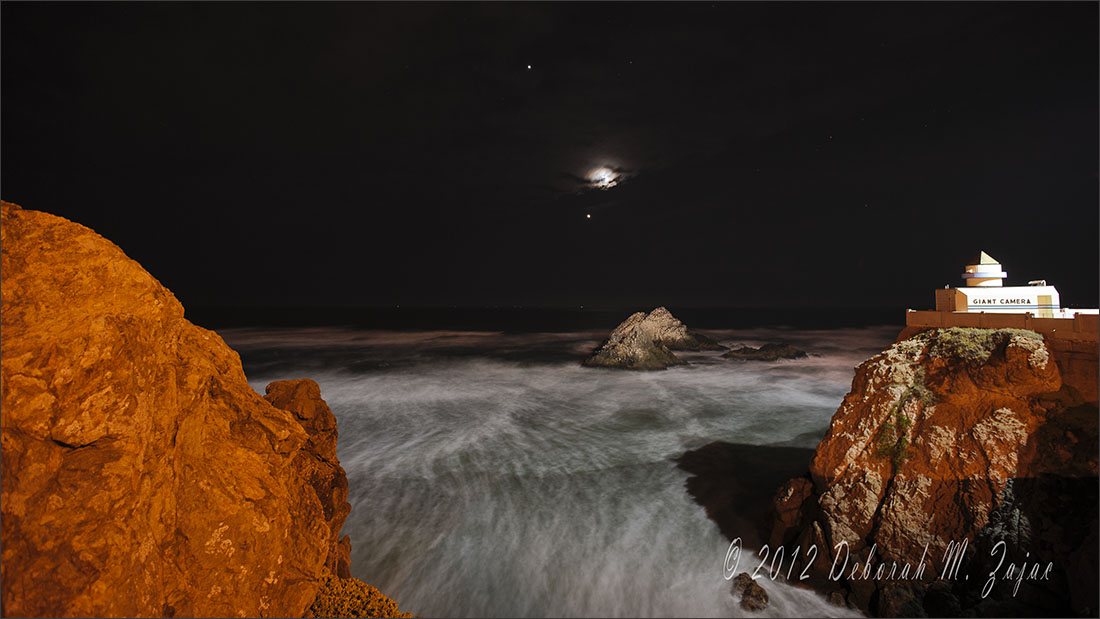
Thanks Dali and Andy for reminding me about this astronomical event. Jupiter, Venus, and the Moon lined up in a triangle to form a special conjunction on Feb. 25, 2012. We spent a lot of time online emailing each other about places we liked to shoot this. I kept looking at this area of the city and I asked the guys to look at it too.  After the guys looked at it on TPE (The Photographer’s Ephemeris) they too liked it and we decided to shoot it here.  Andy didn’t join us he decided to make some progress on his computer project so it was Dali, Phil, and I who shot here. It was fun, but cold!

The forecast called for a clear sky, but what we had were  intermittent clouds, and a low fog bank. As soon as Venus dropped into the fog we called it a night. The Crescent Moon is in those clouds, but Jupiter and Venus are clearly visible.

To see what Dali shot go here

To see Phil’s photo go here

Nikon D700| Nikkor 18mm| f5.6| 15 seconds| ISO 800| Manual Mode| Tripod| Self Timer

First Photo of the New Year

Copyright © 2012 Deborah M. Zajac. All Rights Reserved.

I spent the first few days of 2012 photographing parts of the Eastern Sierras with dear friends. This was our 2nd Annual New Years Photo Trip.
There wasn’t much snow in the high country so we were able to cross Tioga Pass to get to our base camp which was in Bishop, CA. From there we were pretty central to everything we had hoped to photograph. We roamed from Mammoth on the northern end to Alabama Hills in the south.
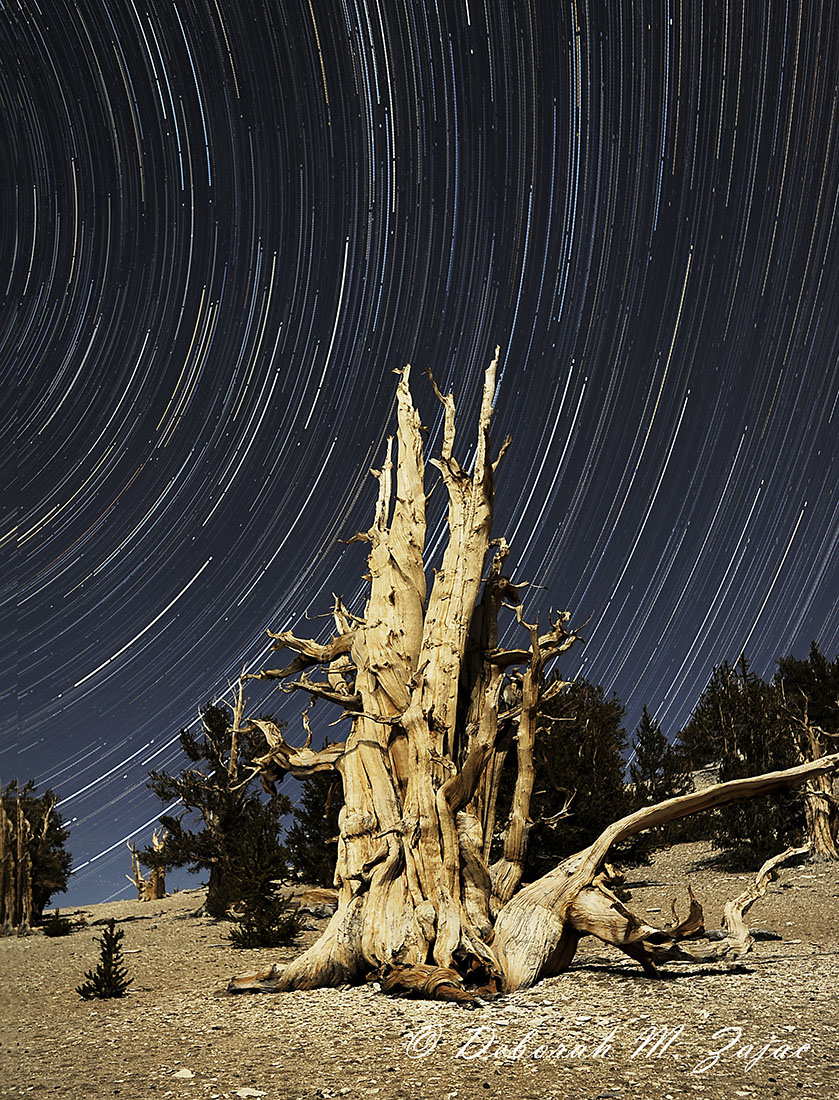
Sunrises, sunsets, and a bit of scouting during the day was on the agenda, and on our first night we had a clear sky so we drove south to Ancient Bristle Pine Cone National Park and shot in the Patriarch Grove.  The elevation is between 10,000 and 11,000ft.  Because the air is so thin up here these trees grow slowly.  This  harsh environment makes their wood denser and stronger to resist pests, and disease. The oldest tree is 4600 years old! Their twisted limbs and odd shapes make great subjects and foreground for star trails.

Once you get the focus sharp, your settings selected, and your intervelometer set up you can sit back and watch the sky, or  do what we did; go back to the car and turn on the heater. It was 26 degrees outside!

This star trail is made from 82 frames each were 58 second exposures. I cloned out 6 airplanes and 1 shooting star.
The trip was great fun, and I’m looking forward to our 2013 New Years Photo adventure.

A gleaming path led my eye…

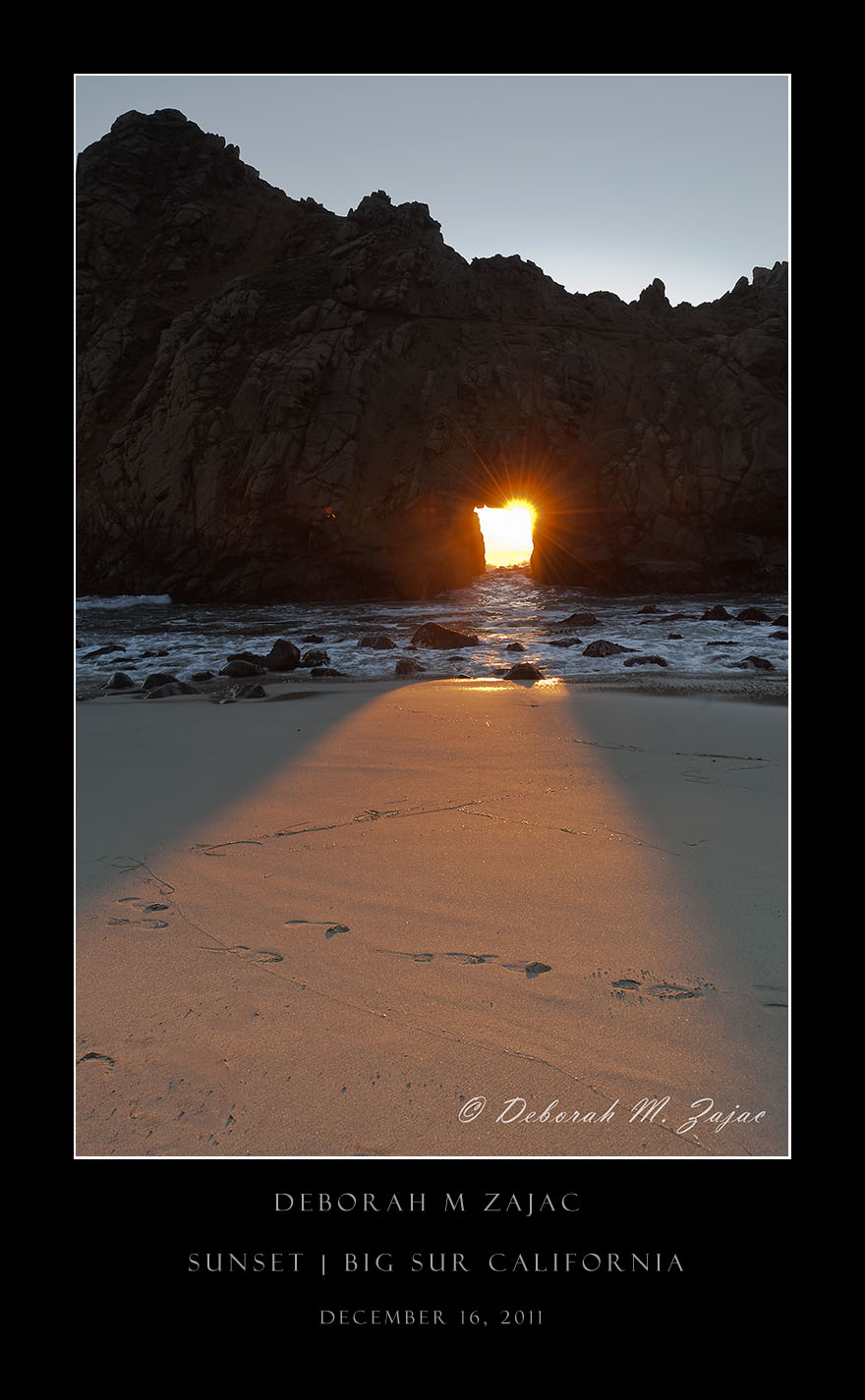
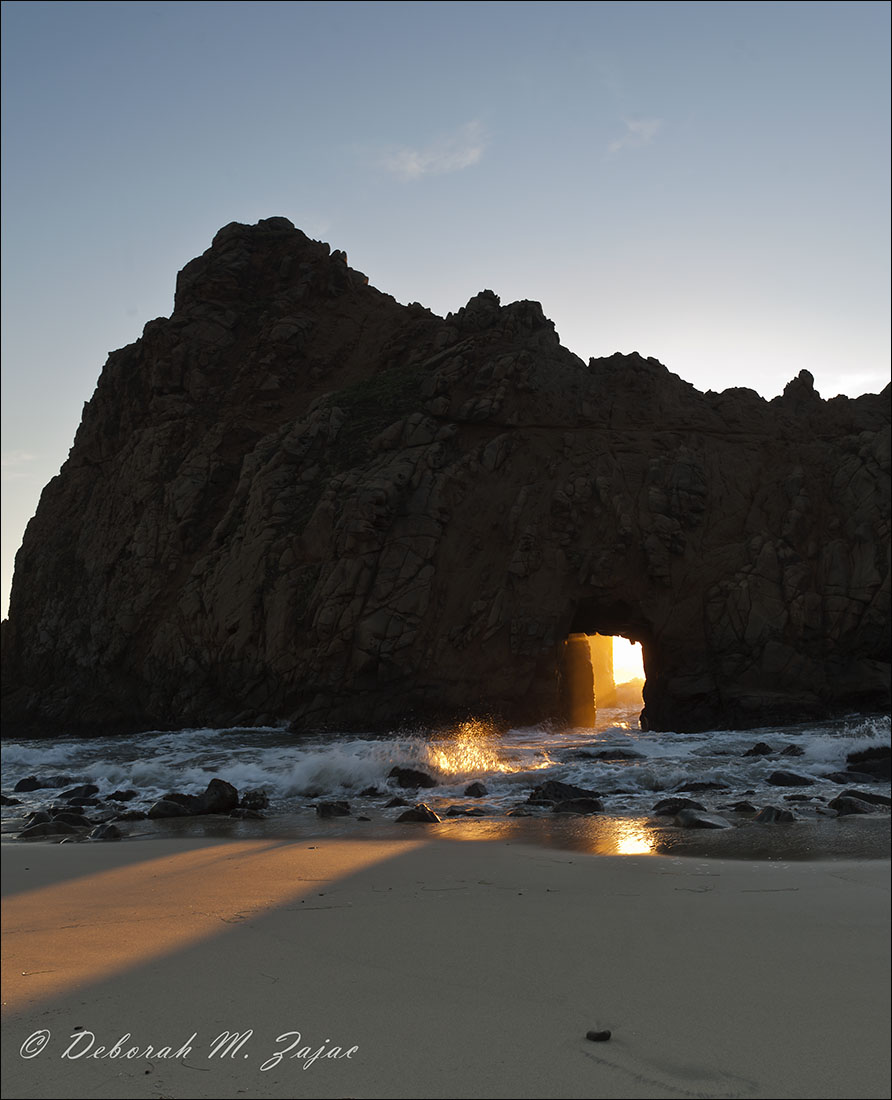
The Portal, Big Sur, California

Copyright © 2011 Deborah M. Zajac. All Rights Reserved.

The sun lines up to shoot its beam through this portal each winter if the weather cooperates.

I had gone down with some friends in late Nov. and got a shot, but I hoped to get a better one before the sun moved out of range. I’ve been watching and waiting for a clear night. The forecast for last night was perfect; clear skies, but cold, so I made the 109 mile drive down to Big Sur.

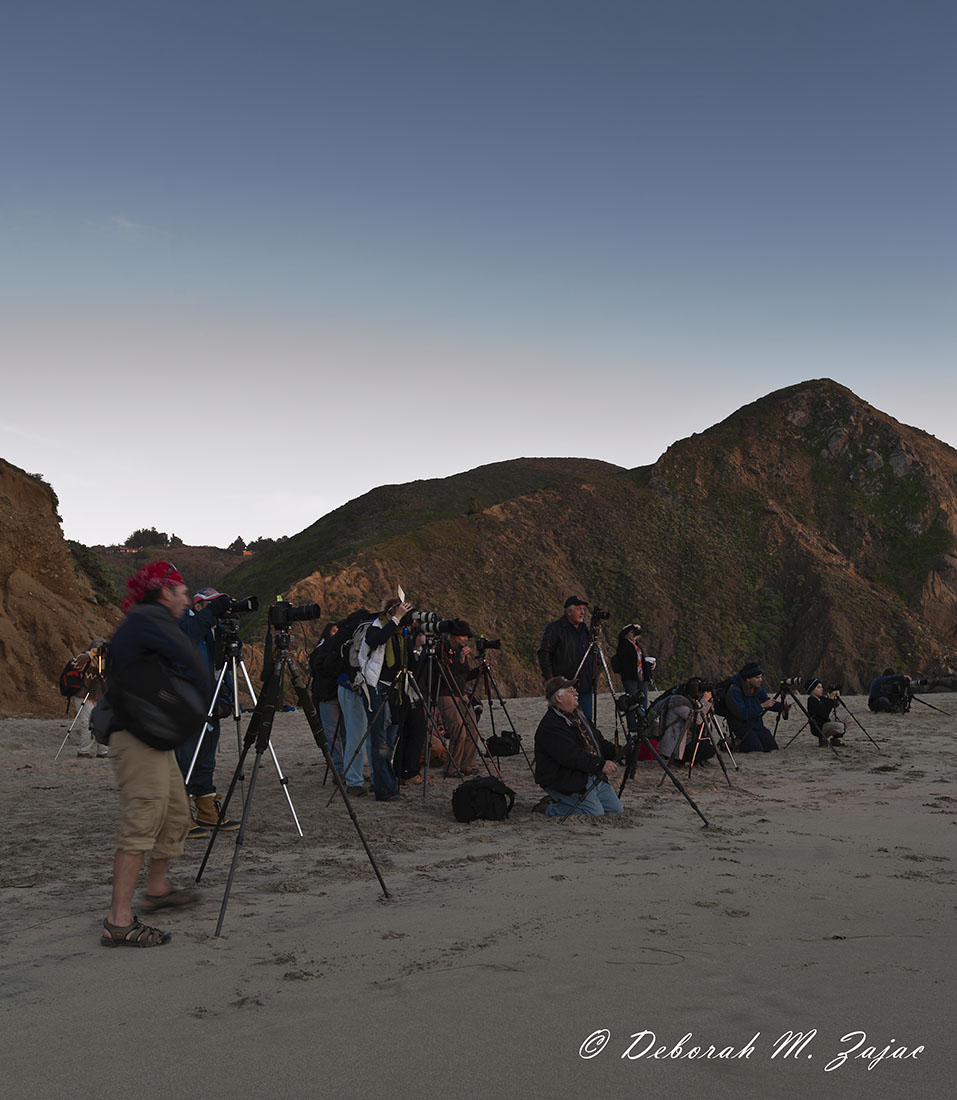
I packed my down jacket, gloves, and gear and hiked out to the beach. There was only one other photographer there, but I knew that would change as the sun sunk lower on horizon. By the end of the evening there were about 15 of us shooting the sunset.

It’s a fun trip down and always an adventure since one never really knows what the sunset will look like.  The light shines through the Portal about 25 minutes so I shot the beam of light from different angles. Here’s one where I caught a cool little splash.

I’m heading down once more. I’ll try some different angles and perspectives if the fog stays far out at sea.

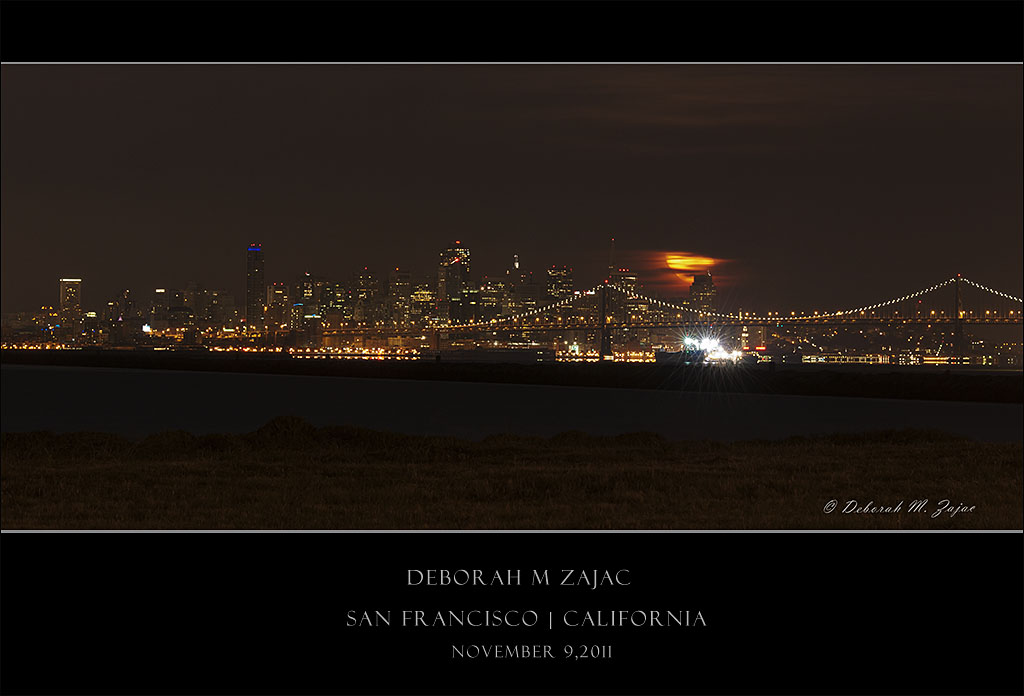
Moonset Over San Francisco, California

Copyright © 2011 Deborah M. Zajac. All Rights Reserved.

I rose pretty early this morning to make the hour drive to this location to meet my friend Andy aka Stargazer to shoot the Moonset.
He checked and double checked the webcams in the area hoping for no fog. We did have a fog bank sitting right where we hoped to shoot the setting Moon, but we got lucky; it peeked out enough to make a pretty picture, and the color! It really was this color! It was gorgeous. Worth getting up at 3AM for.
We have rain in the forecast tomorrow, but if we get a break and no fog in the morning we may try it again.

Andy has his photo up from this morning please check it out. It’s awesome!
www.flickr.com/photos/sharpshutter/6328755145/in/contacts…

Nikon D300s| Nikkor 80-200 @ 100mm| f11| 45 seconds| ISO 200| Manual Mode| Tripod| Intervelometer

Hubble Movies Provide Unprecedented View of Supersonic Jets from Young Stars

Via Flickr:
The glowing, clumpy streams of material shown in these NASA Hubble Space Telescope images are the signposts of star birth.

Ejected episodically by young stars like salvos from a cannon, the blobby material zips along at more than 440,000 miles (770,000 kilometers) an hour. Called Herbig-Haro or HH objects, these speedy outflows have a bumpy ride through space.

When fast-moving blobs “rear-end” slower gas, bow shocks (the blue features) arise as the material heats up. Bow shocks are glowing waves of matter similar to waves produced by the bow of a ship plowing through water. In HH 2, at lower right, several bow shocks (the compact blue and white features) can be seen where fast-moving clumps bunch up like cars in a traffic jam. In HH 34, at lower left, a grouping of merged bow shocks reveals regions that brighten and fade over time as the heated material cools, shown in red, where the shocks intersect.

In HH 47, at top, a long jet of material has burst out of a dark cloud of gas and dust that hides the newly forming star. The blue, fan-shaped region at left is the edge of a cavity illuminated by the fledgling star. A massive clump of jet material collides with upstream gas, creating the white bow-shaped shock wave at right.

These images are part of a series of time-lapse movies astronomers have made showing the outflows’ motion over time. The movies were stitched together from images taken over a 14-year period by Hubble’s Wide Field Planetary Camera 2. Hubble followed the jets over three epochs. Observations of HH 2 were made from 1994, 1997, and 2007; HH 34 from 1994, 1998, and 2007; and HH 47 from 1994, 1999, and 2008.

The outflows are roughly 1,350 light-years from Earth. HH 34 and HH 2 reside near the Orion Nebula, in the northern sky. HH 47 is located in the southern constellation Vela.
Object Names: HH 47, HH 34, HH 2
Image Type: Astronomical/Annotated

To read more go to: www.nasa.gov/mission_pages/hubble/science/supersonic-jets…

Credit: NASA, ESA, and P. Hartigan (Rice University)..NASA Goddard Space Flight Center enables NASA’s mission through four scientific endeavors: Earth Science, Heliophysics, Solar System Exploration, and Astrophysics. Goddard plays a leading role in NASA’s accomplishments by contributing compelling scientific knowledge to advance the Agency’s mission.