“A good snapshot keeps a moment from running away.” ― Eudora Welty
Author: circadianreflections
My name is Deborah Zajac. I'm a photographer living in Nevada at the base of the Eastern Sierras. I am a passionate nature, landscape, night/astro photographer. I shoot predominately in color and use Nikon Digital Cameras, and lenses.
I hope you enjoy seeing some of the photos I've taken while on my travels.
Please feel free to leave a comment I'd love to hear from you.
PLEASE DO NOT USE MY IMAGES WITHOUT EXPRESSED WRITTEN PERMISSION.
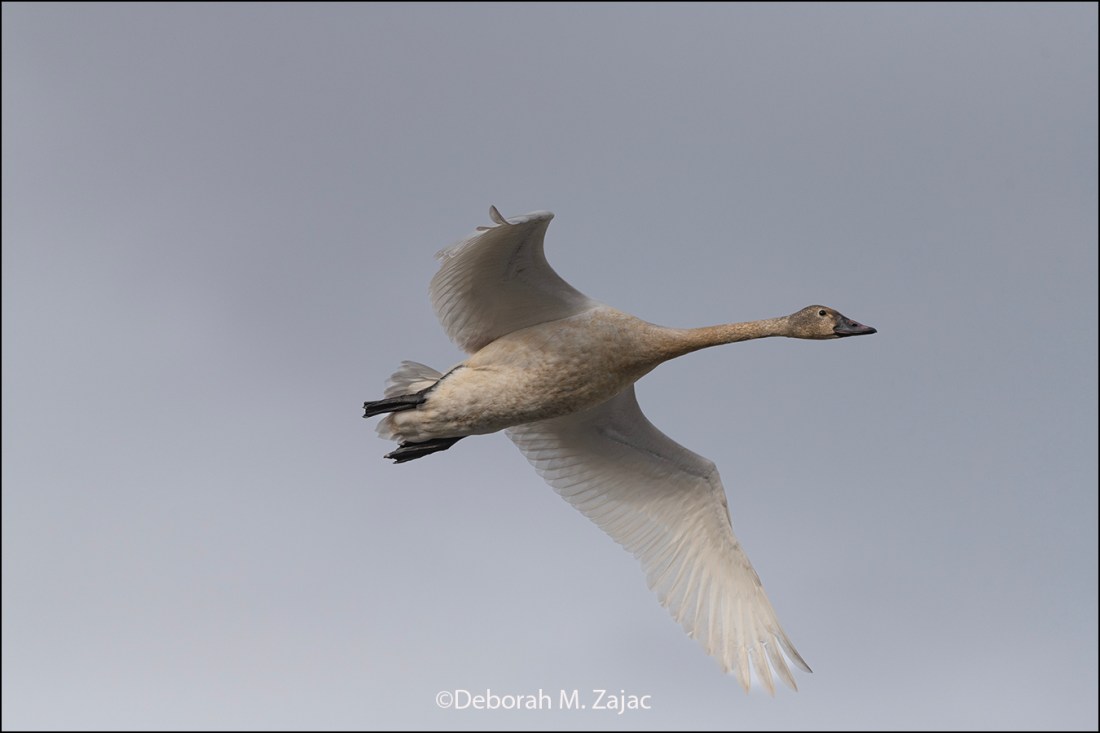
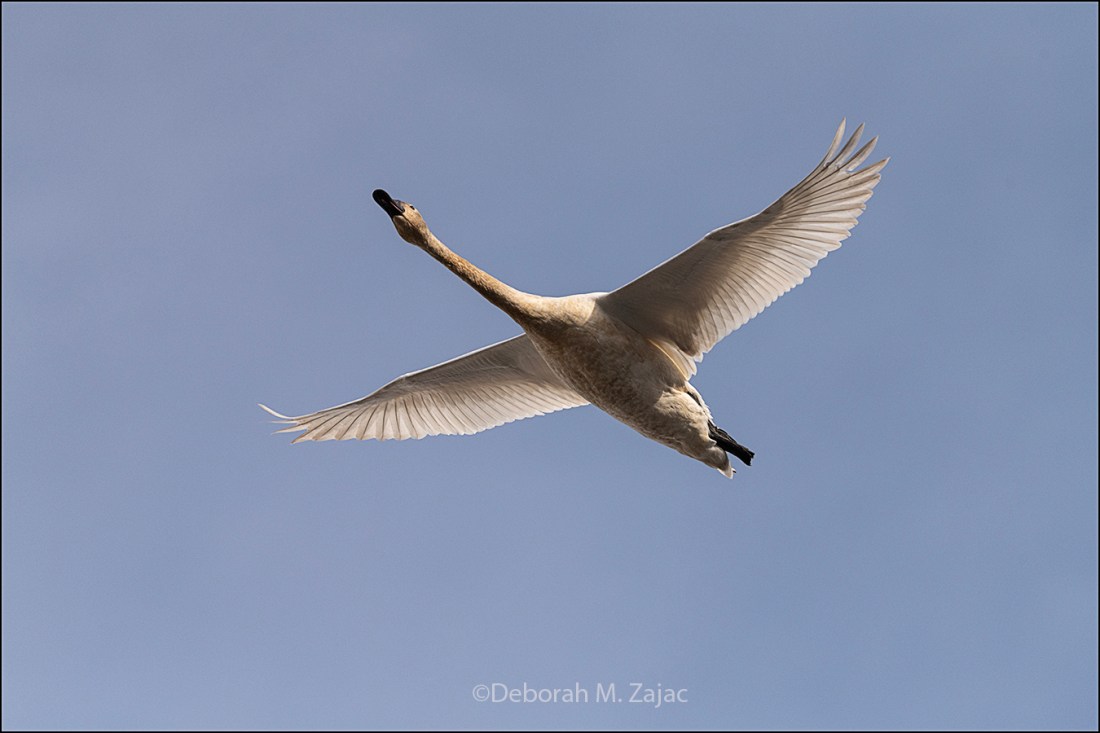
While out birding with the group last Friday morning we had the pleasure of a Tundra Swan fly-by. The single Swan flew by three times actually. Probably checking out the slough and ponds to see if that was the place to land or if his partner was there. We didn’t see a another swan and after three passes we didn’t see it again.
Both images are cropped a bit. It was higher in the sky than these make it look.
Fun Facts:
Lewis and Clark provided the first written description of the Tundra Swan during their expedition to the West, where the birds’ whistle-like calls prompted Meriwether Lewis to dub them “whistling swans.”
The whistling swan, the American race of the Tundra Swan, currently is considered the same species as the Eurasian race, the Bewick’s swan. They were considered separate species in the past, distinguished by the large yellow patches on the face of the Bewick’s swan.
The Tundra Swan stays in flocks except when on a breeding territory. Although most swans spread out to breed, a large proportion of the population on the breeding grounds still can be found in flocks. These swans are not breeding, and may be young birds that have not yet bred, adult pairs whose breeding attempts failed, or adults that bred in the past but for some reason do not in that year.
During the breeding season the Tundra Swan sleeps almost entirely on land, but in the winter it sleeps more often on water.
Tundra Swans breed in the remote arctic of North America. Parents defend their nests and young against a host of predators including foxes, weasels, wolves, and bears, as well as birds such as Glaucous Gulls, Common Ravens, Parasitic Jaegers, Pomarine Jaegers, and Golden Eagles. If the parents are present, they are able to defend the nest and nestlings from these threats. Wolves, people, and bears, however, are too big to fight, and most incubating swans leave their nests while these large predators are far away. By leaving quickly when large predators approach, the parents may make the nest harder to find.
Tundra Swans wintering in Chesapeake Bay feed almost exclusively on clams that they dislodge from the mud. But it can be challenging to enjoy a peaceful meal: often the swan has to fend off a Ring-billed, Herring, or Greater Black-backed gull that swoops in to grab a clam from the swan’s bill – a successful tactic in about half of these “kleptoparasitic” encounters.
Swans have long been associated with ideals of romance. Added to their elegant outlines and all-white plumage is their tendency to form permanent pair bonds by the time they’re 2-3 years old. Once a pair forms, Tundra Swans feed and roost together year-round.
Based on banding records, the oldest known Tundra Swan was a female and at least 23 years, 7 months old when she was identified by her band in the wild, in Ohio. She was originally banded in the same state.
PLEASE DO NOT USE MY IMAGES WITHOUT EXPRESSED WRITTEN PERMISSION.
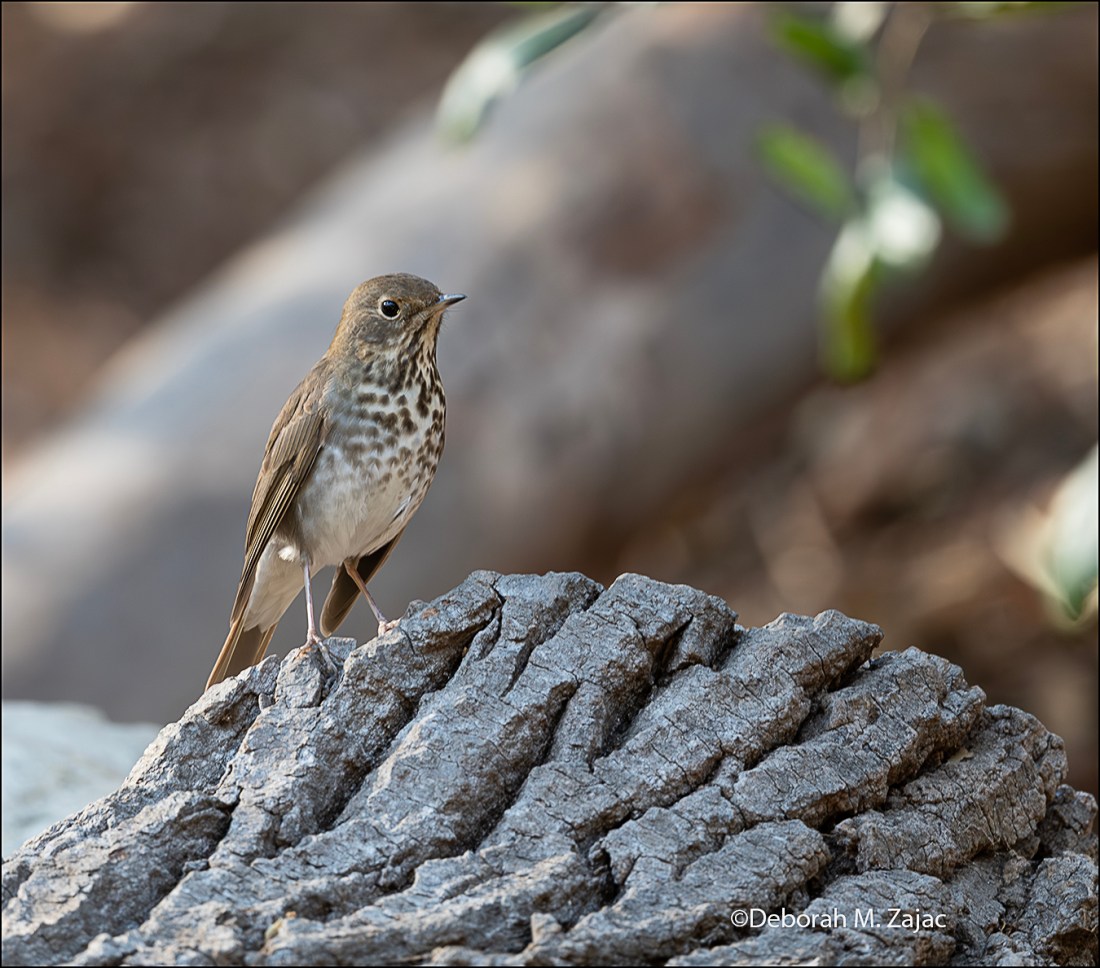
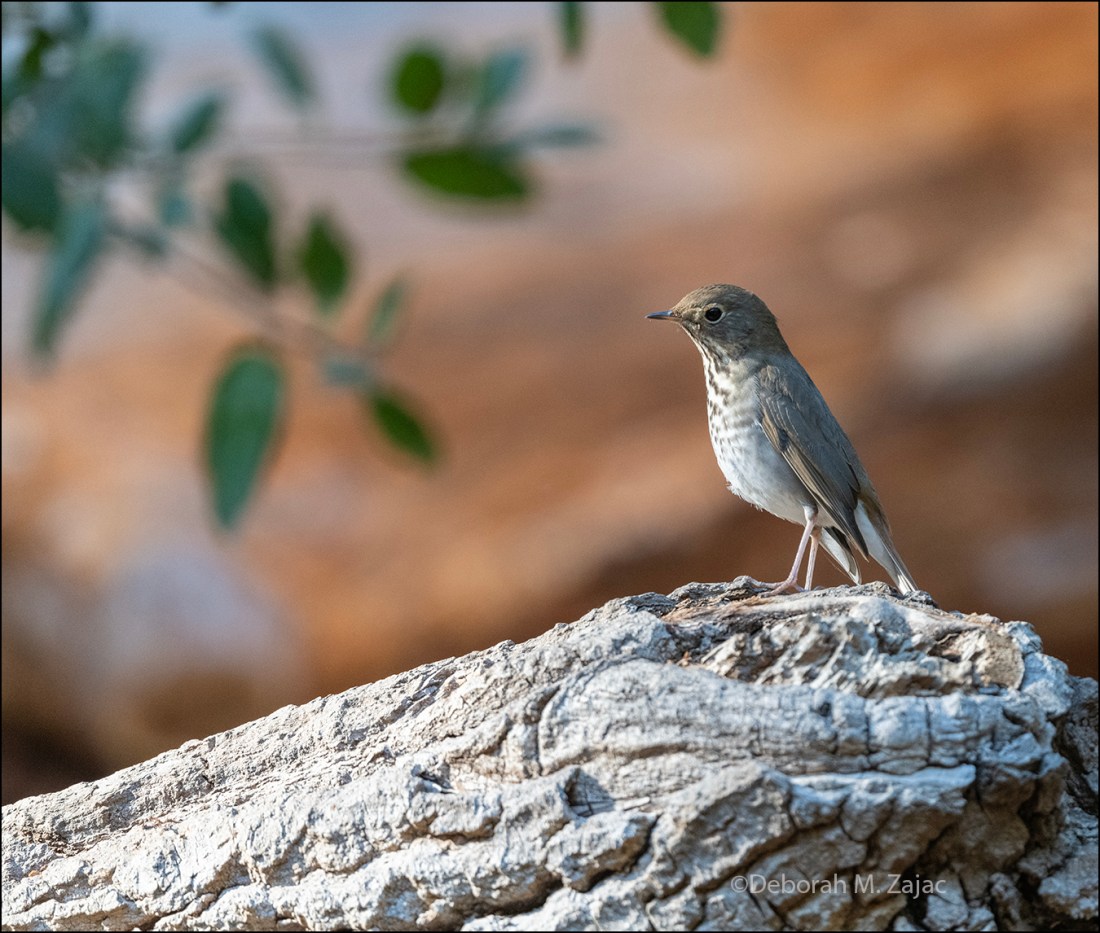
While we were visiting the Santa Barbara Botanical gardens recently He-Man stopped in a little garden rest area with a bench to retie his shoe and out popped a Hermit Thrush! I was so excited because I don’t see these shy birds too often.
We got several minutes of good looks at it while it was foraging around area.
Fun Facts-
Males usually gather food for the nest, while females feed the nestlings. The young birds start by eating bits of larvae, then grasshoppers, moths, and spiders. They sometimes eat small vertebrates such as salamanders.
Hermit Thrushes usually make their nests in and around trees and shrubs, but they can also get more creative. Nests have been found on a cemetery grave, on a golf course, and in a mine shaft.
Hermit Thrushes sometimes forage by “foot quivering,” where they shake bits of grass with their feet to get insects. They also typically begin to quiver their feet as they relax after seeing a flying predator.
East of the Rocky Mountains the Hermit Thrush usually nests on the ground. In the West, it is more likely to nest in trees.
Hermit Thrushes make several distinct calls around their nests. They will sometimes make a rising byob sound similar to a mewing kitten. Females frequently rearrange their eggs while making quit quit noises. In the morning, two adults meeting near the nest will greet each other with a pweet pweet call.
Hermit Thrushes are part of a genus (Catharus) that includes four other similar thrushes in North America: the Veery, Swainson’s Thrush, Gray-cheeked Thrush, and Bicknell’s Thrush. In the northeastern mountains, the Veery lives at the lowest elevations, Hermit Thrushes at middle elevations, and Swainson’s Thrushes at high elevations.
The oldest recorded Hermit Thrush was at least 10 years, 10 months old when it was recaptured and rereleased during banding operations in Maryland in 2009. It was originally banded there in 1999.
PLEASE DO NOT USE MY IMAGES WITHOUT EXPRESSED WRITTEN PERMISSION.
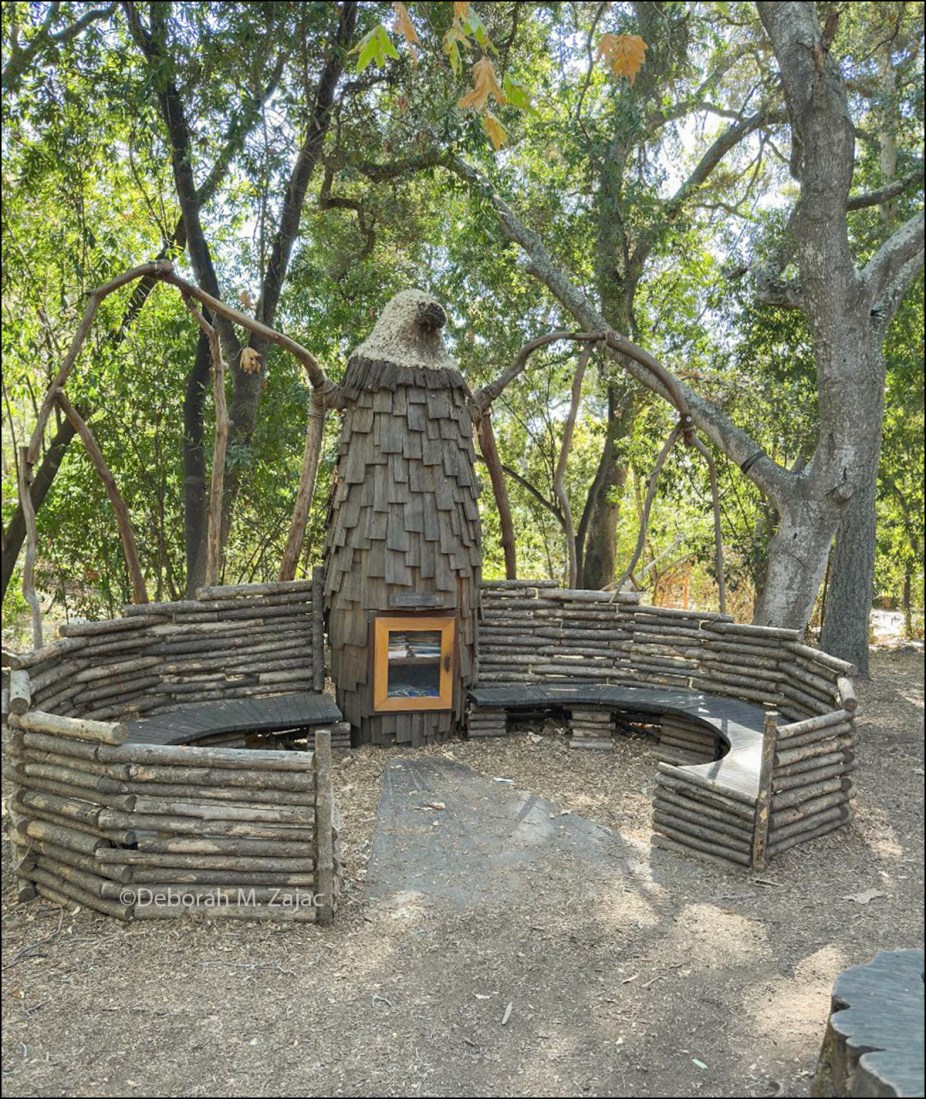
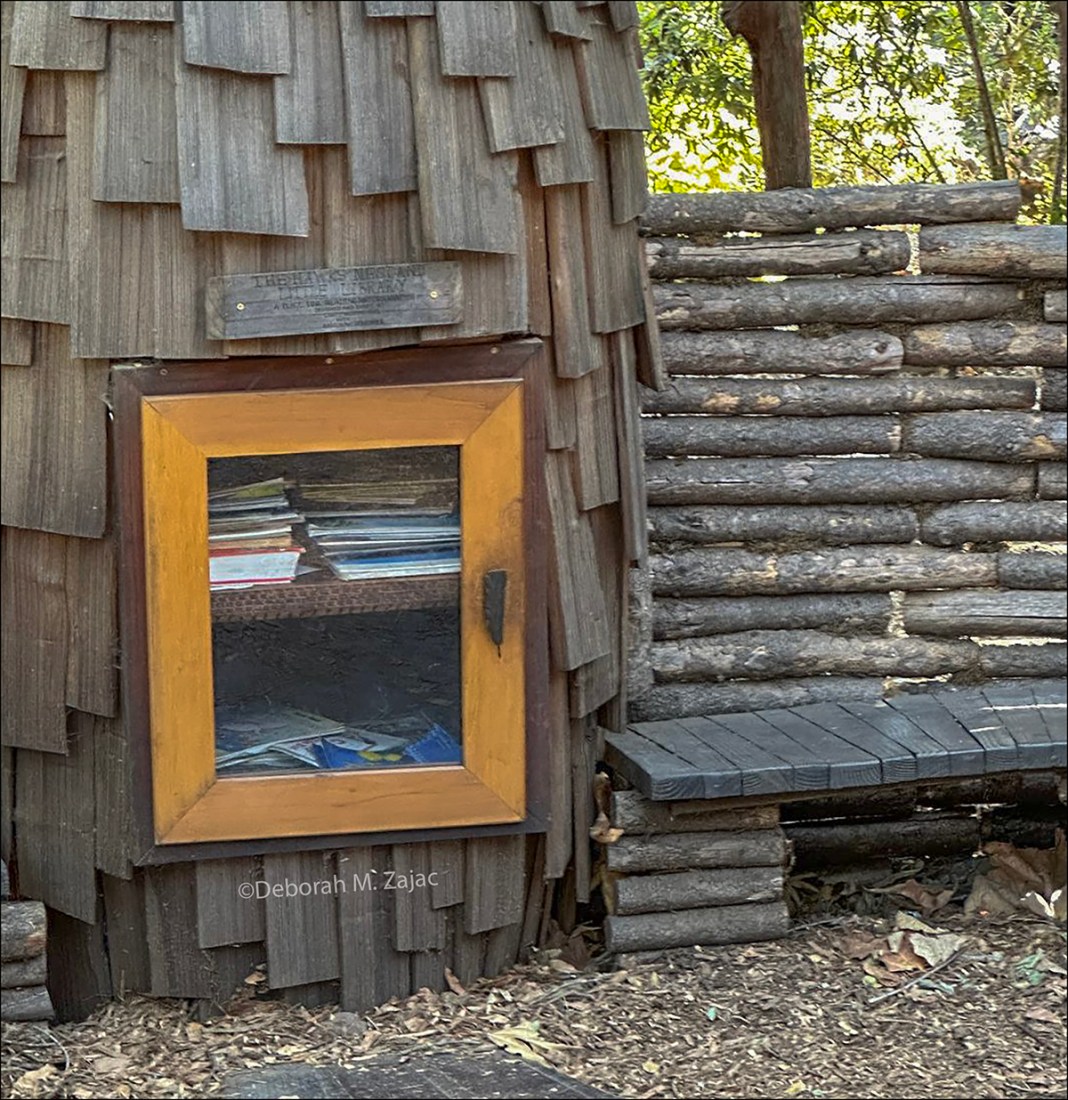
Last week He-Man wanted to break in his new car with a little road trip to the seaside. Santa Barbara, CA. was where he wanted to go. We did some kayaking, birding and a lot of walking. One of the places we birded was Santa Barbara Botanical Garden. The trails are great and while we in the Backcountry section of the garden we came across a Little Library. It’s an Eagle named Nest where you’re invited to enjoy reading while in his nest. I loved it!
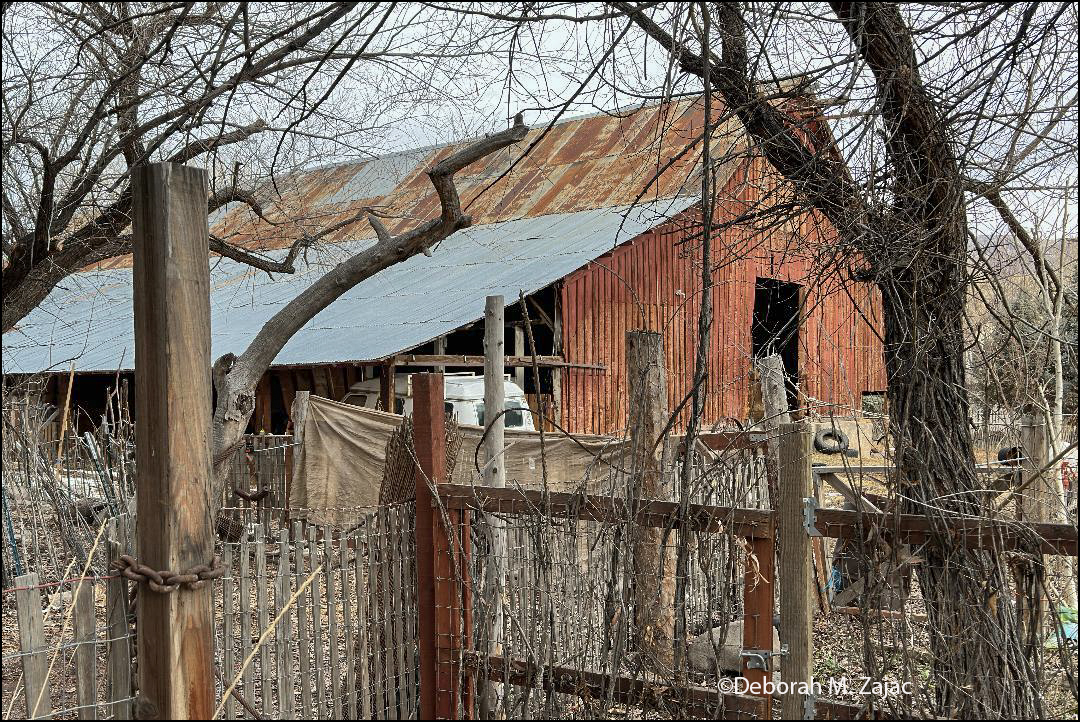
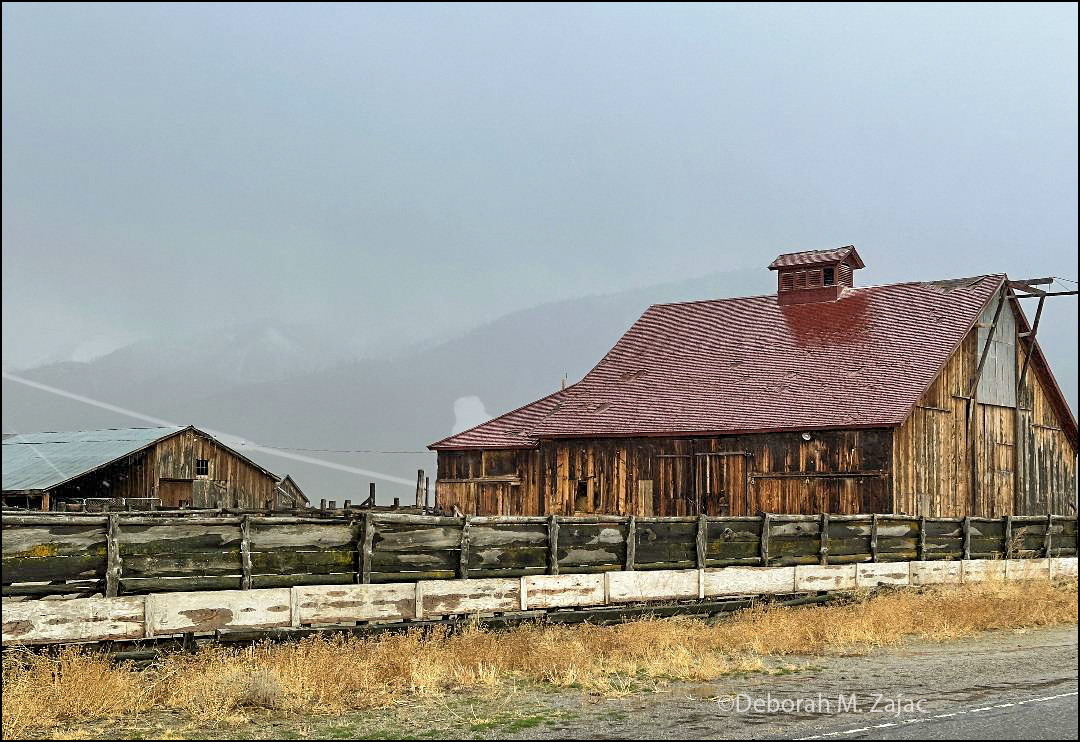
Another barn. This is one of the last images I took in 2024. I spied this barn while doing the Christmas Bird Count in my county on the 29th of December. It was a very cold, windy, rainy, snow flurries day so my partner and I only saw 23 species during our time out. I loved the Copula door. I imagine Owls using it.
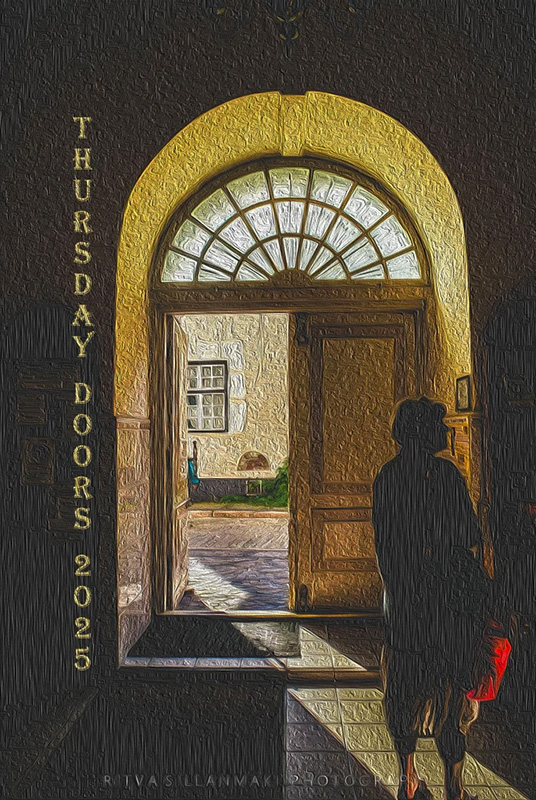
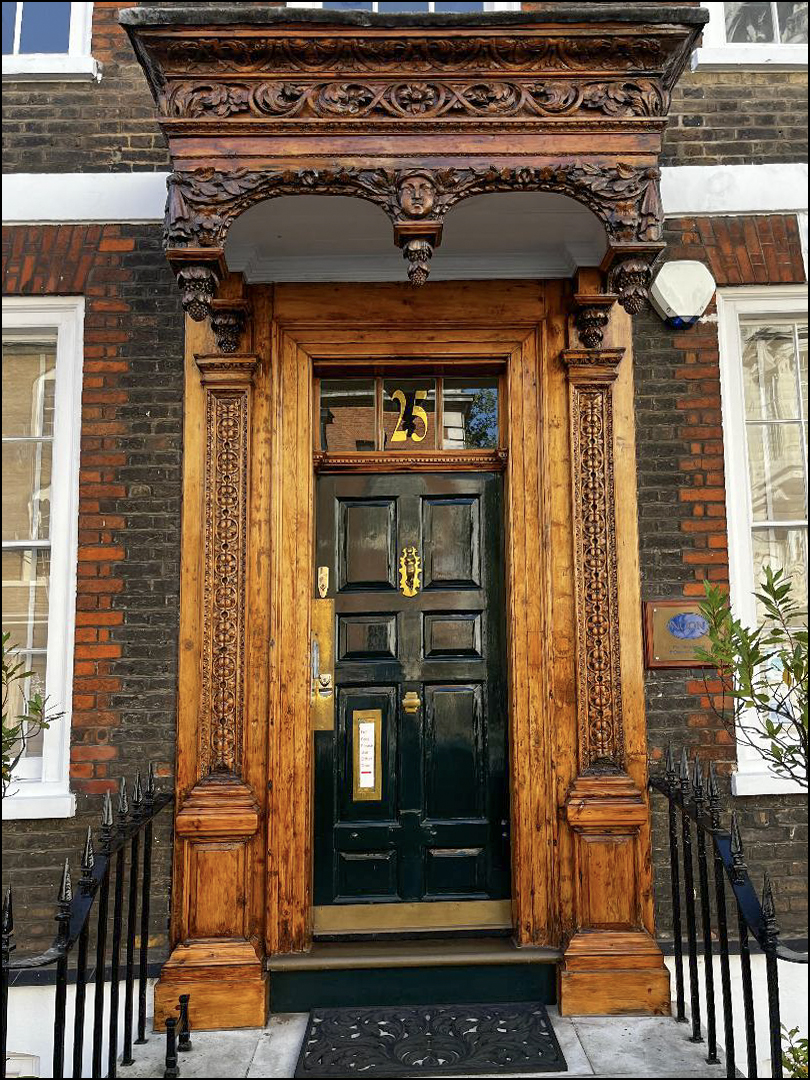
This is the door a friend sent me that he saw while in London and thought of me. Isn’t it gorgeous! Doesn’t the portico look like it’s made of cherry wood?
PLEASE DO NOT USE MY IMAGES WITHOUT EXPRESSED WRITTEN PERMISSION.
I thought it would be fun to look back on 2024 and see which posts you liked the most. 2024 has been a year of creativity, connection, and inspiration, and your engagement has truly fueled this journey. From birding, landscapes, night sky, doors, and everything else you’ve been there with support and encouragement every step of the way. It was fun going through the posts re-reading our conversations, and comments on those posts you chose as your favorites . You are what made the year and our community so special!
I want to thank you all for reading circadianreflections this past year. I love the connections and friendships we’ve made here in our blogging community. I’m looking forward to visiting your blogs, seeing your images, and creativity, and having more good, and interesting conversations in 2025. I wish you all a very Happy, creative, healthy, and prosperous New Year!
Speaking of door pulls I have to include the door my friend in CT sent me from her visit to Gillette Castle with its unique door pull and beautiful door.
You must be logged in to post a comment.