Red-Tailed Hawk: light morph

Copyright © 2012 Deborah M. Zajac. All Rights Reserved.

Several friends and I went out to Central CA to a National Wildlife Refuge to see if any Sandhill Cranes or Snow Geese had arrived and photograph them.

While on the auto-tour we spotted this Red-tailed Hawk on a post. We had a good vantage point to photograph it so we all started framing and firing our cameras which spooked him.

It was just what we hoped for. We all got some really nice shots of him taking off, and flying low in the marsh grass.
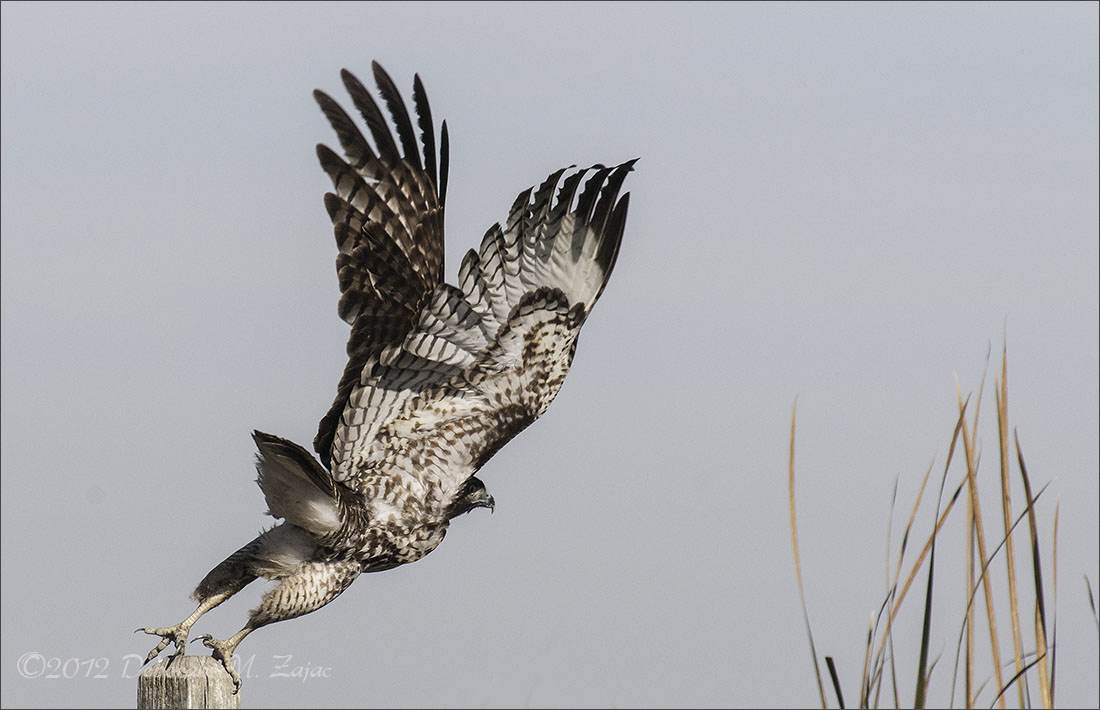
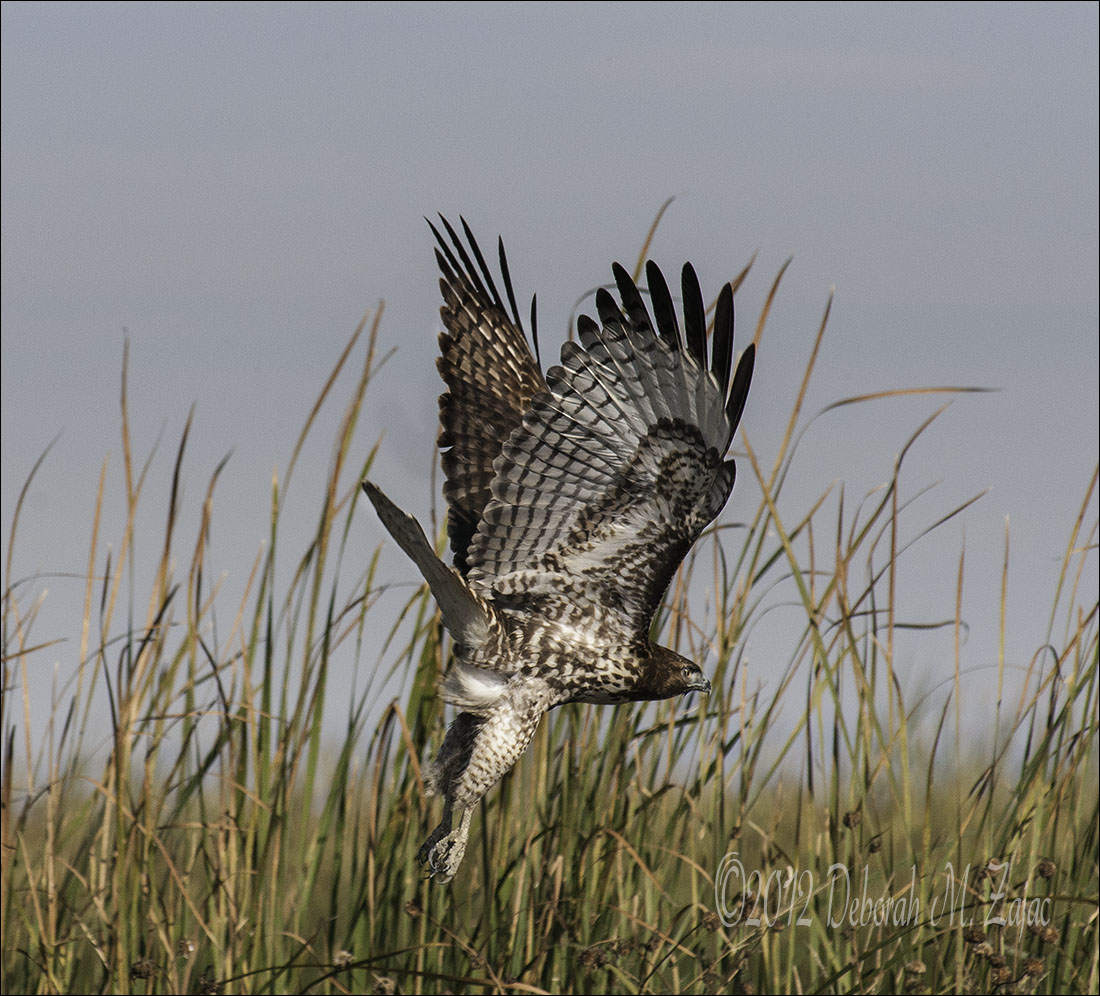
Lift off!


Wings up…


Downward flap

I needed  help identifying this Red-tail. My National Geographic bird book isn’t very clear on the Light and Dark Morphs. Thanks to my friend Dali for I.D.ing it for me. Since then I’ve purchased a new bird guide-book:  Stokes Field Guide to the Birds of North America. Between the two books I hope to be able to ID birds more easily.

Nikon D300s| Nikkor 80-200@ 200mm + Tamron 1.4x Teleconverter| f7.1| 1/2000sec| ISO 640| Manual Priority| Hand-held

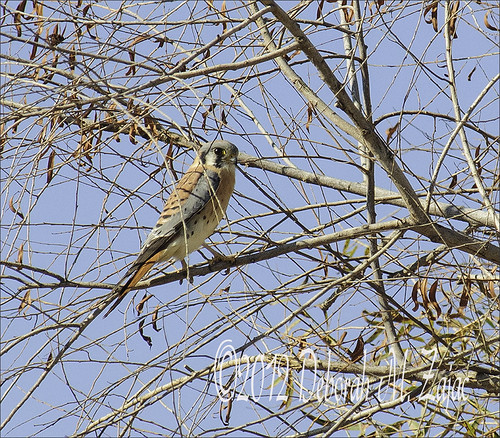
American Kestrel- Female

American Kestrel- Female, originally uploaded by dmzajac2004-.

Via Flickr:
Copyright © 2012 Deborah M. Zajac. All Rights Reserved.

“Not on a wire, not on a pole, it’s a tree for me!” This is the little mantra I said today as I saw a Kestrel on a wire. Later in the morning while we were driving through an Auto-tour in San Luis National Wildlife Refuge I spotted this kestrel in a tree! I was so excited, and thrilled when I uploaded this photo. It’s the first Kestrel I’ve shot that wasn’t on a pole or wire, and the first I’ve posted I believe.
We (Rainy, Dali, Judi, and I) saw so many neat birds and photographed quite a few of them.
We saw, this Kestrel, Red-tailed Hawks, Northern Harriers, Black Phoebe’s, Sparrow’s a new one for me I need to ID, my first Merlin!, Ross Geese, Coots, Blue Herons, Egrets: mostly Great Egrets, a Kingfisher, an American Bluebird, a Burrowing Owl, Mallards, Northern Pintails, Shrike, Meadow Larks, Plovers, Ibis, Sandhill Cranes, White fronted Geese, Red-winged Blackbirds, Shovelers, and White-tail Kites. In addition we saw a Coyote,  I saw a raccoon, and  we saw a dear friend Judi. It was an amazing, fantastic, sunny, everything going our way, very good day!

Nikon D300s| Nikkor 80-200 @200mm + Tamron 1.4TC|f7.1| 1/800 sec| ISO 640| Manual Priority| Hand-held

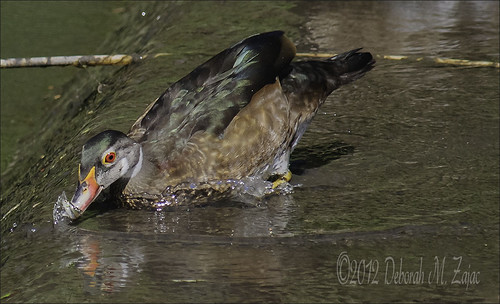
Catch of the Day

Catch of the Day, originally uploaded by dmzajac2004-.

Via Flickr:
Copyright © 2012 Deborah M. Zajac. All Rights Reserved.

This photograph of a female Wood Duck  has been marinating in my archives for sometime. I find if I come back to photos months later I find more keepers.
I want to give a huge Shout Out to my friend Rainey for showing me this spot. THANK YOU Rainey!
It was a fun afternoon.

Nikon D300s| Nikkor 80-200 @ 185mm| f5.6| 1/800 sec| ISO 500| Manual Priority| Hand-held

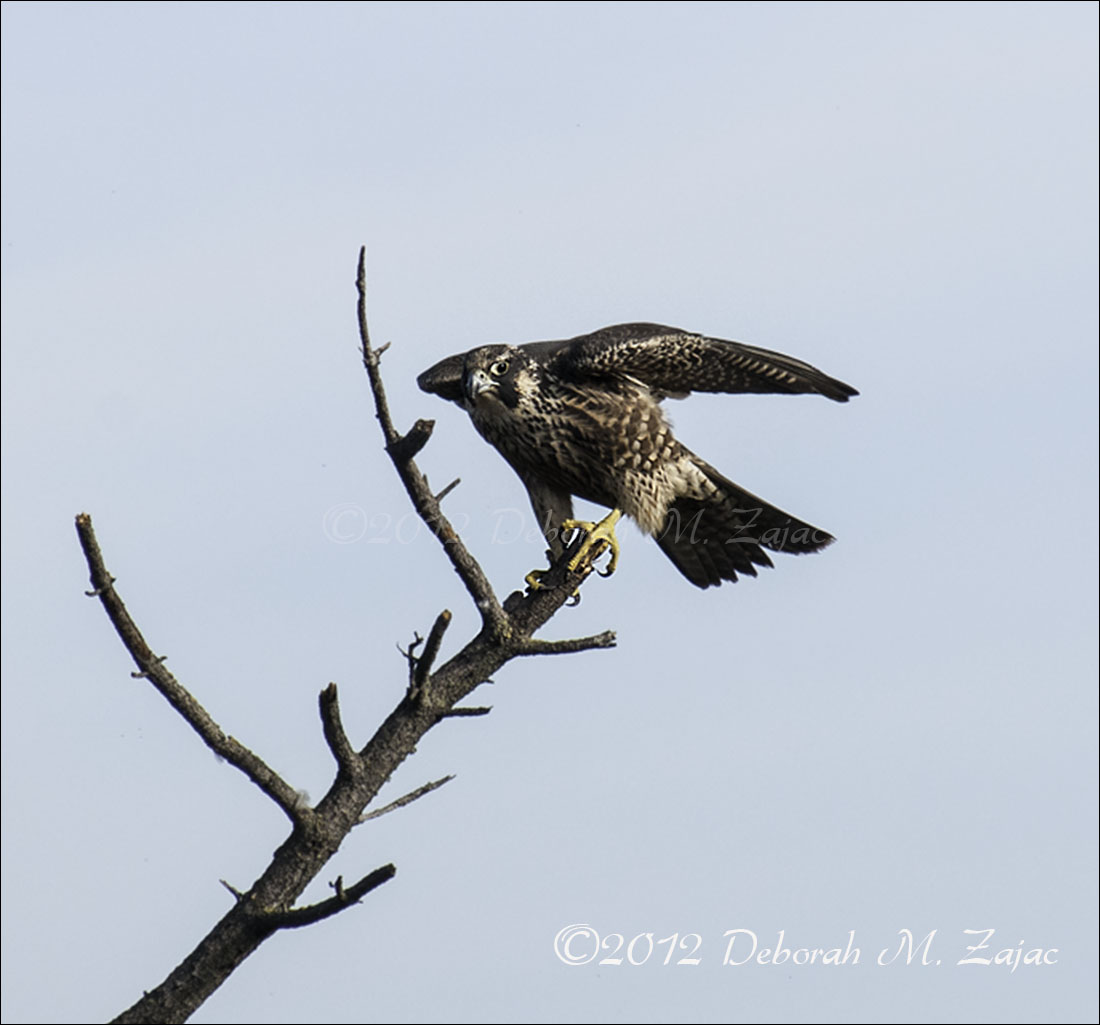
Peregrine Falcon

Copyright © 2012 Deborah M. Zajac. All Rights Reserved.

I’m not sure if this is a juvenile or not. Anyone know? It was thrilling to see him. I knew he was in the area and went out last week with my photography friend Dali, but it didn’t come around that afternoon, but we did see the White Tailed Kite then. This morning Dali emailed me early and asked if I wanted to go out to look for the Peregrine again and I said, “Yes!”. We spotted it perched straight-away. We had the pleasure of observing and photographing it for a couple of hours. This is only the second time I’ve seen and photographed a Peregrine Falcon.

Nikon D300s| Nikkor 80-200@200 + Tamron 1.4x TC|f5.6| 1/600sec| ISO 640| Manual Priority|hand-held

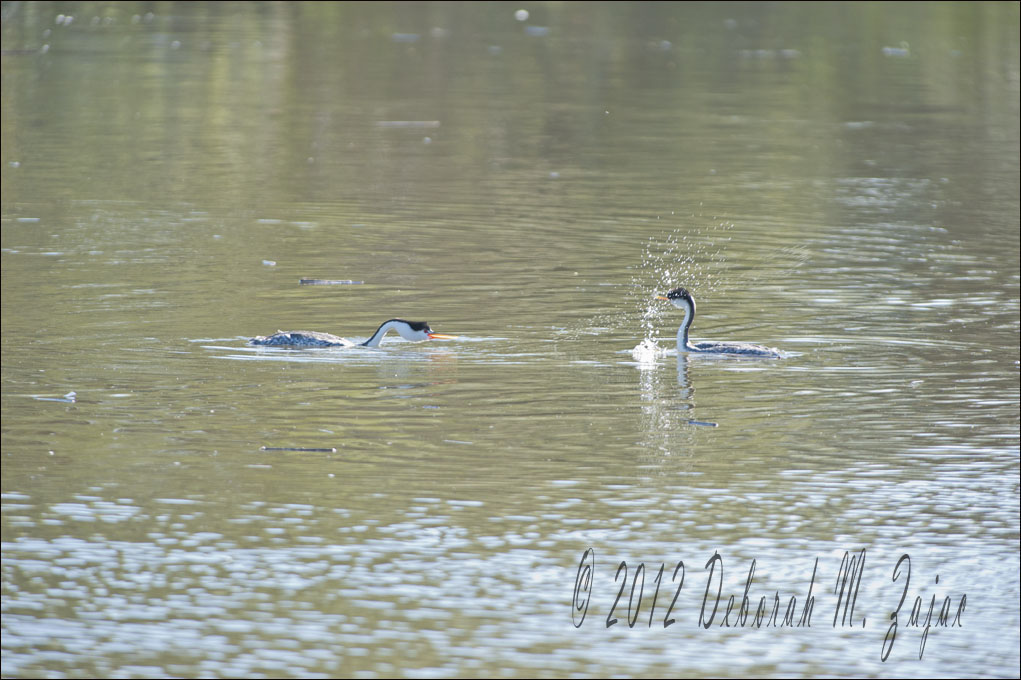
They dance!

Copyright © 2012 Deborah M. Zajac. All Rights Reserved.

I’ve been a bit  behind working on my photographs from my trip to Oregon to see Clark and Western Grebes do their Spring mating courtship and Dance. I’ve still not transferred my files from my laptop to my PC where I do my processing and editing, but I have finally finished some.

By the last morning of our trip I still had not taken any photographs of the Grebes dancing that I liked. I had nearly given up hope of getting any really good photos as they tend to be very shy; keeping themselves pretty far from shore which really tested the limits of my focal range of 300mm + a 2x Teleconverter which gave me an effective range of 600mm. It wasn’t far enough!

We decided to go back once more before leaving for home. After spending 2 mornings on the pond we learned they’re awake and most active beginning about 8AM and settling down by 10AM, so arriving just before 8AM we set up in our favorites spots and waited for them wake up. About half past 8AM this is what I saw and captured with my camera…

The Visual Connection


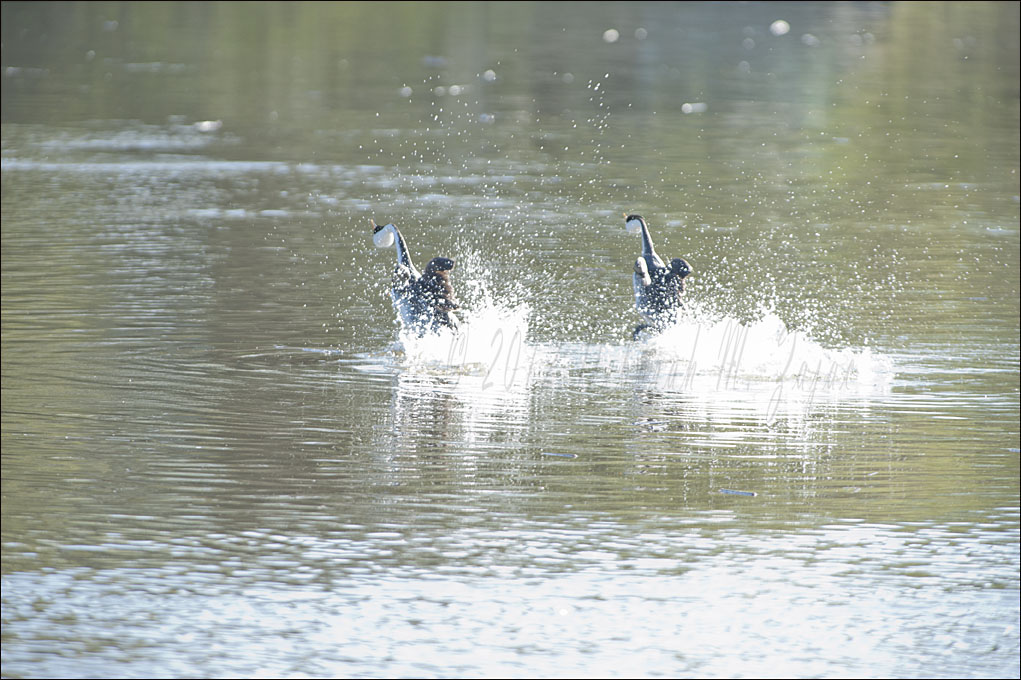
After a quick sizing up one after the other dipped their heads in the water and then flung the water off!

I feel the tension rising as both were totally oblivious to anyone or anything around them. They only saw each other as they flung the water over and over again. This went on for a full minute!

and suddenly they were up gliding across the water in perfect synchronization!

The sound of the beating water was the only sound I heard. It was marvelous, and thrilling to watch. I feel very blessed to have seen it, and to have shared the experience with good friends.

Nikon D700| Nikkor 300mmVRII + 20eIII TC =600mm| Tripod| Wimberley Sidekick

In medias res

Copyright © 2012 Deborah M. Zajac. All Rights Reserved.

I’ve just returned from  Oregon. I was on a birding expedition with some friends who are also photographers. We spent a couple of days in the Klamath Basin looking  for Clark and/or Western Grebes doing their Spring mating ceremony and dance or what the Scientist call “rushing”. We were successful finding them as well as several other birds; some familiar and others new, and it was neat to see many birds I know and see only when they Winter near me in and the Pacific Flyway in their Spring Breeding plumage.

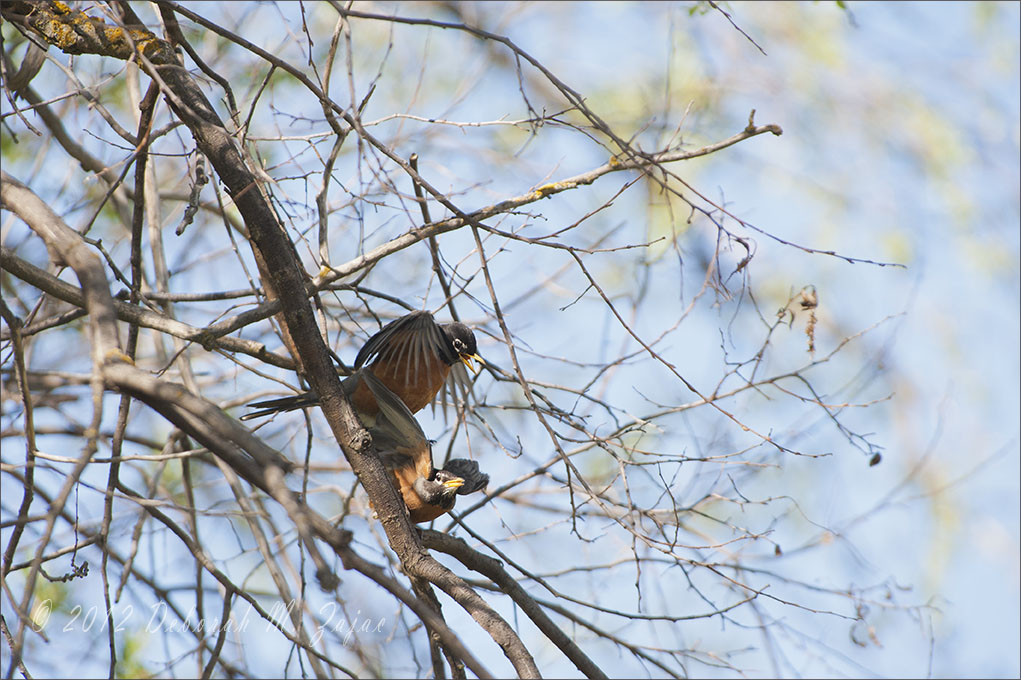
Yesterday morning I was following this male Robin around trying to take his photo when he caught up with the female and I happened to press the shutter catching them “in medias res”.

Nikon D700| Nikkor 300mm f2.8 + 20eIII TC =600mm| f8| 1/1600s| ISO1600|Manual Priority|
Tripod| American Robin

Spring, Nature,and the Great Egret

Copyright © 2012 Deborah M. Zajac. All Rights Reserved.

I spent a morning last week in Santa Rosa watching Egrets, and Herons, building nests, tending nests, and trying to attract a mate at a Rookery right in the middle of a suburban neighborhood. Mothers walked their children to school right under them, and traffic flowed on both sides of the street, and the Egrets and Herons were largely oblivious to all but themselves. Great Egrets nest in colonies so there are many, many birds in the trees.

The city is trying to give them some space so they blocked off one lane on each side of the street for a block or so sparing passing cars from being pelted with falling debris, and guano. The street under the Eucalyptus trees they’re nesting in is messy.

In the past when I’ve watch a Great Egret they’ve been very still, quite, and focused on hunting their prey, or I’ve startled them and they’ve flown away. That wasn’t the case on this morning though. The activity scarcely stopped.

Neither did the noise. In breeding season there is quite a lot of squawking, and screeching, and talking. In fact I found them very funny, and amusing.  I laughed out loud many times listening to them.

There were many sorties by the male to gather just the right branch to  build and strengthen the nest.  He will seriously work on attracting a mate once this task is complete. The female lays 4-5 pale blue eggs which take 3-4 weeks to incubate. Both the male and female parents incubate the eggs, and feed the chicks.

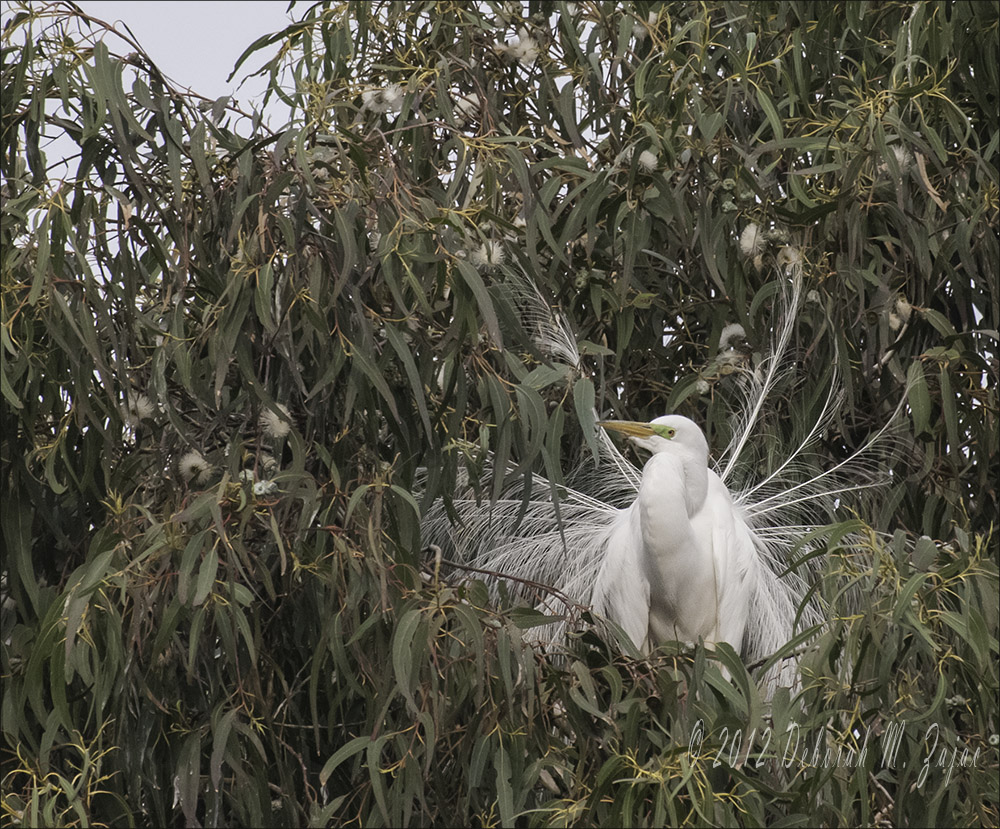
During the breeding season the  male Great Egret grows long tail feathers which he  raises and spreads out . I’ve read their plumes were once prized for making ladies hats and they were nearly hunted to extinction.

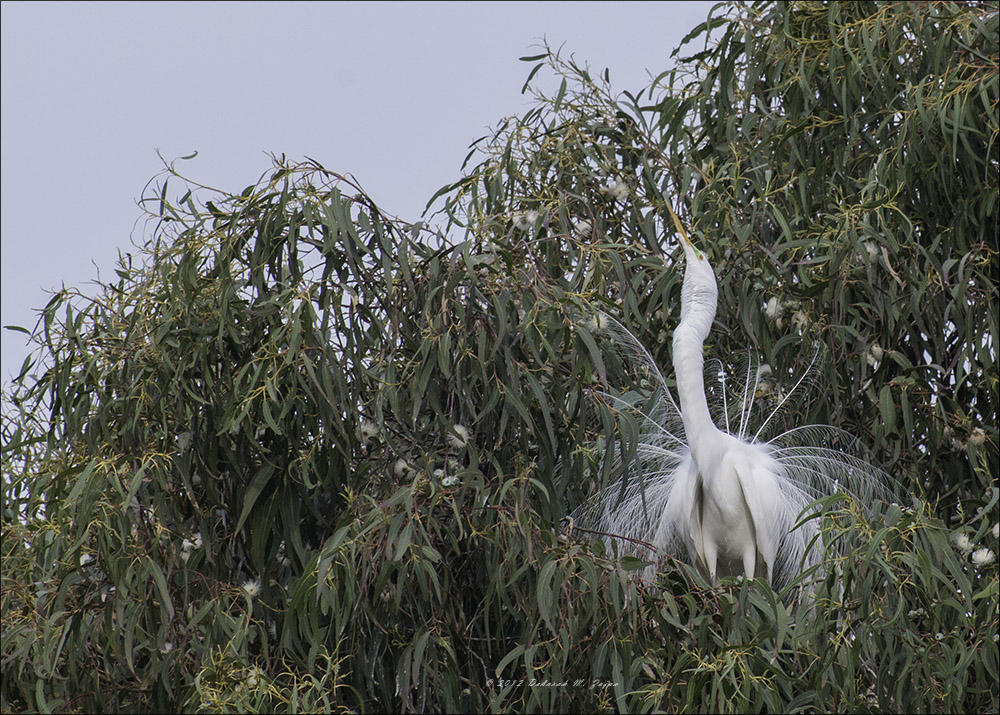
…and he undulates his long neck, and lifts his head toward the sky to try to attract a mate.

It was a wonderful experience observing this behavior up close, and I have more photos to share in the coming days of  Great Egrets, Cattle Egrets, and Night Herons.

Nikon D300s| Nikkor 70-300mm VR