PLEASE DO NOT USE MY IMAGES WITHOUT EXPRESSED WRITTEN PERMISSION.
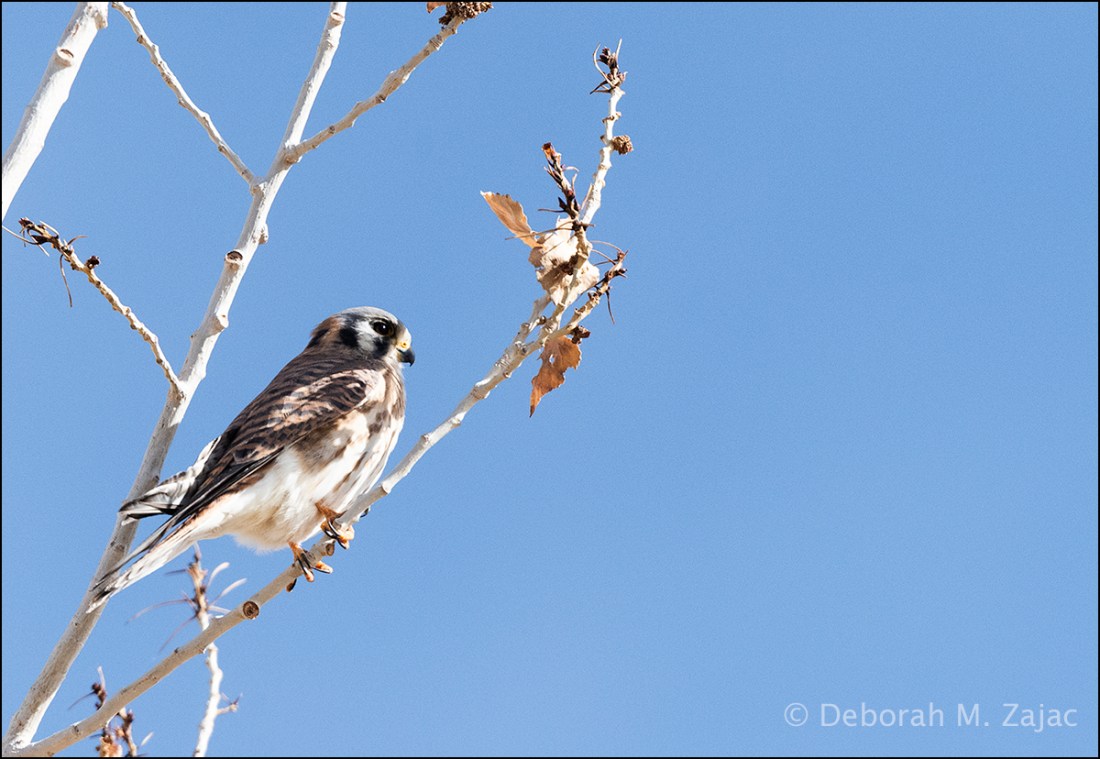
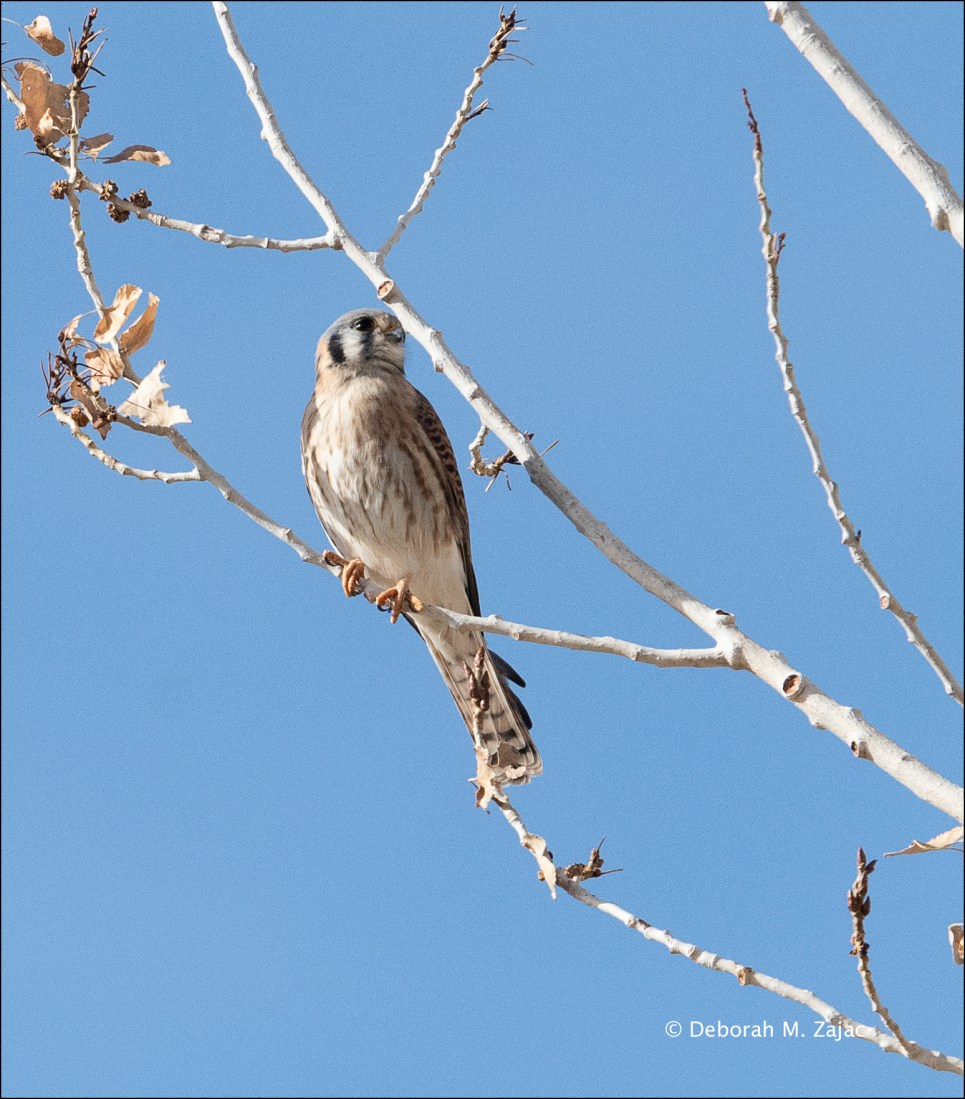
This is a Kestrel I saw in December. I’ll show her from the two sides I got to observe her from. It’s a treat to actually get two side views of a bird.
When I first spotted her high in a Cottonwood tree-
Female American Kestrel
They’re one of the smallest birds of prey, but so cute.
Here she is from the other side, with her chest showing.
American Kestrel Female
Fun Facts:
Sports fans in some cities get an extra show during night games: kestrels perching on light standards or foul poles, tracking moths and other insects in the powerful stadium light beams and catching these snacks on the wing. Some of their hunting flights have even made it onto TV sports coverage.
When nature calls, nestling kestrels back up, raise their tails, and squirt feces onto the walls of the nest cavity. The feces dry on the cavity walls and stay off the nestlings. The nest gets to be a smelly place, with feces on the walls and uneaten parts of small animals on the floor.
It can be tough being one of the smallest birds of prey. Despite their fierce lifestyle, American Kestrels end up as prey for larger birds such as Northern Goshawks, Red-tailed Hawks, Barn Owls, American Crows, and Sharp-shinned and Cooper’s Hawks, as well as rat snakes, corn snakes, and even fire ants.
In winter in many southern parts of the range, female and male American Kestrels use different habitats. Females use the typical open habitat, and males use areas with more trees. This situation appears to be the result of the females migrating south first and establishing winter territories, leaving males to the more wooded areas.
Unlike humans, birds can see ultraviolet light. This enables kestrels to make out the trails of urine that voles, a common prey mammal, leave as they run along the ground. Like neon diner signs, these bright paths may highlight the way to a meal—as has been observed in the Eurasian Kestrel, a close relative.
Kestrels hide surplus kills in grass clumps, tree roots, bushes, fence posts, tree limbs, and cavities, to save the food for lean times or to hide it from thieves.
The oldest American Kestrel was a male and at least 14 years, 8 months old when he was found in Utah in 2001. He was banded in the same state in 1987.
“Like neon diner signs”! 😂 I loved that description.
Last week I met up with some local Audubon club members for a bird walk. Here’s some of the exciting birds we saw.
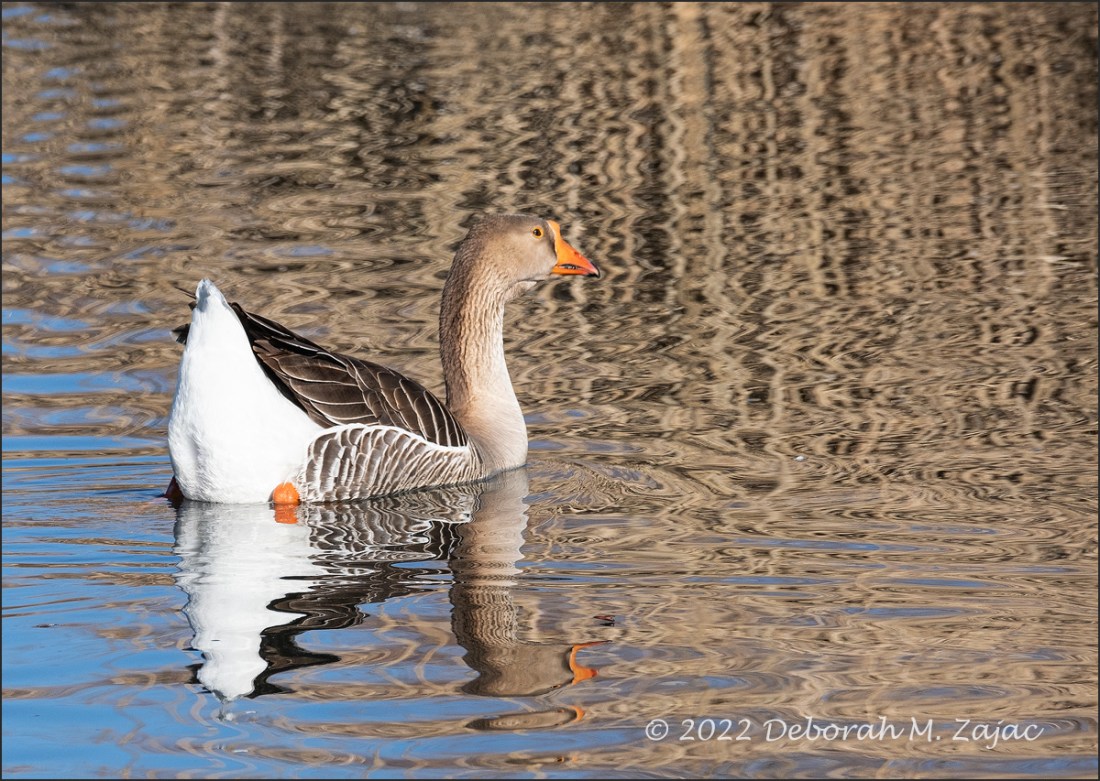
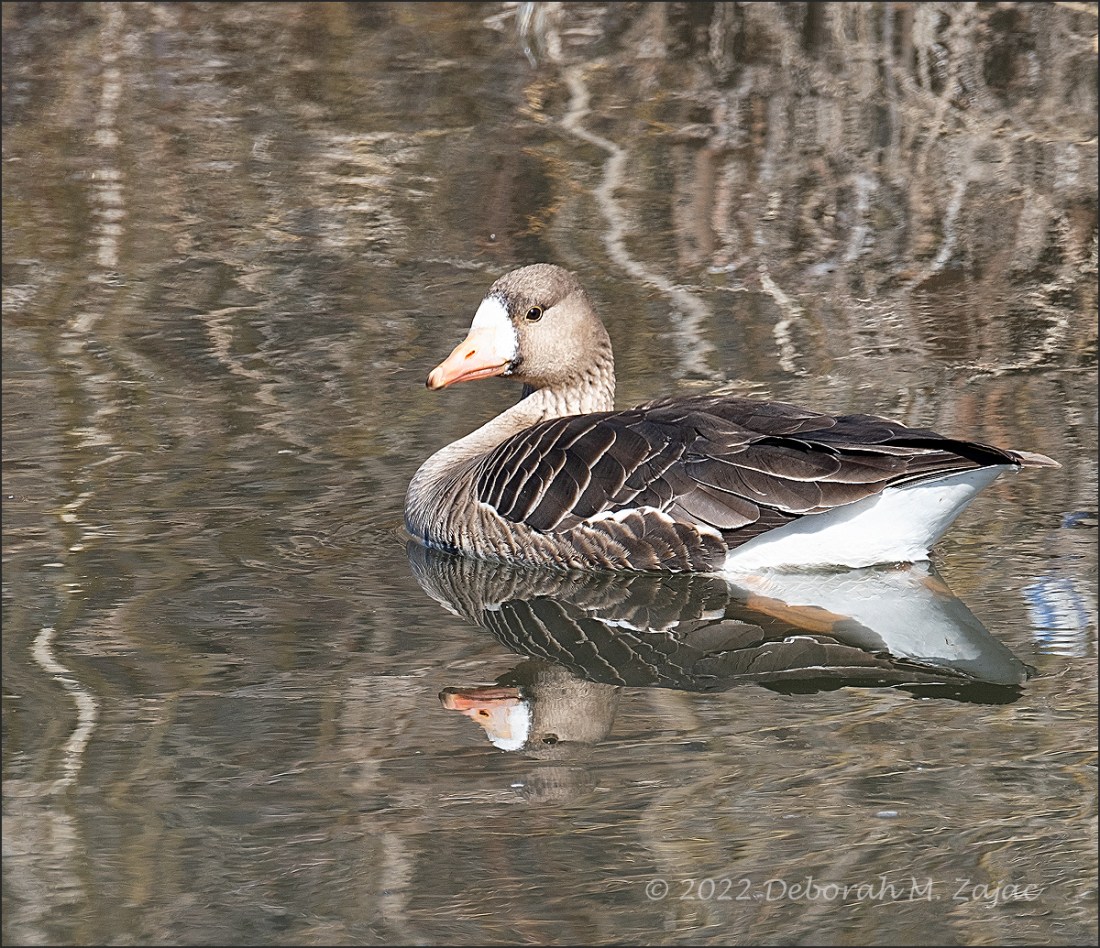
This first bird was a neat sighting. It’s a Graylag x Swan hybrid we discovered. The ebird monitor for Washoe county wrote me after seeing my images of the goose this. “Your documentation shows this is a “Domestic goose with a mix of Graylag and Swan Goose (aka Chinese Goose) ancestry. The dark stripe from the top of the head down the back of the neck, and the bulging forehead are Swan Goose traits, while the orange bill and a few other features are Graylag traits. ” P.H. Isn’t that interesting! It’s a handsome goose and several people we ran into while admiring and photographing it told us they named him. One family called him Barney, and another one calls him Harry. He’s quite the celebrity there.
Graylag Goose
Another exciting sighting was a large group of White-fronted Geese. We don’t see those a lot here so, we watched and photographed them for awhile too.
White-fronted Goose
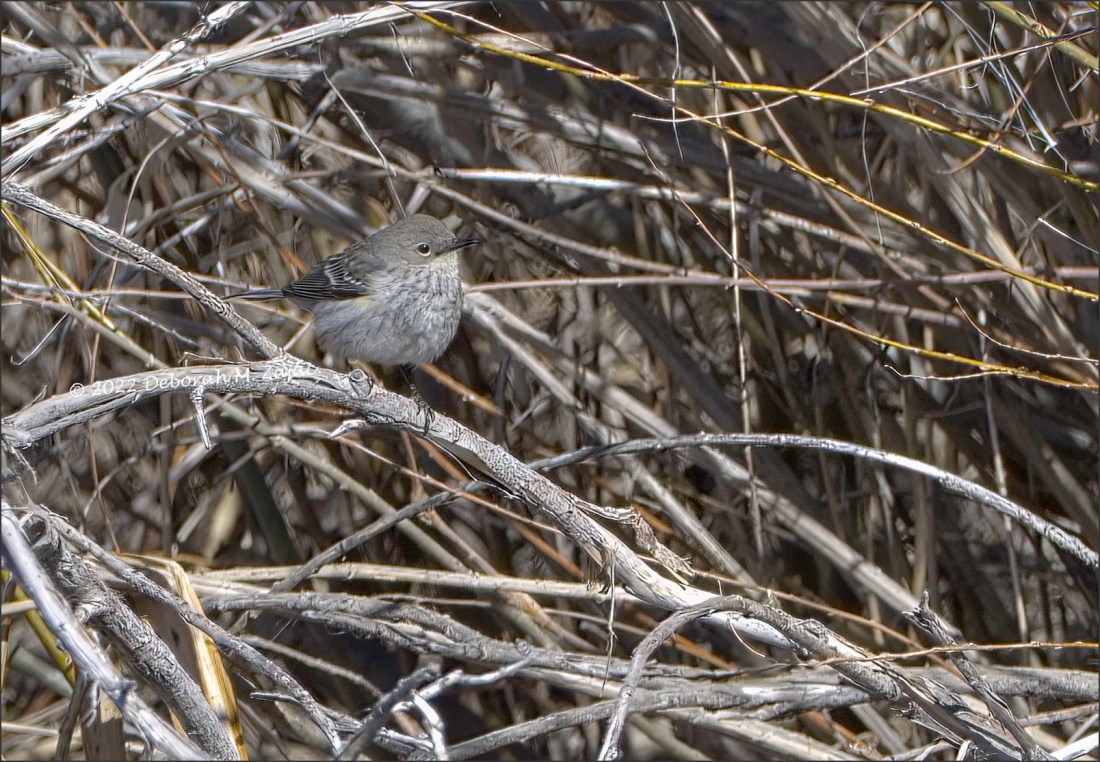
Saving the best for last, and it was the last bird we saw on our way back to the parking before we finished up was the Immature Audubon’s Yellow-rump Warbler. This was a lifer for me! Isn’t it cute!
Audubon’s Yellow-rump Warbler-immature
I’ll be birding with friends this week-end and hoping to see lots of birds. I hope you all have a great week-end!
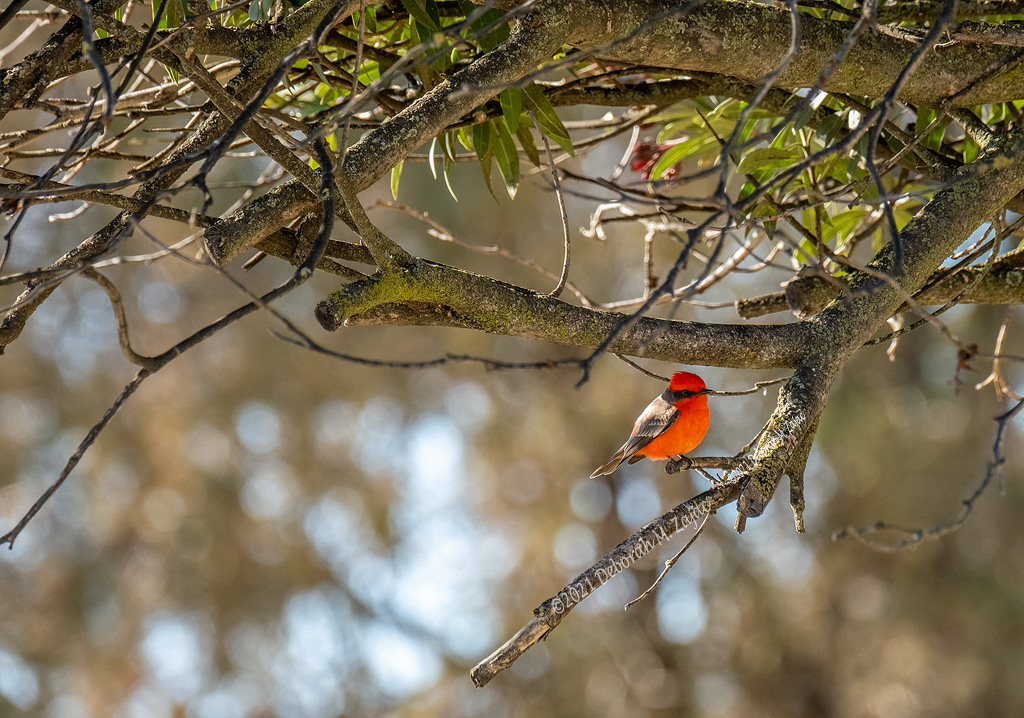
I told you I would show you the beautiful Vermilion Flycatcher that I went to see in Maxwell, CA a few week ago, and today is the day! He’s a year round resident of Mexico and South America. He does come north to So. Texas and So. California for breeding season, and has been seen in the states along the gulf coast states. How this one found his way up here in Central Calif. is a mystery, but it’s been returning for 5 winters now. He’s rare there.
Isn’t he pretty?
Fuji X-T3 w/ Fuji 100-400mm lens @400mm
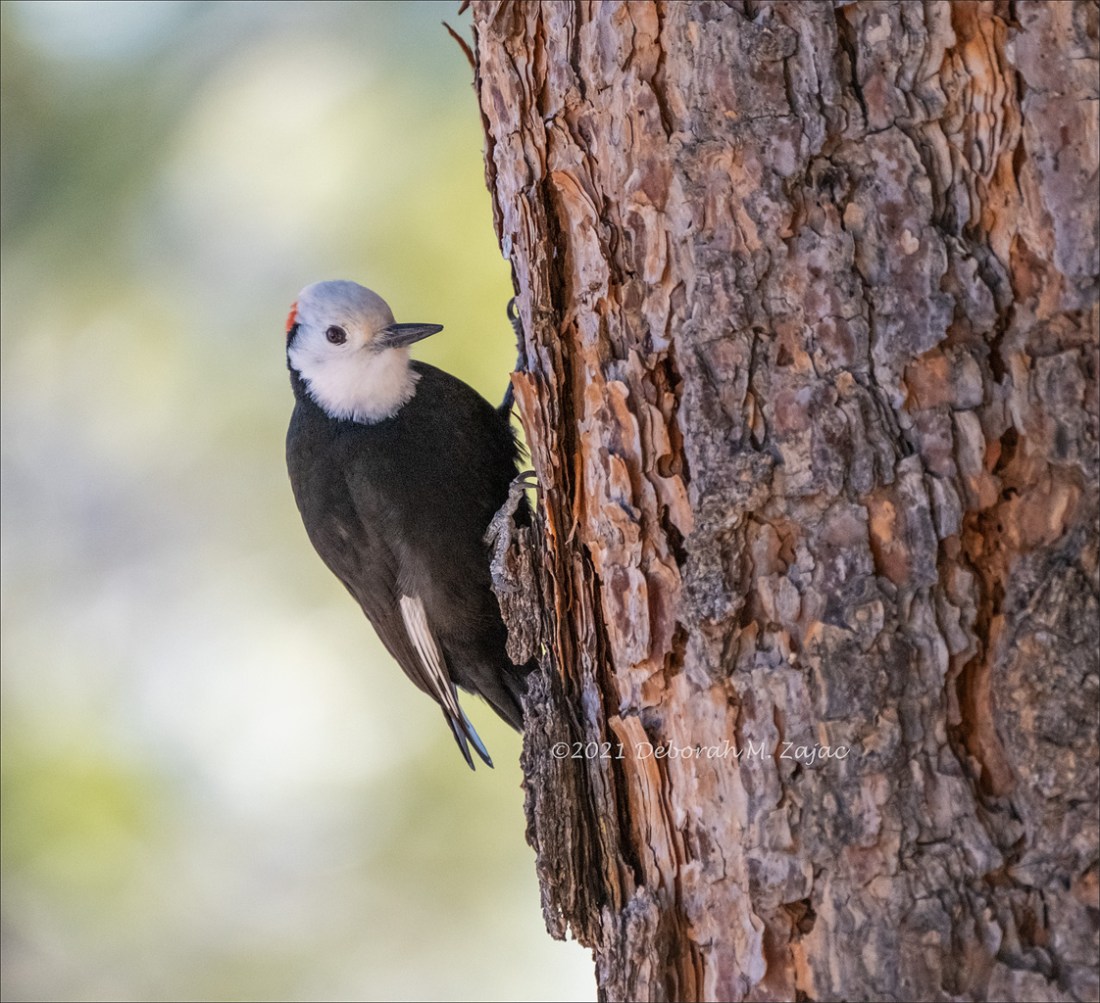
Almost two weeks ago He-Man went up to Washoe Co. the next county over to go on a bike ride and I went with him not to ride, but to bird while he rode and guess who I saw? The White-headed Woodpecker! This is a male. I only saw this species for the first time last year so I still do a happy dance when I see one.
This one was so busy foraging he didn’t care about me too much. Once in awhile he did check me out.
Fuji X-T3| Fuji 100-400mm @400mm
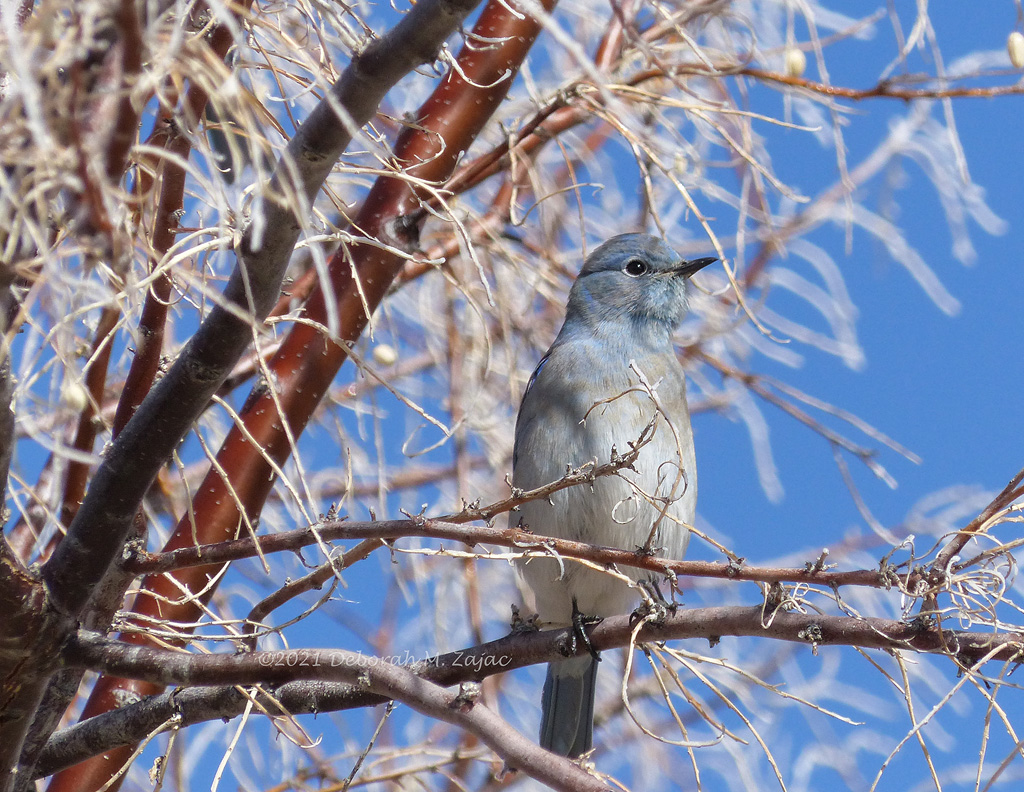
Sunday two neighbors and I went for our walk and we decided to go further than the mailbox and go up the hill and come home the back way where we saw Mountain Bluebirds foraging in the Russian Olive trees. The Olives are like little nuts that they seem to really like.
I saw this species for the first time last Spring, but didn’t have my camera with me but, by the time I raced home on foot to get the camera and return to the spot I saw one it was gone. I am so glad I had a camera with me on Sunday! Mountain Bluebird Male–
Panasonic Lumix FZ200 @600mm
It’s been a good birdy couple of weeks that has been waylaid by weather. We’ve had snow! I won’t be out birding for a few days.
I hope you all have a lovely weekend, stay healthy, and safe.


 Circadianreflections Blog
You must be logged in to post a comment.