Copyright ©2025 Deborah M. Zajac. ALL RIGHTS RESERVED.
PLEASE DO NOT USE MY IMAGES WITHOUT EXPRESSED WRITTEN PERMISSION.
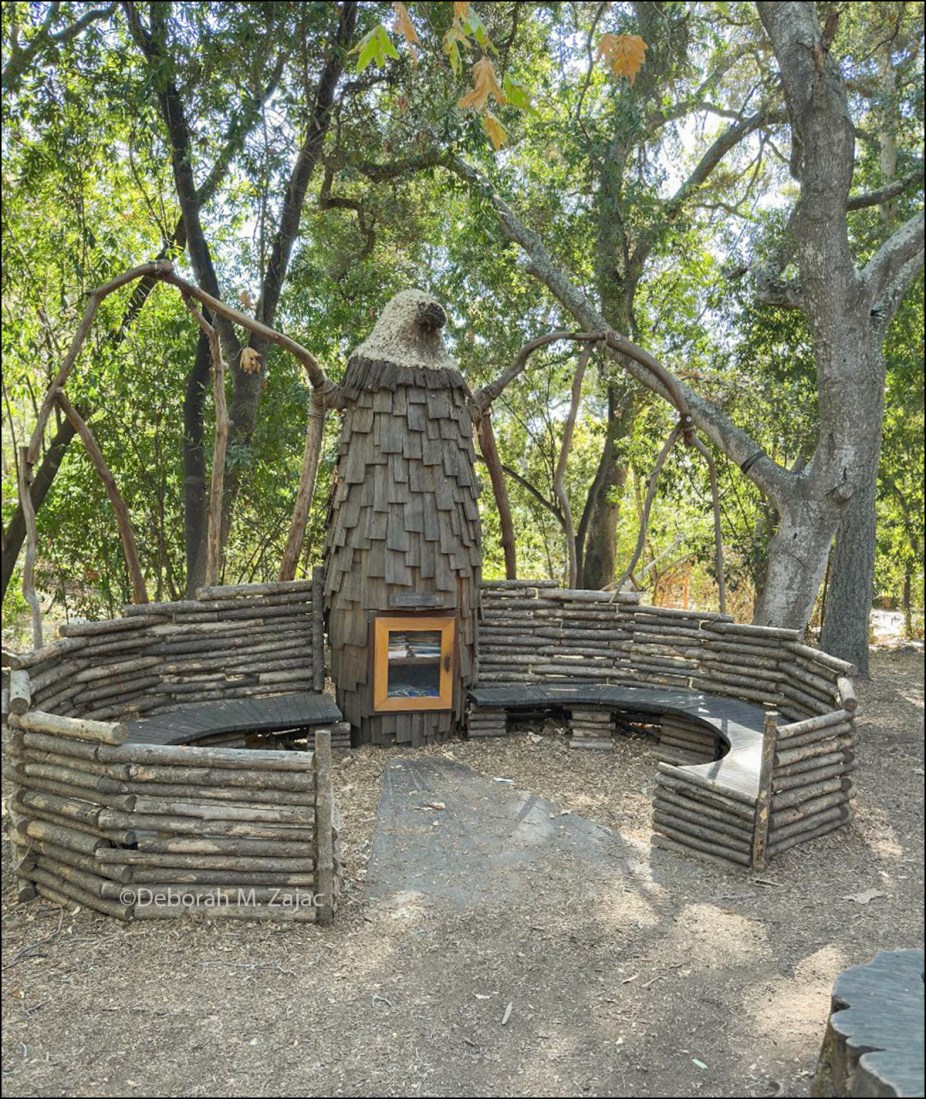
While we were visiting the Santa Barbara Botanical gardens recently He-Man stopped in a little garden rest area with a bench to retie his shoe and out popped a Hermit Thrush! I was so excited because I don’t see these shy birds too often.
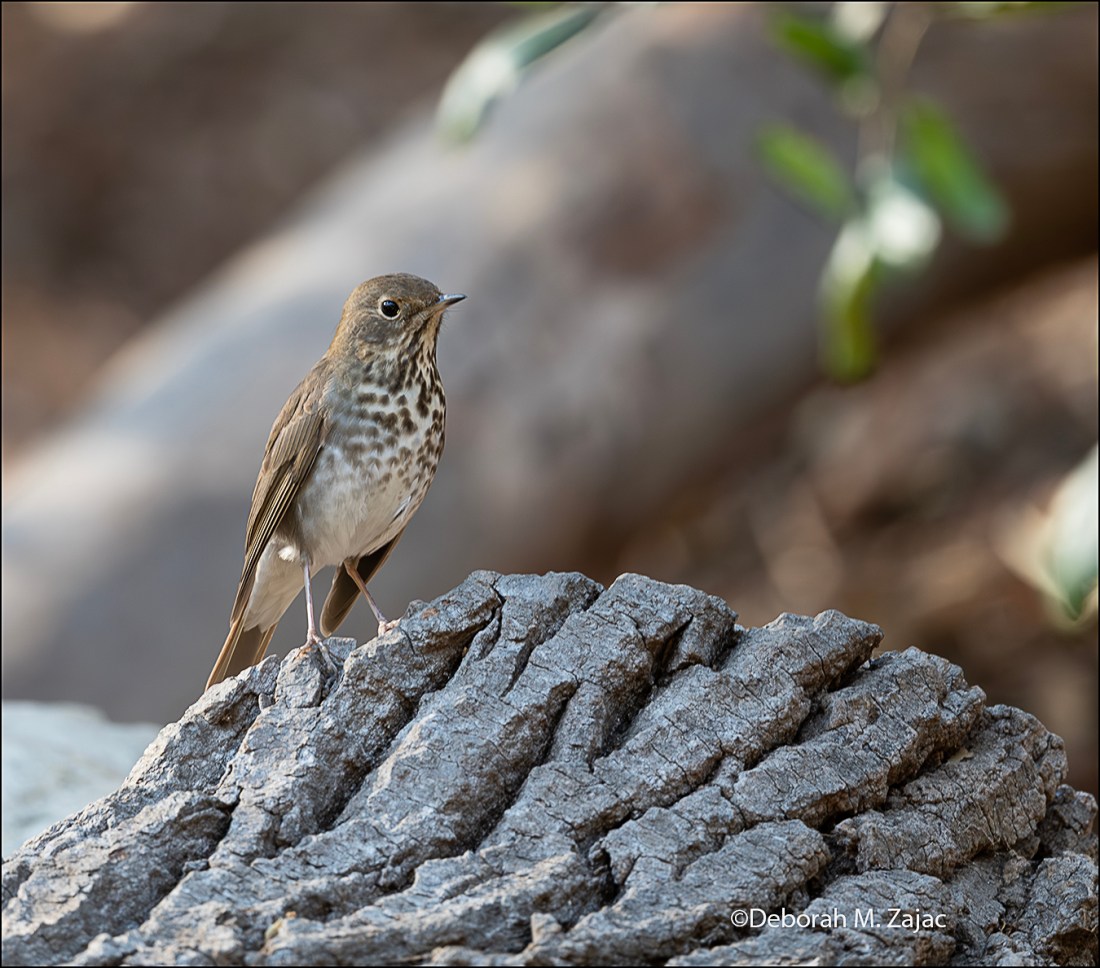
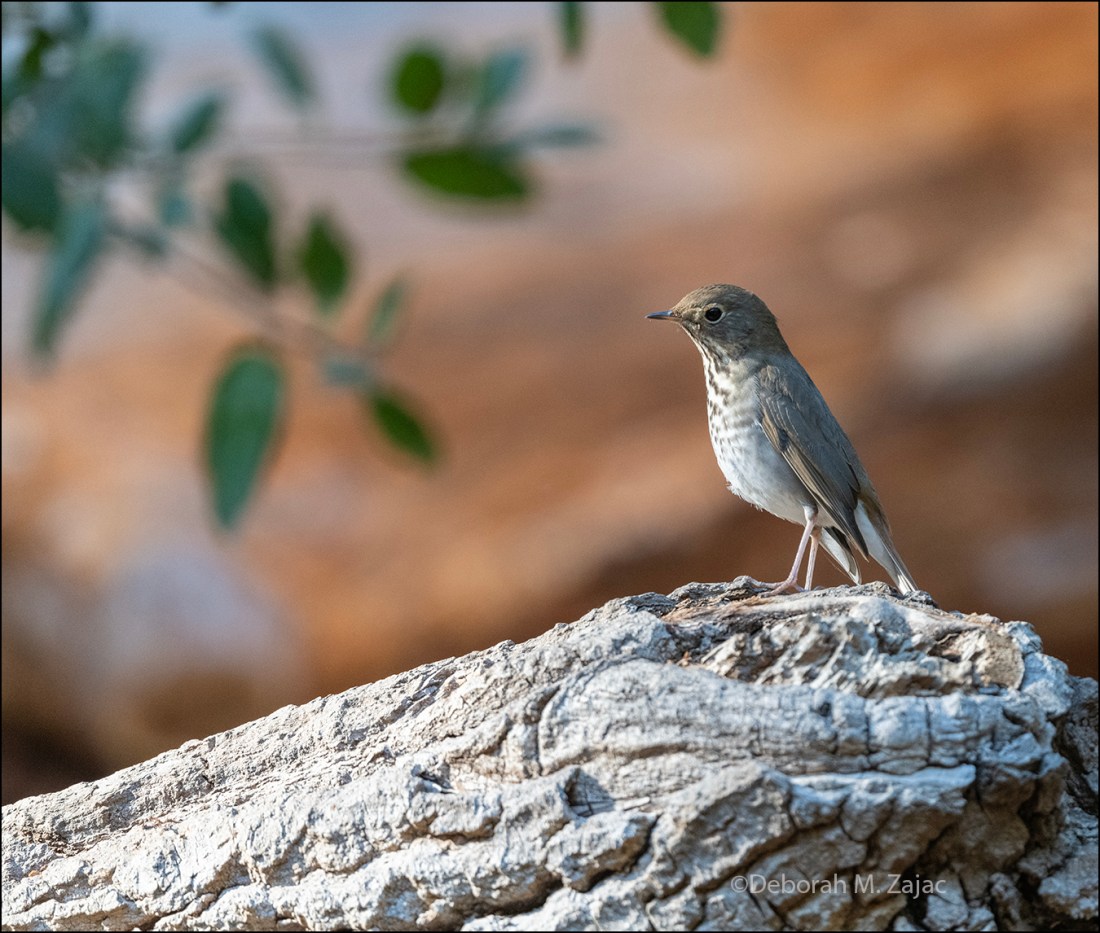
We got several minutes of good looks at it while it was foraging around area.
Fun Facts-
- Males usually gather food for the nest, while females feed the nestlings. The young birds start by eating bits of larvae, then grasshoppers, moths, and spiders. They sometimes eat small vertebrates such as salamanders.
- Hermit Thrushes usually make their nests in and around trees and shrubs, but they can also get more creative. Nests have been found on a cemetery grave, on a golf course, and in a mine shaft.
- Hermit Thrushes sometimes forage by “foot quivering,” where they shake bits of grass with their feet to get insects. They also typically begin to quiver their feet as they relax after seeing a flying predator.
- East of the Rocky Mountains the Hermit Thrush usually nests on the ground. In the West, it is more likely to nest in trees.
- Hermit Thrushes make several distinct calls around their nests. They will sometimes make a rising byob sound similar to a mewing kitten. Females frequently rearrange their eggs while making quit quit noises. In the morning, two adults meeting near the nest will greet each other with a pweet pweet call.
- Hermit Thrushes are part of a genus (Catharus) that includes four other similar thrushes in North America: the Veery, Swainson’s Thrush, Gray-cheeked Thrush, and Bicknell’s Thrush. In the northeastern mountains, the Veery lives at the lowest elevations, Hermit Thrushes at middle elevations, and Swainson’s Thrushes at high elevations.
- The oldest recorded Hermit Thrush was at least 10 years, 10 months old when it was recaptured and rereleased during banding operations in Maryland in 2009. It was originally banded there in 1999.
Fun facts gleaned as always from allaboutbirds.org
I’ll be a little late replying to your comments as I’m out birding this morning.
Nikon D850|Nikkor 500mm PF-e lens
more to come…

 Circadianreflections Blog
You must be logged in to post a comment.