Friday’s Feathered Friends- Ruddy’s got the Blues

Copyright ©2024 Deborah M. Zajac. ALL RIGHTS RESERVED. 

PLEASE DO NOT USE MY IMAGES WITHOUT EXPRESSED WRITTEN PERMISSION.

Things are changin’, Ruddy is showing off his Blues and Ruddy feathers for Spring and hoping he’s got what it takes to persuade a cute little female Ruddy Duck to be his love for the season.

Ruddy Duck in Breeding Plumage

Fun Facts:

    • Ruddy Ducks lay big, white, pebbly-textured eggs—the largest of all duck eggs relative to body size. Energetically expensive to produce, the eggs hatch into well-developed ducklings that require only a short period of care.
    • The bright colors and odd behavior of male Ruddy Ducks drew attention from early naturalists, though they didn’t pull any punches. One 1926 account states, “Its intimate habits, its stupidity, its curious nesting customs and ludicrous courtship performance place it in a niche by itself…. Everything about this bird is interesting to the naturalist, but almost nothing about it is interesting to the sportsman.”
    • Pleistocene fossils of Ruddy Ducks, at least 11,000 years old, have been unearthed in Oregon, California, Virginia, Florida, and Illinois.
    • Ruddy Ducks are very aggressive toward each other and toward other species, especially during the breeding season. They are even known to chase rabbits feeding on the shore.
    • Though Ruddy Ducks are native to the Americas, one population became established in England after captive ducks escaped in 1952. This population grew to about 3,500 individuals by 1992, and now appears to be expanding into the Netherlands, France, Belgium, and Spain.
    • Ruddy Ducks get harassed by Horned Grebes, Pied-billed Grebes, and American Coots during the breeding season. The grebes sometimes attack Ruddy Ducks from below the water, a behavior known as “submarining.”
    • The oldest Ruddy Duck on record was a male and at least 13 years, 7 months old when he was found in Oregon in 1964. He was banded in British Columbia in 1951.

Fun Facts gleaned from https://www.allaboutbirds.org/guide/Ruddy_Duck/

Nikon D810| Nikkor 500mm PF| PS CC 25.4

more to come…

Friday’s Feathered Friends- Hooded Mergansers

Copyright ©2024 Deborah M. Zajac. ALL RIGHTS RESERVED. 

PLEASE DO NOT USE MY IMAGES WITHOUT EXPRESSED WRITTEN PERMISSION.

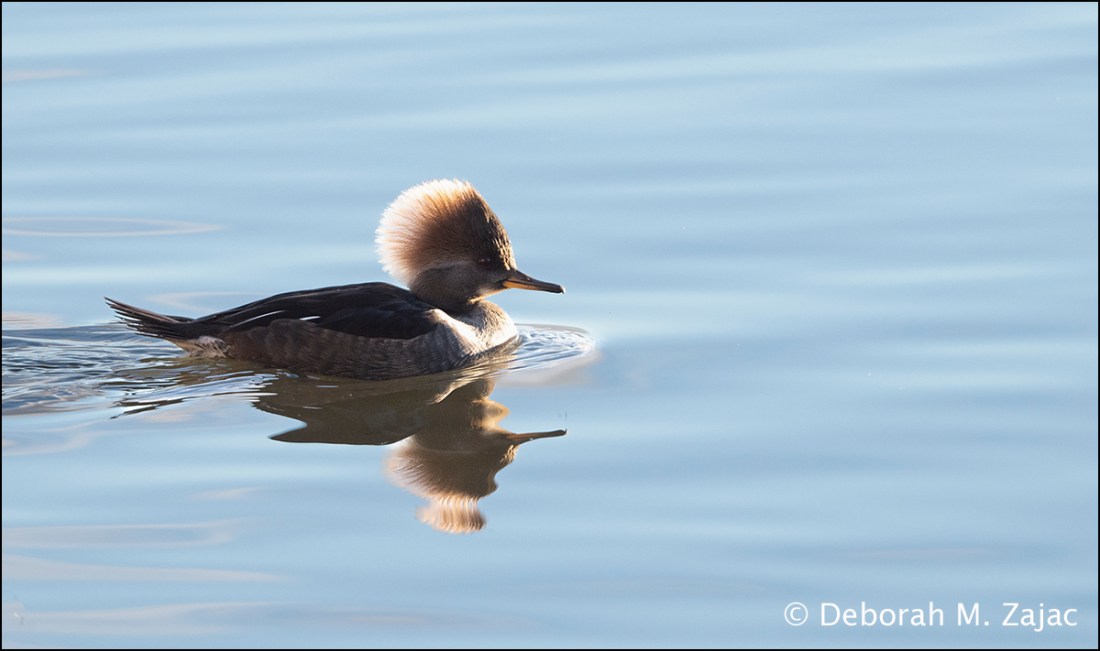
I saw these in early January and since we’re on the very edge of their migration path I feel very lucky to have seen them.

The male has lovely dark coloring and a wonderful hood. During the courting season he continuously tilts his head all the way to his back and up again and back again with his hood raised as it is in this image while he swims very near the female trying to capture her as a mate. It’s called Head Throwing. He also gives her a hoarse croak. It’s pretty neat to see them courting.

Hooded Merganser Male

The female looks rather dull compared to the male but, her crown or hood is lovely too. I liked the way the sunlight lit up her hood.

Hooded Merganser Female
They were swimming somewhat far apart from each other on this morning and not interested in courting, but luckily their hoods were up.

Fun Facts:

  • Similar to other cavity-nesting ducks such as Wood Ducks, Common Mergansers, and Common Goldeneyes, Hooded Mergansers often lay eggs in nests of other ducks, both their own species and others. This is called “brood parasitism” and is similar to the practice of Brown-headed Cowbirds. In turn, other cavity-nesting duck species will parasitize Hooded Merganser nests. Female Hooded Mergansers can lay up to about 13 eggs in a clutch, but nests have been found with up to 44 eggs in them.
  • Hooded Mergansers find their prey underwater by sight. They can actually change the refractive properties of their eyes to improve their underwater vision. In addition, they have an extra eyelid, called a “nictitating membrane,” which is transparent and helps protect the eye during swimming, like a pair of goggles.
  • Hooded Merganser ducklings leave their nest cavity within 24 hours of hatching. First, their mother checks the area around the nest and calls to the nestlings from ground level. From inside the nest, the little fluffballs scramble up to the entrance hole and then flutter to the ground, which may be 50 feet or more below them. In some cases they have to walk half a mile or more with their mother to the nearest body of water.
  • On the bird family tree, Hooded Mergansers (genus Lophodytes) lie between goldeneyes (Bucephala) and the other North American mergansers (Mergus). They share many courtship behaviors and calls with both of those groups.
  • The Hooded Merganser is the second-smallest of the six living species of mergansers (only the Smew of Eurasia is smaller) and is the only one restricted to North America.
  • The oldest recorded Hooded Merganser was a male and at least 14 years, 6 months old when he was shot in Mississippi in 2009. He was originally banded in Minnesota in 1995.

Fun Facts gleaned from allaboutbirds.org

Nikon D810| Nikkor 500mm| PS CC 24.4

I hope you all have a great week-end. If the weather permits I’ll be birding this morning and will respond when I get home. If the weather is poor I’ll be here!😀

more to come…

Sunday Stillness- Storm Clouds and Sunset Colors

Copyright ©2023 Deborah M. Zajac. ALL RIGHTS RESERVED. 

PLEASE DO NOT USE MY IMAGES WITHOUT EXPRESSED WRITTEN PERMISSION.

Storm approaching with sunset colors

iPhone 14 Pro| PS CC 24.6.0

more to come…

Whatever Weds. Fog, Clouds, and a Hawk

Copyright ©2023 Deborah M. Zajac. ALL RIGHTS RESERVED. DO NOT USE MY IMAGES WITHOUT EXPRESSED WRITTEN PERMISSION!

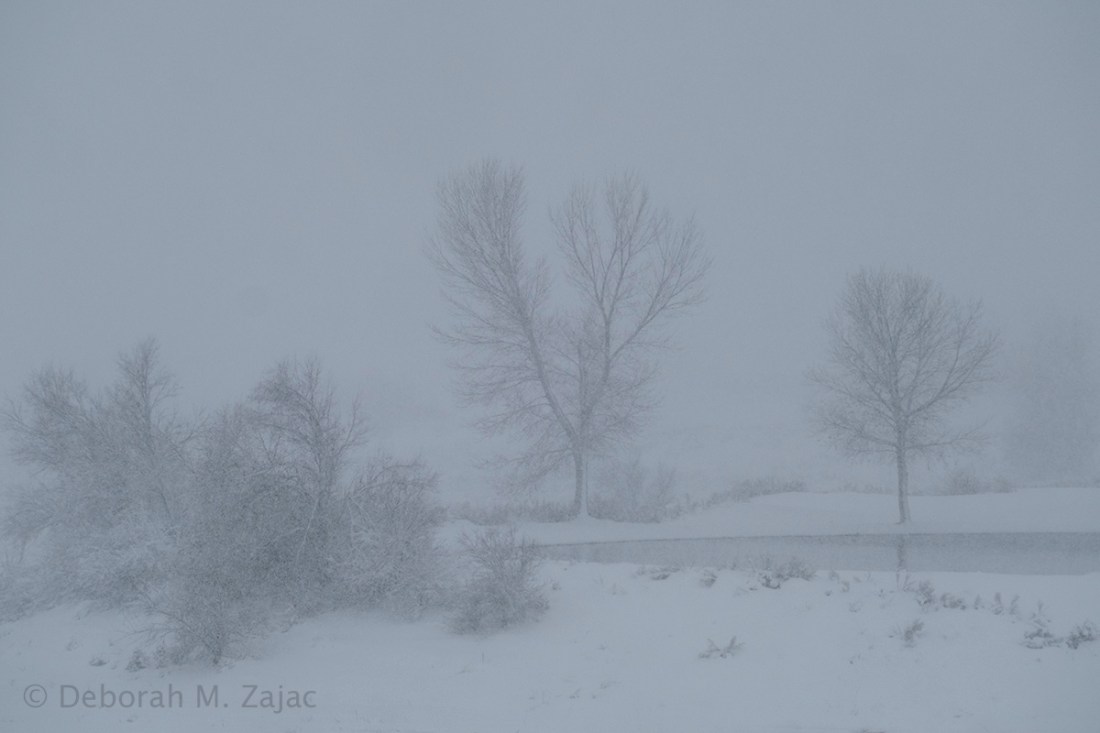
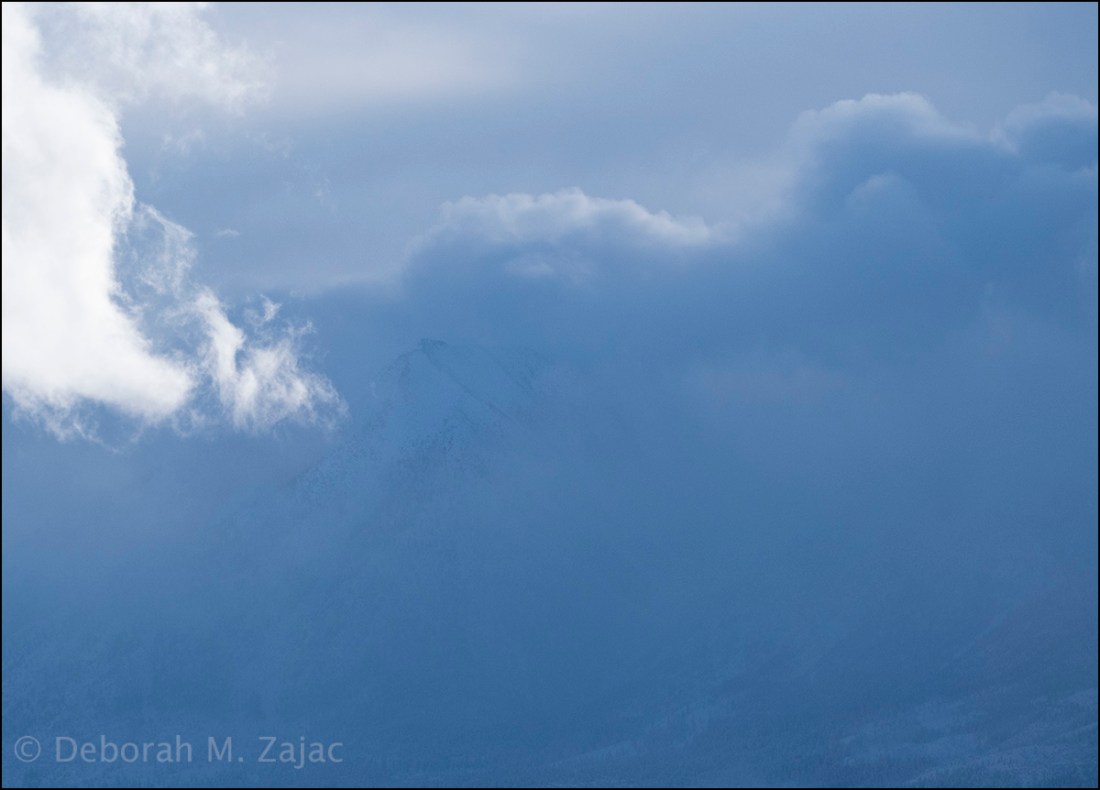
We’ve had fog, and storm clouds the last week through the week-end up until last night. We also got a whole lot of snow. Here are a couple of images of the scenery. Recently the mornings have been foggy.

Foggy morning-

Foggy Morning. Cottonwoods, and Russian Olive Trees in the Snow and Fog.

Clouds-After the storm had passed I looked out the window and saw Job’s Peak just peeking out from the clouds, and this brilliant cloud on the left lit by the afternoon sun.

Job’s Peak in the Clouds

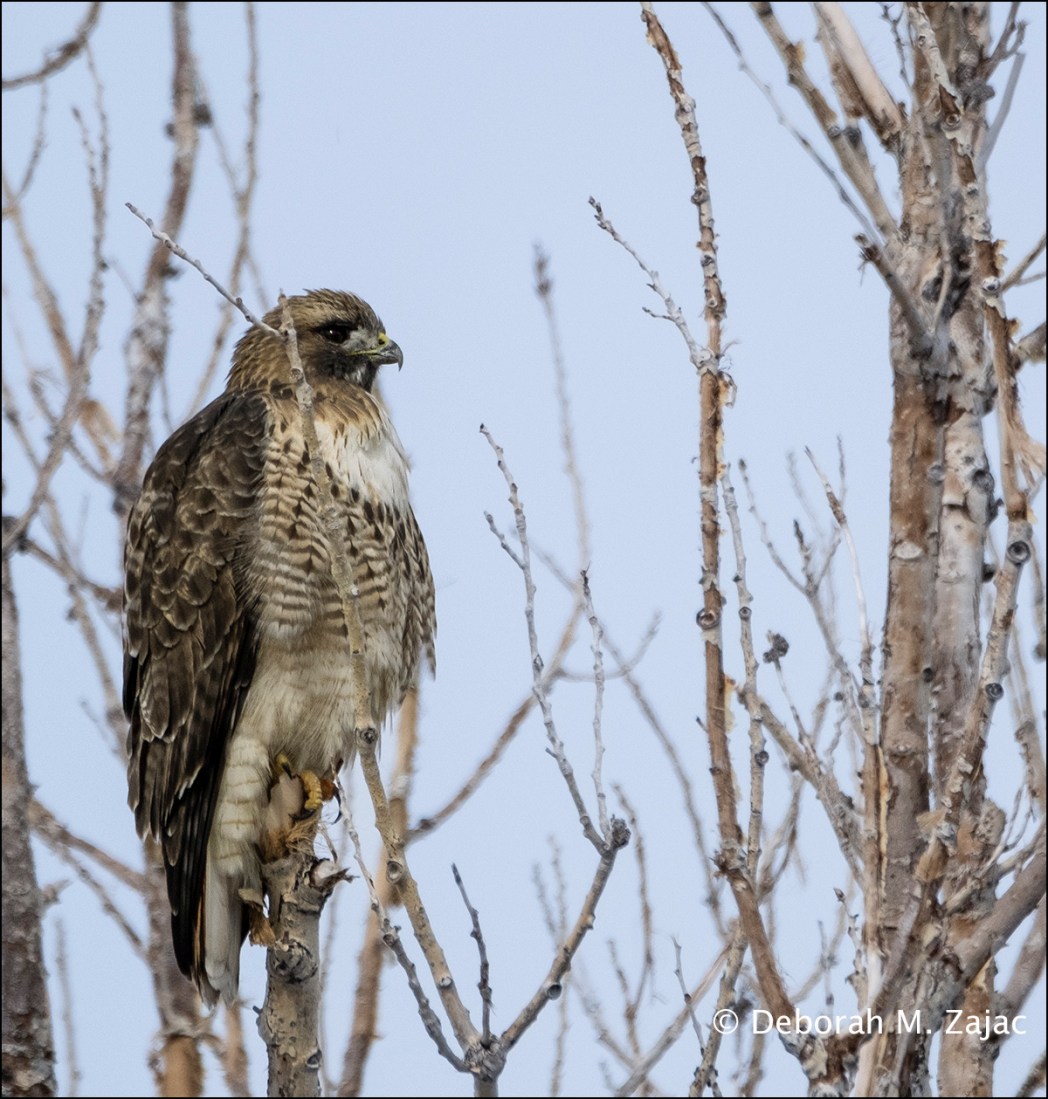
Last week I took advantage of a break in the storm to go run some errands, and on my way home I spied this beauty in a tree on my street.

Red-tail Hawk-

We have cloudy skies in the forecast for the rest of the week. Temperatures are forecasted to be lows in the teens, and highs in mid 30’s I hope that holds so I can get out to do some birding and meet up with some friends.

I hope your week is going well, and you have a lovely week-end too!

Fuji X-T3| Fuji 100-400mm Lens| PS CC 24.1.0

more to come…

Whatever Weds. “You’re off to great places…

Copyright ©2022 Deborah M. Zajac. ALL RIGHTS RESERVED

Today is your day. Your mountain is waiting, so get on your way!” ~Dr. Seuss

Mt Shasta seen from Lower Klamath NWR, Oregon

Happy Hump Day! I hope your week is going well.

Fuji X-T3| Fujinon 100-400mm| PS CC 23.2.2

Friday’s Feathered Friends- Bald Eagles

Copyright ©2022 Deborah M. Zajac. ALL RIGHTS RESERVED

At the end of February I met up with some friends one of them Gordon from https://undiscoverdimagesamongstus2.wordpress.com/ We met up in Oregon in the Klamath Basin region to do some birding. We were hoping to see American Bald Eagles and the other usual winter suspects.

What we didn’t expect was to see 17 American Bald Eagles around and on the first pond we went to!

You know we hit that pond several times while there mornings, and afternoons.

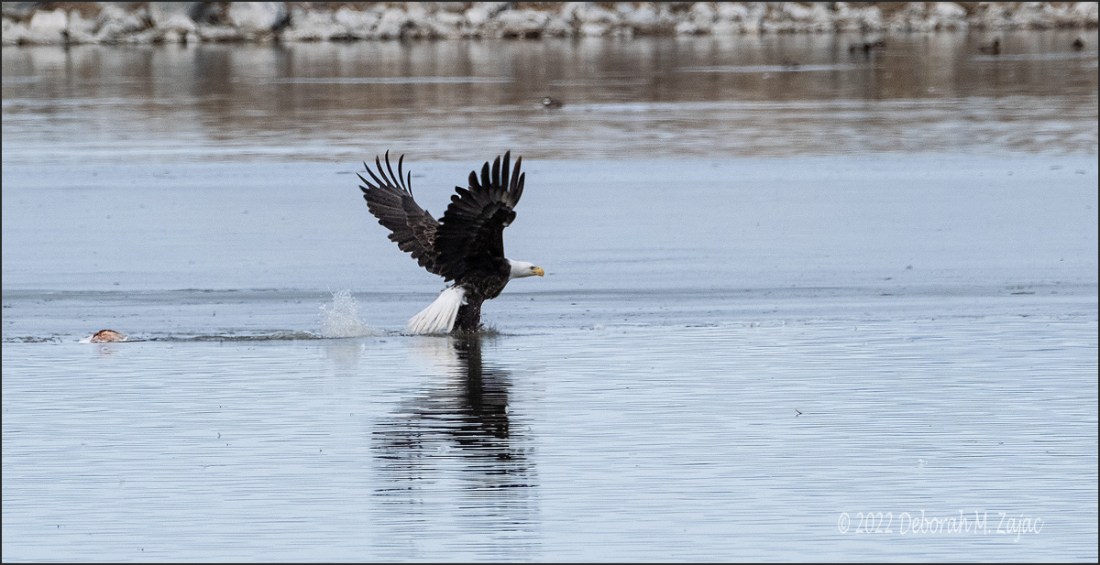
The first morning we were all together was Saturday we rose early and headed to the pond. It was a chilly 14 degrees Fahrenheit, but we saw Eagles. Later that afternoon we went back and saw an Eagle trying to retrieve its prey from the icy pond water.

American Bald Eagle- Incoming!

It missed, but oh, it was so cool seeing it try.

Missed!

It landed in the water then pulled up and swung around again for another pass.

Landed in icy water
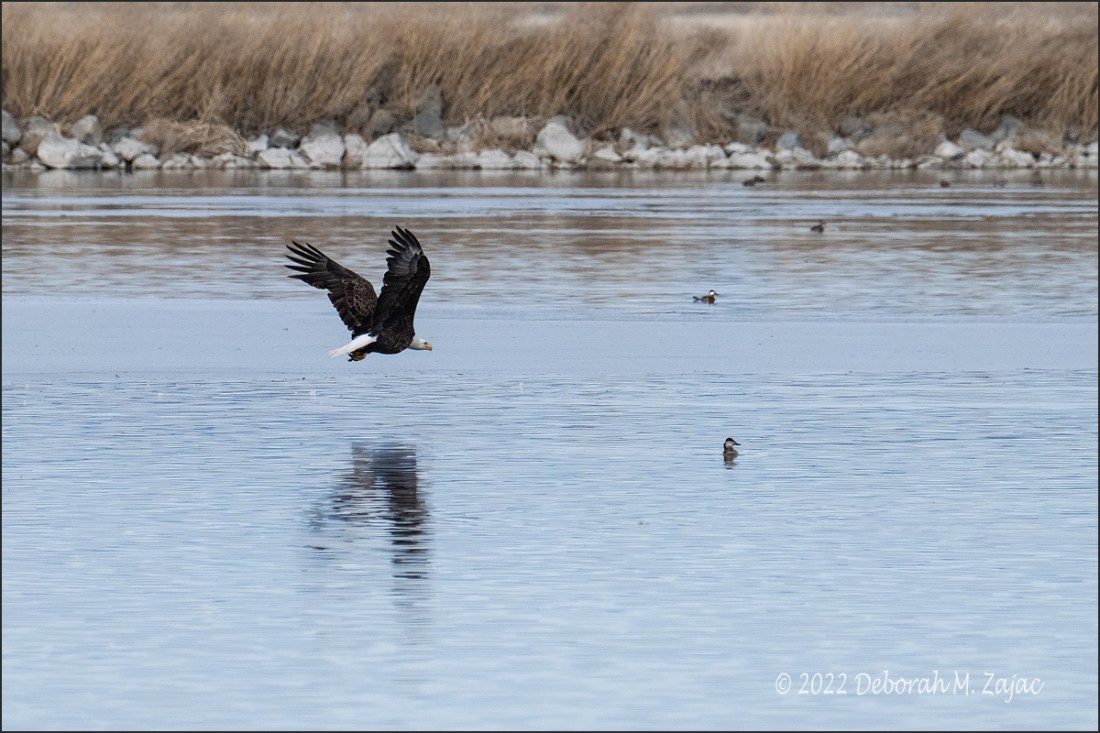
Pull up!

This time it tried a different approach, and missed again!

American Bald Eagle over the Target!

Then it just flew away leaving us wondering if this was just retrieving practice?

American Bald Eagle Adult in Flight

It was quite exciting and entertaining to watch and one of the highlights of the week-end.

Fun Facts:

The American Bald Eagle has been the national emblem of the United States since 1782.

These magnificent birds aren’t really bald, but their white-feathered heads gleam in contrast to their chocolate brown bodies and wings.

Rather than do their own fishing, Bald Eagles often go after other creatures’ catches. A Bald Eagle will harass a hunting Osprey until the smaller raptor drops its prey in midair, where the eagle swoops it up. A Bald Eagle may even snatch a fish directly out of an Osprey’s talons. Fishing mammals (even people sometimes) can also lose prey to Bald Eagle piracy.

Had Benjamin Franklin prevailed, the U.S. emblem might have been the Wild Turkey. In 1784, Franklin disparaged the national bird’s thieving tendencies and its vulnerability to harassment by small birds. “For my own part,” he wrote, “I wish the Bald Eagle had not been chosen the Representative of our Country. He is a Bird of bad moral Character. He does not get his Living honestly. … Besides he is a rank Coward: The little King Bird not bigger than a Sparrow attacks him boldly and drives him out of the District.”

Sometimes even the national bird has to cut loose. Bald Eagles have been known to play with plastic bottles and other objects pressed into service as toys. One observer witnessed six Bald Eagles passing sticks to each other in midair.

The largest Bald Eagle nest on record, in St. Petersburg, Florida, was 2.9 meters in diameter and 6.1 meters tall. Another famous nest—in Vermilion, Ohio—was shaped like a wine glass and weighed almost two metric tons. It was used for 34 years until the tree blew down.

Immature Bald Eagles spend the first four years of their lives in nomadic exploration of vast territories and can fly hundreds of miles per day. Some young birds from Florida have wandered north as far as Michigan, and birds from California have reached Alaska.

Bald Eagles occasionally hunt cooperatively, with one individual flushing prey towards another.

Bald Eagles can live a long time. The oldest recorded bird in the wild was at least 38 years old when it was hit and killed by a car in New York in 2015. It had been banded in the same state in 1977.

Once endangered by hunting and pesticides, Bald Eagles have flourished under protection.

Fun Facts gleaned from All About Birds

https://www.allaboutbirds.org/guide/Bald_Eagle/

I will be sharing more images from this trip in future posts. Until then I hope you cut loose a little and have a lovely week-end! 😀

Fuji X-T3| Fujinon 100-400mm| PS CC 23.2.1

more to come…

Friday’s Feathered Friends- Wood Duck

Copyright ©2021 Deborah M. Zajac. ALL RIGHTS RESERVED

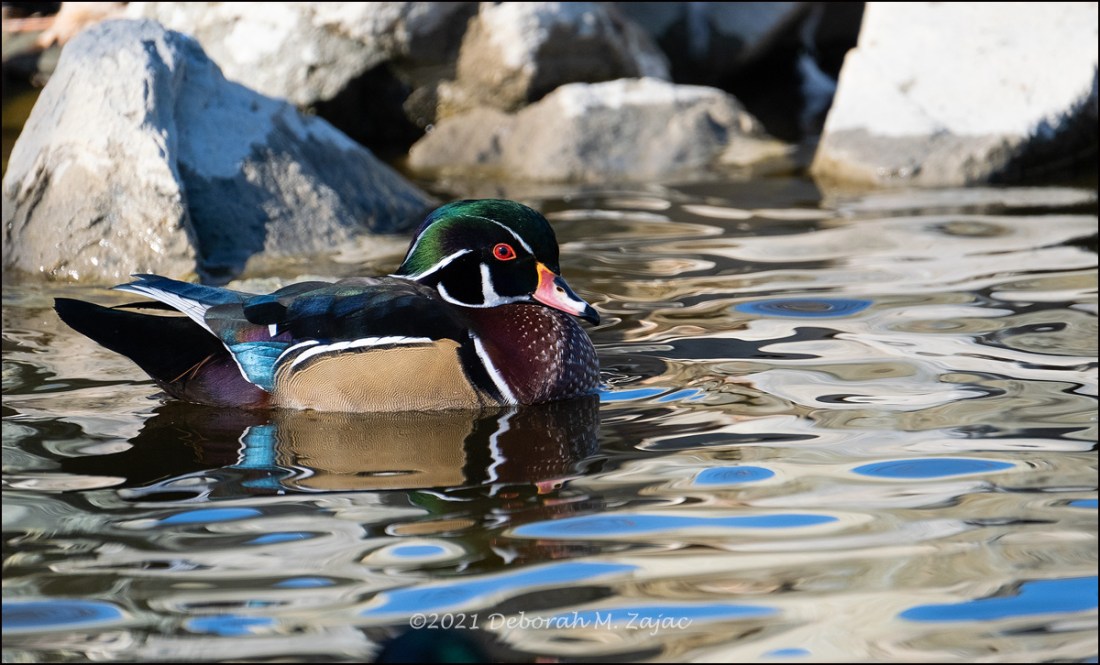
A couple of week ago I discovered a new park with a pond not far from home and this beautiful male Wood Duck was there among the mallards and geese.

Wood Duck Male

I heard there was a female there too but, I never saw her. She too is quite striking and pretty. Here’s an image I made last year along the river of a female Wood Duck checking out a tree for a nesting spot I thought as they nest in holes in trees or if available a nesting box. They have claws that can grip bark so they can perch on branches.

The Wood Duck is one of the prettiest ducks of all the waterfowl.

Fun facts:

  • Natural cavities for nesting are scarce, and the Wood Duck readily uses nest boxes provided for it. If nest boxes are placed too close together, many females lay eggs in the nests of other females.
  • Wood Ducks pair up in January, and most birds arriving at the breeding grounds in the spring are already paired. The Wood Duck is the only North American duck that regularly produces two broods in one year.
  • The Wood Duck nests in trees near water, sometimes directly over water, but other times over a mile away. After hatching, the ducklings jump down from the nest tree and make their way to water. The mother calls them to her, but does not help them in any way. The ducklings may jump from heights of over 50 feet without injury.
  • The oldest recorded Wood Duck was a male and at least 22 years, 6 months old. He had been banded in Oregon and was found in California.

We got a good snow dump during the night and early morning hours on Tuesday. It made everything so pretty! As I write this (Thursday) we’re supposed to get more snow today. #1 Grandson will be celebrating his 9th year on this planet next week. I hope we can get over the mountains to see him to help him celebrate. 9 years old! Time is flying by.

What are you doing this week-end, anything good? Have you finished your holiday shopping?

Fuji X-T3| Fujinon 100-400mm| PS CC 23.0.0

more to come…