Whatever Weds- The Stars have It

Copyright ©2024 Deborah M. Zajac. ALL RIGHTS RESERVED. 

PLEASE DO NOT USE MY IMAGES WITHOUT EXPRESSED WRITTEN PERMISSION.

Last week He-Man and I had a little get-away for our 43rd anniversary. We didn’t go too far just up to Sparks, NV.

We booked a balcony suite at Hampton Inn & Suites at the marina for the view of Helms Lake, and view of Reno’s skyline. This lake has an interesting beginning.

“The site was once a gravel pit owned by the Helms Construction Corp. (1968-1995) The pit is 100 feet deep. They found petroleum and solvent contamination seeping into the pit in 1987 so it was declared a Super Toxic Sight and clean up began. In 1996 it was declared free of petrochemicals and the site was turned over to the city of Sparks.

Millions of dollars of spill mitigation money was made available to the city, which they used to construct the park and make the pit a recreational pond. They had planned to fill the pit to 30 feet, but in January 1997 the Truckee River overflowed its banks and filled the Helms Pit creating what is now Richard Helms Lake or Sparks Marina Pond.” You can read a little more about how it stays filled at the link. https://www.ndow.org/waters/sparks-marina/

Now for our view-
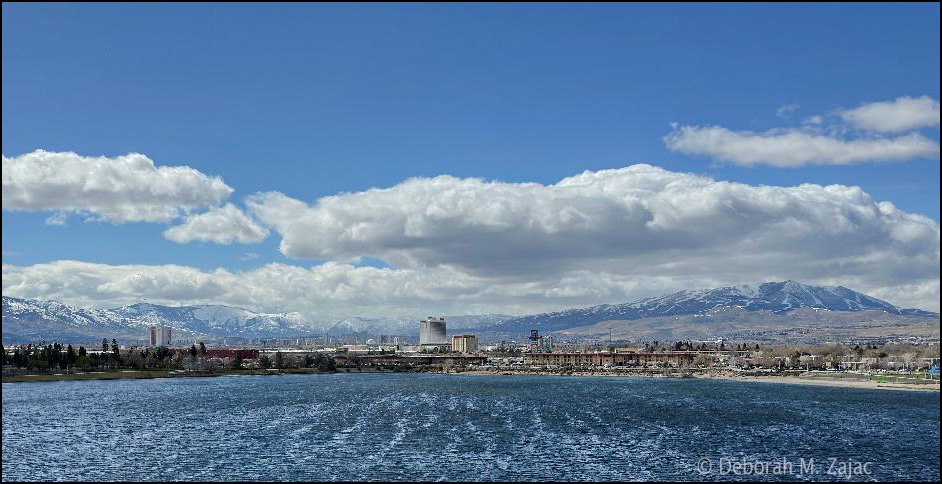
Our day-time balcony view

It was pretty windy the day we were up there as you can see by the water.
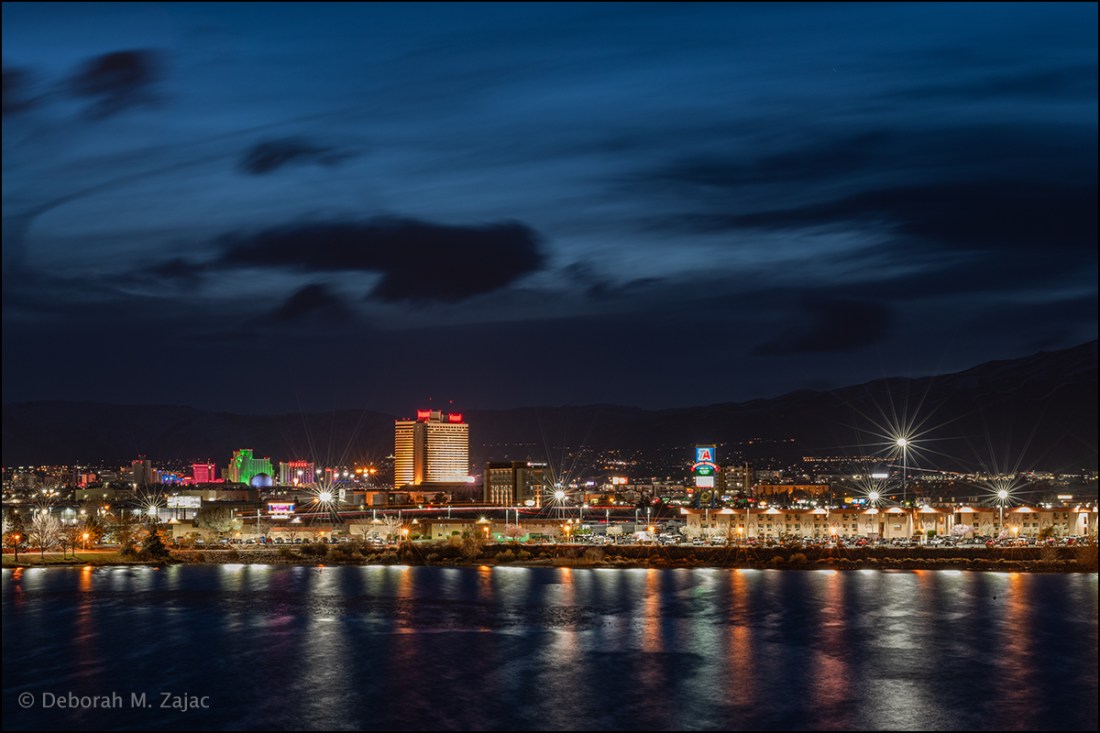
Our Evening View

We both really enjoyed having this evening view when the lights in the city came on.

I had hoped our 4th floor balcony room would afford a great view of the sky so I could also try to photograph Comet 12P/Pons-Brooks, but alas we had a storm rolling in and cloud cover.

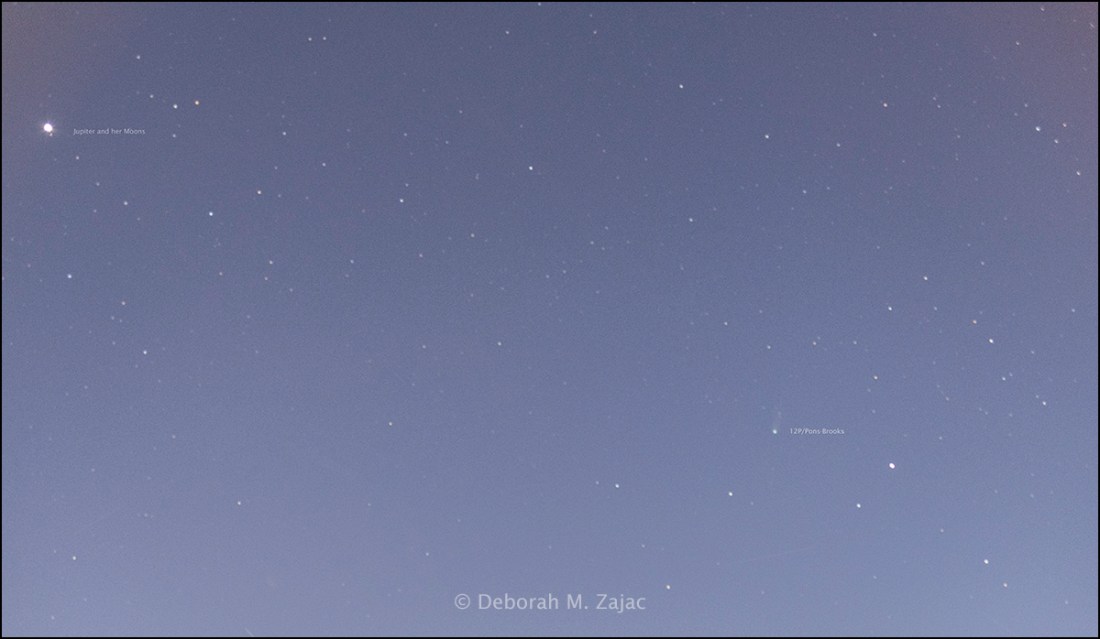
Finally, Monday night April 1st…no joke! We had a clear night so I went out to my front yard and spied the Comet.
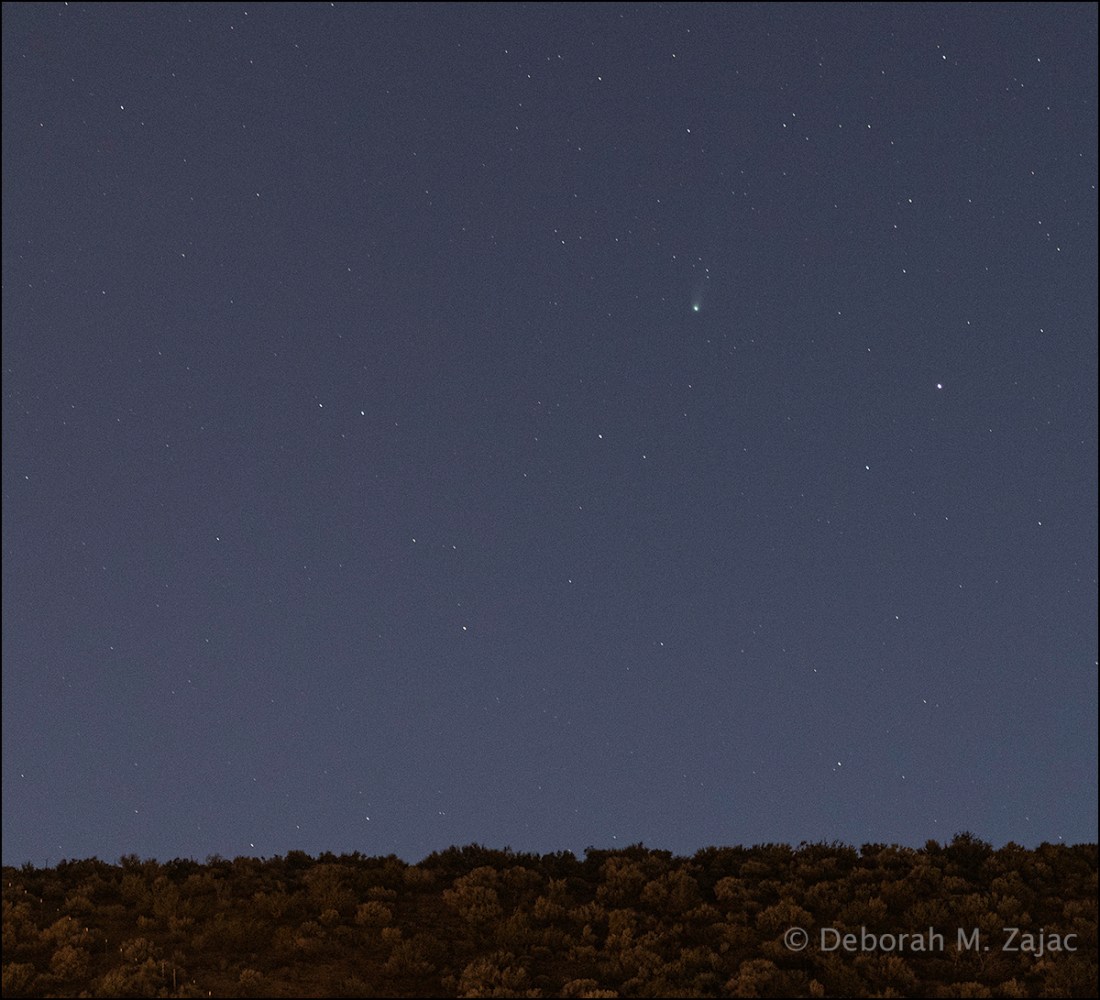
Comet 12P/Pons-Brooks with faint tail.
Green Comet 12P/Pons-Brooks cropped in.
Dialing in my focus I got Jupiter and her Moons too.

We had a lovely anniversary walking around the lake both days, and we found a new Indian place we liked a lot for dinner so, we’ll make the drive up for that again when we’re craving Indian food, and we’ll be staying there again when the weather is warmer and we’ll take our kayak up for a paddle around the lake.

I hope the stars have lined up a fantastic week for you.

Nikon D850| Nikkor 80-200mm| iPhone 14 Pro| PS CC 25.5.1

more to come…

Whatever Weds. Waxing Gibbous Moon

Copyright ©2024 Deborah M. Zajac. ALL RIGHTS RESERVED. 

PLEASE DO NOT USE MY IMAGES WITHOUT EXPRESSED WRITTEN PERMISSION.

97.7% Waxing Gibbous Moon and Clouds 3.23.2024

Nikon D850| Nikkor 500mm PF-e| PS CC 25.5.1

more to come…

Whatever Weds. Backlash

Copyright ©2024 Deborah M. Zajac. ALL RIGHTS RESERVED. 

PLEASE DO NOT USE MY IMAGES WITHOUT EXPRESSED WRITTEN PERMISSION.

I’m guessing it wasn’t a good day fishing?

Fishermen’s Birds Nest

Nikon D810| Nikkor 500mm PF-e| PS CC 25.4.0

more to come…

Friday’s Feathered Friends- Western Wood Peewee

Copyright ©2024 Deborah M. Zajac. ALL RIGHTS RESERVED. 

PLEASE DO NOT USE MY IMAGES WITHOUT EXPRESSED WRITTEN PERMISSION.

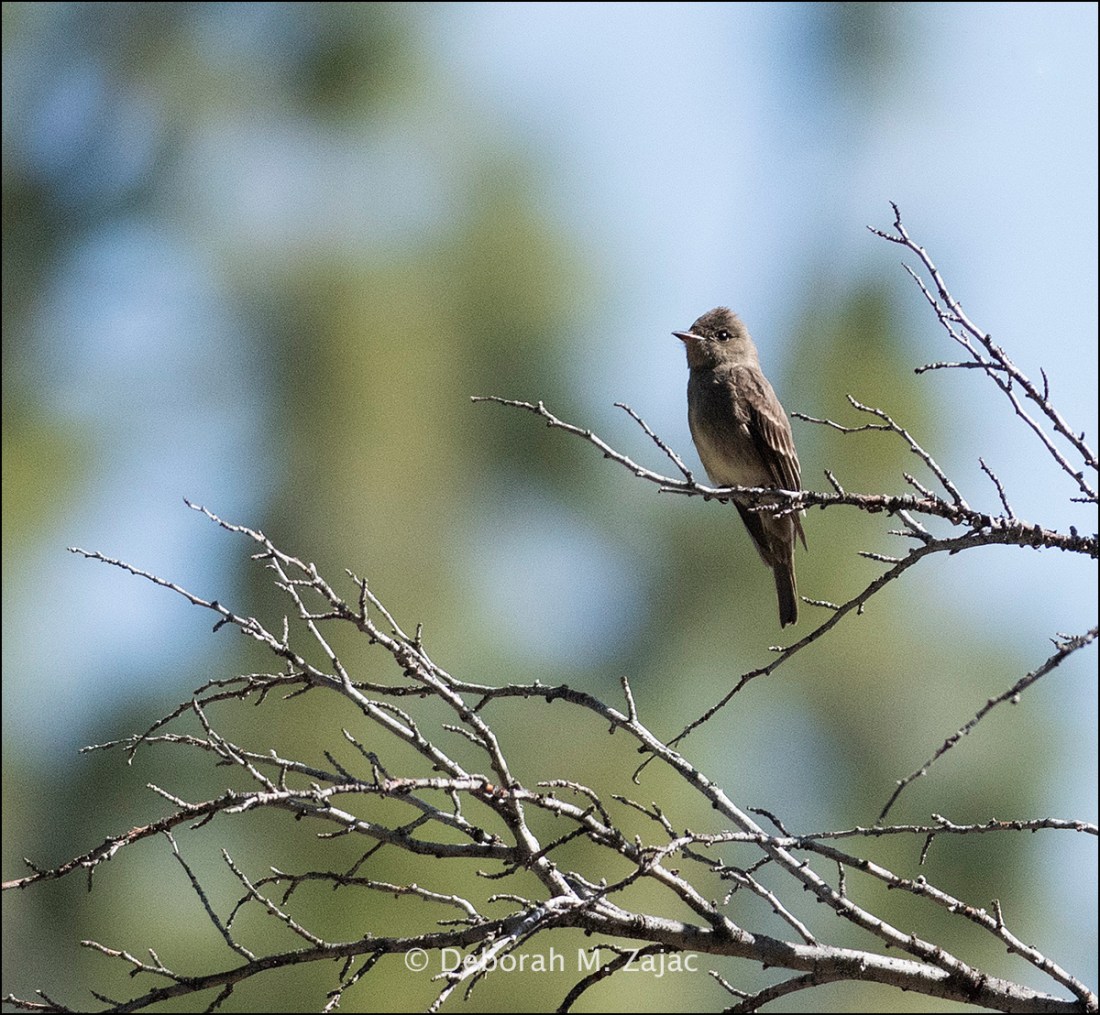
I don’t think I’ve ever shared this bird before. This is an image I made last summer.

Western Wood Peewee

Fun Facts:

  • The breeding ranges of the nearly identical Eastern and Western Wood-Pewees overlap only in a very narrow zone in the Great Plains. Despite the birds’ physical similarity, no evidence has ever been found that the two species interbreed in that area—perhaps because their songs sound so different.
  • Where exactly the Western Wood-Pewee goes in the winter is still a mystery. Both Eastern and Western Wood-Pewees migrate to northern South America, but because they look so similar and they don’t call much on the wintering ground it’s hard to say for certain where each species spends its winter.
  • The scientific name of the Western Wood-Pewee is Contopus sordidulus. Contopus comes from the Greek word kontos which means short and pous which means foot—referring to the relatively short legs on Contopus flycatchers. Sordidulus means dirty or unkempt, a reference to the dusky brown wash to the breast and flanks.
  • The Western Wood-Pewee makes a clapping noise with its bill while chasing and attacking intruders in nest defense.
  • The oldest recorded Western Wood-Pewee was a female, and at least 8 years, 1 month old when she was recaptured and rereleased during banding operations in California in 2002. She had been banded in the same state in 1995.
  • Fun Facts gleaned from allaboutbirds.org

Nikon D810| Nikkor 300mm f/4| PS CC

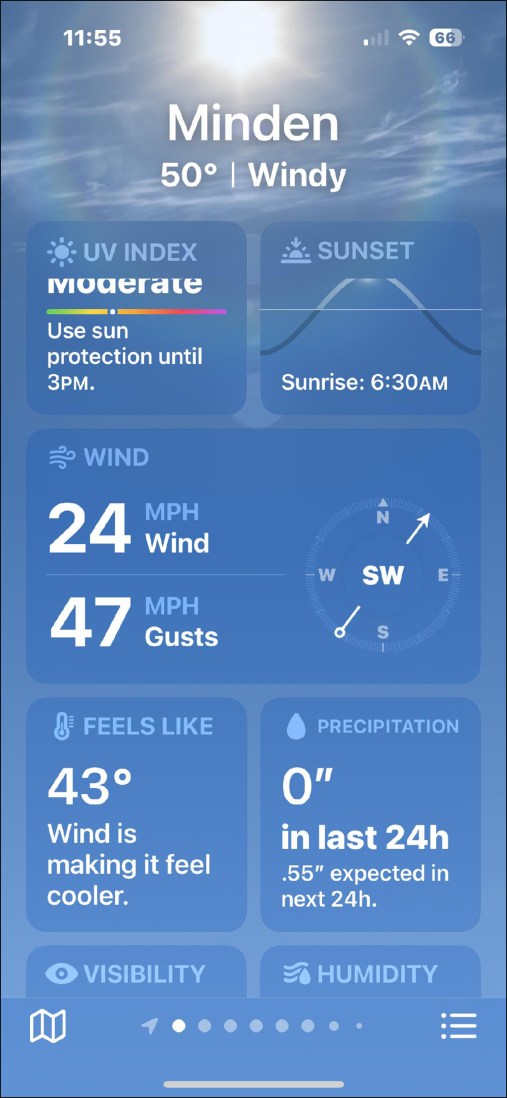
We’ve been under a high wind and storm watch since yesterday morning. As I write this the wind is howling at 24 mph with gusts up to 47 mph. They’re saying we may get 8 inches of snow between now and Saturday. The sun is out, the clouds are big white and fluffy in some spots to the east but, gray and looming over the Sierras to the west. As you can imagine we’re hanging out at home.

I was planning to go birding with a local birding group this morning, but due to the weather that’s been rescheduled.

I’ve been re-watching The Expanse while waiting for the new season of Vera to be released on Wednesday. After I finish The Expanse I’ll be binge watching Vera if all the episodes are available, and I’m still working my way through the Woodlands and Trees Ready to Paint class in a book. I finished exercise 6 but, the little wood bridge over the creek came out really wonky…even more wonky than my normal wonky so, I’m on my second attempt with that one, and I mixed up a dark green shade of paint that I don’t like on this second pass, so they’ll probably be a 3rd attempt at mastering exercise #6. 😀

That’s me all caught up. What’s happening with you?

more to come…

Whatever Weds. Surprise!

Copyright ©2024 Deborah M. Zajac. ALL RIGHTS RESERVED. 

PLEASE DO NOT USE MY IMAGES WITHOUT EXPRESSED WRITTEN PERMISSION.

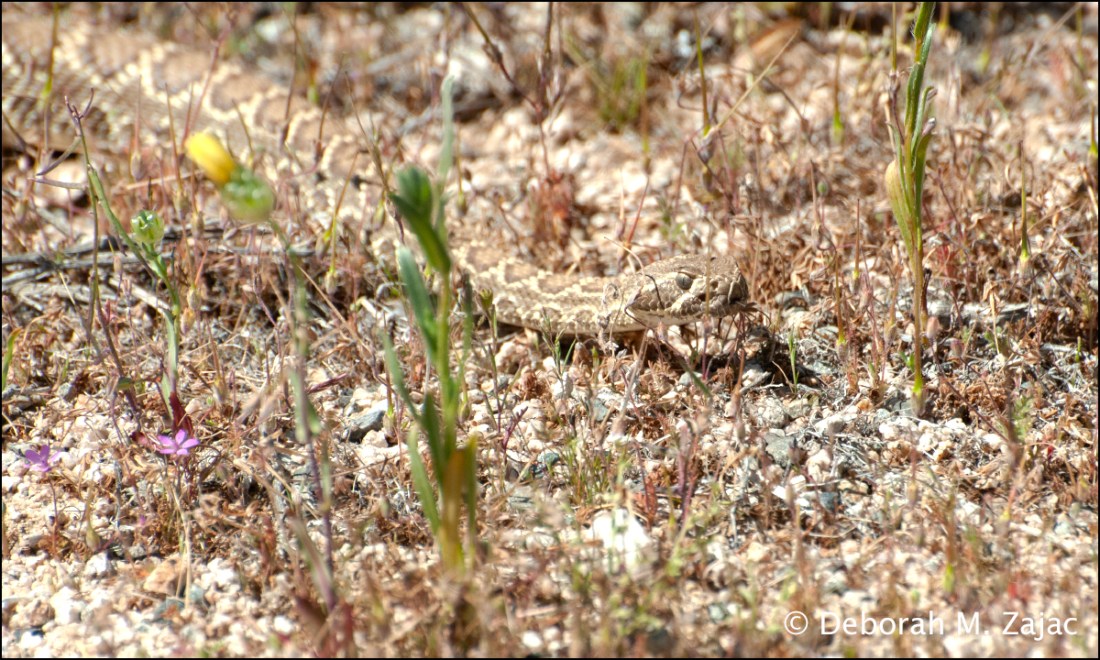
I’ve been updating and cleaning up my birding records which has me going back in my files 15 years. In the Spring of 2011 several friends and I went to Death Valley and on the way home we stopped to photograph wildflowers in a big field by the side of the road, well you’ve heard the saying, beware of a snake in the grass. Beware of Rattlesnakes in the wildflowers!

That’s not the closest I’ve come to a Rattlesnake while hiking, but it was too close for comfort even with my 300mm lens.

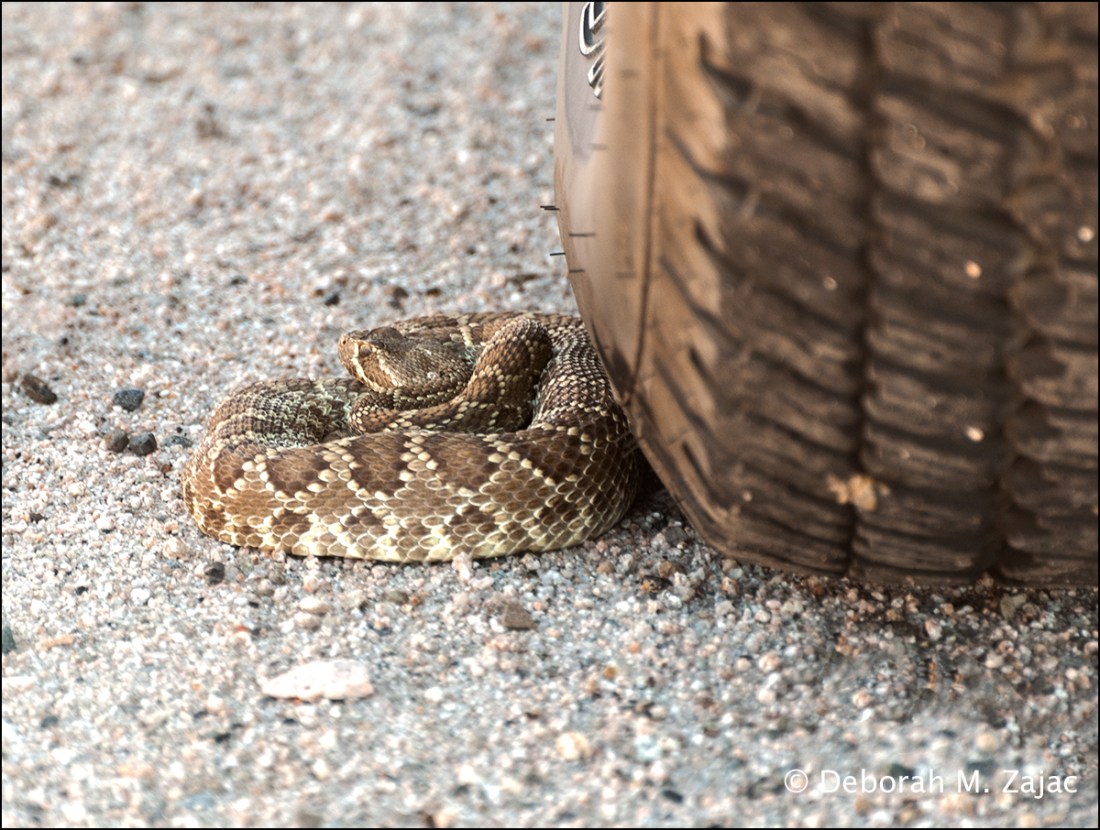
Then we backed out of the field and headed back to our cars only to discover another Western Diamondback coiled up sleeping beside the tire of my friend’s car soaking up the warmth from the sand and car engine! The driver had to get in via the passenger side of the car.

Western Diamondback Rattlesnake

It was quite the adventure!

Nikon D300S| Nikkor 70-300mm@300mm| PS CC 25.4

Happy Valentine’s Day!💗

more to come…

Friday’s Feathered Friends- Cedar Waxing

Copyright ©2024 Deborah M. Zajac. ALL RIGHTS RESERVED. 

PLEASE DO NOT USE MY IMAGES WITHOUT EXPRESSED WRITTEN PERMISSION.

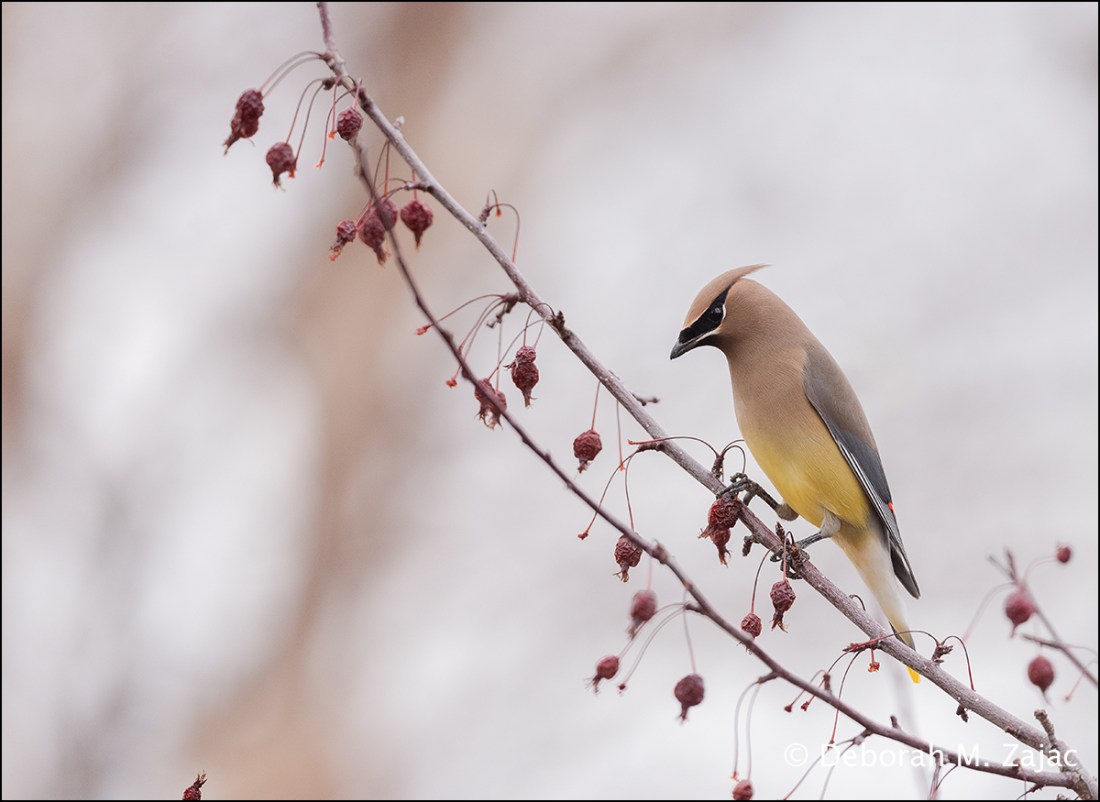
Last week while birding I saw so many Cedar Waxwings at 2 places I visited. There were about 120 in all! At one of the places they were gorging on ripe, plump red berries.

I was doing my happy dance to see that!

“I think this one looks yummy”
Gulp!

It was a great birdy day.

Fun Facts:

  • The name “waxwing” comes from the waxy red secretions found on the tips of the secondaries of some birds. The exact function of these tips is not known, but they may help attract mates.
  • Cedar Waxwings with orange instead of yellow tail tips began appearing in the northeastern U.S. and southeastern Canada in the 1960s. The orange color is the result of a red pigment picked up from the berries of an introduced species of honeysuckle. If a waxwing eats enough of the berries while it is growing a tail feather, the tip of the feather will be orange.
  • The Cedar Waxwing is one of the few North American birds that specializes in eating fruit. It can survive on fruit alone for several months. Brown-headed Cowbirds that are raised in Cedar Waxwing nests typically don’t survive, in part because the cowbird chicks can’t develop on such a high-fruit diet.
  • Many birds that eat a lot of fruit separate out the seeds and regurgitate them, but the Cedar Waxwing lets them pass right through. Scientists have used this trait to estimate how fast waxwings can digest fruits.
  • Because they eat so much fruit, Cedar Waxwings occasionally become intoxicated or even die when they run across overripe berries that have started to ferment and produce alcohol.
  • Building a nest takes a female Cedar Waxwing 5 to 6 days and may require more than 2,500 individual trips to the nest. They occasionally save time by taking nest materials from other birds’ nests, including nests of Eastern Kingbirds, Yellow-throated Vireos, orioles, robins, and Yellow Warblers.
  • The oldest recorded Cedar Waxwing was a male and at least 7 years, 1 month old when he was recaptured and rereleased during banding operations in Maryland in 2014. He was originally banded in the same state in 2008.

Fun facts gleaned from https://www.allaboutbirds.org/guide/Cedar_Waxwing

It’s snowing as I type this but, supposed to be sunny but cold on Saturday. I hope to go out birding for a bit if that forecast holds. I hope you all have a grand week-end!

more to come…

Friday’s Feathered Friends- Hooded Mergansers

Copyright ©2024 Deborah M. Zajac. ALL RIGHTS RESERVED. 

PLEASE DO NOT USE MY IMAGES WITHOUT EXPRESSED WRITTEN PERMISSION.

I saw these in early January and since we’re on the very edge of their migration path I feel very lucky to have seen them.

The male has lovely dark coloring and a wonderful hood. During the courting season he continuously tilts his head all the way to his back and up again and back again with his hood raised as it is in this image while he swims very near the female trying to capture her as a mate. It’s called Head Throwing. He also gives her a hoarse croak. It’s pretty neat to see them courting.

Hooded Merganser Male

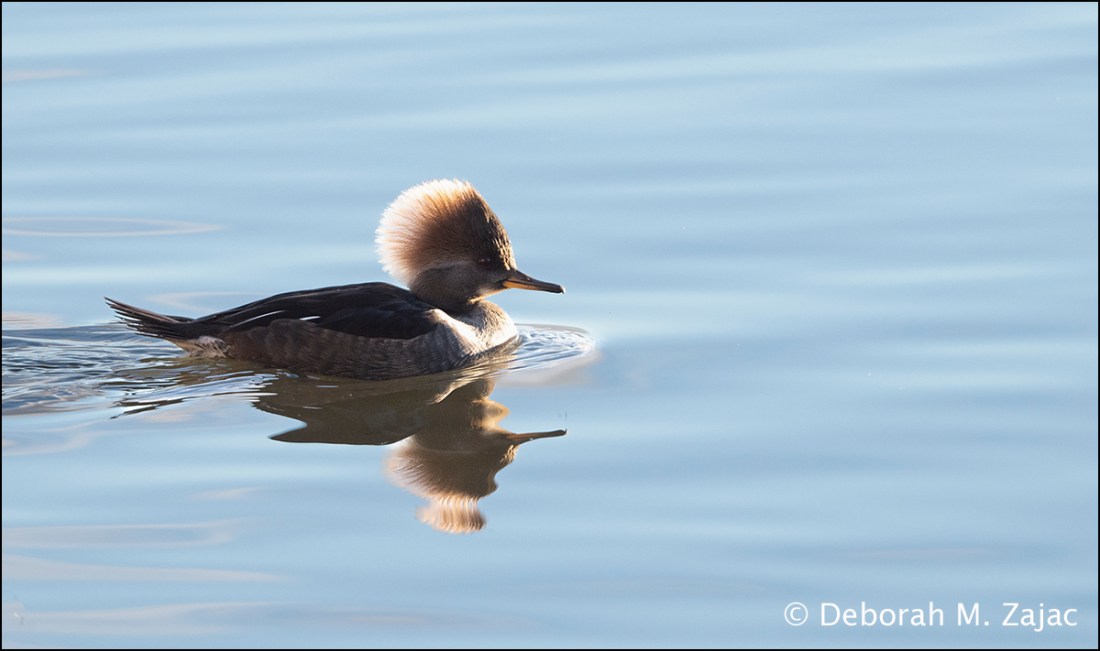
The female looks rather dull compared to the male but, her crown or hood is lovely too. I liked the way the sunlight lit up her hood.

Hooded Merganser Female
They were swimming somewhat far apart from each other on this morning and not interested in courting, but luckily their hoods were up.

Fun Facts:

  • Similar to other cavity-nesting ducks such as Wood Ducks, Common Mergansers, and Common Goldeneyes, Hooded Mergansers often lay eggs in nests of other ducks, both their own species and others. This is called “brood parasitism” and is similar to the practice of Brown-headed Cowbirds. In turn, other cavity-nesting duck species will parasitize Hooded Merganser nests. Female Hooded Mergansers can lay up to about 13 eggs in a clutch, but nests have been found with up to 44 eggs in them.
  • Hooded Mergansers find their prey underwater by sight. They can actually change the refractive properties of their eyes to improve their underwater vision. In addition, they have an extra eyelid, called a “nictitating membrane,” which is transparent and helps protect the eye during swimming, like a pair of goggles.
  • Hooded Merganser ducklings leave their nest cavity within 24 hours of hatching. First, their mother checks the area around the nest and calls to the nestlings from ground level. From inside the nest, the little fluffballs scramble up to the entrance hole and then flutter to the ground, which may be 50 feet or more below them. In some cases they have to walk half a mile or more with their mother to the nearest body of water.
  • On the bird family tree, Hooded Mergansers (genus Lophodytes) lie between goldeneyes (Bucephala) and the other North American mergansers (Mergus). They share many courtship behaviors and calls with both of those groups.
  • The Hooded Merganser is the second-smallest of the six living species of mergansers (only the Smew of Eurasia is smaller) and is the only one restricted to North America.
  • The oldest recorded Hooded Merganser was a male and at least 14 years, 6 months old when he was shot in Mississippi in 2009. He was originally banded in Minnesota in 1995.

Fun Facts gleaned from allaboutbirds.org

Nikon D810| Nikkor 500mm| PS CC 24.4

I hope you all have a great week-end. If the weather permits I’ll be birding this morning and will respond when I get home. If the weather is poor I’ll be here!😀

more to come…