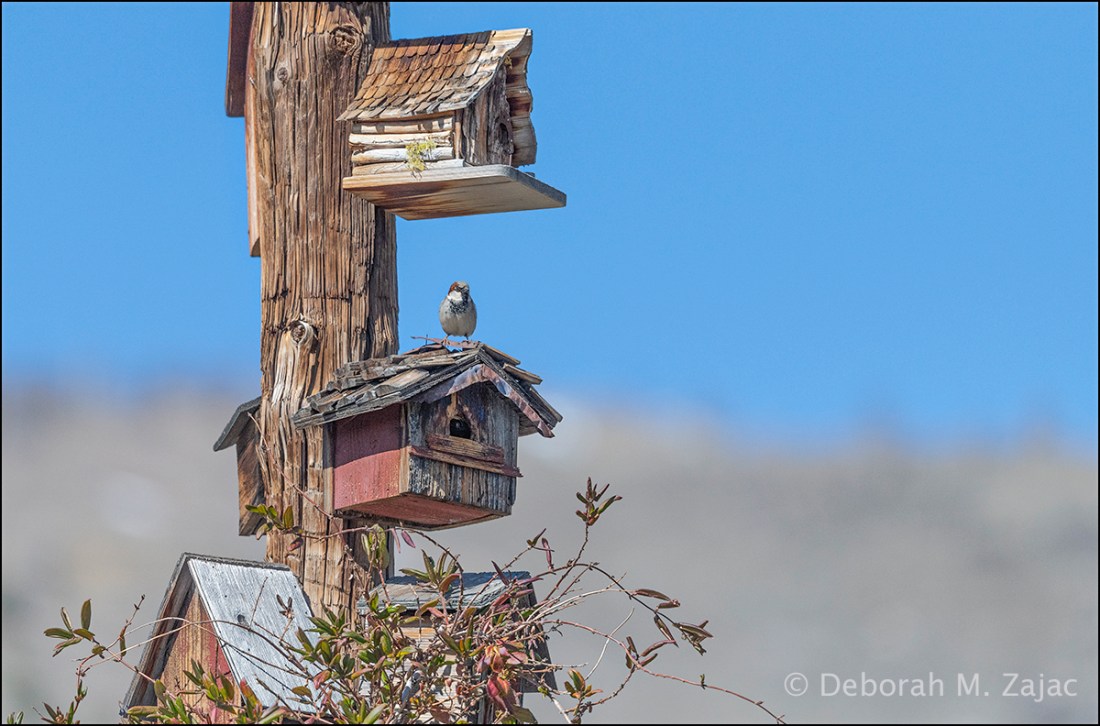
Thursday Doors- Sparrow Pole Bungalows

Copyright ©2024 Deborah M. Zajac. ALL RIGHTS RESERVED. 

PLEASE DO NOT USE MY IMAGES WITHOUT EXPRESSED WRITTEN PERMISSION.

Male House Sparrow on its Birdhouse

This post is part of the Thursday Doors group hosted by Dan Antion over at No Facilities which you can click on to see other doors from around the world-https://nofacilities.com/2024/04/11/alumni-doors/

Nikon D850| Nikkor 500mm PF-e| PS CC 25.5.1

more to come…

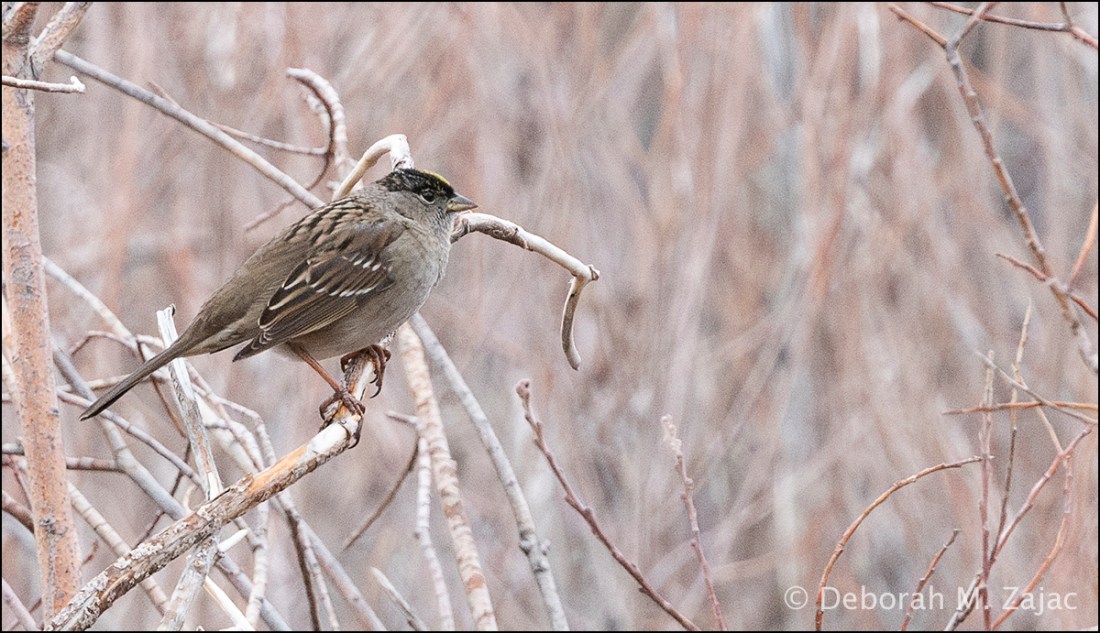
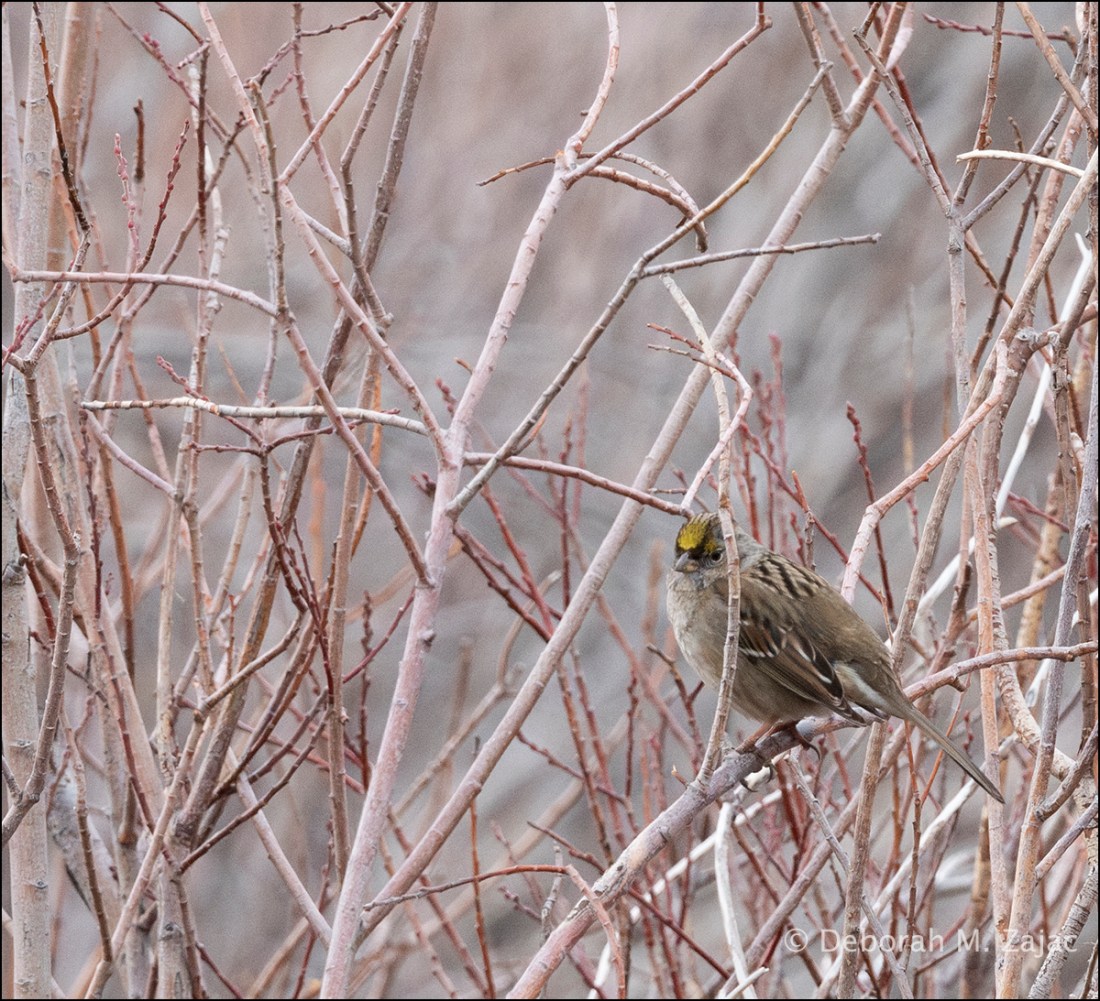
Friday’s Feathered Friends-Golden-crowned Sparrow

Copyright ©2024 Deborah M. Zajac. ALL RIGHTS RESERVED. 

PLEASE DO NOT USE MY IMAGES WITHOUT EXPRESSED WRITTEN PERMISSION.

I last shared this Sparrow in 2015. I don’t see many of them and I only see them during the Winter migration hanging out with the White-crowned Sparrows, but sadly, never at my feeder. Last week I saw this one.

Male Golden-crowned Sparrow

He was pretty skittish. Every time I tried getting closer he flew further away so these are pretty well cropped.

Fun Facts:

    • This sparrow is one of the least known of our songbirds, particularly on its northern breeding grounds. It has been the subject of only a few laboratory and field studies, so most of what we know about it comes from scattered notes in scientific journals.
    • Miners in the Yukon at the turn of the twentieth century woefully referred to the Golden-crowned Sparrow as the “no gold here” bird, because its song resembled that depressing phrase. They also interpreted its song to say “I’m so tired,” prompting them to dub the bird “Weary Willie.”
    • The Golden-crowned Sparrow arrives earlier and stays longer on its California wintering grounds than almost any other bird species.
    • When day length increases in the spring, the Golden-crowned Sparrow detects the change through photoreceptors (light-sensitive cells). Its body responds by putting on fat and getting an urge to migrate.
    • The oldest Golden-crowned Sparrow on record was at least 10 years, 6 months old. It was caught by a bird bander in California in 1970 and released.

Fun facts gleaned from allaboutbirds.org

I hope you all have a great week-end!

Nikon D810| Nikkor 500mm PF-e| PS CC 25.3.1

more to come…

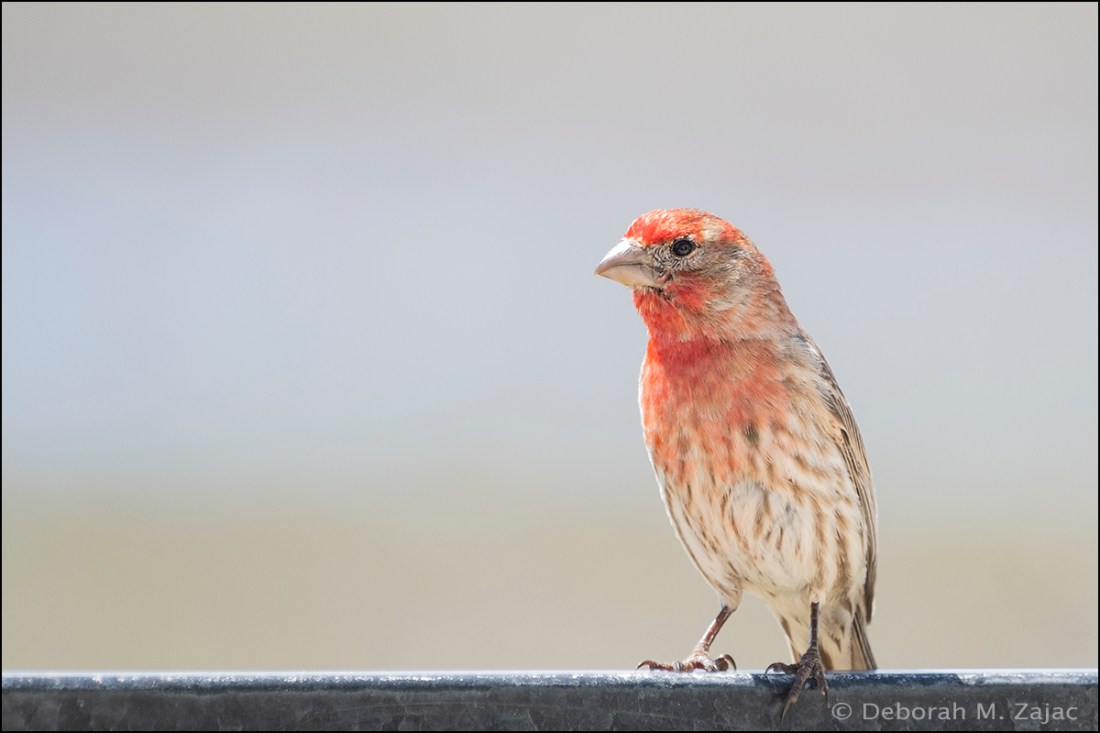
Whatever Weds. House Finch

Copyright ©2023 Deborah M. Zajac. ALL RIGHTS RESERVED. 

PLEASE DO NOT USE MY IMAGES WITHOUT EXPRESSED WRITTEN PERMISSION.

I’ve been MIA again and I’ll probably be on and off again for awhile. A family member is having some medical issues we’re working through.

Copyright ©2023 Deborah M. Zajac. ALL RIGHTS RESERVED. 

PLEASE DO NOT USE MY IMAGES WITHOUT EXPRESSED WRITTEN PERMISSION.

House Finch Male

I’ll catch up with you all soon. Stay well!

Fuji X-T3| Fujinon 100-400mm| PS CC 24.6

more to come…

A cheerful sight!

Copyright ©2017 Deborah M. Zajac. ALL RIGHTS RESERVED

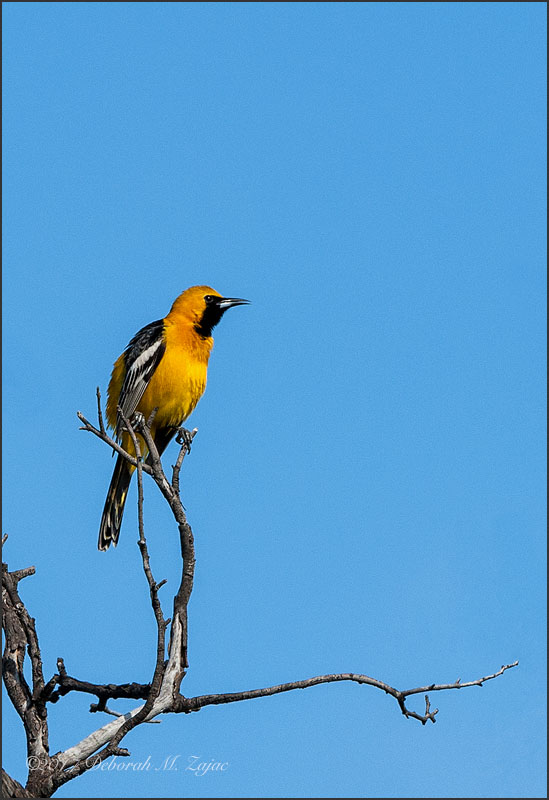
If I’m lucky I get to see and photograph a Hooded Oriole once during Spring. This year I was lucky! Isn’t he beautiful?

I was photographing the Bald Eagle when it left it’s perch and flew away. After watching it soar higher and higher into the thermal stream I turned around to head to the car for the next birding location and, there this Hooded Oriole was! It must have been watching and waiting for the Eagle to leave so it could claim the perch for a little while.

Hooded Oriole-Male

Have a great and cheery week-end everyone!

Nikon D700| Nikkor 200-500mm| Lexar Digital Film| PS CC 2017

More to come…


American Kestrel-Male

Copyright © 2017 Deborah M. Zajac. ALL RIGHTS RESERVED

The American Kestrel is the littlest Falcon in North America and the most colorful.  They’re quite fierce for the size. They often perch on wires, or poles to watch and wait for unsuspecting prey. ” Hunting for insects and other small prey in open territory, kestrels perch on wires or poles, or hover facing into the wind, flapping and adjusting their long tails to stay in place.”~AllAboutBirds.com

Gordon and I stopped at San Luis National Wildlife Refuge on Saturday morning before joining a Meet-Up group we’re in at another National Wildlife Refuge and while on the auto route where the Tulle Elk are we spotted this Kestrel on a post.  It was just after a heavy rain storm so there was Tulle Fog all over the valley hence the white sky.  I love the rain drops or dew drops on his breast feathers.
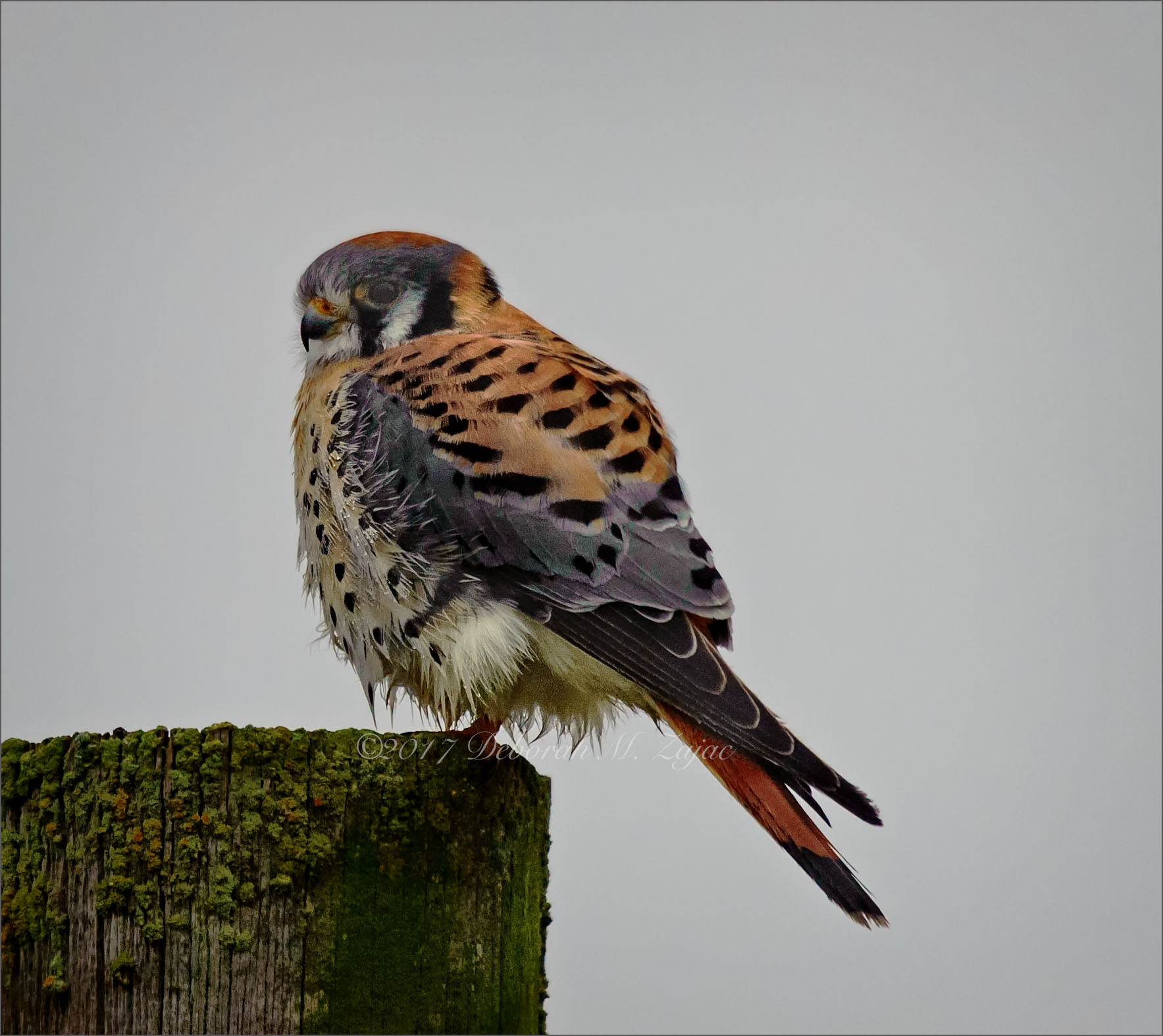
American Kestrel Male


We didn’t see any Tulle Elk in the paddock. Not one! They must have been deep in the trees until it warmed up.  Thankfully for us this Kestrel was out and about looking for breakfast!

Nikon D700|Nikkor 200-500mm @ 460mm| Lexar Digital Film| PS CC 2017

More to come…