PLEASE DO NOT USE MY IMAGES WITHOUT EXPRESSED WRITTEN PERMISSION.
Rural Decay
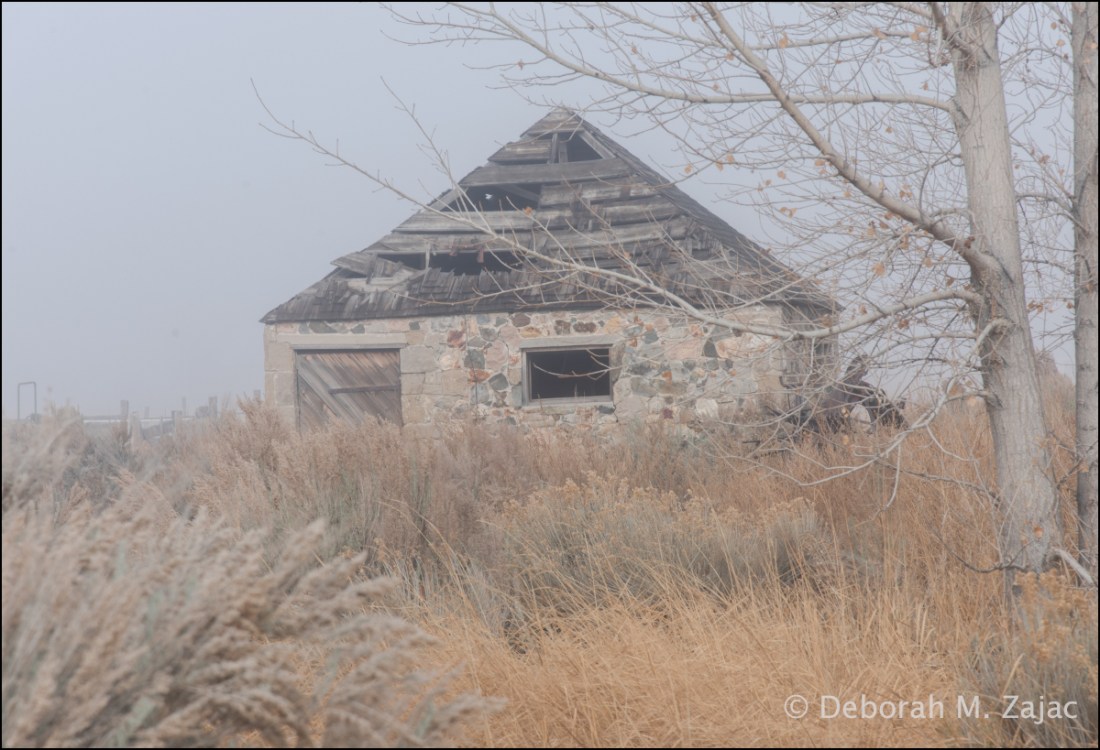
The fog was starting to lift when I pulled over to photograph this little stone building.
This post is part of the Thursday Doors group hosted by Dan Antion over at No Facilities which you can click on to see other doors from around the world-here
PLEASE DO NOT USE MY IMAGES WITHOUT EXPRESSED WRITTEN PERMISSION.
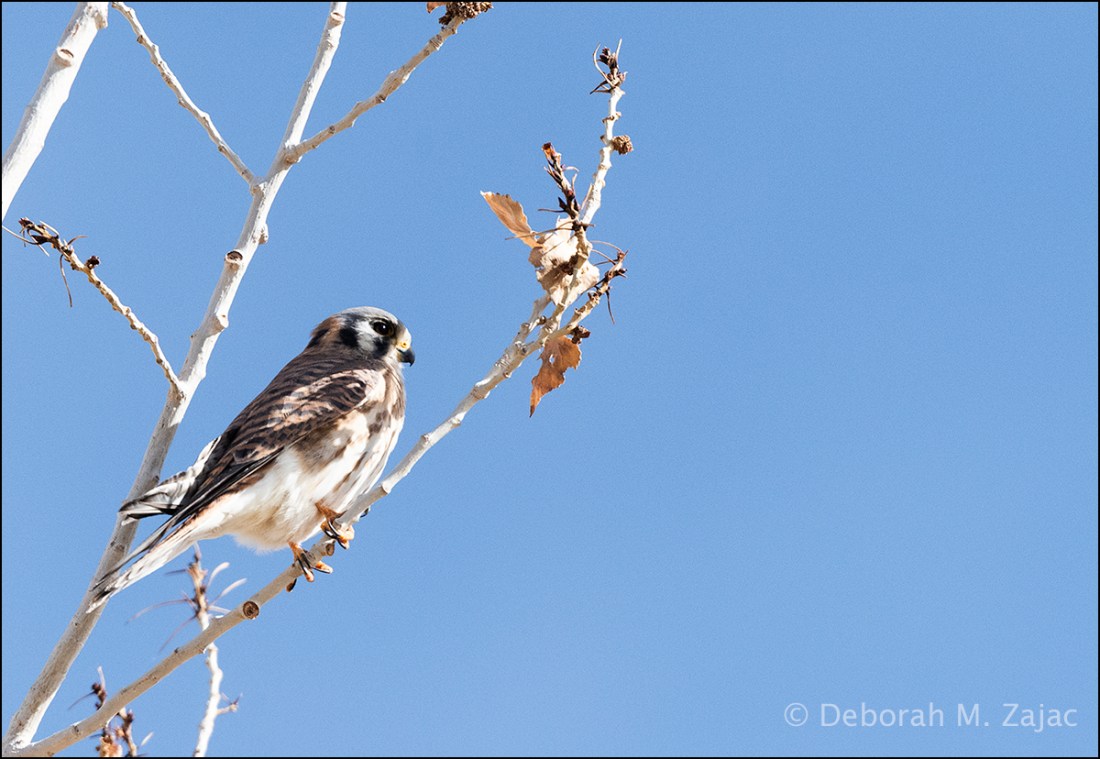
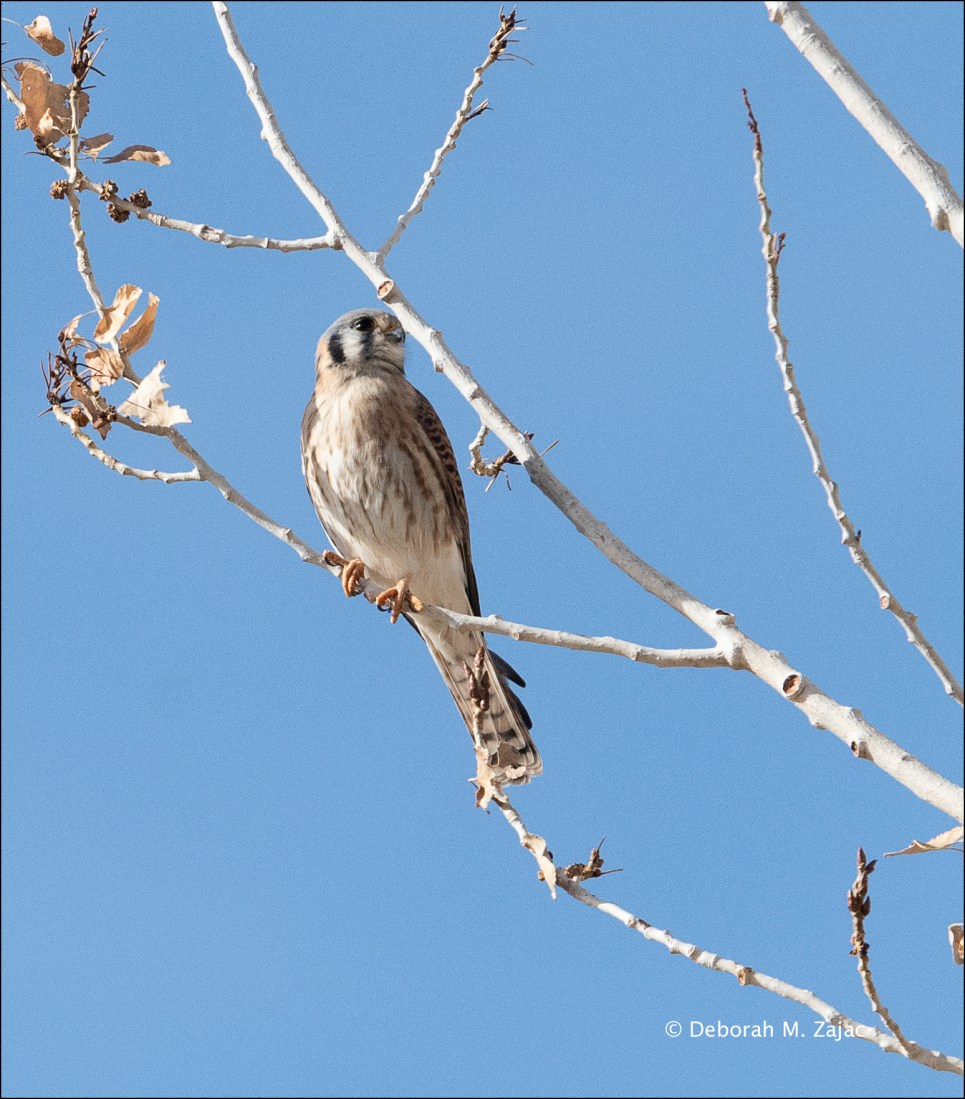
This is a Kestrel I saw in December. I’ll show her from the two sides I got to observe her from. It’s a treat to actually get two side views of a bird.
When I first spotted her high in a Cottonwood tree-
Female American Kestrel
They’re one of the smallest birds of prey, but so cute.
Here she is from the other side, with her chest showing.
American Kestrel Female
Fun Facts:
Sports fans in some cities get an extra show during night games: kestrels perching on light standards or foul poles, tracking moths and other insects in the powerful stadium light beams and catching these snacks on the wing. Some of their hunting flights have even made it onto TV sports coverage.
When nature calls, nestling kestrels back up, raise their tails, and squirt feces onto the walls of the nest cavity. The feces dry on the cavity walls and stay off the nestlings. The nest gets to be a smelly place, with feces on the walls and uneaten parts of small animals on the floor.
It can be tough being one of the smallest birds of prey. Despite their fierce lifestyle, American Kestrels end up as prey for larger birds such as Northern Goshawks, Red-tailed Hawks, Barn Owls, American Crows, and Sharp-shinned and Cooper’s Hawks, as well as rat snakes, corn snakes, and even fire ants.
In winter in many southern parts of the range, female and male American Kestrels use different habitats. Females use the typical open habitat, and males use areas with more trees. This situation appears to be the result of the females migrating south first and establishing winter territories, leaving males to the more wooded areas.
Unlike humans, birds can see ultraviolet light. This enables kestrels to make out the trails of urine that voles, a common prey mammal, leave as they run along the ground. Like neon diner signs, these bright paths may highlight the way to a meal—as has been observed in the Eurasian Kestrel, a close relative.
Kestrels hide surplus kills in grass clumps, tree roots, bushes, fence posts, tree limbs, and cavities, to save the food for lean times or to hide it from thieves.
The oldest American Kestrel was a male and at least 14 years, 8 months old when he was found in Utah in 2001. He was banded in the same state in 1987.
“Like neon diner signs”! 😂 I loved that description.
The Red-Tail Hawk is back using the same nest as last year for this year’s breeding season. Yipee!
On the 15th while on my walk I think I spied a little head so when I got home I grabbed my camera and went back out to take photos of the nest and sure enough there was a chick in the nest and Mom too.
Red-Tail Hawk and sleepy chick
It wasn’t long before Mom took flight to stretch her wings. She flew into a tree across the way a bit to keep watch and once in awhile she called out letting the chick know she was near…I think. I kept waiting hoping the chick would sit up and it paid off.
Red-tail Hawk Chick
Look how fuzzy and soft it looks! 2 weeks later look how big it is and there’s less fuzz and more brown.
Red-tail Hawk Chick
The tree has leafed out quite a bit too making it a bit more difficult to see the chick. This is heavily cropped as well.
I’ll keep checking in on it and hopefully, I won’t miss the fledging like I did last year.
The Red-tailed Hawk has a thrilling, raspy scream that sounds exactly like a raptor should sound. At least, that’s what Hollywood directors seem to think. Whenever a hawk or eagle appears onscreen, no matter what species, the shrill cry on the soundtrack is almost always a Red-tailed Hawk.
Birds are amazingly adapted for life in the air. The Red-tailed Hawk is one of the largest birds you’ll see in North America, yet even the biggest females weigh in at only about 3 pounds. A similar-sized small dog might weigh 10 times that.
The “Harlan’s Hawk” breeds in Alaska and northwestern Canada, and winters on the southern Great Plains. This very dark form of the Red-tailed Hawk has a marbled white, brown, and gray tail instead of a red one. It’s so distinctive that it was once considered a separate species, until ornithologists discovered many individuals that were intermediate between Harlan’s and more typical Red-tailed Hawks.
Courting Red-tailed Hawks put on a display in which they soar in wide circles at a great height. The male dives steeply, then shoots up again at an angle nearly as steep. After several of these swoops he approaches the female from above, extends his legs, and touches her briefly. Sometimes, the pair grab onto one other, clasp talons, and plummet in spirals toward the ground before pulling away.
Red-tailed Hawks have been seen hunting as a pair, guarding opposite sides of the same tree to catch tree squirrels.
The oldest known wild Red-tailed Hawk was at least 30 years, 8 months old when it was found in Michigan in 2011, the same state where it had been banded in 1981.



 Circadianreflections Blog
You must be logged in to post a comment.