Golden Crowned Sparrow-Winter

Via Flickr:
Copyright © 2013 Deborah M Zajac. All Rights Reserved.

I have to double-check, but I think this is my first Golden Crowned Sparrow!
So, far this has been a fantastic birding year for me, and it’s still early in the season.
If I see Eagles this winter it will be icing on the cake. 🙂

Photographing birds in Manual Focusing mode is tough. My finger is always on the focusing ring and I’m adjusting all the time since the birds are so fast and moving all the time. It’s a miracle I got this in focus at all. My friend Dali shoots with a Legacy Nikon lens the 400mm f/3.5 which is a manual focus lens and he gets the most beautiful bird and wildlife photographs. I want to be as good as that if I have to manual focus.

See his work here.

Nikon D700| Nikkor AF-S 300mm f/4 @ f/5.6 + 14E II TC= 420mm| 1/400s| ISO 500| Manual Priority| Cnt Metering| Monopod


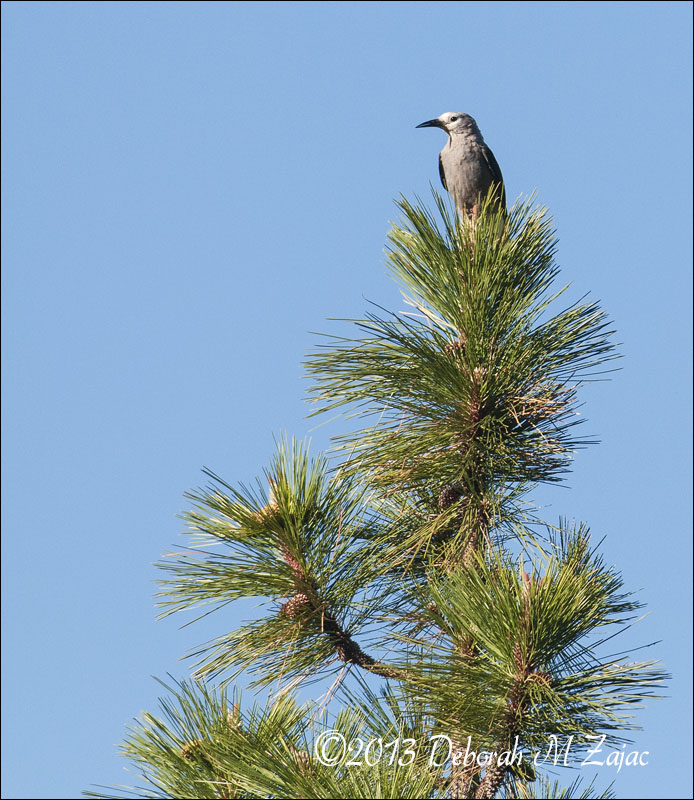
Clark’s Nutcracker

Copyright © 2013 Deborah M Zajac. All Rights Reserved.

Clark's NutcrackerMy friend Jackie had thought to take or purchased bird food to lure  birds to her deck while on vacation in Lake Tahoe.
She had been feeding them all week; throwing bird food loaded with peanuts,seeds, and berries on the decking, setting it on the railing, and tossing some to the roof top below the deck.
By the time I arrived the birds to my delight were coming really close to us to get the food. I think we spent 2 hours on the deck photographing the Stellar Jays, and Pygmy Nuthatches.
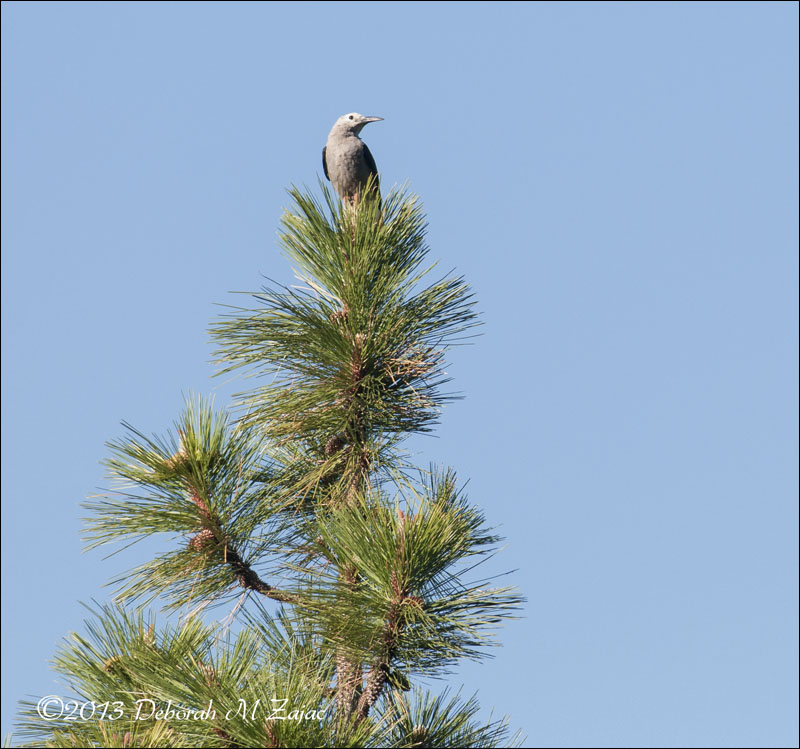
Just as I was getting ready to quit shooting and get ready for our excursion around the lake this bird flew to the top of a farther Douglas Fir I think.  It’s not a bird I’d ever seen before. I thought it was a Thrasher at first by its bill, but KUDO’s to Jackie who identified the bird when she got home to New Jersey as a Clark’s Nutcracker.

It’s taking flight off the tree in the photo above. I’m glad I got this shot because it shows more wing and tail detail than my earlier shots of it just sitting and surveying the landscape in the photos below.

Clarks Nutcracker profile 2

Clarks Nutcracker Left Profile
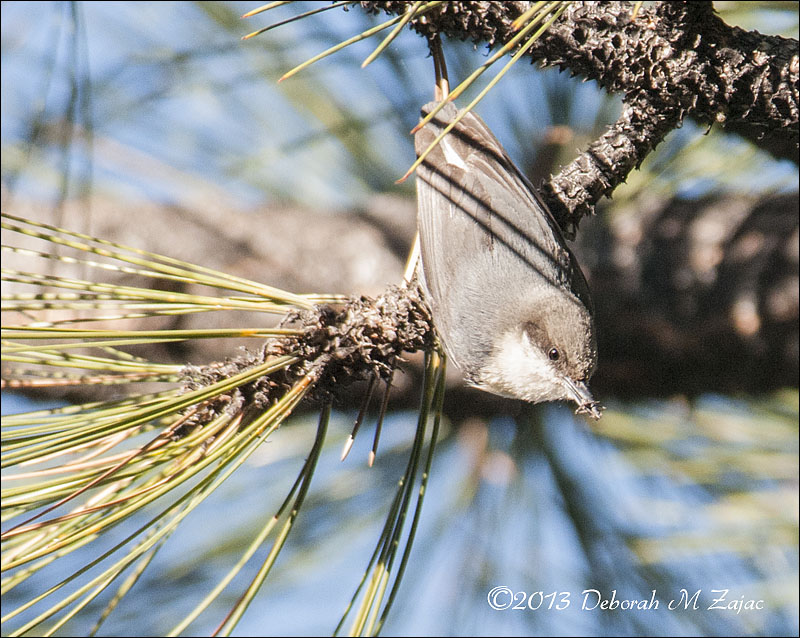
Here’s another photo of a Pygmy Nuthatch with a bug or something in its bill.

Pygmy Nuthatch

Here’s a snapshot of Jackie and I in late afternoon light hanging around the shore waiting for Golden Hour and Sunset.

Jackie and I waiting for sunset Lake TahoeNikon D300s, and D700 w/Nikkor 300mm f4, and 17-35mm.

“It is the sweet, simple things in life which are the real ones after all.” Laura Ingalls Wilder

Via Flickr:
Copyright © 2012 Deborah M. Zajac. All Rights Reserved.

Nikon D700| Nikkor 70-300mm vr


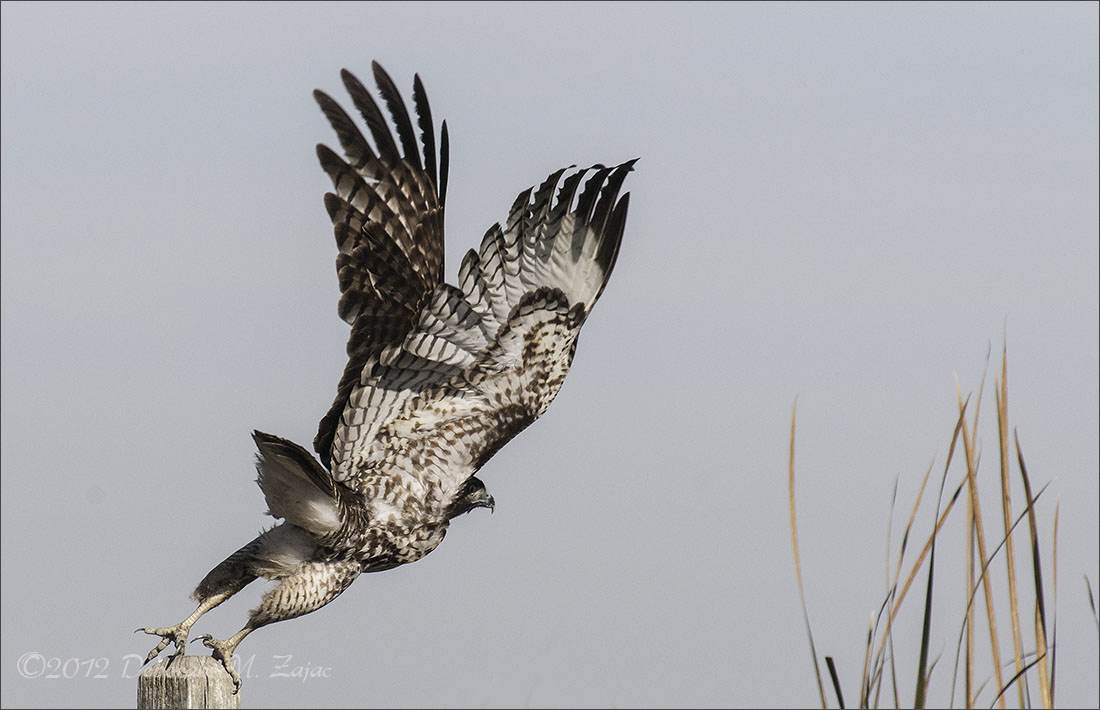
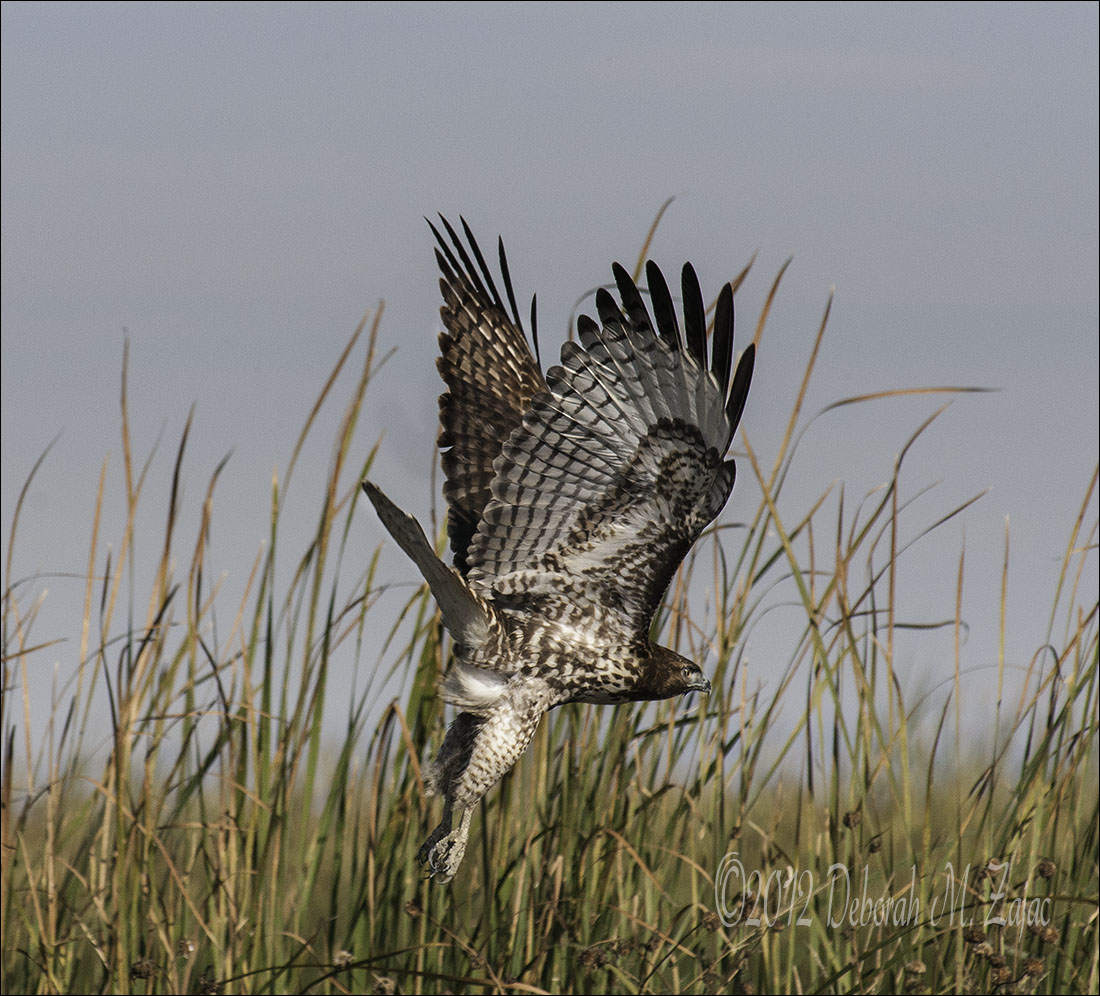
Red-Tailed Hawk: light morph

Copyright © 2012 Deborah M. Zajac. All Rights Reserved.

Several friends and I went out to Central CA to a National Wildlife Refuge to see if any Sandhill Cranes or Snow Geese had arrived and photograph them.

While on the auto-tour we spotted this Red-tailed Hawk on a post. We had a good vantage point to photograph it so we all started framing and firing our cameras which spooked him.

It was just what we hoped for. We all got some really nice shots of him taking off, and flying low in the marsh grass.

Lift off!


Wings up…


Downward flap

I needed  help identifying this Red-tail. My National Geographic bird book isn’t very clear on the Light and Dark Morphs. Thanks to my friend Dali for I.D.ing it for me. Since then I’ve purchased a new bird guide-book:  Stokes Field Guide to the Birds of North America. Between the two books I hope to be able to ID birds more easily.

Nikon D300s| Nikkor 80-200@ 200mm + Tamron 1.4x Teleconverter| f7.1| 1/2000sec| ISO 640| Manual Priority| Hand-held

In medias res

Copyright © 2012 Deborah M. Zajac. All Rights Reserved.

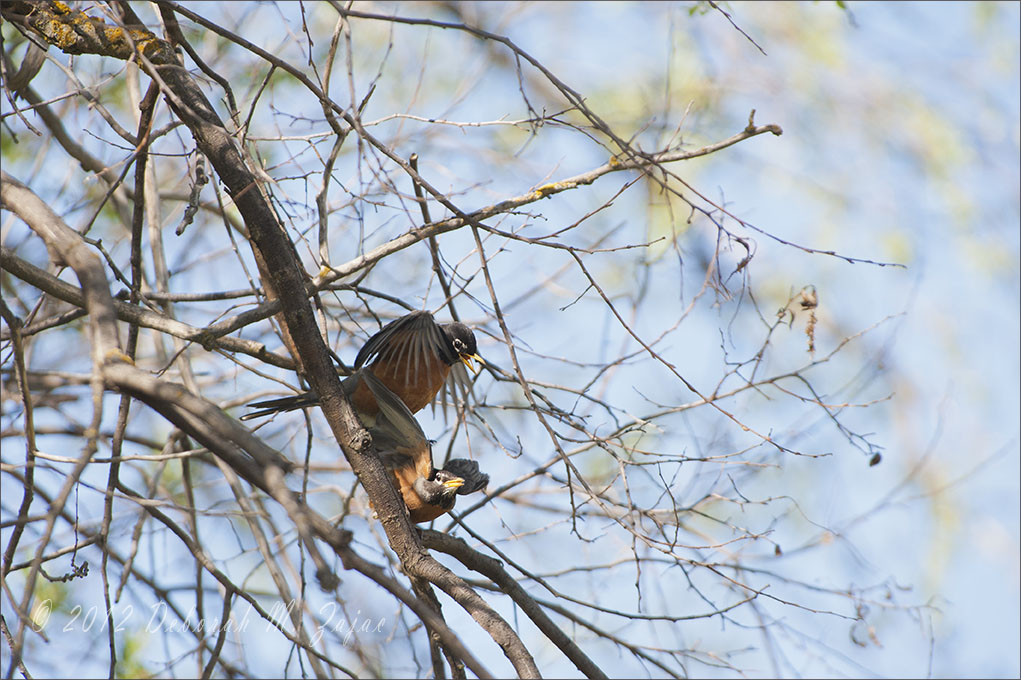
I’ve just returned from  Oregon. I was on a birding expedition with some friends who are also photographers. We spent a couple of days in the Klamath Basin looking  for Clark and/or Western Grebes doing their Spring mating ceremony and dance or what the Scientist call “rushing”. We were successful finding them as well as several other birds; some familiar and others new, and it was neat to see many birds I know and see only when they Winter near me in and the Pacific Flyway in their Spring Breeding plumage.

Yesterday morning I was following this male Robin around trying to take his photo when he caught up with the female and I happened to press the shutter catching them “in medias res”.

Nikon D700| Nikkor 300mm f2.8 + 20eIII TC =600mm| f8| 1/1600s| ISO1600|Manual Priority|
Tripod| American Robin

Spring, Nature,and the Great Egret

Copyright © 2012 Deborah M. Zajac. All Rights Reserved.

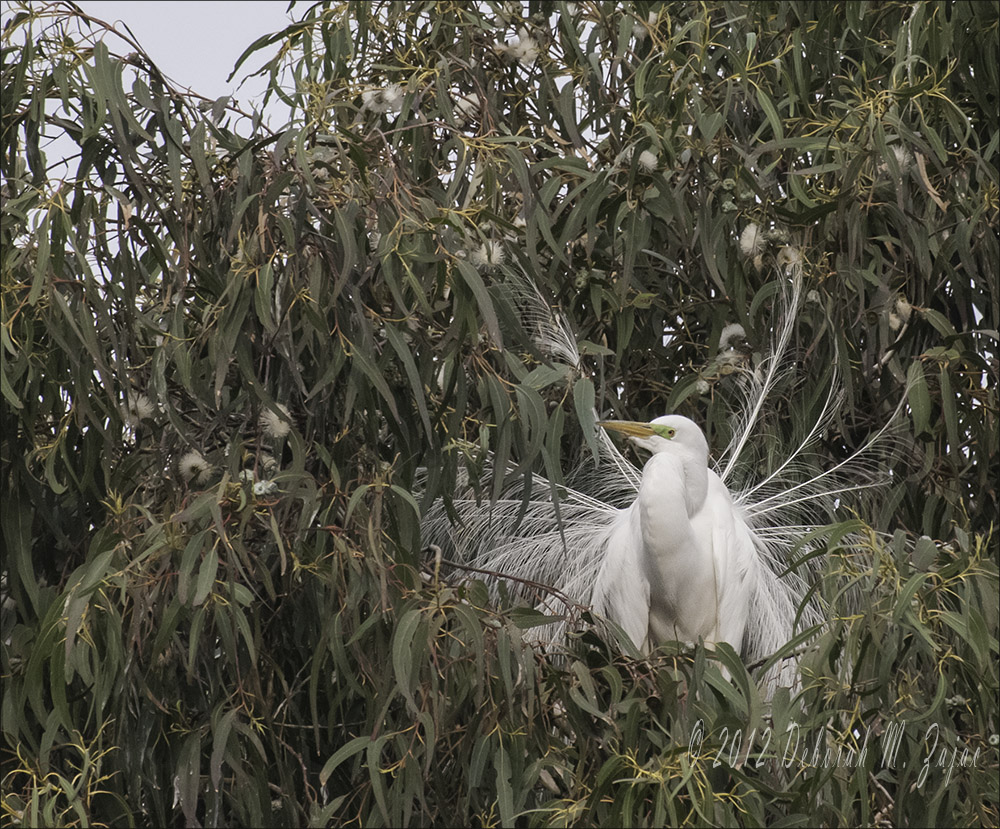
I spent a morning last week in Santa Rosa watching Egrets, and Herons, building nests, tending nests, and trying to attract a mate at a Rookery right in the middle of a suburban neighborhood. Mothers walked their children to school right under them, and traffic flowed on both sides of the street, and the Egrets and Herons were largely oblivious to all but themselves. Great Egrets nest in colonies so there are many, many birds in the trees.

The city is trying to give them some space so they blocked off one lane on each side of the street for a block or so sparing passing cars from being pelted with falling debris, and guano. The street under the Eucalyptus trees they’re nesting in is messy.

In the past when I’ve watch a Great Egret they’ve been very still, quite, and focused on hunting their prey, or I’ve startled them and they’ve flown away. That wasn’t the case on this morning though. The activity scarcely stopped.

Neither did the noise. In breeding season there is quite a lot of squawking, and screeching, and talking. In fact I found them very funny, and amusing.  I laughed out loud many times listening to them.

There were many sorties by the male to gather just the right branch to  build and strengthen the nest.  He will seriously work on attracting a mate once this task is complete. The female lays 4-5 pale blue eggs which take 3-4 weeks to incubate. Both the male and female parents incubate the eggs, and feed the chicks.

During the breeding season the  male Great Egret grows long tail feathers which he  raises and spreads out . I’ve read their plumes were once prized for making ladies hats and they were nearly hunted to extinction.
…and he undulates his long neck, and lifts his head toward the sky to try to attract a mate.
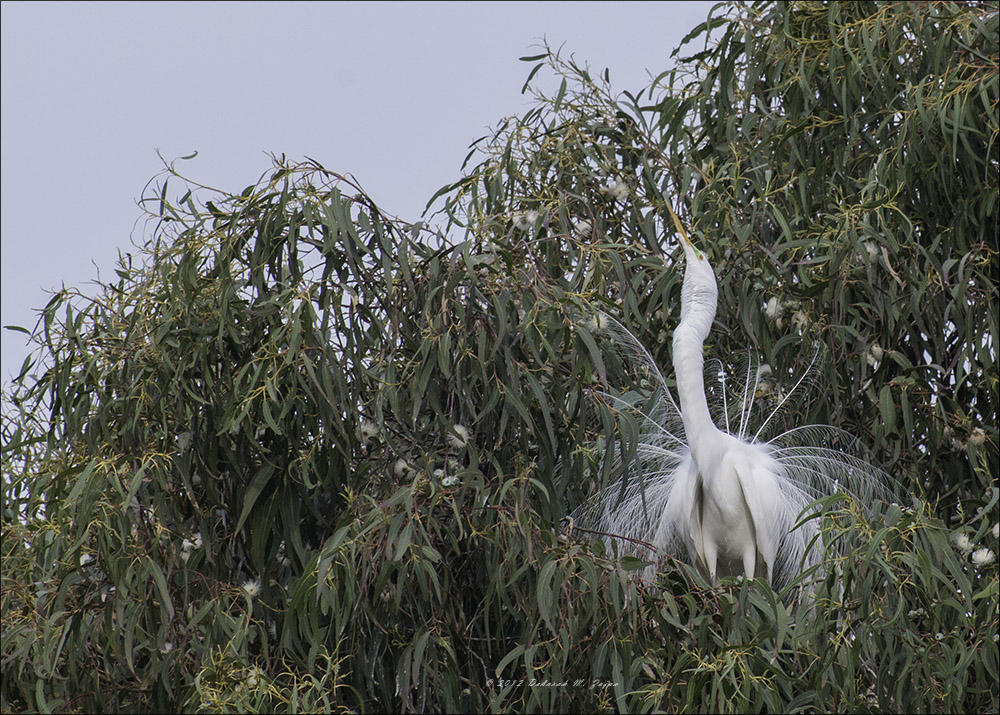
It was a wonderful experience observing this behavior up close, and I have more photos to share in the coming days of  Great Egrets, Cattle Egrets, and Night Herons.

Nikon D300s| Nikkor 70-300mm VR

Camouflage it’s for the Birds

Copyright © 2012 Deborah M. Zajac. All Rights Reserved.

This little bird was very busy pecking through all the dropped leaves, and twigs looking for worms grubs I think. I watched it for a little while but never saw it get a worm.

I’m not sure what breed it is. It looks sort of like House Wren or some sort of Thrush to me. Anyone know?

Nikon D700| Nikkor 70-300@ 300mm| f5.6| 1/60 sec| ISO 640| Manual Mode| Hand-held