Friday’s Feathered Friends-Virginia Rail

Copyright ©2025 Deborah M. Zajac. ALL RIGHTS RESERVED.

PLEASE DO NOT USE MY IMAGES WITHOUT EXPRESSED WRITTEN PERMISSION.

This is a bird I don’t think I’ve shared often as they’re very elusive and shy.

Last month while birding up in Washoe County we were thrilled to see this one come out of the reeds to forage in the shallow end of the lake. This one is a juvenile which is why it was foraging in the open for sometime. There was another one behind in the reeds tut-tutting…probably an adult.

©Deborah M. Zajac | http//:circadianreflections.com
Virginia Rail

Fun Facts:

A secretive bird of freshwater marshes, the Virginia Rail often remains hidden in dense vegetation, but its loud grunting may give away its presence. As it slowly pokes its way through the marsh, you might get a glimpse of its reddish bill, black-and-white barred sides, and its twitching tail, showing off white tail feathers beneath. It possesses many adaptations for moving through its nearly impenetrable habitat, including a laterally compressed body, long toes, and flexible vertebrae.

  • The forehead feathers of Virginia Rails are adapted to withstand wear and tear that results from pushing through dense and often sharp marsh vegetation.
  • The Virginia Rail is more adept at walking on soft mud than swimming, but it occasionally swims across wetlands and even dives underwater, propelling itself with its wings.
  • As a group, rails have the highest ratio of leg muscles to flight muscles of any bird, which may explain their propensity to walk rather than fly.
  • The Virginia Rail builds numerous “dummy nests” in addition to the one where eggs are actually laid.

Fun Facts gleaned from https://www.allaboutbirds.org/guide/Virginia_Rail/overview

I’m birding this morning so will be late to your blogs and comments. I hope you all have a Happy Halloween, and great week-end.

more to come…

Whatever Weds. Celestial and Birds

Copyright ©2025 Deborah M. Zajac. ALL RIGHTS RESERVED.

PLEASE DO NOT USE MY IMAGES WITHOUT EXPRESSED WRITTEN PERMISSION.

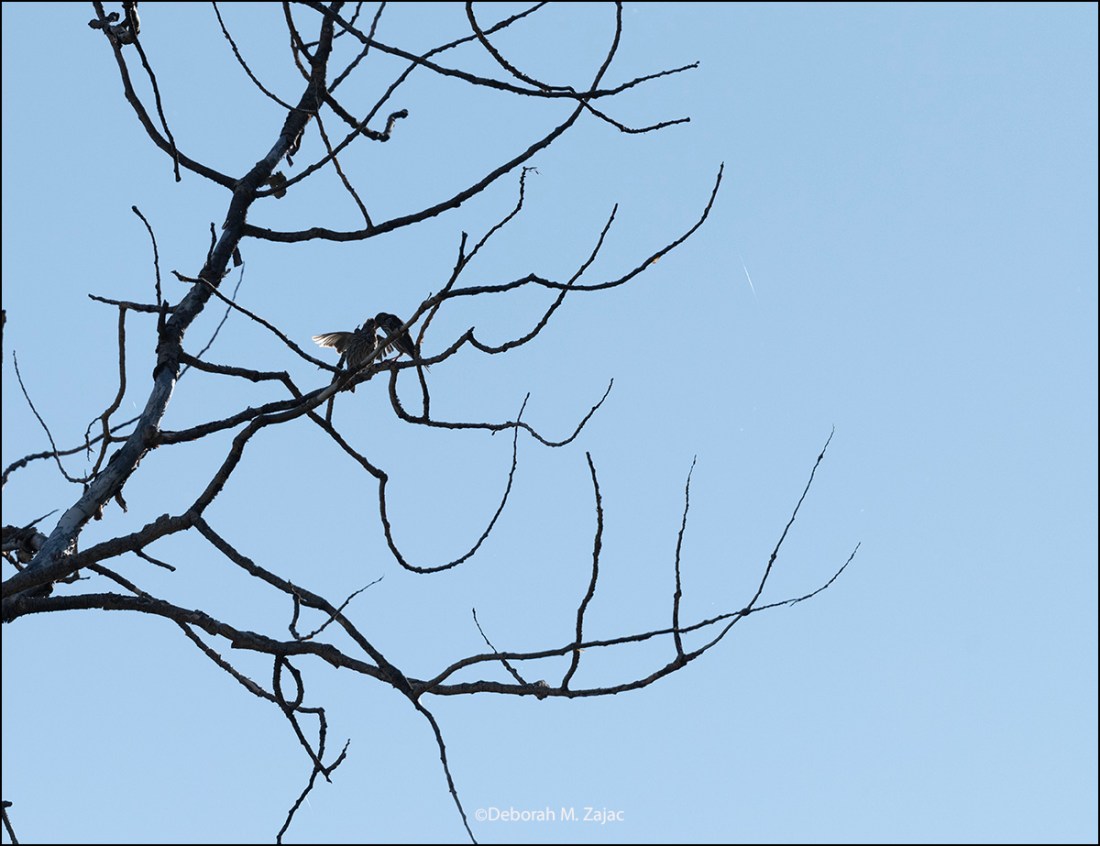
While birding last week I saw a Cassin’s Finch chick being fed by its parent and made several images of it. Unfortunately, they were facing me with the sun to their backs and in my face. So, the image isn’t great but, what is… is what I discovered once I uploaded my images.

Off to the right of the birds is a satellite flare. I think it’s a Starlink flare/glint which would be the first time I’ve photographed one of those.

©Deborah M. Zajac | http//:circadianreflections.com Image

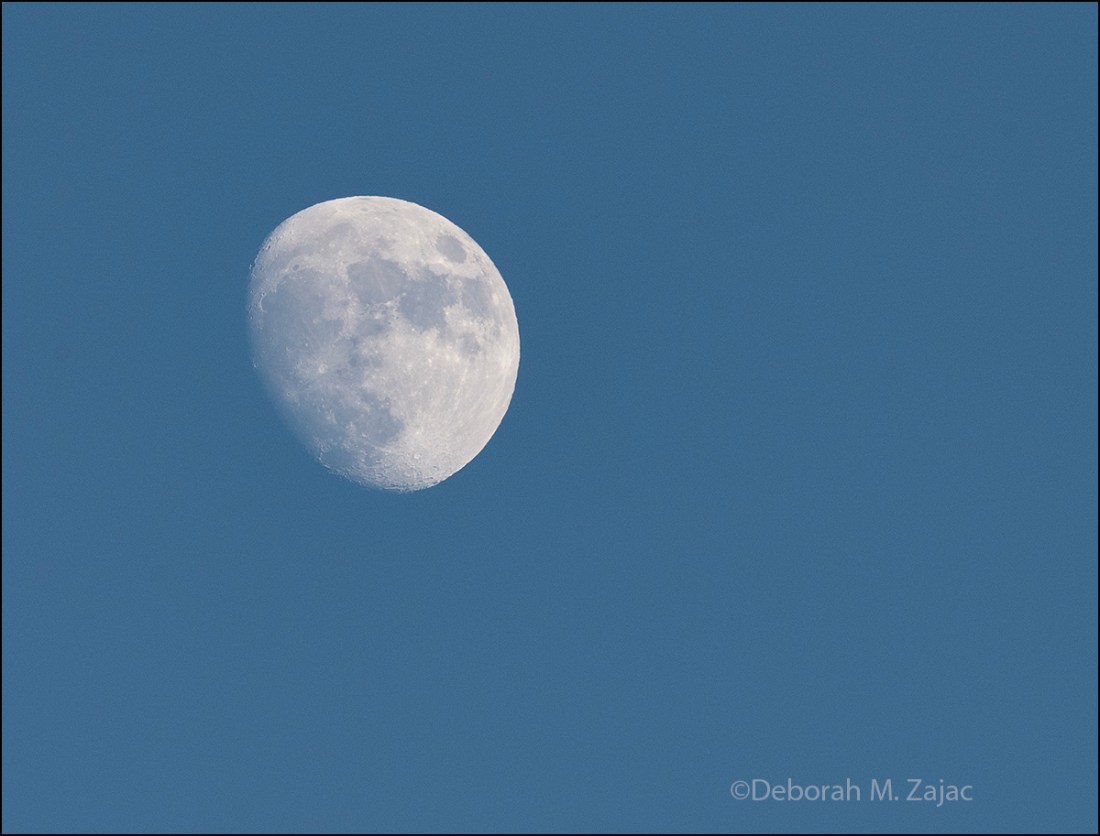
Regarding this next image- A friend had been sharing his images of the Moon several days ago with me so, the other evening when I saw the Moon shining out my living room window I was inspired to get up and photograph it.

Here’s the moon at 82.7% percent full. A waxing Gibbous Moon from July 6th.

©Deborah M. Zajac | http//:circadianreflections.com Image

The bottom crater is Tycho. I really like its crusty textured bits. I know the other large crater off on the left below the Sea of Showers is the Copernicus Crater. I wish I didn’t need a poster to help me every single time with the other sea and crater names, but I do.

July’s Full Moon is called the Buck Moon. It also has several other names like Thunder Moon, and Hay Moon.

The Full Moon this month is July 10th.

Fun Facts:

This full moon coincides with a Major Lunar Standstill in 2025, making the moon appear especially low in the sky after sunset due to its orbital path and the recent summer solstice.

  • It will be the farthest full moon from the Sun in 2025, occurring shortly after Earth reached aphelion — the point in its orbit farthest from the Sun.
  • In some regions, such as India, the full moon coincides with Guru Purnima, a spiritually significant event, enhancing its cultural importance.
  • The Buck Moon gets its name from the Algonquin-speaking Native American tribes, as July is the time when male deer (bucks) begin to grow new antlers covered in velvet, symbolizing renewal and growth.

Fun facts gleaned from Space.com

Nikon D850| Nikkor 500mm PF-e| Processed with Photoshop CC

more to come…

Friday’s Feathered Friends-Birds, Birds, Birds

Copyright ©2025 Deborah M. Zajac. ALL RIGHTS RESERVED.

PLEASE DO NOT USE MY IMAGES WITHOUT EXPRESSED WRITTEN PERMISSION.

I thought I’d share some of the birds I’ve seen the last couple of weeks.

Starting with a little Pygmy Nuthatch. It was flying to and from its nest the hole in a tree trunk you can sort of see behind it.

©Deborah M. Zajac | http//:circadianreflections.com Image

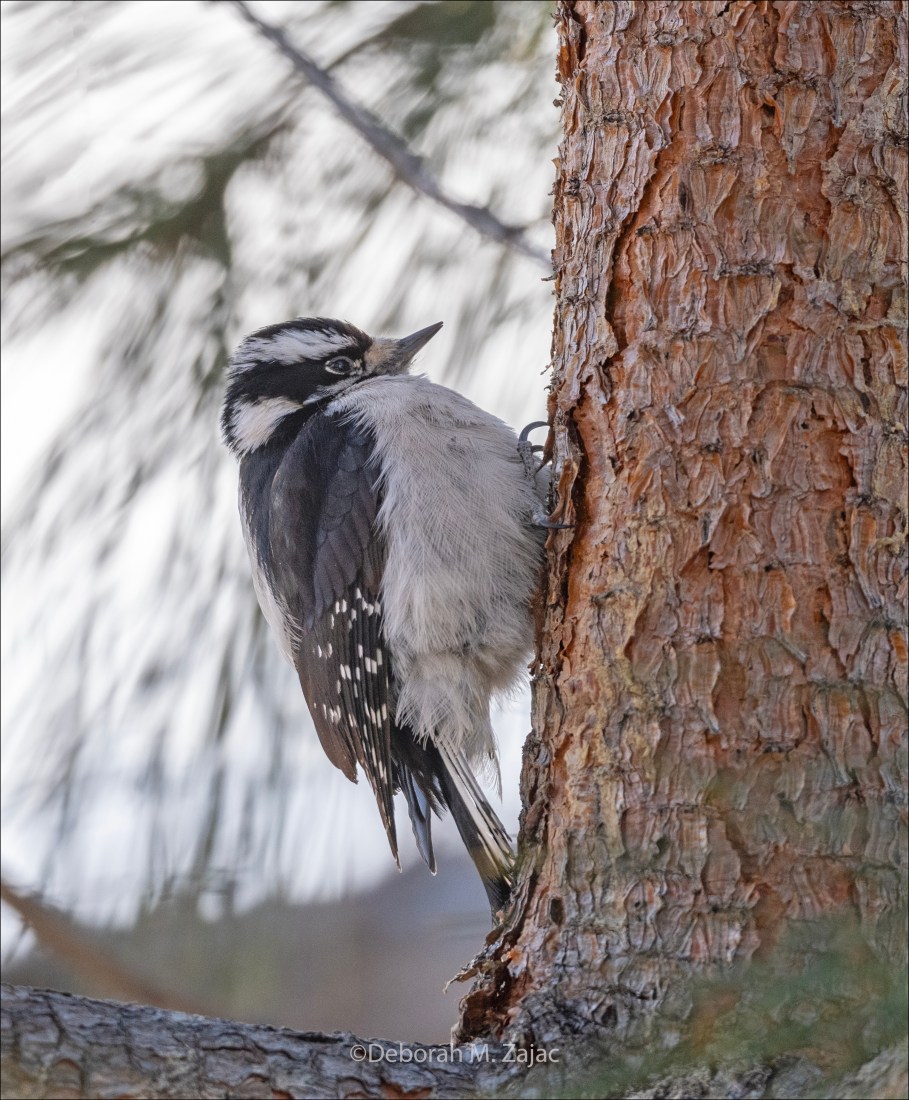
A female Downy Woodpecker who was cold that morning. It was 15 degrees F when we started birding. She didn’t move from that tree for the longest time.

©Deborah M. Zajac | http//:circadianreflections.com Image

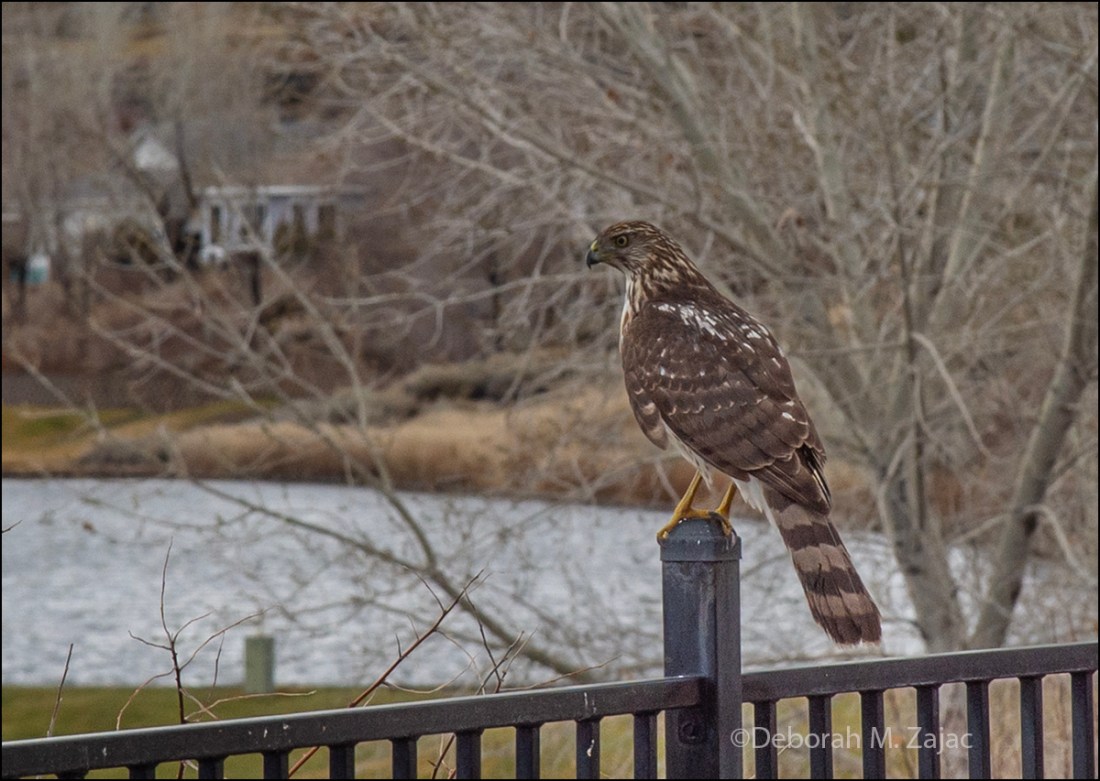
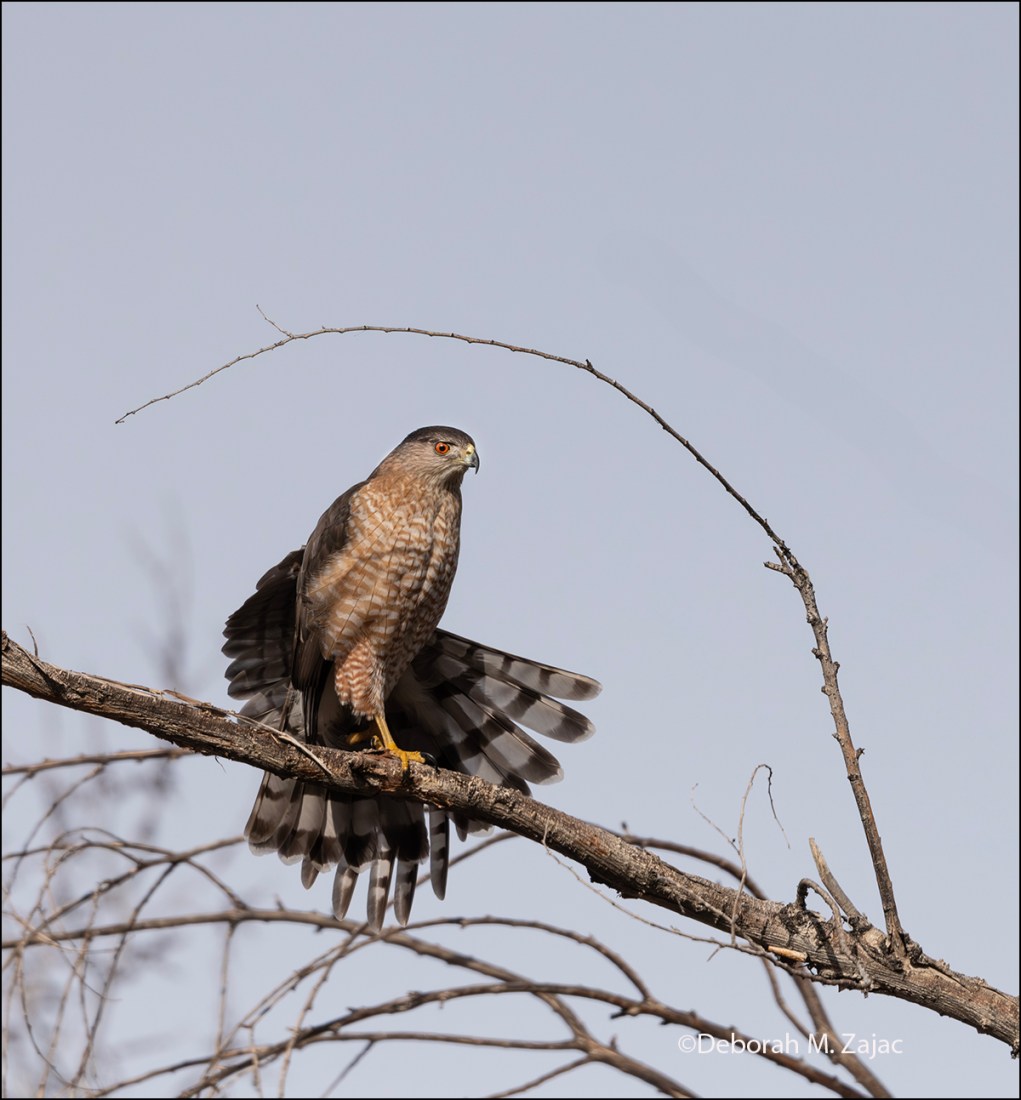
Another morning I had the pleasure of viewing a posing Cooper’s Hawk. Look at that tail!

©Deborah M. Zajac | http//:circadianreflections.com Image

Then it showed off its wing.

©Deborah M. Zajac | http//:circadianreflections.com Image

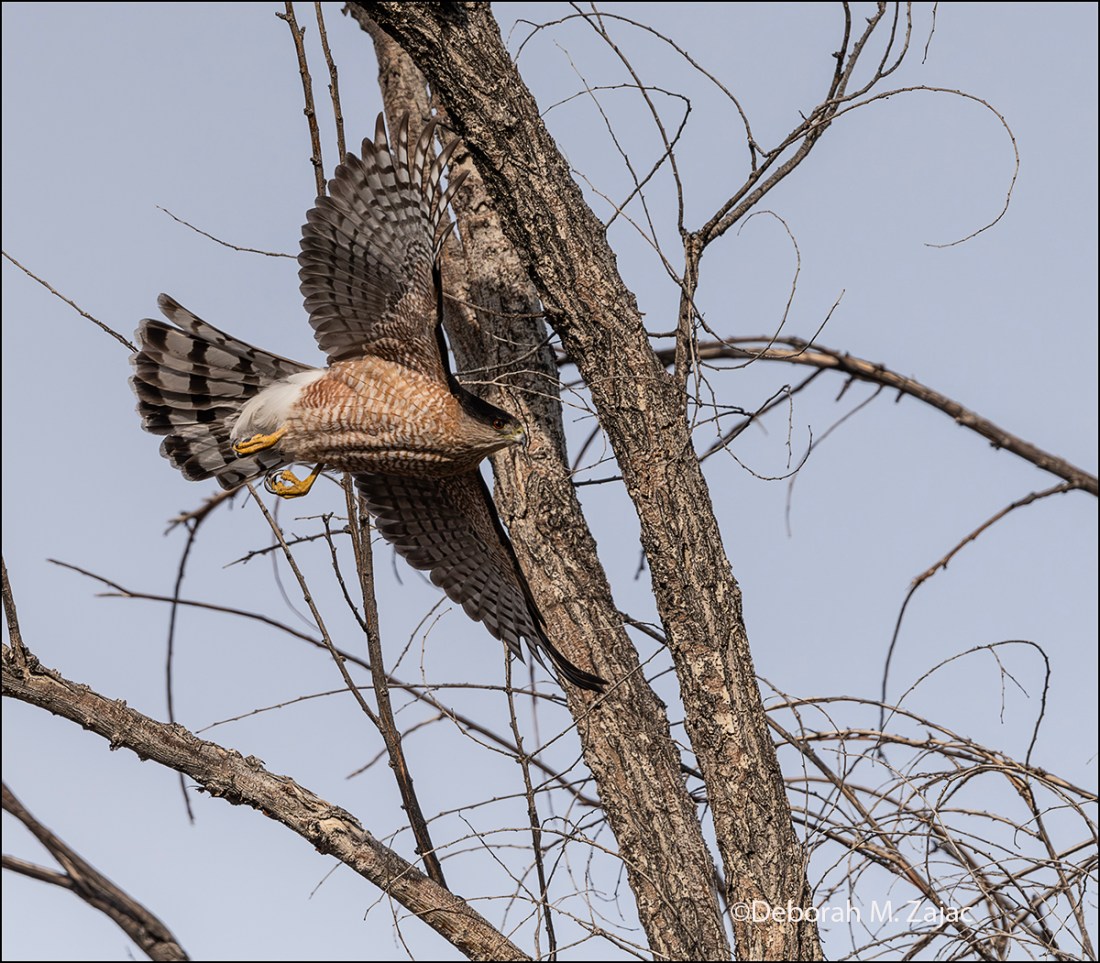
Then it flew showing off its wing span.

©Deborah M. Zajac | http//:circadianreflections.com Image

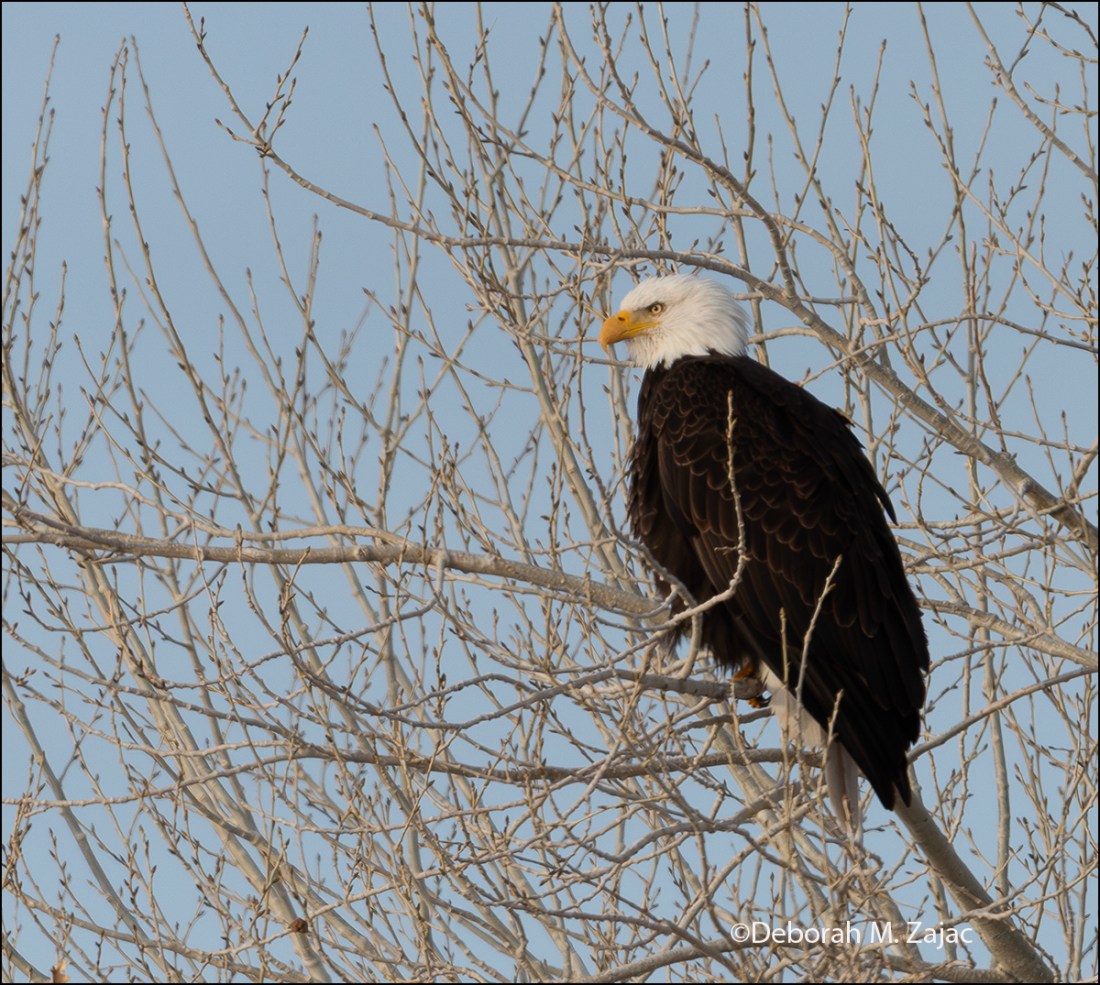
Last but not least, I saw the pair of Bald Eagles in their tree near my house on my way out last week. He was obscured by all the branches, but she was up high and in the open. I had to stop for a photo of her.

©Deborah M. Zajac | http//:circadianreflections.com Image

That’s all I have for you this week. I may be late getting to your posts and blogs this morning as I’m birding with my bird group.

More to come…

Friday’s Feathered Friends- Tundra Swan

Copyright ©2025 Deborah M. Zajac. ALL RIGHTS RESERVED.

PLEASE DO NOT USE MY IMAGES WITHOUT EXPRESSED WRITTEN PERMISSION.

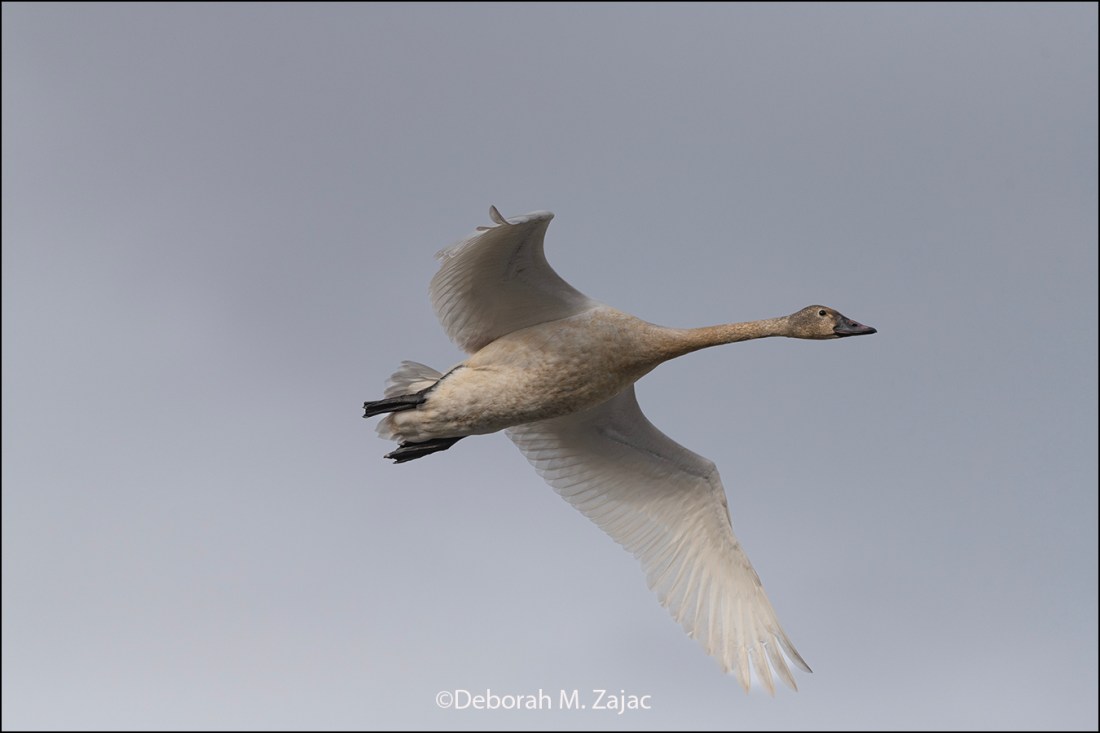
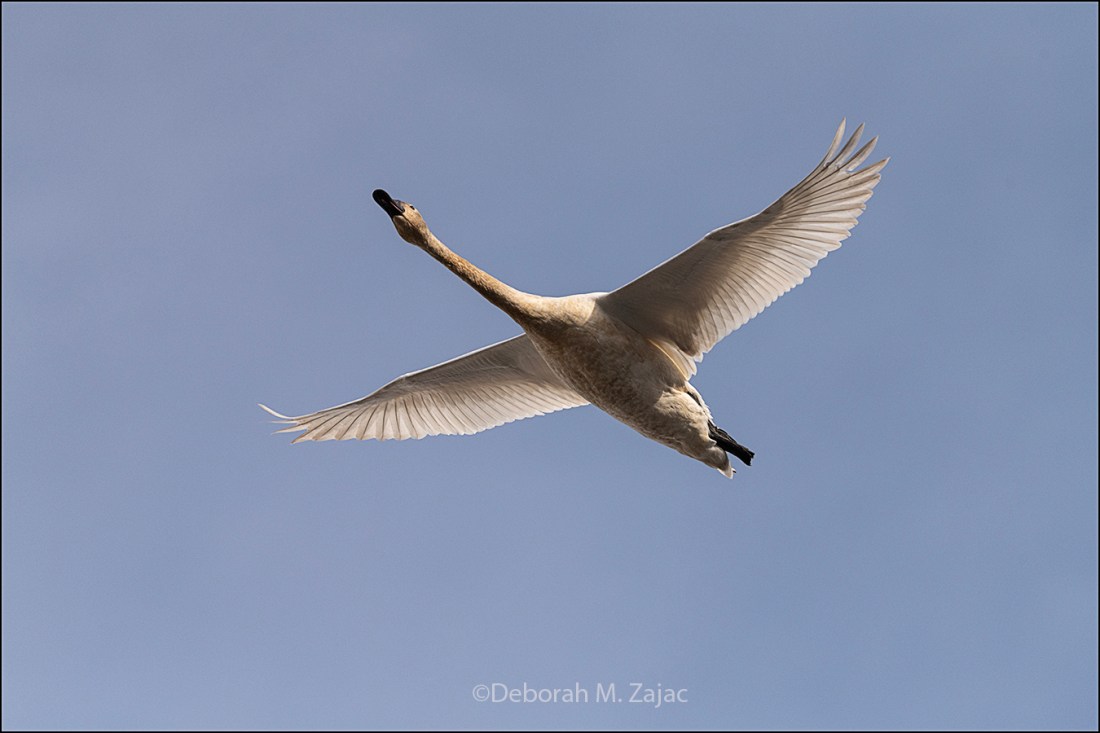
While out birding with the group last Friday morning we had the pleasure of a Tundra Swan fly-by. The single Swan flew by three times actually. Probably checking out the slough and ponds to see if that was the place to land or if his partner was there. We didn’t see a another swan and after three passes we didn’t see it again.

©Deborah M. Zajac | http//:circadianreflections.com Image

Here it was flying over my head.

©Deborah M. Zajac | http//:circadianreflections.com Image

Both images are cropped a bit. It was higher in the sky than these make it look.

Fun Facts:

  • Lewis and Clark provided the first written description of the Tundra Swan during their expedition to the West, where the birds’ whistle-like calls prompted Meriwether Lewis to dub them “whistling swans.”
  • The whistling swan, the American race of the Tundra Swan, currently is considered the same species as the Eurasian race, the Bewick’s swan. They were considered separate species in the past, distinguished by the large yellow patches on the face of the Bewick’s swan.
  • The Tundra Swan stays in flocks except when on a breeding territory. Although most swans spread out to breed, a large proportion of the population on the breeding grounds still can be found in flocks. These swans are not breeding, and may be young birds that have not yet bred, adult pairs whose breeding attempts failed, or adults that bred in the past but for some reason do not in that year.
  • During the breeding season the Tundra Swan sleeps almost entirely on land, but in the winter it sleeps more often on water.
  • Tundra Swans breed in the remote arctic of North America. Parents defend their nests and young against a host of predators including foxes, weasels, wolves, and bears, as well as birds such as Glaucous Gulls, Common Ravens, Parasitic Jaegers, Pomarine Jaegers, and Golden Eagles. If the parents are present, they are able to defend the nest and nestlings from these threats. Wolves, people, and bears, however, are too big to fight, and most incubating swans leave their nests while these large predators are far away. By leaving quickly when large predators approach, the parents may make the nest harder to find.
  • Tundra Swans wintering in Chesapeake Bay feed almost exclusively on clams that they dislodge from the mud. But it can be challenging to enjoy a peaceful meal: often the swan has to fend off a Ring-billed, Herring, or Greater Black-backed gull that swoops in to grab a clam from the swan’s bill – a successful tactic in about half of these “kleptoparasitic” encounters.
  • Swans have long been associated with ideals of romance. Added to their elegant outlines and all-white plumage is their tendency to form permanent pair bonds by the time they’re 2-3 years old. Once a pair forms, Tundra Swans feed and roost together year-round.
  • Based on banding records, the oldest known Tundra Swan was a female and at least 23 years, 7 months old when she was identified by her band in the wild, in Ohio. She was originally banded in the same state.

Fun Facts gleaned from allaboutbirds.org

If the rain holds off this morning I’ll be birding so I may be late getting to your blogs, and comments.

more to come…

Something for Sunday- First Snow in the Valley

Copyright ©2024 Deborah M. Zajac. ALL RIGHTS RESERVED.

PLEASE DO NOT USE MY IMAGES WITHOUT EXPRESSED WRITTEN PERMISSION.

I woke up Friday morning pretty early to go birding with a group I’m in. When I opened the garage door to leave I discovered there was snow on the ground and flurries still swirling.

I was heading about an hour northeast from home so, I checked my email to make sure they hadn’t canceled the outing…they hadn’t so off I went.

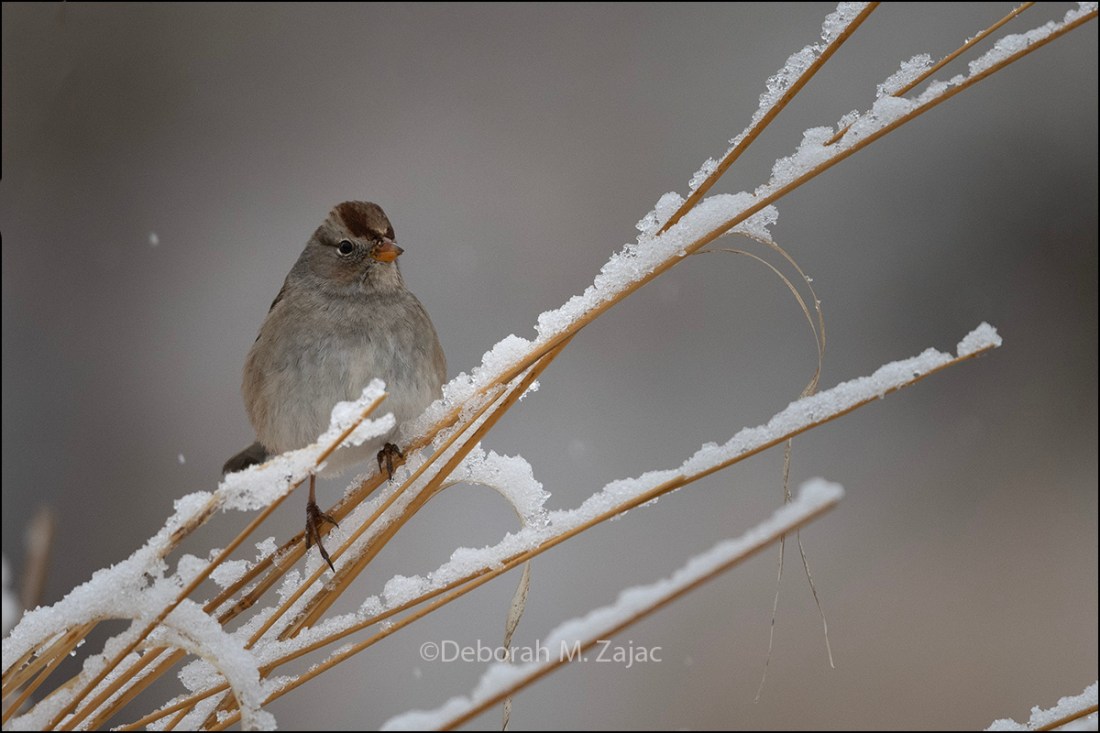
It wasn’t snowing when I arrived at the meeting spot but, while birding the snow started to fall pretty heavy. It wasn’t in the weather forecast the day before! It was still a good morning of birding. We saw 22 species of birds. One White-crown Sparrow favored us with a nice look perched on snowy grass.

©Deborah M. Zajac | http//:circadianreflections.com Image

By the time we left it had quit snowing so my drive home was easy, and while the snow was sticking to the ground where I was birding it hadn’t had home. The upcoming 10 day forecast looks like we’re snow free.

Nikon D850| Nikkor 500mm| PS CC

more to come…

Whatever Weds.-This & That

Copyright ©2024 Deborah M. Zajac. ALL RIGHTS RESERVED.

PLEASE DO NOT USE MY IMAGES WITHOUT EXPRESSED WRITTEN PERMISSION.

What a week it’s been! It all started on October 10th, 2024.

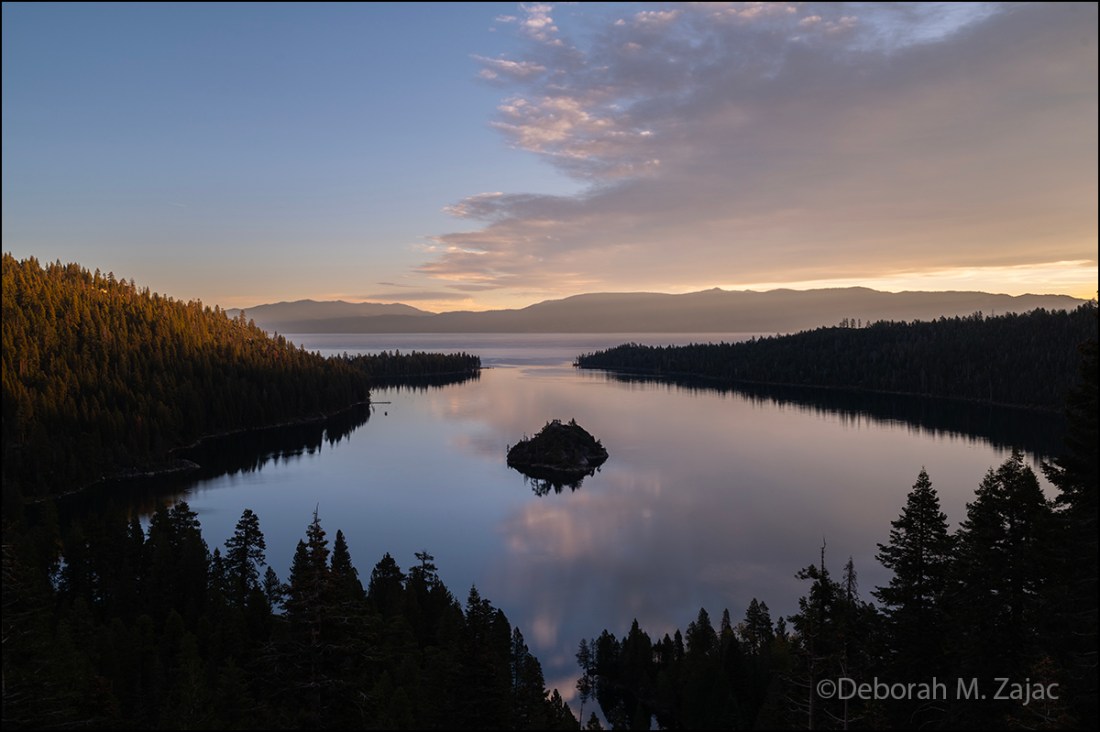
My neighbor and I rose early to head up to Emerald Bay for sunrise.

The color was earlier than we hoped so, we made a quick stop at Pope Beach to shoot the color and daybreak.

©Deborah M. Zajac | http//circadianreflections.com Image

Then we made our way up to a lookout over Emerald Bay to photograph the lake.

©Deborah M. Zajac | http//circadianreflections.com Image

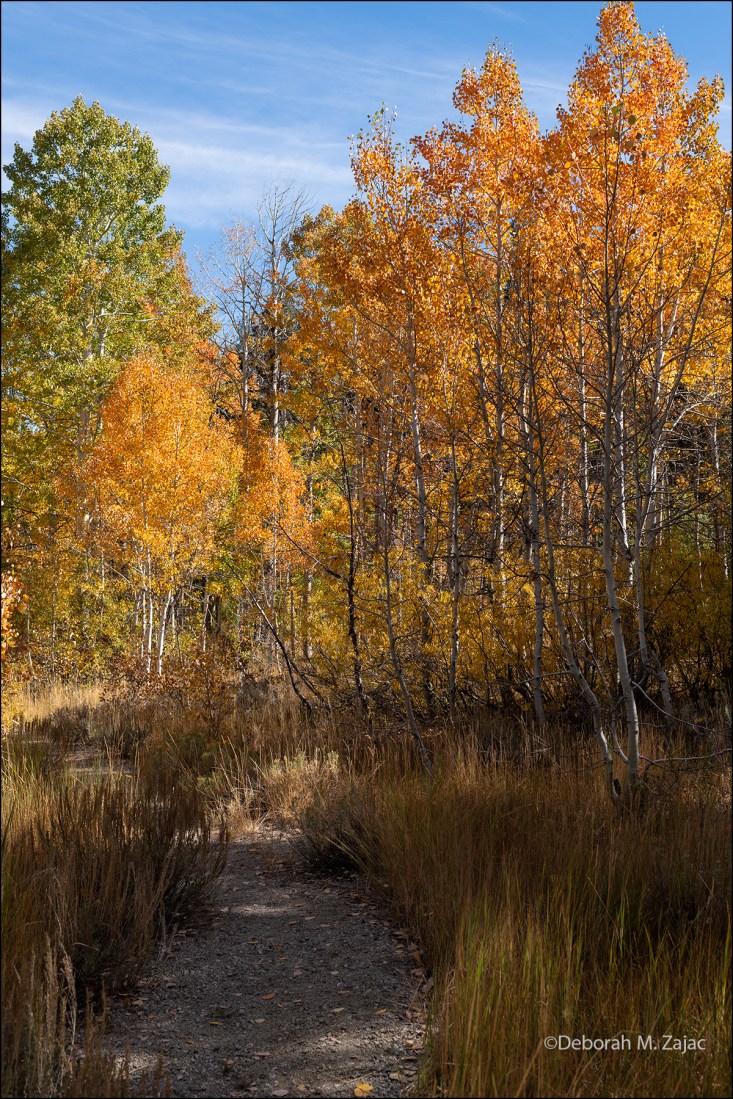
Then we took our time making stops along the way home to photograph some Autumn Color.

©Deborah M. Zajac | http//circadianreflections.com Image

We saw a beautiful Red-tailed Hawk hunting for breakfast. She caught a Vole but, I won’t gross you out with those images.

©Deborah M. Zajac | http//circadianreflections.com Image

Later that evening I saw the Northern Lights for the first time ever. That post is here. It was glorious.

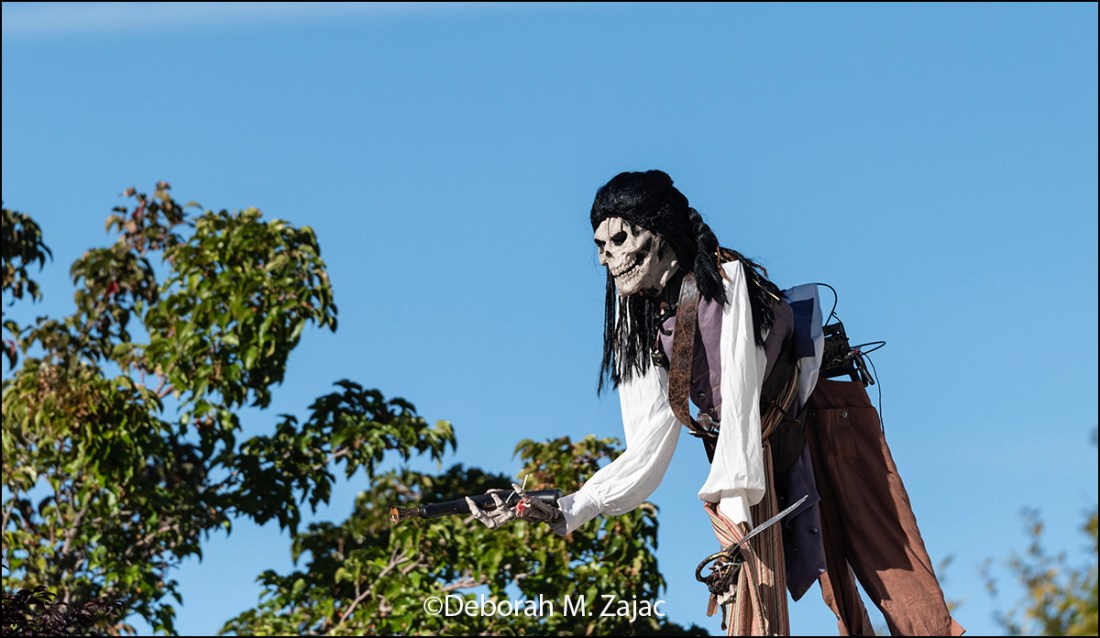
Friday morning I birded with my usual birding group and we had a great morning seeing 40 species of birds. Along with the birds I noticed some spooky Zombie Pirates lurking by the pond. Here’s one.

©Deborah M. Zajac | http//circadianreflections.com Image

Saturday morning I was up early and met up with two girl friends to do my first Big Day. It’s a 24 hour global birding marathon put on by Cornell Lab of Ornithology. We didn’t sign up as team or register our day but we, birded from 8AM until after 4PM. I saw 45 species. It was pretty fun day. We posted our sightings on ebird.org so they’ll have our record for their counts and information. Unfortunately, the next afternoon I got sick, and shortly afterwards I was hearing from my companions from the day before that they where also sick. We think the deli we stopped at to have lunch is where we picked up food poisoning. I brought home half my sandwich which I shared with He-Man and yep, he got it too. UGH.

Monday still weak, and very tired I was determined to locate and see Comet C/2023 A3 (Tsuchinshan-ATLAS) but, I wasn’t in shape to drive anywhere so I just stepped out on my back patio and photographed it there. It’s so cool and it has a great long tail!

©Deborah M. Zajac | http//circadianreflections.com Image

What a week! What a month it’s been so far! The Aurora, and the Comet really made my month. Everything else has been icing on the cake.

My tummy is still sketchy, but I’m on the mend and so are He-Man and my friends. I plan to be out photographing Halloween things, birding, and maybe the Comet with a better composition soon. I hope your week is going well. Oh, and watch out for the Zombies and Ghoulies! 👻

Nikon D850| Nikkor 500mm, &35mm| PS CC

more to come…

Friday’s Feathered Friends- Warblers

Copyright ©2024 Deborah M. Zajac. ALL RIGHTS RESERVED.

PLEASE DO NOT USE MY IMAGES WITHOUT EXPRESSED WRITTEN PERMISSION.

For Mother’s Day and my birthday He-Man and I went to Ohio for several days of birding the Spring migration of Eastern birds. It was fantastic. I added 27 new birds to my life list most of which were Warblers.

Here are three that I have processed.

Magnolia Warbler, female
Black-throated Blue, male
Chestnut-sided Warbler, male.

My favorite Warbler seen was the Chestnut-sided. Isn’t he gorgeous.

I have thousands of images to cull and sort through so I’ll be dribbling out the images over the next several weeks.

It was a great trip. I hope I get an opportunity to return as there are Warblers, and other birds I still hope to see.

Have a great week-end everyone.

Nikon D850| Nikkor 500mm PF-e

more to come…