Friday’s Feathered Friends- Tundra Swan

Copyright ©2025 Deborah M. Zajac. ALL RIGHTS RESERVED.

PLEASE DO NOT USE MY IMAGES WITHOUT EXPRESSED WRITTEN PERMISSION.

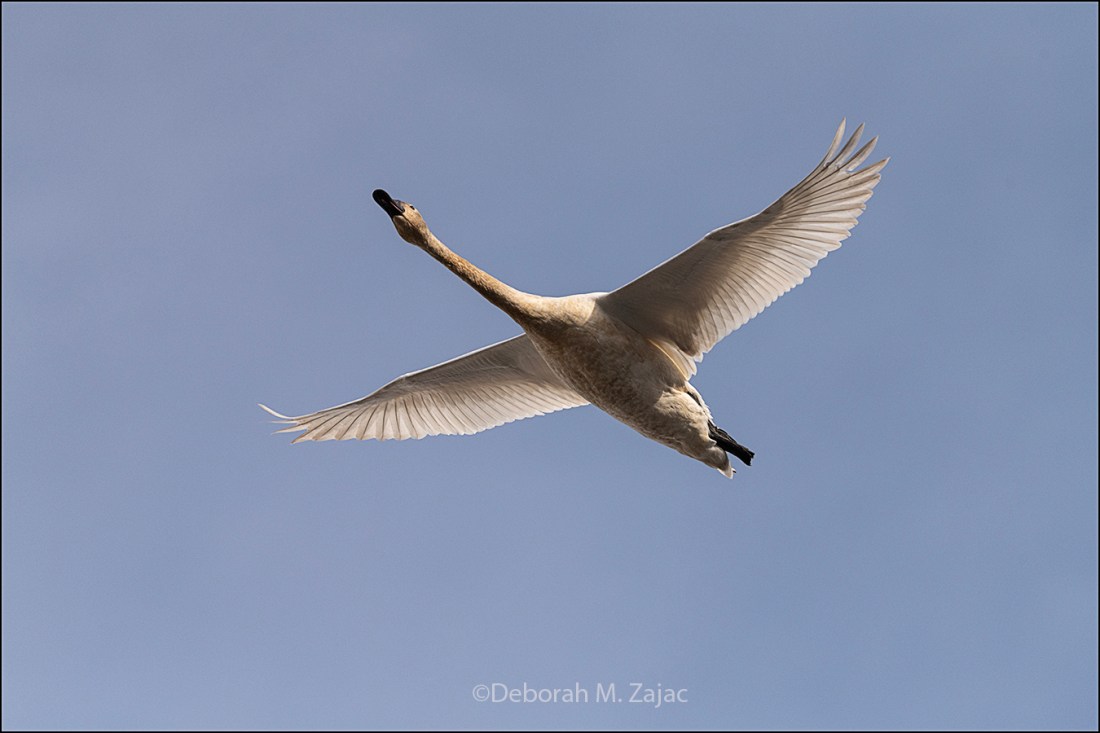
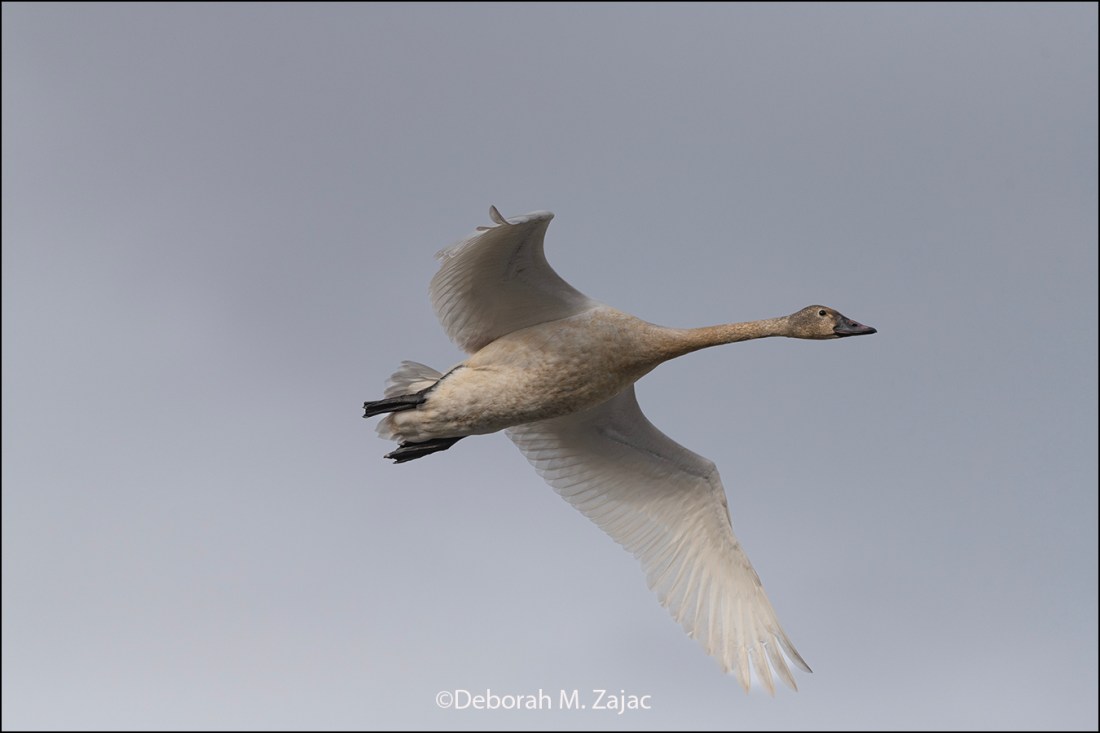
While out birding with the group last Friday morning we had the pleasure of a Tundra Swan fly-by. The single Swan flew by three times actually. Probably checking out the slough and ponds to see if that was the place to land or if his partner was there. We didn’t see a another swan and after three passes we didn’t see it again.
©Deborah M. Zajac | http//:circadianreflections.com Image

Here it was flying over my head.

©Deborah M. Zajac | http//:circadianreflections.com Image

Both images are cropped a bit. It was higher in the sky than these make it look.

Fun Facts:

  • Lewis and Clark provided the first written description of the Tundra Swan during their expedition to the West, where the birds’ whistle-like calls prompted Meriwether Lewis to dub them “whistling swans.”
  • The whistling swan, the American race of the Tundra Swan, currently is considered the same species as the Eurasian race, the Bewick’s swan. They were considered separate species in the past, distinguished by the large yellow patches on the face of the Bewick’s swan.
  • The Tundra Swan stays in flocks except when on a breeding territory. Although most swans spread out to breed, a large proportion of the population on the breeding grounds still can be found in flocks. These swans are not breeding, and may be young birds that have not yet bred, adult pairs whose breeding attempts failed, or adults that bred in the past but for some reason do not in that year.
  • During the breeding season the Tundra Swan sleeps almost entirely on land, but in the winter it sleeps more often on water.
  • Tundra Swans breed in the remote arctic of North America. Parents defend their nests and young against a host of predators including foxes, weasels, wolves, and bears, as well as birds such as Glaucous Gulls, Common Ravens, Parasitic Jaegers, Pomarine Jaegers, and Golden Eagles. If the parents are present, they are able to defend the nest and nestlings from these threats. Wolves, people, and bears, however, are too big to fight, and most incubating swans leave their nests while these large predators are far away. By leaving quickly when large predators approach, the parents may make the nest harder to find.
  • Tundra Swans wintering in Chesapeake Bay feed almost exclusively on clams that they dislodge from the mud. But it can be challenging to enjoy a peaceful meal: often the swan has to fend off a Ring-billed, Herring, or Greater Black-backed gull that swoops in to grab a clam from the swan’s bill – a successful tactic in about half of these “kleptoparasitic” encounters.
  • Swans have long been associated with ideals of romance. Added to their elegant outlines and all-white plumage is their tendency to form permanent pair bonds by the time they’re 2-3 years old. Once a pair forms, Tundra Swans feed and roost together year-round.
  • Based on banding records, the oldest known Tundra Swan was a female and at least 23 years, 7 months old when she was identified by her band in the wild, in Ohio. She was originally banded in the same state.

Fun Facts gleaned from allaboutbirds.org

If the rain holds off this morning I’ll be birding so I may be late getting to your blogs, and comments.

more to come…

Whatever Weds. White Peacock Butterfly

Copyright ©2024 Deborah M. Zajac. ALL RIGHTS RESERVED.

PLEASE DO NOT USE MY IMAGES WITHOUT EXPRESSED WRITTEN PERMISSION.

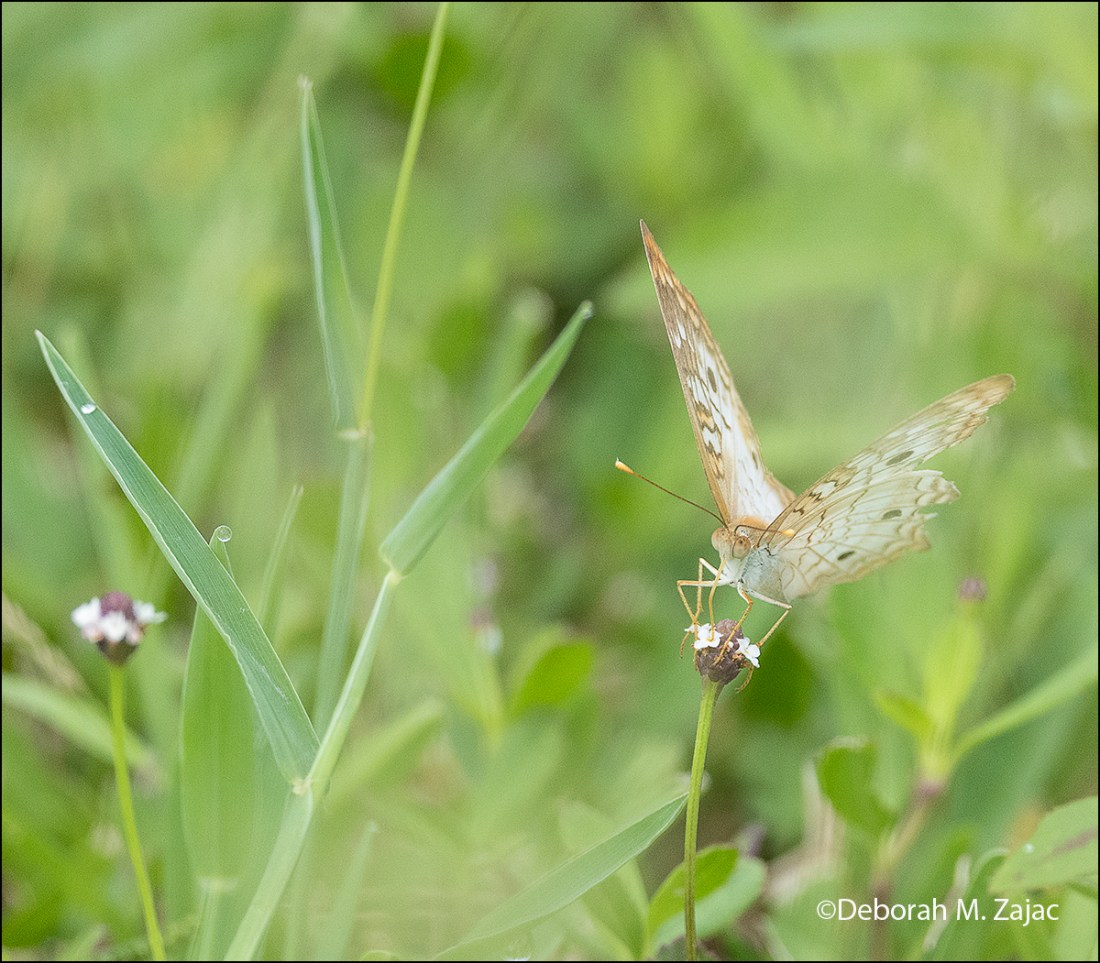
While birding around a pond in Pinellas Co. Fl I spied this butterfly trying to warm up for the day. Mary knew what it was straight-away when I asked her if she knew what kind it was.

©Deborah M. Zajac | http//circadianreflections.com Image

I showed you its best side first. It’s a bit tattered by the end of summer.

©Deborah M. Zajac | http//circadianreflections.com Image

Still beautiful though.

They’re in the brush-footed butterfly family and stay low to the ground because their favorite plants are also low on the ground. They can also be found throughout the southeastern USA, the Caribbean, Mexico, and South America to Argentina. They are white with brown markings and orange margins, and have a small black spot in the center of each of the forewings. Two small black spots on each of the hindwings resembling a peacock’s eyespot give this butterfly its common name. There’s a short tail on the hindwings. Male and female White peacock butterflies don not differ in appearance from each other.” Facts gleaned from

Florida Wildflower Foundation link here. They also say, that, “the White Peacock is smaller and darker in the wet summer months and larger and paler in the drier summer months.” I’m thinking this one has be one of the larger paler ones as it is quite pale.

Nikon D850| Nikkor 500mm Pe-F| PS CC

more to come…

Friday’s Feathered Friends- American Redstart

Copyright ©2024 Deborah M. Zajac. ALL RIGHTS RESERVED.

PLEASE DO NOT USE MY IMAGES WITHOUT EXPRESSED WRITTEN PERMISSION.

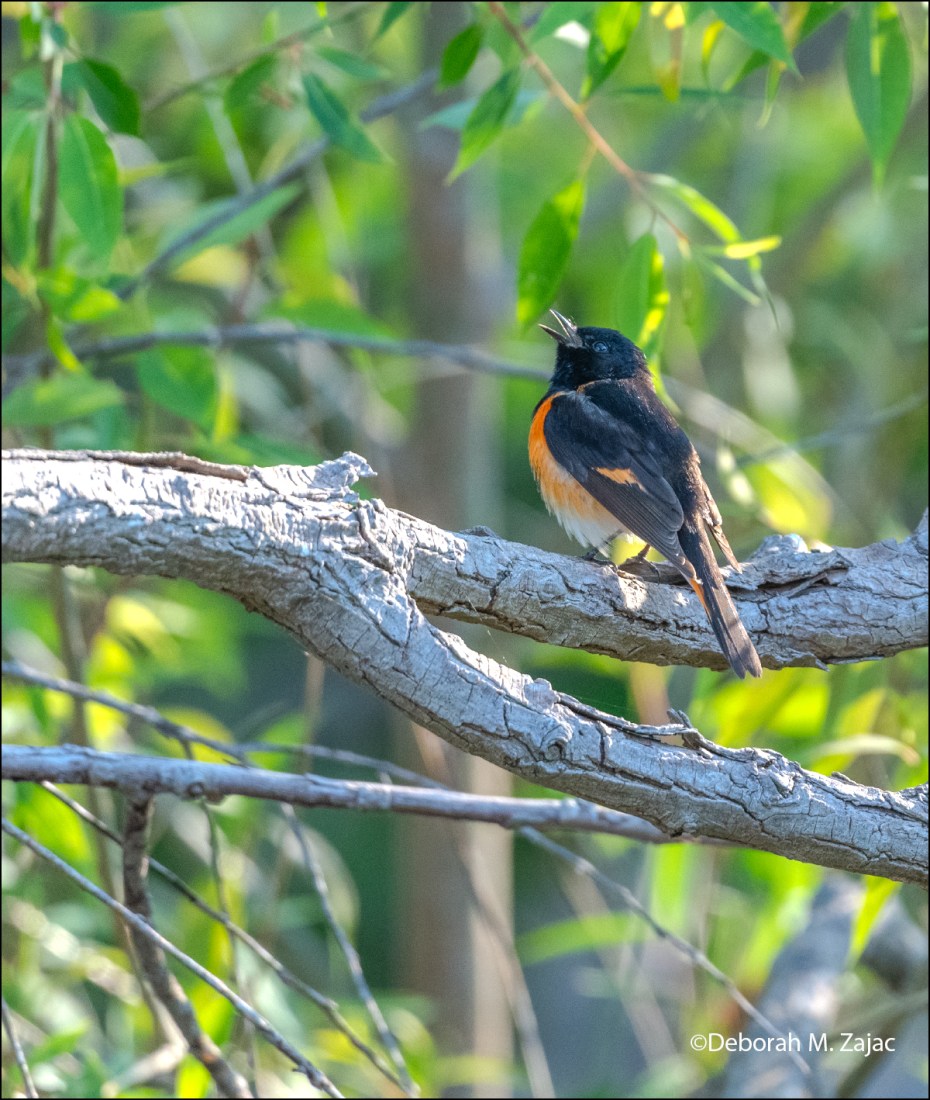
Going back to my Spring trip to Ohio for these images. The American Redstart male.

He’s a Warbler. I’m on the edge of it’s range. If only one or two would stray a bit further west I wouldn’t have needed to go to Ohio to this one. 😂

©Deborah M. Zajac | http//circadianreflections.com

Here’s an audio clip of its song.

https://www.bird-sounds.net/american-redstart/

Fun Fact:

  • Like the Painted Redstart and other “redstarts” of the Neotropics, the American Redstart flashes the bright patches in its tail and wings. This seems to startle insect prey and give the birds an opportunity to catch them. Though these birds share a common name, they are not closely related to each other. In fact, there are other unrelated birds around the world—such as the fantails of Australia and southeastern Asia, and other redstarts of Europe—that share the same foraging tricks.
  • Young male American Redstarts have gray-and-yellow plumage, like females, until their second fall. Yearling males sing vigorously in the attempt to hold territories and attract mates. Some succeed, but most do not breed successfully until the following year when they develop black-and-orange breeding plumage.
  • The male American Redstart sometimes has two mates at the same time. While many other polygamous bird species involve two females nesting in the same territory, the redstart holds two separate territories that can be separated by a quarter-mile. The male begins attracting a second female after the first has completed her clutch and is incubating the eggs.
  • The oldest American Redstart was at least 10 years and one month old, when he was recaptured and rereleased during a banding operation in Ontario.

Fun facts gleaned from allaboutbirds.org

I may be late replying this morning as I’m starting my week-end birding a new to me area in South Lake Tahoe. I hope you all have a great day and week-end.

more to come…

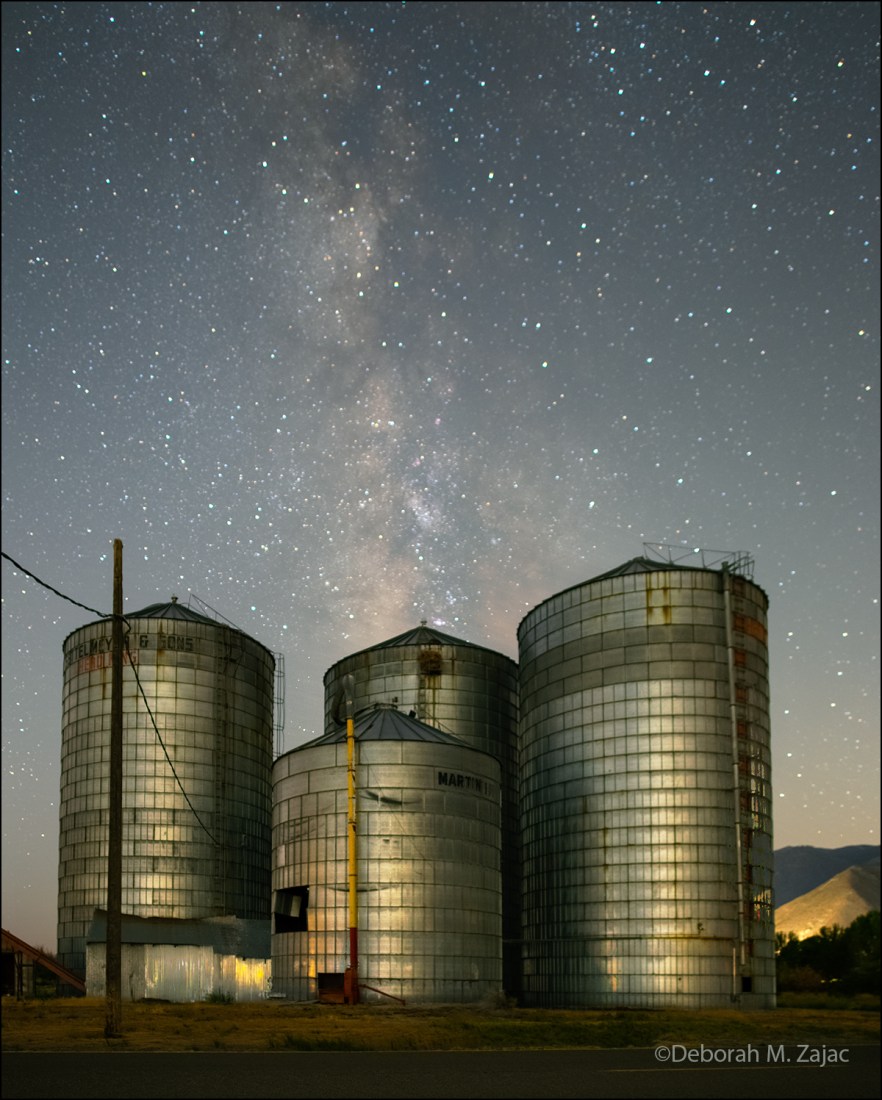
Something for Sunday-The Cosmos from Rural Nevada

Copyright ©2024 Deborah M. Zajac. ALL RIGHTS RESERVED.

PLEASE DO NOT USE MY IMAGES WITHOUT EXPRESSED WRITTEN PERMISSION.

©Deborah M. Zajac | http//circadianreflections.com Image

11 frames stacked. Nikon D850| Nikkor 20mm f/1.8g@f2

more to come…

Friday’s Feathered Friends- Warblers

Copyright ©2024 Deborah M. Zajac. ALL RIGHTS RESERVED.

PLEASE DO NOT USE MY IMAGES WITHOUT EXPRESSED WRITTEN PERMISSION.

For Mother’s Day and my birthday He-Man and I went to Ohio for several days of birding the Spring migration of Eastern birds. It was fantastic. I added 27 new birds to my life list most of which were Warblers.

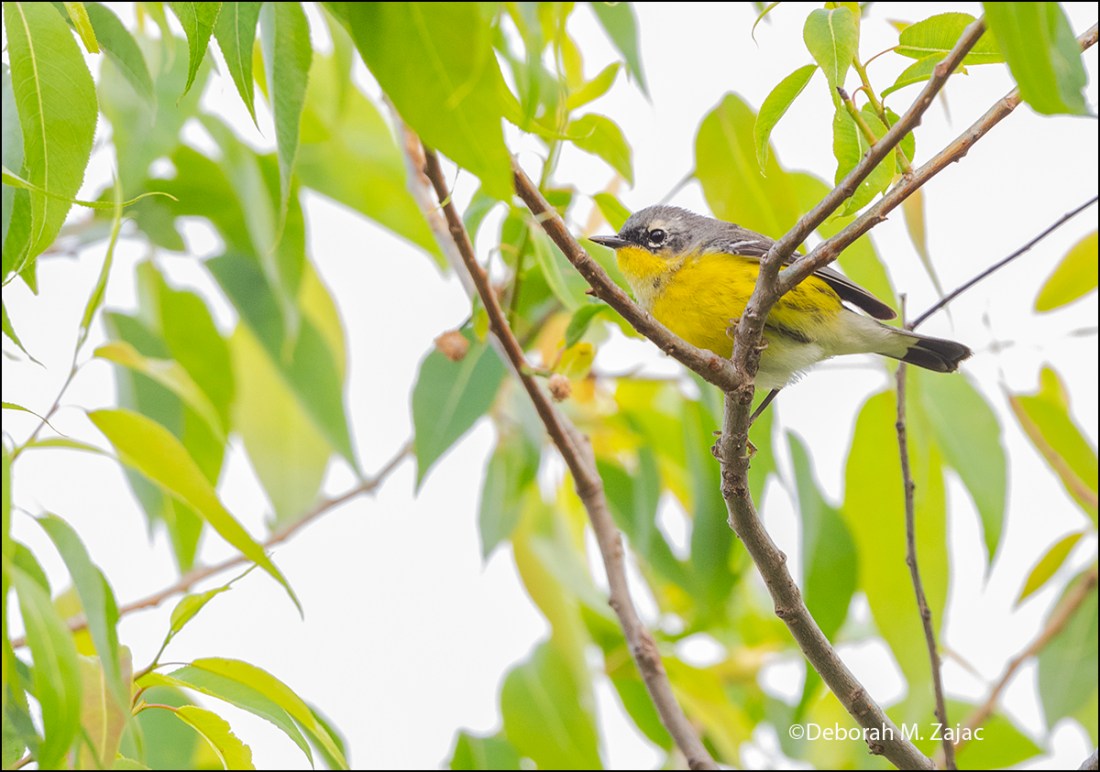
Here are three that I have processed.

Magnolia Warbler, female
Black-throated Blue, male
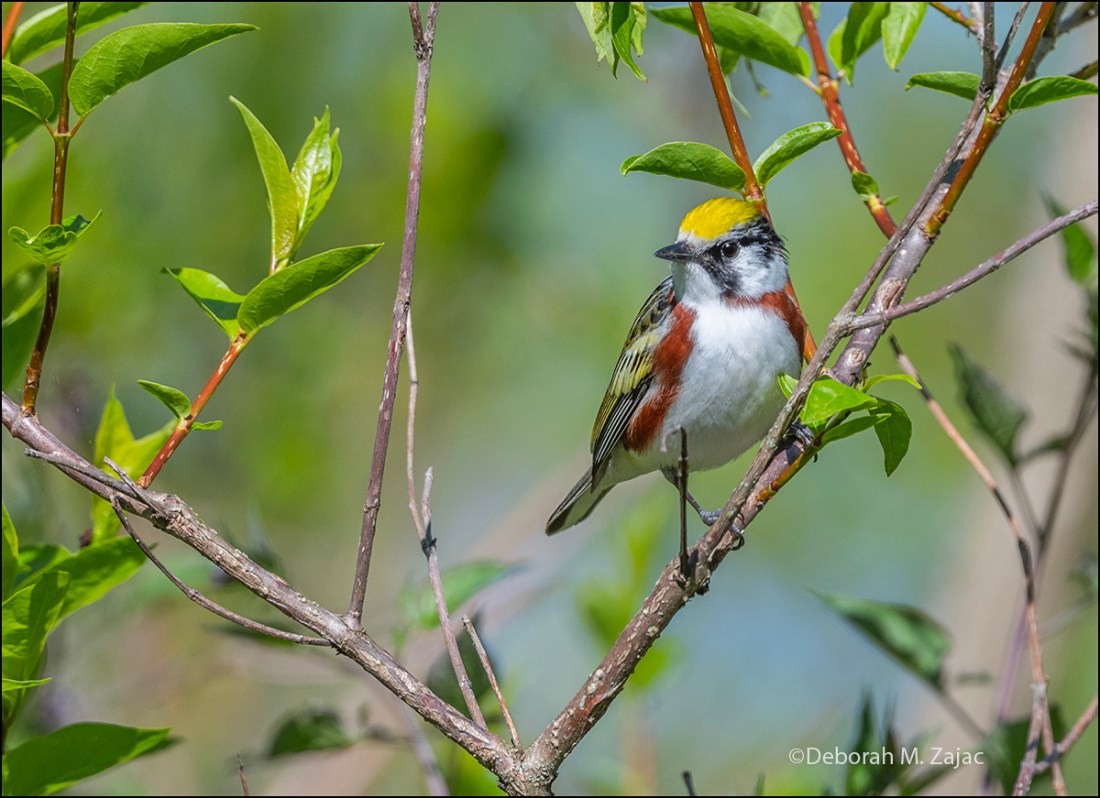
Chestnut-sided Warbler, male.

My favorite Warbler seen was the Chestnut-sided. Isn’t he gorgeous.

I have thousands of images to cull and sort through so I’ll be dribbling out the images over the next several weeks.

It was a great trip. I hope I get an opportunity to return as there are Warblers, and other birds I still hope to see.

Have a great week-end everyone.

Nikon D850| Nikkor 500mm PF-e

more to come…

Whatever Weds. Eclipse

Copyright ©2024 Deborah M. Zajac. ALL RIGHTS RESERVED. 

PLEASE DO NOT USE MY IMAGES WITHOUT EXPRESSED WRITTEN PERMISSION.

I wasn’t in the path of Totality for the eclipse on Monday but, I did watch the it from my patio. The Partial we saw covered 47% of the Sun’s face.

He-Man, myself, and a neighbor enjoyed the birds singing, and watching golfers play through without ever looking up to see what was happening in the sky above us.

I made an image of the full sun first before the eclipse started.

Sun, April 8, 2024

The large sunspot is 3628, and the smaller one is 3633.

This image below is a 5 frame composite showing the sequence of the partial eclipse from shortly after the beginning to the end with the Maximum coverage image in the middle.

Image-5 Frame Composite

The dark shadows you see on the face of the images of the sun are clouds that were rolling across the Sun/Moon during the eclipse.

Now that eclipse madness has passed and it’s sunny, the snow has melted here in the valley and our lawn has turned green I’m ready to turn my attention to looking for spring flowers and more birds.

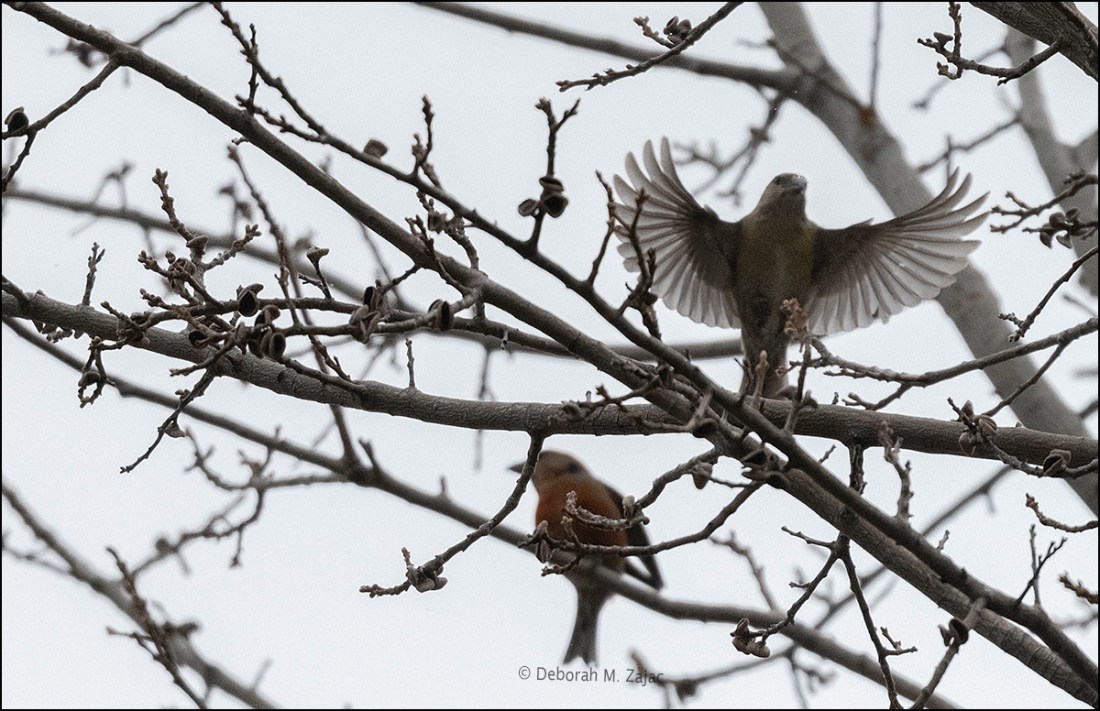
Speaking of birds. I got a “lifer pair” last Friday. A pair of Red Crossbills.

They were a bit out of range for my lens but, I did get an image that positively identified them. It’s noisy and soft, but it’s a keeper.

Red Crossbill Pair

This is the female with her wings spread ready to fly, and her mate in the back. I was doing my happy dance when I got a positive ID on these two.

So, did you see the eclipse in partial or in Totality? Wasn’t it cool!

Happy Wednesday!

Nikon D850|Nikkor 500mm PF-e| Orion Glass Solar Filter| PS CC 25.5.1

more to come…

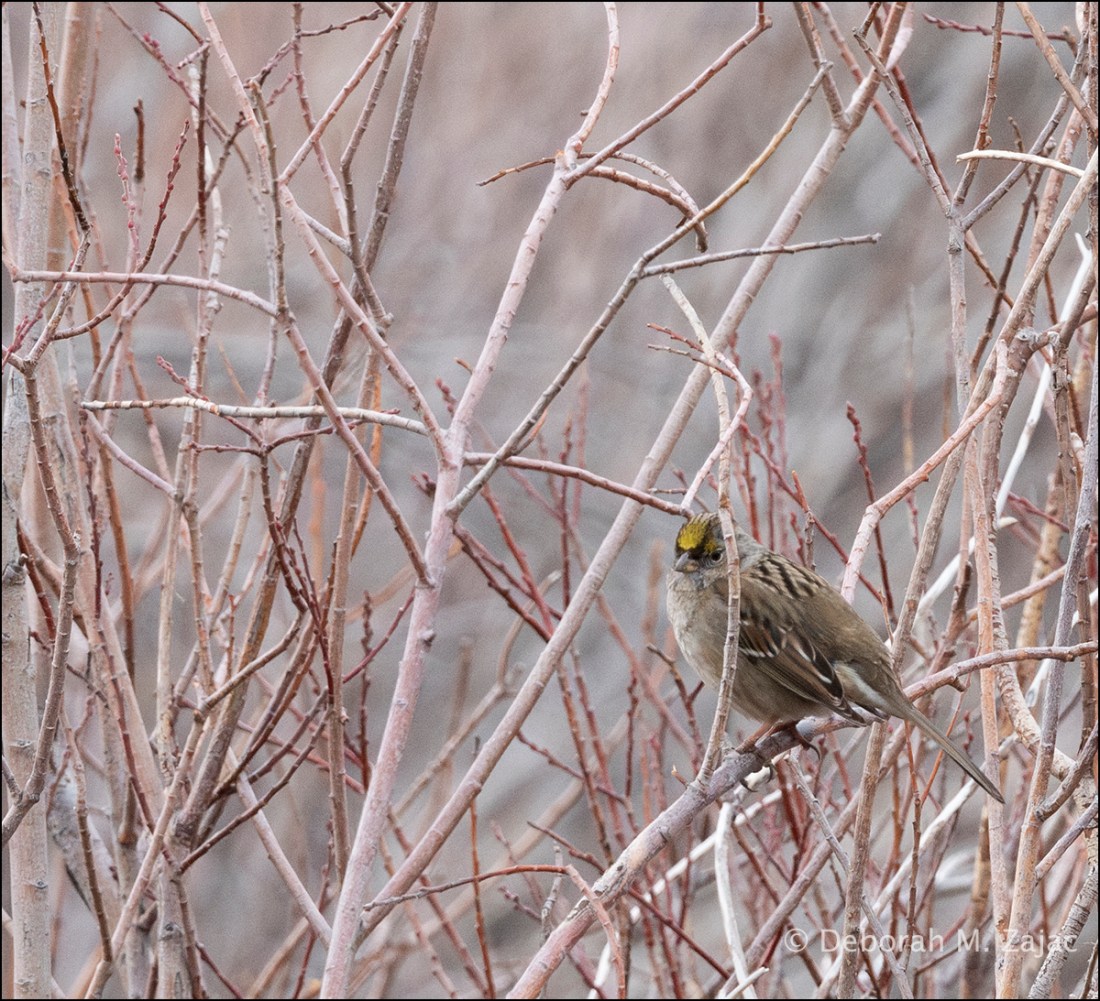
Friday’s Feathered Friends-Golden-crowned Sparrow

Copyright ©2024 Deborah M. Zajac. ALL RIGHTS RESERVED. 

PLEASE DO NOT USE MY IMAGES WITHOUT EXPRESSED WRITTEN PERMISSION.

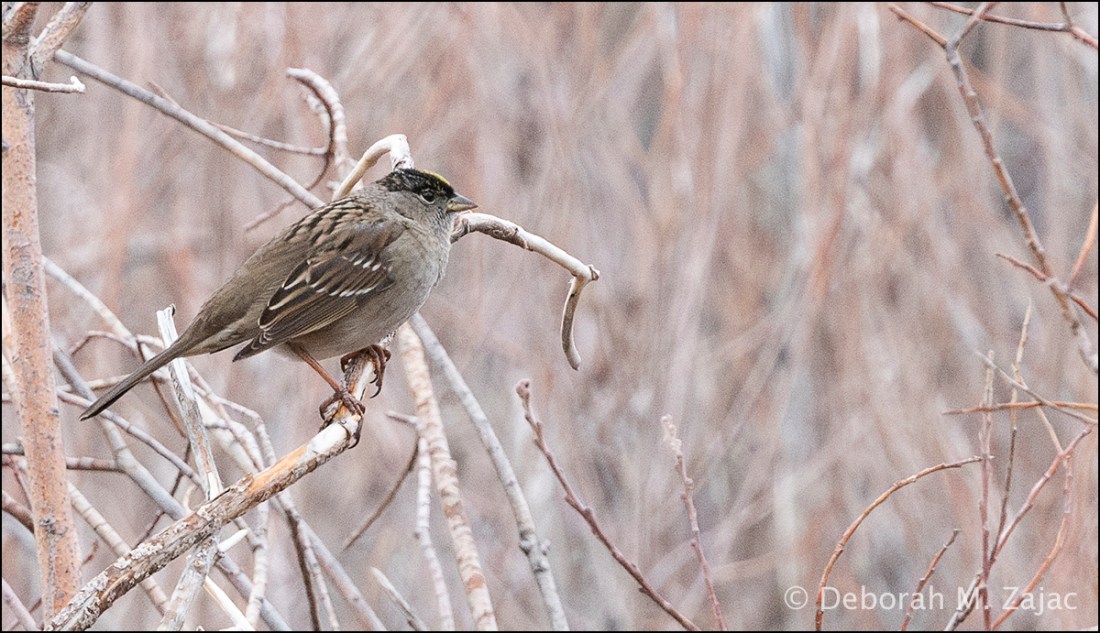
I last shared this Sparrow in 2015. I don’t see many of them and I only see them during the Winter migration hanging out with the White-crowned Sparrows, but sadly, never at my feeder. Last week I saw this one.

Male Golden-crowned Sparrow

He was pretty skittish. Every time I tried getting closer he flew further away so these are pretty well cropped.

Fun Facts:

    • This sparrow is one of the least known of our songbirds, particularly on its northern breeding grounds. It has been the subject of only a few laboratory and field studies, so most of what we know about it comes from scattered notes in scientific journals.
    • Miners in the Yukon at the turn of the twentieth century woefully referred to the Golden-crowned Sparrow as the “no gold here” bird, because its song resembled that depressing phrase. They also interpreted its song to say “I’m so tired,” prompting them to dub the bird “Weary Willie.”
    • The Golden-crowned Sparrow arrives earlier and stays longer on its California wintering grounds than almost any other bird species.
    • When day length increases in the spring, the Golden-crowned Sparrow detects the change through photoreceptors (light-sensitive cells). Its body responds by putting on fat and getting an urge to migrate.
    • The oldest Golden-crowned Sparrow on record was at least 10 years, 6 months old. It was caught by a bird bander in California in 1970 and released.

Fun facts gleaned from allaboutbirds.org

I hope you all have a great week-end!

Nikon D810| Nikkor 500mm PF-e| PS CC 25.3.1

more to come…