Whatever Weds. Moonrise

opyright ©2026 Deborah M. Zajac. ALL RIGHTS RESERVED.

PLEASE DO NOT USE MY IMAGES WITHOUT EXPRESSED WRITTEN PERMISSION.

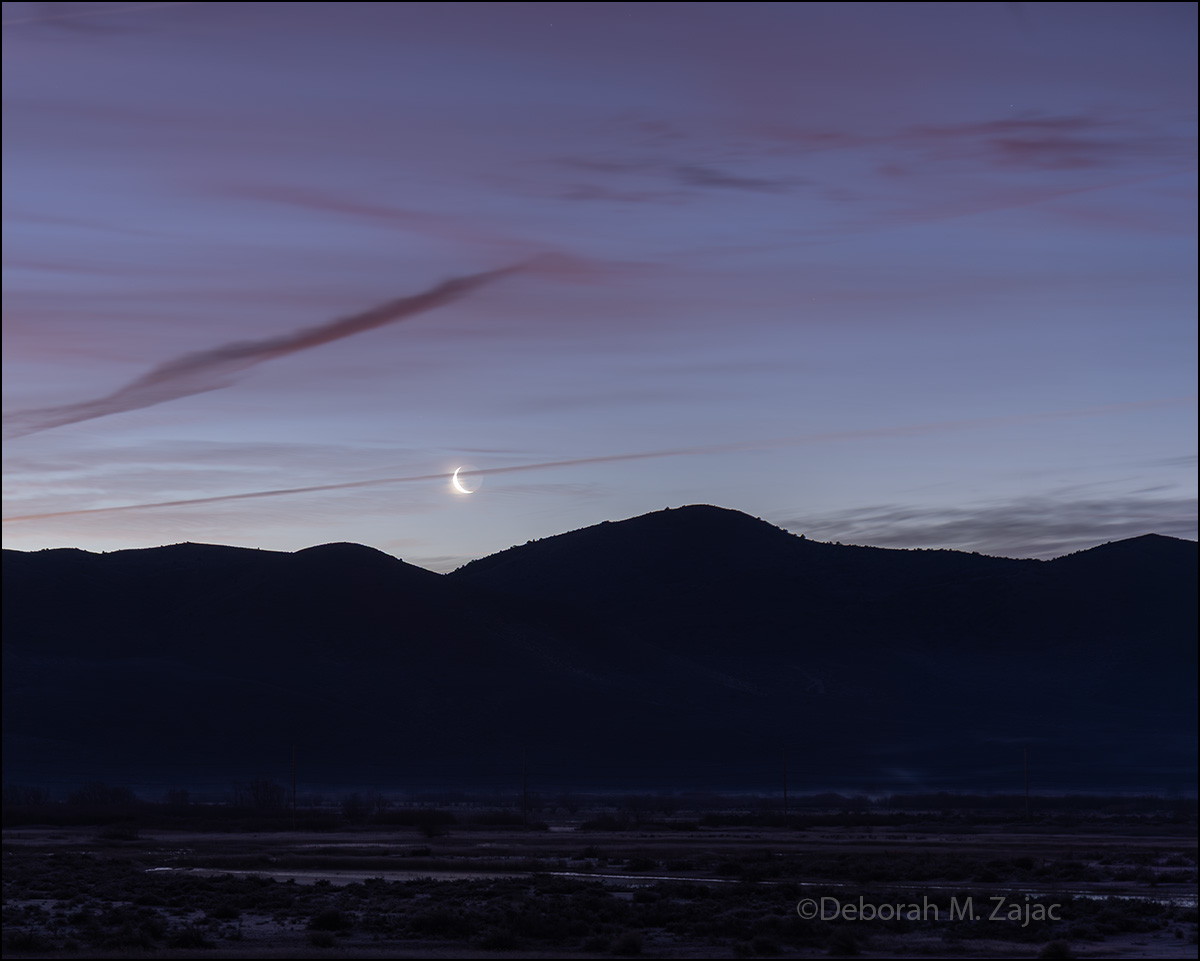
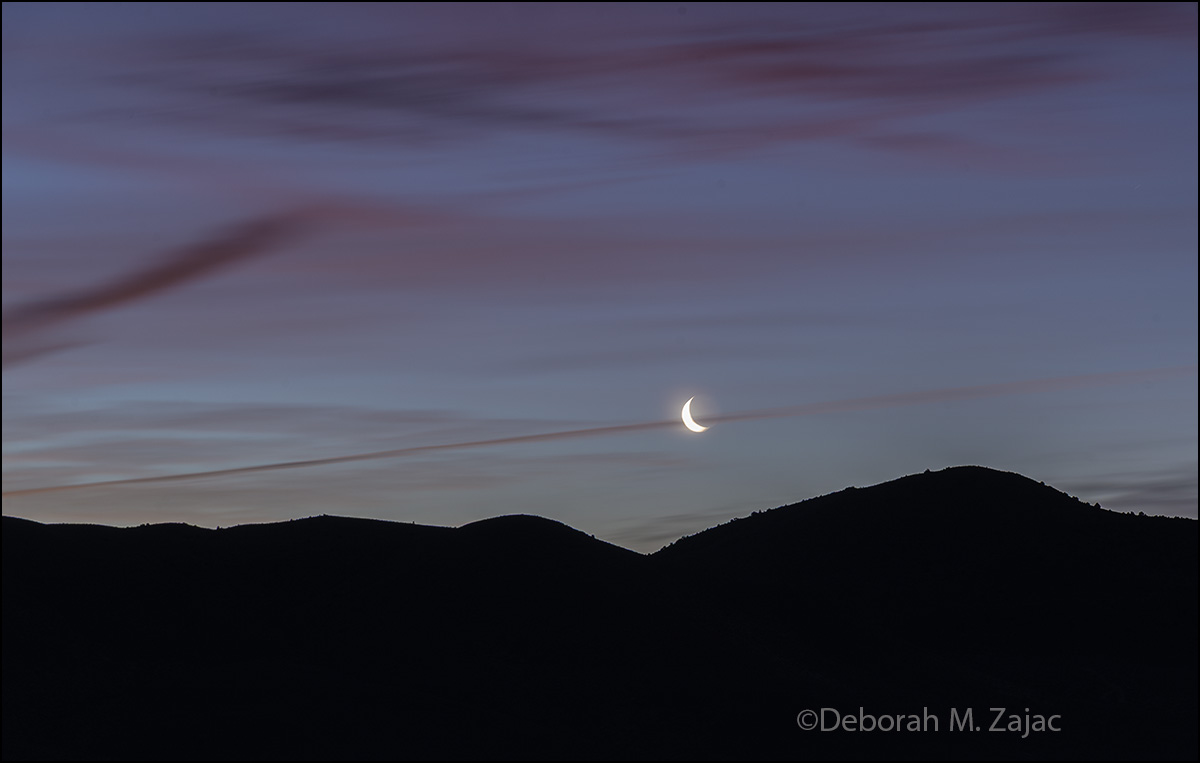
On Valentine’s Day morning the Moon rose just before sunrise and I was up and ready for it. I went out back and while setting up my tripod and camera I thought I heard a quiet “hello”. It was dark and way too early for anyone to be out so I carried on. Then I heard a louder “hello”. Oh, my gosh it was my neighbor out filling her bird feeder. We both giggled and said good morning then we both admired the Moonrise.
©Deborah M. Zajac | http//:circadianreflections.com
Waning Crescent 8.1%.

There was Earthshine too. What is Earthshine you may be asking? The internet has a better definition than mine.

“Earthshine is the faint glow seen on the unlit portion of the Moon, particularly during its crescent phase. 

 It occurs when sunlight reflects off Earth’s surface—especially clouds, ice, and landmasses—then travels to the Moon, illuminates its night side, and is reflected back to Earth. This creates a ghostly luminance on the Moon’s dark face, making the entire lunar disk visible even when only a thin crescent is lit by direct sunlight. 

The phenomenon is most noticeable just before and after a New Moon, when Earth appears nearly full from the Moon’s perspective, maximizing the reflected light.  Earth reflects about 30% of incoming sunlight, and from the Moon, Earth appears 40 times brighter than the full Moon does from Earth.  The effect is sometimes called “the old Moon in the new Moon’s arms” or “the ashen glow.” 

Earthshine is not just a visual curiosity—it’s a valuable tool for science. By studying the light reflected from Earth to the Moon, researchers can analyze Earth’s albedo (reflectivity), monitor changes in cloud cover, and even search for signs of life, such as the “red edge” spectral signature from vegetation. 

 It also serves as a natural illumination source for robotic missions exploring the Moon’s night side and permanently shadowed polar regions.”

I zoomed in a bit. Here it is at 100mm.
©Deborah M. Zajac | http//:circadianreflections.com

Isn’t that a lovely thought, ” The Old Moon in the New Moon’s arms”.

The contrail was interesting- it looks like it’s going right through the Moon.

We’ve got a storm coming in as I type this (Tuesday morning). They predict 4-8 inches of snow here in the valley and 12-16 in the mountains. We woke up to snow and it’s still snowing. We’re staying in and getting cozy. Well until we have to get bundled up and start shoveling!

I finished the Love Stamps puzzle I started at the beginning of the month last night so, I suppose it’s a good time to start a new one.

I hope you’re all having a good week!

Nikon Df| Nikkor 120mm| edited and processed in PS CC 2026

more to come…
Whatever Weds. Aurora’s Amethyst Sky

Copyright ©2026 Deborah M. Zajac. ALL RIGHTS RESERVED.

PLEASE DO NOT USE MY IMAGES WITHOUT EXPRESSED WRITTEN PERMISSION.

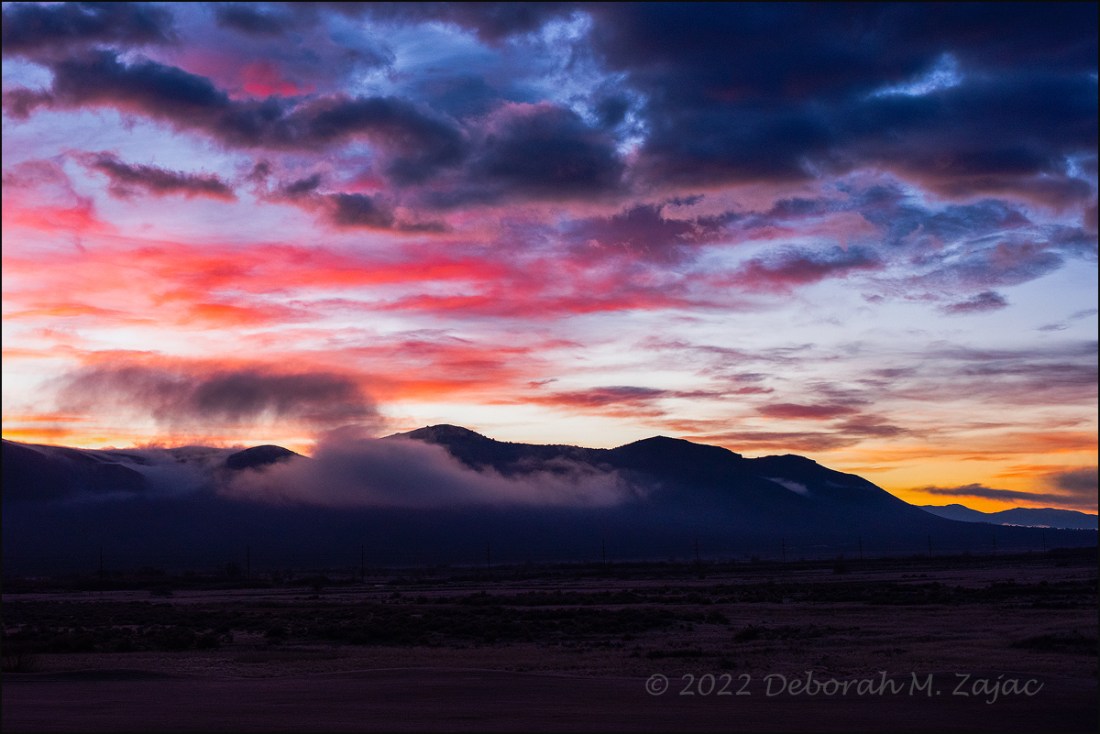
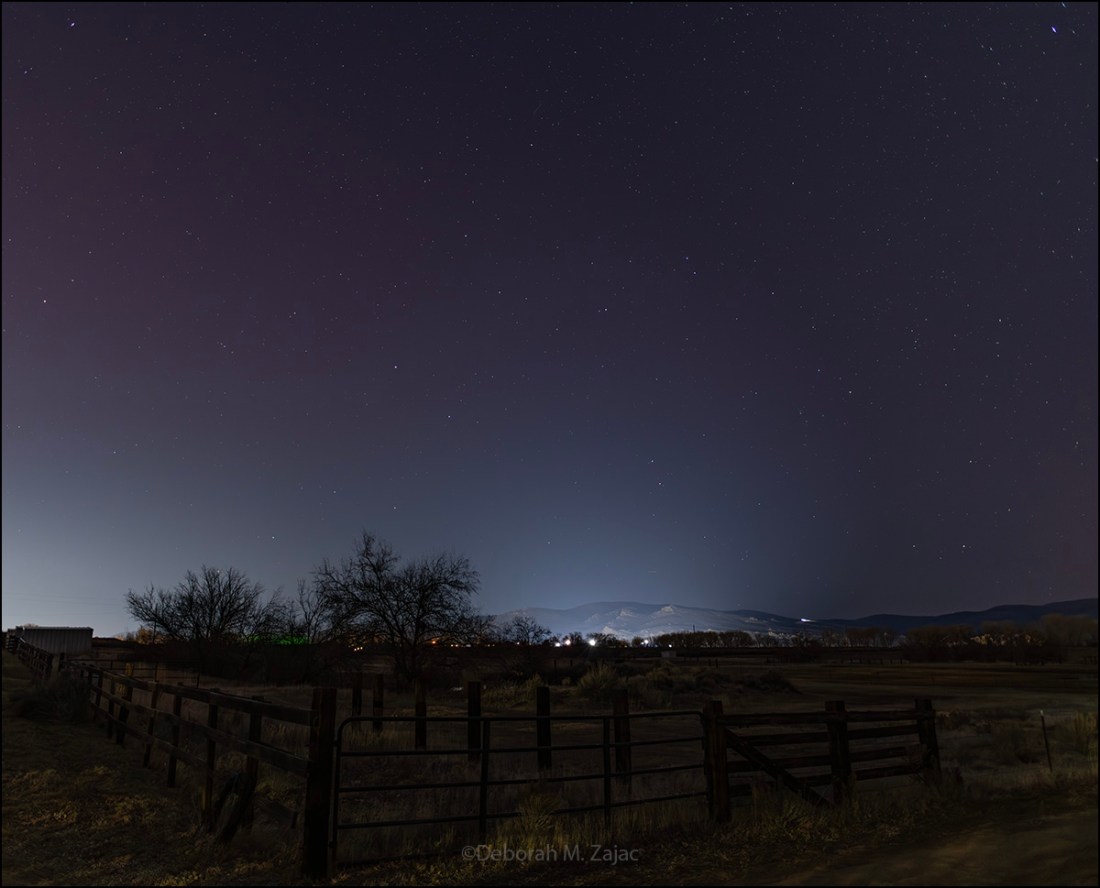
Monday I got an alert from my Aurora App that said it might possible to see the Aurora as low as Northern Nevada. There was a pretty large CME -solar flare on January 19th that I read about in Spaceweather and it mentioned the Aurora Borealis could be really good and perhaps wide spread. I was on a hike when my app pinged me Monday afternoon saying that it was looking good where I live to see some of the Aurora. When I got home I charged up my batteries, switched lenses, and got my gear ready. In the evening close to the peak KP index reading per my app I put on my thermals, coat, toe warmers, then gathered my hand heating pouch, tripod, gear bag, red headlamp, and walked out into the 35 degrees F night air. I headed down the street to photograph the sky over my neighbors ranch.

The stars were bright, and clear, and the air cold, and brisk. It was just me and a horse in the stall kicking and making that sound they make when the blow raspberries through their nose, and lips. I suspect it heard me and saw my red headlamp. Then it got really quiet.

The horse and I settled in for a bit. I set up my tripod, and camera then got my focus dialed in and made a few tests shots. Then I made this shot when it was supposed to be “peak KP index (6.67)” for my area.

©Deborah M. Zajac | http//:circadianreflections.com
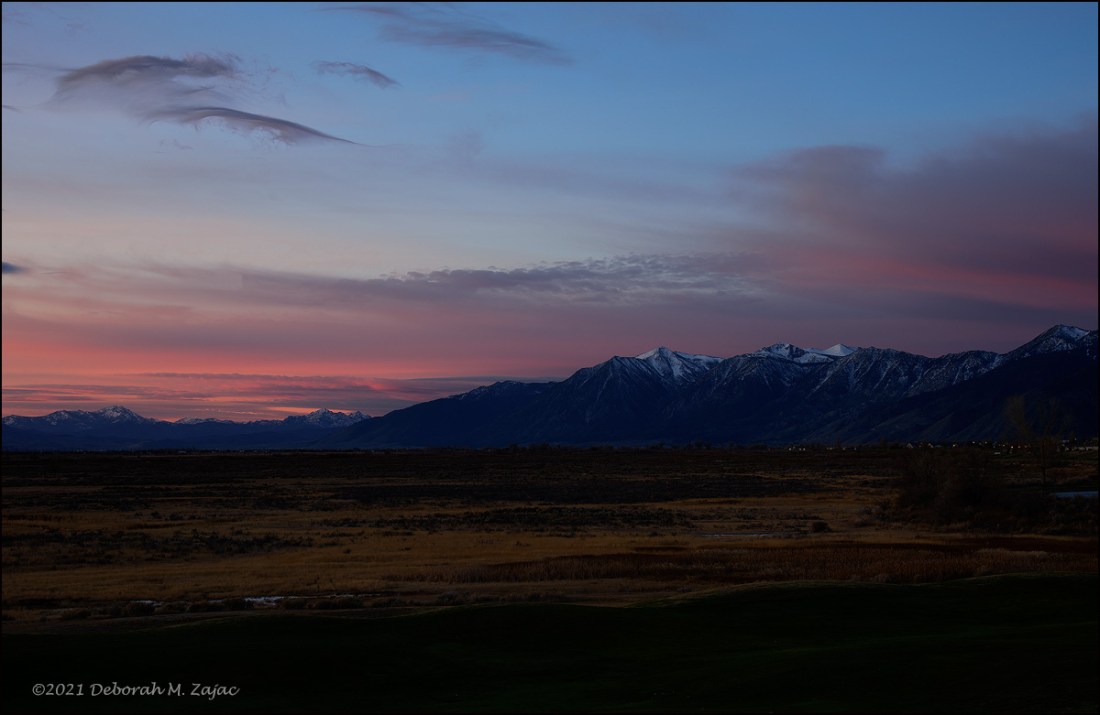
It was very light pinky purple with maybe a little green.

There’s light pollution from Carson City to the north.

Way out on the top of hills in the distance is a bright white light. That’s an ATV of some kind making its way to the top of the Pinenut Mountains. I wondered if they were going to a great view and maybe a darker sky?

I read the Aurora’s were spectacular in parts of Europe and some of the images I’ve seen are fantastic.

This Aurora wasn’t as strong as the one that we saw here in October 2024 see my post here , but anytime I get a ping saying maybe I’ll see an Aurora in No. Nevada I’ll be out with my camera.

Happy Mid Week Everyone!

more to come…

Whatever Weds.- Dream

Copyright ©2023 Deborah M. Zajac. ALL RIGHTS RESERVED. 

PLEASE DO NOT USE MY IMAGES WITHOUT EXPRESSED WRITTEN PERMISSION.

“For my part, I know nothing with any certainty but the sight of the stars makes me dream.”

– Vincent Van Gogh

Milky Way

Nikon D810| Nikkor 20mm G| PS 24.6| Single Frame

more to come...

Wordless Weds. The Star Stop

Copyright © 2021 Deborah M. Zajac. ALL RIGHTS RESERVED

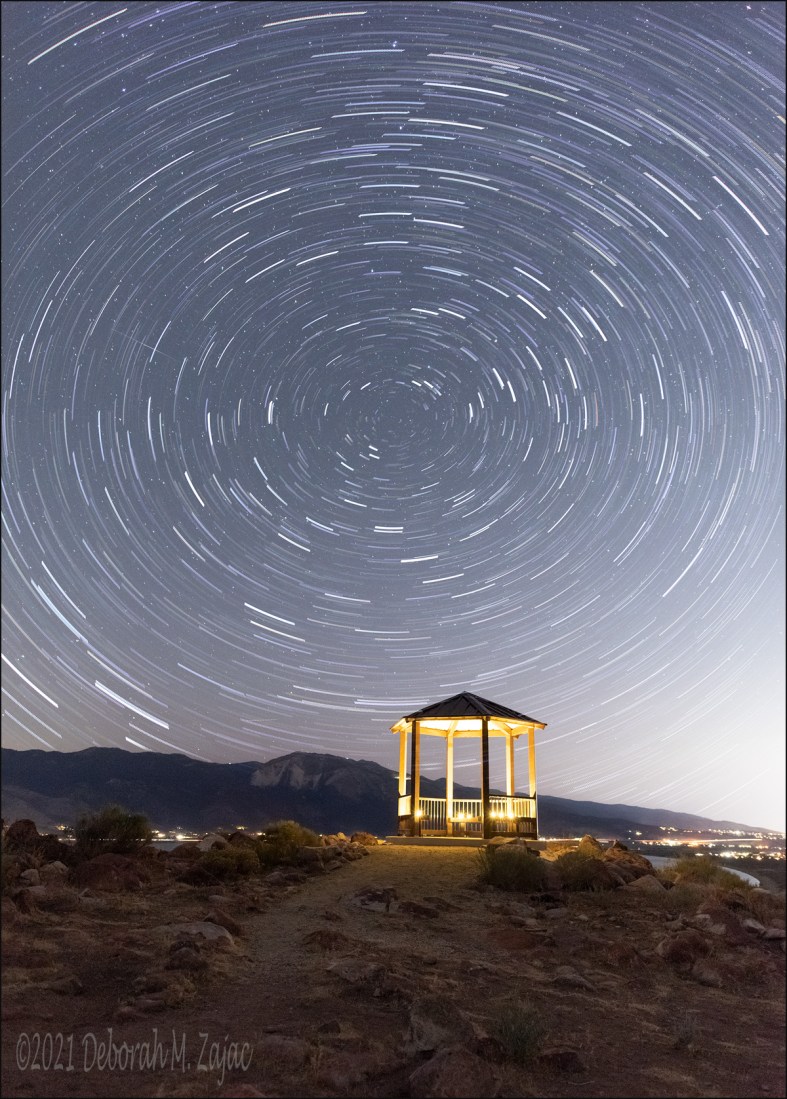
Composite image:

Sky- Nikon D300s| 17mm| f90 secs| f/5.6| ISO 400 52 frames stacked in Photoshop

Foreground-Nikon D810|15 secs.|20mm| f/2.2| ISO 2000

I lit up the gazebo with 14 little tea lights. All the elements were blended in Photoshop CC 22.4.2

more to come…