I have been a long time admirer of Diana’s Still-life’s. She has an innate sense composition which I envy. She cleverly stages everyday objects into wonderful compositions that are both beautiful and timeless fine art photographs.
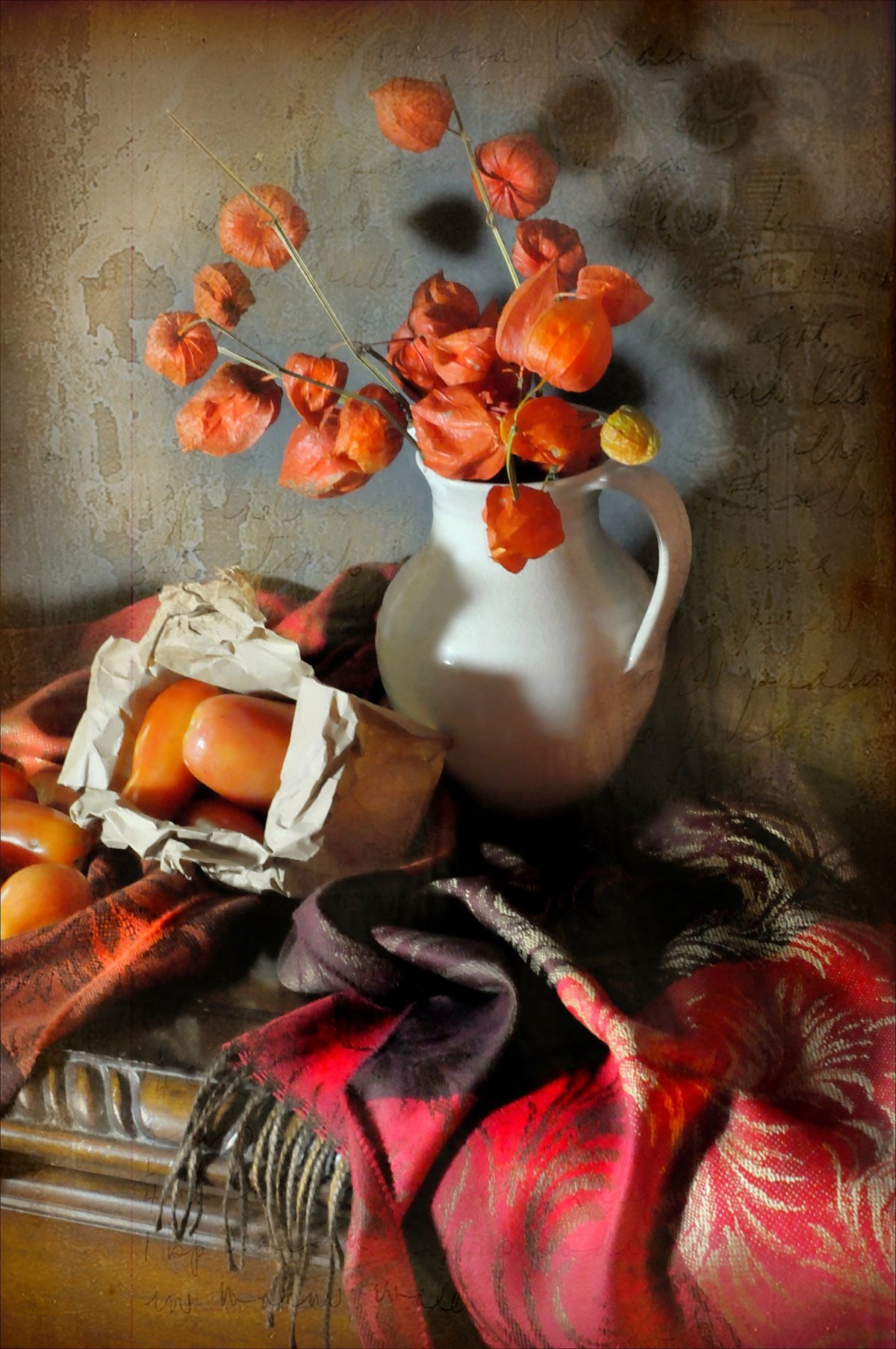
She shares with us how she created this beautiful piece she calls “Desk Corner”.
Photograph by Diana Lee Angstadt
Q. Tell us about this set up?
Diana: Setting up the still life is the biggest hurdle; trying to make sure it looks as natural as possible. Objects should look as though they have a relationship to one another in a natural way. For this composition I began with the flowers. Then I slowly added in other items. I do not really think about it before hand. It comes to me as I am creating it. I will remove, and switch items until I feel it is cohesive and in good balance. I always like to have the light as soft as possible to create a gentle softness and mood.
Q. How did you expose for this shot?
Diana: I don’t have too much available light from a nearby window, so I used two lamps with natural light bulbs… one to be the main source and the other as “fill” light. They have bendable arms so I can position them easily in any direction. My exposure was Shutter Speed 1/40 with an F stop of 8. I used a tripod with a cable release.
Q. What camera and lens did you use for this shot?
Diana: The shot was taken with a Nikon D300 with a 50mm 1.8 lens. After I upload the image, I also add “texture” by placing it over the entire image and then vary the opacity in certain areas to allow the photo to come through the texture.
To see more of Diana’s work visit her website here.
Wildlife photographers know all too well how hard it is to get a great photo of their subject. It takes long hours of studying their behavior, and being familiar with their territory.
In this edition Rainey Shuler dedicated bird photographer tells us how her experience, persistence and patience paid off in this story of the Pied-billed Grebes.
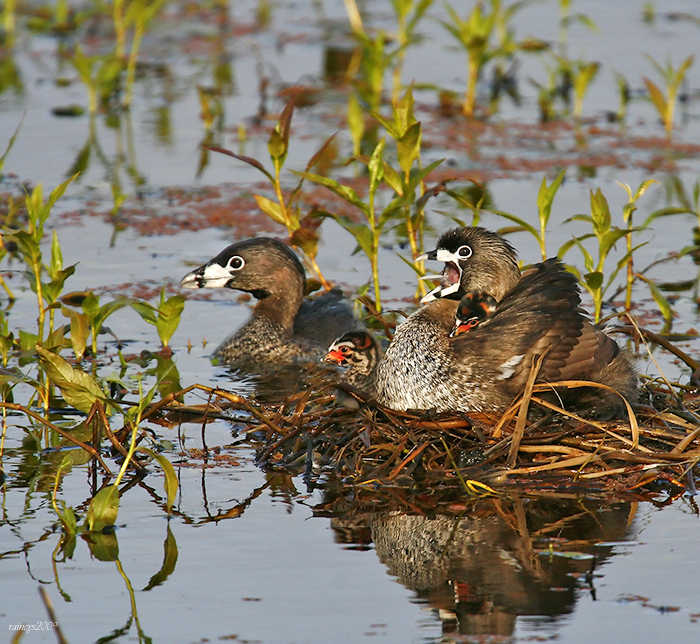
Photograph by Rainey Shuler
Pied-billed Grebe Nest-2009
CR: Tell us about this location.
Rainey: The location is at the Struve Slough in Watsonville, CA which has a lovely walking path for viewing many types of birds including nesting Pied-billed Grebes and American Coots. You can also find Bitterns, Great Egrets, Snowy Egrets, Osprey, Kingfishers, Double-crested Cormorants, Black-crowned Night Herons, Green Herons and many other birds there depending on the season.
We had spotted this Mama and 7 eggs around mid May, 2009. It was close enough to the shore that I was able to sit on a chair with my camera mounted on a Tripod and chronicle the whole story. I would go there almost every day around 5-6:00 p.m. in the afternoon. I chronicled the entire family; first one chick, then two, until 5 eggs hatched. As long as the last two eggs remained in the nest the parents would not give up on trying to incubate those remaining eggs…it wasn’t until June 20th that the last of the two eggs disappeared into the slough and at that time the entire family left the site, which was four days after I took this shot.
CR: How difficult was this to capture?
Rainey: The most difficulty in getting a shot like this is just having enough patience to wait and capture certain moments. I spent approximately 2 hours just sitting and waiting for special moments to occur and during times like this I can end up shooting 200-500 shots to get just the right moment. Of course exposure can be difficult with these dark colored birds on a foggy day so the right ISO and shutter speed is very important.
CR: How did you expose for this shot?
Rainey: I used a Canon Rebel XTi and a 100-400mm lens with a UV filter. For this shot in the late afternoon I had to increase my ISO to 800 and set the shutter speed at 1000 to capture any action. I chose an aperture of f6.3. I used a tripod and natural light.
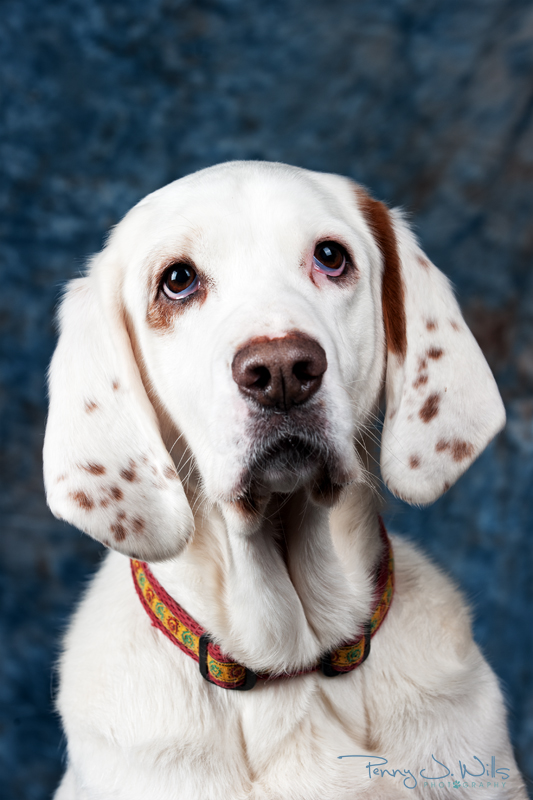
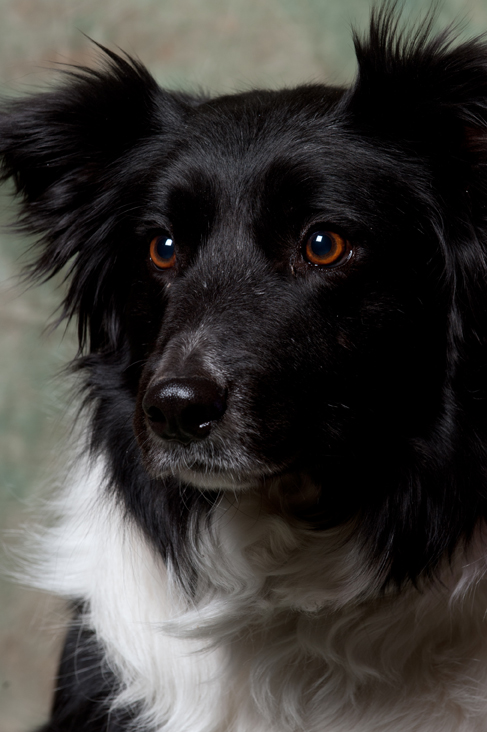
In this edition of “Just Be There” Pet Photographer Penny Wills shares with us an emotional story of how she captured this gorgeous portrait of Abby.
Photography by: Penny Wills
CR. Tell us about this location.
Penny: This was taken in my home office, on a dark brown leather chair.
CR. How difficult was this to capture?
Penny: It’s interesting that you should ask me to talk about this particular photo. This is one of those emotional photos that I love taking. Unfortunately, this time, it’s my emotional photo.
Abby was sick. Intermittently she was throwing up foamy yellow bile. Not any food in it, just the foamy yellow stuff. Not all the time, and not just after eating, or playing and not every day. Sometimes she would go days without throwing up, and then she would throw up every couple of hours a day. After 2 weeks of this, I took her to the vet. He was thinking she got into something she should not have, and it irritated her stomach. She was admitted to the hospital and put on an IV and no food, just fluids, and a special medicine that coats the stomach, like for an ulcer. After 3 days of her behaving, he was about to call and say, she’s better, when she promptly threw up. We decided to do an X-Ray just to be sure and about an hour later, the vet called back. He said, “You have to come in and take a look at her X-Rays.” That is never a good sign, but I have been going to this vet for years, and with all my pets, you never know what they can pick up and eat. We have had a good laugh over another dog’s X-Rays, so I did not put too much gloom into his words.
My first hint that things were not good was the front office staff. They were quite somber instead of the joking that I am normally greeted with. I meet the Dr., and he pulls out her X-Ray. There is a large mass showing in her stomach. It’s not metal or wood (like some others I won’t mention!) because it does not have a distinct outline, it’s fuzzy. He gives me the bad news, “there’s not much I can do, I believe it’s a tumor, and that large, it can’t be good.” We discuss options, such as an ultrasound, and an exploratory. I settle on exploratory surgery, and we schedule it for the next morning first thing.
He looks at me, and says, “There’s no reason that she can’t go home tonight, so why don’t you take her?” What he didn’t say, but was understood, that if he found a tumor that large, her prognosis was not good. Dan & I had decided that if the vet did find something, and he didn’t think it was treatable, we would have her euthanized then. So, I brought her home for her last night, or so I thought. I took her out in the back yard to play with the other dogs and darned if I could not get a good photo of her. I had to give up when I lost the light.
CR. How did you expose for this shot?
Penny: The next morning, as I was setting one of our cats up for my photography class in front of the window, I noticed just how lovely the light was. Bells went off in my head, “Put Abby on the brown leather chair and take her photo there!” Eureka! So I popped her on the chair, swiveled the chair until I got the lighting just right, and took the shot. Fortunately, the neighbor was walking their dog down the road, so Abby’s attention was fixed on that dog.
Hand-held, I metered off her face, allowing the rest of the photo to be naturally dark. The camera settings were: 52mm, ISO 200, f/8, 1/20s,
There was absolutely no processing done on this photo, with the exception of adding my logo.
CR. What camera and lens did you use for this shot?
Penny: Natural light out of a north window, 6:18 a.m. just as the sun was rising.
I loved the soft light and the color of the light as the sun was rising. The color was just perfect, you cannot tell by the photo that her face is almost completely gray; the sun hid the gray behind the almost too saturated color.
On a happy note, after the surgery, the vet called. He found out what the problem was. Was it a tumor the size of his fist? Well it ended up being a stuffed mouse cat toy. How she managed to swallow it whole is beyond us. It was too large to pass into her stomach, so it just floated around in her stomach. Her throwing up was from the occasions that the toy blocked food and water from passing the stomach and into her intestines. So, after surgery, I brought her home and for about 12 hours she was fine. Then she started throwing up again. NOW WHAT? She was confined to her crate except for the trip from work to the car. Once again I call the vet and ask him to do a quick X-Ray, she is throwing up again. I wait in the waiting room and a couple of minutes later he comes out with the X-Ray. We look at it, look at each other and say, “What in the world?” There, big as life, is a piece of razor blade! UGH! This dog is going to give me a heart attack. So, for the 2nd time in less than 24 hours she heads to surgery. Thankfully, he removed it without any complications.
I think I got at least 1/2 a head of gray hair from her that week. Silly girl! She is now almost 12 and still going strong.
When I met Penny in 2008 she had just moved from a Pentax camera system to Nikon, and was on the threshold of opening a Pet Photography business. Penny knows pets!
Penny is the proud owner/parent of 5 dogs and 14 cats. In addition to this she has fostered abused and abandoned pets for her local Breed, and All Breed rescue groups. She has competed with her dogs in Agility, Obedience, and Conformation competitions for years and photographed her pets throughout their competitive lives. This is where she honed her keen sense of timing to get the perfect action shot. Through the years friends would ask her if she would take photographs of their dogs and Penny loved it. Over time it evolved into a small business.
The last 3 years she’s worked hard at building her business into a full-time career. Her warmth, love for animals, and her skill as a photographer have taken her from being on the threshold to crossing it.
Q. Give us a little bit about your background, a mini biography where you were born or grew up. Where are you living now? I grew up in Windsor Locks, Ct. I went to a Vocational Agricultural High school with a major that started in Animal Sciences, but switched to Plant sciences instead. I went to Springfield Technical Community College with an Associate’s Degree in Landscape Architecture. After spending a few years in that field, I moved inside where it was warm and dry! My husband and I own a hardware store in a lovely little town in the northwest corner of Connecticut. We live about 3 miles from where I grew up.
Q. How would you describe yourself as a photographer, and what sparked your interest in photography?
I have always been interested in photography. My first camera was a Kodak Instamatic camera. The kind with the square flash cubes that clicked into the top of the camera. I took some great pictures, but film in the 70’s was horrible at turning orange from aging. My first “recent” camera was a Pentax K1000 film camera. I loved that little camera, it went everywhere with me. As a photographer, I’m still learning. I will probably be always learning. There is so much to learn study and work on.
Q. How did you get your start in the field of Pet photography?
I have white dogs. Nobody can seem to take decent shots of white dogs. I was bound and determined to get good shots of my dogs. I had professional photographers take their photos, and they were either over exposed with blown highlights, or they were out of focus. I do have two of those blown highlight/out of focus photos hanging on the wall, they are a reminder of what I do not want my photos looking like.
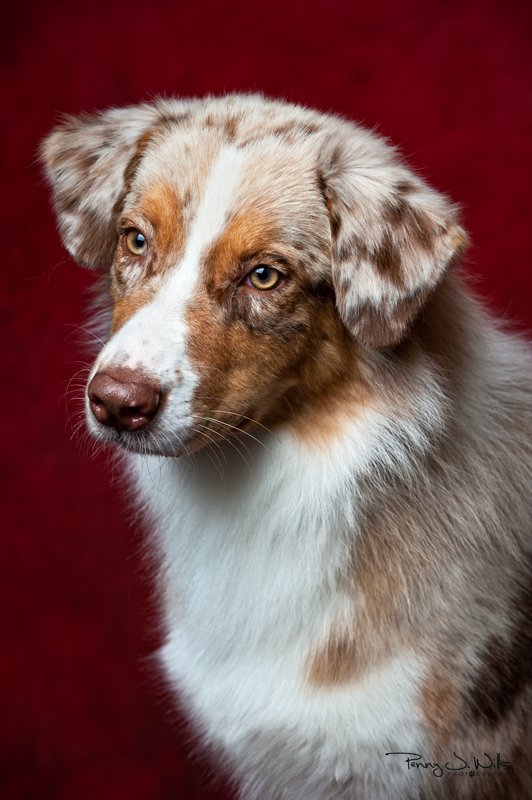
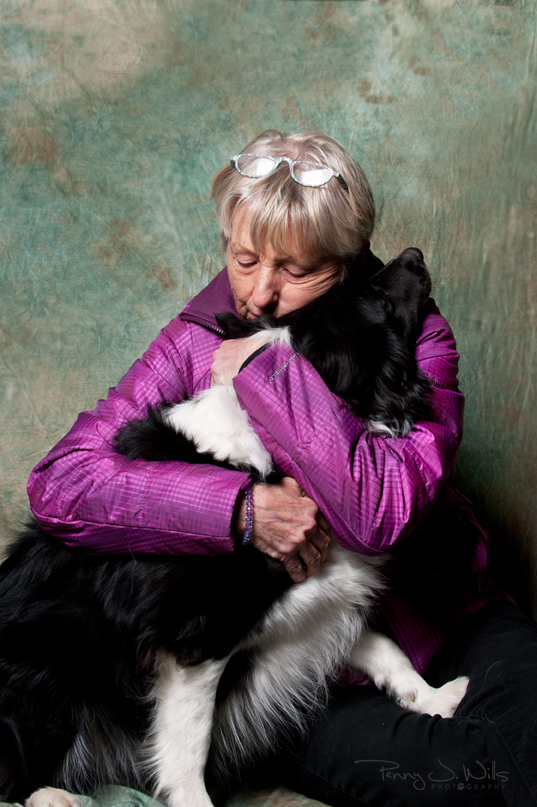
Photograph by Penny J. Wills
Q. What is your favorite kind of Pet photography, and what is it about that type that interests you so much?
My favorite type of Pet Photography is Studio work. I love formal portraits. I could spend hours in the studio shooting. There is something about portraits that speak to me. I lose all track of time in the studio. If I have a bad day at work, my husband can always tell. I grab the camera and head to the studio. I’ll emerge hours later, quite refreshed.
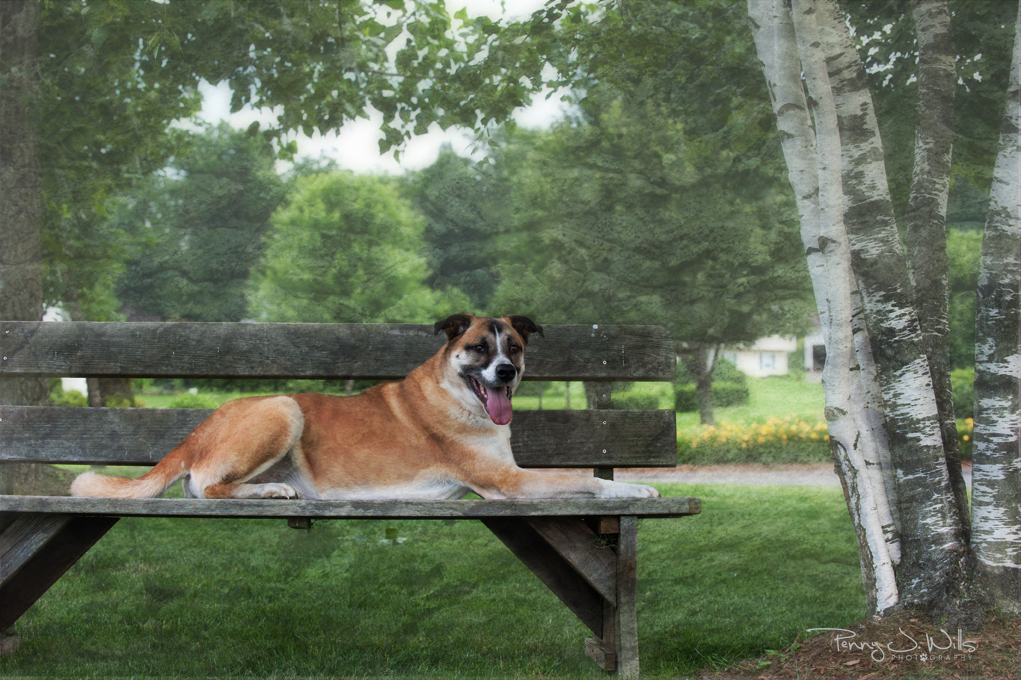
Photograph by Penny J. Wills
Q. Describe to us your first real “Event” that you shot professionally; where were you, what you were you feeling, what was it like etc.? The first real Event I shot was this past January. It was an Australian Shepherd Regional Agility Specialty. This was my first break into shooting events. I also brought my portable studio and did formal portraits in between the runs when the new courses were being built. I had a lot of fun, but those were very, very tiring days. I was not expecting to be at the trial site at 6:30 in the morning, and not leave until almost 10 pm that evening, just to return at 6 a.m. the next day. I shot over 2000 photos in 3 days. In comparison now, that was being very frugal. That agility trial got my foot in the door to shoot my first Conformation show (think Westminster Dog show) this past June and will be shooting in October.
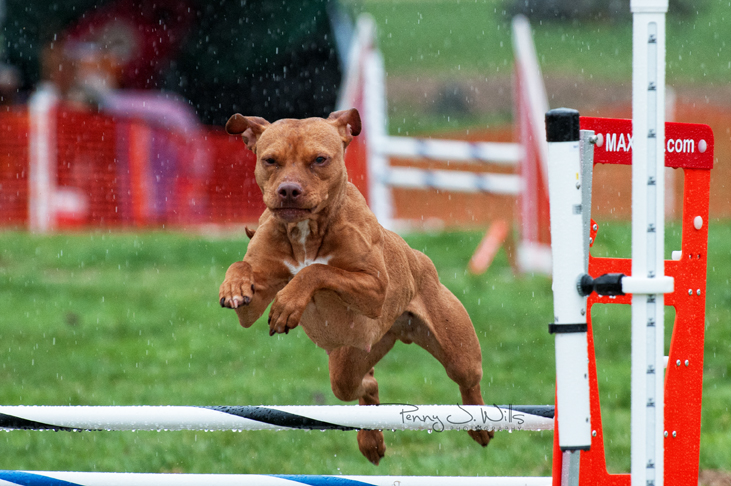
Photograph by Penny J. Wills
Q. What is the most exciting thing about photographing Dogs in action?
The answer is the question. The most exciting thing about shooting events is capturing the dogs in action. The dogs’ expressions, their body language, they are just like people, you can empathize with them. The thrill of victory or, the agony of a dropped bar. Most of my action shots are Agility trials, so there is plenty of opportunity for great action shots. The best shots are the emotional shots. A novice dog’s first trial, a high award received, a dog’s last run before being retired, those are all events that have high emotional appeal to their owners. Those runs you go out of your way to make sure you capture some of the emotion in the photo. Usually somebody from the host club will give me a hint that something important is going to happen so I can prepare
Photograph by Penny J. Wills
Q. When you started what was your biggest dream? And have you accomplished that?
My biggest dream is to have my own studio. I’m still working on that one! I have not decided where we will be and where my studio will be located. We are considering moving from Ct to Arizona, so, we’ll see.
Q. Who’s your favorite Pet photographer, and who do you draw inspiration from?
That is a tough question. I have so many. I would have to say I’m honored to call some of the most famous pet photographers in the country (except Helmi, she’s world famous) as friends. Helmi Flick, Preston Smith, Julie Poole, Jill Flynn, Jim Garvie, just to name a few. They are all wonderful people, down to earth, answer my many questions, proof read contracts with me, and are fun to just chat with.
Q. What is it that you like the most about shooting Pets aside from other types of photography?
I love pets, all pets. In a Pet Photography workshop that I gave recently, the number one tip I gave was Patience. You must have patience when dealing with animals. I love interacting with the animals. They cannot speak, but if you are patient, they, through their body language, can tell you how they feel. That is not something that everybody gets, even their owners. That required a lot of study on body language, for cats and dogs, my main subjects. Does that cocked ear mean the dog is happy? Or that the cat is upset? There are very subtle tell-tale signs that are in plain sight if you take the time to read them.
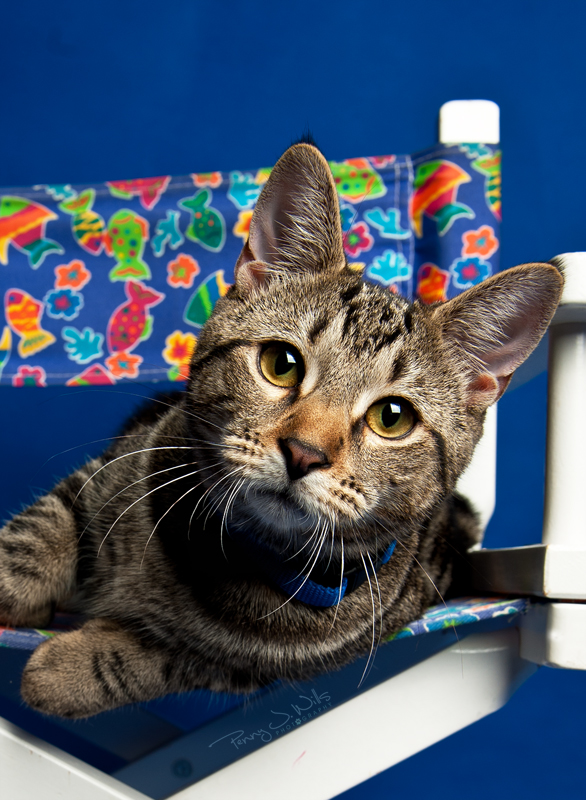
Photograph by Penny J. Wills
Q. What has been your favorite shoot so far?
hmm, I’ll have to think about this one. I would have to say the lady who invited me to her home in Rhode Island to take photos of her dying dog because in her words “You’re the only photographer I trust with my dog.” It was a delightful drive to her house, we could not have asked for better weather, and she was an extremely gracious host. Her dog would not sit or lay still, so we scrapped the “formal” shots and went with the flow. I followed her dog around the yard and captured candid moments instead. Moments such as the cat washing the dog’s face, her lying in the damp grass with dew all over her nose. This goes back to one of the previous questions, about shooting the action shots. It’s not the action or the lack of that makes a good photo great, it’s the emotion behind the shot. I believe that to be true of all great photographs, not just pets.
Photograph by Penny J. WillsPhotograph by Penny J. Wills
Q. What’s on the horizon for Penny Wills?
That is a good question. I am broadening my horizons and moving into the category of Fine Art. I was recently approached to provide photos for a local doctor’s office. Reception room, waiting area, two exam rooms and offices. This is a huge jump for me, and one I am looking forward to. This will be a public gallery of my work and I’m very excited.
I plan on keeping the pet photography business going, but in addition to action/event, and portraits, I will be offering Fine Art Portraits and Prints.
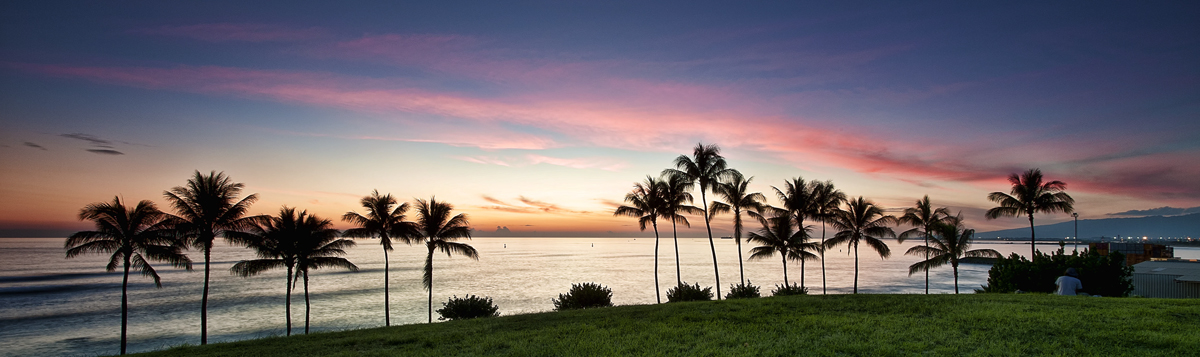
If you’ve ever tried to capture a photograph of a beautiful sunset you know just how challenging it can be. Time is the enemy. The light and color fade as the shadows deepen with the setting sun, and you only have minutes to shoot that precise moment when all the elements come together. Photographer and lifelong Hawaii resident Todd Maeda captures those magic moments time after time, and shares with us how he did it on this beautiful tropical evening in Oahu.
Photo by Todd Maeda
Q. Tell us about this location.
Todd: This is at Kaka’ako Waterfront Park, in Honolulu, Hawaii, a State park that was reclaimed from the old town dump. It is situated near the entrance of Honolulu Harbor, so there is a stream of boats and ships going in and out. It’s part of the game; ship, barge, wave, sunset… A “go to”spot for solid sunsets while keeping your feet dry; most of my mid-week forays are right after work, so I am usually still in work attire.
This particular spot is on a hill closest to the harbor. At the bottom of the hill, about the center of this image, is a MADD (Mothers Against Drunk Driving) memorial. Rather poignant, and a decent sunset subject/foreground. The vantage point is such that I actually get better views of the water, and usually fewer people. Usually. A problem with this spot, and actually any spot on a hill in the park, is the maintenance crews sometimes turn on the sprinklers in the middle of the sunset. Something to watch for.
Q. What time of day?
Todd: This was that magic moment around 15 minutes after the sun sets, when the colors “pop,” then die quickly. During the “winter” months, so a little after 6PM. Yeah, I know; Hawaii don’t have winters. Hey, we have to wear warm shorts, so there!
Q. How difficult was this to capture?
Todd: This was a fairly basic capture; hardest thing is to be sure you have everything you want in the frame. Since I do a fair amount of post-processing, I try to give myself some latitude in the composition for possible creative cropping, which I did here.
Q. How did you expose for this shot?
Todd: I used a 3-stop Reverse Graduated Neutral Density filter to hold back the light at the horizon, as it was still bright enough to darken the foreground without it. Other than that, Aperture Priority on Matrix Metering (Nikon’s equivalent to Canon’s Evaluative mode), because the light is moving so quickly. I usually input -0.7EV, because I prefer that look. This one ended up at ISO200, f/22 for 1/4 second; you can see a bit of the effect in the trees and water.
Q. What camera and lens did you use for this shot?
Todd: The Nikon D700 is my standard landscape body. I had the Nikkor 17-35mm/2.8D mounted for this shot, as it is the widest reasonable lens with filter threads I have; I did know I would be using filters for this particular day, based on the sky. Had that mounted on a Really Right Stuff BH-55 ballhead on a Gitzo GT1531 tripod, with the Rapid-Rise column at the lowest position.
You can see more of Todd’s photographic work here:
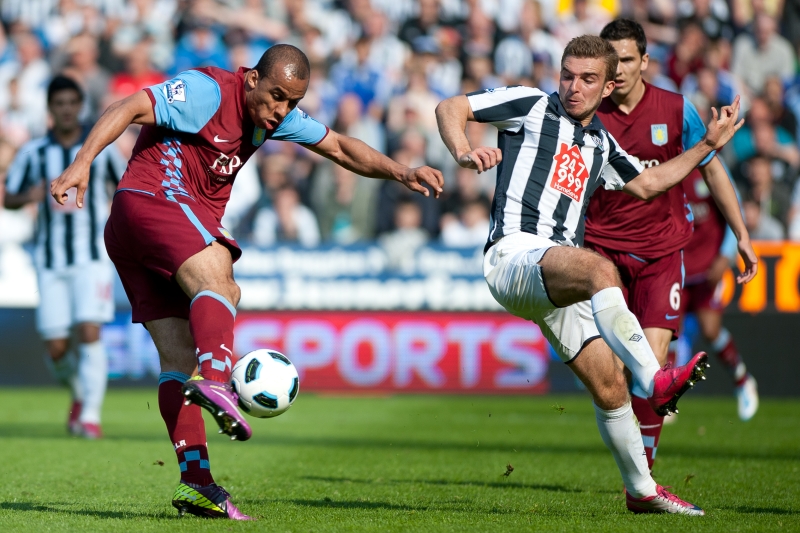
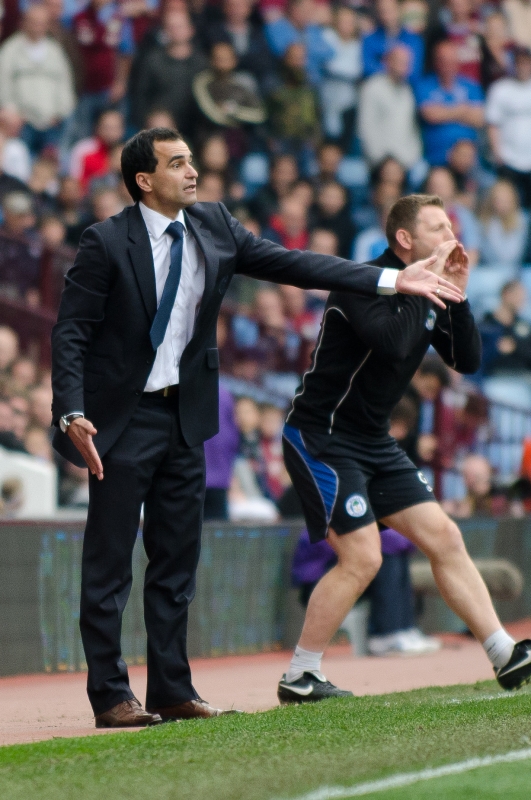
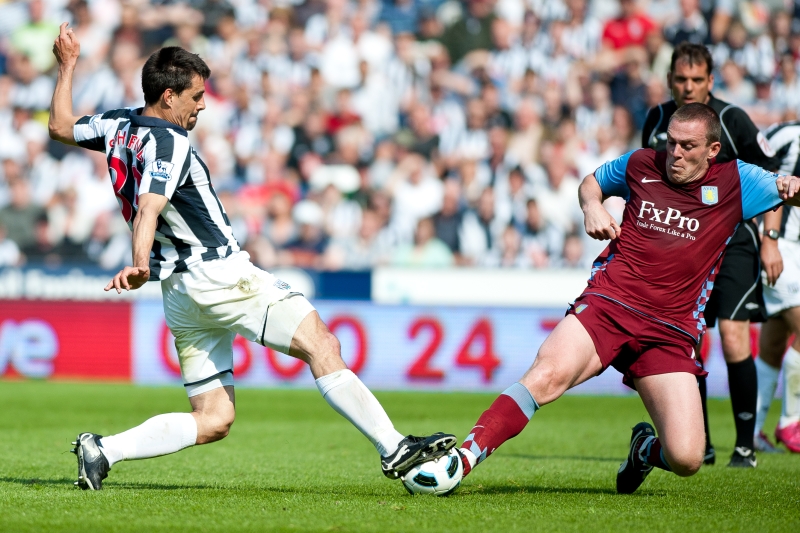
Meet Lee Hawkins a UK photographer specializing in Football/Soccer Sports Photography.
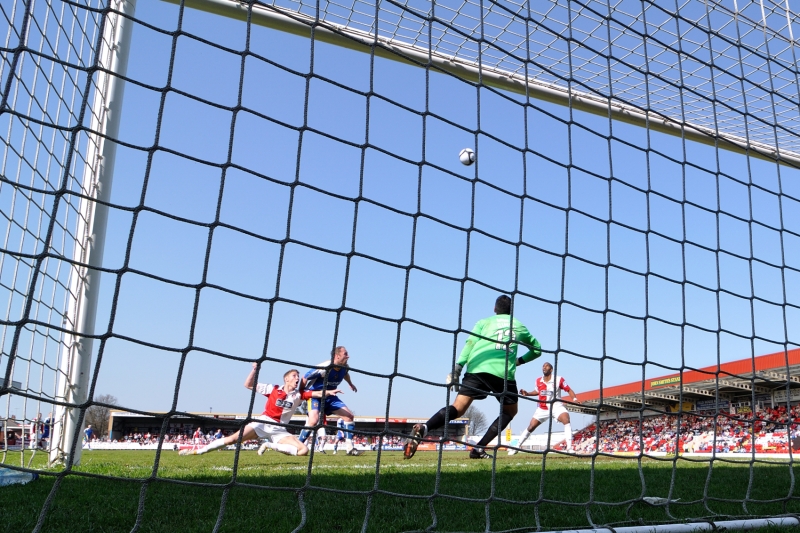
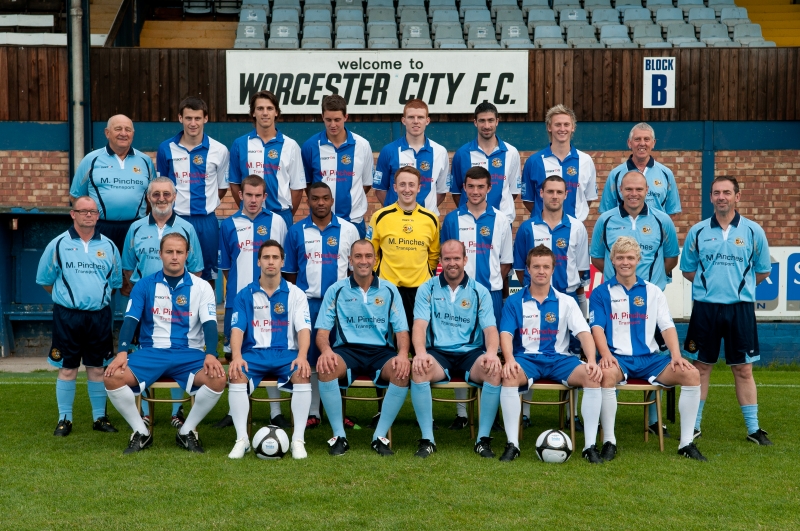
He is the Official Photographer for the Blue Square North team, Worcester City FC.
In addition Lee’s work can regularly be seen in many UK publications such as local and National newspapers.
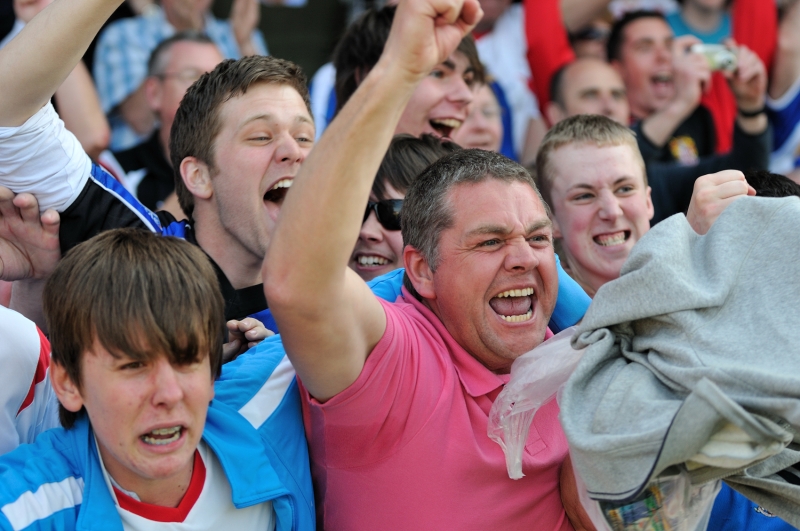
His work is poignant, and raw. You feel as if you’re down on the field where the action is happening.
His rapid rise into the Professional world of Sports Photography is a testament to his courage, determination, skill, and passion for his craft. He knows the face of adversity and has come back stronger. His story and body of work are inspiring.
Q. Give us a bit about your background, a mini biography where you were born or grew up.
[Lee] I was born near London in 1970 but moved away to a small town called Tewkesbury at 1-year-old. Tewkesbury is a lovely town in the picturesque Gloucestershire. I moved to Worcester in 1993, where I now live with my wife Joanne and children Thomas and Lauren. After leaving School in 1987 I went straight into work as a designer in a drawing office but continued at college for 5-years getting my ONC / HNC in Construction Studies through part-time study. This served me well in my job and allowed me to progress nicely before starting my own Design Consultancy in 1995. I eventually employed about 16 people and sold the business to a Swedish company in 2003, at which time I worked for a Canadian Company operating their UK Engineering office. I also enrolled to Bath University and studied for my MSc Façade engineering degree. Photography always ran alongside my main career as a Facade Engineer, although always as a hobby.
Q. How would you describe yourself as a photographer, and what sparked your interest in photography?
[Lee] In 2005 I was diagnosed with Crohn’s Disease and became very ill forcing me to re-evaluate my whole life. I was in hospital for 9-months between June 2006 and Sept 2008 and was unable to go out or function properly. On several occasions I was very close to dying, but pulled through after some quite extreme surgeries. September 2008 was the turning point and since then I have gone from strength to strength. Photography for me was a big part of the recovery process and has enabled me to get out, build my strength and engage in things I enjoyed. It was a year before I had the physical ability to pursue sports photography.
Q. How did you get your start in the Sports field of photography?
[Lee] I have always been a believer that in life we have to work hard and create opportunities for ourselves. Photography is no exception and I contacted all the local newspapers and asked if they needed help with covering local events and teams. The Worcester Standard did, and asked me to cover a Worcester City FC game. This level of football (The Football Conference) is a popular training ground for sports photographers so it was a big opportunity. I did it and the paper asked me to continue. Within several months I was the Club’s Official Photographer, had full accreditation with the league and supplied a few more local papers. It snowballed very quickly because it all came naturally to me. I know the game and I know cameras. A perfect combination.
Q. What is your favorite kind of sports photography, and what is it about that sport that interests you so much?
[Lee] Football (Soccer) has always been my passion where photography is concerned. As a sport it offers so many opportunities for great shots. Tackles, Goals, Celebrations, and Fan Passion. I have never come away from a game without a really good shot.
Q. Describe to us the first game you shot as a “Sports Professional Photographer” what was it like, what was the match, what you were feeling, who you were with, etc?
[Lee] The first game for the Agency as a paid semi-professional sports photographer was in League 2 (the 4th tier of English Football). It was between Hereford United and Port Vale, both clubs with long histories. It was the first time I flashed my League Accreditation ID Card and it was such a buzz. I think the adrenalin kicked in for the whole day
Q. Who’s your favorite Sports photographer, and who do you draw inspiration from?
[Lee] Ian Hodgson is probably the most published football photographer in the UK and I see his work after most big games in the national newspapers. Unknowingly, I sat next to him twice at games and only realised afterwards who he was when I noticed his name on his laptop pitch side.
Q. When you started what was your biggest dream? And have you accomplished that?
[Lee] When I started, my dream, like most other football photographers was to shoot in the English Premier League. It’s the pinnacle of the football photography and the most demanding too. It’s a very difficult league to get into and the Football Association are very strict on who can shoot in the league and have high insurance requirements. There are two ways to get in; one is to get employed by an Agency or by you (selling 30 shots to National newspapers in the year prior to the application). My First Premier League game was 13-months after my very first football shoot. Most people take years, I took 13-months.
Q. What has been your favorite shoot so far?
[Lee] My favourite shoot was my first Premier League game. Aston Villa v Blackpool played at night with 44,000 people in the crowd. It was the pivotal ‘I have made it’ moment. It was just brilliant and proud moment for me. I had come a very long way since lying in hospital beds, unable to eat, walk or function.
Q. In your opinion what are the 5 tools a photographer must always have in his/her photography kit?
[Lee] Based on Sports Photography:
A fast long lens (minimum 300mm f2.8).
Two to Three camera bodies.
A good seat / stall
Wet Weather clothing
A good quality Mono-pod
Q. What’s on the horizon for Lee Hawkins?
[Lee]Next season I intend to renew my contract with the Agency so I get the accreditation to the Premier League and do one game a week for them. I will also look to support my local team in the 6th tier of English Football by acting as their Official Photographer. That’s my plan but I have to remain versatile so never say never.
To see more of Lee’s photography work visit his website at:
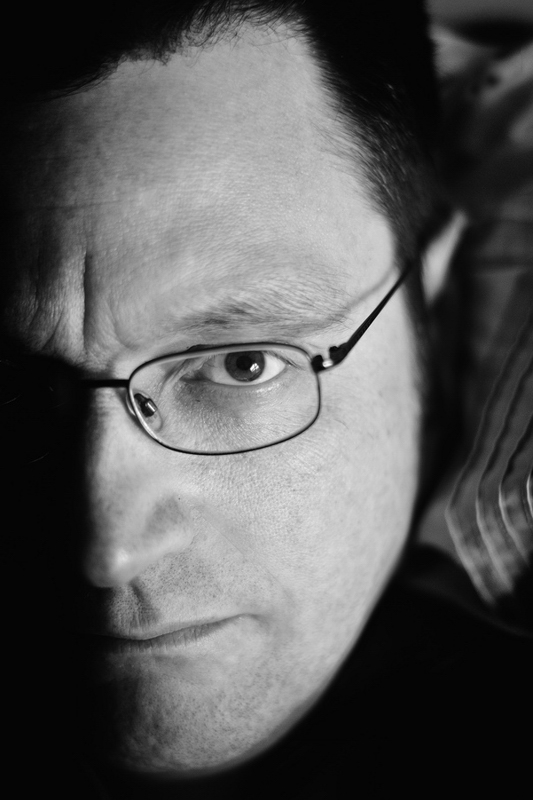
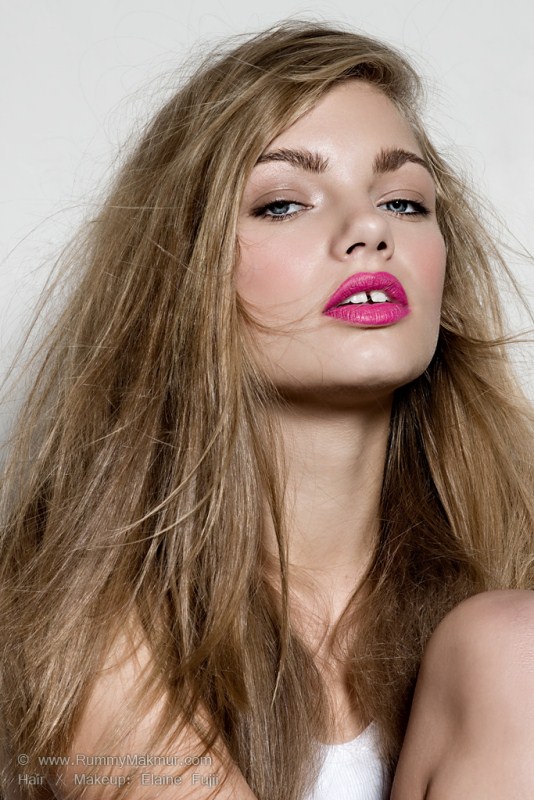
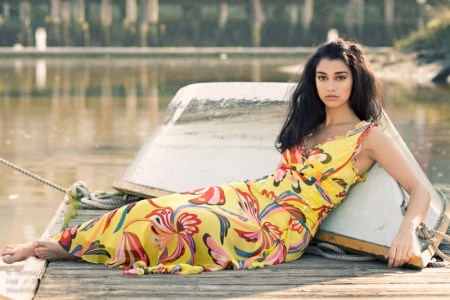
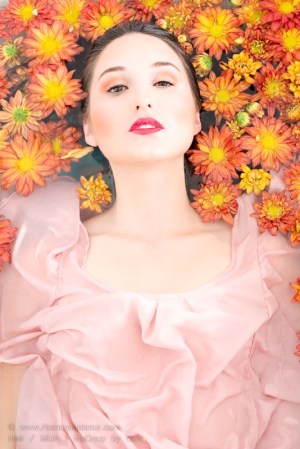
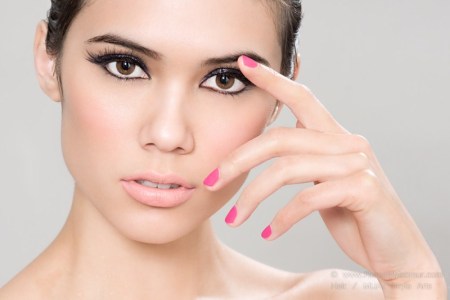
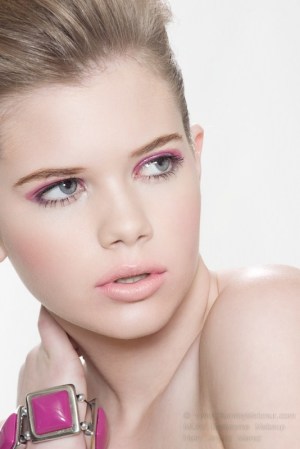
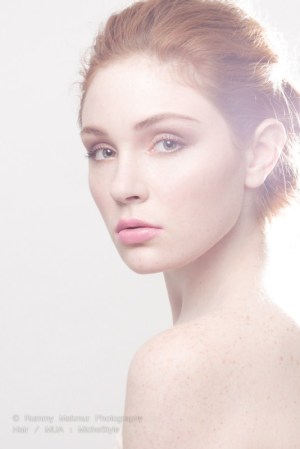
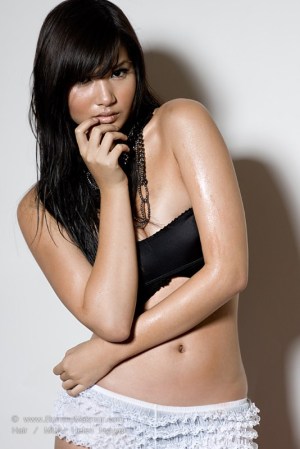
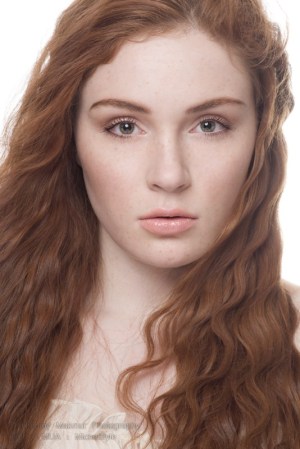
Meet Rummy Makmur, a Beauty and Fashion photographer, and good friend based in Santa Clara, CA., a little hamlet in the middle of Silicon Valley.
I met Rummy (pronounced roomy), nearly 3 yrs ago at a Scott Kelby World Wide Photo Walk.
Rummy is a prolific and passionate photographer, balancing both a career in the electronics industry, and his passion for photography.
Rummy says he’s still working to define and refine his style, but whether he’s shooting edgy, new age, Gothic, or romantic scenes he leaves his mark with his innate sense of style, beauty, and creativity.
CircadianReflections- Give us a little bit about your background, where you were bornor, grew up, and when you came to this country?
[Rummy]- I was born and raised in North Sumatra in Indonesia. I came here to the States to attend university and studied chemical engineering.
CircadianReflections- How would you describe yourself as a photographer and describe for us your signature look?
[Rummy] My main interest is shooting beauty and fashion, perhaps more on beauty. I feel beauty is simple to shoot but yet at the same time is challenging. When it’s done right, it is very satisfying. I don’t think I have a signature look even though some people who look at my work may feel I have one. I am still experimenting and trying to define and refine my style.
CircadianReflections- Describe to us how all this began for you?
[Rummy] To be honest, before I bought my first DSLR, I had no interest in photography. I owned a very cheap point and shoot and I rarely used it if any at all. One day, I was in a Cosplay conference and helped my wife take some photos of the Cosplayers. Suffice to say that most of the photos turned out not so good and blurry due to the lighting condition in the conference area. Challenged by that, I started to have more interest in finding out why the images were so bad. I thought having a better camera would give better result so I went and purchased my first DSLR. To my surprise at that time, it did not improve at all. From there, it’s been a journey in learning and finding out about lighting, about color and about what makes a great image. And I am still learning.
CicadianReflections- Describe to us your first “real shoot” where were you, what you were doing, and who you were with?
[Rummy] I tried a lot of genres when I first started: landscape, architecture, street photography, people, etc. I found that shooting portrait was most satisfying and for some reason, I had better eyes for portrait. My first “real shoot” was when I participated in local San Francisco meet up group for Strobist to learn about off camera lighting. That was the first time I shot a model. Having a first shoot was quite exciting and I definitely learned a lot in how to work with a model.
CircadianReflections- What has been your most rewarding achievement as a portrait/beauty artist?
[Rummy] I think that is still to come! Although, I find all my projects rewarding… my goal is to continue to make my shoots more dynamic, and compelling.
CircadianReflections- When you first started what was your biggest dream? And have you accomplished that?
[Rummy] I actually didn’t expect a lot when I first started. I just wanted to take better pictures and learned all things related to photography. My goal right now is to get more publications for beauty and fashion. It’s hard, but I am working on that.
CircadianReflections- Who’s your favorite beauty portrait photographer, and who do you draw inspiration from?
[Rummy] There are a lot of beauty photographers that I admire. I try to browse and look around for inspirations, not just from one photographer. So I don’t have a favorite photographer, per se. However, if I need to name somebody, I really like the work of Gavin O’Neill for beauty and skin work.
CircadianReflections- What is it that you like the most about shooting Portrait/Beauty aside from other types of photography?
[Rummy] As we all know, lighting is important in photography. I feel that I have more control of the lighting when I shoot portrait/ beauty. The lighting will be however I want it to be, even for outdoor. In addition, being able to interact with the subject makes it a bit easier and maybe more interesting.
CircadianReflections- In your opinion what are the tools a photographer must always have in his/her photography kit?
[Rummy] I’d say, from portrait standpoint (I assume these are items that you always carry around):
1. Decent camera (entry level is fine and any brand)
2. good lens
3. Color checker (to adjust white balance and color correction in post)
4. External lighting (minimal should have external flash/ strobes) and its modifiers
Hmm, those are the items that I always carry around.
CircadianReflections- Currently you’re working on your photography business “part-time”, and holding down a regular 8-to-5 job in the Electronics Industry. Do you have aspirations of turning your Photography work into a “full-time” business?
[Rummy] No, not at all. My current goal is not necessarily making this into a business. My dream is to shoot for beauty ad campaigns some day.
CircadianReflections- What’s on the horizon for Rummy Makmur?
[Rummy] I’m hoping for more publications this year.
CircadianReflections- What advice would you give a new photographer who would like to start a business as a Portrait/Beauty Photographer?
[Rummy] I won’t give any advice from business standpoint as I am still learning. But, for any new photographers who are just starting shooting portrait, my advice is to keep shooting and shoot often. That’s the only way to learn.

 Circadianreflections Blog
You must be logged in to post a comment.