Harbinger of Spring

Copyright © 2016 Deborah M. Zajac. ALL RIGHTS RESERVED

This has been a fantastic birding season so far!  The Vermilion Flycatcher,  the Red-tailed Hawk with its prey, the elusive Loggerhead Shrike, the Bald Head Eagle I didn’t get a photo of, the pair of Ring necked Pheasants, and the sweet Hermit Thrush on my fence all were amazing, and exciting sightings, but in Winter is there anything better than a Harbinger of Spring?

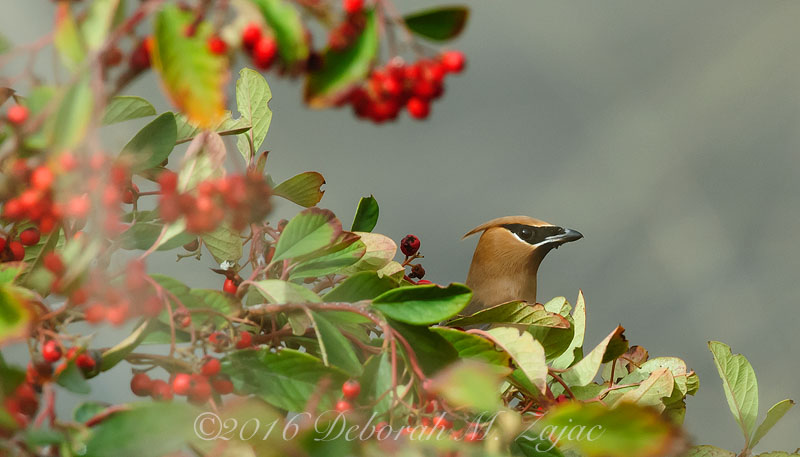
I heard Cedar Waxwings were showing up, a sure sign that Spring is on the way!  I’ve had Robins in the Ginko tree out in the front yard, and in back yard lately so, I’ve been looking for the Waxwings because, they usually arrive with the Robins, and last year there was a flock of Waxwings in the Ginko trees a few houses away from me. That was a first for me.  You can read about that here

Last week-end my birding friend and I stayed local and found some!
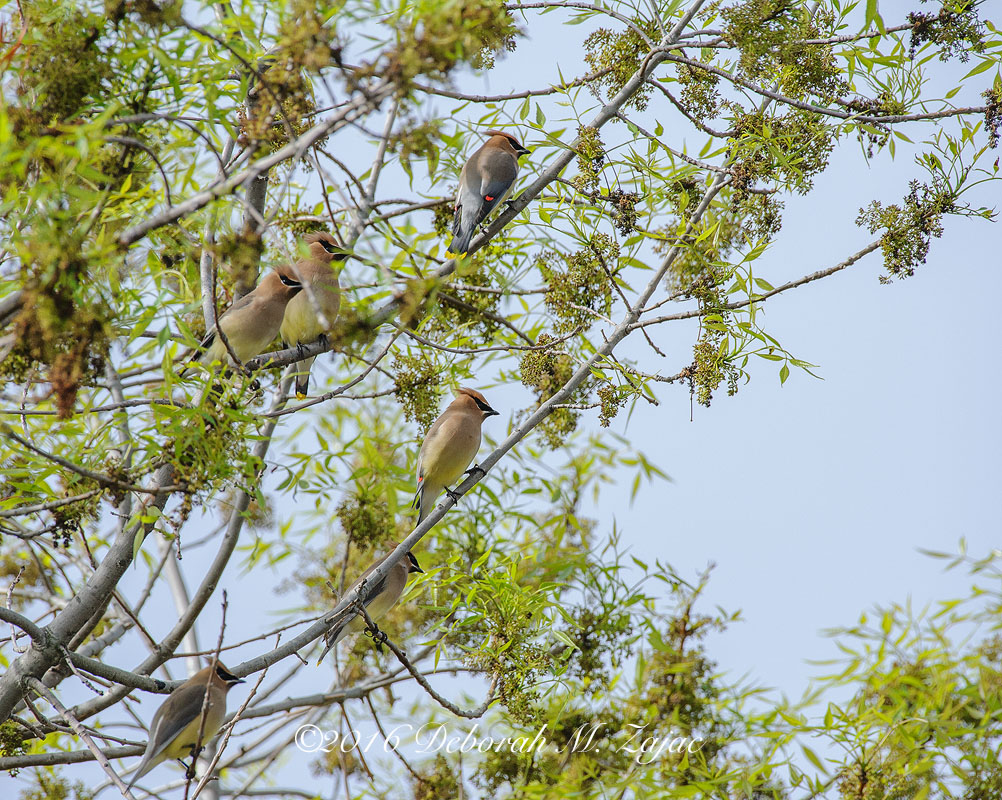
Cedar Waxwings

Soon they were taking turns flying down to the bush with  luscious, ripe red berries   beneath this tree.
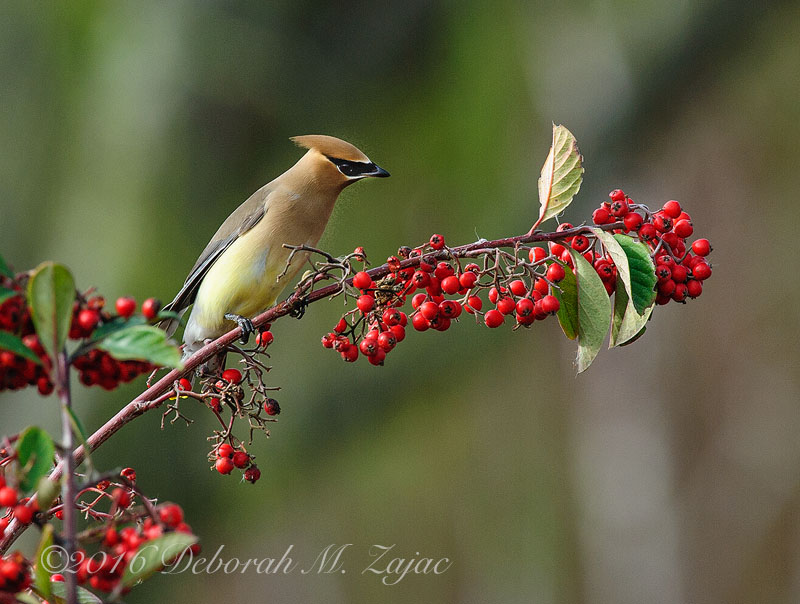
Cdear Waxwing Feast

… and one was shy,

Cedar Waxwing

I spent some time photographing the Robins that also were there to feed on the same berries, but I’ll save those images for another post.

I’m off to Yosemite National Park today to photograph something other than birds, and my son and his girl-friend are arriving early Saturday morning for the week-end. It promises to be a stellar week-end!

I’ll catch up with all your posts when I return.  I hope you all have a wonderful week-end!

Nikon D700| Nikkor 200-500mm VR| Lexar Professional Digital Film| PS CC 2015

More to come…
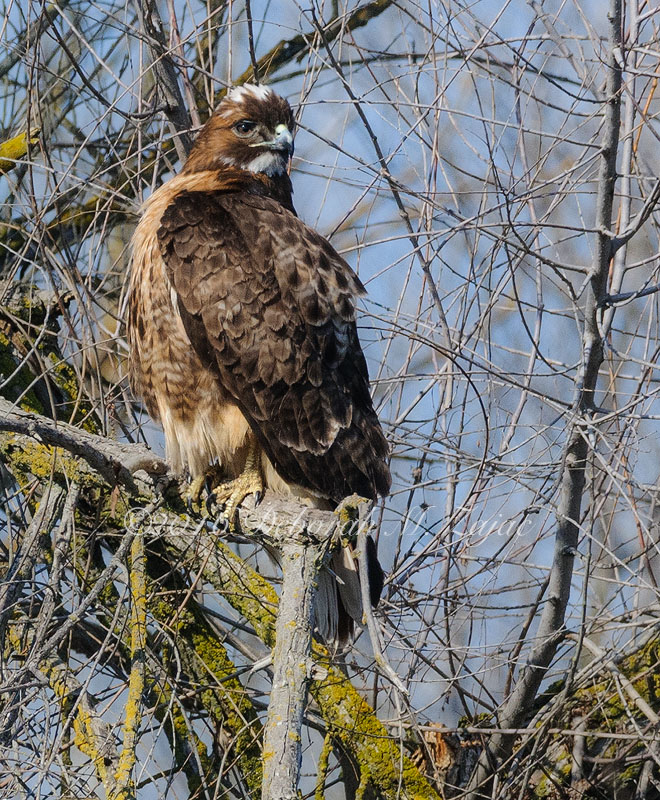


Red-tailed Hawk 2

Copyright ©2016 Deborah M. Zajac. ALL RIGHTS RESERVED

This Red-tail is from a couple of weeks back.  My friend and I were birding in San Luis National Wildlife Refuge and nearing the end of one of the auto-routes when we spotted it high in the tree.  I was driving and didn’t think I’d get a decent photograph of it because it was on the passenger side of the car/road, and climbing over the console and gear box wasn’t something I wanted to do.

Red-tail Hawk

We had the route nearly to ourselves so I thought I’d pull the car caddy-whompus across the road and shoot leaning into the passenger seat.  I was able to get several images of it before another car came up and I had to move.

It is striking isn’t it with its white cap and that gaze?

Nikon D300s| Nikkor 200-500mm VR| Lexar Digital Film| PS CC 2015

Loggerhead Shrike

Copyright ©2016 Deborah M. Zajac, ALL RIGHTS RESERVED

I have only seen this bird a handful of times, and managed to get an image even less.

This Loggerhead Shrike was on the fence bordering the Tule Elk Paddock as you enter the Refuge. This one was pretty accommodating and let me take its photo for a couple of minutes.

Loggerhead Shrike

Coming around to the end of the auto-route in the Refuge was this Loggerhead Shrike perched on a dried plant in the Tule Elk paddock. It was pretty far away and behind a wire fence. This is cropped in a bit. I wondered if it wasn’t the same Shrike I’d seen when I first entered the Refuge? I’ll never know but am thrilled to have seen it!

Loggerhead Shrike

This was an exciting start to my day of birding.

Nikon D300s| Nikon 200-500mm VR| Lexar Digital Film| PS CC 2016

More to come…


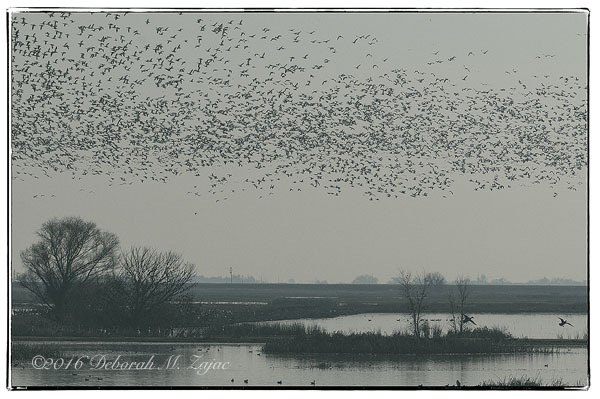
Monochrome Madness 2 44/52 Late Afternoon Merced Marsh

Copyright ©2016 Deborah M. Zajac. ALL RIGHTS RESERVED

MM2 Late Afternoon Merced Marsh_3000593

My friend Dali and I went out to Merced National Wildlife Refuge last week-end and found oh, so many Snow Geese, and some Lesser Sandhill Cranes along with the usual suspects.  We were photographing some of the Snow Geese and other birds in the nearest marsh when all of the sudden the noise level escalated and the birds took to the air!

The squawking, screeching, quacking, and honking was so loud you couldn’t hear yourself speak!  It was pretty neat to see and hear. We’re not sure but, we think a Hawk, or Coyote spooked them.

This is my entry to Leanne Cole’s Monochrome Madness 2. To check out all the entries this week click here.

Nikon D300s| Nikkor 200-500mm VR| Delkin Devices Digital Film| PS CC 2015 & On1 Photo 10

More to come…

A Western Bluebird at her Toilette

Copyright ©2016 Deborah M. Zajac. ALL RIGHTS RESERVED

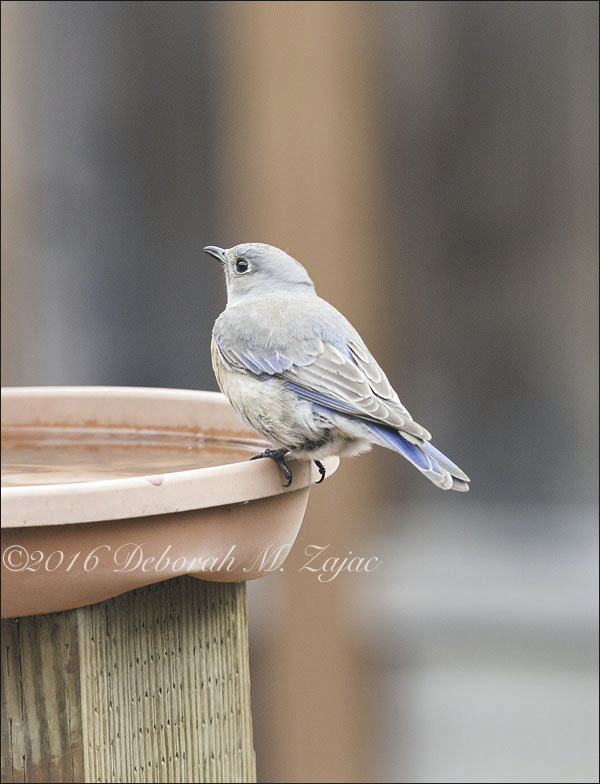
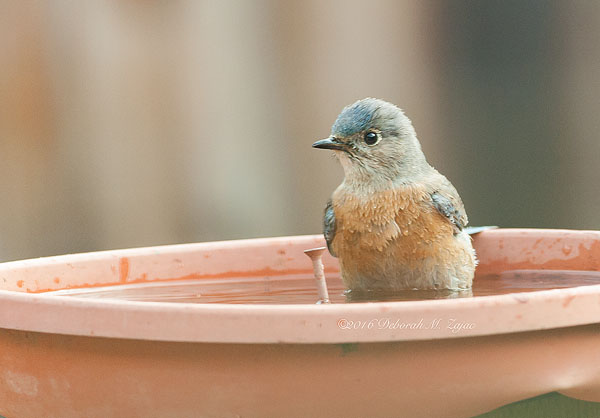
A few weeks ago I had a first time visitor to the little feeder which turned into a bird bath after the rainy week. I was thrilled to see the Western Bluebird in my yard!

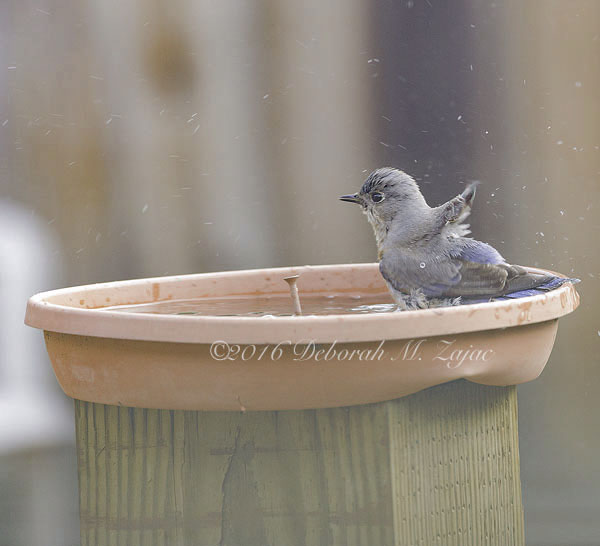
Well, she like the temperature, and atmosphere so she decided to stay and have a bath. Luckily my camera was nearby.

Eyeing up the tub, and making sure the coast is clear overhead…

Bluebird Female

At her toilette

Western Bluebird Female bathing

“Do you mind! I’m bathing here!” That look really got me thinking…”man I’m a voyeur!” 🙂

Do you mind I'm bathing here!

All clean! She had a good shake and flew away after this image was taken. I hope she comes back!

Western Bluebird

I took these images through the window so they’re a bit soft. I used the dehaze feature to help that a bit. It’s a pretty neat feature!


Nikon D300s| Nikkor 300mm f4| Lexar Professional Digital Film| PS CC 2015

Vermilion Flycather-Male

Copyright ©2016 Deborah M. Zajac
ALL RIGHTS RESERVED

I met my friend Dali yesterday morning to do some local birding, but he said he’d read in a bird forum before leaving his house that there was a Vermilion Flycatcher in the area where we were last week-end birding in Sacramento Valley.

“Did I want to go look for that bird?” He asked.

“Oh yeah!” Was my reply. I had one errand to do in the opposite direction before I could leave for the 2.5 hour drive north.
I finished up my errand in record time. Thankfully there is very little traffic early Saturday mornings, then I met Dali again to head north to look for the Vermilion Flycatcher.

Vermilion Flycatcher-Male

We arrived at the spot that the bird had been seen hanging out and found a half dozen birders there observing the bird. We spent 30 minutes observing and photographing it before it flew off into a field and we lost sight of it.

Isn’t he beautiful! My Audubon Bird Field Guide says this bird’s “breeding range is Southeastern California east to western Texas and south to the tropics. Winters in southern part of breeding rage, but wanders as far east as Gulf Coast.”

It’s a resident of Southeast California, southwest Arizona, southern Texas, and Mexico. It Winters along the Gulf of Mexico’s coast.


Vermillion Flycatcher

We’re seeing this Vermilion Flycatcher in Sacramento Valley, California which is well to the north and west of its normal habitat! What a gift!!

This bird is a “lifer” for me! The definition of a “lifer” is, ” A bird species when it is first seen and positively identified by an individual birder. Generally birds must be observed in the wild, and in appropriate conditions to be added to one’s life list. Dead or captive birds are not usually counted as a “lifer”.

Vermilion Flycatcher-Male

“The bright colors of the male have earned it the Mexican name brasita de fuego, “little coal of fire.” ~ Audubon Bird Guide app for ios.   I love that name don’t you?

I also saw a Bald Eagle, and a Juvenile Bald Eagle yesterday. It was a stellar day for birding!

Nikon D300s| Nikkor 200-500mm E ED VR| Lexar Professional Digital Film| PS CC 2015

More to come…

Hermit Thrush…I think!

Copyright ©2016 Deborah M. Zajac
ALL RIGHTS RESERVED

This little bird lives in my neighbors Oleander bush, and I rarely see it. I tried photographing it last year when it flew up to the fence, but the shots were through a window, and I really wanted an image without a window between us.

Hermit Thrush I think

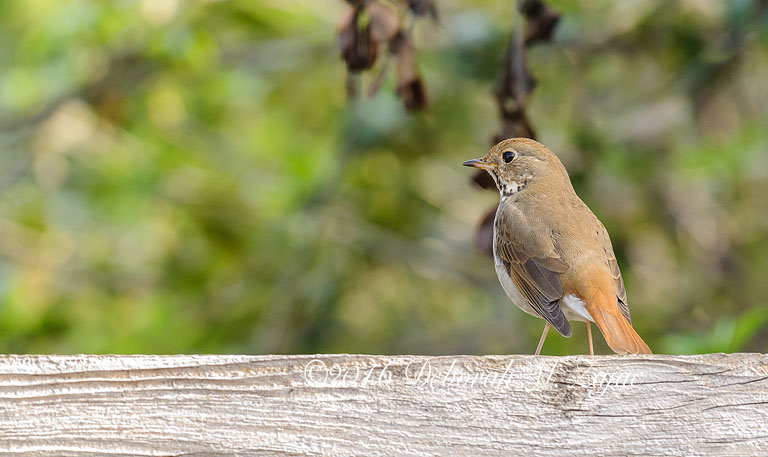
A few days ago while #1 Grandson was in the backyard playing and I was sitting in the middle of the lawn hoping the Chick-a-Dee would stop making such a fuss about us being out there and fly down to the feeder so I could take its picture the Hermit Thrush flew up to the top of the fence to see what all the fuss was about.

What luck! I got two frames of it before it jumped down into the safety of the Oleander.

I thought it was Fox Sparrow, but now that I have decent image to compare with the birds in my bird books I now think this little bird is a Hermit Thrush.

If I’m wrong please let me know!

Nikon D300s| Nikkor 200-500mm | Lexar Professional Digital Film| PS CC 2015

More to come…