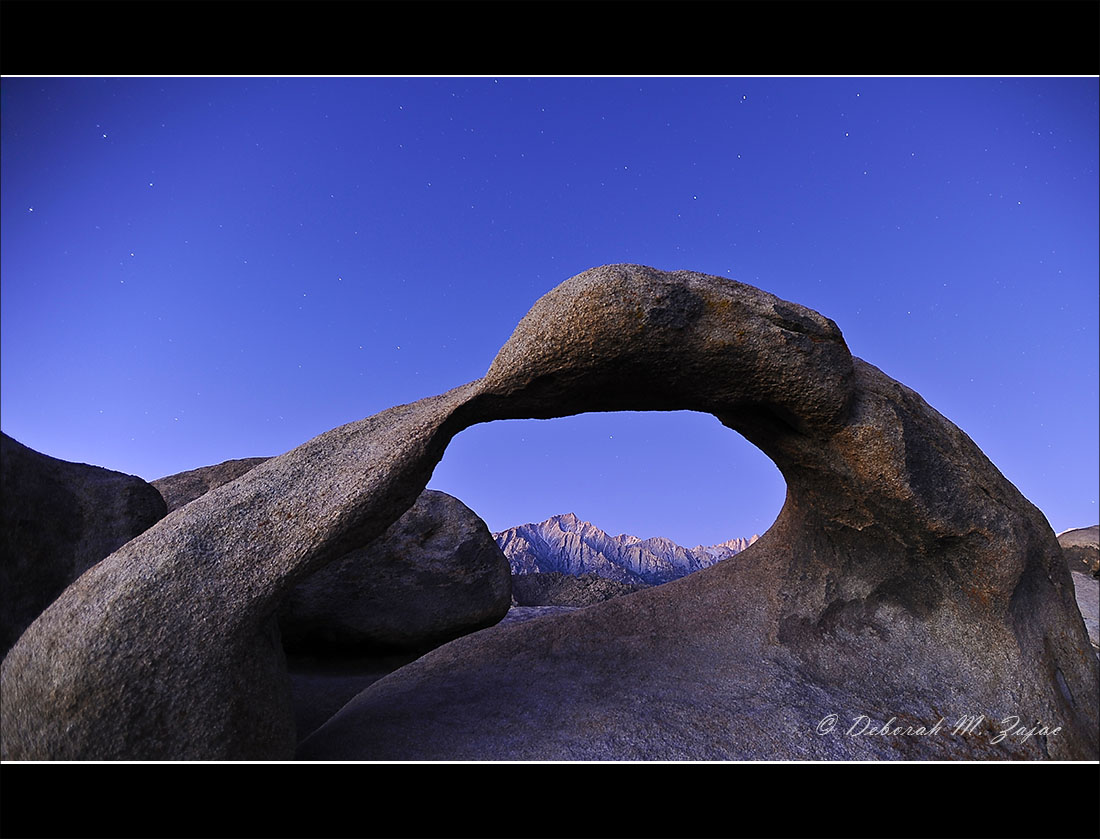
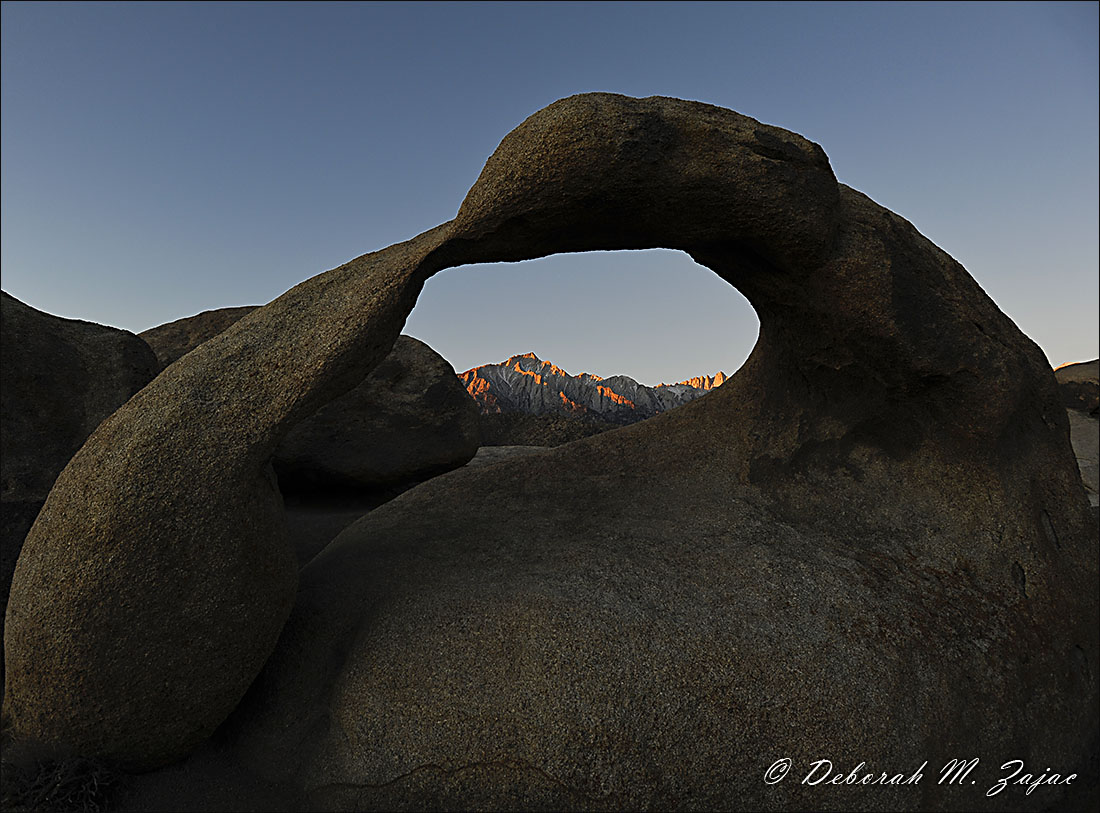
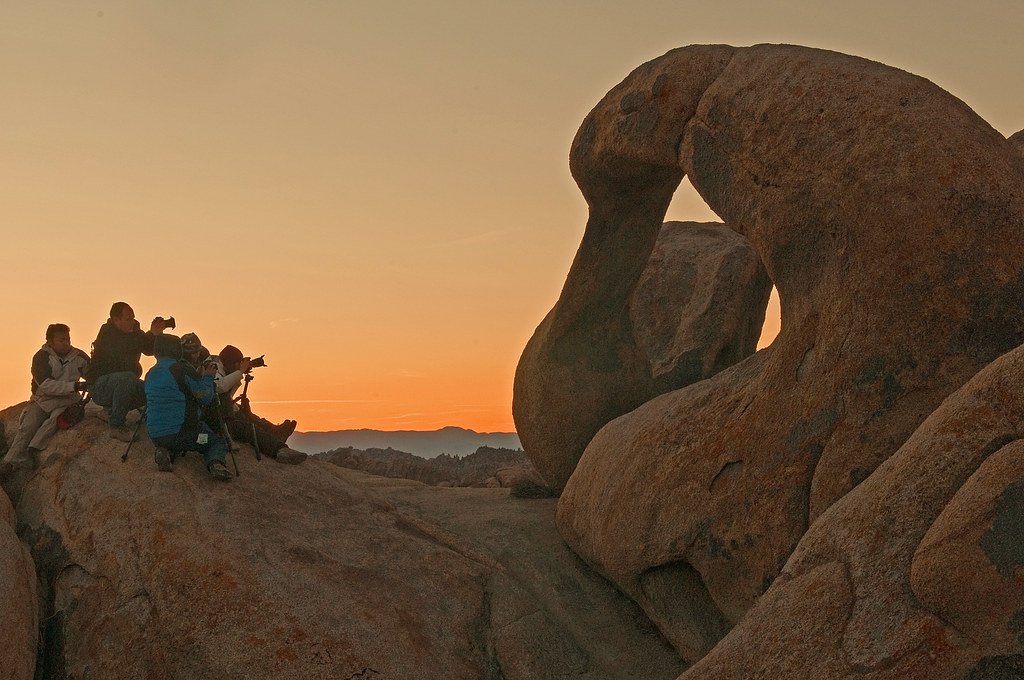
Sometimes you do get an opportunity to redo a shot. On my New Year’s Photography Trip we planned to shoot Mobius Arch in Alabama Hills on our first morning there. The last time I was there to shoot a sunrise I was a bit late and missed the “blue period”. I’ve been wanting a “do over” since. This time we left in plenty of time, and we didn’t stop for coffee. We weren’t the first in the parking lot and we thought as we hiked out to Mobius Arch that there would be someone already there which meant we wouldn’t have the choice spot on the boulder to shoot from.
We were so lucky; no one was there! Behind the Arch is a large boulder most photographers set up on. My 3 friends and I sat huddled together with our tripods and packs waiting for sunrise. I framed up Lone Pine Peak through Mobius Arch with the first lights of day lighting it. I think that the stars in the upper left corner is The Great Square of Pegasus.
As we were shooting and waiting for the light a couple of guys hiked up. It was their car we’d seen in the parking lot when we arrived. They took a wrong turn and got a bit lost before finding the right trail. We made a bit more space so they could shoot too. They were shooting over our heads for the Alpine Glow show. It’s always fun to meet other photographers when out and about. Turns out these two were also from the Bay Area. Small world!
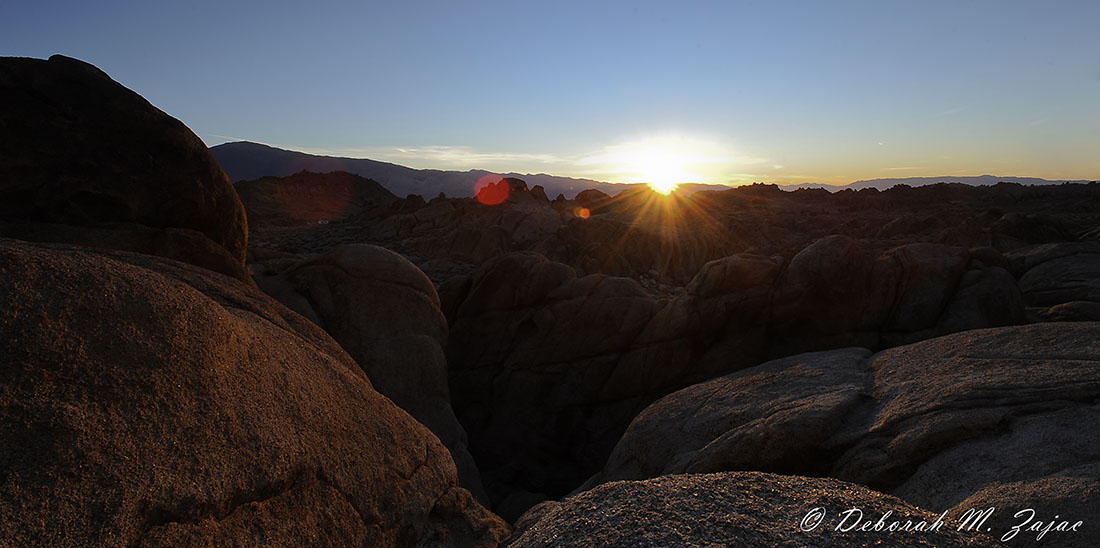
I gave up my spot on the rock to Sasha. Then I turned around and saw the sun crest the White Mountains.
We said farewell to Sasha, and his friend then we drove around the park scouting out other locations to shoot. We found another arch and some neat formations. Famished we left the park and headed into Lone Pine for a hearty breakfast and much-needed coffee.
Nikon D700| Nikkor 17-35| Tripod
UPDATE: On a whim I did a photo search on flickr for other shots taken this morning at Mobius Arch and found this photo by Photosuze! You can’t see too much of me, but I’m behind the guy in blue who is my friend Dali, I’m wearing a white coat, pink hat, and my face is to my camera. My friend Alex is behind me sitting on the edge, and you can just make out my friend T’s hat. You see I wasn’t kidding there isn’t much room on that rock!
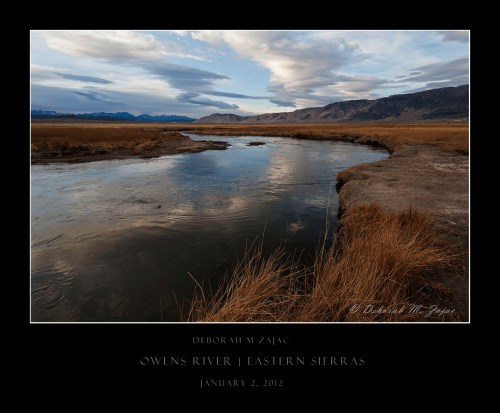
I spent the first few days of 2012 photographing parts of the Eastern Sierras with dear friends. This was our 2nd Annual New Years Photo Trip.
There wasn’t much snow in the high country so we were able to cross Tioga Pass to get to our base camp which was in Bishop, CA. From there we were pretty central to everything we had hoped to photograph. We roamed from Mammoth on the northern end to Alabama Hills in the south.
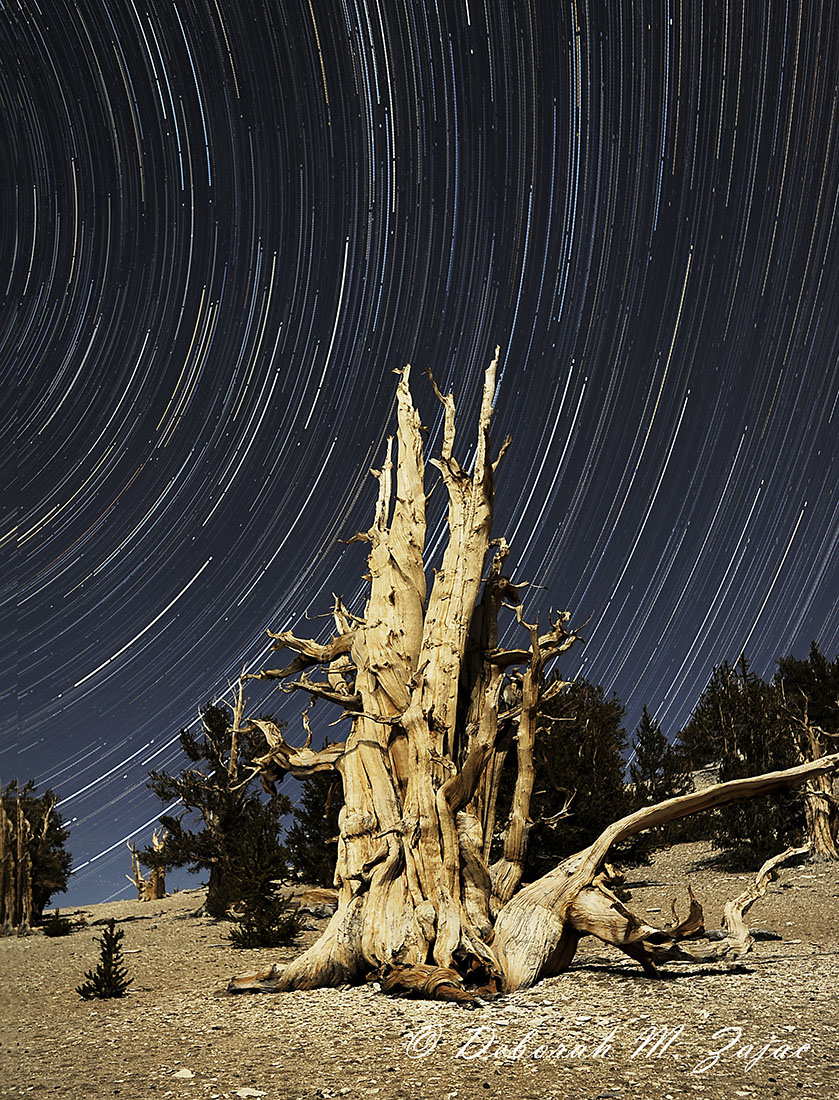
Sunrises, sunsets, and a bit of scouting during the day was on the agenda, and on our first night we had a clear sky so we drove south to Ancient Bristle Pine Cone National Park and shot in the Patriarch Grove. The elevation is between 10,000 and 11,000ft. Because the air is so thin up here these trees grow slowly. This harsh environment makes their wood denser and stronger to resist pests, and disease. The oldest tree is 4600 years old! Their twisted limbs and odd shapes make great subjects and foreground for star trails.
Once you get the focus sharp, your settings selected, and your intervelometer set up you can sit back and watch the sky, or do what we did; go back to the car and turn on the heater. It was 26 degrees outside!
This star trail is made from 82 frames each were 58 second exposures. I cloned out 6 airplanes and 1 shooting star.
The trip was great fun, and I’m looking forward to our 2013 New Years Photo adventure.
Myself, and a photographer friend have gone over to Moss Landing a couple of times in the last few weeks in lieu of going further south to capture an annual solar phenomenon in Big Sur. The fog has rolled in diffusing or blocking the sunlight needed to see it so, we switched to plan B which was to head to Moss Landing for some birding. Many species of ducks and water fowl are migrating from the north and I am near the Pacific Fly-way which is the migration route. Moss Landing is a stop for some of those birds.
Moss Landing, California located north-northeast of Monterey, CA is little fishing village which started out as a wharf in 1895. Today it’s still a small town with a population of 204. Its most notable landmark is the Moss Landing Power Plant. A natural gas plant whose tall smoke stacks are visible from Santa Cruz to the north, and Monterey, to the south on clear days*.
This once busy whaling port is still a busy place with over 600 berths, over 300 fishing boats, and hundreds of pleasure craft in the Marina*. Kayaking, fishing, bird watching, and day trips to the State beach are some of the activities available in Moss Landing.
There are lots of antique vendors, and I can totally recommend the pontoon boat tour of Elkhorn Slough. Yohn Gideon the owner of the boat knew all sorts of interesting facts about the shore birds, otters, the Slough, and he’s funny!
I’ve been able to scratch off one bird from my “I want to photograph those!” list. The female Bufflehead. They are the smallest duck, and so cute! A couple of males flew in over the week, but they were being shy and stayed on the farthest side of the slough so I haven’t got a good photograph of the male yet.
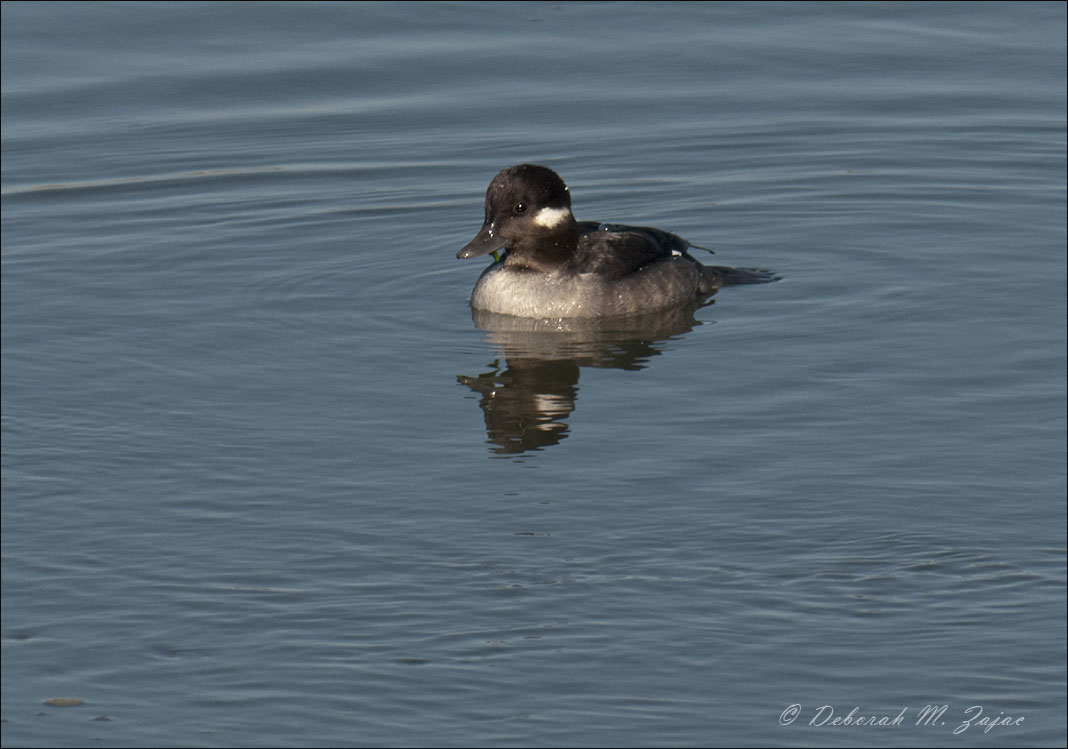
Here’s a Willet in Winter plumage looking very serious.
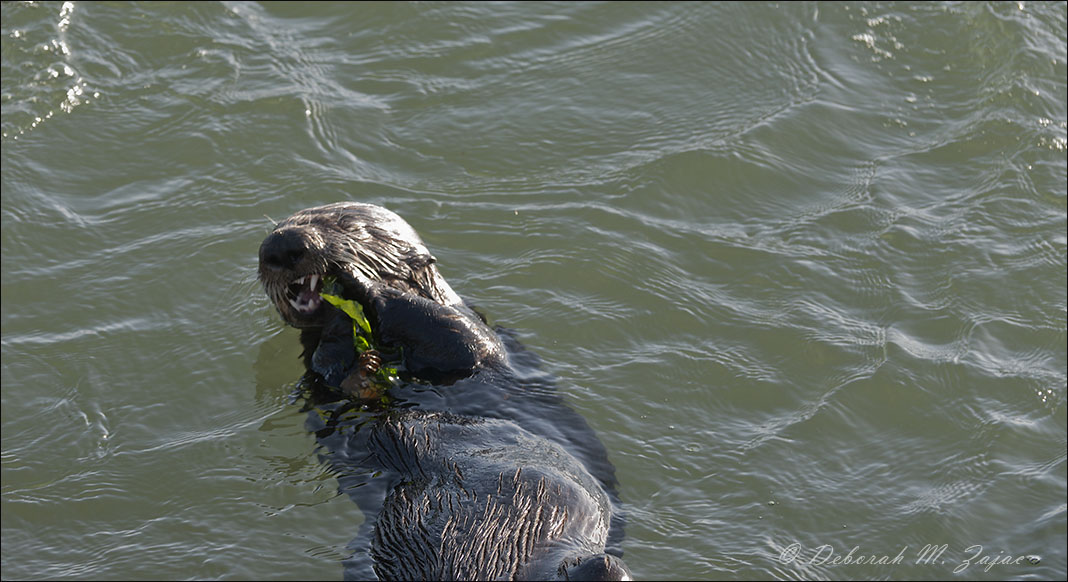
There is quite a large population of Sea Otters in the Slough. They are cutest when they’re dry I think, but they are always entertaining to watch. This one was busy finding and eating food.
I’ve captioned this one, ” I could use a toothpick” Look at the size of that canine!
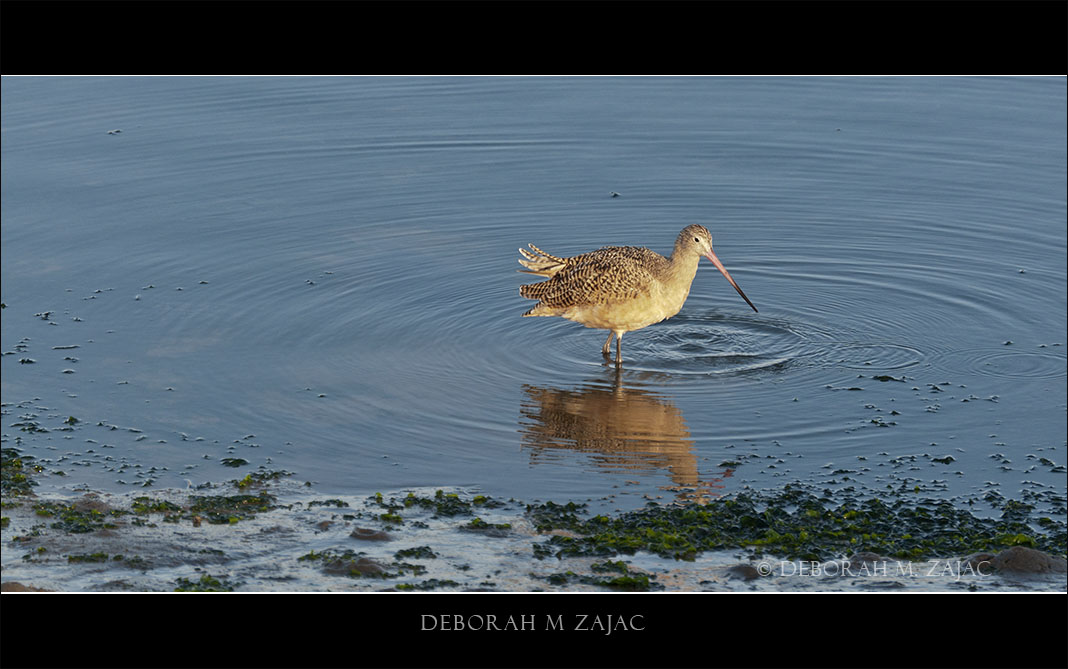
The Marbled Godwit is a winter visitor here, and the afternoon light was lovely on this one.
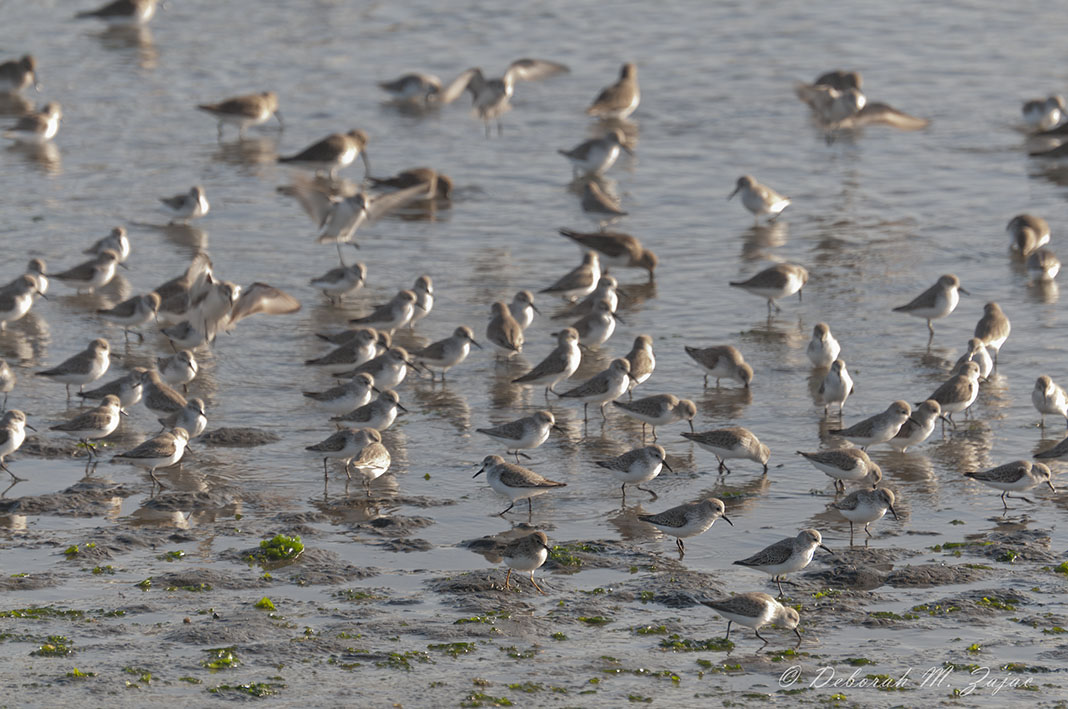
There is a coterie of Spotted Sandpipers. I just learned they lose their spots in the winter.
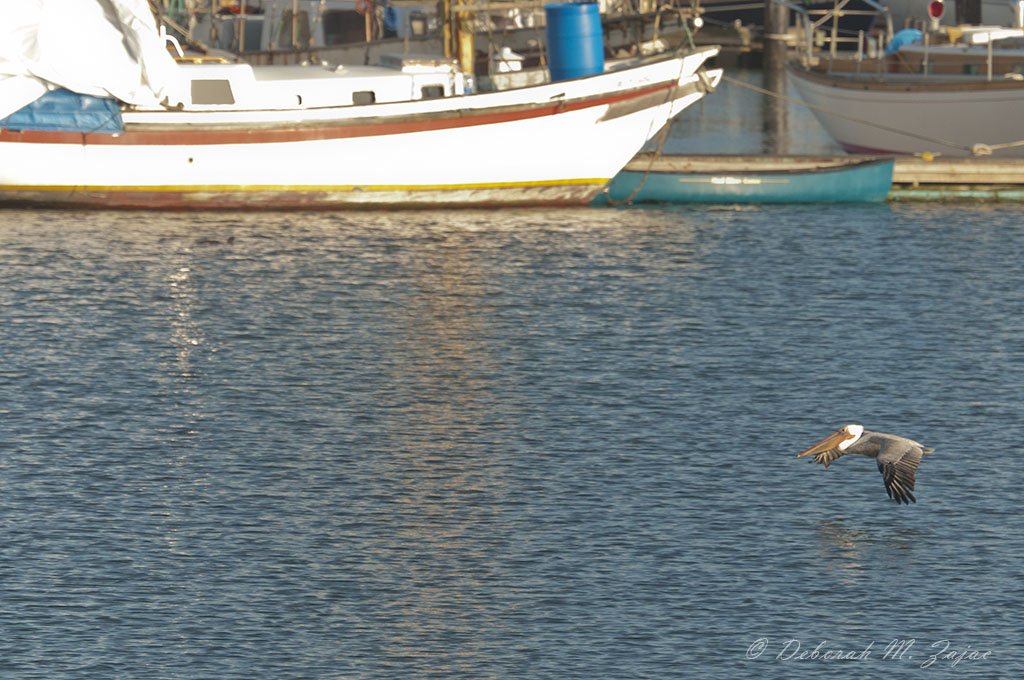
…and the usual characters one finds hanging around the Slough; The Brown Pelican. Here is one now flying low, under the radar.
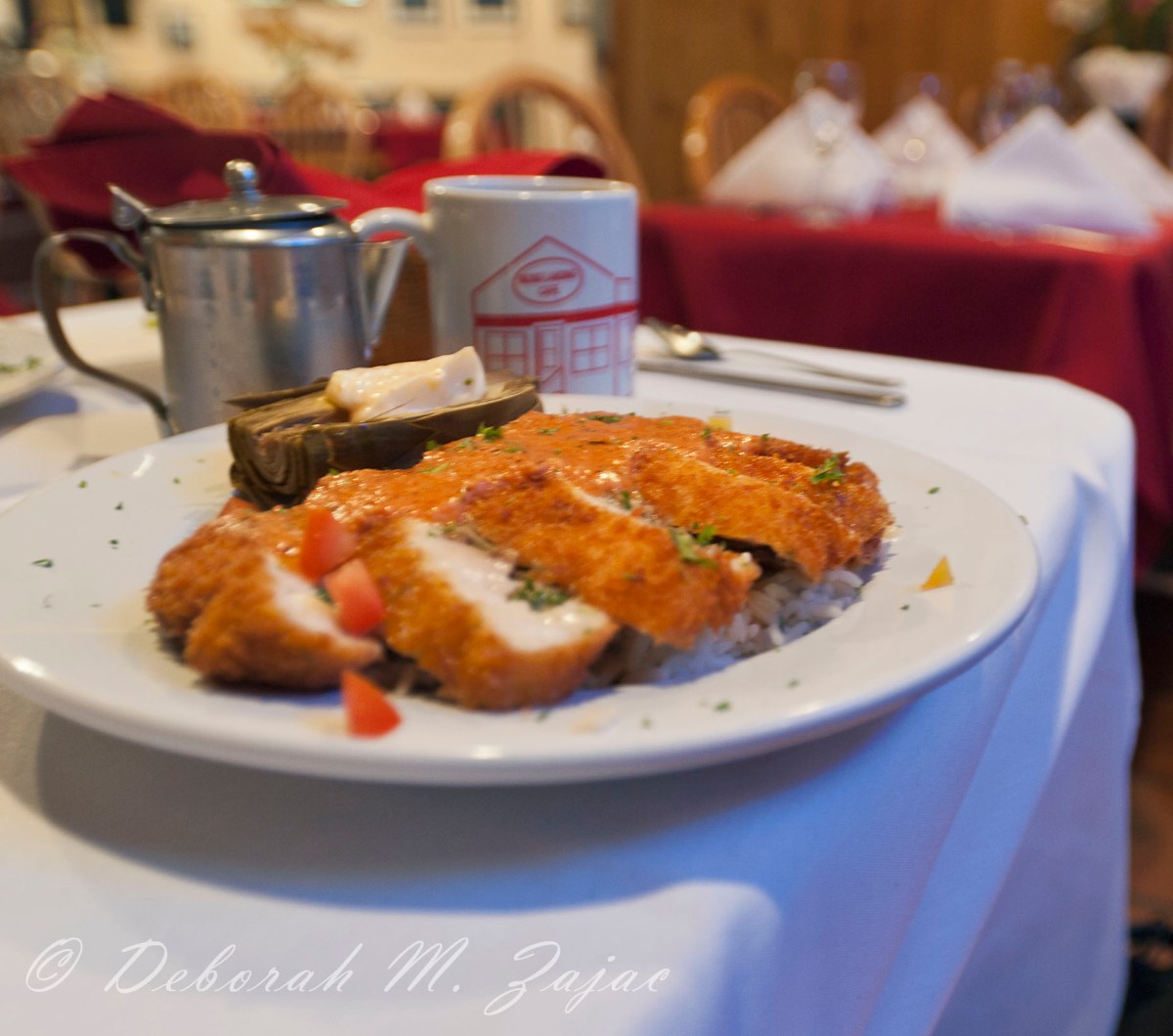
After all this birding you’re sure to get hungry then head to the Moss Landing Café. Mark, owner/chef is not only a great chef he is very friendly, and a wonderful host. I’ve loved everything I’ve eaten there. Dinner is served Friday and Sat. evenings only, but he serves breakfast and lunch the rest the week.
My dinner last night: Stuffed Chicken Breast w/tomato sauce- it was a cream sauce, served on a bed of rice, and the side was a steamed local artichoke with a dollop of Bearnaise sauce. Dessert, that I didn’t take a picture of was Berry Mango Cobbler with a scoop of vanilla ice cream, and dollop of whipped cream. I was good and didn’t eat the whole thing. I started this dinner with a cup of white clam chowder. It was so good and seasoned to perfection! I was stuffed when I left.
Fortunately the solar phenomenon I’ve been trying to photograph takes place over the course of several weeks so I have time to try it again, but if the fog rolls in the next time I go down there to shoot it, I wouldn’t mind making Moss Landing Plan B again.
Update: Becky writes” I say you keep one hand on your lens at all time when your camera is not in use and you have it around you neck. They can’t get your lens if your own hands are on it at all times, it would be rather awkward for the thief to reach over and discover that he/she is touching your hand!!!!” Brilliant thought Becky!
I had read about this mission and wanted to visit it while on my July trip to Whitefish, Mt. It’s only 1.5 hours to the east of where I was staying. When planning things to do with my friend Big Jay who wouldn’t be doing the steep hikes with me I thought this would be a great outing, and we could continue our Mission series that we’d started in Northern California. When I suggested it I delighted that he was interested, and game to go.
The most striking thing to me about this Mission is how different its exterior structure is from the Missions of California. This one is made of brick and mortar, and has the familiar look of a mid-sized Catholic Church , and has no inner courtyard, and large garden verses the Missions in California that are made of Adobe or stucco, with wood beams, and the familiar Spanish arches, and an inner courtyard with a fountain.
Their small garden has a statue of Christ carved by Fr. Anthony Ravalli, S. J. believed to be done during his stay in St. Ignatius in 1863. The statue is next to the Original Log Cabin. The first home of the Jesuit missionaries, built in 1854. Today it’s a museum with a collection of artifacts from various tribes of the Northwest. The clothes, and dolls kept me occupied for sometime. There are several old photographs of the local Indians that would come to the Mission. The man in office was very friendly and shared some facts and stories with us about the Mission.
The Original Log Cabin, and statue of Christ
The chapel is wonderful. The colors are soft and peaceful, and the Frescoes are outstanding in their workmanship, and artistry. There are 58 murals, painted in the early 20th century by artist Brother Joseph Carignano (1853-1919), an Italian Jesuit. He was a cook, and handyman at the Mission. He had no professional training in art.
The paintings depict scenes from the Old and New Testaments, as well as some saints. Below you see most of the Frescoes that are painted on the North and South walls, and the Triptych in the Sanctuary which tells the story of “The Three Visions of St. Ignatius Loyola” the founder of the Mission. To the right of the Triptych is a large Fresco titled, ” St. Joseph and Jesus, and the large Fresco on the left of the Triptych is titled, ” The Immaculate Conception.
Chapel, St. Ignatius Mission, Montana, Full view
Below is a piece of statuary that rests next to the Altar, and behind it one part of the Triptych in the Sanctuary by artist Brother Joseph Carignano (1853-1919), to the left of that are two smaller round Frescoes, the lower one is “Jesus the Bread of Life”, and the one above it is “St. Luke Evangelist”.
Statuary in the Chapel - St. Ignatius Mission, Montana
Below in the foreground is the Altar with the depiction of “The Last Supper”. I really like the soft pastel color palette, and ornate wood carvings that frame it. Behind the Altar another view of the Triptych, and to the right the small round Fresco is “St. Peter the Apostle”.
The Last Super The Altar in St. Ignatius Mission, Montana
The Fresco above the Triptych is titled “The Last Judgement”. To the right of it is a round Fresco titled “Moses receives the Ten Commandments on Mt. Sinai”,and to the left is a Fresco called “Manna and Water in the Desert”.
The Last Judgement
I shot the whole interior in Natural Light. None of the lights were on inside the chapel except those that lit the Triptych. I thoroughly enjoyed visiting this Mission. I would love to come back and visit it again. If you happen to be passing near here it makes a wonderful side trip.
For the Historians:
Mission St Ignatius, St Ignatius, Montana, USA
St. Ignatius Mission is in Mission Valley on the Flathead Indian Reservation in Western Montana, about forty miles north of Missoula. It is bounded by the Mission Mountains to the east, and the hills of the National Bison Range to the west.
The Mission and the town that grew up around it were founded in 1854 by Jesuit missionaries and named for their founder, St Ignatius Loyola.
The present day brick church was built in 1891 and is now a National Historic Site, along with two small cabins, the original homes of the Jesuit Fathers and Providence Sisters, and the present rectory. The church took 2 years to build. The Indians, and missionaries together built the church of bricks made from local clay, and trees cut in the foothills, and sawed at the Mission Mill.
The building measures 120 feet by 60 feet with a belfry reaching nearly 100 feet.
The majority of the facts and figures I gleaned from a pamphlet I purchased while at the Mission.
You must be logged in to post a comment.