Copyright ©2025 Deborah M. Zajac. ALL RIGHTS RESERVED.
PLEASE DO NOT USE MY IMAGES WITHOUT EXPRESSED WRITTEN PERMISSION.

more to come…
“A good snapshot keeps a moment from running away.” ― Eudora Welty
Copyright ©2025 Deborah M. Zajac. ALL RIGHTS RESERVED.
PLEASE DO NOT USE MY IMAGES WITHOUT EXPRESSED WRITTEN PERMISSION.
more to come…
Copyright ©2025 Deborah M. Zajac. ALL RIGHTS RESERVED.
PLEASE DO NOT USE MY IMAGES WITHOUT EXPRESSED WRITTEN PERMISSION.
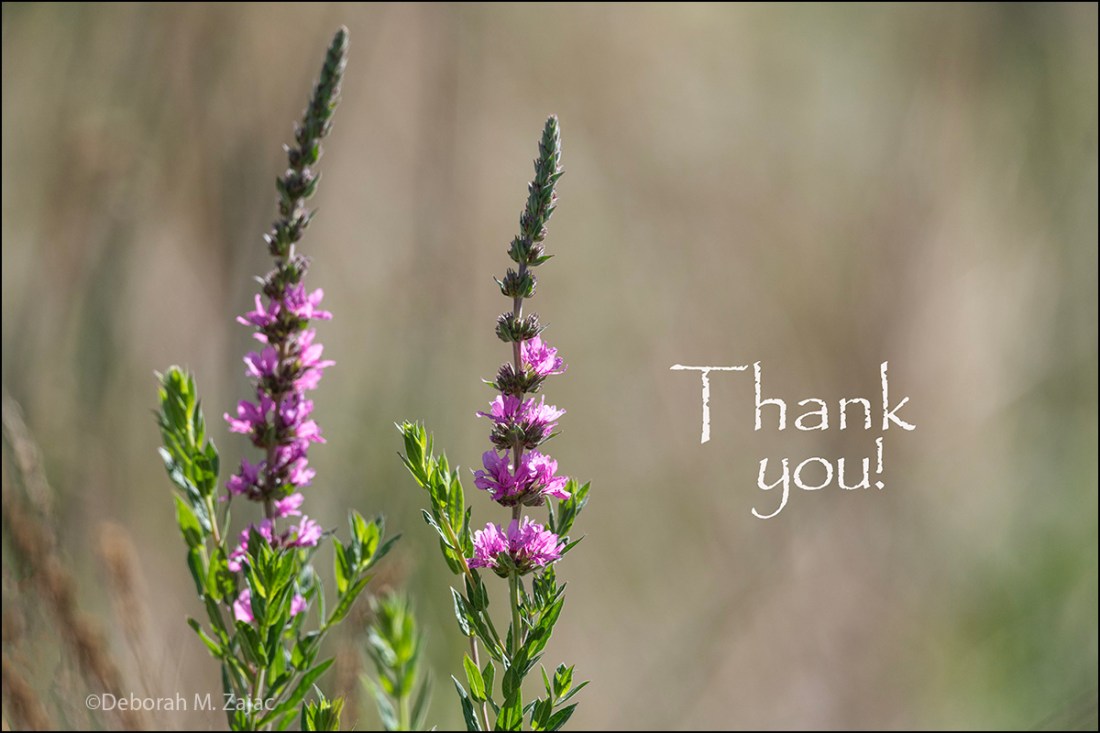
Thank you all for the support, and kindness you’ve given me these last few weeks. I appreciate you and your comments so much. 🥰
I wish you all a wonderful Independence Day Week-end!
Purple Loosestife wildflowers
more to come…
Copyright ©2025 Deborah M. Zajac. ALL RIGHTS RESERVED.
PLEASE DO NOT USE MY IMAGES WITHOUT EXPRESSED WRITTEN PERMISSION.
With this sighting of the Eastern Phoebe on May 13th while birding in Ohio I have now seen all 3 Phoebe’s that reside in the Unites States.

The Eastern Phoebe can be found throughout the eastern half of the continent from the Northwest Territories all the way down to Mexico.
The other two Phoebes are found in the Western regions of North America. They are the Say’s Phoebe, and the Black Phoebe.
Fun Facts:
I hope you all have a lovely week-end!
more to come…
Copyright ©2025 Deborah M. Zajac. ALL RIGHTS RESERVED.
PLEASE DO NOT USE MY IMAGES WITHOUT EXPRESSED WRITTEN PERMISSION.
I thought I’d share some of the birds I’ve seen the last couple of weeks.
Starting with a little Pygmy Nuthatch. It was flying to and from its nest the hole in a tree trunk you can sort of see behind it.

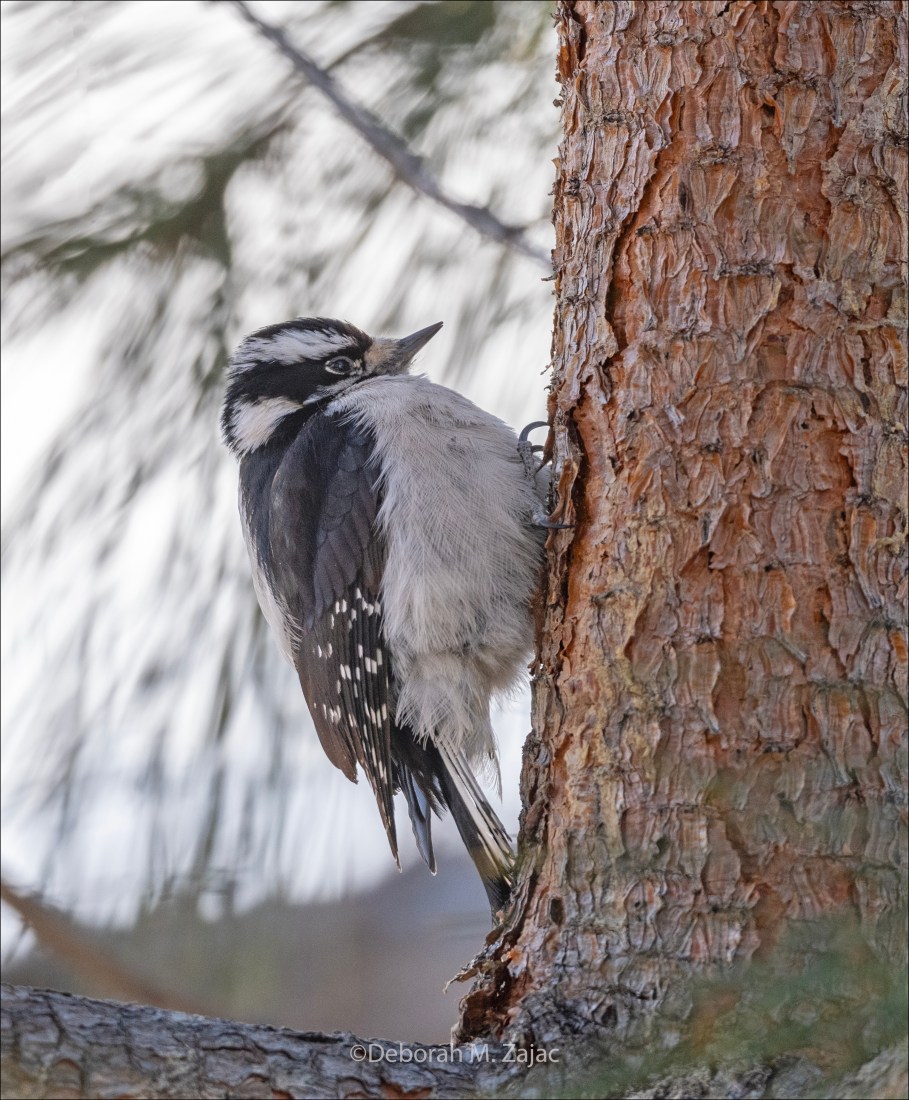
A female Downy Woodpecker who was cold that morning. It was 15 degrees F when we started birding. She didn’t move from that tree for the longest time.
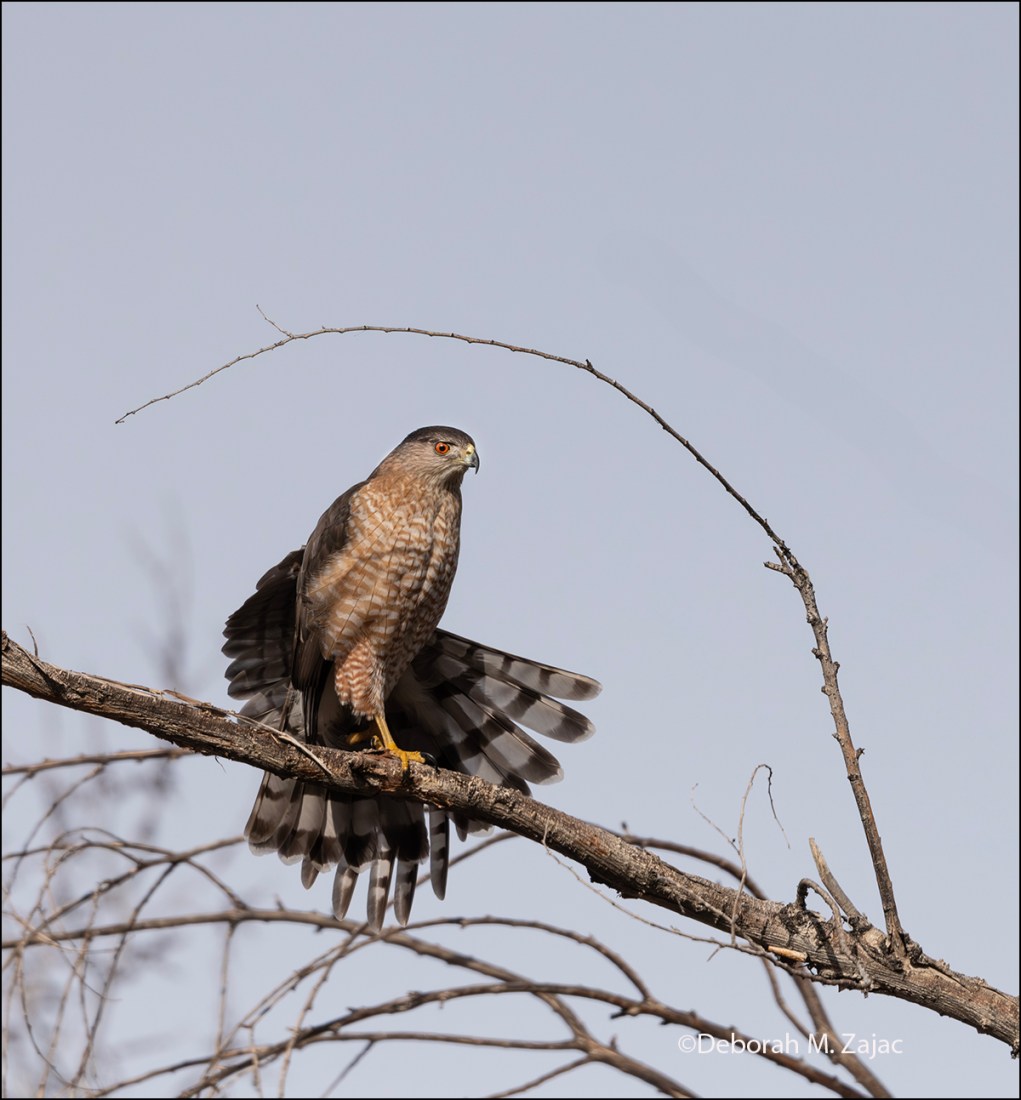
Another morning I had the pleasure of viewing a posing Cooper’s Hawk. Look at that tail!
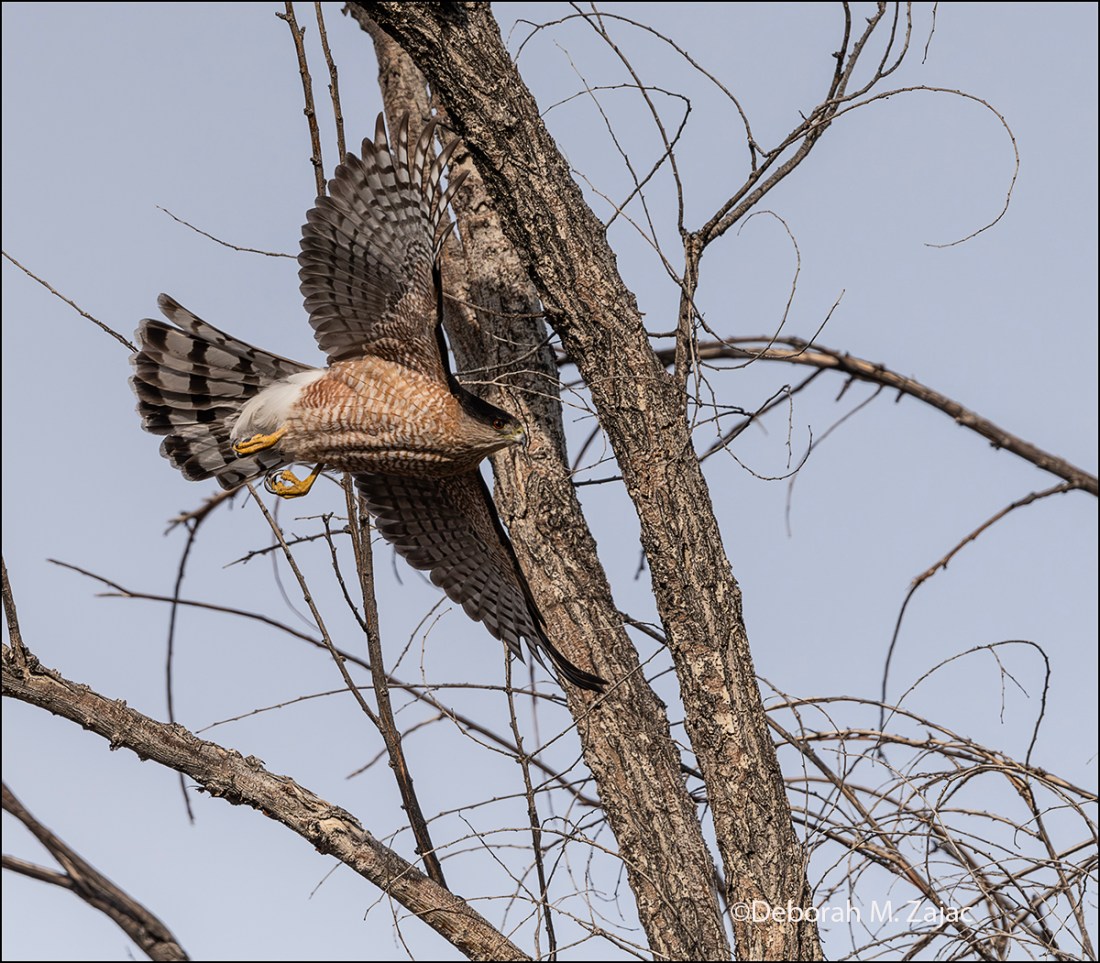
Then it showed off its wing.

Then it flew showing off its wing span.
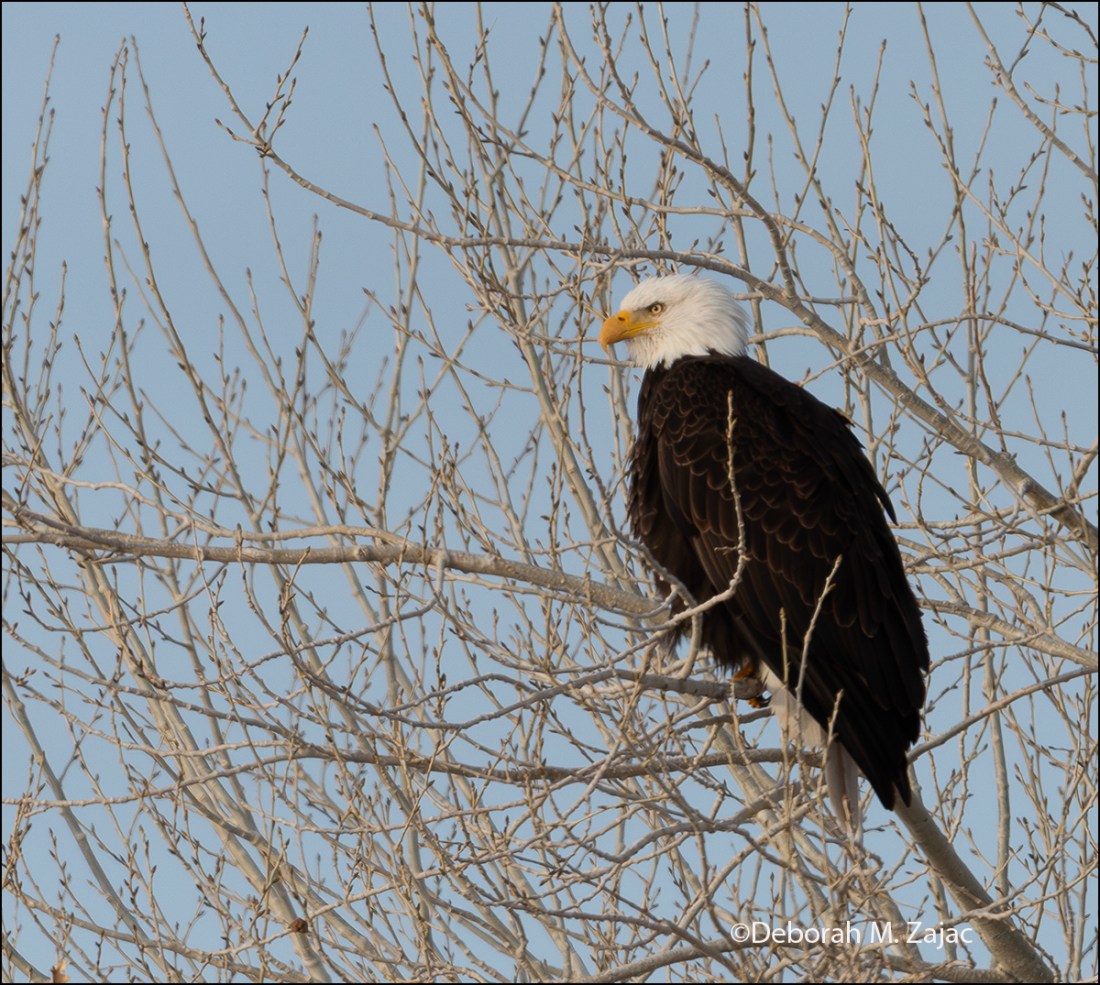
Last but not least, I saw the pair of Bald Eagles in their tree near my house on my way out last week. He was obscured by all the branches, but she was up high and in the open. I had to stop for a photo of her.
That’s all I have for you this week. I may be late getting to your posts and blogs this morning as I’m birding with my bird group.
More to come…
Copyright ©2024 Deborah M. Zajac. ALL RIGHTS RESERVED.
PLEASE DO NOT USE MY IMAGES WITHOUT EXPRESSED WRITTEN PERMISSION.
I wanted to wish all of you in the U.S.A. a very Happy Thanksgiving day and week-end!

To everyone else I wish you a very happy day and week-end!
more to come…
Copyright ©2024 Deborah M. Zajac. ALL RIGHTS RESERVED.
PLEASE DO NOT USE MY IMAGES WITHOUT EXPRESSED WRITTEN PERMISSION.
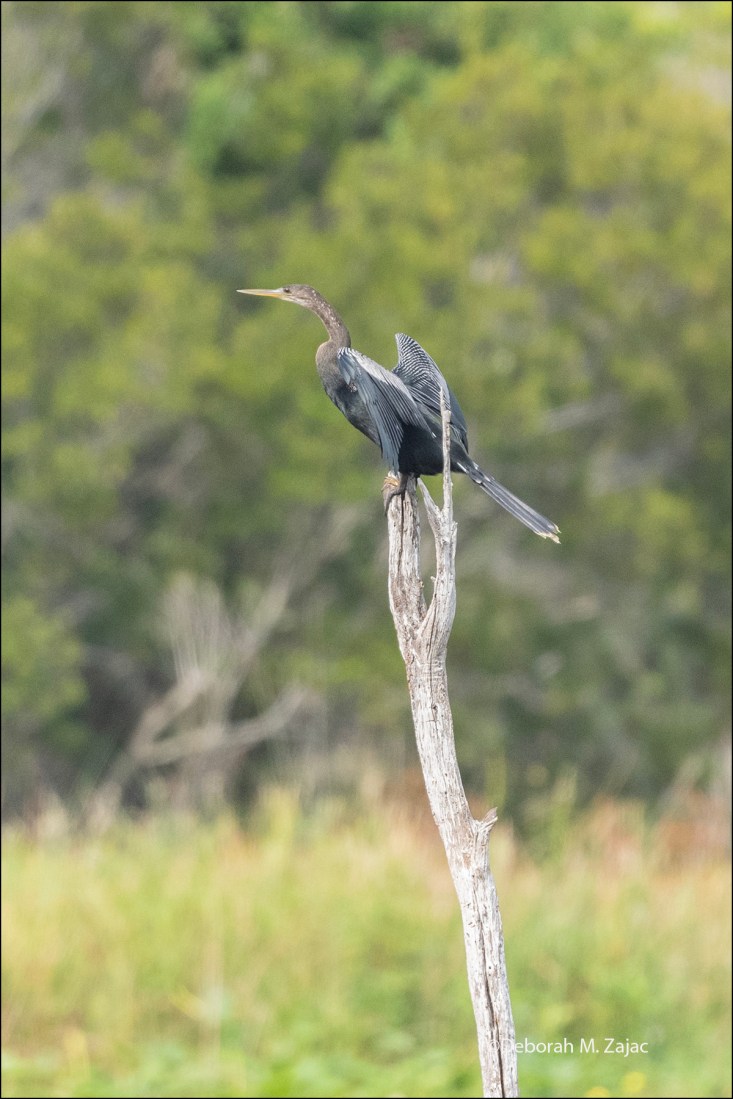
The Anhinga was one of 4 birds I really wanted to see while I was in Florida in September and I saw 3 of them! One male and two Females…I think.
It’s another pre-historic cool looking bird.
I think this is a male because his neck is black. He’s drying his wings.

Here’s the female also drying out her wings. Like Cormorants they don’t have waterproof feathers so they get on a perch or land and spread them open to dry them out.
Fun Facts:
Fun facts gleaned from https://www.allaboutbirds.org/guide/Anhinga/overview
We may have a break from the wind and beat the rain this morning so I’m going birding with friends which means I’ll be a bit late checking out your blogs, and reading comments.
more to come…
Copyright ©2024 Deborah M. Zajac. ALL RIGHTS RESERVED.
PLEASE DO NOT USE MY IMAGES WITHOUT EXPRESSED WRITTEN PERMISSION.
I woke up Friday morning pretty early to go birding with a group I’m in. When I opened the garage door to leave I discovered there was snow on the ground and flurries still swirling.
I was heading about an hour northeast from home so, I checked my email to make sure they hadn’t canceled the outing…they hadn’t so off I went.
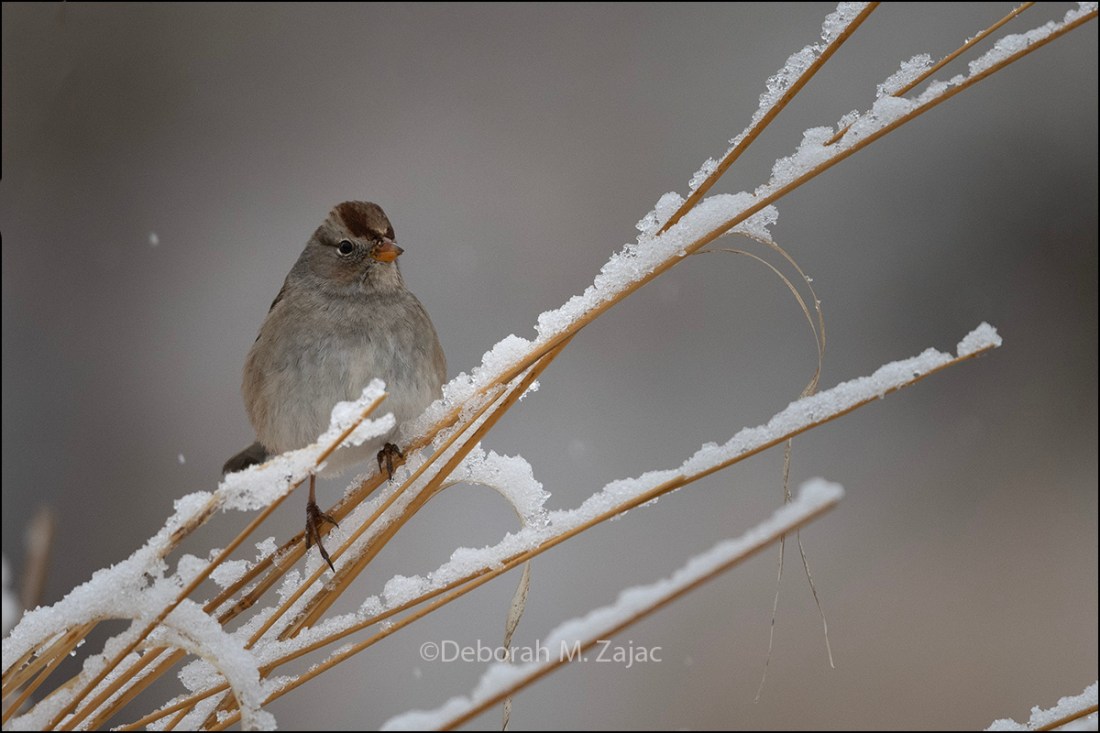
It wasn’t snowing when I arrived at the meeting spot but, while birding the snow started to fall pretty heavy. It wasn’t in the weather forecast the day before! It was still a good morning of birding. We saw 22 species of birds. One White-crown Sparrow favored us with a nice look perched on snowy grass.
By the time we left it had quit snowing so my drive home was easy, and while the snow was sticking to the ground where I was birding it hadn’t had home. The upcoming 10 day forecast looks like we’re snow free.
Nikon D850| Nikkor 500mm| PS CC
more to come…


You must be logged in to post a comment.