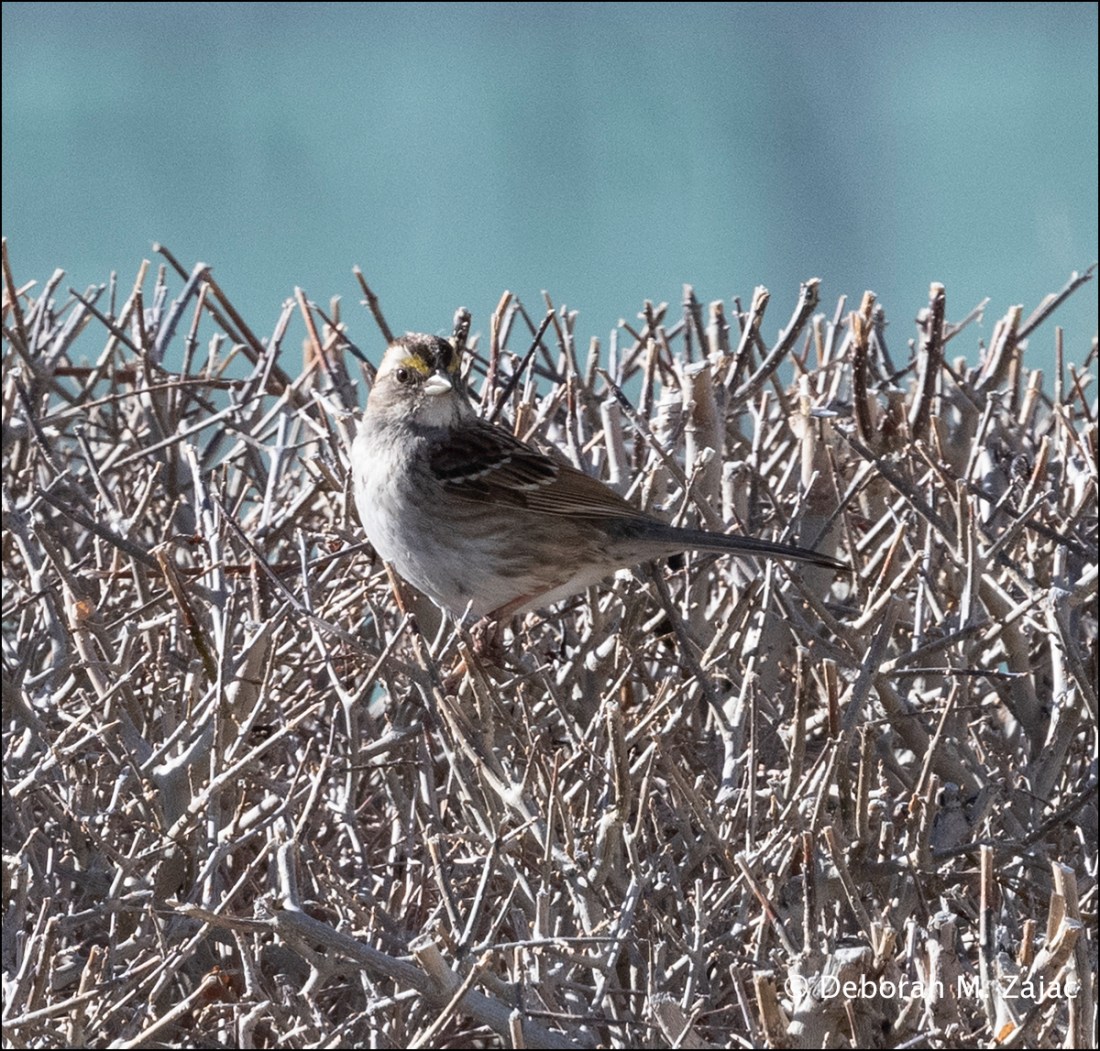
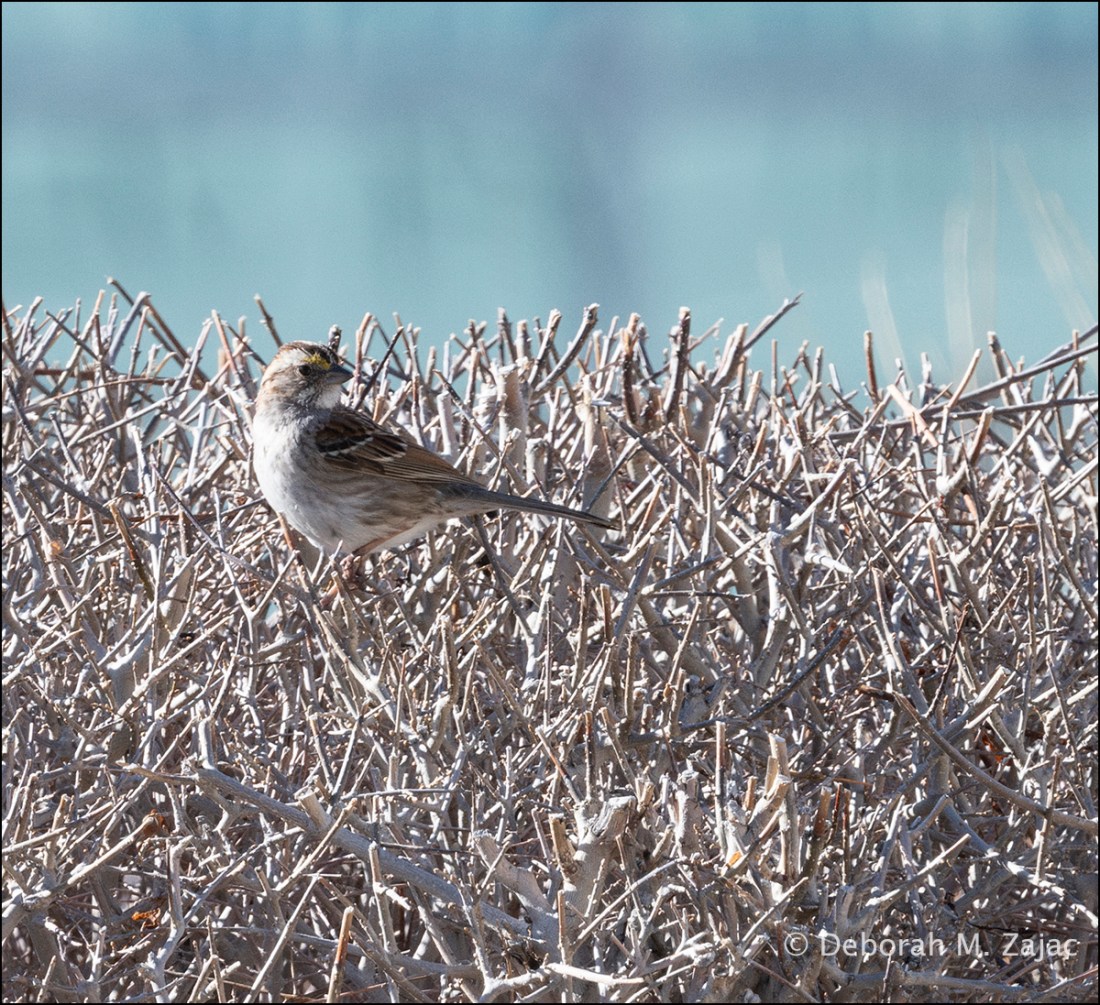
Whatever Weds. White Peacock Butterfly

Copyright ©2024 Deborah M. Zajac. ALL RIGHTS RESERVED.

PLEASE DO NOT USE MY IMAGES WITHOUT EXPRESSED WRITTEN PERMISSION.

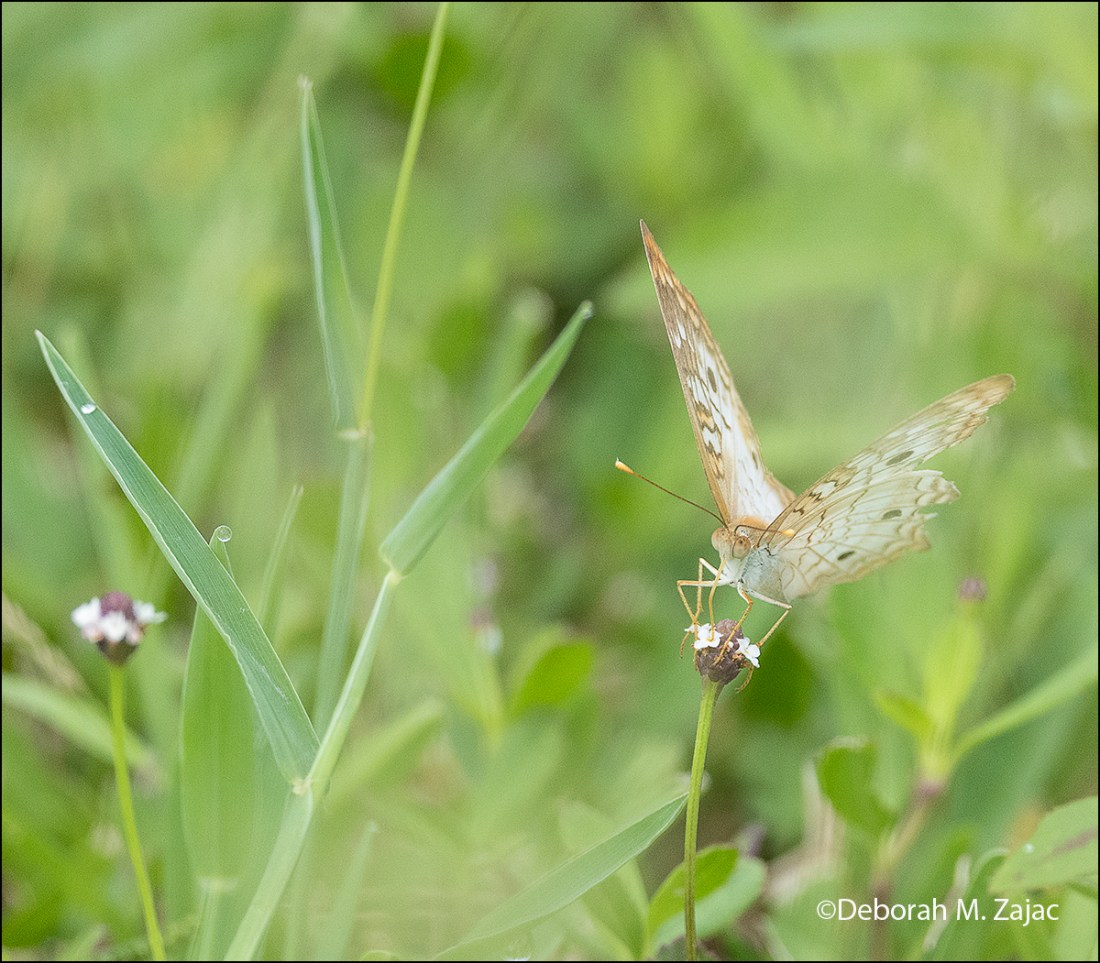
While birding around a pond in Pinellas Co. Fl I spied this butterfly trying to warm up for the day. Mary knew what it was straight-away when I asked her if she knew what kind it was.

©Deborah M. Zajac | http//circadianreflections.com Image

I showed you its best side first. It’s a bit tattered by the end of summer.

©Deborah M. Zajac | http//circadianreflections.com Image

Still beautiful though.

They’re in the brush-footed butterfly family and stay low to the ground because their favorite plants are also low on the ground. They can also be found throughout the southeastern USA, the Caribbean, Mexico, and South America to Argentina. They are white with brown markings and orange margins, and have a small black spot in the center of each of the forewings. Two small black spots on each of the hindwings resembling a peacock’s eyespot give this butterfly its common name. There’s a short tail on the hindwings. Male and female White peacock butterflies don not differ in appearance from each other.” Facts gleaned from

Florida Wildflower Foundation link here. They also say, that, “the White Peacock is smaller and darker in the wet summer months and larger and paler in the drier summer months.” I’m thinking this one has be one of the larger paler ones as it is quite pale.

Nikon D850| Nikkor 500mm Pe-F| PS CC

more to come…

Whatever Weds. When Happy Hour means…

Copyright ©2024 Deborah M. Zajac. ALL RIGHTS RESERVED.

PLEASE DO NOT USE MY IMAGES WITHOUT EXPRESSED WRITTEN PERMISSION.

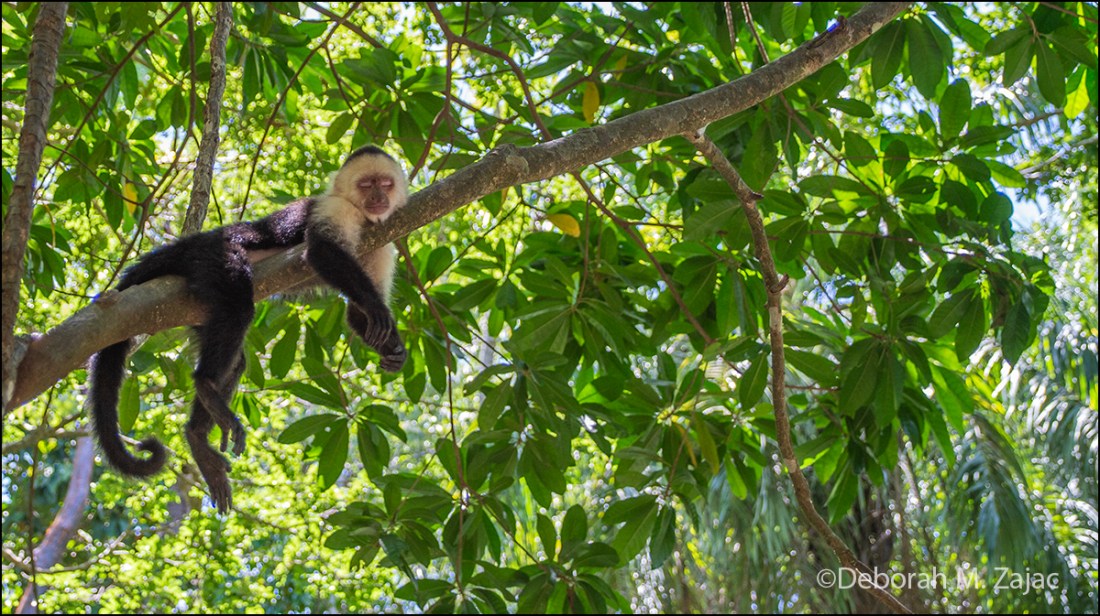
Nap time! Happy Mid Week everyone!

©Deborah M. Zajac | http//circadianreflections.com Image

Nikon Df| Nikkor 28-105mm| PS CC

more to come…

Something for Saturday-Just dropping in…

Copyright ©2024 Deborah M. Zajac. ALL RIGHTS RESERVED.

PLEASE DO NOT USE MY IMAGES WITHOUT EXPRESSED WRITTEN PERMISSION.

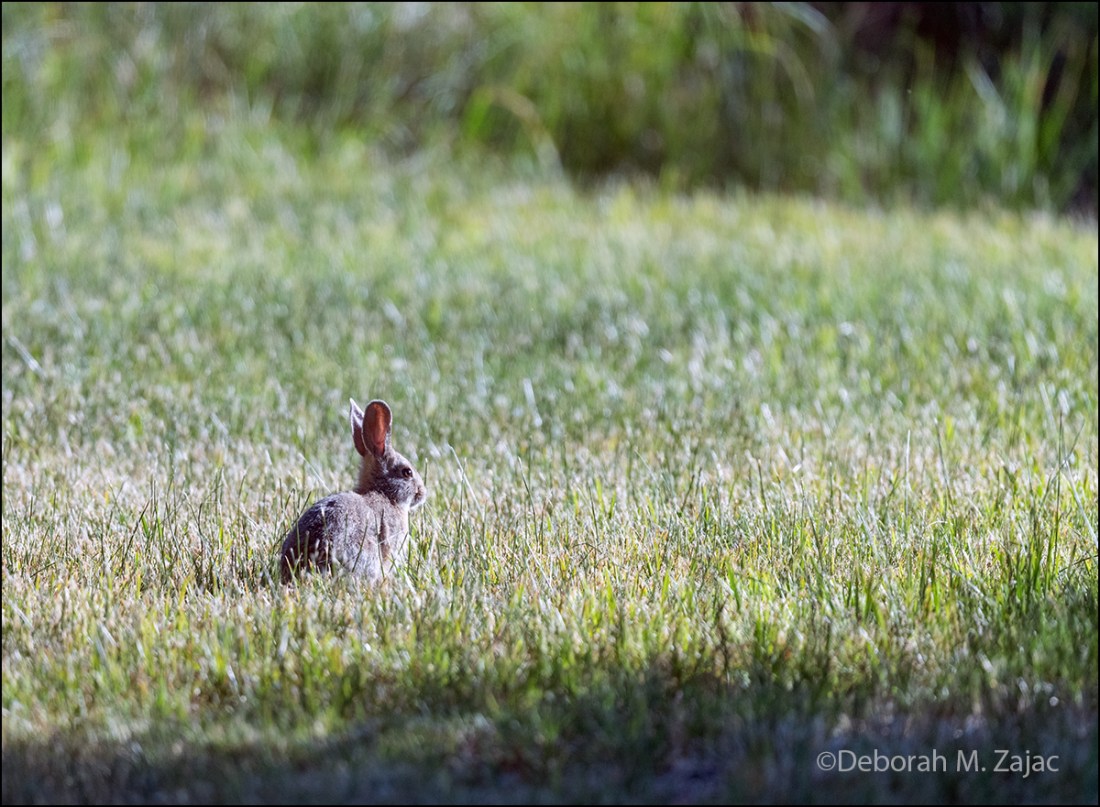
…with a hop,

…and a flutter,

Image

to say have a great week-end everyone!

Nikon D850| Nikkor 500mm| PS CC

more to come…

Friday’s Feathered Friends-White-throated Sparrow

Copyright ©2024 Deborah M. Zajac. ALL RIGHTS RESERVED. 

PLEASE DO NOT USE MY IMAGES WITHOUT EXPRESSED WRITTEN PERMISSION.

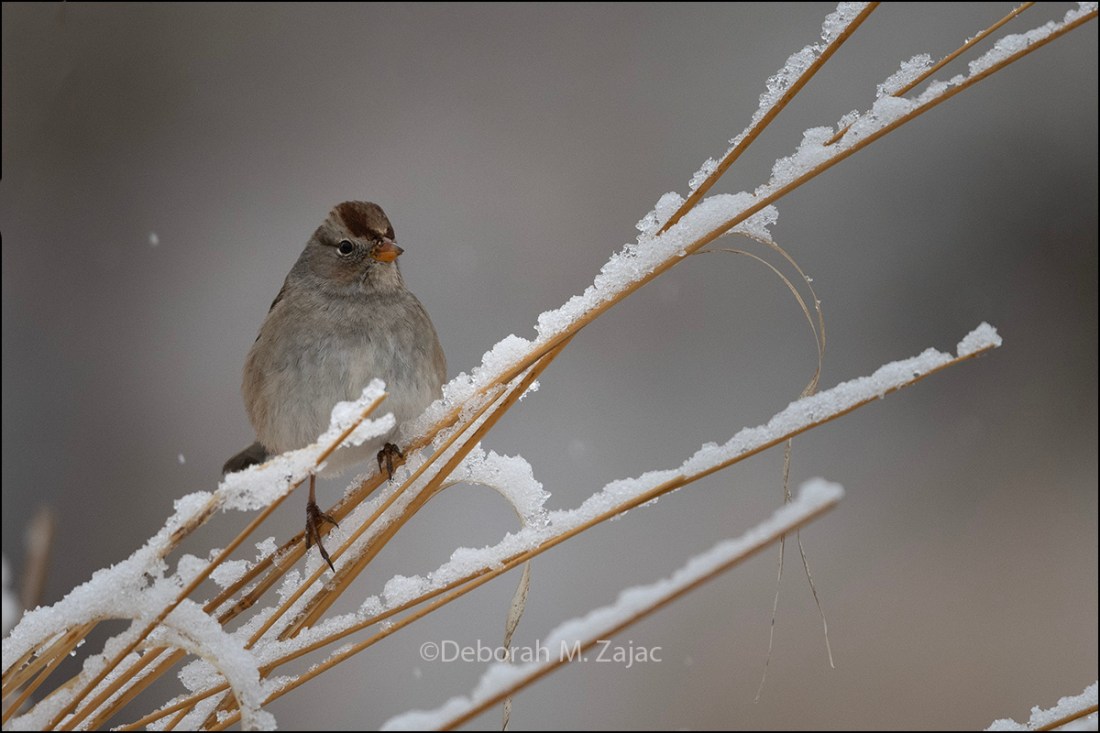
Back in late January or early February I heard there was a White-throated Sparrow up in Carson City. This is a rare bird for Nevada. The map doesn’t show it ever being here rare.

I’d never seen one before so I began the hunt for it. I only had a general location of where it was so I was covering a very large area and staying for hours photographing every sparrow and bird I saw.

I was unsuccessful 6 times over the course of about 6 weeks.

All the while this bird was being seen and reported by one guy almost every day while myself, and my neighbor were not seeing it! I can tell you it was frustrating! During this period there was another one seen, photographed, and reported on the birding site ebird.org up in Reno!

So, my neighbor and I went up and spent hours looking for it but, no joy there either. Sigh.

Then on a tip from a fellow birder who had seen it a week before in Carson City told me the which area I should try looking. I went back last week and hung around the area he suggested and got lucky! 💃💃😀The 7th times the charm!

White-throated Sparrow
White-throated Sparrow profile

Fun Facts:

  • The White-throated Sparrow comes in two color forms: white-crowned and tan-crowned. The two forms are genetically determined, and they persist because individuals almost always mate with a bird of the opposite morph. Males of both color types prefer females with white stripes, but both kinds of females prefer tan-striped males. White-striped birds are more aggressive than tan-striped ones, and white-striped females may be able to outcompete their tan-striped sisters for tan-striped males.
  • Although they look nothing alike and aren’t particularly closely related, the White-throated Sparrow and the Dark-eyed Junco occasionally mate and produce hybrids. The resulting offspring look like grayish, dully marked White-throated Sparrows with white outer tail feathers.
  • White-throated Sparrows typically nest on or near the ground. Occasional nests are built up to 15 feet off the ground in conifers. Usually, these nests are second attempts after a pair has had a ground nest robbed by a predator.
  • The oldest recorded White-throated Sparrow was at least 14 years, 11 months old, when it was recaptured and rereleased during banding operations in Alberta.

I have been birding a lot so have lots of birds to share in the coming weeks.
I hope you all have a lovely week-end.

Nikon D850| Nikkor 500mm PF-e| PS CC 25.5.0

Fun Facts gleaned from allaboutbirds.org

more to come…

Friday’s Feathered Friends- Western Wood Peewee

Copyright ©2024 Deborah M. Zajac. ALL RIGHTS RESERVED. 

PLEASE DO NOT USE MY IMAGES WITHOUT EXPRESSED WRITTEN PERMISSION.

I don’t think I’ve ever shared this bird before. This is an image I made last summer.

Western Wood Peewee

Fun Facts:

  • The breeding ranges of the nearly identical Eastern and Western Wood-Pewees overlap only in a very narrow zone in the Great Plains. Despite the birds’ physical similarity, no evidence has ever been found that the two species interbreed in that area—perhaps because their songs sound so different.
  • Where exactly the Western Wood-Pewee goes in the winter is still a mystery. Both Eastern and Western Wood-Pewees migrate to northern South America, but because they look so similar and they don’t call much on the wintering ground it’s hard to say for certain where each species spends its winter.
  • The scientific name of the Western Wood-Pewee is Contopus sordidulusContopus comes from the Greek word kontos which means short and pous which means foot—referring to the relatively short legs on Contopus flycatchers. Sordidulus means dirty or unkempt, a reference to the dusky brown wash to the breast and flanks.
  • The Western Wood-Pewee makes a clapping noise with its bill while chasing and attacking intruders in nest defense.
  • The oldest recorded Western Wood-Pewee was a female, and at least 8 years, 1 month old when she was recaptured and rereleased during banding operations in California in 2002. She had been banded in the same state in 1995.
  • Fun Facts gleaned from allaboutbirds.org

Nikon D810| Nikkor 300mm f/4| PS CC

We’ve been under a high wind and storm watch since yesterday morning. As I write this the wind is howling at 24 mph with gusts up to 47 mph. They’re saying we may get 8 inches of snow between now and Saturday. The sun is out, the clouds are big white and fluffy in some spots to the east but, gray and looming over the Sierras to the west. As you can imagine we’re hanging out at home.

I was planning to go birding with a local birding group this morning, but due to the weather that’s been rescheduled.

I’ve been re-watching The Expanse while waiting for the new season of Vera to be released on Wednesday. After I finish The Expanse I’ll be binge watching Vera if all the episodes are available, and I’m still working my way through the Woodlands and Trees Ready to Paint class in a book. I finished exercise 6 but, the little wood bridge over the creek came out really wonky…even more wonky than my normal wonky so, I’m on my second attempt with that one, and I mixed up a dark green shade of paint that I don’t like on this second pass, so they’ll probably be a 3rd attempt at mastering exercise #6. 😀

That’s me all caught up. What’s happening with you?

more to come…

Friday’s Feathered Friends- Ruddy’s got the Blues

Copyright ©2024 Deborah M. Zajac. ALL RIGHTS RESERVED. 

PLEASE DO NOT USE MY IMAGES WITHOUT EXPRESSED WRITTEN PERMISSION.

Things are changin’, Ruddy is showing off his Blues and Ruddy feathers for Spring and hoping he’s got what it takes to persuade a cute little female Ruddy Duck to be his love for the season.

Ruddy Duck in Breeding Plumage

Fun Facts:

    • Ruddy Ducks lay big, white, pebbly-textured eggs—the largest of all duck eggs relative to body size. Energetically expensive to produce, the eggs hatch into well-developed ducklings that require only a short period of care.
    • The bright colors and odd behavior of male Ruddy Ducks drew attention from early naturalists, though they didn’t pull any punches. One 1926 account states, “Its intimate habits, its stupidity, its curious nesting customs and ludicrous courtship performance place it in a niche by itself…. Everything about this bird is interesting to the naturalist, but almost nothing about it is interesting to the sportsman.”
    • Pleistocene fossils of Ruddy Ducks, at least 11,000 years old, have been unearthed in Oregon, California, Virginia, Florida, and Illinois.
    • Ruddy Ducks are very aggressive toward each other and toward other species, especially during the breeding season. They are even known to chase rabbits feeding on the shore.
    • Though Ruddy Ducks are native to the Americas, one population became established in England after captive ducks escaped in 1952. This population grew to about 3,500 individuals by 1992, and now appears to be expanding into the Netherlands, France, Belgium, and Spain.
    • Ruddy Ducks get harassed by Horned Grebes, Pied-billed Grebes, and American Coots during the breeding season. The grebes sometimes attack Ruddy Ducks from below the water, a behavior known as “submarining.”
    • The oldest Ruddy Duck on record was a male and at least 13 years, 7 months old when he was found in Oregon in 1964. He was banded in British Columbia in 1951.

Fun Facts gleaned from https://www.allaboutbirds.org/guide/Ruddy_Duck/

Nikon D810| Nikkor 500mm PF| PS CC 25.4

more to come…

Whatever Weds. Surprise!

Copyright ©2024 Deborah M. Zajac. ALL RIGHTS RESERVED. 

PLEASE DO NOT USE MY IMAGES WITHOUT EXPRESSED WRITTEN PERMISSION.

I’ve been updating and cleaning up my birding records which has me going back in my files 15 years. In the Spring of 2011 several friends and I went to Death Valley and on the way home we stopped to photograph wildflowers in a big field by the side of the road, well you’ve heard the saying, beware of a snake in the grass. Beware of Rattlesnakes in the wildflowers!

That’s not the closest I’ve come to a Rattlesnake while hiking, but it was too close for comfort even with my 300mm lens.

Then we backed out of the field and headed back to our cars only to discover another Western Diamondback coiled up sleeping beside the tire of my friend’s car soaking up the warmth from the sand and car engine! The driver had to get in via the passenger side of the car.

Western Diamondback Rattlesnake

It was quite the adventure!

Nikon D300S| Nikkor 70-300mm@300mm| PS CC 25.4

Happy Valentine’s Day!💗

more to come…