A day in the Wild

Copyright © 2014 Deborah M. Zajac. ALL RIGHTS RESERVED

I spent Saturday at two Wildlife Refuges: Merced National Wildlife Refuge, and San Luis National Wildlife Refuge.

It’s takes just about 2 hours to get there from my house even with a stop for coffee along the way. It’s a fairly easy drive, and the only worrisome part of the drive is crossing Pacheco Pass, and only in the two lane windy section. Fortunately traffic was light going, and not much worse on the way home.

I was hoping to see Sandhill Cranes which my friend Judi shared were starting to return for the Winter.

With the drought being pretty severe here the Refuges have had their water allotments cut way back so, there’s not much water there. I suspect that will influence the number of birds that winter there, and the numbers will be a lot fewer than in past years.

At Merced National Wildlife Refuge there are a couple of observation decks, and a large auto-route with quite a few pull-outs. I arrived not long after the gate opened, and only saw one other car ahead of me. For two hours we were the only people in the refuge. It was really nice not having cars pass me and frighten the birds.

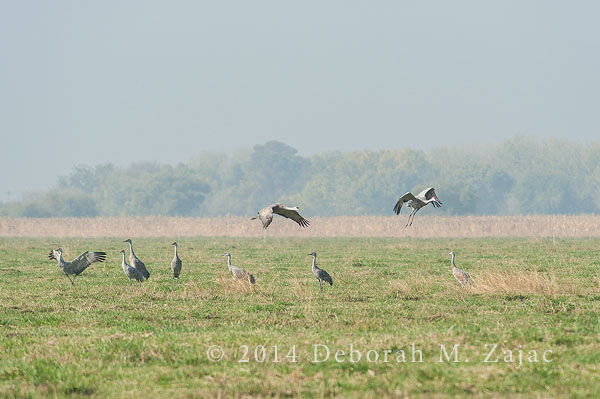
Here are the only Sandhill Cranes I saw. They were in the last field, and as always very skittish. They started moving deeper into the field when I stopped. While I was imaging the group I had the good luck to see two more fly in.

Sandhill Crane Fly-in

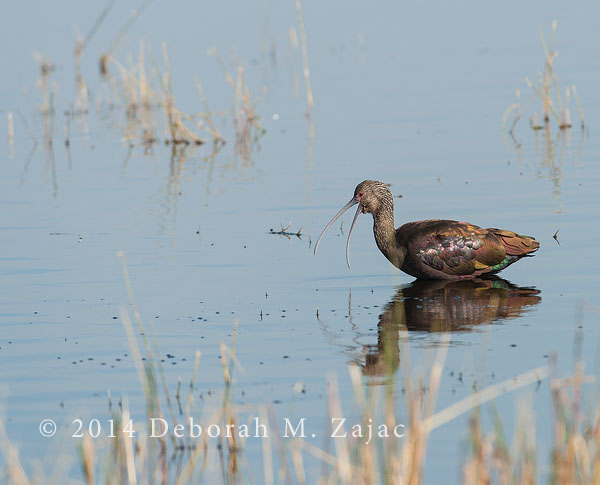
There was a flock of White-faced Ibis here, and they were so hungry they didn’t worry about me at all. There were a few quite close to the road. This one just yawned when I crept up. I love the colors in their feathers.

White-faced Ibis: Adult Winter

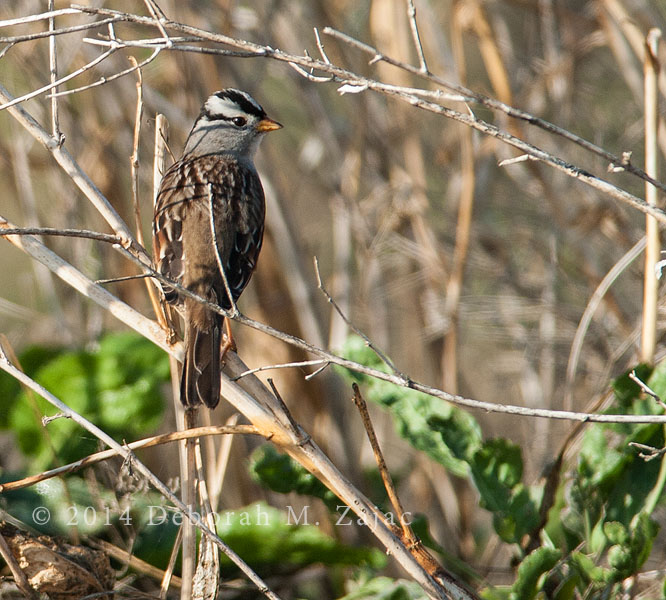
The White Crowned Sparrows are returning everywhere, even here.

White Crowned Sparrow

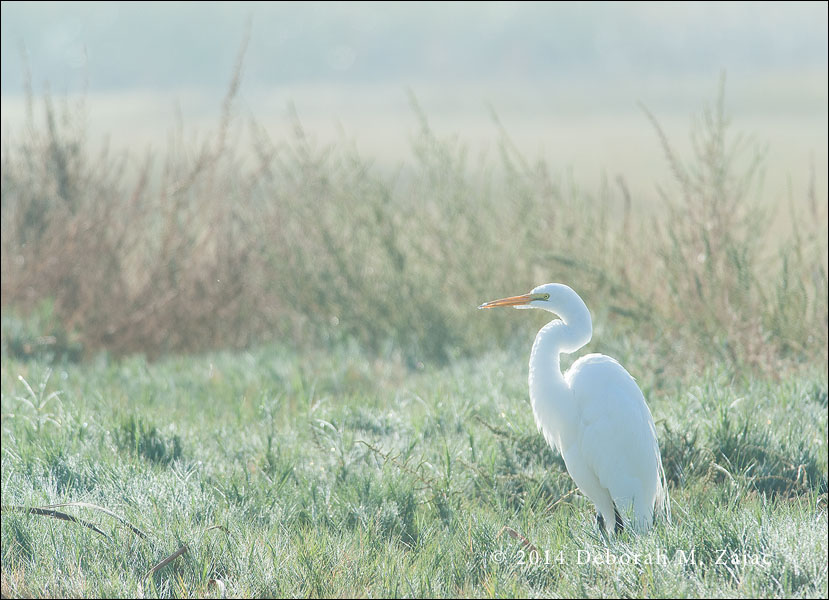
It was foggy when I left home, and there was haze around the countryside, and Refuge. I had hoped to meet my friend Judi here, but the air quality was really bad. There had been a report the night before that the air quality would be bad and people should not go out. I got Judi’s message about that too late; after I arrived at the Refuge. She’s on bottled air and didn’t dare leave the house. You can see the haze in several of the images, but especially in this image of a Great Egret I saw. He didn’t bat an eyelash at my presence! Their stillness and concentration are amazing. I liked the back lighting, and the haze gave the image a soft, dreamy look.

Backlit Great Egret

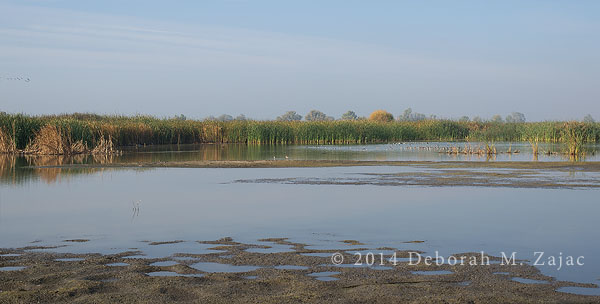
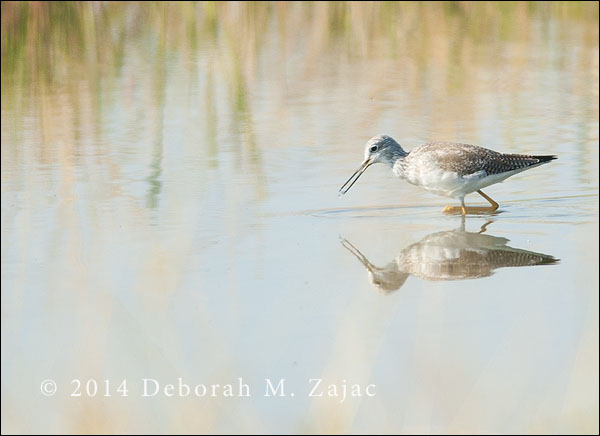
The Coots are back, as are the Shovelers, Mallards, and some Greater Yellowlegs.  While photographing the Greater Yellowlegs I put down my camera to take in the pond. You can see how much the water has already receded/evaporated.

Pond at MErced NWR

…a Greater Yellowlegs

Greater Yellowlegs

I have a lot of images to go through and can’t share them all in this post. I haven’t even got to the second refuge images yet.

Nikon D700| AF-S Nikkor 300mm f/4| AF-S Nikkor 14eII Teleconverter| braced with this beanbag.

More to come…

Life in the Garden-Chestnut-backed Chickadee

Copyright © 2014 Deborah M. Zajac. ALL RIGHTS RESERVED

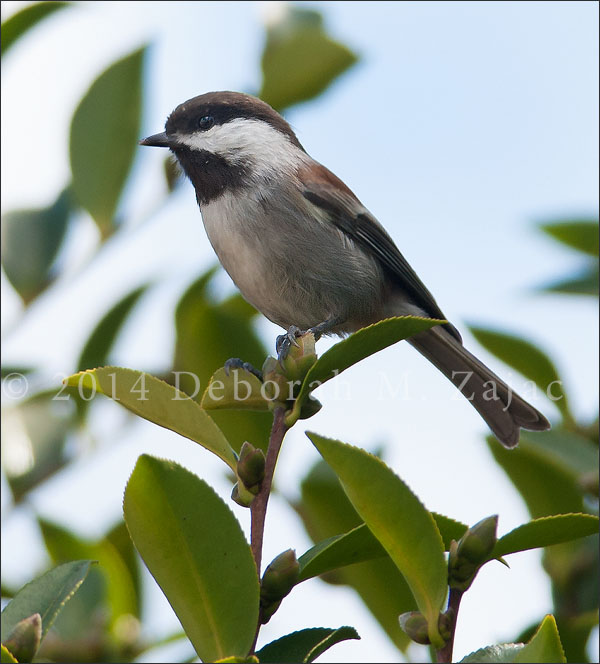
Chestnut-backed Chickadee

Shortly after the mornings began getting chillier here in No. California a pair of Chestnut-backed Chickadees showed up at my feeder. They make sorties for about 30 minutes or so in the mornings then I don’t see them again until the following morning. Since their arrival I’ve been trying to get a good image of them from my window, but I’ve not liked anything I’ve taken as they were too soft, or blurry, too noisey, or something so, I ended up deleting them all. I was quite frustrated I can tell you!

Thursday afternoon I was in the backyard with #1 Grandson who was busy getting into everything he shouldn’t…not being content with his climbing fort, toys, or sandbox as some toddlers are wont to be when a Chestnut-backed Chickadee perched itself on a tippy top branch of my Camellia bush!
Fortunately, I took my camera out with me just in case the Hummingbirds were brave enough to continue feeding with us in the yard. This is the best image of the Chestnut-backed Chickadee I’ve been able to make to date! I hope I’m ready the next time it makes an appearance.

Nikon D700| AF-S Nikkor 300mm f/4| Nikkor 14eII Teleconverter| Lexar Professional Digital Film

UPDATE on the RUFF- A post by a birder on the birding forum reported seeing the Ruff in its favorite corner of the salt pond today. It had been flushed by the Harrier a couple of times. The Ruff is wounded on the wing, but it can fly without any apparent problems, and is eating.  Happy news indeed!

More to come…

Catch of the Day!

Copyright © 2014 Deborah M. Zajac ALL RIGHTS RESERVED.

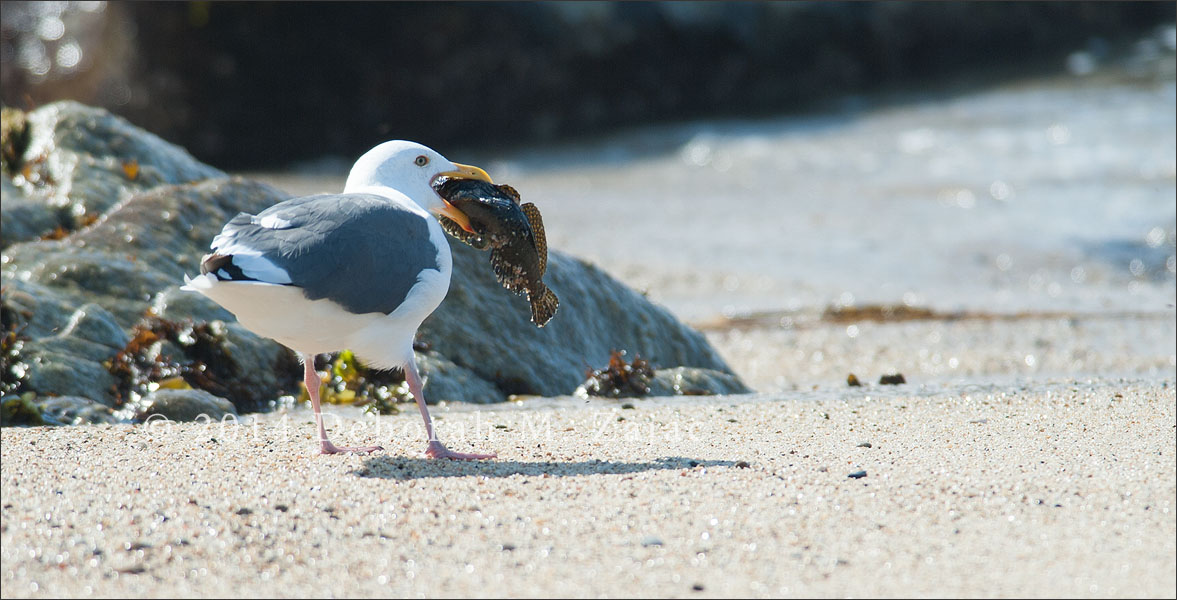
Catch of the Day

The fish this Seagull caught was so big it kept slipping out of the Gull’s mouth onto the sand. It was still alive and flopping about too. Several times the waves came up threatening to pull the fish back to sea, but that Gull would grab a fin and pull it back to the dry sand and try to eat it over and over. Finally he managed to swallow it.

Carmel by the Sea-  Nikon D700| AF-S Nikkor 300mm f4| AF-S Nikkor 14eII Teleconverter

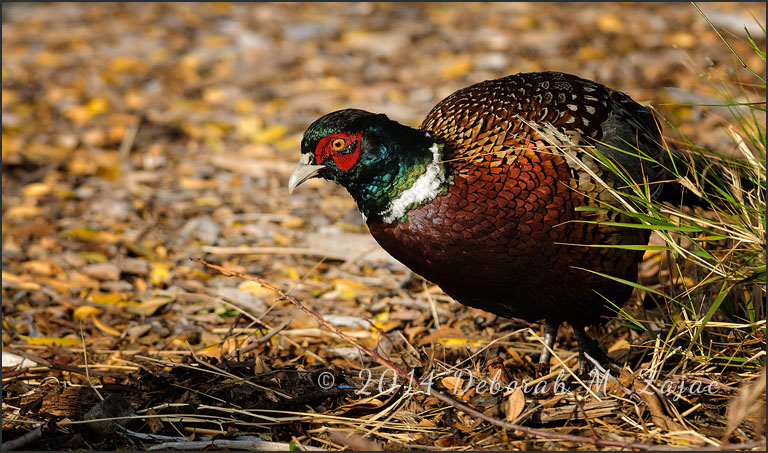
Ring-necked Pheasant

Copyright © 2014 Deborah M. Zajac. ALL RIGHTS RESERVED.

Ring-necked Pheasant MaleThis one is from my Archives. I made this image in late May this year.  This was a really neat and thrilling experience seeing this male Pheasant. I see them so rarely, and most the time they’re on the run the instant they spot me. This male was so busy eating, and I think used to people being around so, he didn’t pay much attention to my presence or the sound of my clicking shutter button.

I really liked the light on his back and face.

Nikon D3oos| AF-S Nikkor 300mm f4| Hand-held

If I had a Song…

Copyright © 2014 Deborah M. Zajac. All Rights Reserved.

I’d sing it in the morning!
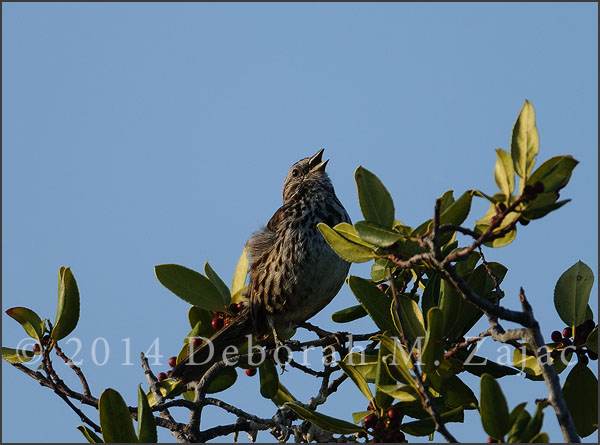
Song Sparrow Singing its Morning SongLast Saturday morning I spent a lovely morning out birding with friends Dali, and Rainey. The weather was great, cool,  with a blue sky with a few big, puffy white clouds for just the right amount of diffusion, and not too many intruding city-life sounds.

We went out with the hopes of finding Stilts, and Avocets with chicks or on nests, but we found few Stilts, and only saw two or three Avocets. Overall there were very few shorebirds at all in either of the places we birded yesterday.

We did see quite a few other birds so the morning wasn’t a total bust. Here are some of the images I took Saturday morning.

Black-necked Stilts
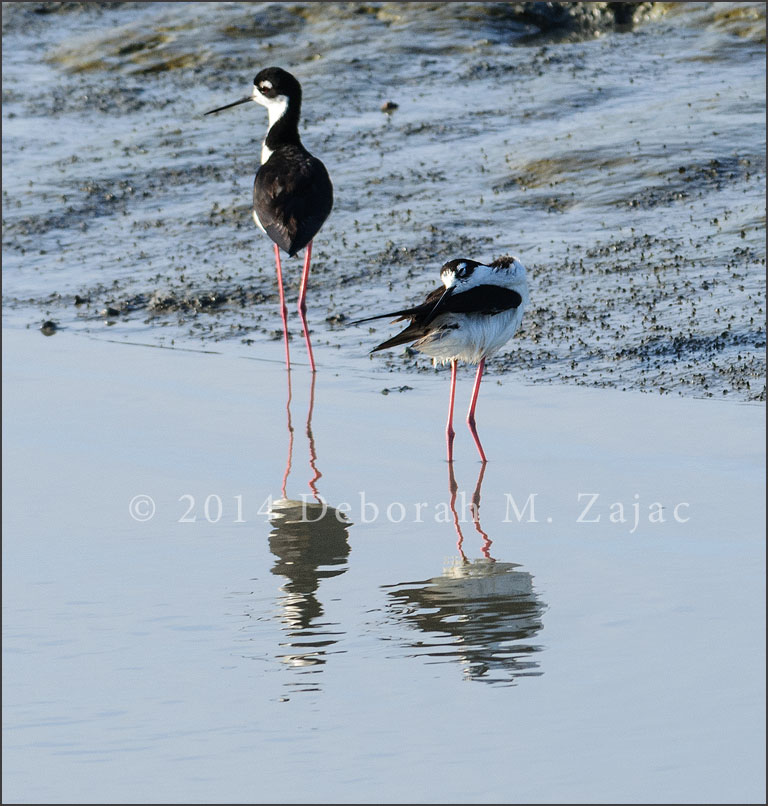
Black-necked StiltsMallard and chick. This was the only chick we saw with her sadly. Actually it was the only chick we saw all morning.
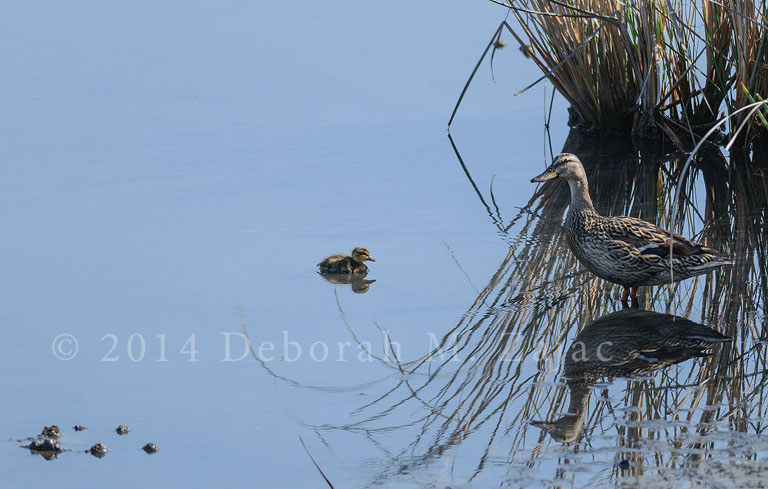
Mallard Female and ChickA Mockingbird imitating several birds. I like this pose and setting.
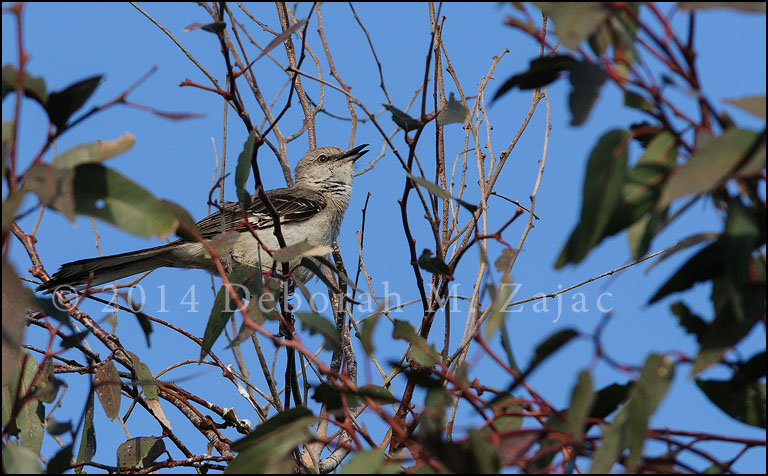
MockingbirdThe Cliff Swallows were very busy making sorties to and from their nests.
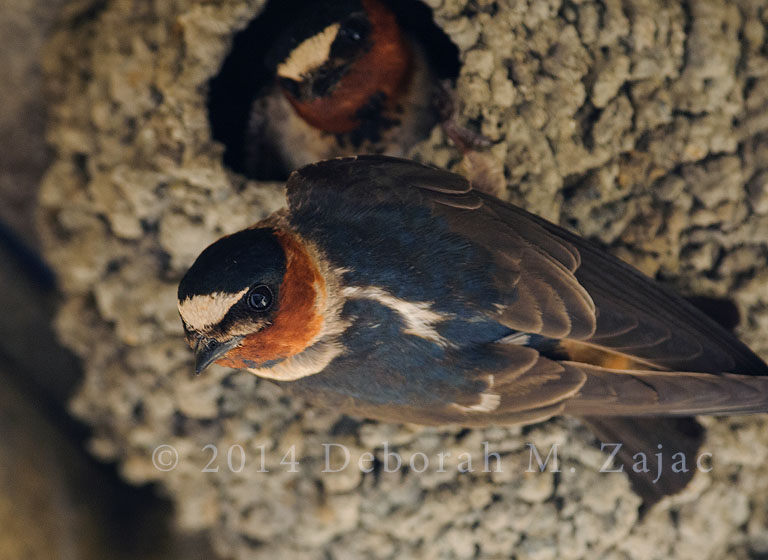
Cliff SwallowHummingbirds are very entertaining and didn’t disappoint this morning either. I saw a territorial spat, but with my 300mm lens wasn’t able to get both birds in the frame. Here’s the offended Hummingbird who thought he had territorial rights to the whole tree.
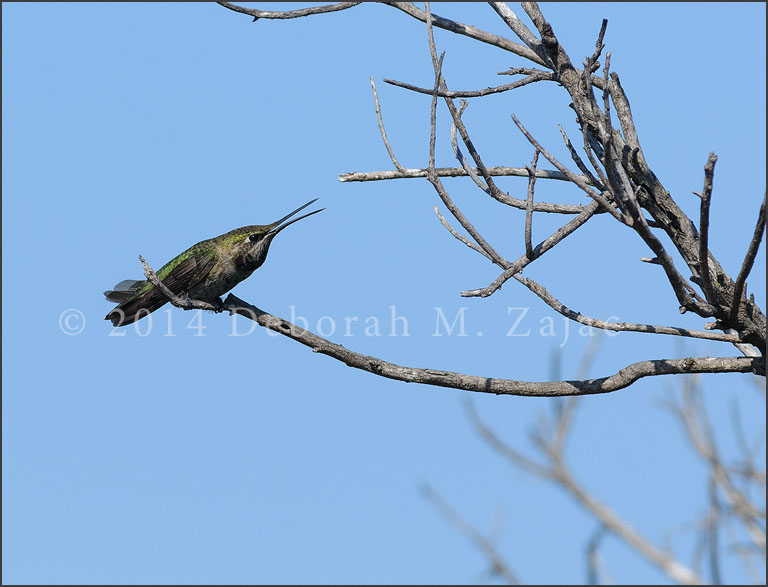
Hummingbird …after a little of this posturing this Hummer decided he wasn’t having another Hummingbird on the tree, so he went on the attack. I didn’t get them both in the frame, but here’s the intruding Hummer on the defense. They squabbled a bit then they both flew away, and neither returned for sometime, so we moved on.
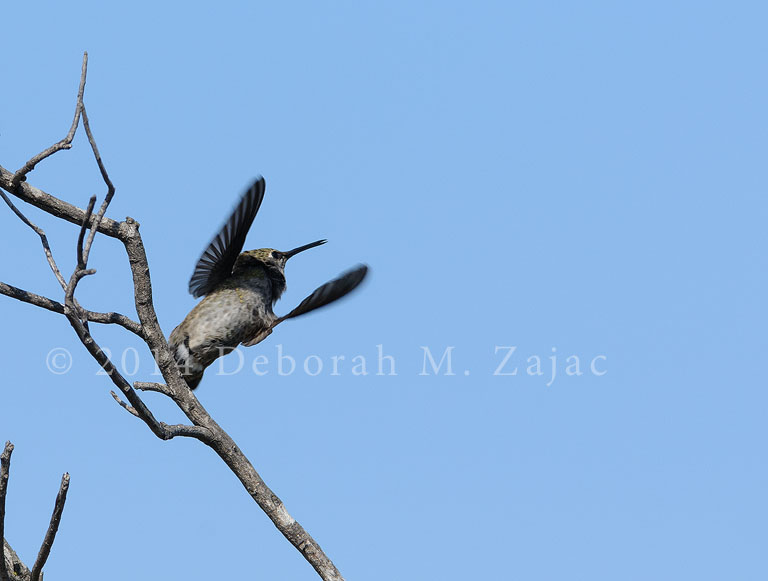
Hummingbird Wings UpThe Bumble bees were busy with the only blooms I could see.
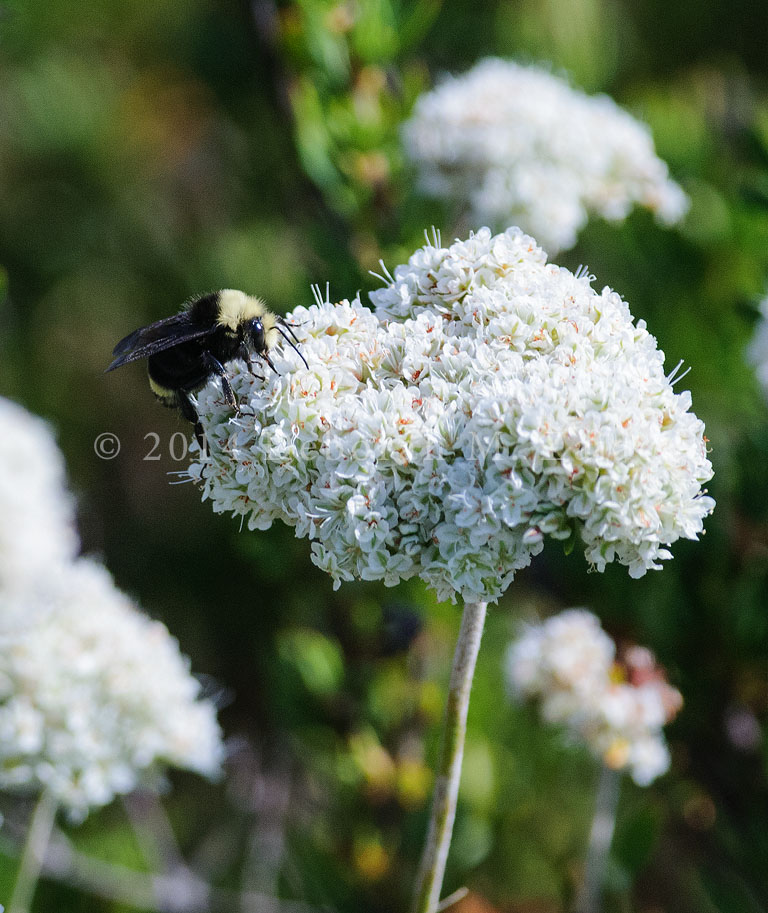
Bumble Bee

…and there were other kinds of birds practicing their landing skills at a nearby airport.
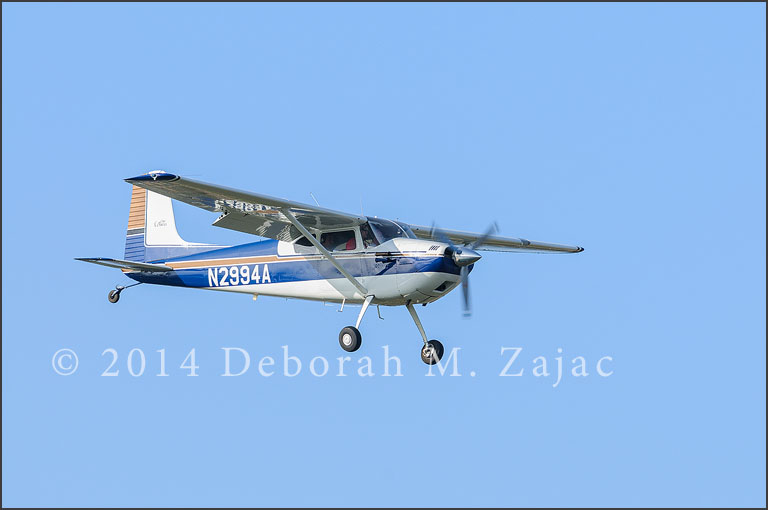
Another kind of Bird-Cessna 180Another little Anna’s Hummingbird posed for me.
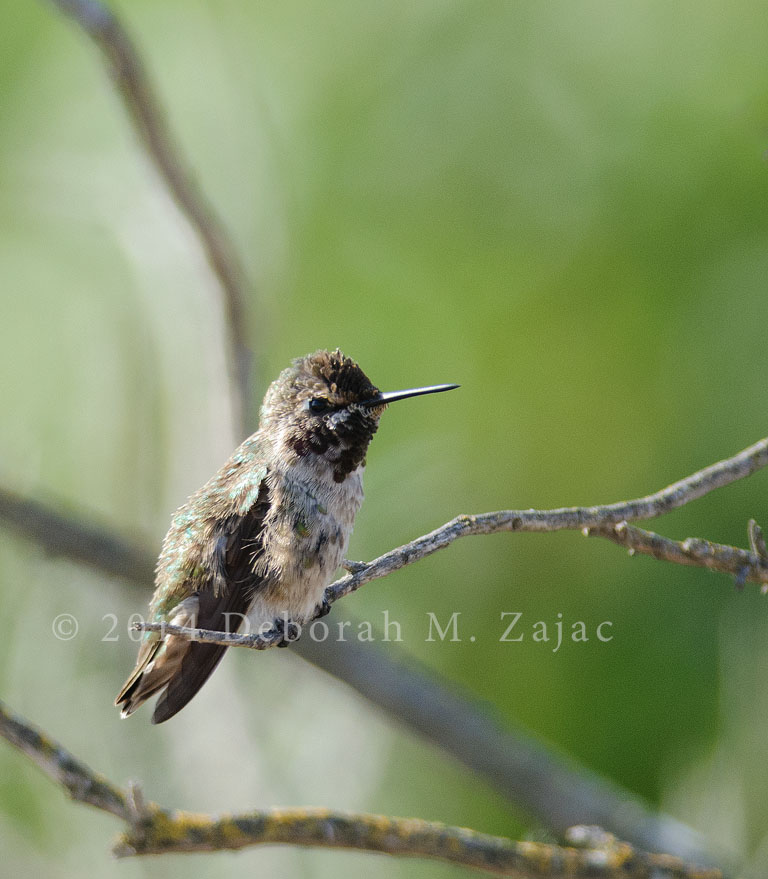
Annas HummingbirdThe most colorful bird of the morning was the Ring-necked Pheasant.
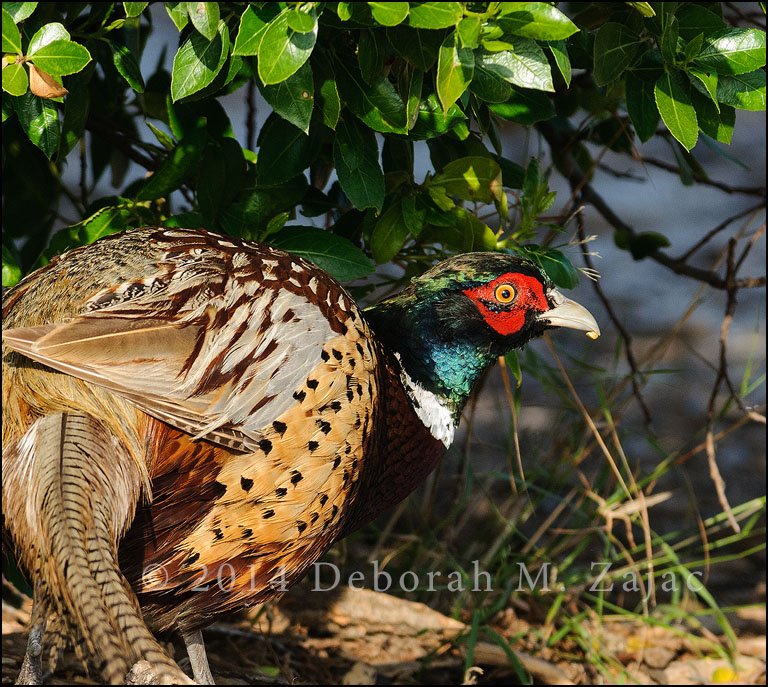
Ring-necked PhesantSaturday morning was also a great opportunity to really give my 300mm f4 lens a workout. I hadn’t really since getting it back from Nikon. I’m so happy to report it works really well. It is quieter than before the fix, and AF (auto-focus) seems quite snappy, and responsive even with my 1.4x Teleconverter on it.

It was a good morning despite there being only few shorebirds.

Nikon D300s| AF-S Nikkor 300mm f4| Hand-held
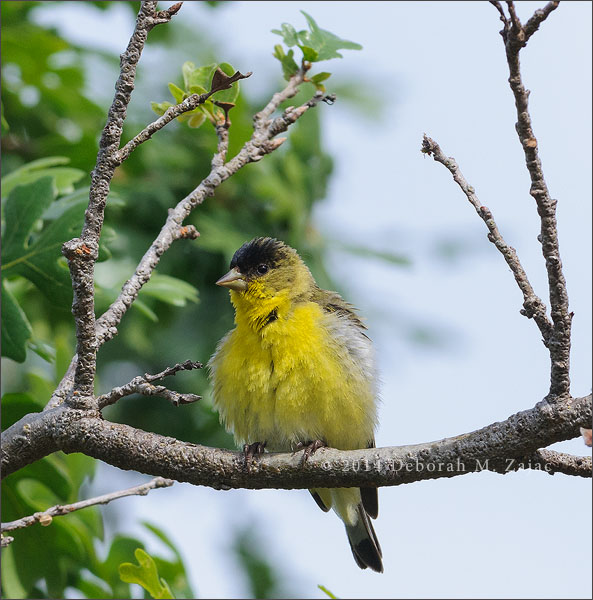
Violet-green Swallow Male

Copyright © 2014 Deborah M. Zajac. All Rights Reserved.

Violet-green Swallow MaleI took this image earlier this month with the rented Nikon Df camera. It’s by far my favorite image that I took of the Violet-green male swallow.

Nikon Df| AF-S Nikkor 300mm f4 @ f9| 1/160s| ISO 400| Manual Priority| Matrix Metering| Tripod w/Wimberley Sidekick