Friday’s Feathered Friends-White-throated Sparrow

Copyright Β©2024 Deborah M. Zajac. ALL RIGHTS RESERVED. 

PLEASE DO NOT USE MY IMAGES WITHOUT EXPRESSED WRITTEN PERMISSION.

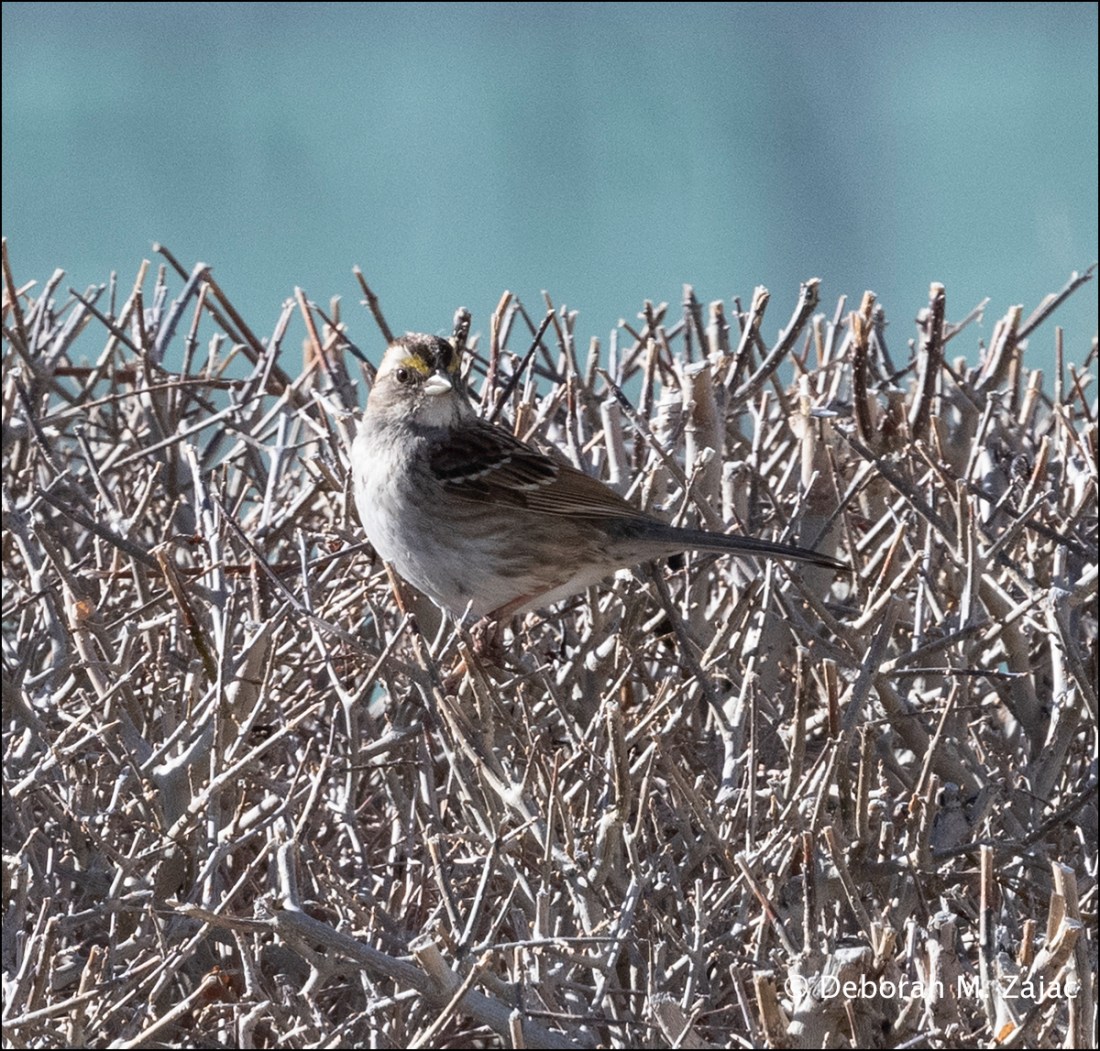
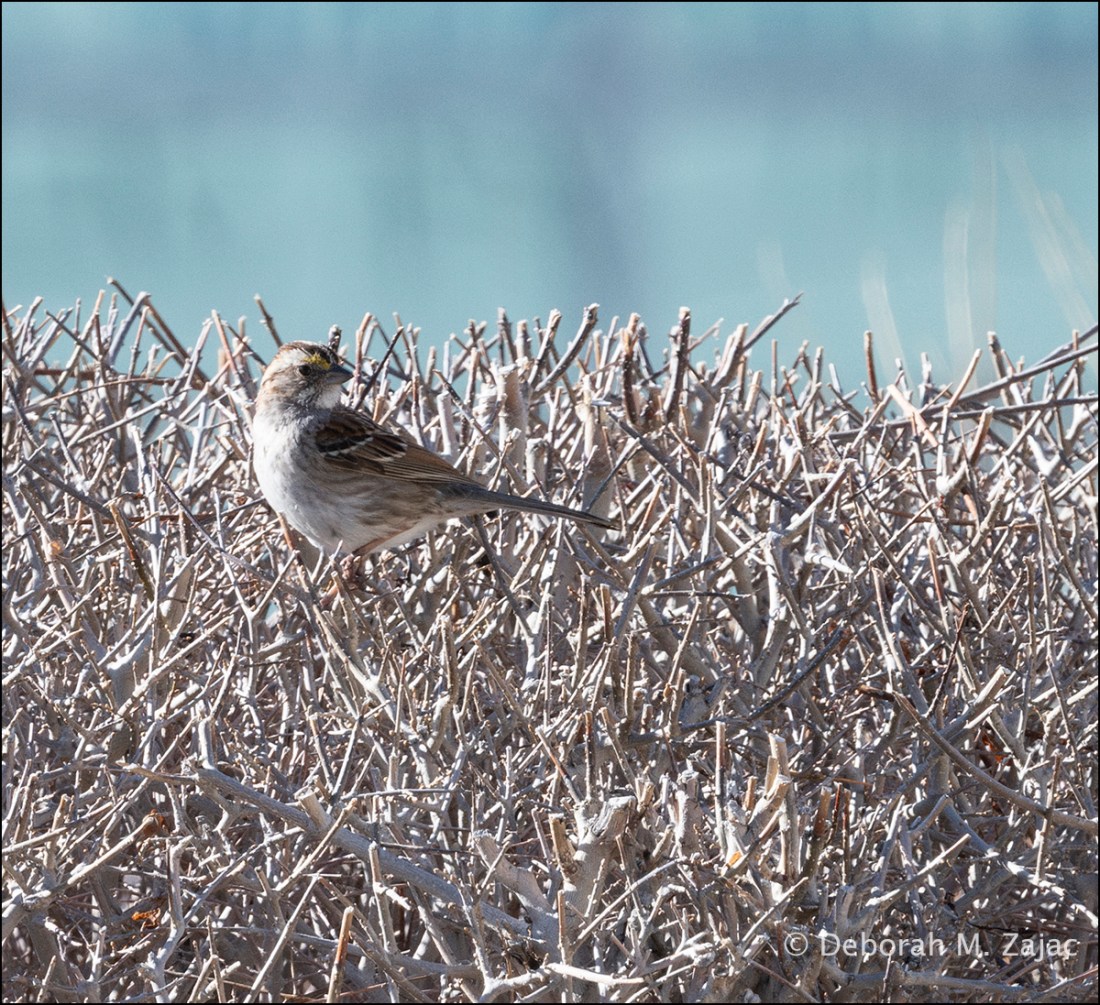
Back in late January or early February I heard there was a White-throated Sparrow up in Carson City. This is a rare bird for Nevada. The map doesn’t show it ever being here rare.

I’d never seen one before so I began the hunt for it. I only had a general location of where it was so I was covering a very large area and staying for hours photographing every sparrow and bird I saw.

I was unsuccessful 6 times over the course of about 6 weeks.

All the while this bird was being seen and reported by one guy almost every day while myself, and my neighbor were not seeing it! I can tell you it was frustrating! During this period there was another one seen, photographed, and reported on the birding site ebird.org up in Reno!

So, my neighbor and I went up and spent hours looking for it but, no joy there either. Sigh.

Then on a tip from a fellow birder who had seen it a week before in Carson City told me the which area I should try looking. I went back last week and hung around the area he suggested and got lucky! πŸ’ƒπŸ’ƒπŸ˜€The 7th times the charm!

White-throated Sparrow
White-throated Sparrow profile

Fun Facts:

  • The White-throated Sparrow comes in two color forms: white-crowned and tan-crowned. The two forms are genetically determined, and they persist because individuals almost always mate with a bird of the opposite morph. Males of both color types prefer females with white stripes, but both kinds of females prefer tan-striped males. White-striped birds are more aggressive than tan-striped ones, and white-striped females may be able to outcompete their tan-striped sisters for tan-striped males.
  • Although they look nothing alike and aren’t particularly closely related, the White-throated Sparrow and the Dark-eyed Junco occasionally mate and produce hybrids. The resulting offspring look like grayish, dully marked White-throated Sparrows with white outer tail feathers.
  • White-throated Sparrows typically nest on or near the ground. Occasional nests are built up to 15 feet off the ground in conifers. Usually, these nests are second attempts after a pair has had a ground nest robbed by a predator.
  • The oldest recorded White-throated Sparrow was at least 14 years, 11 months old, when it was recaptured and rereleased during banding operations in Alberta.

I have been birding a lot so have lots of birds to share in the coming weeks.

I hope you all have a lovely week-end.

Nikon D850| Nikkor 500mm PF-e| PS CC 25.5.0

Fun Facts gleaned from allaboutbirds.org

more to come…
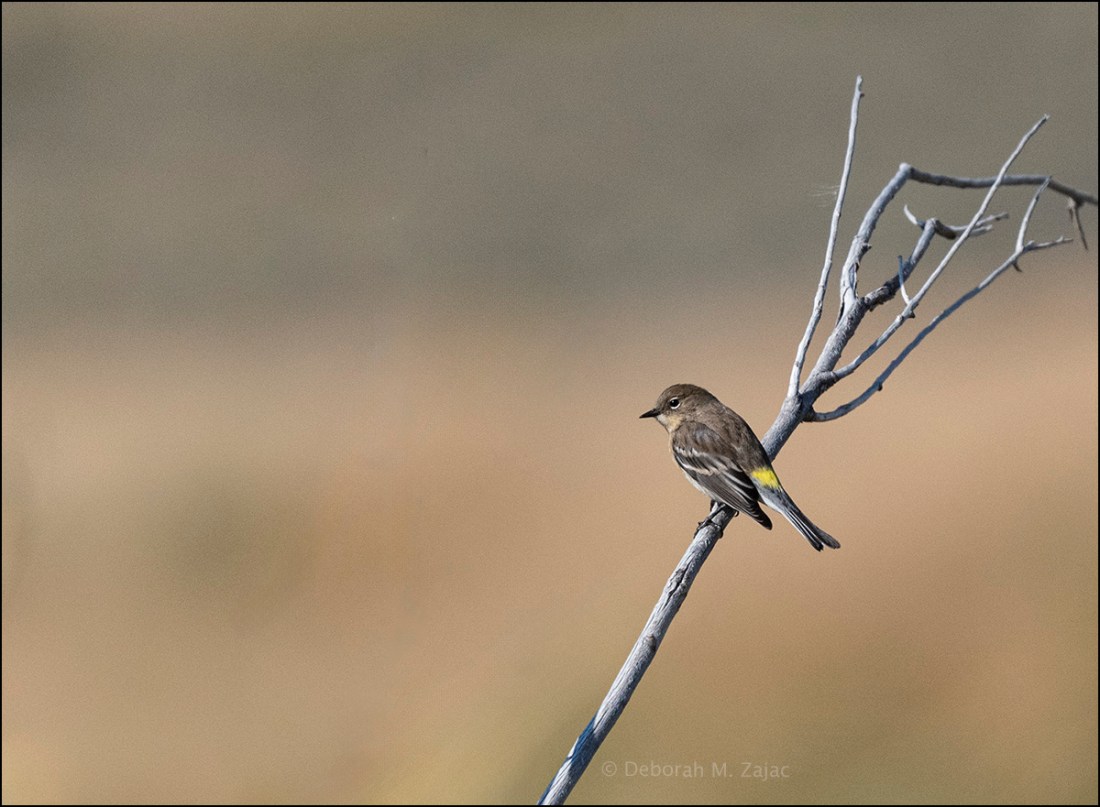
Sunday Stillness: Yellow Rumped Warbler + 1

Copyright Β©2023 Deborah M. Zajac. ALL RIGHTS RESERVED. 

PLEASE DO NOT USE MY IMAGES WITHOUT EXPRESSED WRITTEN PERMISSION.

Plus 1:

It’s out of my wheelhouse to promote other’s work, but I’m so excited I’m sharing a book and author this week.

Several months back Dan Antion of https://nofacilities.com/2023/09/20/introducing-rascal-todd/

had a give-away of his soon to be published 4th novel and I won it!

The book was released last Wednesday and I received my copy. I’m so excited to read this 4th book that goes along with his first three books in his Dreamer’s Alliance series, but this fourth book is also a “stand alone” book. The series is terrific. I’m so glad we get to meet new characters and follow some of the original characters in the new book whom I didn’t want to say good-bye to. You know how that goes when you really like the book right? πŸ˜€

What I’ll be reading next week:

Image used with permission from Dan Antion

Have a lovely Sunday, and great week everyone!

Nikon D810| Nikkor 500mm PF-e | PS CC 24.6.0

more to come...

Wordless Weds. Great Horned Owlets!

Copyright Β©2023 Deborah M. Zajac. ALL RIGHTS RESERVED. 

PLEASE DO NOT USE MY IMAGES WITHOUT EXPRESSED WRITTEN PERMISSION.

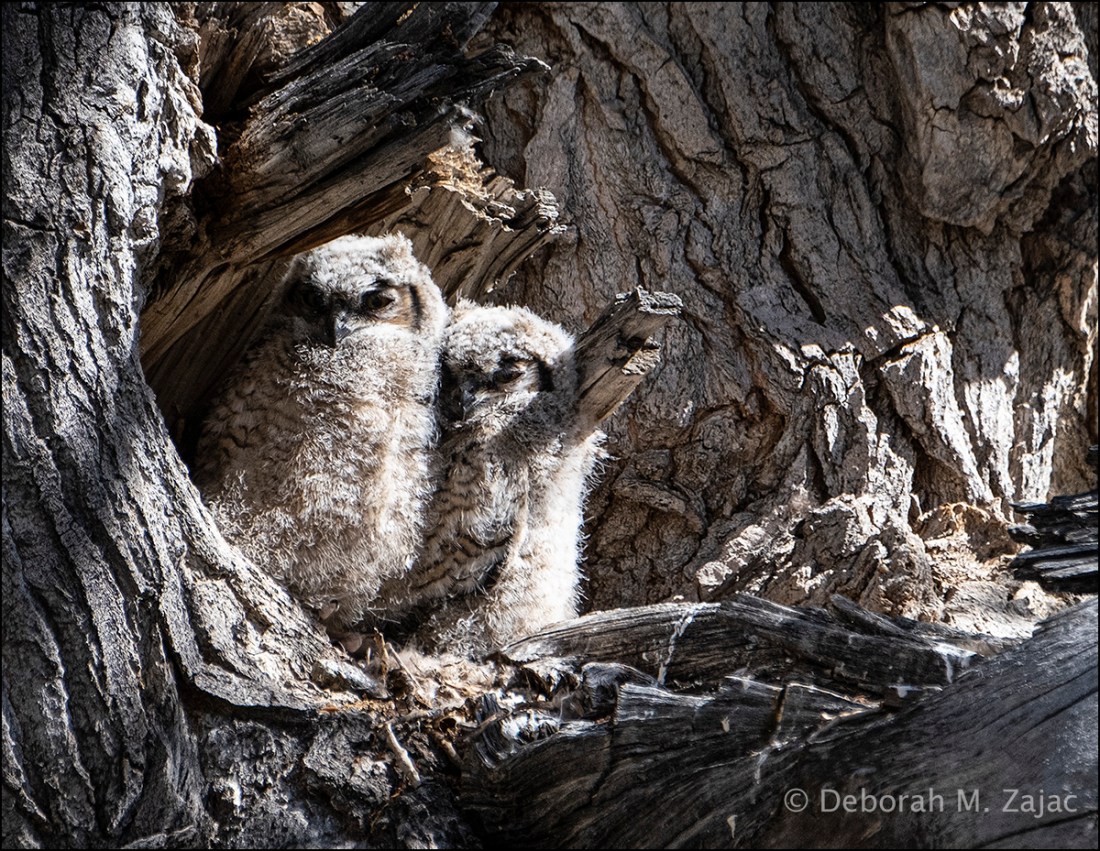
Great Horned Owlets

Fuji X-T3|Fujinon 100-400mm@400mm| PS CC 24.4.1

more to come…

Wordless Wednesday- Your Voice is my Favorite Song

Copyright Β©2022 Deborah M. Zajac. ALL RIGHTS RESERVED. DO NOT USE MY IMAGES WITHOUT EXPRESSED WRITTEN PERMISSION!

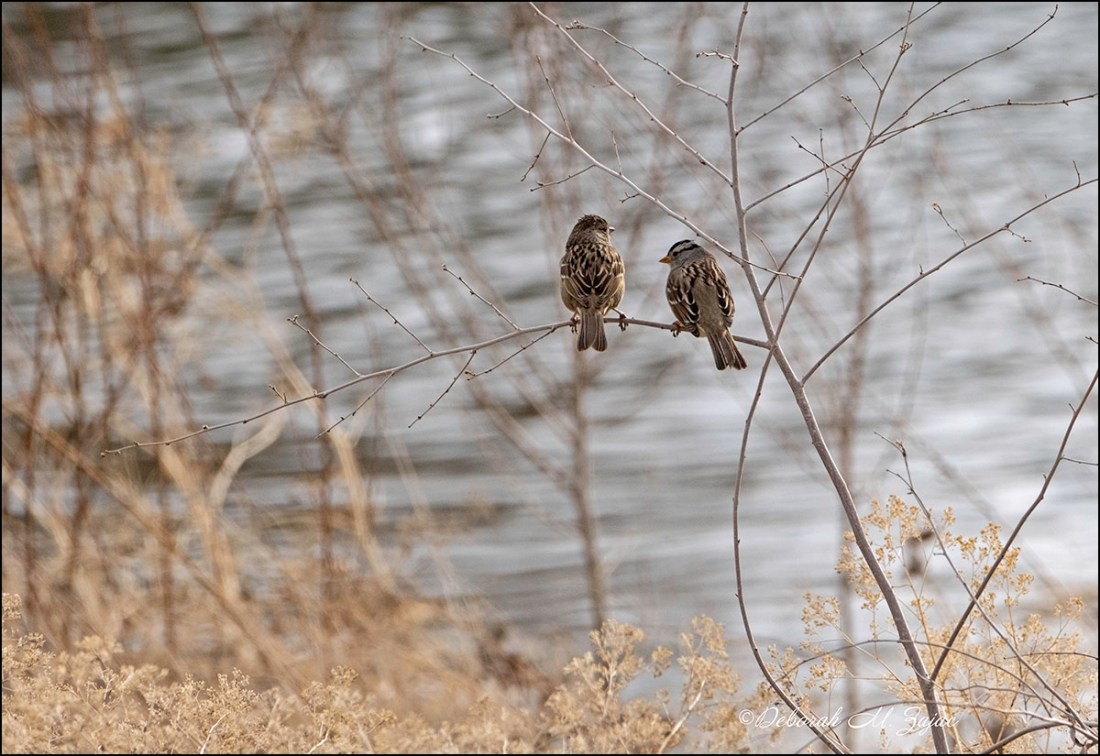
White Crowned Sparrow Pair

Fuji X-T3| Fujinon 100-400mm| Photoshop CC 23.5

more to come…

Friday’s Feathered Friends-Red-Tail Hawk Chick

Copyright Β©2022 Deborah M. Zajac. ALL RIGHTS RESERVED. DO NOT USE MY IMAGES WITHOUT EXPRESSED WRITTEN PERMISSION!

The Red-Tail Hawk is back using the same nest as last year for this year’s breeding season. Yipee!

On the 15th while on my walk I think I spied a little head so when I got home I grabbed my camera and went back out to take photos of the nest and sure enough there was a chick in the nest and Mom too.

Red-Tail Hawk and sleepy chick

It wasn’t long before Mom took flight to stretch her wings. She flew into a tree across the way a bit to keep watch and once in awhile she called out letting the chick know she was near…I think. I kept waiting hoping the chick would sit up and it paid off.

Red-tail Hawk Chick

Look how fuzzy and soft it looks! 2 weeks later look how big it is and there’s less fuzz and more brown.

Red-tail Hawk Chick

The tree has leafed out quite a bit too making it a bit more difficult to see the chick. This is heavily cropped as well.

I’ll keep checking in on it and hopefully, I won’t miss the fledging like I did last year.

Fun Facts-gleaned from allaboutbirds.org

  • The Red-tailed Hawk has a thrilling, raspy scream that sounds exactly like a raptor should sound. At least, that’s what Hollywood directors seem to think. Whenever a hawk or eagle appears onscreen, no matter what species, the shrill cry on the soundtrack is almost always a Red-tailed Hawk.
  • Birds are amazingly adapted for life in the air. The Red-tailed Hawk is one of the largest birds you’ll see in North America, yet even the biggest females weigh in at only about 3 pounds. A similar-sized small dog might weigh 10 times that.
  • The “Harlan’s Hawk” breeds in Alaska and northwestern Canada, and winters on the southern Great Plains. This very dark form of the Red-tailed Hawk has a marbled white, brown, and gray tail instead of a red one. It’s so distinctive that it was once considered a separate species, until ornithologists discovered many individuals that were intermediate between Harlan’s and more typical Red-tailed Hawks.
  • Courting Red-tailed Hawks put on a display in which they soar in wide circles at a great height. The male dives steeply, then shoots up again at an angle nearly as steep. After several of these swoops he approaches the female from above, extends his legs, and touches her briefly. Sometimes, the pair grab onto one other, clasp talons, and plummet in spirals toward the ground before pulling away.
  • Red-tailed Hawks have been seen hunting as a pair, guarding opposite sides of the same tree to catch tree squirrels.
  • The oldest known wild Red-tailed Hawk was at least 30 years, 8 months old when it was found in Michigan in 2011, the same state where it had been banded in 1981.

I hope you all have a lovely week-end!

Fuji X-T3| Fuji 100-400mm lens| PS CC 23.2.2

more to come…

Friday’s Feathered Friends-Western Kingbird

Copyright Β©2022 Deborah M. Zajac. ALL RIGHTS RESERVED

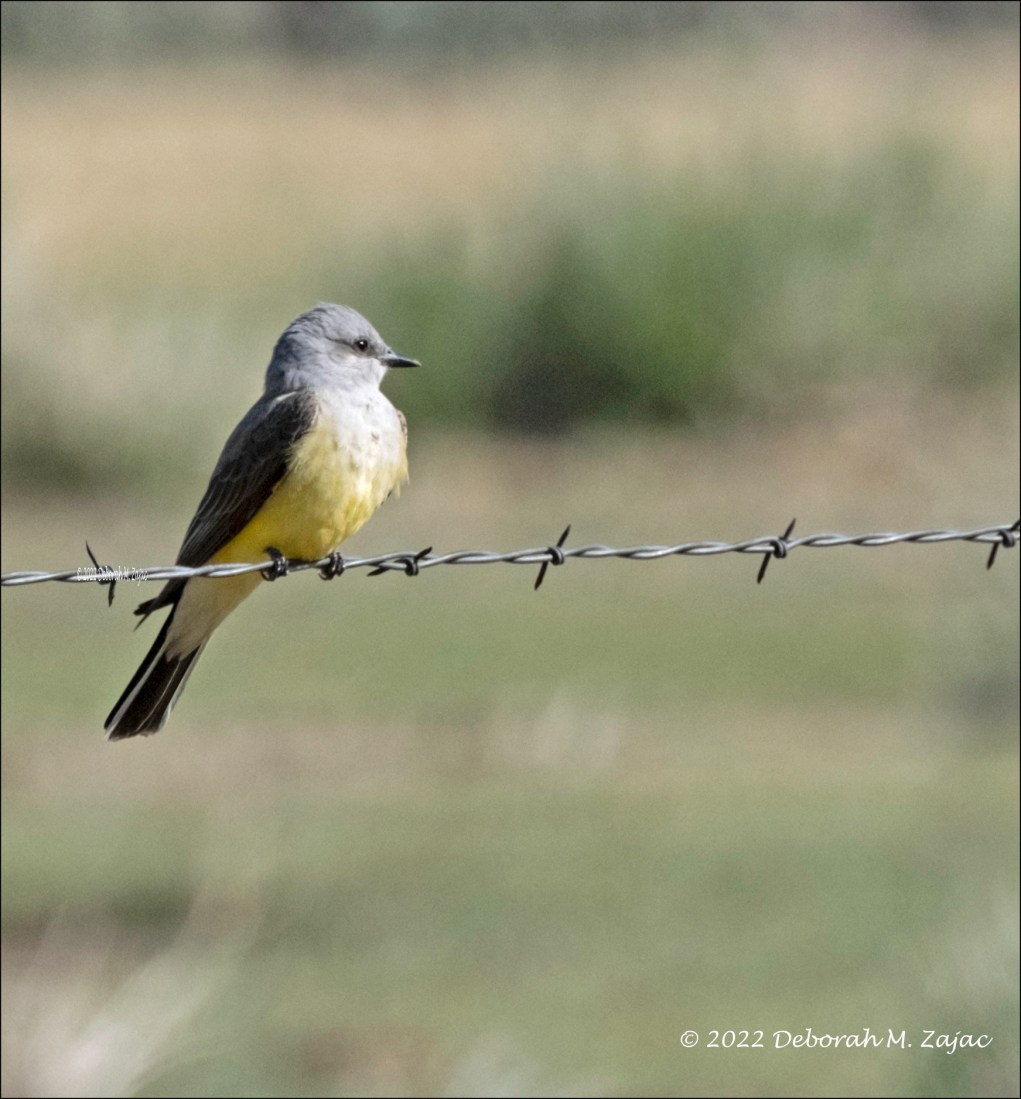
While out for good long walk along the river recently I spied a Spring/ Summer visitor perched on a fence. The Western Kingbird. They’re one of the birds with lovely yellow in their coloring that visit here.

I think they’re so cheery with their bright yellow feathers, and gray heads.

They are in the Flycatcher family that hunts flying insects from its perch on a fence, trees, or utility wires.

They’re also famous for chasing and scolding intruders like Red-tailed Hawks, and American Kestrels.

Fun Facts gleaned from allaboutbirds.org

  • The Western Kingbird’s breeding range has been spreading for the last century as an unplanned result of human activities. By planting trees and installing utility poles in open areas, people have provided hunting perches and nest sites, and by clearing forests they have created open habitats suitable for foraging.
  • Though known as birds of the West, Western Kingbirds tend to wander during fall migration. They show up along the East Coast, between Florida and Newfoundland, every autumnβ€”but only rarely during the spring. In 1915 Western Kingbirds began spending winters in Florida, where they are now regular winter residents.
  • Western Kingbirds aggressively fend off predators and other kingbirds from their territories. The males warn off intruders with harsh buzzes or whirring wings. Both males and females snap their bills and raise their red crowns (normally hidden under gray feathers on their heads) when provoked. As the breeding season wears on, each pair defends a smaller and smaller territory. By mid-incubation time the territory includes the nest tree and little else.
  • The Western Kingbird was originally known as the Arkansas Kingbird, but scientists changed its name to acknowledge its wide range across western North America.
  • The oldest Western Kingbird on record was a male, and at least 6 years, 11 months old, when he was found in South Dakota. ~allaboutbirds.org

We’ve been having big, strong winds lately so my sinus’ are a bit of a mess, but we’re looking at nice sunny days for the week-end here and hopefully the wind mellows out too.

I’ve been thinking about photographing the upcoming Lunar Eclipse. I won’t be able to see the entire thing from start to finish, but I’ll be able to see Totality. I’ll probably just photograph it from my yard. What about you, are you planning to watch it or photograph it?

I hope you all have a lovely week-end, and to all the Mom’s and Grandmother’s, I wish you a very Happy Mother’s Day! πŸŒΌπŸ’—

Fuji X-T3| Fujinon 100-400mm| PS CC 23.2.2

more to come…

Friday’s Feathered Friends- A walk by the slough

Copyright Β©2022 Deborah M. Zajac. ALL RIGHTS RESERVED

Last week I met up with some local Audubon club members for a bird walk. Here’s some of the exciting birds we saw.

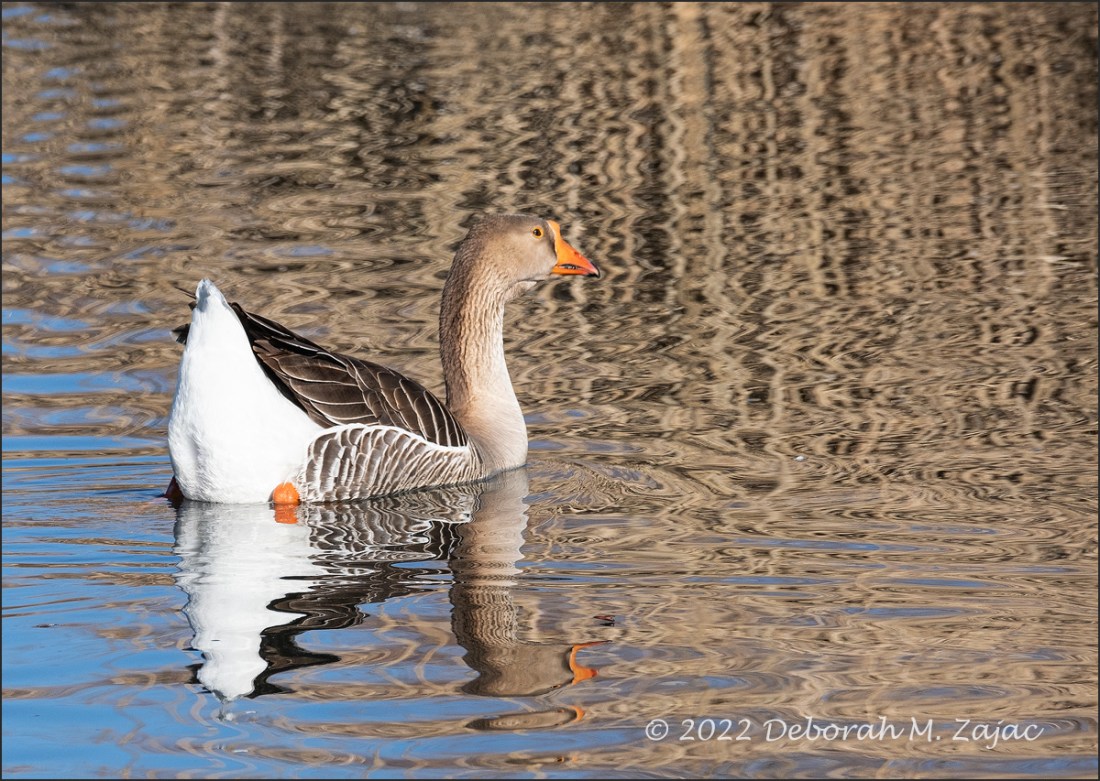
This first bird was a neat sighting. It’s a Graylag x Swan hybrid we discovered. The ebird monitor for Washoe county wrote me after seeing my images of the goose this. “Your documentation shows this is a “Domestic goose with a mix of Graylag and Swan Goose (aka Chinese Goose) ancestry. The dark stripe from the top of the head down the back of the neck, and the bulging forehead are Swan Goose traits, while the orange bill and a few other features are Graylag traits. ” P.H. Isn’t that interesting! It’s a handsome goose and several people we ran into while admiring and photographing it told us they named him. One family called him Barney, and another one calls him Harry. He’s quite the celebrity there.

Graylag Goose

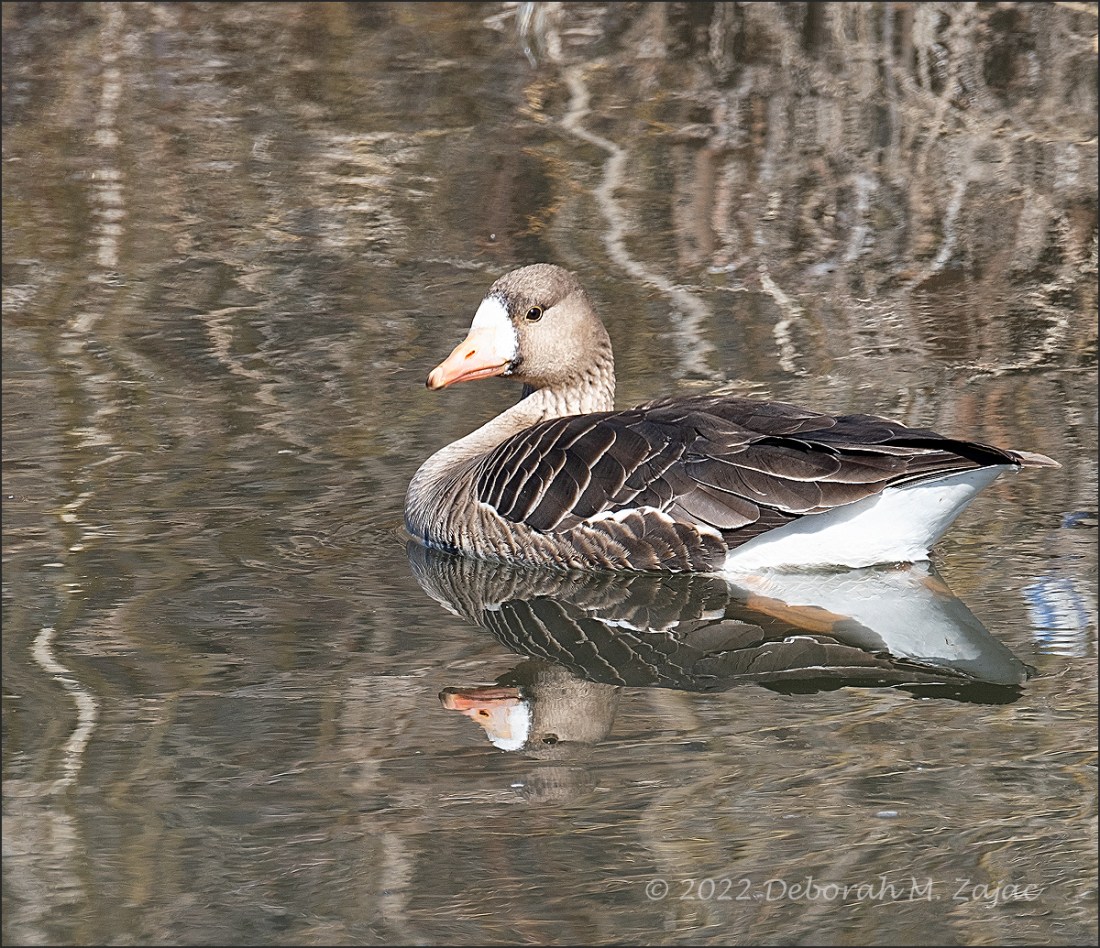
Another exciting sighting was a large group of White-fronted Geese. We don’t see those a lot here so, we watched and photographed them for awhile too.

White-fronted Goose

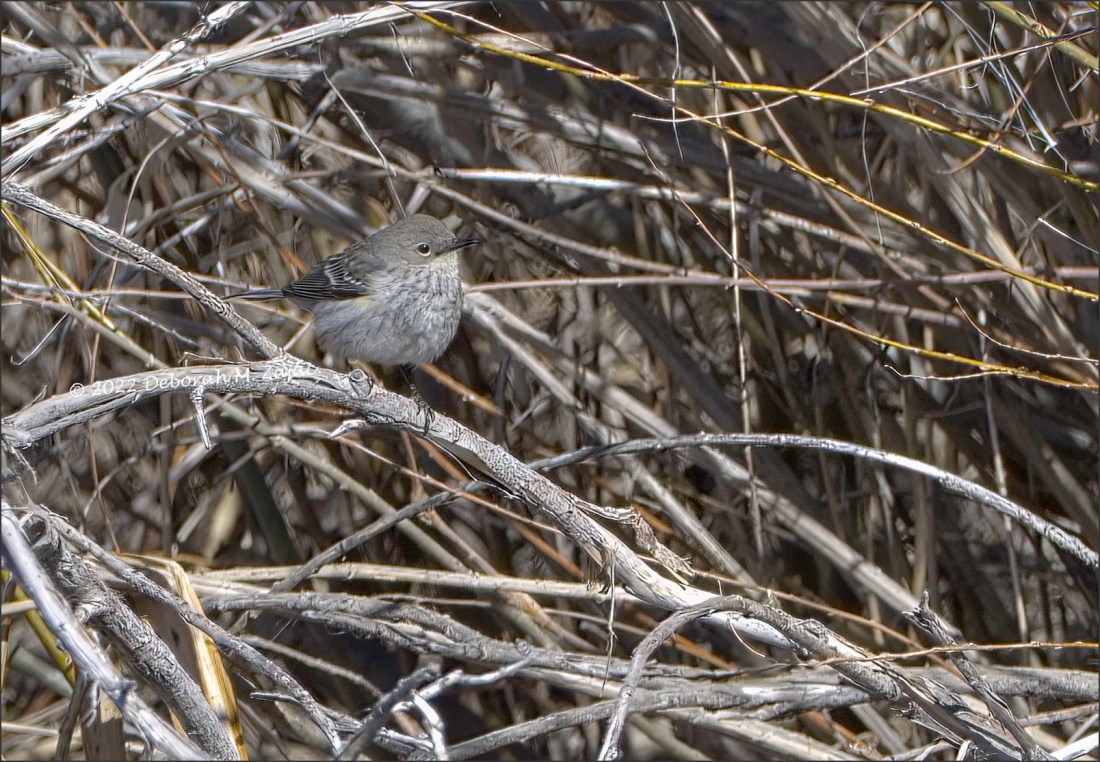
Saving the best for last, and it was the last bird we saw on our way back to the parking before we finished up was the Immature Audubon’s Yellow-rump Warbler. This was a lifer for me! Isn’t it cute!

Audubon’s Yellow-rump Warbler-immature

I’ll be birding with friends this week-end and hoping to see lots of birds. I hope you all have a great week-end!

Fuji X-T3| Fujinon 100-400mm @400mm| PS CC 23.2.0

more to come…