Whatever Weds. American Kestrel

Copyright ©2023 Deborah M. Zajac. ALL RIGHTS RESERVED. 

PLEASE DO NOT USE MY IMAGES WITHOUT EXPRESSED WRITTEN PERMISSION.

This is a Kestrel I saw in December. I’ll show her from the two sides I got to observe her from. It’s a treat to actually get two side views of a bird.

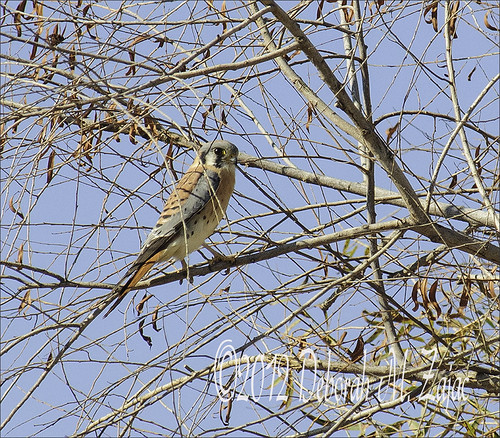
When I first spotted her high in a Cottonwood tree-
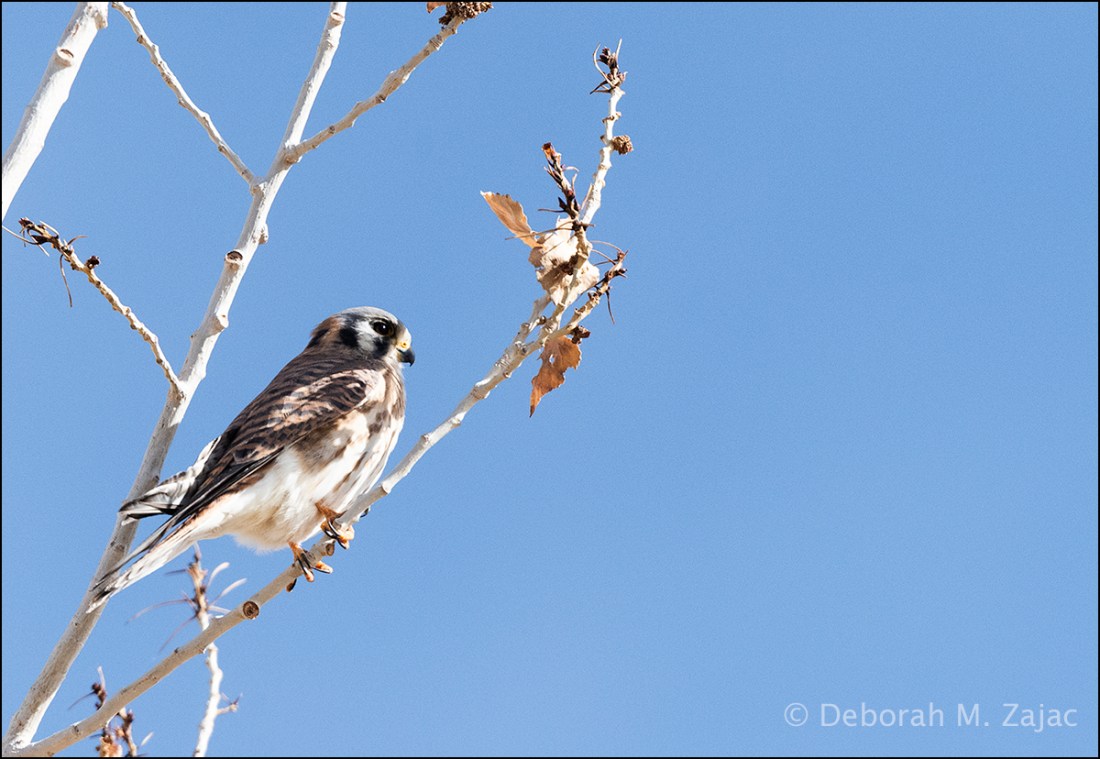
Female American Kestrel

They’re one of the smallest birds of prey, but so cute.

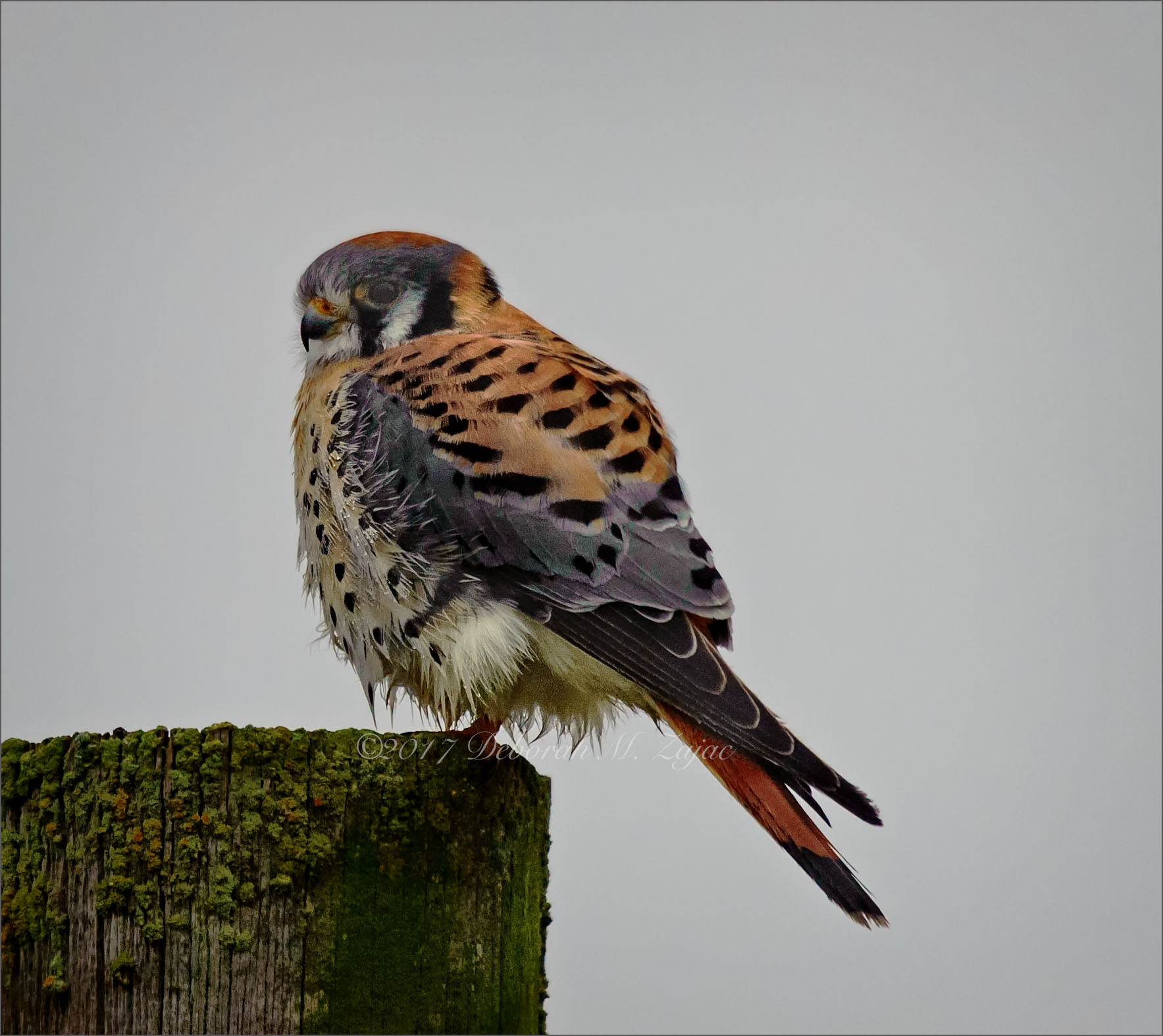
Here she is from the other side, with her chest showing.
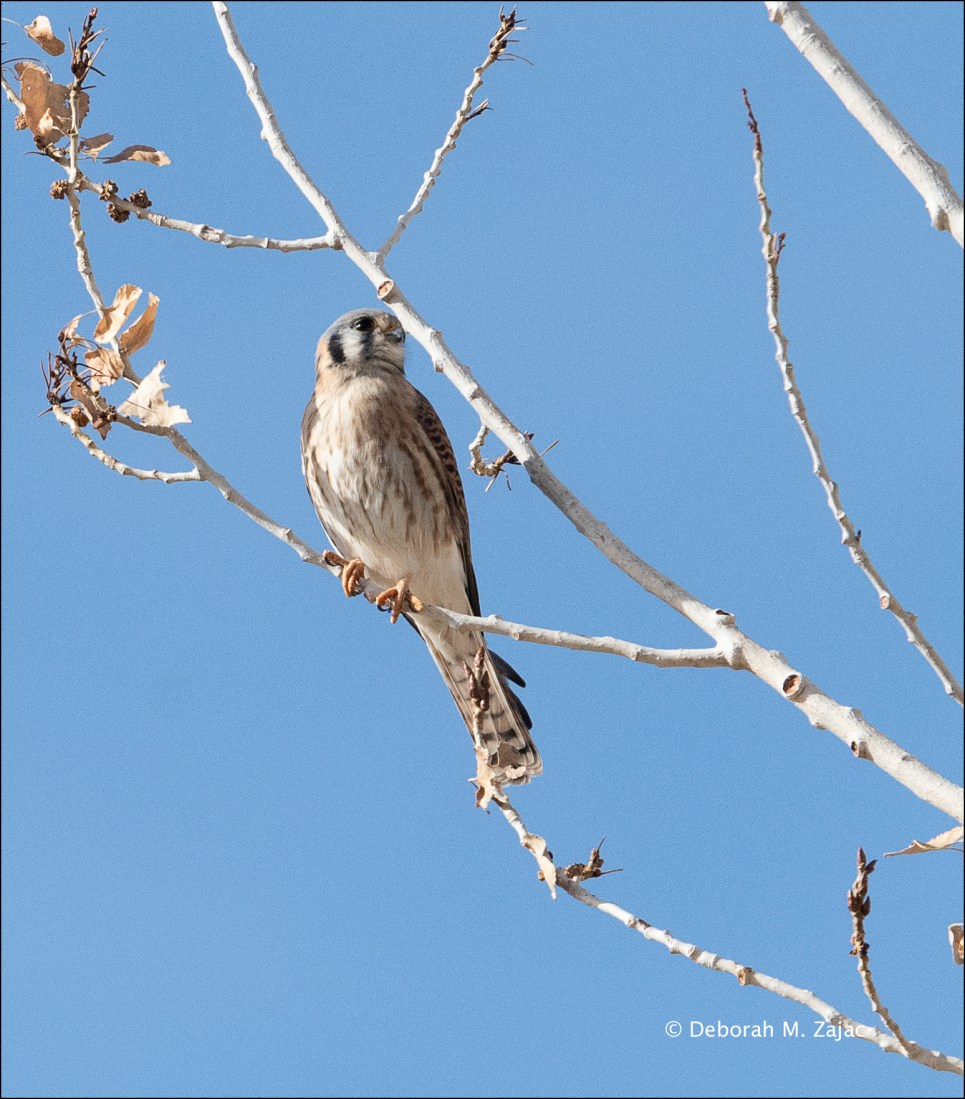
American Kestrel Female

Fun Facts:

    • Sports fans in some cities get an extra show during night games: kestrels perching on light standards or foul poles, tracking moths and other insects in the powerful stadium light beams and catching these snacks on the wing. Some of their hunting flights have even made it onto TV sports coverage.
    • When nature calls, nestling kestrels back up, raise their tails, and squirt feces onto the walls of the nest cavity. The feces dry on the cavity walls and stay off the nestlings. The nest gets to be a smelly place, with feces on the walls and uneaten parts of small animals on the floor.
    • It can be tough being one of the smallest birds of prey. Despite their fierce lifestyle, American Kestrels end up as prey for larger birds such as Northern Goshawks, Red-tailed Hawks, Barn Owls, American Crows, and Sharp-shinned and Cooper’s Hawks, as well as rat snakes, corn snakes, and even fire ants.
    • In winter in many southern parts of the range, female and male American Kestrels use different habitats. Females use the typical open habitat, and males use areas with more trees. This situation appears to be the result of the females migrating south first and establishing winter territories, leaving males to the more wooded areas.
    • Unlike humans, birds can see ultraviolet light. This enables kestrels to make out the trails of urine that voles, a common prey mammal, leave as they run along the ground. Like neon diner signs, these bright paths may highlight the way to a meal—as has been observed in the Eurasian Kestrel, a close relative.
    • Kestrels hide surplus kills in grass clumps, tree roots, bushes, fence posts, tree limbs, and cavities, to save the food for lean times or to hide it from thieves.
    • The oldest American Kestrel was a male and at least 14 years, 8 months old when he was found in Utah in 2001. He was banded in the same state in 1987.

“Like neon diner signs”! 😂 I loved that description.

Fun facts gleaned from allaboutbirds.org

Happy New Year to all my blogging friends, and visitors!

Nikon D810| Nikkor 500mm| PS CC 25.3.1

more to come…
Whatever Weds.

Copyright ©2019 Deborah M. Zajac. ALL RIGHTS RESERVED

We’re settling into our new home. I can see the light at the end of the tunnel of boxes!

Sunday I went out with a local birding expert and guide for a morning of birding.

It was so much fun and a great birdy day with so many bird highlights. We saw a pair Great-horned Owls, some Owlets, a Barn Owl, Bald Eagles, lots of Red-wing Blackbirds, Yellow-headed Blackbirds, sparrows, Turkey Vultures, and a pilot practicing aerial loops, swoops, and dives!

I’ll share just two images today though.

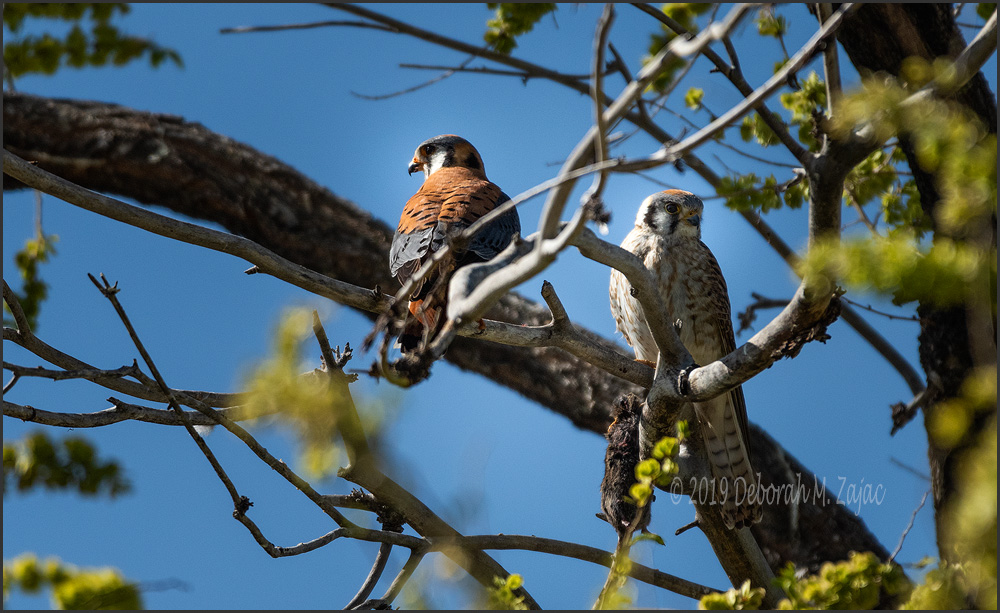
A pair of Kestrels in a tree with breakfast. I didn’t notice the prey until I uploaded my images.  I’ve never seen a pair together before so this was a real treat for me.

American Kestrel Pair with Prey

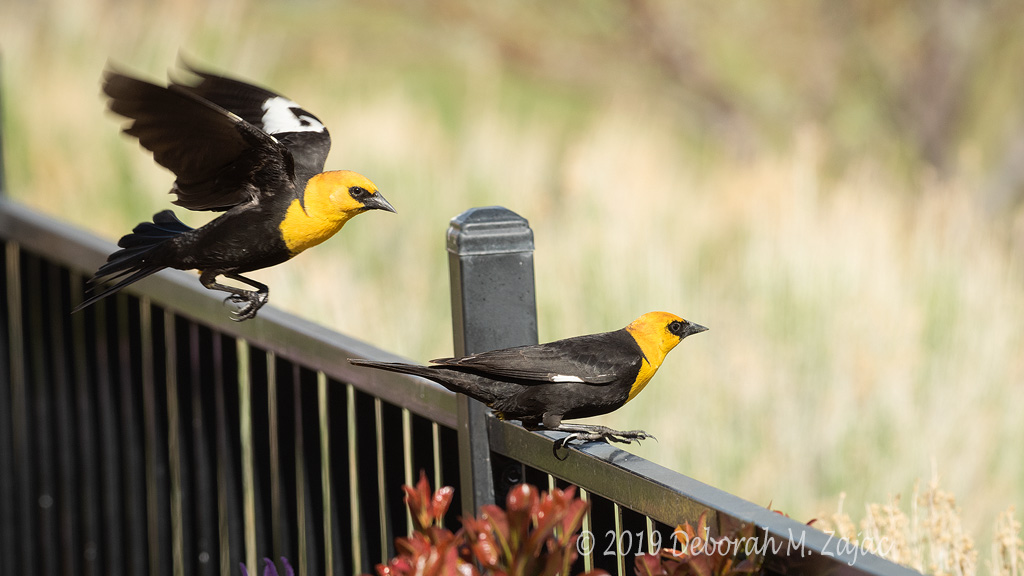
and from my backyard, there are flocks of Yellow-headed Blackbirds enjoying the trees and my feeder.  I never saw these in Silicon Valley. I love their vivid heads and lovely white pattern on their wings.  I’m not sure if these are year-round birds or just spending Spring here. I’ll soon find out!

Yellow-headed Blackbirds

Yesterday the cabinets for the laundry room arrived so the contractor is going to open those boxes up and see what we got. I have to select and order my counter top still, and I think he’s going to paint He-Man’s closet. He textured the new framing for it yesterday.  I’ve been taking photos of the project at each step. I’ll share those later.

I hope your week has been going well and continues to go well through the week-end!

Nikon D810| Nikkor 200-500mm f/5.6 top image and 300mm f/4 bottom image| Hoodman Steel Digital Film| PS CC 2019

more to come…


Wordless Wednesday 39/52 American Kestrel

Copyright © 2017 Deborah M. Zajac.  ALL RIGHTS RESERVED

Nikon D810; Nikkor 200-500mm @500mm | hand-held| SanDisk Digital Film| PS CC 2017

more to come…

American Kestrel-Male

Copyright © 2017 Deborah M. Zajac. ALL RIGHTS RESERVED

The American Kestrel is the littlest Falcon in North America and the most colorful.  They’re quite fierce for the size. They often perch on wires, or poles to watch and wait for unsuspecting prey. ” Hunting for insects and other small prey in open territory, kestrels perch on wires or poles, or hover facing into the wind, flapping and adjusting their long tails to stay in place.”~AllAboutBirds.com

Gordon and I stopped at San Luis National Wildlife Refuge on Saturday morning before joining a Meet-Up group we’re in at another National Wildlife Refuge and while on the auto route where the Tulle Elk are we spotted this Kestrel on a post.  It was just after a heavy rain storm so there was Tulle Fog all over the valley hence the white sky.  I love the rain drops or dew drops on his breast feathers.

American Kestrel Male


We didn’t see any Tulle Elk in the paddock. Not one! They must have been deep in the trees until it warmed up.  Thankfully for us this Kestrel was out and about looking for breakfast!

Nikon D700|Nikkor 200-500mm @ 460mm| Lexar Digital Film| PS CC 2017

More to come…

American Kestrel- Female

American Kestrel- Female, originally uploaded by dmzajac2004-.

Via Flickr:
Copyright © 2012 Deborah M. Zajac. All Rights Reserved.

“Not on a wire, not on a pole, it’s a tree for me!” This is the little mantra I said today as I saw a Kestrel on a wire. Later in the morning while we were driving through an Auto-tour in San Luis National Wildlife Refuge I spotted this kestrel in a tree! I was so excited, and thrilled when I uploaded this photo. It’s the first Kestrel I’ve shot that wasn’t on a pole or wire, and the first I’ve posted I believe.
We (Rainy, Dali, Judi, and I) saw so many neat birds and photographed quite a few of them.
We saw, this Kestrel, Red-tailed Hawks, Northern Harriers, Black Phoebe’s, Sparrow’s a new one for me I need to ID, my first Merlin!, Ross Geese, Coots, Blue Herons, Egrets: mostly Great Egrets, a Kingfisher, an American Bluebird, a Burrowing Owl, Mallards, Northern Pintails, Shrike, Meadow Larks, Plovers, Ibis, Sandhill Cranes, White fronted Geese, Red-winged Blackbirds, Shovelers, and White-tail Kites. In addition we saw a Coyote,  I saw a raccoon, and  we saw a dear friend Judi. It was an amazing, fantastic, sunny, everything going our way, very good day!

Nikon D300s| Nikkor 80-200 @200mm + Tamron 1.4TC|f7.1| 1/800 sec| ISO 640| Manual Priority| Hand-held