Two hours in the park

Copyright © 2013 Deborah M. Zajac. All Rights Reserved.


Last Saturday I had the pleasure of going birding with a my friend Dali. We heard the Cedar Waxwings were returning, and we hoped to find them.

We found a good size flock of them zipping through the Aspens, and pines in the park.  We spent most the morning photographing them.
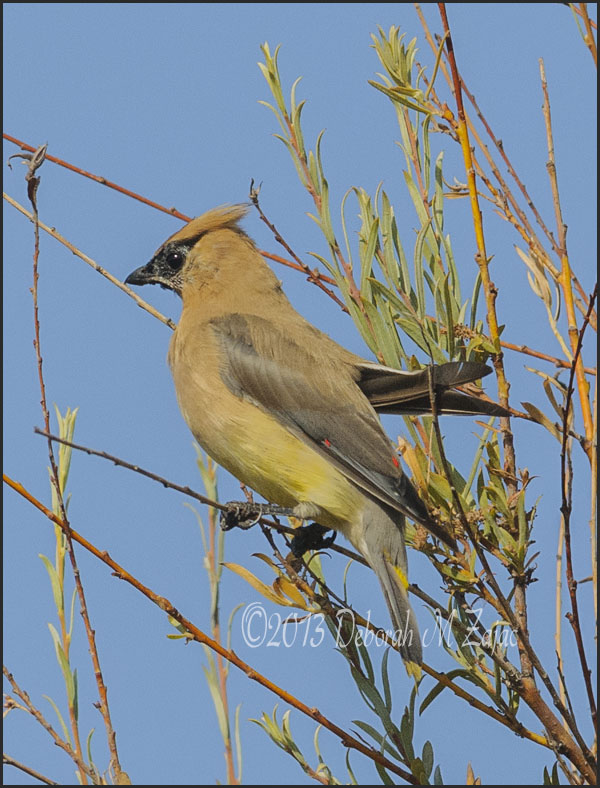
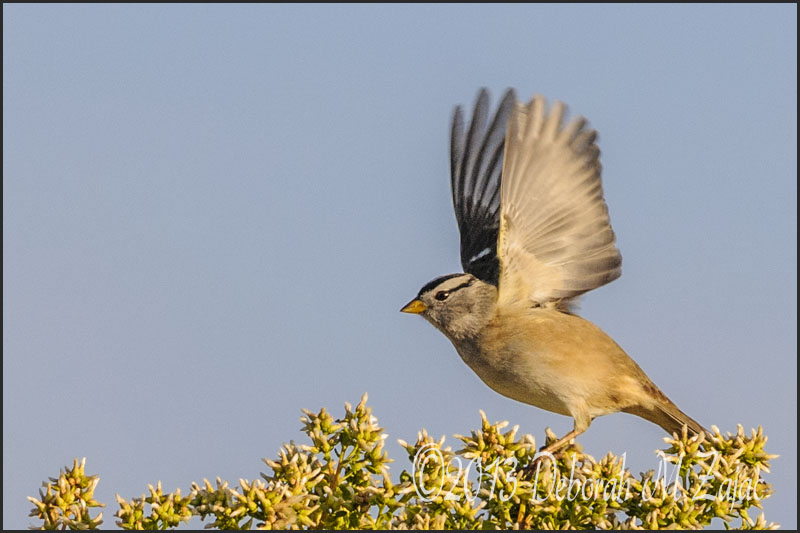
Cedar WaxwingWe spotted several other birds too. I managed to nail this photo of a White Crown Sparrow as it was just about to take off.
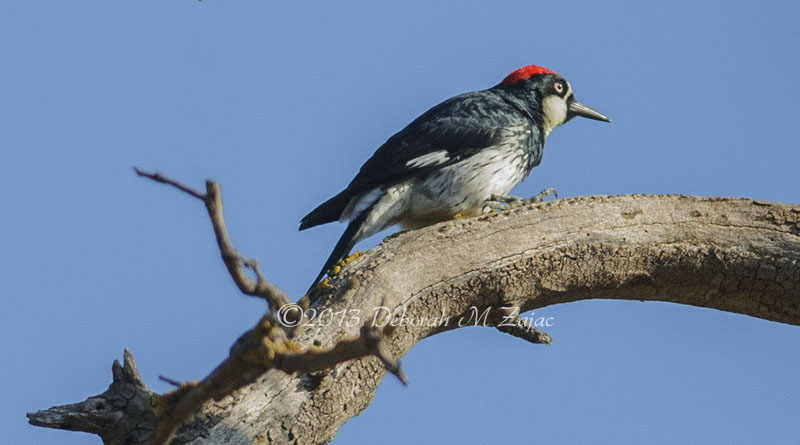
White Crowned Sparrow taking offThere was an old dead tree along the creek that had several Acorn Woodpeckers, and Starlings perched on it. Here’s an Acorn Woodpecker taking a quick break from pecking for bugs.
Acorn WoodpeckerIn the wooded area we came across these lovely berries. I don’t know what plant this is, but it was lovely in the morning light, and the colors were vibrant, and perfect for the season.
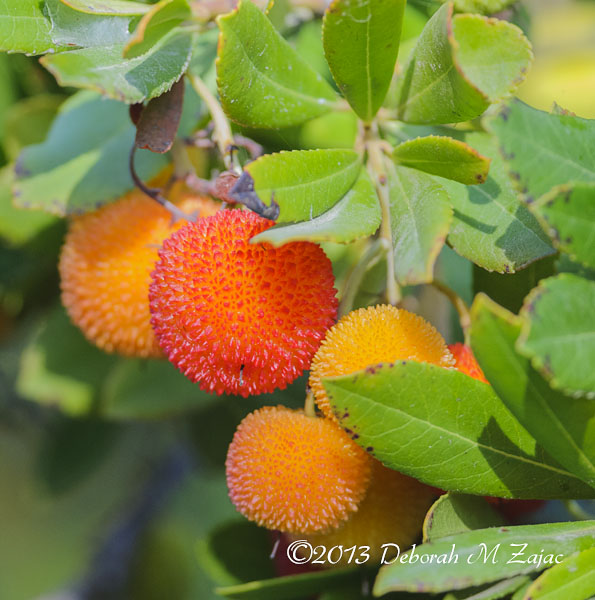
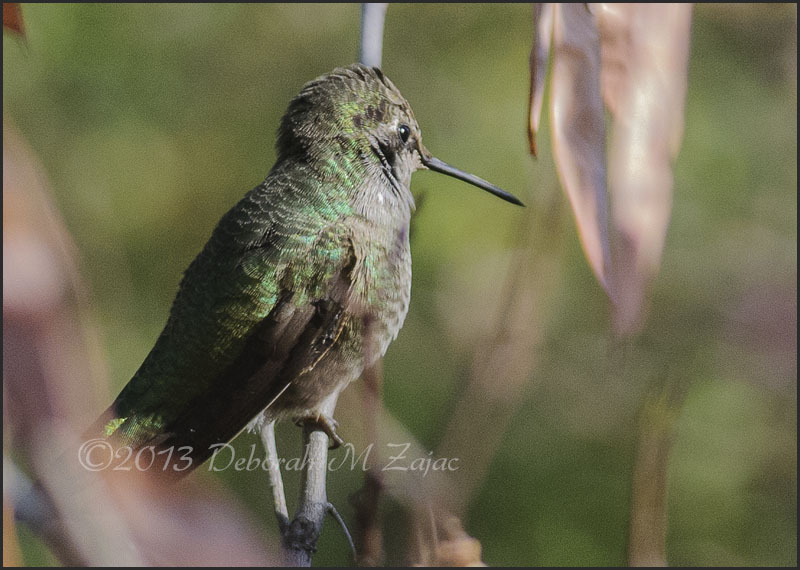
Spiky BerriesIt was in this area we also saw several Anna’s Hummingbirds flitting around.
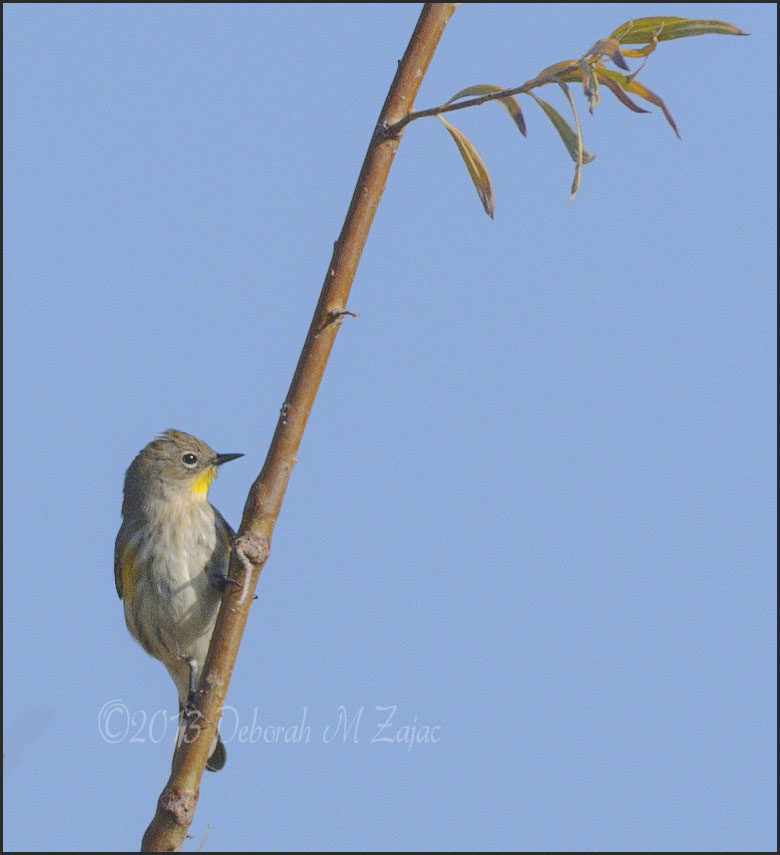
Anna's Hummingbird profileDali says this is a Yellow Throat Warbler. If it is this is the first one I’ve ever seen.
Yellow Throat WarblerHere are a few more Cedar Waxwings. I just love seeing them. They’re so exotic.
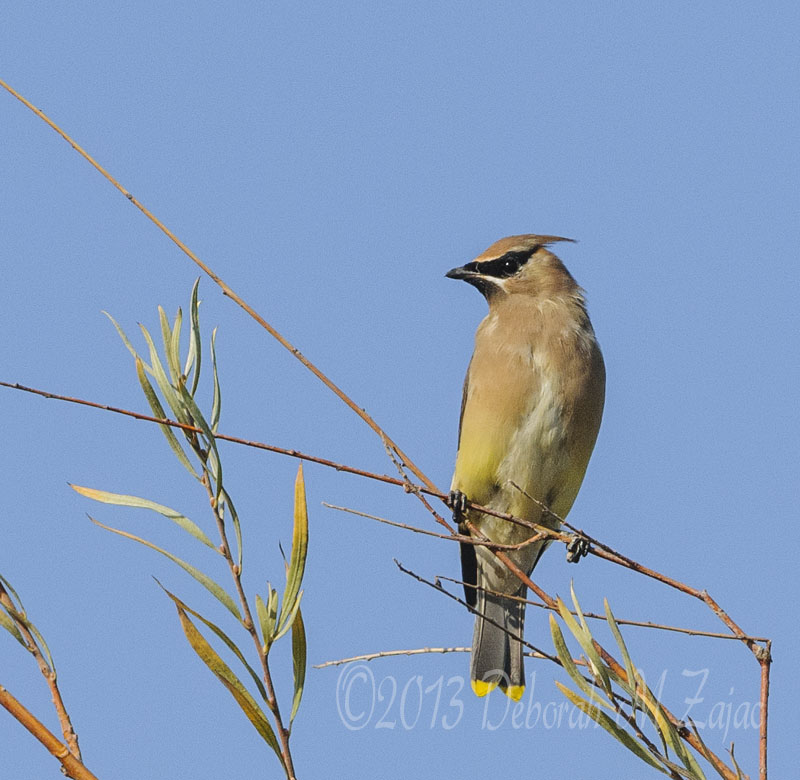
Cedar Waxwing_0878

The Aspens in the park were at peak Fall color, and the Waxwings liked being in the yellow branches.
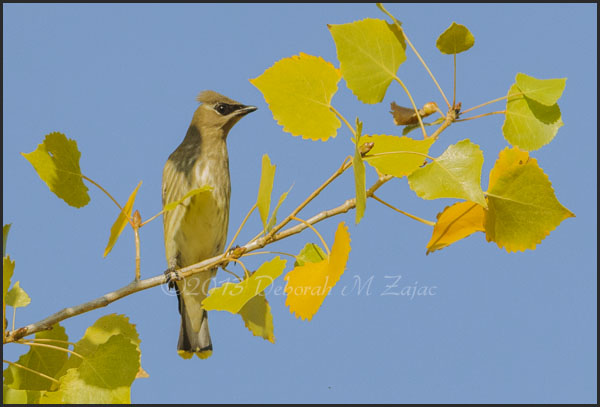
Cedar on Aspen…and here’s one that was high on top of a tree feathering its nest.
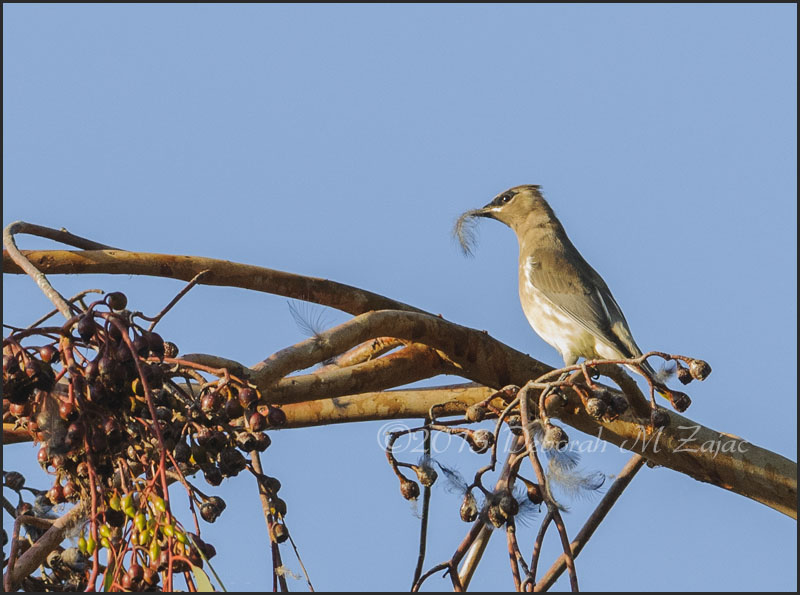
Feathering the Nest

It was a very successful outing for birding, and a lovely way to spend two hours.

All the photos were taken with a Nikon D300s with a Nikkor 300mm f/4 lens, hand-held.


Mandarin Duck- Male(Drake)

Copyright © 2013 Deborah M Zajac. All Rights Reserved.

Via Flickr:
Copyright © 2013 Deborah M. Zajac. All Rights Reserved.

This duck is usually a resident of Asia not the USA. This one is the only one if its kind on this pond. Most likely it was a pet that was released or flew the coup. It’s known as the most beautiful Duck in the world and I agree! My friend Dali and I went to photograph him when we got wind that he was in town. Prior to this sighting I’ve only seen this duck in captivity. It’s very exciting to see one in the wild!

Nikon D300s| Nikkor 300mm f/4@ f/5.6| 1/250sec| ISO 1250| Manual Priority| Matrix Metering| Hand-held| On board camera flash fill; San Jose, CA; USA;

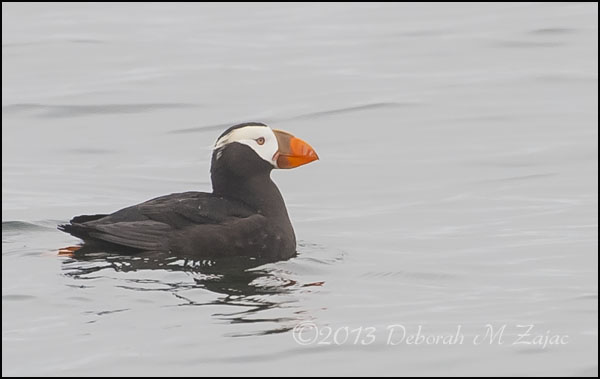
Tufted Puffin-Adult Summer

Copyright © 2013 Deborah M. Zajac. All Rights Reserved.

Tufted Puffin-Adult SummerThis is the first time I’ve ever seen a Puffin in the wild! I went on a Birding trip out to the Farallon Islands 27 miles outside of San Francisco in the Pacific Ocean. We weren’t allowed on the island-only Biologists are allowed on the island, but we cruised all around them and then we went out to deeper water from there. Along the way we saw 3 Tufted Puffin.

There are only 50 pairs of Tufted Puffin nesting on the Islands at this time, but there thousands of gulls, Common Murre’s, lots of Cormorants, seals, sea lions, and one lone Gannet. In deeper water we saw Hump Back whales, and a Blue Whale too.

I saw so many new birds on the trip, and the one bird I hoped to see was the Tufted Puffin. I went home a happy sailor just seeing one. I hoped I got one good shot.
The weather was overcast, and to get the shutter speed I needed I really pushed the ISO. Shooting from the boat was challenging. I would focus on a bird then the boat would go up or down and my focus point was off. I didn’t start to get the rhythm of the sea til near the end of the day, and then there wasn’t much to see as we were pushing hard to get back.
We were out at sea for nearly 9 hours.  I went with Alvaro’s Adventures out of Half Moon Bay. I would definitely go again.

Alvaro is a Biologist, and he had two expert birders along for the tour. One was on the starboard side calling out birds and mammals, and the other on the Port side doing the same. I don’t think we missed anything flying or swimming on our route.

I’ve not been able to spend much time online lately. #1 Grandson is very busy and takes all my attention these days. I’m looking at your  photos when I can and I’ll catch up soon!

Nikon D700| Nikkor 70-300mm VR@ 280mm| f9| 1/1000s| ISO 1250| Manual priority| Matrix Metering| Hand-held

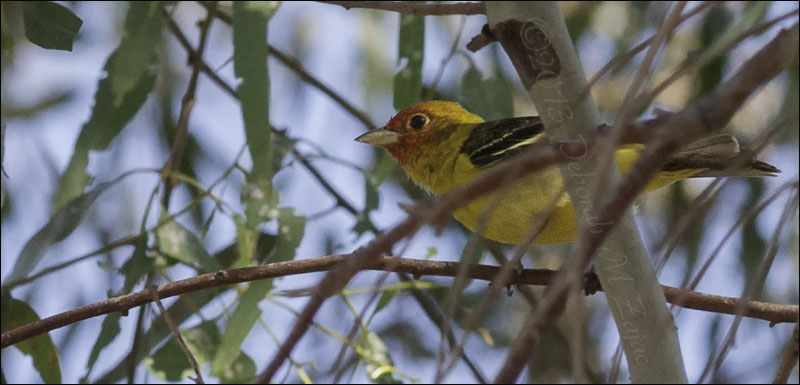
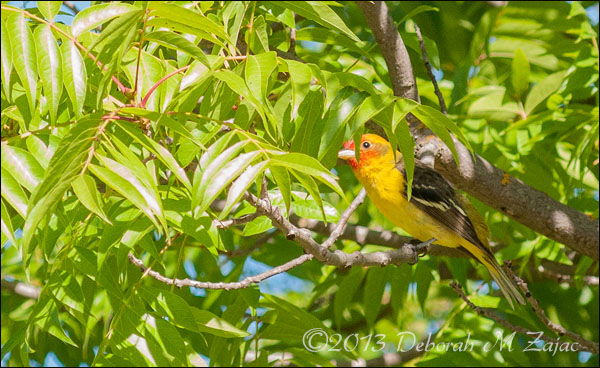
Western Tanager-Male

Copyright 2013 Deborah M Zajac. All Rights Reserved

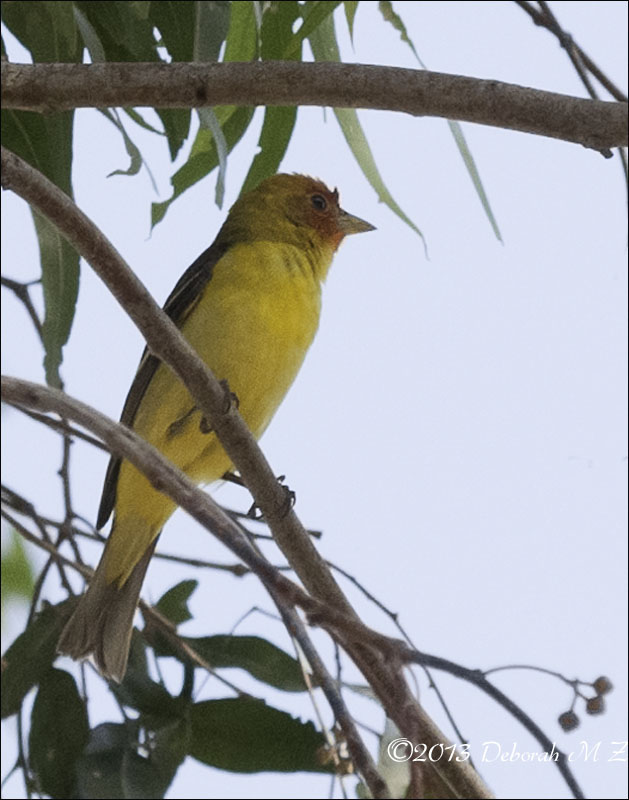
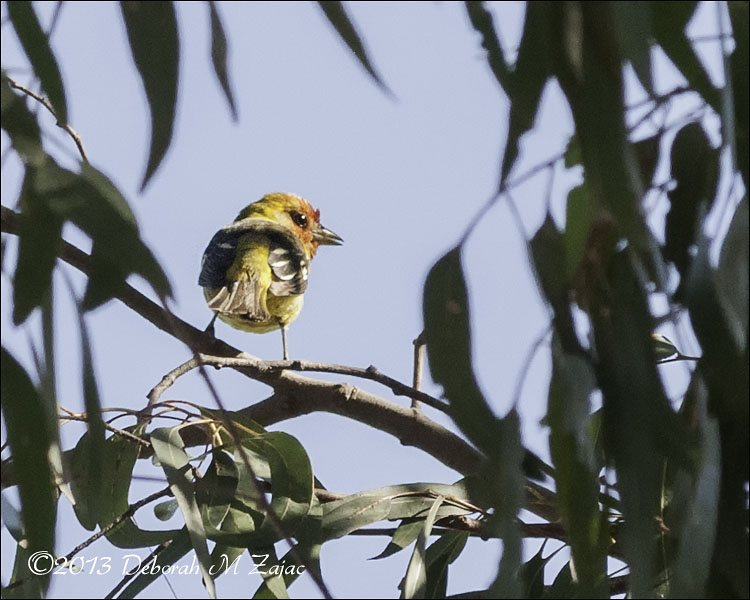
Western Tanager-MaleMy first Western Tanager Photograph! I’ve seen this bird before, but wasn’t able to capture a photograph of it that time. I’m very excited about this capture. This may be one of 5-6 Tanagers in this area that may be nesting here. If so it’s rare. I read yesterday, “The Breeding Bird Atlas of Santa Clara County reports the species as an
“uncommon to rare breeder” in the Santa Cruz Mountains and the Diablo Range, with lowest altitude nests reported at 400-500 feet. Lake Almaden has an altitude of about 200 feet, so if nesting occurs, it would be at the lowest altitude ever noted in the county. ”  Tom Grey

I was in this location yesterday with Dali, Tom Grey, and several others who like me were very excited to see these birds.

Here are a few more poses I managed to capture.

Trying to keep a low profile,

Western Tanager-MaleSurveying the area,
Western Tanager-Male 3

A backward glance,

Western Tanager-Male profile

Nikon D300s| Nikkor 80-200mm| f8| 1/400s| ISO 800| Manual Priority| Matrix Metering| Tripod


On the third day there was better light

Copyright © 2013 Deborah M. Zajac. All Rights Reserved.

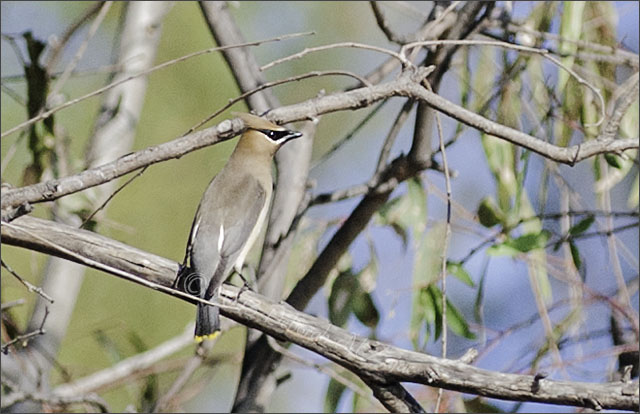
On the third day there was better light.I have gone out 3 mornings in a row trying to get a decent photograph of a Cedar Waxwing. The first morning the light was awful. It was overcast requiring me to really crank up my ISO to get the speed I needed to maintain a sharp photograph, but all my photos have too much noise…yes even with the D700 it’s too much noise for me. To keep my speed up I was using ISO 3200. These little guys move fast.
Yesterday wasn’t as overcast, but the Cedar Waxwings kept themselves high in the trees which was too far for my lens unfortunately, but this morning the light was better, the sun was breaking through the marine layer earlier, so I dressed grabbed a slice of toast, and a quick cup-a-tea then headed over to the park hoping to spot the Waxwings before the park got too busy.

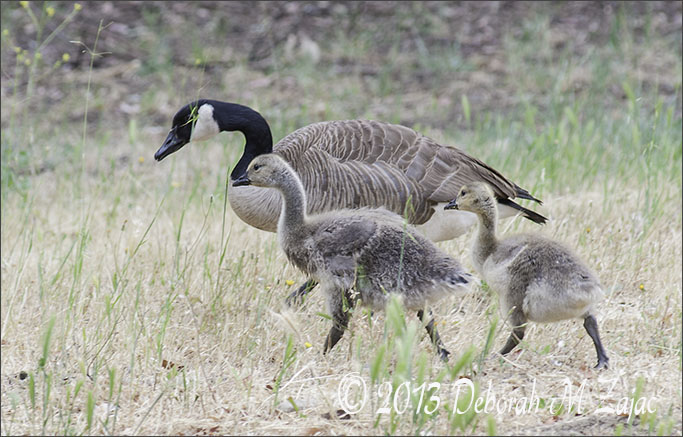
Arriving in the park I saw a gaggle of geese with several goslings in tow-here’s just two,  two Killdeer in the grass hunting for breakfast, and there were robins, and crows as well.

Canadian Goose and Goslings

KilldeerThe early morning runners and walkers were already there, and several families were claiming picnic areas, and tables.

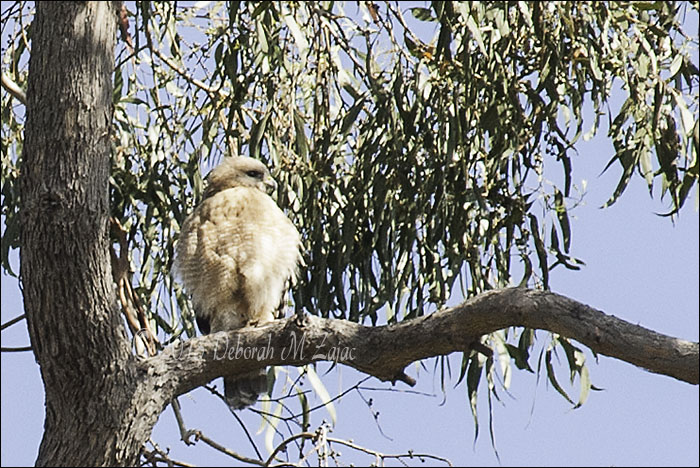
It took me a little while to find the flock this morning. They moved a little further south from where they were previously. I spent over an hour following them and photographing them.  They had flown to  some great low branches where the sun was at a great angle for both back-lit and side-lit shots. I was focused and shooting away when suddenly in the creek below this Canadian Goose started honking, and honking, and the Waxwings got upset; flitting around and then from the corner of my eye I spied a large bird coming in fast…it was a  Hawk! All the Waxwings, and the Goose took off for safer branches. I’m not sure if this is a Red-tail or a Coopers.

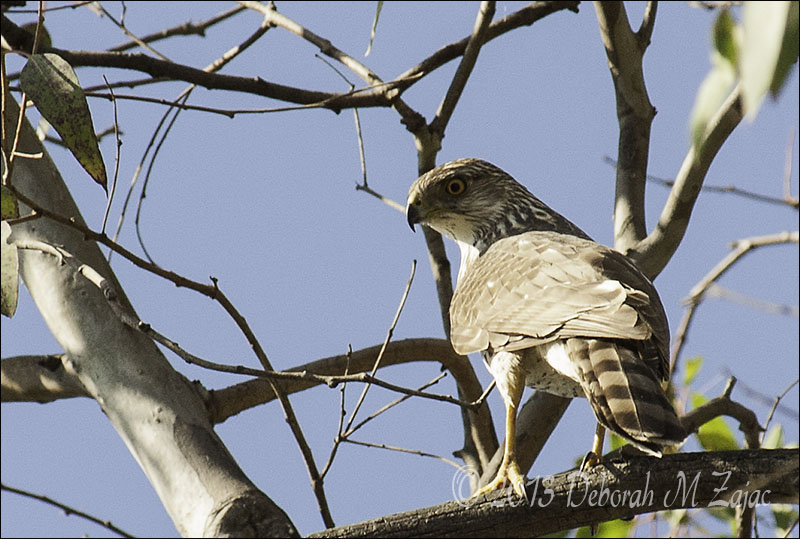
Hawk I saw this Hawk high up in a Eucalyptus Tree on my way out of the park. I think it’s a Cooper’s Hawk, but am not positive. Any help with the Hawk ID I’d appreciate it.

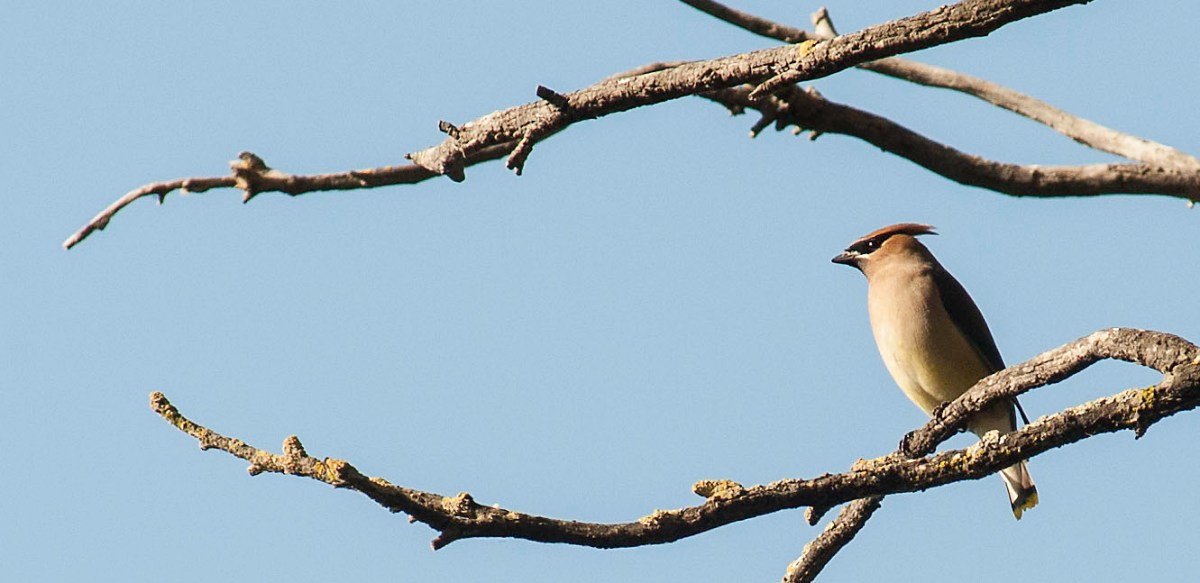
Coopers HawkWaxwings don’t normally live here. They will be gone by June I’ve heard. This is the first time I’ve ever seen them in the wild. I’m so happy to have seen them and get a few photos I like. I hope to get back here and photograph them again before they move on.

Cedar WaxwingNikon D700| Nikkor 80-200@ 200mm + Tamron 1.4x TC| f5.6| 1/1250s| ISO 1600| Manual Priority| CW Metering| Hand-held|

Canadian Geese and Goslings

Copyright © 2013 Deborah M. Zajac. All Rights Reserved.

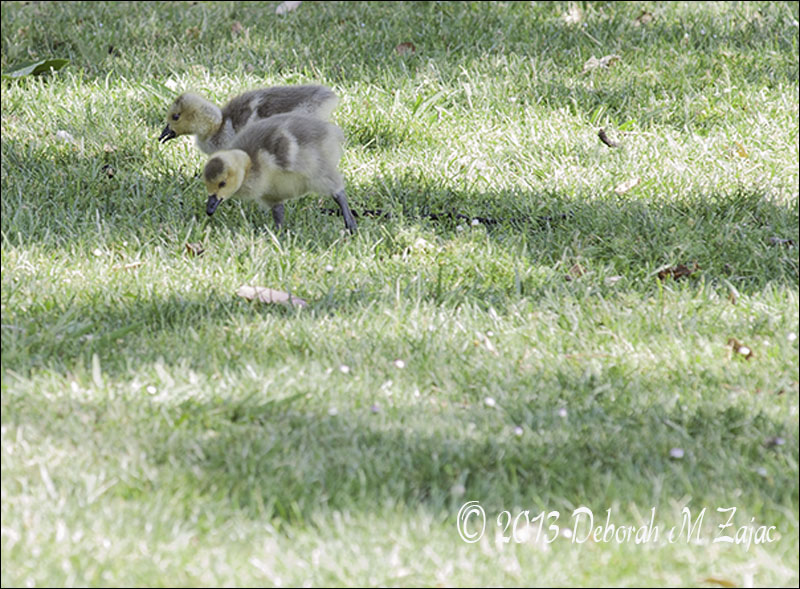
I went to a local park this morning looking for a small flock of Cedar Waxwings that I spied yesterday, and on the way I spotted two Canadian Geese Goslings.

They were adorable pecking along the grass looking for worms and grubs.

Here’s the only photo I was took with the parents fully in the frame:

Canadian Geese and Gosling…and here are the two little ones together:

Canadian Geese GoslingsSince these were born in the USA shouldn’t they be called United States Geese, or California Geese? 🙂

Hooded Merganser

Copyright © 2013 Deborah M. Zajac. All Rights Reserved.

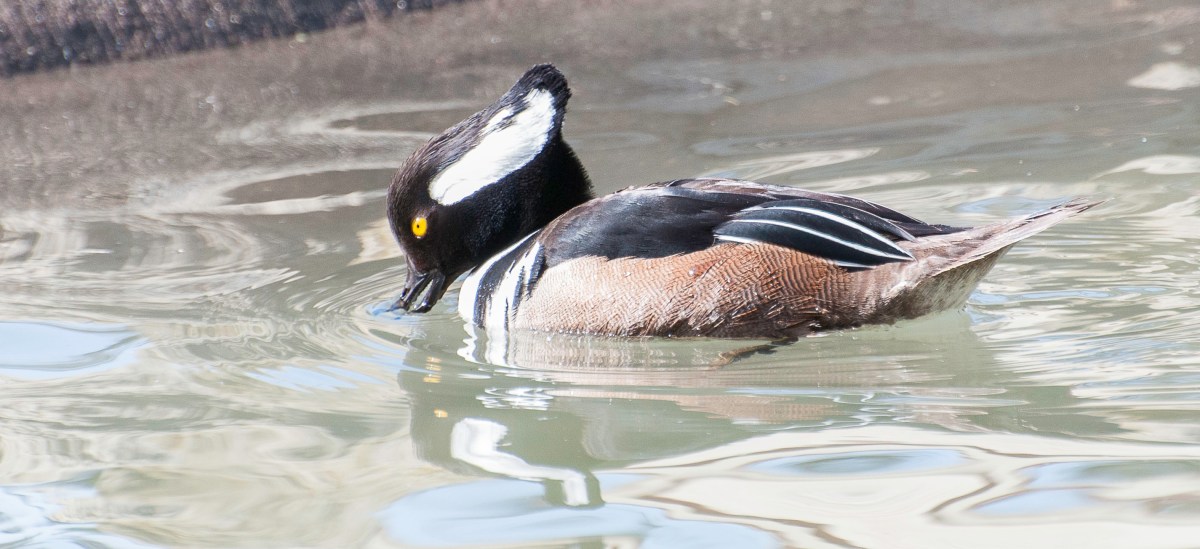
Hooded Merganser Male-Crest Down 1

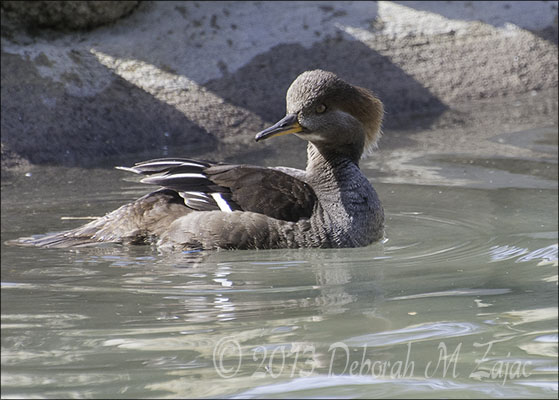
This is my first sighting of the Hooded Merganser! I was so excited to see both a male and female swimming around in the pond in the Children’s Zoo section of San Francisco Zoo. According to one of the staff they are free range and can come and go as they please like the gulls and Peacocks.

The female:

Hooded Merganser Female

Nikon D700| Nikkor 70300@ 300mm| f5.6| 1/400s| ISO 400| Manual Priority| Matrix Metering| Hand-held