PLEASE DO NOT USE MY IMAGES WITHOUT EXPRESSED WRITTEN PERMISSION.
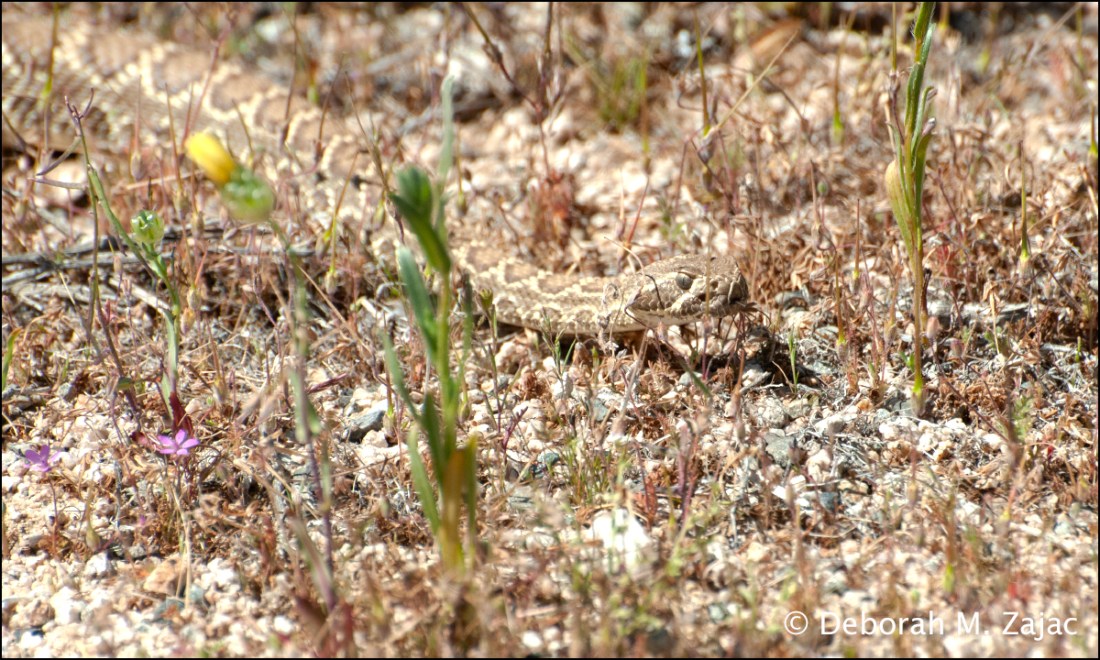
I’ve been updating and cleaning up my birding records which has me going back in my files 15 years. In the Spring of 2011 several friends and I went to Death Valley and on the way home we stopped to photograph wildflowers in a big field by the side of the road, well you’ve heard the saying, beware of a snake in the grass. Beware of Rattlesnakes in the wildflowers!
That’s not the closest I’ve come to a Rattlesnake while hiking, but it was too close for comfort even with my 300mm lens.
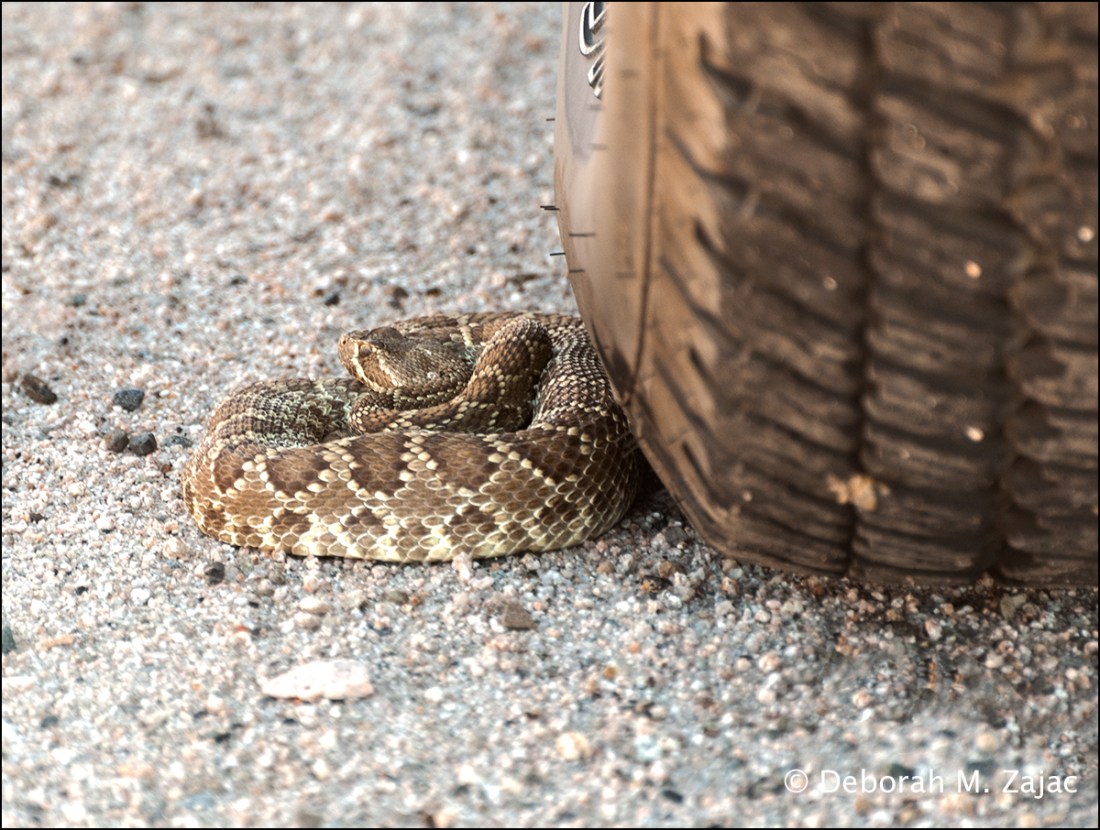
Then we backed out of the field and headed back to our cars only to discover another Western Diamondback coiled up sleeping beside the tire of my friend’s car soaking up the warmth from the sand and car engine! The driver had to get in via the passenger side of the car.
PLEASE DO NOT USE MY IMAGES WITHOUT EXPRESSED WRITTEN PERMISSION.
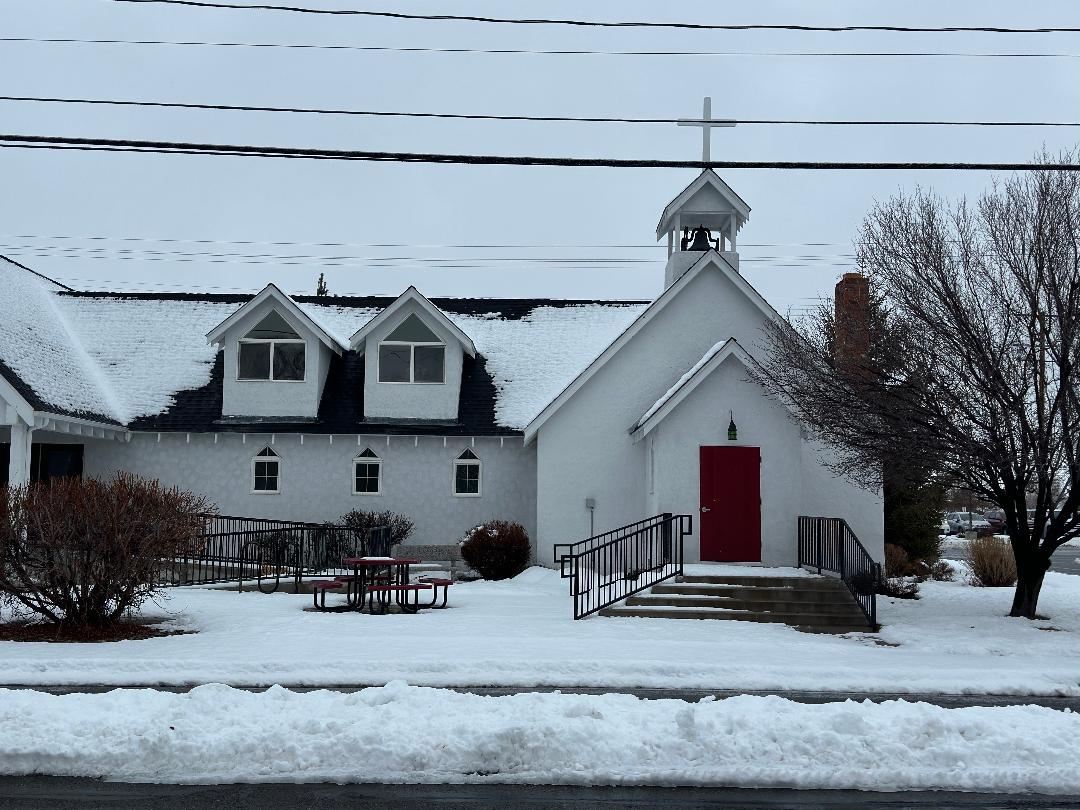
Coventry Cross Episcopal Church is in my town, and I see this cross every time I drive through town using the main Hwy/Interstate 395. FYI the speed limit through this section of town is 25 MPH.
Wooden Cross
I’ve often wondered what the door(s) and front of the church look like so while I was in town running errands earlier this week I used the back streets to go just a couple of blocks from one place to another and finally saw the front doors.
As you can see it was gray, it was cold Tuesday morning, and there’s still snow on the ground from last week-end’s big snow storm.
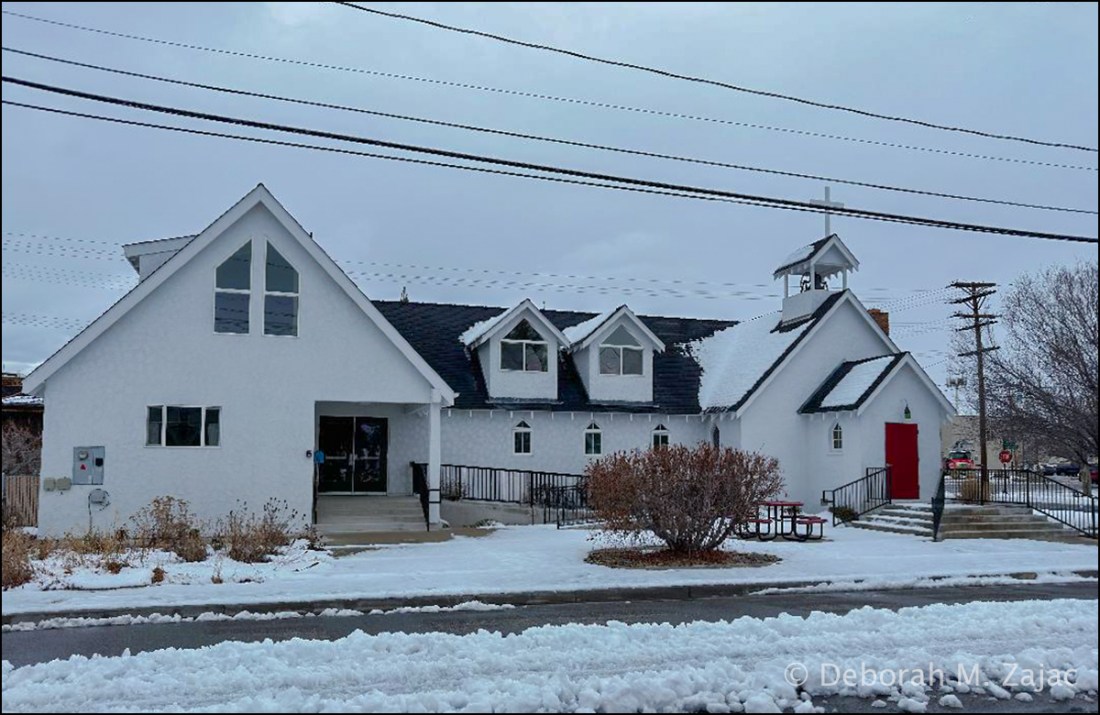
Here’s a look at their glass doors and the whole building.
I didn’t bother taking out all the wires because I would have taken out the Cross on top of the bell tower too. My Photoshop skills aren’t good enough to put the cross back. What a shame to have all these wires going across it, but this is how it really looks. 😀
I did find a wee bit of history about this building on their site.
It says, ” Coventry Cross Episcopal Church, a member of the Episcopal Diocese of Nevada. Serving the communities of Douglas County, Nevada , for over 55 years.
Coventry Cross Chapel was moved from its original site in Smith Valley, Nevada, to its present location in Minden, in October of 1954, to become the town’s first church. Before that, local Episcopalians worshipped in members’ homes and other buildings. While in Smith Valley, the Chapel was given the carved stone Tudor Cross which had stood on the porch of the Cathedral of St. Michael (Coventry Cathedral) at Coventry, England. Honoring the gift, the Chapel became “Coventry Cross Episcopal Church.” The rose quartz cross stands about three feet high and is carved with 28 Tudor roses with points terminating in a large blossom. It stands on the rood beam over the altar. At some point in its history it was stained brown to match the beam. The mantel of the fireplace (the original heat for the church) came from 14th century Malmesbury Abbey in England; the left corner stone of the fireplace is from a first century Roman wall at St. Alban’s; and the right corner stone is from 17th century St. Paul’s in London. The new parish hall modifies and expands the one built in 1958.”
Doesn’t that rose quartz cross and mantel sound lovely! I wish the chapel was open so I could have seen both. Maybe one day.
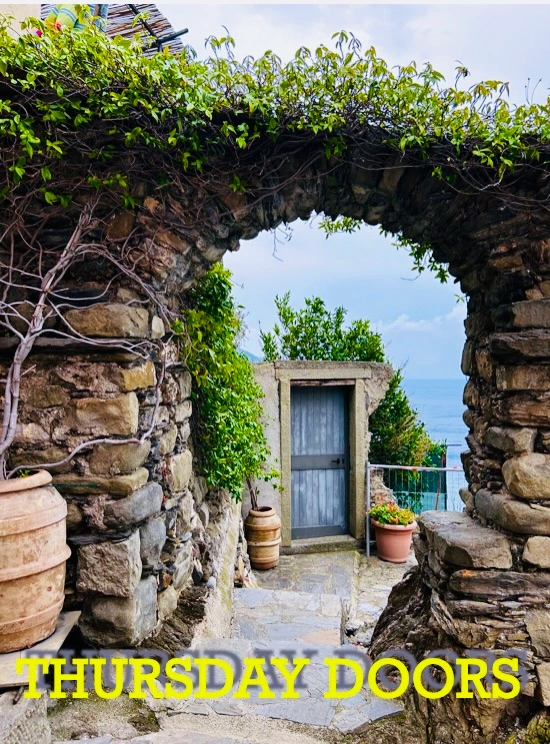
This post is part of the Thursday Doors group hosted by Dan Antion over at No Facilities which you can click on to see other doors from around the world- here
PLEASE DO NOT USE MY IMAGES WITHOUT EXPRESSED WRITTEN PERMISSION.
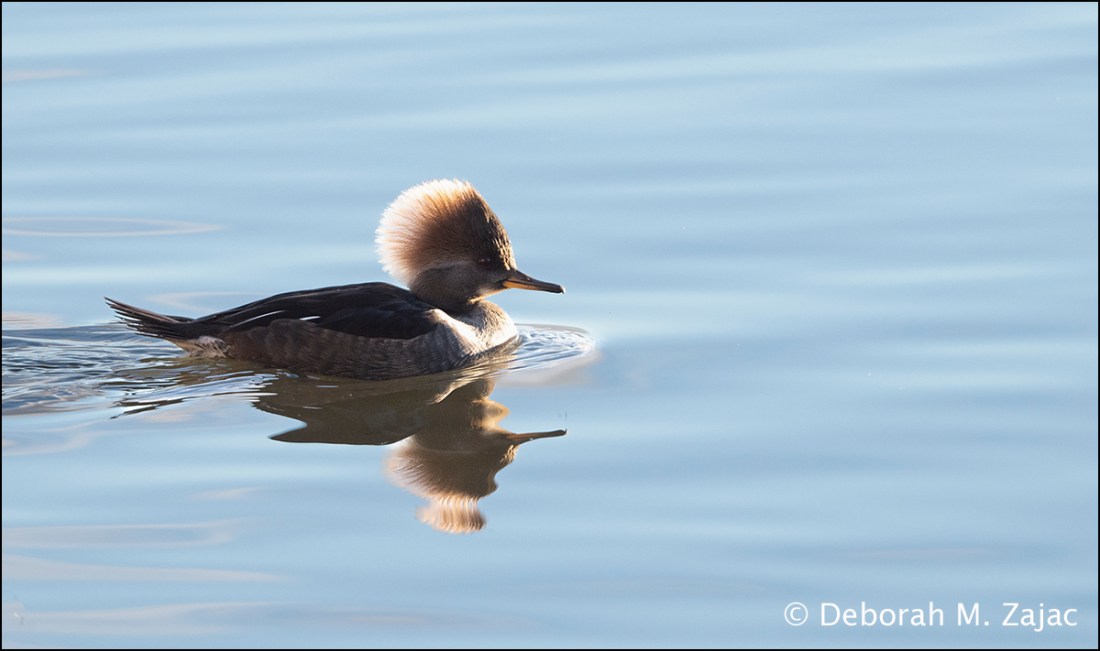
I saw these in early January and since we’re on the very edge of their migration path I feel very lucky to have seen them.
The male has lovely dark coloring and a wonderful hood. During the courting season he continuously tilts his head all the way to his back and up again and back again with his hood raised as it is in this image while he swims very near the female trying to capture her as a mate. It’s called Head Throwing. He also gives her a hoarse croak. It’s pretty neat to see them courting.
Hooded Merganser Male
The female looks rather dull compared to the male but, her crown or hood is lovely too. I liked the way the sunlight lit up her hood.
Hooded Merganser Female They were swimming somewhat far apart from each other on this morning and not interested in courting, but luckily their hoods were up.
Fun Facts:
Similar to other cavity-nesting ducks such as Wood Ducks, Common Mergansers, and Common Goldeneyes, Hooded Mergansers often lay eggs in nests of other ducks, both their own species and others. This is called “brood parasitism” and is similar to the practice of Brown-headed Cowbirds. In turn, other cavity-nesting duck species will parasitize Hooded Merganser nests. Female Hooded Mergansers can lay up to about 13 eggs in a clutch, but nests have been found with up to 44 eggs in them.
Hooded Mergansers find their prey underwater by sight. They can actually change the refractive properties of their eyes to improve their underwater vision. In addition, they have an extra eyelid, called a “nictitating membrane,” which is transparent and helps protect the eye during swimming, like a pair of goggles.
Hooded Merganser ducklings leave their nest cavity within 24 hours of hatching. First, their mother checks the area around the nest and calls to the nestlings from ground level. From inside the nest, the little fluffballs scramble up to the entrance hole and then flutter to the ground, which may be 50 feet or more below them. In some cases they have to walk half a mile or more with their mother to the nearest body of water.
On the bird family tree, Hooded Mergansers (genus Lophodytes) lie between goldeneyes (Bucephala) and the other North American mergansers (Mergus). They share many courtship behaviors and calls with both of those groups.
The Hooded Merganser is the second-smallest of the six living species of mergansers (only the Smew of Eurasia is smaller) and is the only one restricted to North America.
The oldest recorded Hooded Merganser was a male and at least 14 years, 6 months old when he was shot in Mississippi in 2009. He was originally banded in Minnesota in 1995.
I hope you all have a great week-end. If the weather permits I’ll be birding this morning and will respond when I get home. If the weather is poor I’ll be here!😀
PLEASE DO NOT USE MY IMAGES WITHOUT EXPRESSED WRITTEN PERMISSION.
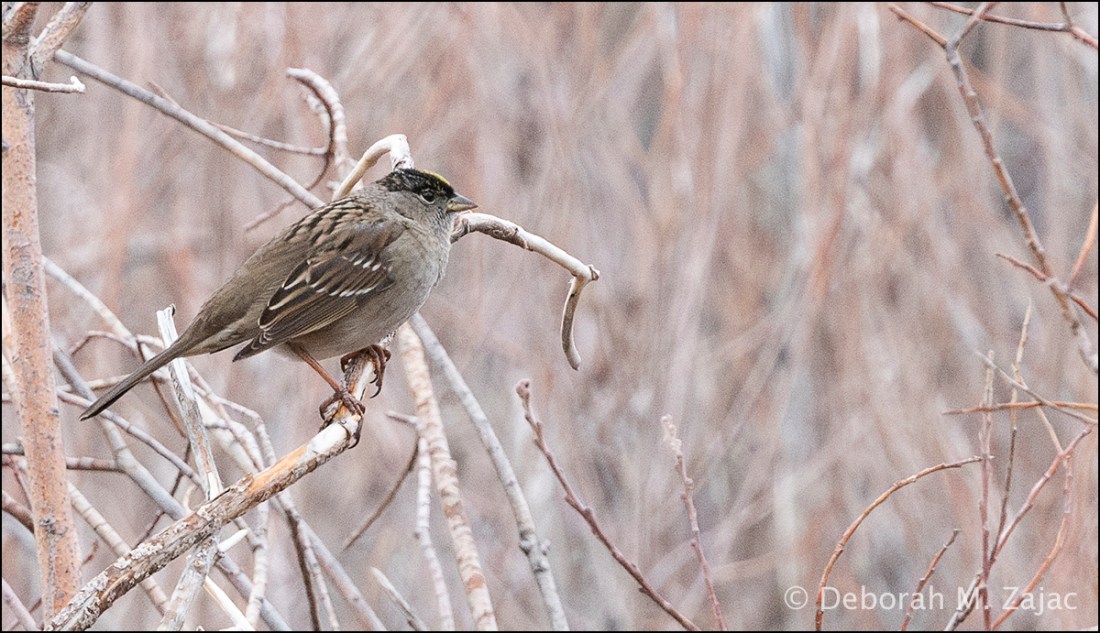
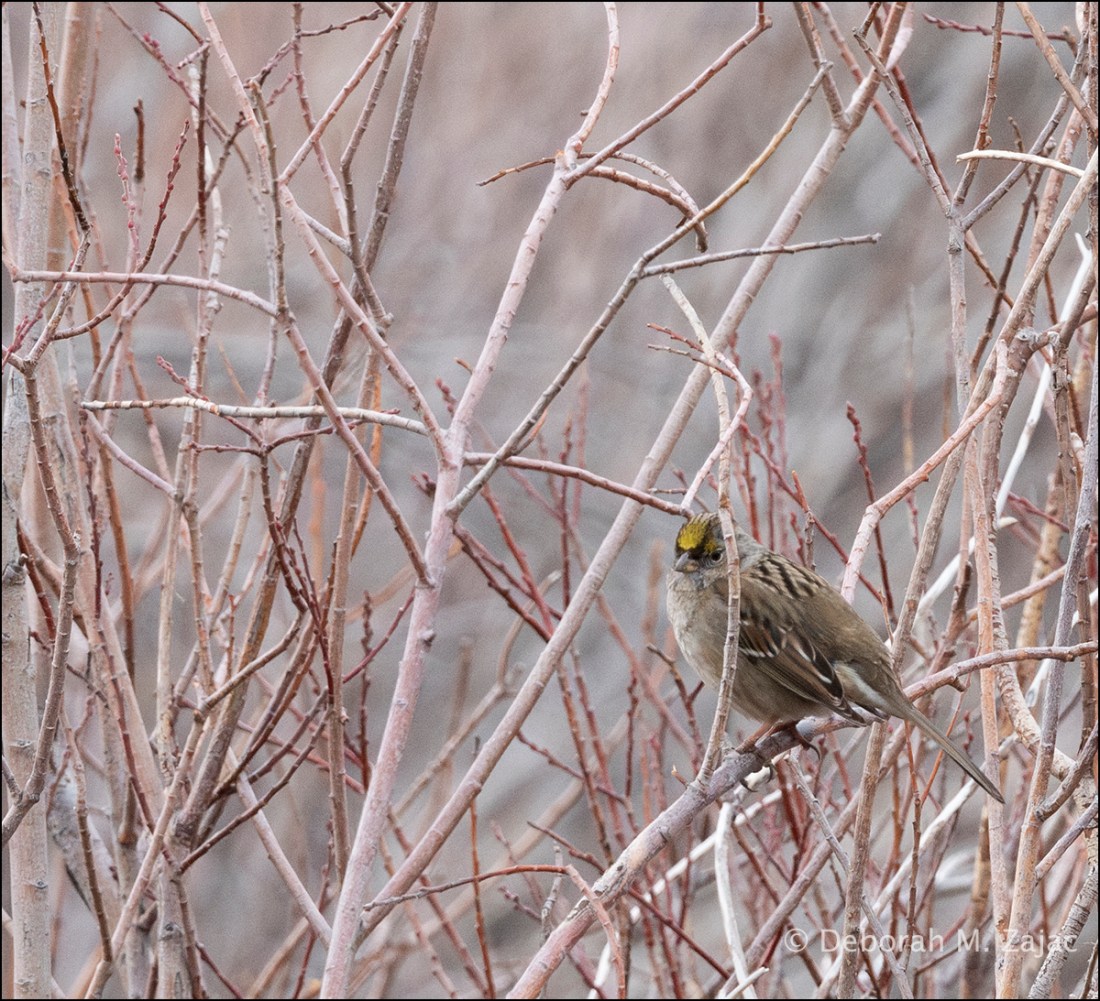
I last shared this Sparrow in 2015. I don’t see many of them and I only see them during the Winter migration hanging out with the White-crowned Sparrows, but sadly, never at my feeder. Last week I saw this one.
Male Golden-crowned Sparrow
He was pretty skittish. Every time I tried getting closer he flew further away so these are pretty well cropped.
Fun Facts:
This sparrow is one of the least known of our songbirds, particularly on its northern breeding grounds. It has been the subject of only a few laboratory and field studies, so most of what we know about it comes from scattered notes in scientific journals.
Miners in the Yukon at the turn of the twentieth century woefully referred to the Golden-crowned Sparrow as the “no gold here” bird, because its song resembled that depressing phrase. They also interpreted its song to say “I’m so tired,” prompting them to dub the bird “Weary Willie.”
The Golden-crowned Sparrow arrives earlier and stays longer on its California wintering grounds than almost any other bird species.
When day length increases in the spring, the Golden-crowned Sparrow detects the change through photoreceptors (light-sensitive cells). Its body responds by putting on fat and getting an urge to migrate.
The oldest Golden-crowned Sparrow on record was at least 10 years, 6 months old. It was caught by a bird bander in California in 1970 and released.
PLEASE DO NOT USE MY IMAGES WITHOUT EXPRESSED WRITTEN PERMISSION.
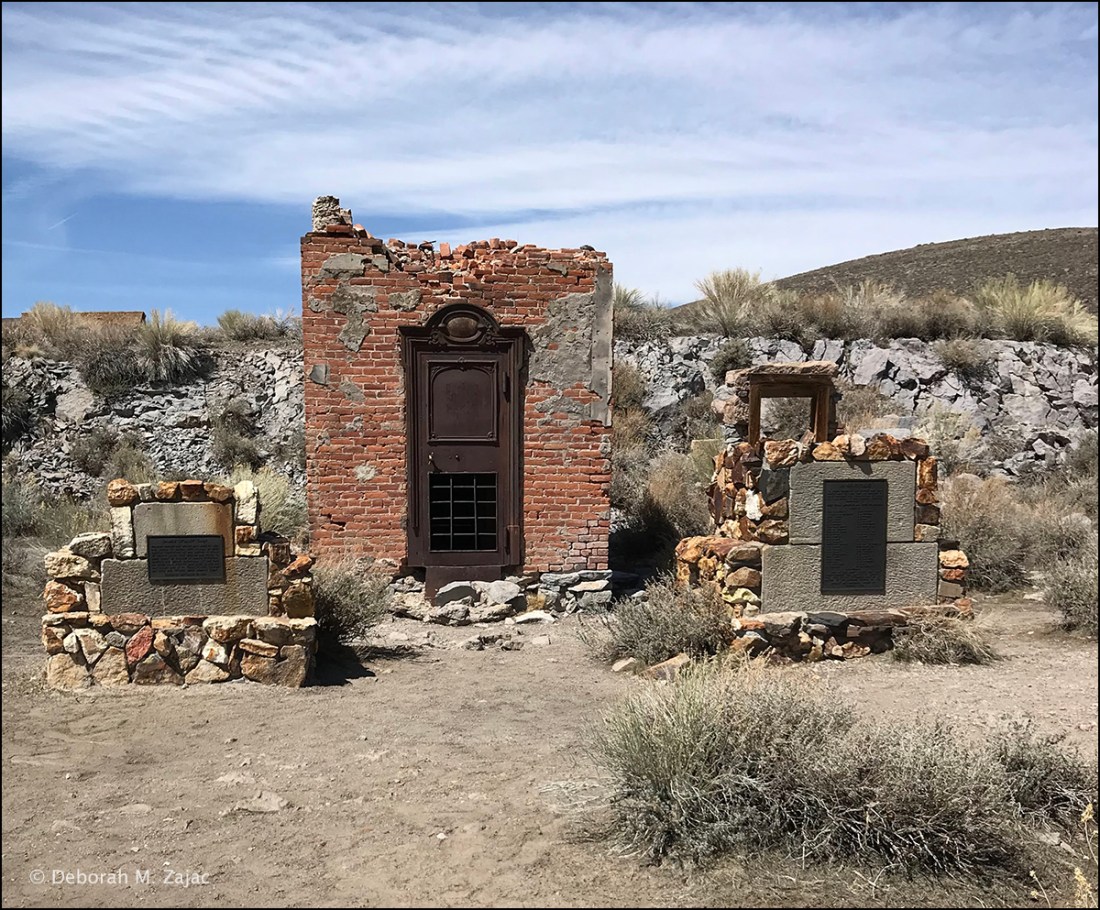
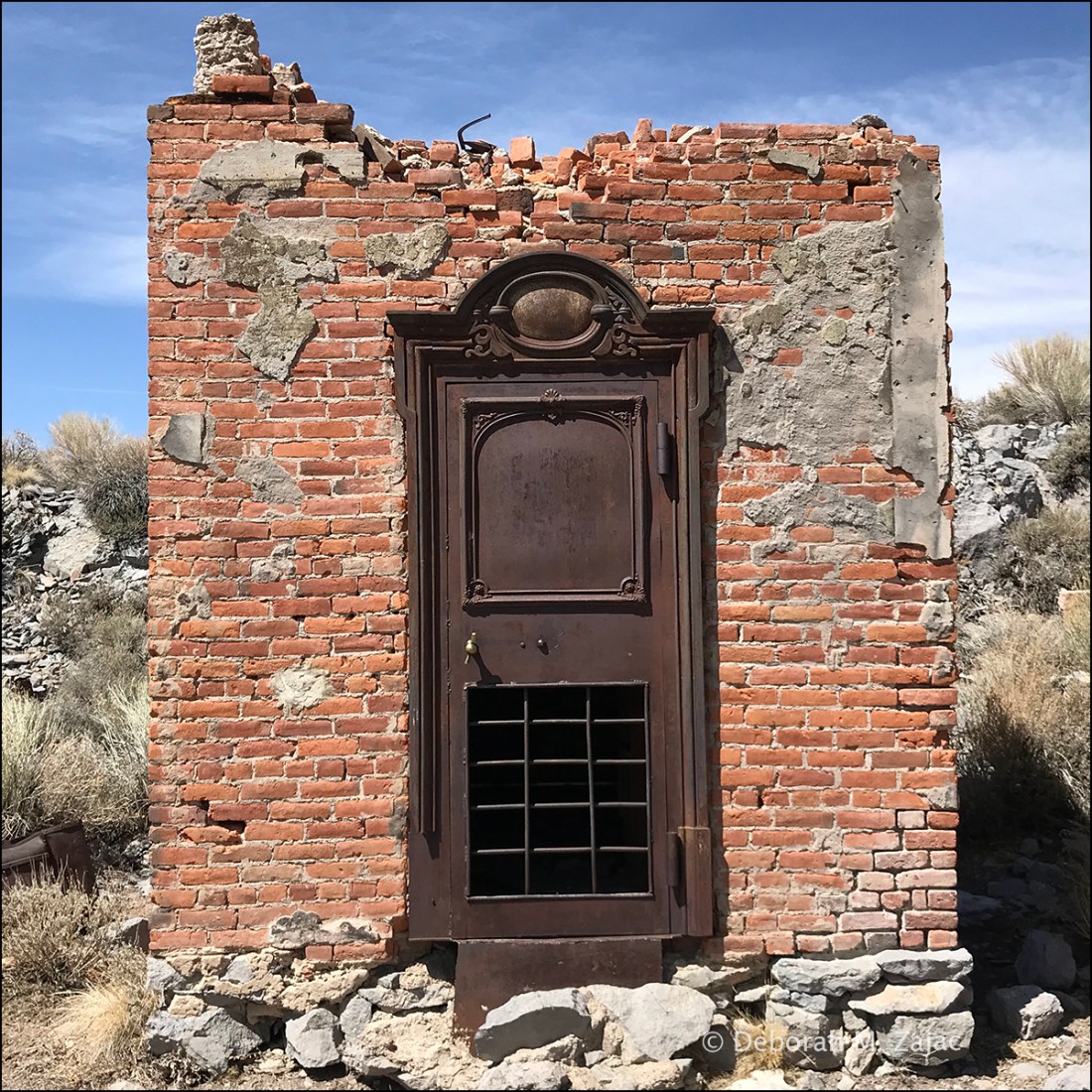
This door has been marinating in my archives for nearly 2 years. I think its ready to finally be shared.
This bank vault door is located in Bodie State Historic Park in Mono, County California.
A little history for the History Buffs- The plaque reads:
James Stuart Cain
Pioneer banker and mining man born in 1854 and moved to Carson City, Nevada in 1875. Shortly thereafter he and Martha D. Wells of nearby Genoa, NV married and moved to Bodie, CA where he engaged in lumber, freighting, banking and mining operations. At one time he owned Mono County’s only bank. In 1938 Mr. Cain passed away at 84 years of age. Through his faith, and efforts Bodie remains today.
Dedicated September 12, 1964
Bodie Bank Vault Door
From the site map/brochure:
“The Bodie Reputation
Stories of the quality and amount of gold being mined by the Standard Mining Company sparked a rush of people, and Bodie became a boomtown in 1877. By 1879 Bodie had a population of approximately 8,500 people and more than 2,000 buildings.
General stores and saloons supplied the needs of the miners. More than 60 saloons and dance halls lined the streets providing a source of relaxation and entertainment for the miners after a hard day’s work in the the depths of the mines.
Gunfights, stage holdups, robberies, and street fights contributed to its reputation of lawlessness and the legend of the “Bad Man of Bodie” is a composite of outlaws and men like Tom Adams, and Washoe Pete, who contributed to the wild atmosphere of Bodie.” California State Parks
“Bodie- a town so lawless that in 1881 it was described as,”…a sea of sin, lashed by the tempests of lust and passion.” Quoted by Reverend F.M. Warrington” California State Parks 2005 Brochure/Map
It’s a Ghost town today which is in a state of “arrested decay”. If you’re ever in Mono County, California it’s a neat place to visit.
This post is part of Thursday Doors a weekly challenge group.
You can find doors from around the world shared over on Dan Antion’s No Facilities site here.
PLEASE DO NOT USE MY IMAGES WITHOUT EXPRESSED WRITTEN PERMISSION.
I don’t want the week to go by without a post so here we have me posting on a rare Saturday.
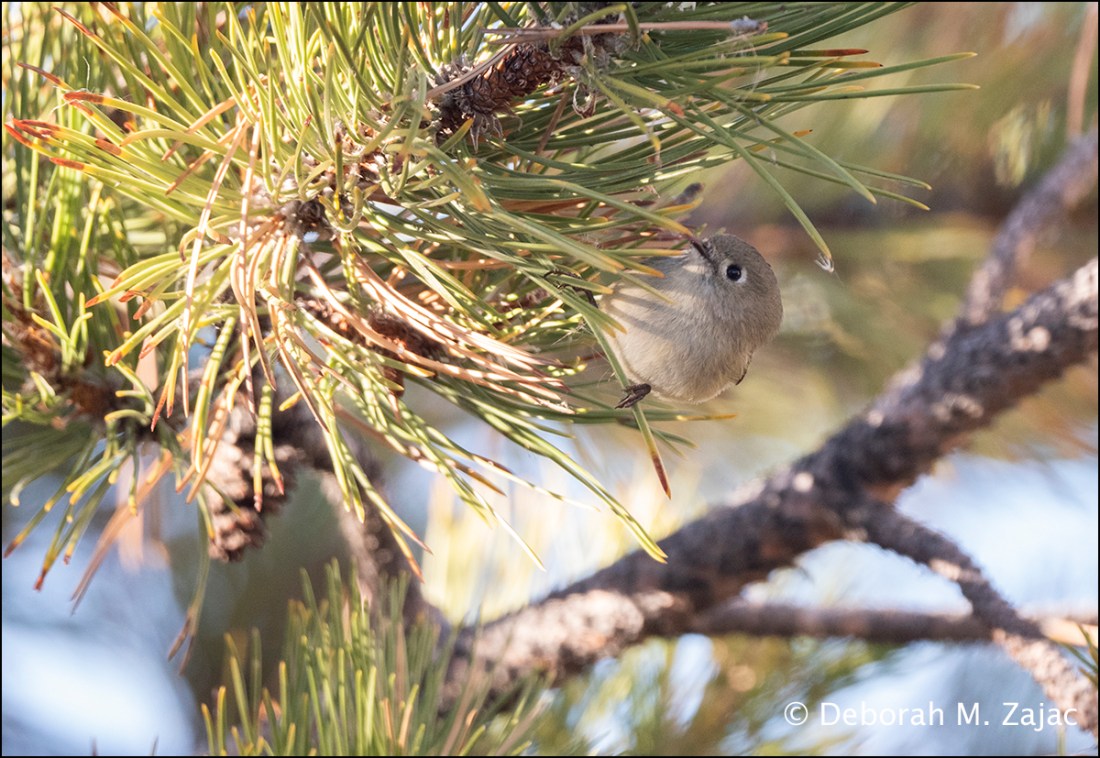
This little Kinglet is so cute, but very flitty normally but, on this day earlier this month I was able to get quite a few good looks at this one.
They’re a small bird being only 3.5-4.3 inches in length, and weigh 0.2-0.3 ounces.
They get their name from a Ruby spot on their crown.
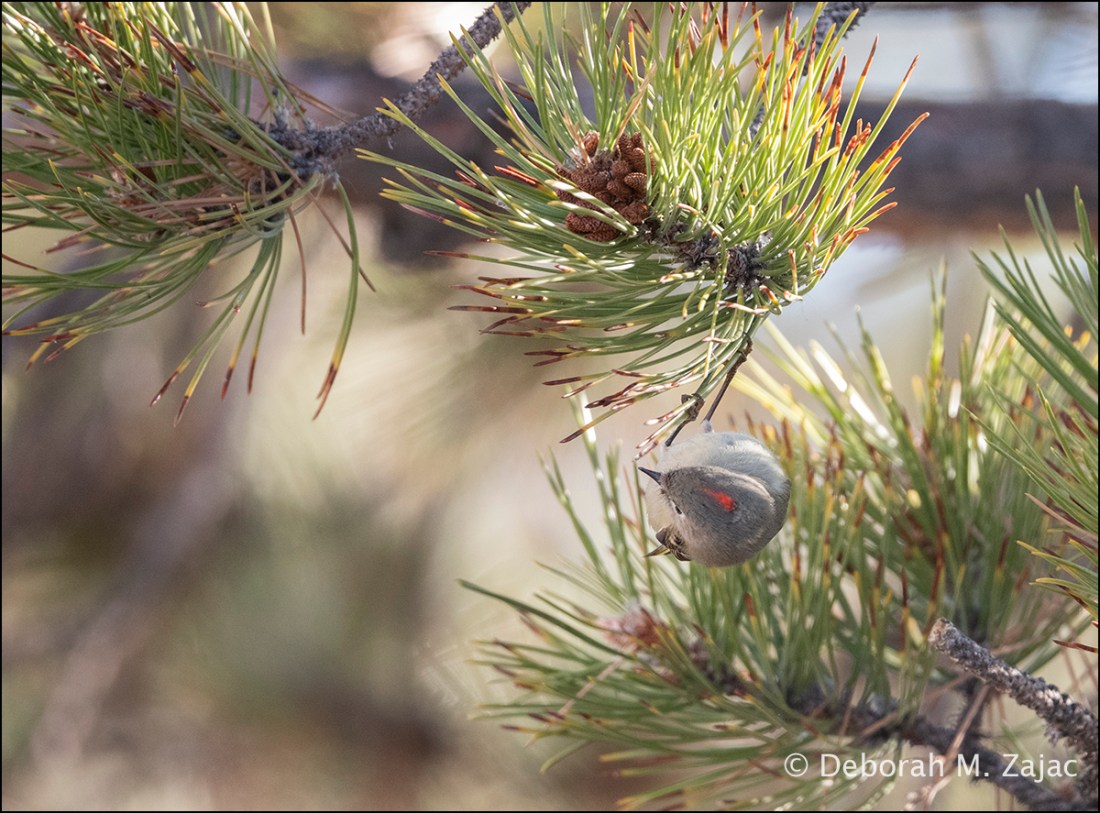
I have yet to see it flared, but here’s a look at the top of its head showing the Ruby spot.
This one is busy being an acrobat which afforded me a good look at its Ruby Spot which was a treat. Just look at how light they are it’s holding onto those pine needles and they aren’t bending!
Fun Facts:
The Ruby-crowned Kinglet is a tiny bird that lays a very large clutch of eggs—there can be up to 12 in a single nest. Although the eggs themselves weigh only about a fiftieth of an ounce, an entire clutch can weigh as much as the female herself.
Ruby-crowned Kinglets seem nervous as they flit through the foliage, flicking their wings nearly constantly. Keeping an eye out for this habit can be a useful aid to identifying kinglets.
Metabolic studies on Ruby-crowned Kinglets suggest that these tiny birds use only about 10 calories (technically, kilocalories) per day.
The oldest known Ruby-crowned Kinglet was a female, and at least 8 years, 8 months old, when she was recaptured and rereleased during banding operations in Texas in 2017. She was banded in the same state in 2008.
PLEASE DO NOT USE MY IMAGES WITHOUT EXPRESSED WRITTEN PERMISSION.
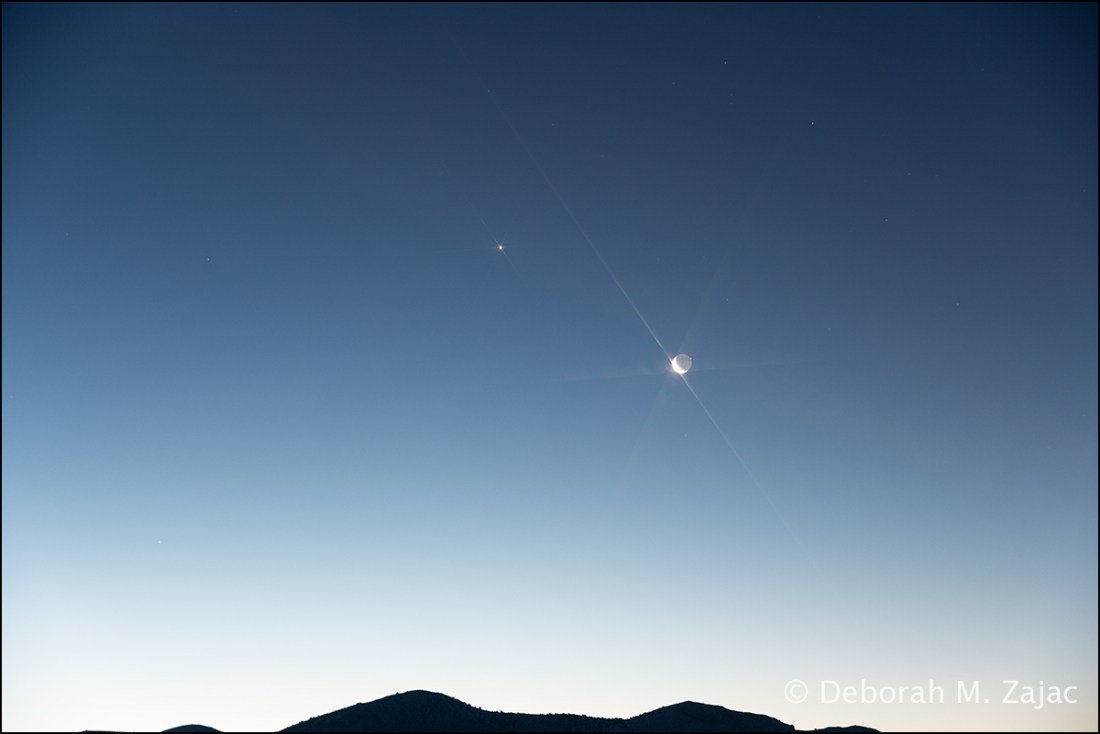
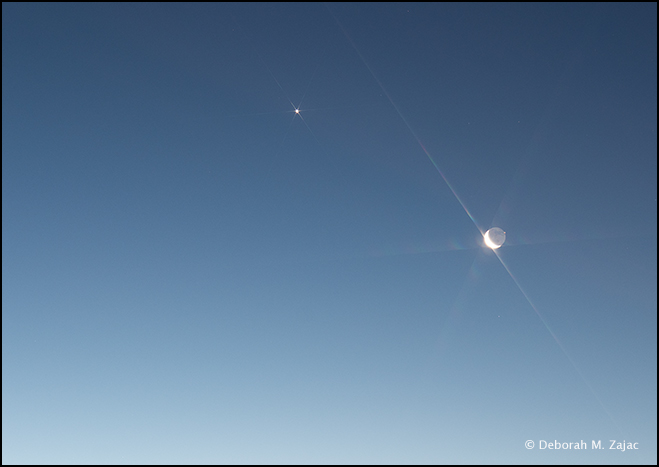
January 8th just at dawn I photographed my first celestial event of the year. The Occultation of the crescent moon and Antares the brightest star in the constellation of Scorpius.
The tiny dot of light on the Earthshine side of the crescent moon is Antares right before it slipped behind the Moon. Venus the morning star shines brightly above and to the left of the Moon.
I give you three views, one with my star filter on my lens, one with my ultra wide angle lens, and one deeply cropped to show Antares slipping behind the Moon.
20mm view of the Crescent Moon, Venus, and Antares.
Crescent Moon, Antares, Venus dawn January 8, 2024
Venus above and left of the Crescent Moon, Antares a tiny dot of light on the Earthshine side of the Crescent Moon just before it disappeared behind the Moon.
I was in a bit of a rush putting on my star filter so it went on askew so some of the star lines aren’t clean, and worse it’s now stuck. It’s on too tight for me to unscrew it, and I broke my filter wrench some time ago removing a ND (neutral density) filter, and failed to replace it. DOH! I have ordered a new one…and not a plastic one this time. It should arrive today.
We had our first big snow drop that stuck on Sat/Sun. It required shoveling. My neighbor bought a new cordless snow-blower and did our driveway twice! I just shoveled the clean up and the road below our driveway. She’s a jewel! She said it took just 12 minutes to do the driveway. We’ve made a deal. She’ll do the snow-blower and I do the clean up shoveling on 3 driveways and sidewalks. I told her I’d spring for the Hot Cocoa with marshmallows!
We have another big storm coming this weekend which is going to mess up my plans to meet friends, and do some birding at one of our favorite California refuges. It’s going to snow here, and in the mountains I’d need to cross, and it’s got rain on the forecast for there. It’s always a risk in the winter though isn’t it. Looks like I’ll be cancelling my plans.
Hopefully, we can meetup in February.
That’s me all caught up. How’s it going for you? Were any of you up and notice the tiny reddish star right beside the moon Monday morning?
Nikon D810| Nikkor 24-120mm & Nikkor 20mmG| PS CC 25.3.1





 Circadianreflections Blog
You must be logged in to post a comment.