Moon-struck madness!

Copyright © Deborah M. Zajac. All Rights Reserved.
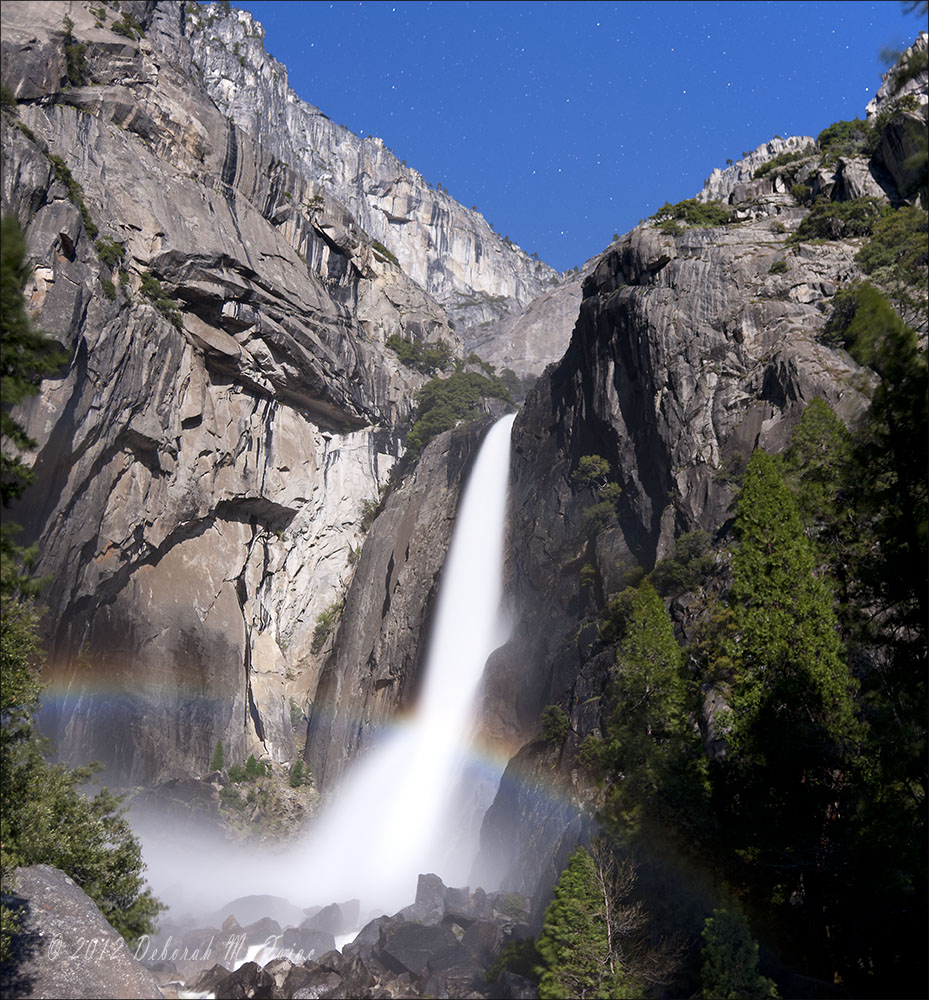
Yesterday myself and 3 friends went up to Yosemite National Park where we met more friends to photograph a Moonbow.
This is my first Moonbow, and my first Vertorama.

A moonbow can only happen when a full moon is shining reflected sunlight on the falls at an angle of 42º or lower, there must be water, or a mist, and it must be dark enough to see it.

There were nearly 200 people here on the little plaza and bridge to Lower Yosemite Fall last night by my quick head count in the dark. As the night wore on more people kept coming!

It was a lot of fun and I’m looking forward to capturing a Moonbow over Upper Yosemite Fall in the future.

I must say a word about the Vertorama. Paul Bruins a fellow Flickrite is the first person I knew of doing Vertoramas. He has generously written a tutorial for our use. You can read it here:
http://www.flickr.com/groups/vertoramas/discuss/72157602953001077/

I have to thank my freind Steven Christenson for “thinking out loud” last night and saying I think I’ll try a Vertorama too.” That was a reminder to me to finally try one.
I was a bit confused on how one moves the camera up, and Steven suggested the same thing Paul does and that is tilt the camera up without moving the tripod. So that is what I did. I’m going to try more of them now that I have the first one under my belt.
This is 2 frames stitched together in CS5. I’m looking forward to capturing a Moonbow on Upper Yosemite Fall in future.

Nikon D700| Nkkor 35mm f2 @ f2.8| 38 seconds| ISO 400| Manual Priority| Tripod

“I wander the long road home seeking tomorrow.” ~Anon

Via Flickr:
Copyright © 2012 Deborah M. Zajac. All Rights Reserved.

At last! These little guys are so darn skittish and quick that I’ve failed for years to get a crisp photograph of one.
I got lucky recently while out in the country one morning and got several good photos…well worthy enough to share anyway. “)

Don’t you love their fancy head adornment?

Nikon D300s| Nikkor 70-300mm VR f4.5-f5.6

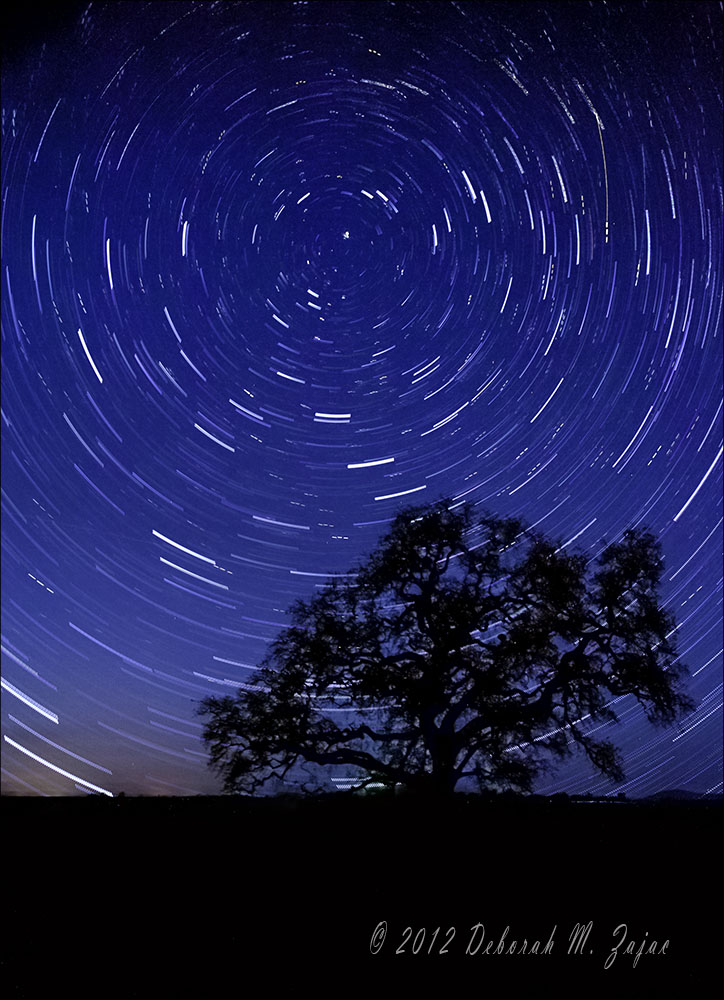
There is something about the stars that set the Gypsy blood astir…

Copyright © 2012 Deborah M. Zajac. All Rights Reserved.

I am inspired by William Bliss Carman’s thought about things that stir the Gypsy blood for the title of this piece. The stars do stir my blood and I wish I could travel up there. Perhaps someday we will.

This tree was absolutely gorgeous, and in a perfect location for shooting a star trail at the end of a day of shooting wildflowers, creeks, and a waterfall in Northeastern California. I’d gone up with some friends to meet more photography friends in a Meet-up group we’re in. While we set up for the shot and finished up we listened to little frogs croaking, and following them were crickets. A lovely round of natures music that I’m sure continued long into the night.

My battery died short of where I wanted it to for this sequence of star trails. A lesson learned! I will insert a fresh battery from now on.

Nikon D700 Nikkor 18mm AI-S| f5.6| 211 seconds| ISO 200| Manual Priority| Tripod| 29 frames stacked with Photoshop CS5

A Nocturnal Adventure

Copyright © 2012 Deborah M. Zajac. All Rights Reserved.

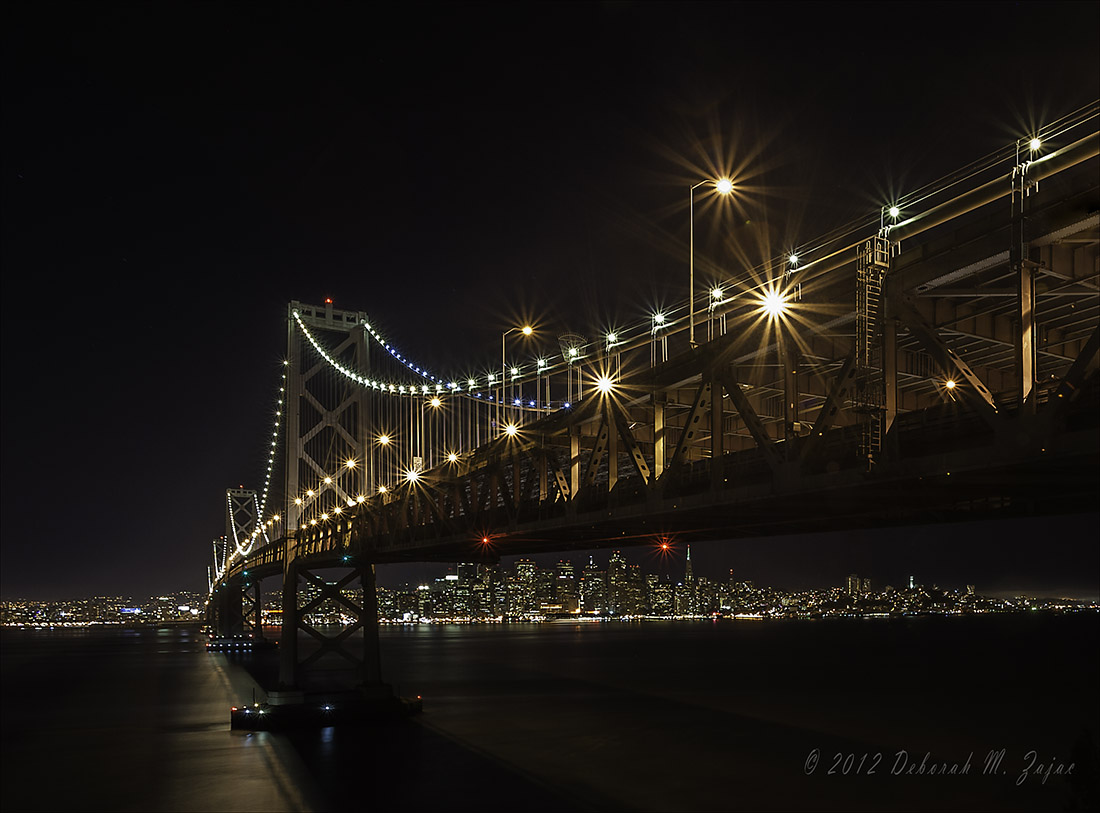
I finally got this shot! I’ve wanted to take a photograph from here for over a year. Last year my friend Dali and I did some recon trips to get the logistics worked out.  It’s a tricky place to get to, and a rare view I believe. We’ve kept this shoot on our “short shot list” but haven’t been able to fit it into our schedules until now. It was well worth the effort, risks, and steep climb to get it. The weather this evening was perfect. It was warm, with a slight breeze, and the fog was thin and stayed outside the Bay while we were here. I don’t know if I’ll ever get back here to photograph this view again or not, but I do hope so.

San Francisco, California, Bay Bridge, Pacific Ocean

Nikon D700| Nikkor 18mm Ai-S| f11| 30 seconds| ISO 200| Manual Priority| Tripod

Good Fences make Good Neighbors

Copyright © 2012 Deborah M. Zajac. All Rights Reserved

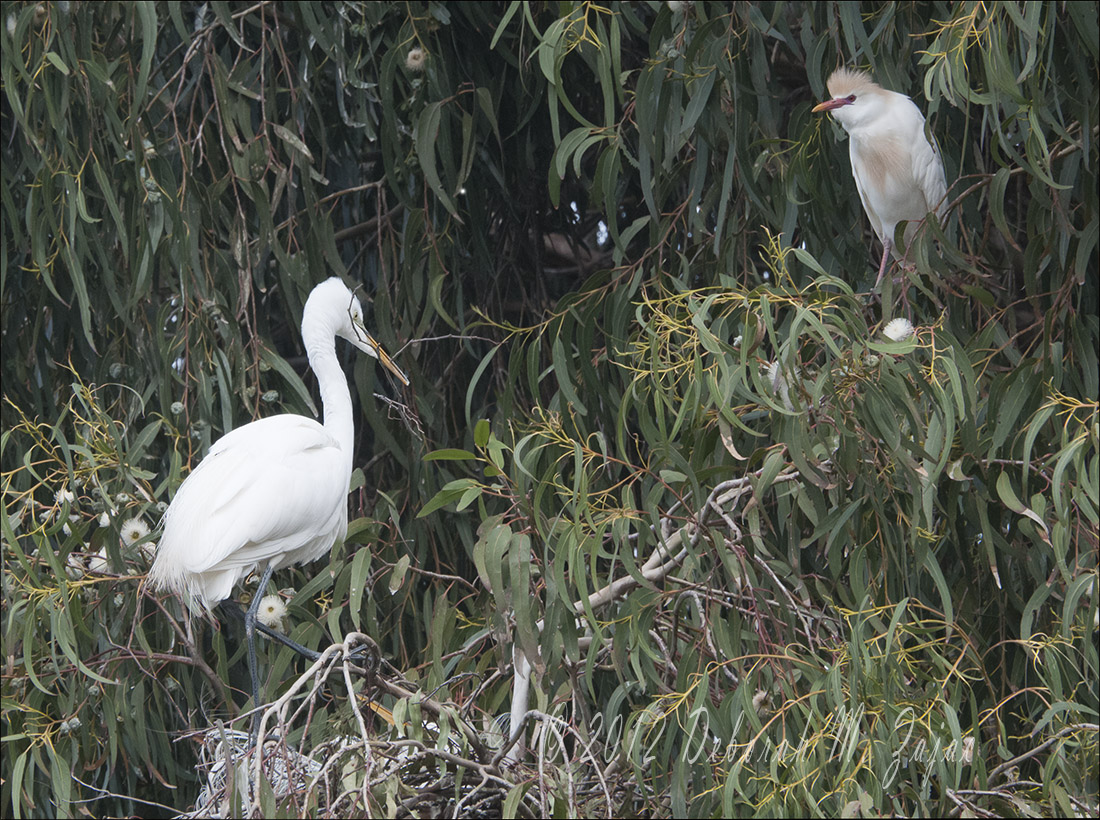
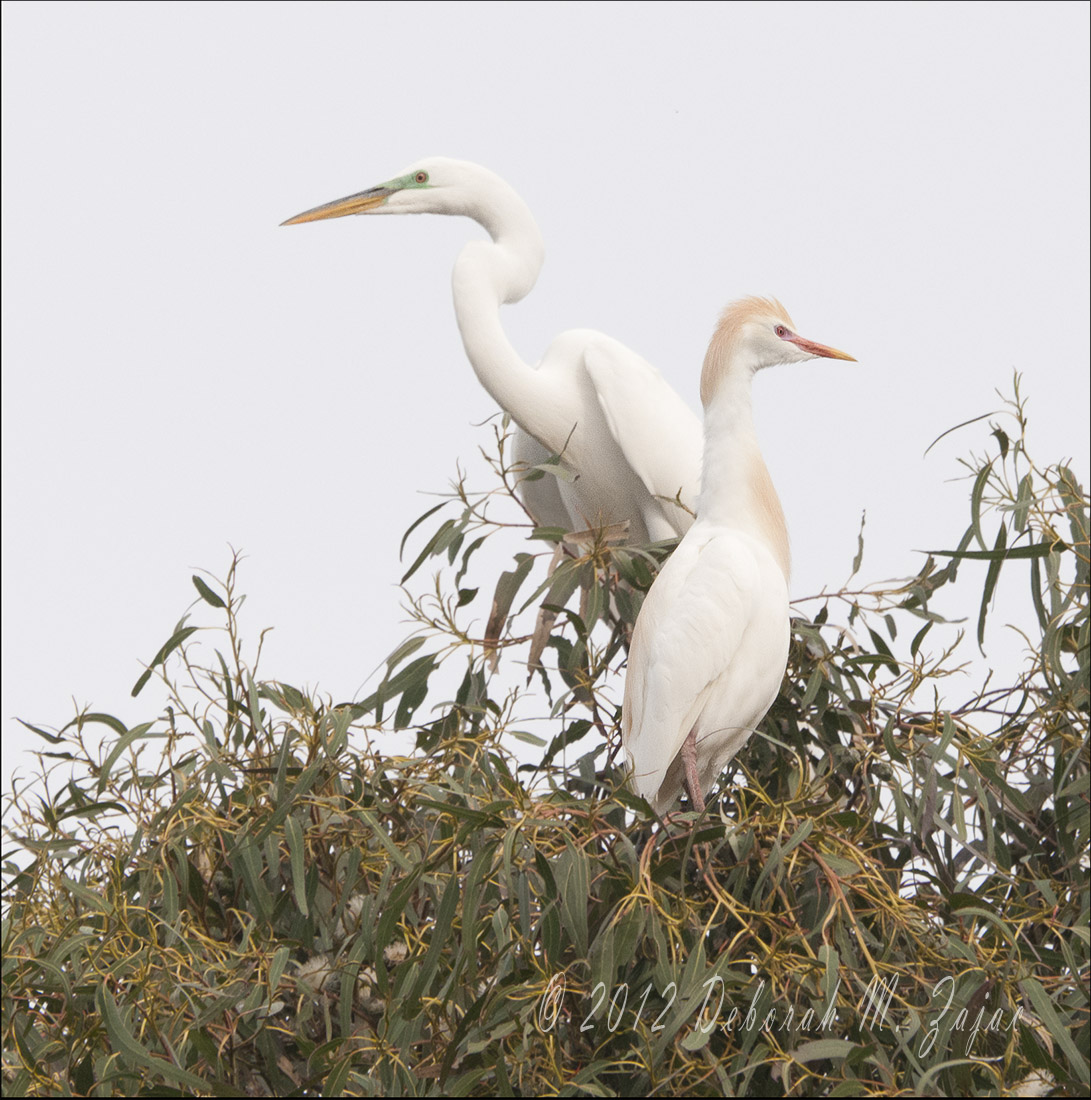
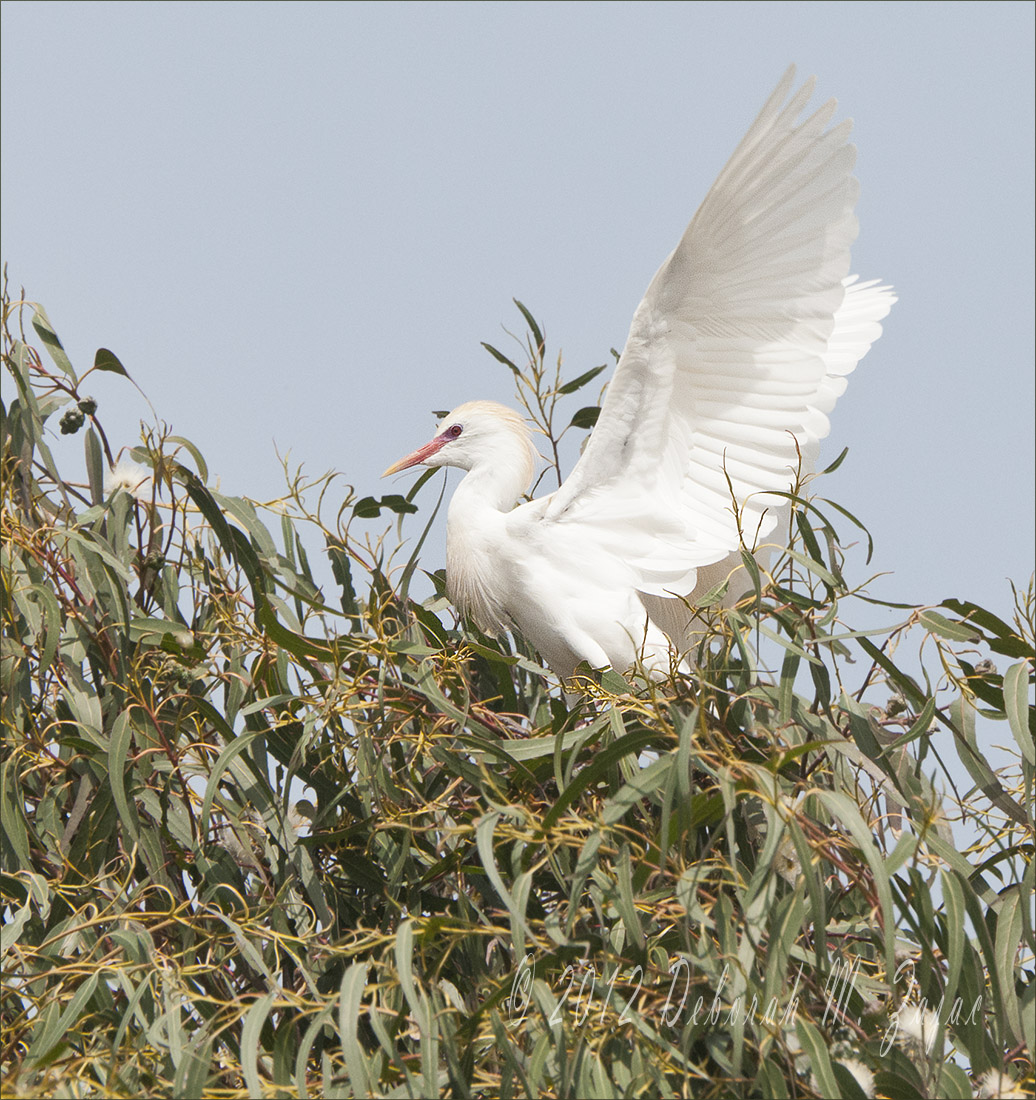
More photos of the Great Heron, and Cattle Egrets in breeding plumage, and nesting.

The Cattle Egret doesn’t look impressed by the Great Heron’s nest-building.

Yin and Yang

A Graceful landing

All photos taken with a Nikon D300s mounted with a Nikkor 70-300mm VR lens| Hand-held


“You never listen to me!”

Via Flickr:
Copyright © 2012 Deborah M. Zajac. All Rights Reserved.

The most animated and noisy birds breeding and nesting in this rookery were by far the Cattle Egrets.
They were very amusing to watch.

Nikon D700| Nikkor 70-300@ 300mm| f11| 1/800 sec| ISO 500| Manual Priority| Hand-held

Spring, Nature,and the Great Egret

Copyright © 2012 Deborah M. Zajac. All Rights Reserved.

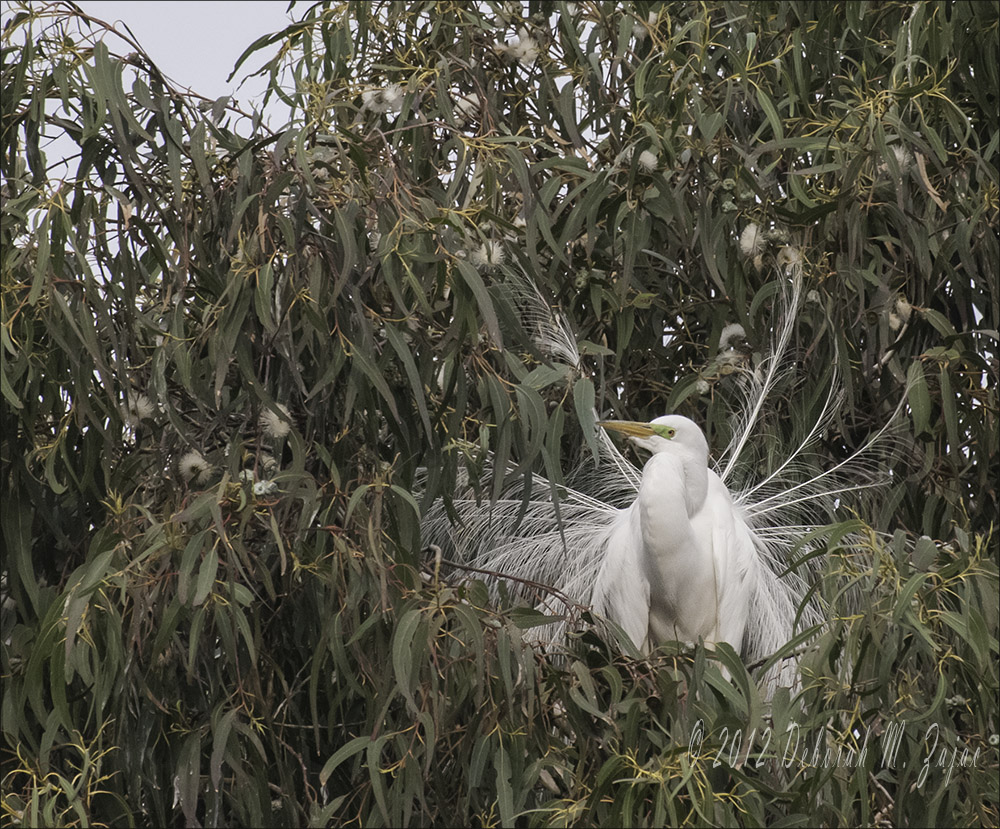
I spent a morning last week in Santa Rosa watching Egrets, and Herons, building nests, tending nests, and trying to attract a mate at a Rookery right in the middle of a suburban neighborhood. Mothers walked their children to school right under them, and traffic flowed on both sides of the street, and the Egrets and Herons were largely oblivious to all but themselves. Great Egrets nest in colonies so there are many, many birds in the trees.

The city is trying to give them some space so they blocked off one lane on each side of the street for a block or so sparing passing cars from being pelted with falling debris, and guano. The street under the Eucalyptus trees they’re nesting in is messy.

In the past when I’ve watch a Great Egret they’ve been very still, quite, and focused on hunting their prey, or I’ve startled them and they’ve flown away. That wasn’t the case on this morning though. The activity scarcely stopped.

Neither did the noise. In breeding season there is quite a lot of squawking, and screeching, and talking. In fact I found them very funny, and amusing.  I laughed out loud many times listening to them.

There were many sorties by the male to gather just the right branch to  build and strengthen the nest.  He will seriously work on attracting a mate once this task is complete. The female lays 4-5 pale blue eggs which take 3-4 weeks to incubate. Both the male and female parents incubate the eggs, and feed the chicks.

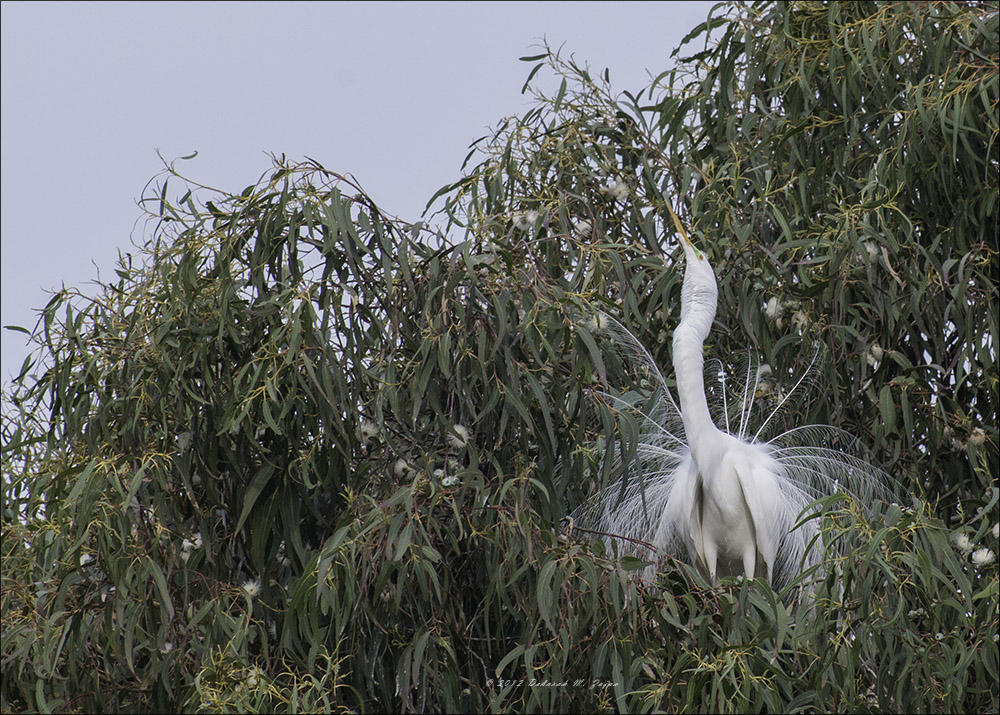
During the breeding season the  male Great Egret grows long tail feathers which he  raises and spreads out . I’ve read their plumes were once prized for making ladies hats and they were nearly hunted to extinction.

…and he undulates his long neck, and lifts his head toward the sky to try to attract a mate.

It was a wonderful experience observing this behavior up close, and I have more photos to share in the coming days of  Great Egrets, Cattle Egrets, and Night Herons.

Nikon D300s| Nikkor 70-300mm VR