Friday’s Feathered Friends- Greater Roadrunner

Copyright ©2025 Deborah M. Zajac. ALL RIGHTS RESERVED.

PLEASE DO NOT USE MY IMAGES WITHOUT EXPRESSED WRITTEN PERMISSION.

Last month about a week before Thanksgiving I went on a quick road trip to Las Vegas/Henderson with a girl-friend. She was wanting to see her parents who live in Vegas, and I was wanting to go to Henderson which is just 20 minutes south of downtown Vegas to do some birding. So we got a plan together and went. While she was hanging out with her parents I was birding at the Henderson Bird Viewing Preserve. I was hoping to see the Long-tailed Duck that is back this winter, alas, I did not see it, but I had a fantastic meeting with a Greater Roadrunner.

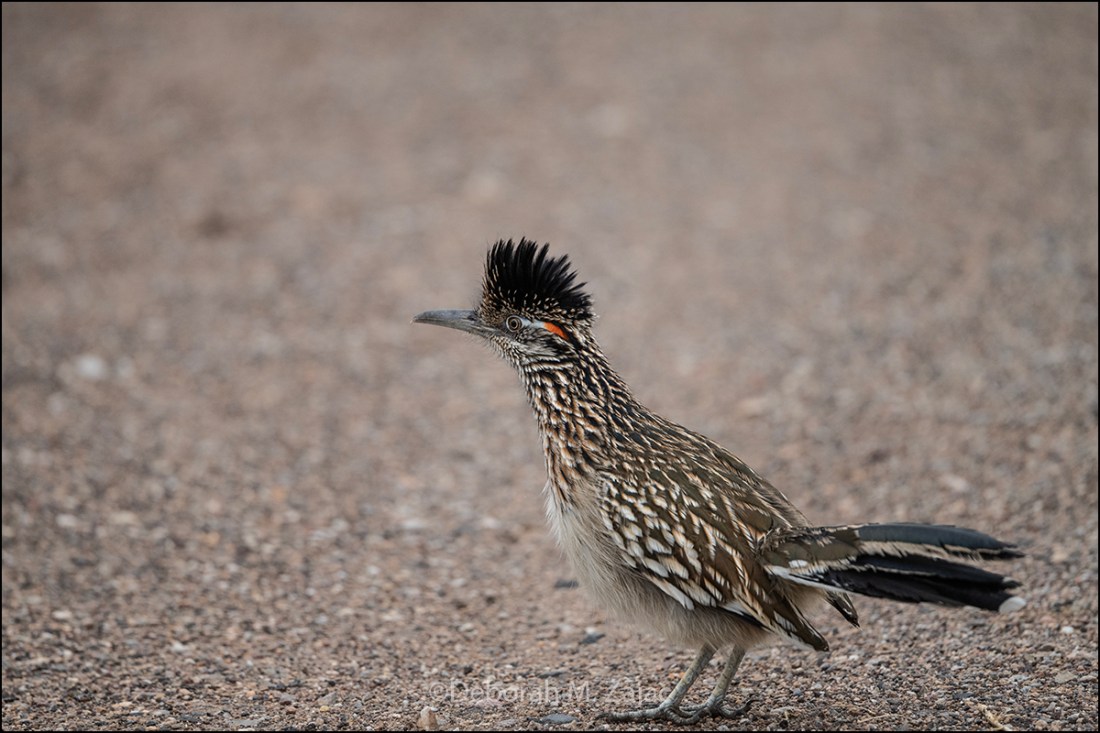
I was walking up a path and turned a corner and there it was standing in the middle of the path. I stopped. It jumped back and looked at me. There we stood eyeing each other up. When it was apparent it wasn’t going to flee and be flighty I started making photographs of it. After a minute it approached me! I backed up to keep it in my focal range. It was too close!!! Such a problem to have right? 😂 This profile is the best image I made showing its colorful skin behind its eye. The colors say Southwest to me.

©Deborah M. Zajac | http//:circadianreflections.com
Greater Roadrunner

I didn’t back up enough because as you see I nearly cut off his feet!

Here it is showing me its lovely long tail.

©Deborah M. Zajac | http//:circadianreflections.com
Greater Roadrunner- I backed up more for to make this image.

I can’t tell if it is a male or female. I do know it’s an adult though. It stayed on the path walking back and forth in front of me, and crossing the path from side to side for nearly 5 minutes! I have quite a few images of it. I think it must have had a nest nearby guarding it perhaps? Anyway, I figured I’d better get moving and let the Roadrunner get back to doing whatever it does. I thanked it for such a lovely encounter and as quietly as I could walked up the path then when the Roadrunner thought I was too close it darted into the bushes.

That was only the 3rd Roadrunner I’ve ever seen and by far the best encounter with one ever!

Fun Facts: Gleaned from AllAboutBirds.org

    • For a generation of Americans, the familiar “beep, beep” of Warner Brothers’ cartoon Roadrunner was the background sound of Saturday mornings. Despite the cartoon character’s perennial victories over Wile E. Coyote, real-life coyotes present a real danger. The mammals can reach a top speed of 43 miles an hour—more than twice as fast as roadrunners.
    • Roadrunners have evolved a range of adaptations to deal with the extremes of desert living. Like seabirds, they secrete a solution of highly concentrated salt through a gland just in front of each eye, which uses less water than excreting it via their kidneys and urinary tract. Moisture-rich prey including mammals and reptiles supply them otherwise-scarce water in their diet. Both chicks and adults flutter the unfeathered area beneath the chin (gular fluttering) to dissipate heat.
    • Greater Roadrunners eat poisonous prey, including venomous lizards and scorpions, with no ill effect, although they’re careful to swallow horned lizards head-first with the horns pointed away from vital organs. Roadrunners can also kill and eat rattlesnakes, often in tandem with another roadrunner: as one distracts the snake by jumping and flapping, the other sneaks up and pins its head, then bashes the snake against a rock. If it’s is too long to swallow all at once, a roadrunner will walk around with a length of snake still protruding from its bill, swallowing it a little at a time as the snake digests.
    • Based on banding records, the oldest roadrunner was at least 7 years old.
    • Roadrunners hold a special place in Native American and Mexican legends and belief systems. The birds were revered for their courage, strength, speed, and endurance. The roadrunner’s distinctive X-shaped footprint—with two toes pointing forward and two backward—are used as sacred symbols by Pueblo tribes to ward off evil. The X shape disguises the direction the bird is heading, and is thought to prevent evil spirits from following.

Isn’t that folklore about its X shaped footprint interesting! I didn’t know that until I read the fun facts. 😊

I hope you all have a lovely week-end. Beep, beep!

more to come…

Whatever Weds. A Little Fall Color + 2 more…

Copyright ©2025 Deborah M. Zajac. ALL RIGHTS RESERVED.

PLEASE DO NOT USE MY IMAGES WITHOUT EXPRESSED WRITTEN PERMISSION.

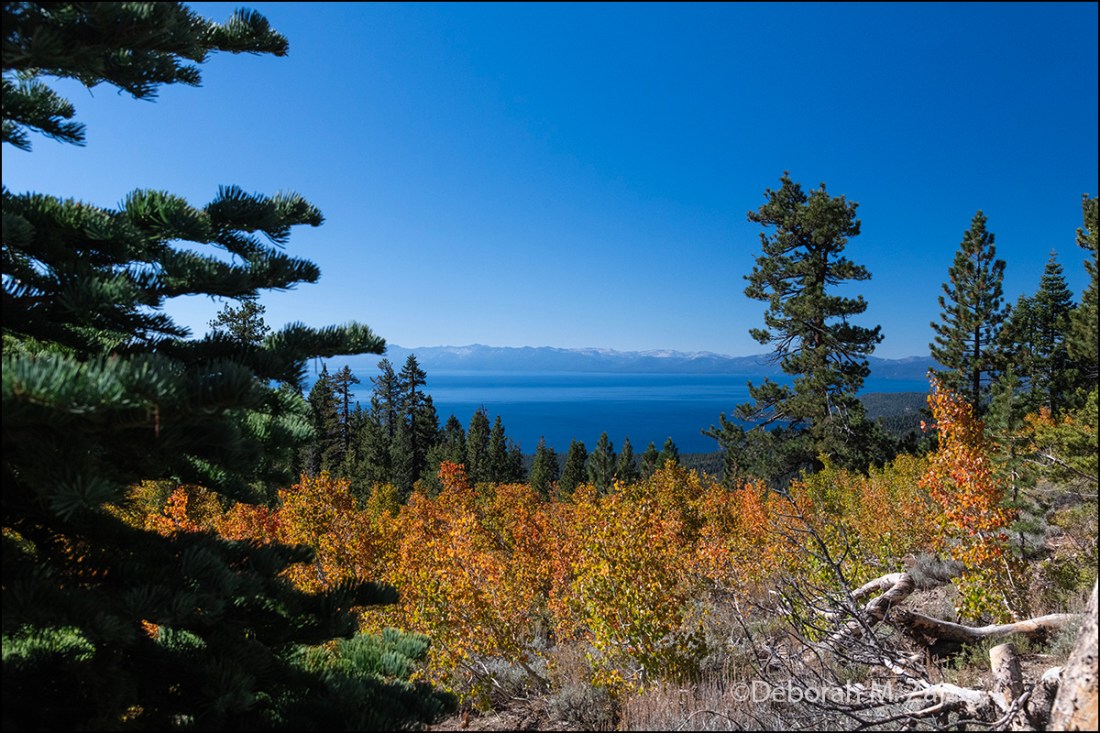
I’ve been seeing fall colors here and there while hiking and birding the last couple of weeks. Here are three of my favorite views so far this fall.

©Deborah M. Zajac | http//:circadianreflections.com
Mountain Splash
©Deborah M. Zajac | http//:circadianreflections.com
A Spot of Color above Lake Tahoe
©Deborah M. Zajac | http//:circadianreflections.com
A Bright Beginning

The little tree in the last image was the only tree in full Fall Color. All the huge Cottonwoods only had their tippy tops yellow and the rest of their leaves were green still.

Last Friday after a 5.5 mile birding hike myself and several friends went to an early lunch at the Squeeze In. I had a great salad loaded with bacon, chicken, blue cheese, red peppers, romaine lettuce, and a little balsamic vinaigrette the salad is called The Bleu Moon. I ate the whole thing.

©Deborah M. Zajac | http//:circadianreflections.com

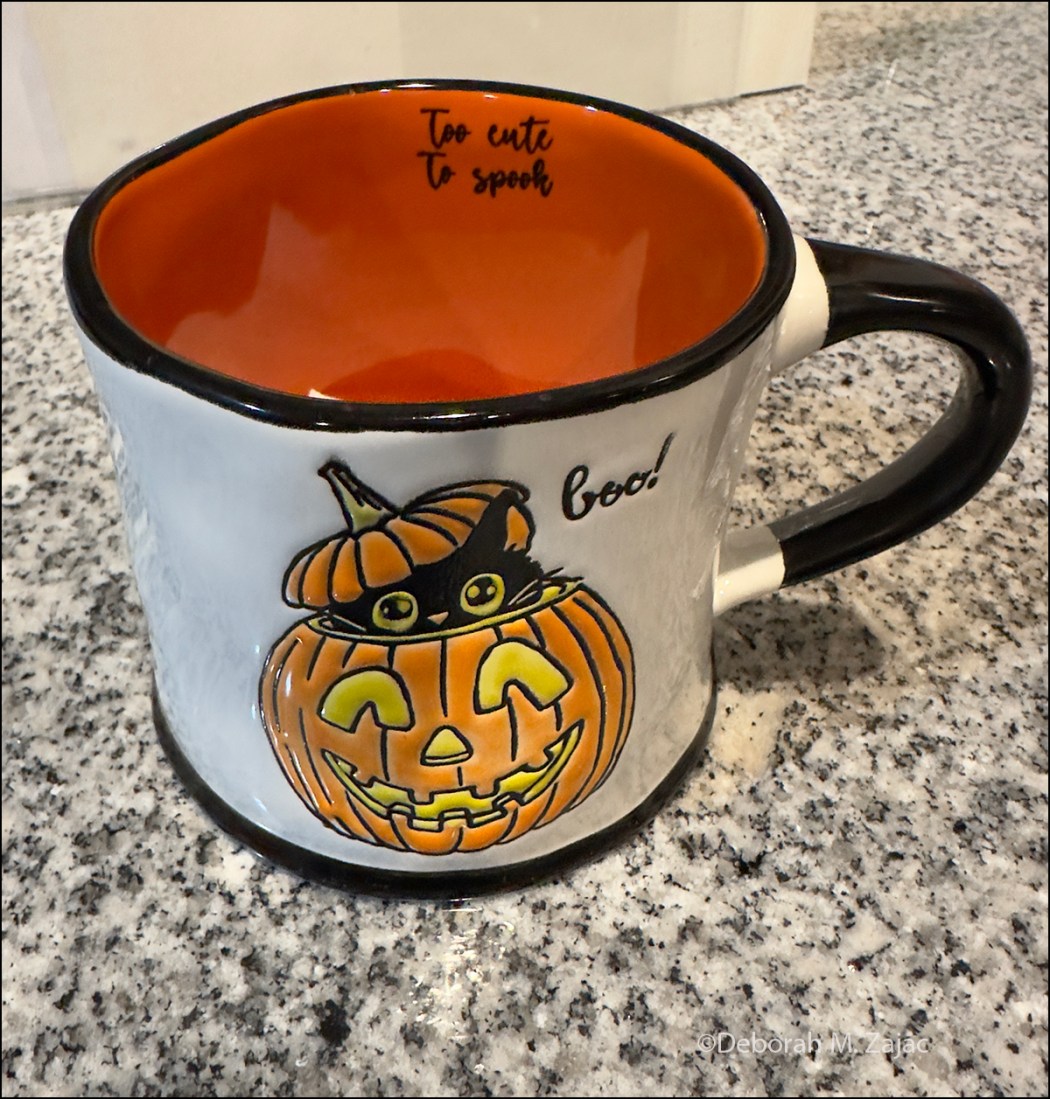
Speaking of food reminded me of drink. Here’s the mug I’ve been using for my tea all this month.

©Deborah M. Zajac | http//:circadianreflections.com
Unlike Rascal Todd’s Boss Bernie I do wash my mug out daily.

I watched No Country for Old Men from the beginning and I didn’t like the ending at. all. I guess after all these years there will be no sequel to give me the happy ending I was hoping for.

I’m reading Dan Antion’s book Bridge to Nowhere, A Rascal Todd Mystery. I already have the next book in the series ready to read when I finish Bridge to Nowhere. It’s a good series!

Our lows have been in the mid 30’s here so we’re getting ready for winter, and my gloves and heavy coat have already been called into service. We’ve had some rain too. Can you believe it’s already October 15th!? Time isn’t flying by, it’s racing by!

I’ve got some errands to do in town this morning so I may be a little late getting to your posts, and responding to your comments.

Happy Hump Day!

more to come…

Friday’s Feathered Friends-Couples

Copyright ©2025 Deborah M. Zajac. ALL RIGHTS RESERVED.

PLEASE DO NOT USE MY IMAGES WITHOUT EXPRESSED WRITTEN PERMISSION.

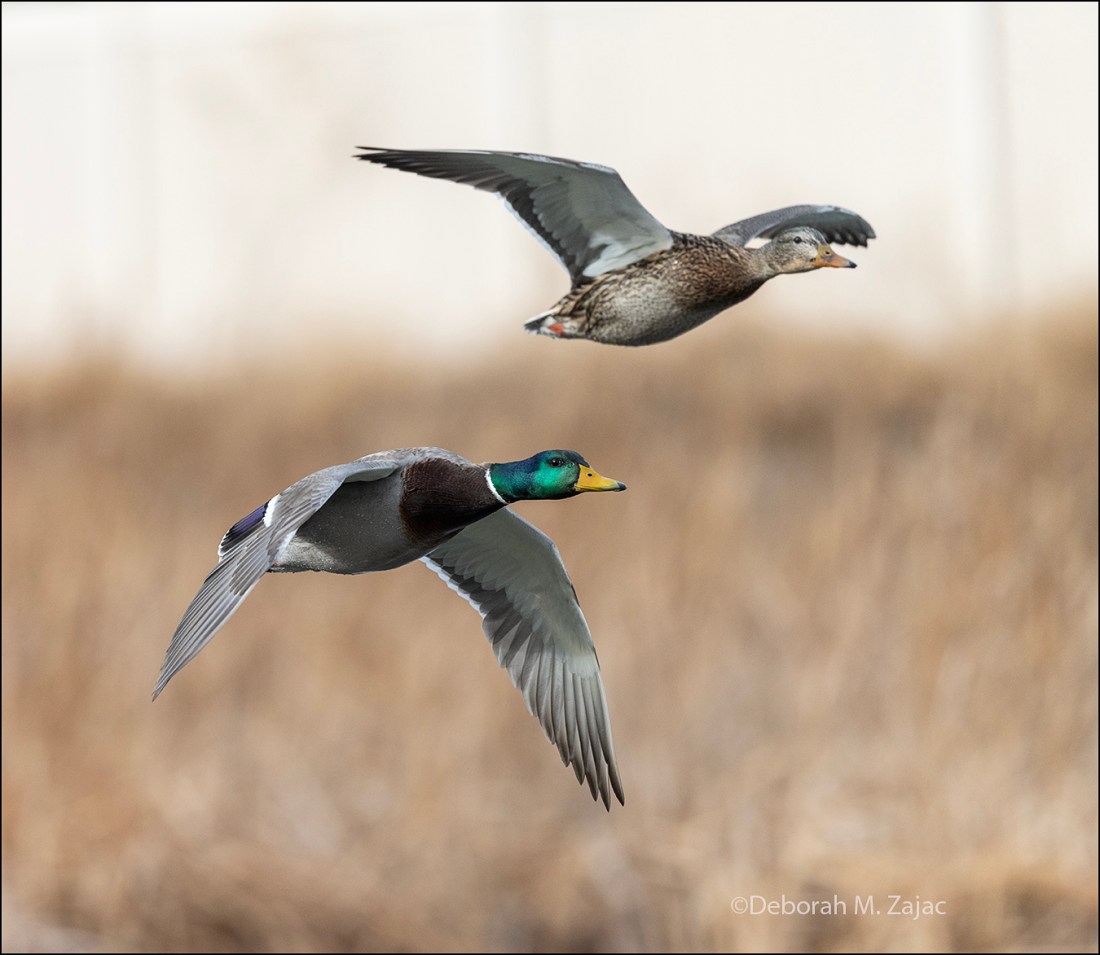
Being Valentine’s Day today I thought I’d share a couple of bird pairs/couples.

Mallard pair

©Deborah M. Zajac | http//:circadianreflections.com Image

Hooded Merganser pair

©Deborah M. Zajac | http//:circadianreflections.com Image

I hope you all have a lovely Valentine’s Day and great weekend.

Nikon D850| Nikkor 500mm| PS CC

more to come…

Friday’s Feathered Friends- American Redstart

Copyright ©2024 Deborah M. Zajac. ALL RIGHTS RESERVED.

PLEASE DO NOT USE MY IMAGES WITHOUT EXPRESSED WRITTEN PERMISSION.

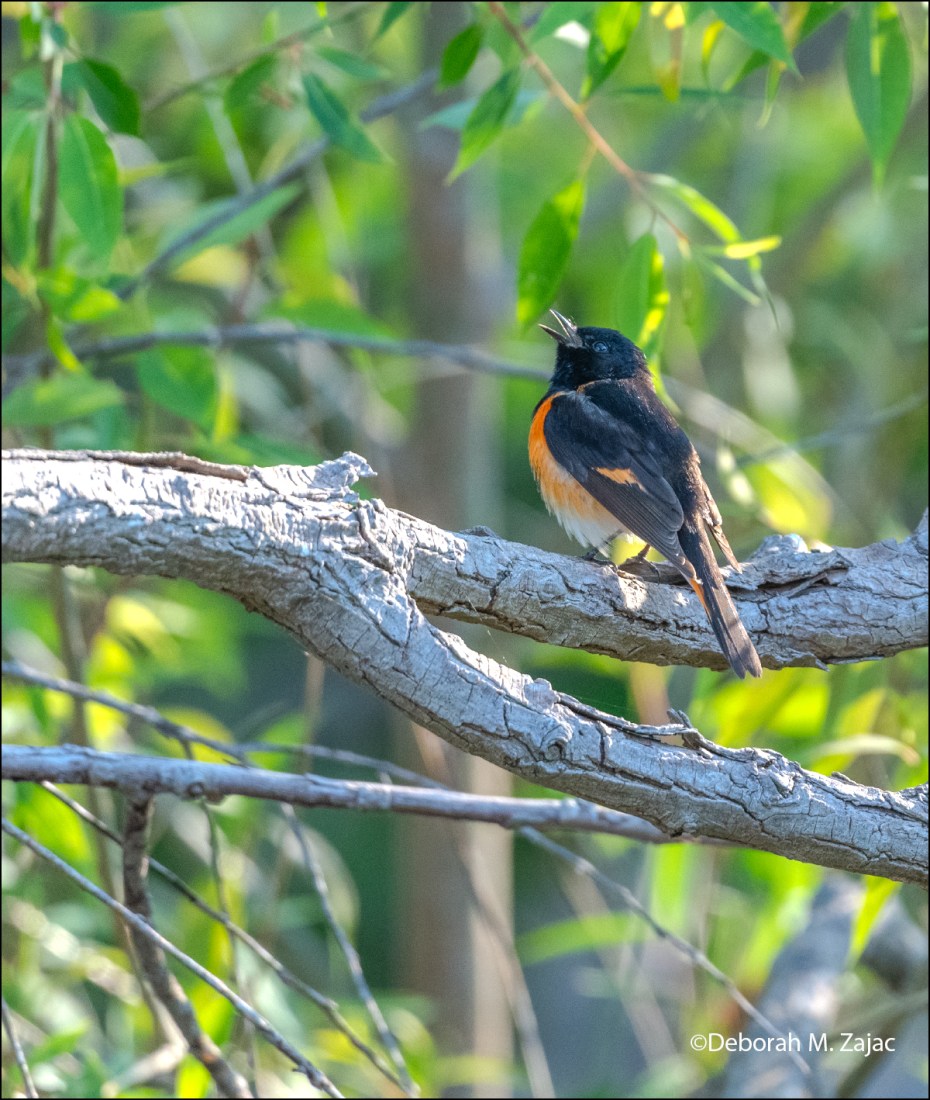
Going back to my Spring trip to Ohio for these images. The American Redstart male.

He’s a Warbler. I’m on the edge of it’s range. If only one or two would stray a bit further west I wouldn’t have needed to go to Ohio to this one. 😂

©Deborah M. Zajac | http//circadianreflections.com

Here’s an audio clip of its song.

https://www.bird-sounds.net/american-redstart/

Fun Fact:

  • Like the Painted Redstart and other “redstarts” of the Neotropics, the American Redstart flashes the bright patches in its tail and wings. This seems to startle insect prey and give the birds an opportunity to catch them. Though these birds share a common name, they are not closely related to each other. In fact, there are other unrelated birds around the world—such as the fantails of Australia and southeastern Asia, and other redstarts of Europe—that share the same foraging tricks.
  • Young male American Redstarts have gray-and-yellow plumage, like females, until their second fall. Yearling males sing vigorously in the attempt to hold territories and attract mates. Some succeed, but most do not breed successfully until the following year when they develop black-and-orange breeding plumage.
  • The male American Redstart sometimes has two mates at the same time. While many other polygamous bird species involve two females nesting in the same territory, the redstart holds two separate territories that can be separated by a quarter-mile. The male begins attracting a second female after the first has completed her clutch and is incubating the eggs.
  • The oldest American Redstart was at least 10 years and one month old, when he was recaptured and rereleased during a banding operation in Ontario.

Fun facts gleaned from allaboutbirds.org

I may be late replying this morning as I’m starting my week-end birding a new to me area in South Lake Tahoe. I hope you all have a great day and week-end.

more to come…

Whatever Weds. Yellowlegs

Copyright ©2023 Deborah M. Zajac. ALL RIGHTS RESERVED. 

PLEASE DO NOT USE MY IMAGES WITHOUT EXPRESSED WRITTEN PERMISSION.

I saw this one foraging in a shallow pond earlier in the month. I think it’s a Lesser Yellowlegs, but if I’m wrong let me know! It’s so hard to tell it apart from the Greater Yellowlegs. I’m going on the bill not being too much longer than its head.

I don’t see this type of bird too often so it’s pretty neat when I do. It’s either passing through or hanging out for winter migration.

Yellowlegs

Fun Facts:

    • Despite their very similar appearance, Greater and Lesser Yellowlegs are not each other’s closest relatives. Lesser Yellowlegs is more closely related to the much larger Willet.
    • Lesser Yellowlegs are known for their steadfast defense of their eggs and chicks. Biologist William Rowan once noted, “they will be perched there as though the safety of the entire universe depended on the amount of noise they made.”
    • Both the male and female Lesser Yellowlegs provide parental care to the young, but the female tends to leave the breeding area before the chicks can fly, thus leaving the male to defend the young until fledging.
    • The Lesser Yellowlegs saw significant declines due to market hunting for the fashion trade. The species’ tendency to return and hover above wounded flock mates made them easy targets. Populations rebounded when market hunting was banned in the U.S and Canada in the early 20th century.
    • The oldest recorded Lesser Yellowlegs was at least 4 years, 11 months old when it was found in South Dakota in 1965. It had been banded in the Lesser Antilles in 1960.

more to come…

Sunday Stillness-Cabbage White Butterfly

Copyright ©2023 Deborah M. Zajac. ALL RIGHTS RESERVED. 

PLEASE DO NOT USE MY IMAGES WITHOUT EXPRESSED WRITTEN PERMISSION.

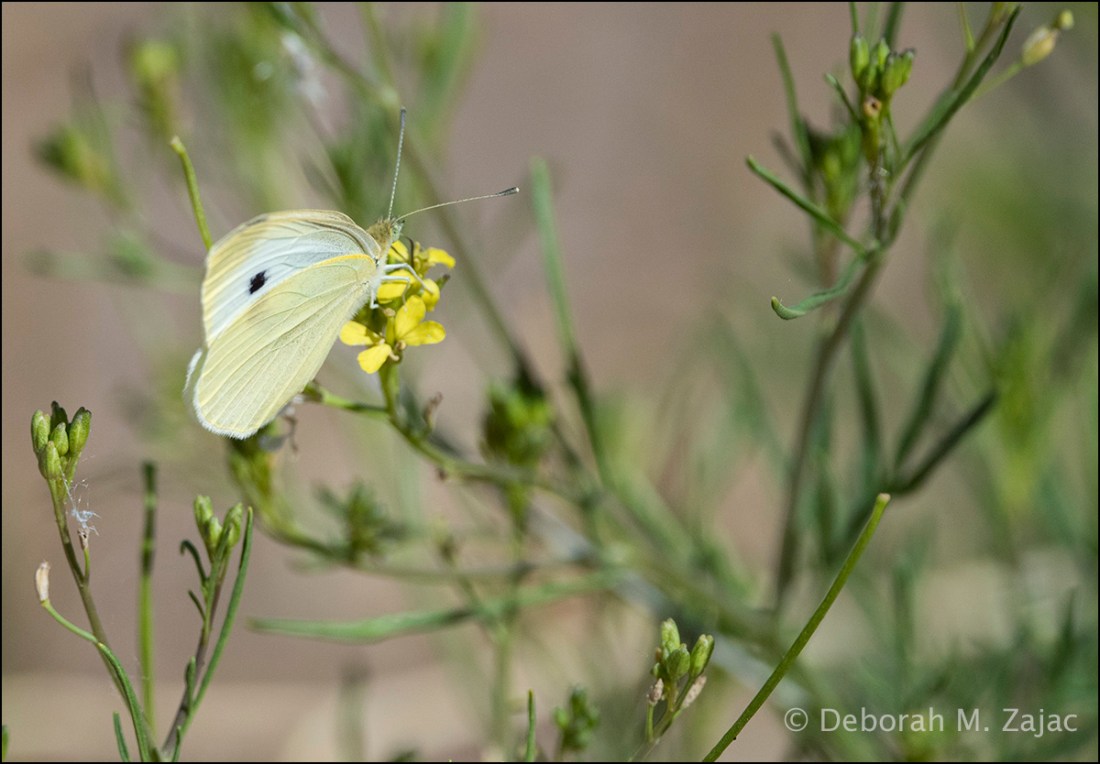
Cabbage White Butterfly

Nikon D810| Nikkor 500mm PF-e| PS CC 24.6

more to come…

Whatever Weds. This and That April 2023

Copyright ©2023 Deborah M. Zajac. ALL RIGHTS RESERVED. DO NOT USE MY IMAGES WITHOUT EXPRESSED WRITTEN PERMISSION!

Here are a few images of some critters I’ve seen this month while out birding.

Big Horn Sheep- Males: These guys were such a great treat to see! I also saw Ewes with lambs up higher in the hills, and further west, but the images aren’t good as they were too far out of my lenses range.

Wild Mustang-Stallion

Wild Mustang- Mare

I have birds and wildflowers too that I’ll be sharing soon.

Fuji X-T3| Fujinon 100-400mm| PS CC 24.3.0

more to come…