Copyright © 2012 Deborah M. Zajac. All Rights Reserved.
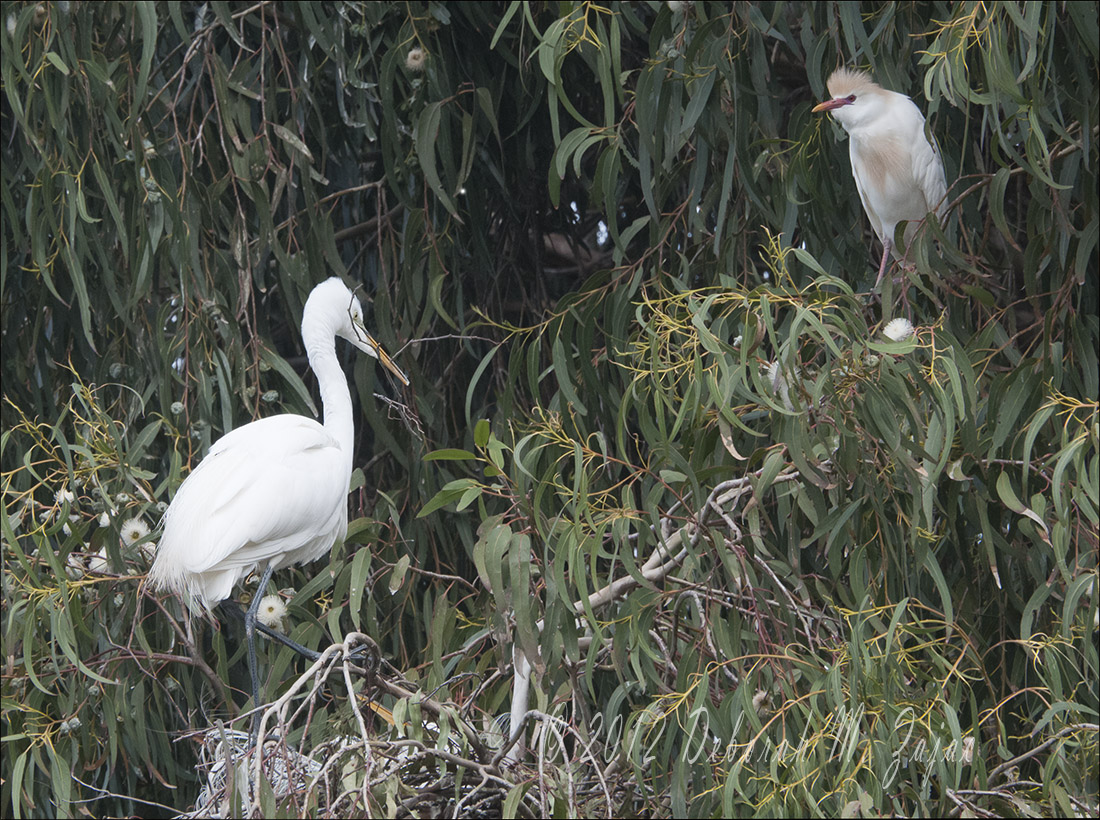
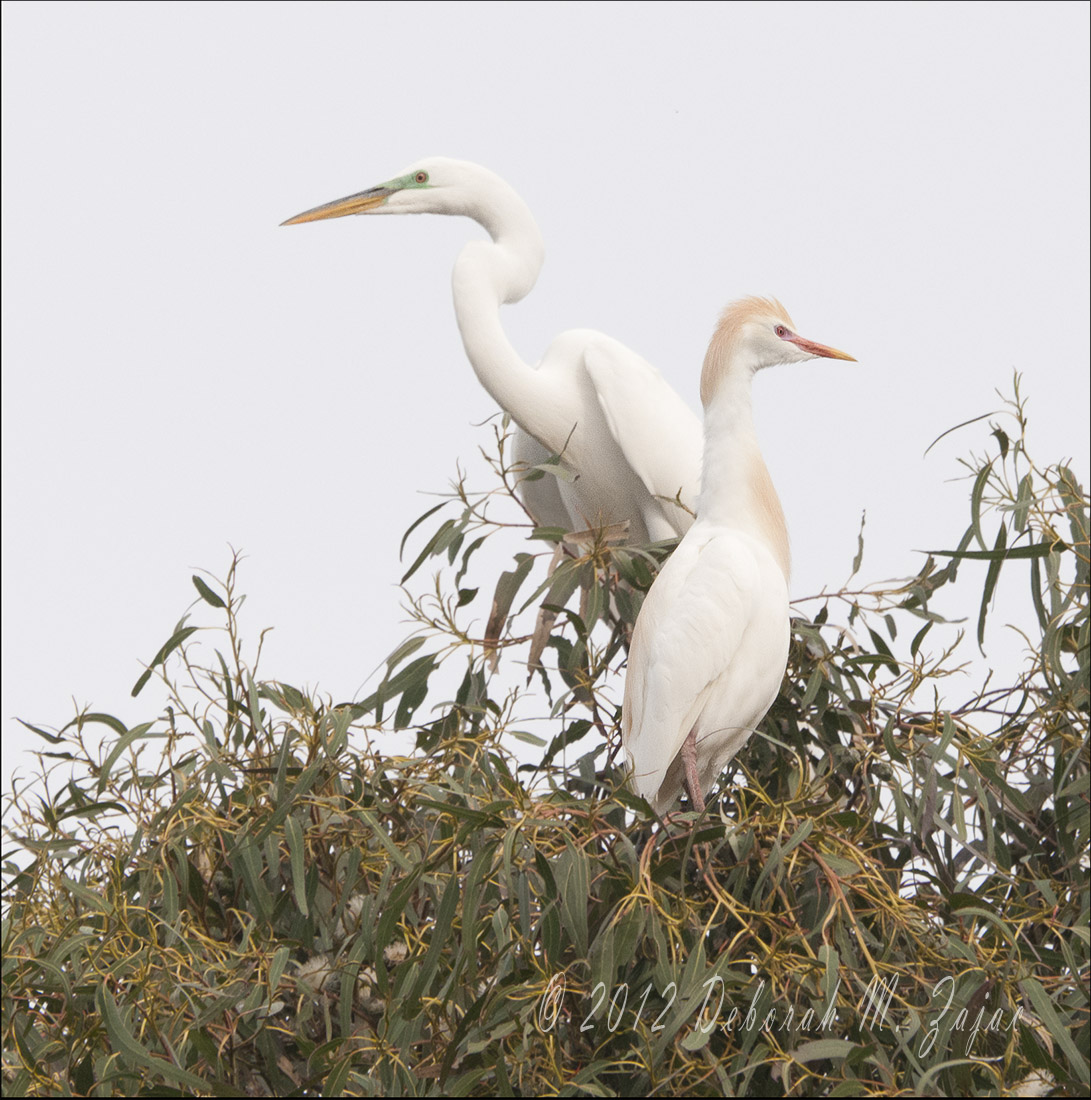
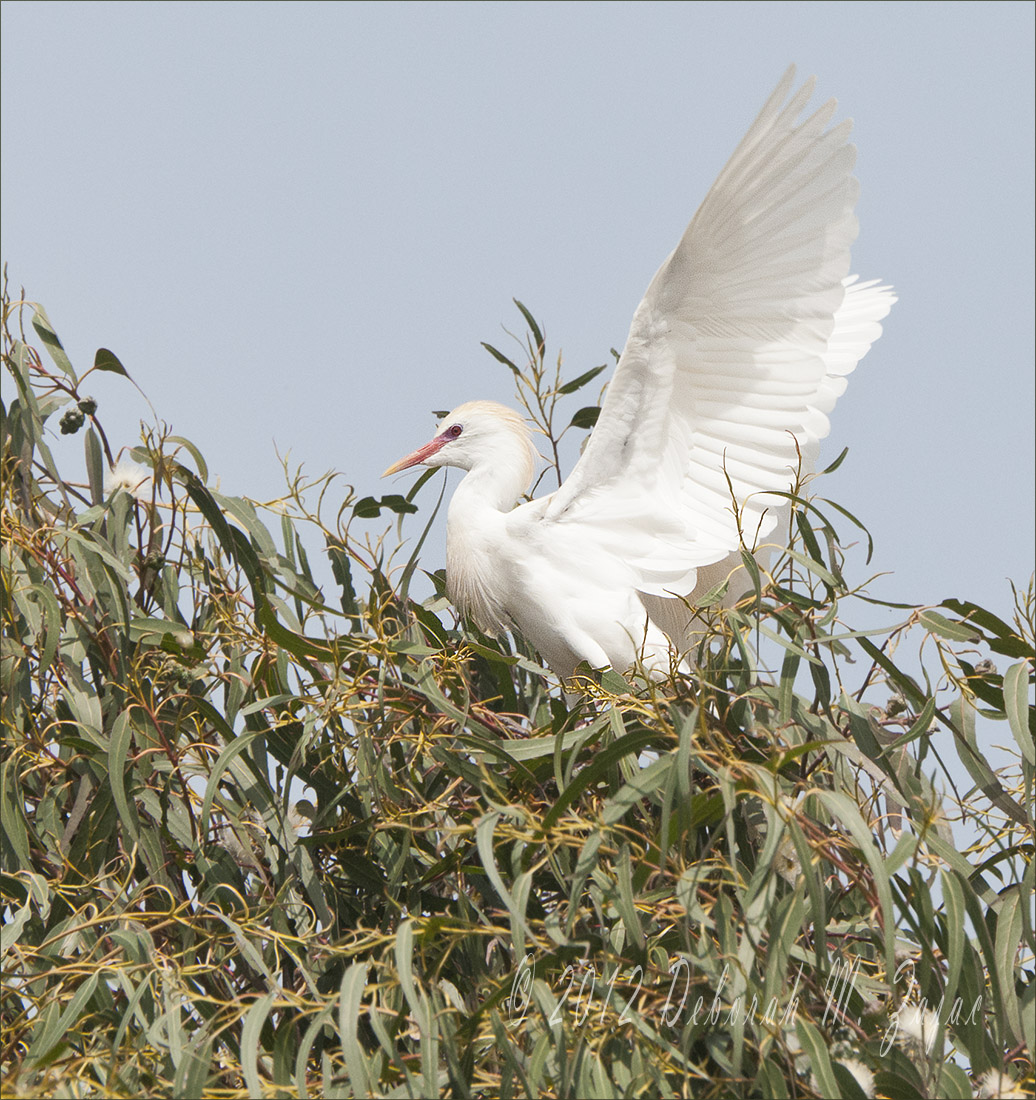
I spent a morning last week in Santa Rosa watching Egrets, and Herons, building nests, tending nests, and trying to attract a mate at a Rookery right in the middle of a suburban neighborhood. Mothers walked their children to school right under them, and traffic flowed on both sides of the street, and the Egrets and Herons were largely oblivious to all but themselves. Great Egrets nest in colonies so there are many, many birds in the trees.
The city is trying to give them some space so they blocked off one lane on each side of the street for a block or so sparing passing cars from being pelted with falling debris, and guano. The street under the Eucalyptus trees they’re nesting in is messy.
In the past when I’ve watch a Great Egret they’ve been very still, quite, and focused on hunting their prey, or I’ve startled them and they’ve flown away. That wasn’t the case on this morning though. The activity scarcely stopped.
Neither did the noise. In breeding season there is quite a lot of squawking, and screeching, and talking. In fact I found them very funny, and amusing. I laughed out loud many times listening to them.
There were many sorties by the male to gather just the right branch to build and strengthen the nest. He will seriously work on attracting a mate once this task is complete. The female lays 4-5 pale blue eggs which take 3-4 weeks to incubate. Both the male and female parents incubate the eggs, and feed the chicks.

During the breeding season the male Great Egret grows long tail feathers which he raises and spreads out . I’ve read their plumes were once prized for making ladies hats and they were nearly hunted to extinction.
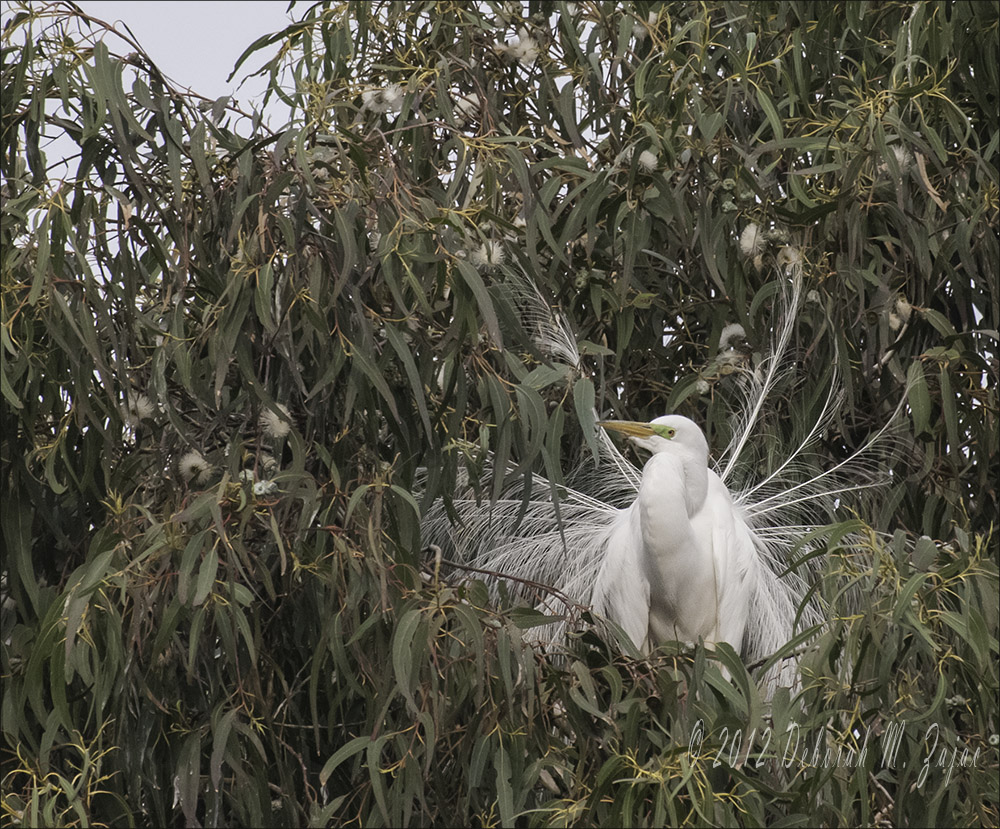
…and he undulates his long neck, and lifts his head toward the sky to try to attract a mate.
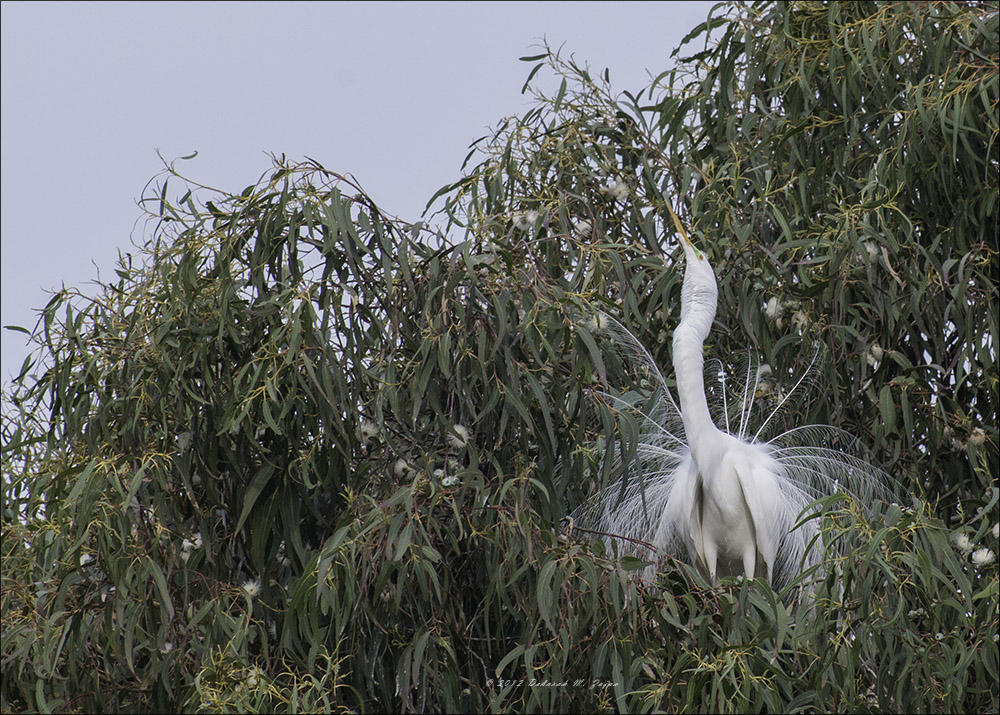 It was a wonderful experience observing this behavior up close, and I have more photos to share in the coming days of Great Egrets, Cattle Egrets, and Night Herons.
Nikon D300s| Nikkor 70-300mm VR
 I’ve just returned from Oregon. I was on a birding expedition with some friends who are also photographers. We spent a couple of days in the Klamath Basin looking for Clark and/or Western Grebes doing their Spring mating ceremony and dance or what the Scientist call “rushing”. We were successful finding them as well as several other birds; some familiar and others new, and it was neat to see many birds I know and see only when they Winter near me in and the Pacific Flyway in their Spring Breeding plumage.

 Circadianreflections Blog
You must be logged in to post a comment.